We are butchering this week. We have 3-digit high temps coming this week so we’re trying to butcher our broilers before that happens…you know, since I’m on vacation.
Yesterday morning there were 300 broilers on pasture. We butchered 100 yesterday. It took us 2 hours to get them in the chill tanks, another hour to bag. But we were late getting started so we barely finished before lunch, took a break and bagged them from 3-4. Today we intend to start earlier. I really mean it this time.
My flat Salatin-style chicken tractors get the hottest so they got emptied first. Today I’ll take 20 birds from each of the hoop tractors to make more room, take 40 of the turkey’s roommates and finish up the remaining Salatin-style box.
Yesterday’s birds weighed an average of 4 pounds. That’s just what we were shooting for. Customer feedback on 5 and 6 pound birds varied. It’s nice to have normal-sized birds available again.
The freezers are nearly full! This is it for the summer. There are no chicks on the farm right now. Soon we’ll be focused on swimming instead of feeding and watering!
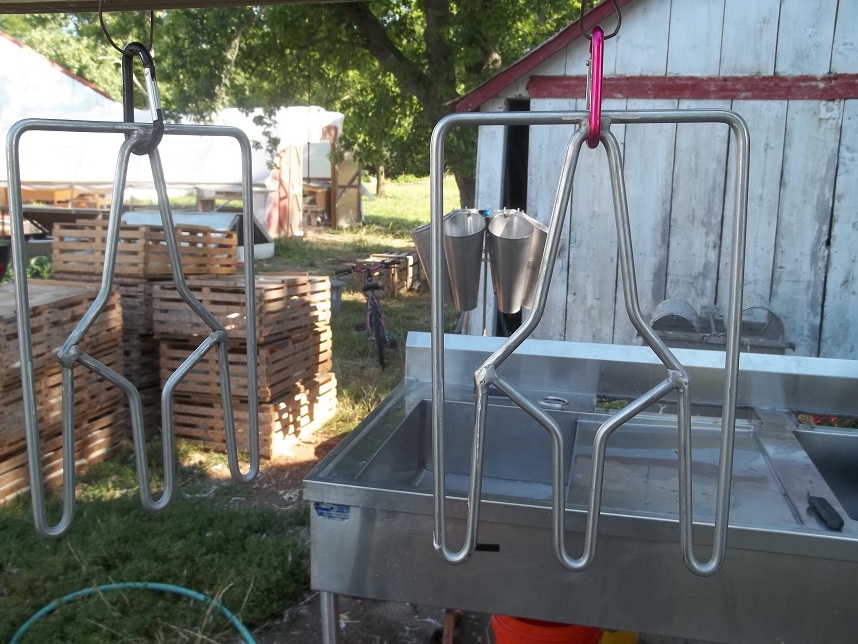
OK. Really gotta get going. Have to start butchering at 7 and I have to catch the birds, sterilize the work surfaces and sharpen the knives.
Oh, golly. The sky is the limit on could. Ask a more direct question.
“How much money do you make doing this?”
Well. Yeah. You see…we…um…not much. I see the potential. I know the market is there. I just have a hard time introducing myself to that market. We’re learning every day but we’re still in school.
You can do the math. We raised 900 birds on a little over an acre to an average of 5 pounds dressed. 4500 pounds of chicken sold at a minimum of $3/pound. Chicken feed isn’t free. Chicks aren’t free. Electric netting isn’t free. Land isn’t free. My time is worth something. So, we come out a little ahead on our season but we’re not getting rich.
We do better with pigs. Pigs need our attention for about 2 minutes/day, every day for 4 or 5 months. Then we load them into a trailer (which can be hilariousfrustrating interesting) and send them to town. We have annual pig revenues in the hundreds of dollars. Yup.
We’re small. Many of the things we do are just first efforts. We are still learning what works here. Yes, I have read Salatin’s Pastured Poultry Profit$: Net $25,000 in 6 months on 20 acres. My copy is pretty worn. Yes I have 20 acres. Yes I raise poultry. Yes, I have studied the 40 pages in that book on marketing. I agree with Salatin that sales are driven less by advertising and more by word of mouth. We have a superior product. Our customer feedback is positive. It just takes time to build sales…to get your name out there. This is our third year raising chicken and we are taking it slowly. We have to. It would be very easy to outstrip our sales with production. While we have always sold out on chicken and pork there is more than just numbers involved. We have to find ways to get the work done. Just doing the work is tiring. We could raise more chicken but when? I have no doubt we could raise more pigs but I don’t know how many more. We need time to figure it out.
Could I make my farm payment from the farm? No doubt. Could I make a living by farming alone? I don’t know. I suspect I could but I need more time. Time to learn. Time to market. Time to figure out what works. Time to try new things. Time to grow.
I have to learn about pasture management. I have to learn about seasonal changes, annual changes, multi-year drought management, low-stress livestock handling, water management, nutrient cycling, winter stockpile management, managing differences between North-facing slopes and South-facing slopes….you see where this is going? Orcharding, aquaculture, growing and marketing vegetables…on and on. It takes time to learn/try/recover from each. Time is not on my side but I have to resist the temptation to force something to happen. It has to grow. We have to move slowly.
Farming is a biological process. Biological processes take time. I could present you a business model that shows $X over X years but it would not be honest. There is a lot of work to do. There is a lot to learn. Things take time. You better get started now.
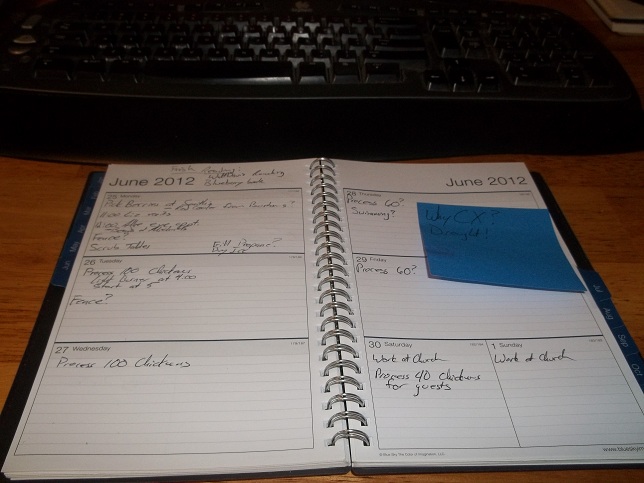
What does your week look like? I’m on vacation this week so I’m penciling in the plan. We got this mostly roughed in during our weekly planning meeting yesterday but not all the detail. Weekly planning meeting? Yup. If we don’t sit down every week to sync up our planners we get lost. We also meet with the kids to find out where they want to go. There is supposed to be a big family meeting as we think it is important to involve the kids in family goals. That meeting was missed yesterday so we could attend the Sustainable Backyard Tour.
This week I have a couple of books I want to finish reading, fence to build, chickens to process, bookshelves to design and build, wire to run, and ponds to swim in. That means I’ll spend the week reading to the kids, teaching about fence post placement, teaching anatomy, geometry, fractions, measurements and buoyancy. I also need to get the greenhouse ready to plant for fall crops and I may start digging potatoes…no rush on that though.
Today is more filled out than Thursday. That’s kind of on purpose. I try to stay flexible. Things happen. Some projects drag out more than others. No big deal. I have a to-do list and have that list prioritized. I’ll knock out what I can and if, by some miracle, I get to the end of my list I’ll find more to do. There is always more work to do. If things were right in the universe there would be no unemployment. But then, I try to avoid discussing politics and economics here. There is more work to do than can be done…it’s an issue of price. OK. I’m done.
This week finishes out our broiler production season. We may run a small fall batch depending on sales but at this time we’re leaning away from it. Exciting times. Chicken evisceration, blueberry picking, raspberry picking, potato harvest, goat milking…it’s both fun and overwhelming at the same time. Everything has to be done at once. It has been that way since February. Ah, the good life.
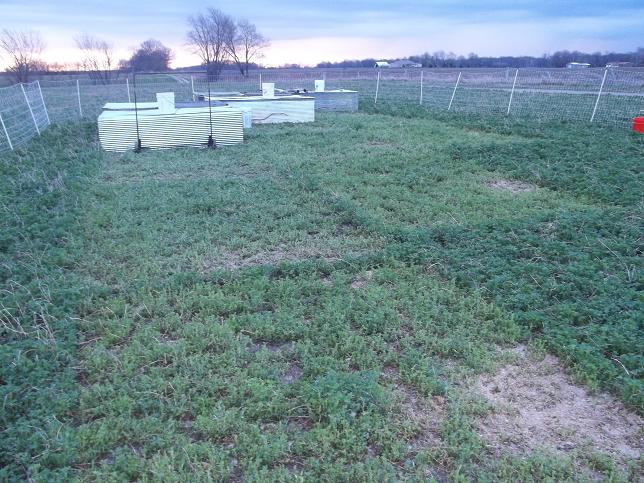
I’m going to show you a picture. Tell me what you see in the picture’s future.
Come on. Ignore the alfalfa. Ignore the chicken tractors. What should be here? What would you do with this space?
I’m asking you to be creative. I have an acre that makes several tons of feed for ruminants and chickens. Is that the best I can do? What else could I do with the space?
Remember this mild disturbance from mid-March?
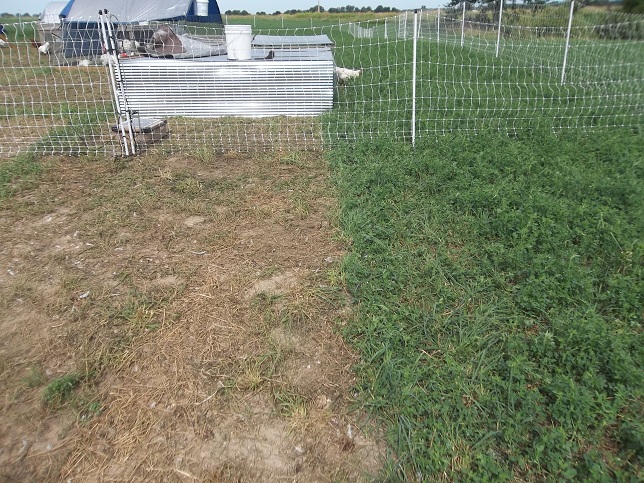
Well, now that it’s hot and dry we see this:
Recovery is slower in the absence of rain…but it does recover. I’m have raised 4500 pounds of chicken on this field and two cuttings of alfalfa…and it’s not even July yet. But then what? I haul goat and cow manure out of the shed to spread it out on the field again? I compost the chicken guts and bring them back out to the field? Isn’t there something better I could be doing?
I ask this because I’m reading The Blueberry Years. Also I’m making an intensive study of permaculture right now. What if I planted 1,000 berry plants? What if? What if I planted them on contour to preserve water? What if I planted an orchard? What if I planted a food forest? What if I just sculpted the landscape to retain water and grazed it with beef? Where would I raise chickens? Would I raise chickens? Possibility overload!
I look at the alfalfa field and I see any number of possibilities…maybe even a series of greenhouses. What do you see? What could be there?
We aren’t parenting experts. We’re just parents. We have four helpful children and we don’t believe that helpfulness is an accident. Mileage may vary but here’s what we find works.
The workload on the farm is staggering. Not only do we face the normal household routines of dishes, laundry and food followed by dishes laundry and more food, we have to deliver meals on wheels to a few hundred animals. Messes seem to happen in certain locations day after day in the house. We have to clean those up. Then we have to clean up after a few hundred animals by constantly moving them to fresh ground, composting bedding and moving fencing. In the yard we pick up fallen tree limbs, weed and mulch the flower beds, mow, keep the garden moving in the right direction and then carry that work out to the rest of the 20 acres. Thistle threatens to take over the pasture, limbs fall on fences, fences short out and chickens lose the fight to raccoons. We have to be diligent about testing our fences for shorts on a daily basis. I’m just scratching the surface here. There is a lot of work to do both in and out of the house. We could not function at our current skill level if our children were not helping us. We don’t see much of a future on the farm if our children run screaming away from us when they get old enough to be on their own.
Our children have to know that we love them. They aren’t accidents. We don’t regret our decision. We thought, saved, considered and prayed before each was born. Well, maybe we would have liked to spread them out a bit more but… Our children aren’t a burden to us, they are our treasures. I could give up the farm tomorrow but I will never give up my children. I need them.
They have to know that this is home. It’s not my home. It’s our home. They belong here, this is theirs too. That sense of ownership is important in helping them understand they aren’t imposing on us or living in a hotel and I’m not providing a storage locker for their things. This is their home. I’m not passing my time hoping they’ll move out someday. I am not burdened by their presence. I don’t calculate the “cost” of raising a child (nor should you). I hope they stick around as adults. They make everything I do easier and more fulfilling. As a part of a home they have to share the workload. Being a part of any community requires one to contribute. Sometimes being part of a home goes beyond contribution into sacrifice.
Our children have to know that their work is necessary and important. We aren’t just keeping them busy. We aren’t sending them because we are too lazy to go ourselves. They know that we can’t do everything and they find ways to help us. Together we keep things running around the farm. Our kids understand this so well we have to hold them back at times. With time and training the kids will finally be able to help me buck bales. Right now they sit frustrated on the sidelines knowing I’m tired and wishing they could help.
We have to model an appropriate attitude toward work for our children. We don’t complain about the work. We don’t drag our feet. We just get it done. In fact, we work to be joyful about our purpose. They know it’s hard. I’m sure they realize we don’t always want to do the work but we do it anyway. It has to be done. No matter how late we were up the night before, no matter how hot/tired/sick/hungry/busy we are, the chickens have to be watered. Sometimes the routine gets old. There’s a lot of just going there when you’re going somewhere. But when we arrive! The destination is worth the journey.
Our children have to know that hard work is rewarding. There is no allowance. Our children aren’t paid to live. Our children earn money. They either earn play money for doing regular household chores or they earn real cash for doing farm work. Either way, we have an opportunity to teach them about savings and delayed gratification. Sometimes we just stop for ice cream and tell them they are great. Sometimes we go swimming. Whatever we do, we make it a point to tell the kids how much we appreciate their help.
Our children need to be trained to accomplish each task. Just like I won’t hand the car keys to my untrained 16 year old and say, “Well, you’ve seen me do this so just go do it.” we train our children to do the housework. Cleaning a bedroom is not obvious to a 6-year old. She might get started looking for socks under her bed but would quickly be distracted. The whole project is too big if she hasn’t been trained to break it up into multiple tasks…bite sizes. Stay with her, encouraging her, working with her for the first few room cleanings. Help her at the end of each day to tidy things up so next time it’s not such a big deal. Every morning ask if she made her bed. This is training. In time, it will become routine so when she’s 12 you won’t be talking (let alone screaming) about cleaning rooms. Our oldest two can run the house now. The meals may be a little bland but they can cook, clean, fold and put away laundry, vacuum and clean the bathroom. It took years of training to get them to this point but now they are wrapping up the training required to function daily as a human so they can spend their adolescent years in a focused pursuit of their passion…be it art, astronomy or bio-intensive carbon sequestration.
Finally, we have to praise our children for their contribution. We tell friends and neighbors how proud we are of our children…in front of our children. My oldest taught a group of men from India how to eviscerate a chicken when he was 9. It was a hands-on class and he was the teacher. We have told that story to everyone who would listen and now I have shared it with the internet. It was a big deal. Not only could he do the work, he could teach it to adults…at age 9! Now, at age 11, he can replace me at any point in the chicken process, though he has been doing final inspection lately.
I hope that helps you understand why our kids jump to meet our requests and how we got there. Please comment if you have any additional suggestions.
A lot of my readers are looking for more information on my pig trough. Either that or they just want to see more of the pigs. Either way, today is your day.
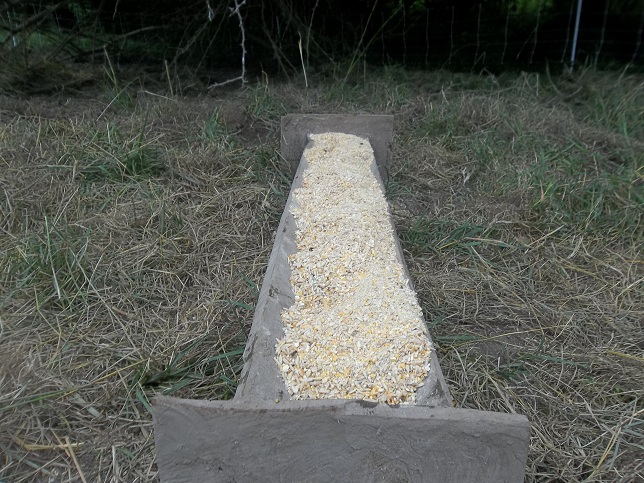
I took slab oak from my sawmill. Slab lumber is waste wood. It either has bark on it, marks from the chainsaw or it’s an uneven thickness. Whatever the reason, it’s more useful as firewood than for furniture. I cut it down to a 1×6 then cut it into 3.5′ long sections and screwed those together in an L shape. I had 8-10″ long boards left over and I screwed those to the ends of the trough to act as legs. These are rough measurements but it really couldn’t be more simple.
Now that the pigs are getting some size to them they don’t all fit around the trough. We give them a rubber pan too. The rubber pan is better than a metal pan because pigs play with their feeders and inevitably push them against the fence. I don’t want them to associate the feed pan with pain when they push it against the electric fence.
Now, the moment you’ve been waiting for. Breakfast at Piggany’s. I especially liked the pig trying to figure out the mystery of the feed bucket. Please notice the pigs aren’t tackling me to get to the feed trough. Feeding your pigs is more art than science. I want them to grow, I want them to get enough but I don’t want them to waste the feed. They eat more on cool mornings than on hot afternoons so we try to account for that in our routine too. I recently increased their ration because they had been eating it all and I like for them to have a little snack between feedings. I try to feed them a little more than they can finish in one sitting. The rubber pan still had feed in it from last night so I guess I went overboard yesterday. On the other hand, they weren’t tackling me to get to the feed either.
Eating healthy food doesn’t cost more money. It costs more time but gives you more time…time to live…past your 60’s. As food prices have fallen, health care costs have risen. Correlation does not equal causation but I think the two are linked. Here is my lovely bride with more to say on this topic.
“It’s just too expensive to eat healthy.”
My reply was that in the long term eating cheap is very expensive – it costs you your health and medical care is only getting more expensive.
As I thought about that conversion I wish I had taken it a different direction. I don’t believe it does cost more to eat healthy food, even in the short term. What are some of the items in your shopping cart this week? A bag of chips usually will cost $3/lb, Cheerios – $4/lb, Oreo’s – $5/lb, candy bars – $8/lb. Compare that to a Chism Heritage Pasture Raised Chicken – $3/lb or raw milk from grass feed dairy cows – .75c/lb. How much money do you spend on food that isn’t nurishing you? Cheap and easy food is not real and sustainable food. Just because you can chew it, swallow it, digest it and maybe even like it does not make it real food.
In America we spend less on food than any country in the world. This cheap food is not only causing people to be malnursihed but it also effects our soil. Joel Salatin in Folks, This Ain’t Normal says, “Don’t people understand that a cheap food policy will create a cheap farmer policy? And a cheap farmer policy will create a cheap landscape policy? And a cheap landscape policy with create a cheap soil policy? No civilization can be any healthier environmentally or economically that it’s soil. No health care system and no bank bailout program can compensate for a bankrupt soil policy, which is exactly what a cheap food policy creates.”
Our family is still developing good eating habits. We certainly have some issues we need to work on but we have come a long way. Eight years ago a typical day’s menu for my children looked something like this:
Breakfast: cold cereal (absolutely nutritionless and full of sugar) with pasturized 2% milk (from who knows what farm)
Lunch: peanut butter and jelly on cheap bread
Dinner: hamburger helper with canned refridgerated rolls and a can of green beans
Today there is no boxed cold cereal in my house. Breakfast is usually eggs and bacon, fruit salad with cottage cheese or oatmeal. My kids still love peanut butter and jelly but I make the bread and jelly. Dinner is usually a meat with vegetables but no bread. We do buy different food but eating healthy is not just about going to the store and buying different groceries or just shopping the perimeter. Healthy eating starts with a different approach to food. You don’t just buy pre-packaged food that is labeled “healthy”, you buy quality ingredients and cook them. There is no way around it, if you want to eat healthy you have to cook. If you don’t have the time or desire then you have to pay someone the cook for you. That sounds very expensive to me. The great thing about this approach is that it can lower your food budget while giving you more time with your family in the kitchen. Go to the library and read Nourishing Traditions The Cookbook that Challenges Politically Correct Nutrition and the Diet Dictocrats and Folks, This Ain’t Normal. Both books will give you a desire and a direction toward real food. Then get into your kitchen and help your farmer make the world better with just your plate and fork. Stop watching TV and cook something!
I’m still learning, but I’m learning with my kids and it’s great. Old habits die hard but we can form better habits in ourselves and our children. Chime in below and let us know where you have found the most success in your healthy kitchen efforts.
I hate that question. I work in tech. I have a hard time telling management, most of whom don’t work in tech, that I have no idea what changes are in store for my career. I don’t really see myself moving to management and if you try to explain current tech trends to HR their eyes glaze over and they just wait for you to finish talking. I like what I do and would like to continue doing it. Tech changes constantly and if I were to guess, 5 years from now I’ll still be diligently working to stay abreast of new trends, add value, etc. Looking back 5 years I couldn’t foresee the iPad. I couldn’t foresee (and still don’t really understand) Facebook. I have no idea what Microsoft will dream up next. I don’t think we’ll use keyboards much longer though.
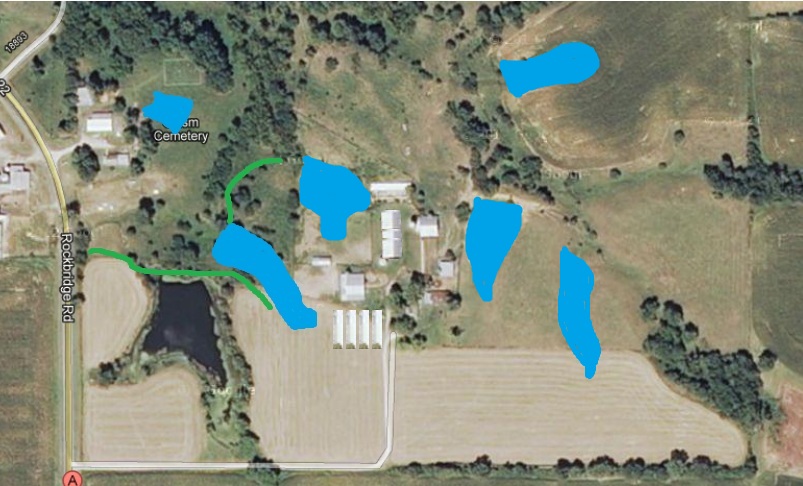
Looking at my farm in 5 years is a little easier. I’m a little restrained by the economy and have no idea how to pay for this but I have a vision of how I would like to reshape the farm over the next 5-40 years. I have plans to add greenhouses and ponds, I have a plan for pasture grazing and improvement, woodlot improvement, establishment of new tree stands, orchards, swales and general beautification of the farm. On the topic of beautification I need to replace a number of buildings but that’s further down on the list. More water on the farm = more life. I need to build 6 or 7 ponds over the next few decades.
I plan to transition our primary revenue generation away from chickens to cattle. We haven’t begun to build our beef herd yet. I hope to divorce myself from the feed grinder as it is both dangerous and expensive to operate. Further, it’s one more thing I have to store in a shed…a shed I need to replace. Instead we’ll use dense swards of grass to harvest sunlight, earthworks to harvest rainfall and cows to cycle nutrients. It’s a terribly complicated machine with no moving parts but entirely dependent on free and continued sunlight. I plan to use a solar-powered fence charger to keep the cows where I want them.
To prevent wind and evaporation we have plans for tree plantings. These will be primarily fruit and nut trees but I would like a larger stand of sugar maples to tap in my old age. I better get started now! The fruit trees will give guests another reason to come visit the farm…another over-arching goal of ours.
Everything we do should boost biodiversity, restore the local ecology, and help nurture our community. I hope to raise big, fat cows and have room for big, fat groundhogs. We plan to leave meadows ungrazed until the ground-nesting birds have hatched in July. I hope friends and customers continue to come here seeking rest and inspiration…or at least entertainment.
We have given strong consideration to picking up a Fertrell dealership. It could happen in the next 5 years though I have a lot to learn and, again, need a shed. And a scale. And a truck. But it’s possible…
I anticipate my oldest son will begin to step up his involvement in the farm and will either relieve me of one or more enterprises or will start some of his own. At 17 he should be ready to test his wings and I plan to enable him to do so. He has always been our guinea pig so he’ll set the pattern for his siblings. Whatever they are interested in, we are interested in.
I didn’t list revenue in my planning. I can’t set financial goals outside of paying for the land and the improvements. I am not a corporation. This isn’t a machine. This is a biological process. Financial goals fit with biology like socks on a rooster.
These are, of course, moving targets. These plans will likely shift as the wife and I dive deeper into our studies of permaculture. So I guess, like tech, my farming goals aren’t entirely knowable. It’s a best guess either way. But it’s easier to keep my audience interested when I’m not explaining database index optimization strategies. Yeah.
So, there you go. The top-down view of the next X years. That question is so much easier than career planning. What about you? Where do you see yourself in 5 years? Will you finally achieve your “someday“?
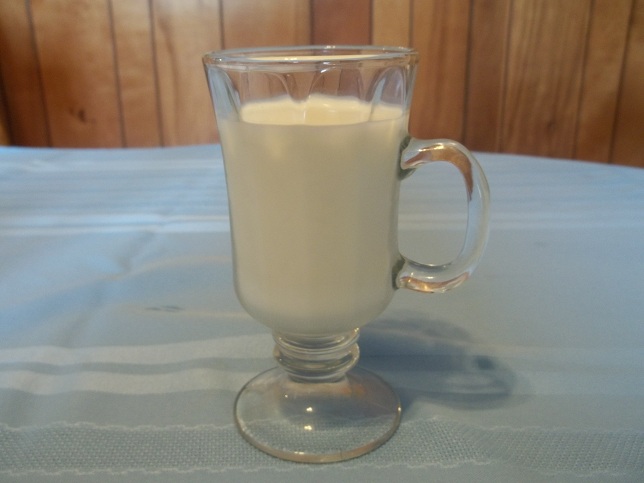
I was asked, “What makes some goat milk taste bad?” Milk should taste like milk…but milk may not always taste like that white liquid you buy at the store. Some milk has character. Some milk tastes different. Some milk tastes bad. I’ll offer my thoughts on the subject, though I’m far from an authority. In fact, I’m anxious to read your responses. I also want to note this is not limited to goat milk.
Handling
Goat milk, cow milk and, I suspect, camel milk all benefit from being refrigerated quickly. Milk is biologically active and yearns to express its potential. We place our milk in the freezer immediately after milking to chill it quickly and slow biological processes as soon as possible. This quick chill doesn’t kill anything but it does slow everything down. Our friend Steve does the same thing with cow’s milk. He sterilizes a deep freezer every night, fills it about 1/3 full of water and lets it chill overnight. In the morning he puts 5-10 gallons of milk in the freezer in cans to chill. We do something similar but since we’re only chilling 4-6 pounds of milk (as opposed to 80 pounds) and since we consume all of our milk ourselves we just pop the jar in the freezer with the pork chops. This could affect flavor.
Sanitation Your dairy can impart flavors on milk. Is the goat clean and brushed and did you wash the udder? Are your buckets and jars sterile? Did you use an appropriate filter to strain the milk? Not only can your milk become unsafe to drink, the critters you introduce when handling the milk can change the flavor.
Diet/Seasonality
Diet makes a huge difference in milk flavor. Our goats get a varied diet in addition to free-choice alfalfa hay. We also buy raw cow’s milk from a dairy North of us. There is a noticeable difference in flavor as the seasons change. In the winter the cows eat alfalfa hay and the milk is sweeter. As spring comes on their diet is rye and clover. The milk takes on a smokey character. I find myself lacking appropriate adjectives for the milk but it does change seasonally as does the cow’s diet. Further, goat milk changes depending on what kinds of weeds are out there and the availability of browse. Finally, milk changes as we get further into the lactation.
Genetics Some goats just have a different…flavor. Like apples, genetics seem to have an impact. I know. Do with that what you will. I suspect it’s the least important after diet, sanitation and quick chill.
Buck Smell
If you keep a buck with your doe you’ll smell him. The smell won’t leave you. You can’t get it out of your clothes. Your co-workers will remark on the odor. It soaks into your pores and no amount of pumice will remove it. Makes sense then that it will be on your doe…and it will taint the milk.
What do you do with your goat milk? Just add a glass and drink? Goat milk ice cream? Cheese? Let us know in the comments below.
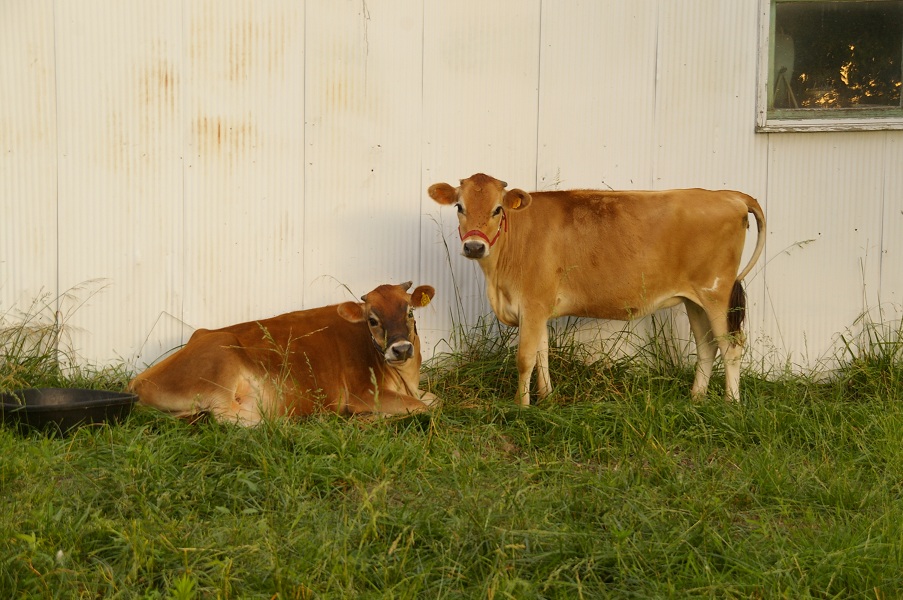
May (black halter) is expecting in September thanks to a straw. We held off on breeding Flora (red halter) because she was a bit younger. It struck us as a good idea to send Flora to the bull rather than bring the bull home, especially since the dairyman we bought Flora and May from didn’t mind. Further, there was a chance that the dairyman was going to get some pretty high-priced straws in time to use on Flora. She met the bull instead. Anyway, off they went just in time for us to get through kidding our goats. The cows came home again yesterday. It’s time to stop dancing.
It was nice having a month off from moving the cows. They came back fat and slick, maybe a bit spoiled. My pastures (yard) don’t compare to Steve’s pastures. Not at all. But we’re improving year after year.









 Chism Heritage Farm