Strolling Through the Pasture May 2013

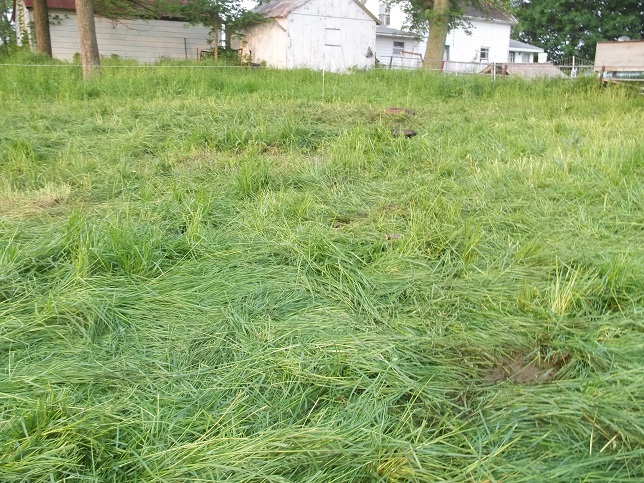
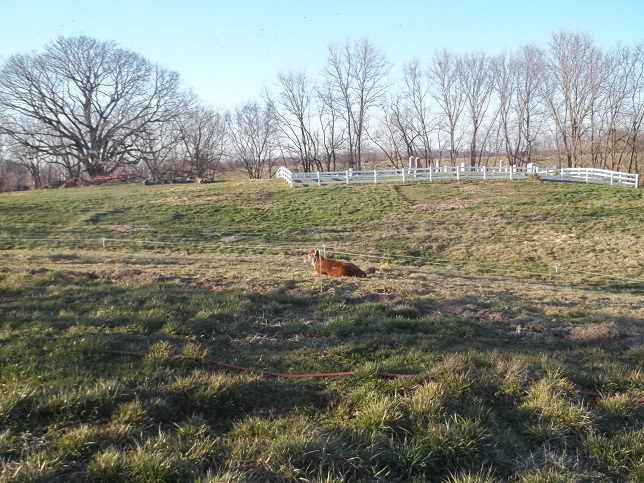
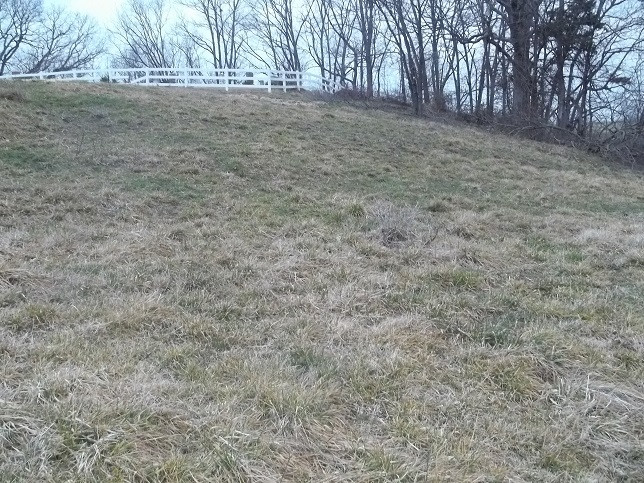
I’ll start off by making a loop around the cemetery hill then we’ll head North.  Looking toward the cemetery I’m standing in grass that won’t be grazed for about 2 weeks…but what a difference two weeks makes.  Compare this picture with this one taken two weeks later with this one taken another two weeks later.  What a difference two weeks makes.  Closest to the cemetery is ground that was grazed two weeks ago.  Recovery is happening but it really didn’t get trampled as well as the pasture in the foreground.

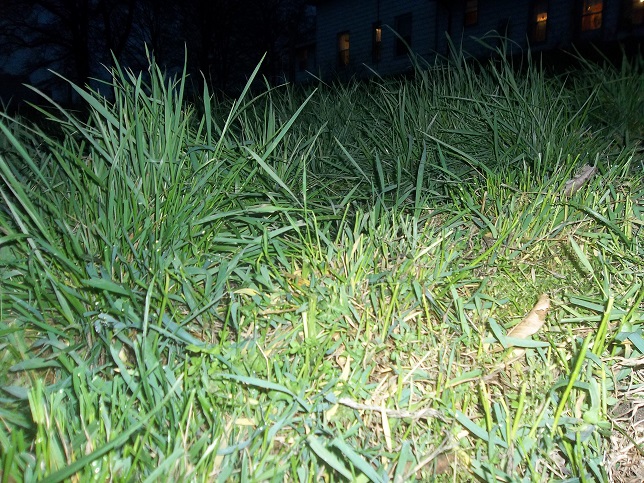
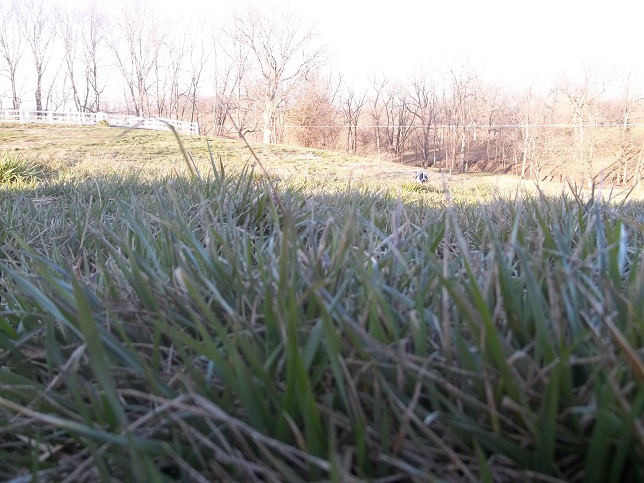
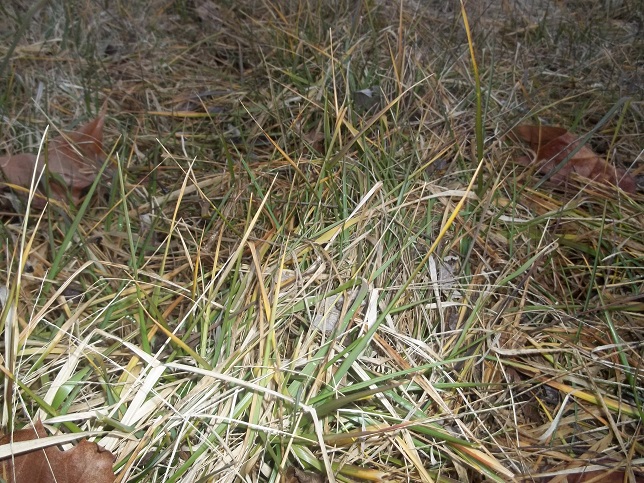
MayPasture1The fescue is tall but the other grasses have a lot of growing ahead of them before I can graze them again.

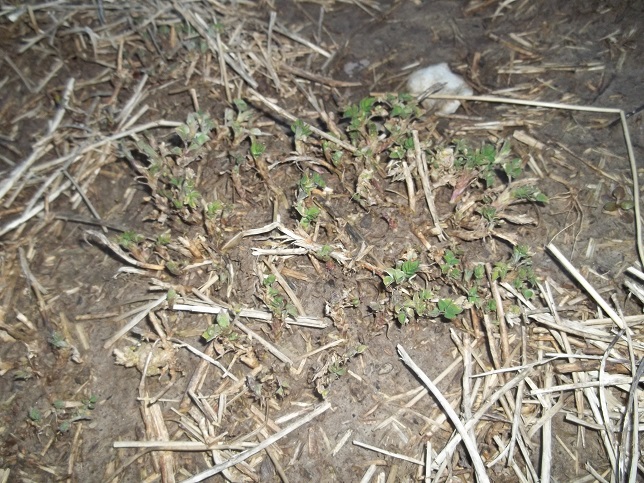
MayPasture3Maybe this is a better picture.  The cows ate whatever this was right down to the ground.  That’s my fault, not the cow’s fault.

MayPasture4We grazed across the remaining bottom ground South of the branch then crossed the branch and grazed it out.  You can see the line where we put electric fence 2-3′ inside of the perimeter fence.  I really didn’t want my cousin’s Angus bull to get any opportunity with my Shorthorns.

MayPasture5Also notice the abundance of honey locust trees.  I’ll be busy next winter.

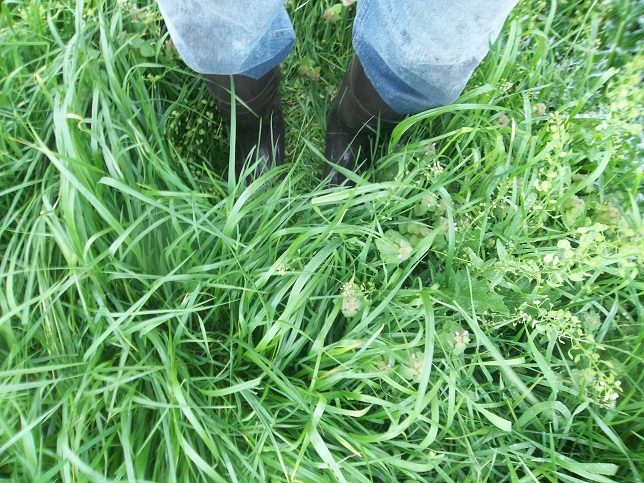
Cows grazed the best out of this, trampled quite a bit but we still didn’t have enough pressure on the land.  Too much fescue was left standing.  But there was a section in the middle that got missed in the grazing rotation.  The diversity of species there is amazing and shows where the above picture started.  A good stand of red clover and a mix of weeds including goldenrod, burdock and multi-flora rose but there was a total lack of chicory and dandelion.  Maybe because it’s wet, sandy bottom ground.  Who knows.

MayPasture6Notice none of the fescue heads were nibbled off.  Yup.  We messed up.  Oh well, we’ll trample it hard when we come through again in June.

MayPasture7The next area was grazed a little over two weeks ago.  Portions of it are recovering well, other portions are totally dominated by white clover and the recovery is slow.
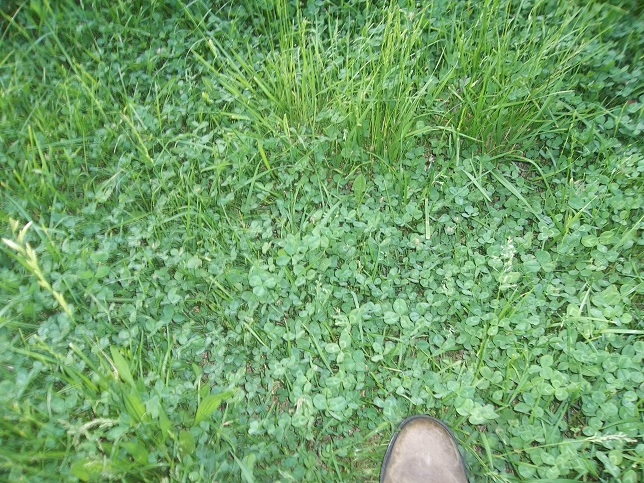
MayPasture8Back to the South the bottom ground is recovering well.  A fair portion of the growing green stuff is goldenrod but this has been a weedy mess for years.  Two years ago (maybe three?) the 6 of us spent an evening with a tractor pulling hundreds of saplings our of the bottom then I mowed it (I mowed because I didn’t have cows).  Now I’m hoping to continue improving the stand by way of cows.  Check in again in a couple of years to see.

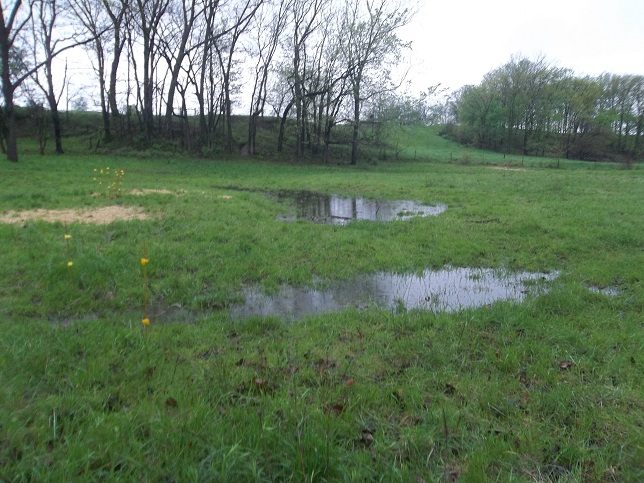
MayPasture9The stand is recovering well but there are a lot of hoof prints.  We got more than a foot of rain toward the end of April, several more inches at the beginning of May.  I would guess we have had 16-20″ of rain in the last 6 weeks.  Anyway, hoofprints…
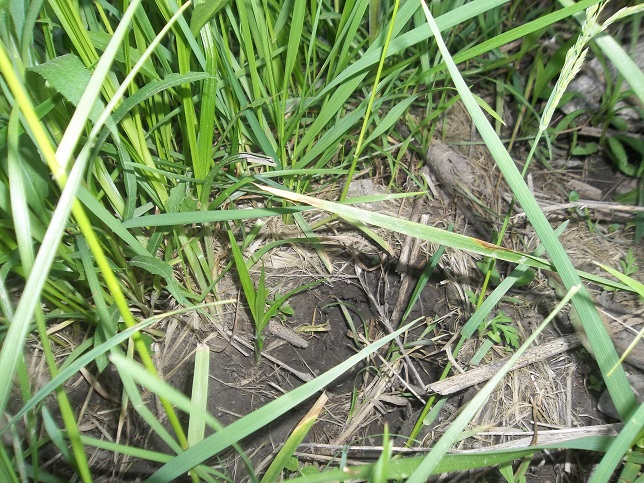
MayPasture10Follow this link to see the flood water standing in the bottom.  This is the same area (side view) today (…well, Sunday).

MayPasture11Up the hill, my fallen tree is getting lost in the grass.  I thought the grass was tall last time we grazed here.  I have never seen this much grass here before and am anxious to see what it looks like in another month when the cows return to it.

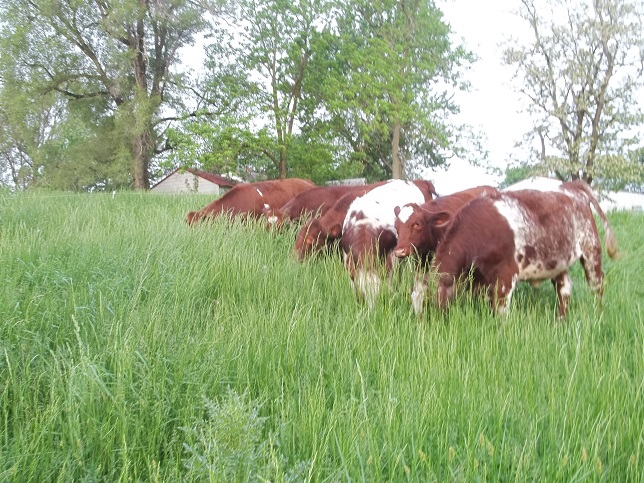
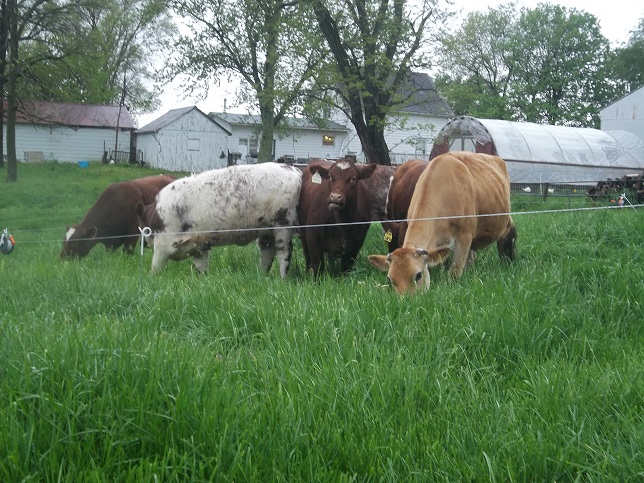
MayPasture12Now we have made the loop and we’re back to the cows.  They have nothing to say to me and are clearly unafraid.  None of them want to snuggle with me but the dairy cows are nearly pets.  The others know I’m the guy who can move the fence forward, I mean nothing else to them.  Look carefully at the picture and you can see the next division we’ll open up the next morning.  Two fences behind the cows.  We just roll those two cross fences backwards then push the water and the back fence forwards leaving 2-3 days of grazing area under the cows at any given time.

MayPasture15A little further South, looking South I can see the few acres I have set aside for drought.  By my measurements I am actively grazing less than 10 acres with 8 heifers and two calves.  I have 4 acres set aside as a reserve along with odd patches of hilly, wooded areas I don’t care to pasture heavily.  Add to that 3 or 4 acres of alfalfa (well, mostly alfalfa….well, mostly alfalfa and orchardgrass…well, mostly alfalfa and orchardgrass and a few bare spots where the chickens killed the plants standing in mud during days of heavy rainstorms) that we’ll use for hay.  I hope to graze this pretty hard starting in July and again in November or December.  The plan is to set aside a portion of the farm each year for stockpile.  This gives my main pastures additional recovery time just when they need it and builds standing forage for winter grazing.  I’m not exactly making this up as I go along but I am playing by ear.  Stay with me as I learn.  Anyway, straight ahead of the brush pile is an old bridge.  The stream flows from right to left under the bridge.  Everything across is set aside for July.
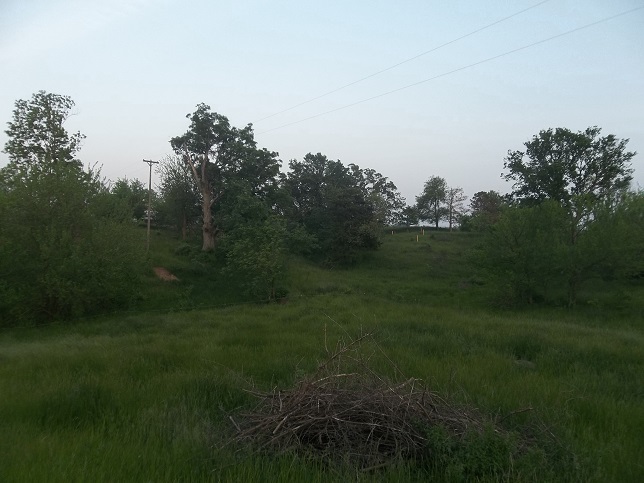
MayPasture16Now moving West we come to the place the pigs were in March.  It’s hard to hurt fescue…

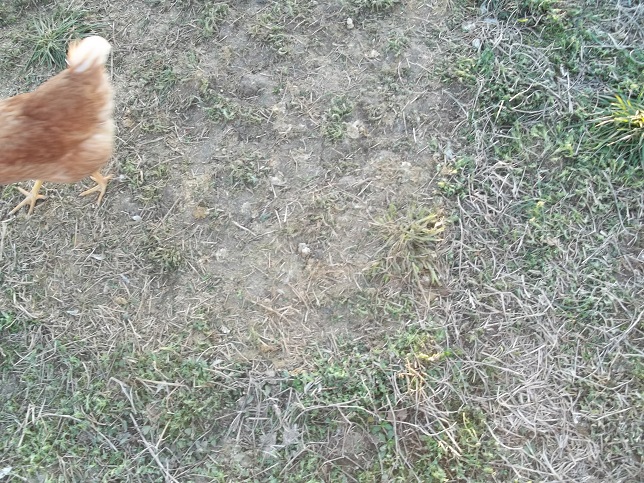
MayPasture13…but there are some spots where the pigs managed to set it back.  Those spots are dominated by chicory and dandelion.  I’ll need to work to get more clover growing here going forward.  There is always more to do.
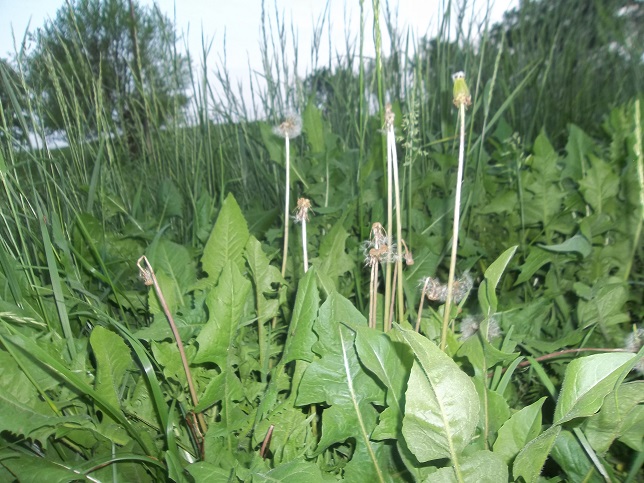
MayPasture14We’ll just have to wait and see what the cows eat here in a few weeks.  Hopefully it’s not too stale.  I may follow Gabe Brown’s advice and sew in cowpeas, sunflowers and millet as the cows stomp through, then winter annuals when they go through again in the fall.  Who knows.  Again, playing by ear here.

In spite of my best efforts to build big grazing areas early and cover the farm quickly I fell behind.  It all got away from me.  Now I’m slowing down a little, trampling more grass with narrow grazing strips and just hanging on.  The plan is to double our herd size next year as our farm triples in size.  Yeah, I know…but you have to work within your budget.

How is your grass growing?

4 Inches in 45 Minutes

4″ in less than an hour.  That’s a lot of rain.  The storm was not intense, it just rained a lot in a short amount of time.  The basement filled with water but that’s another story.

Flood1

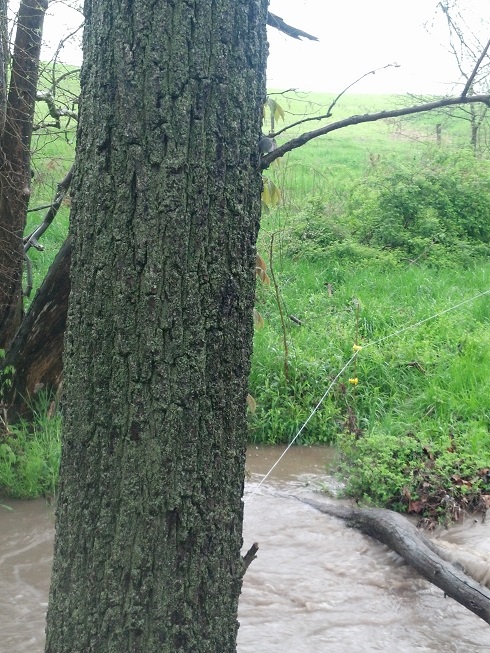
The stream was up 5′ above where it is now, which was about another 5′ in elevation from where the cows were pastured.  Looks like the whole bottom was a stream briefly.

Flood2All of our wide collection of driftwood was moved.  The barrier fences on both ends of the branch will need to be cleaned out and maintained.  But the good news is we’re covered in grass.  While the neighbor lost a lot of soil from cow paths and bare dirt, I suspect we trapped soil.  I especially like the protein tub pushed against the fence in the first picture.

Looks like the pasture wasn’t hurt, just the fences.  We’ll deal with what comes our way.

Morning Grazing May 2013

One day.  Just one day.  This is the first paddock of second grazing of the growing season.  We raced across the farm through late March, April and early May, now we are beginning to slow down.  I’m asking the cows to work through a somewhat narrow grazing area, trampling around 60% of the standing forage, eating 30% and leaving 10% standing.

GrazedGround

They seem just as happy as can be.  They mob up, as much as 6 cows can mob up, and march across whatever fresh ground I give them then lay down to chew their cud.

Heifers

Looking forward a bit, in about two weeks we’ll be here:

CrimsonClover

The cheat that is growing there will be absolutely unpalatable by then but the crimson clover out there should help.  They’ll just trample what they don’t eat but the cheat will stick to their socks.

Sooner or later the cows will be on the South slope of the hill.  That slope is hot, fairly steep and covered in cow paths.  In short, it doesn’t grow a lot of grass.  The hill is mostly clay and is hard packed.  We’re just praying for weeds to break up the clay.

SouthSlope

I have to make sure this has recovered as much as possible before we graze it, not for the sake of the cows but for the sake of future grass here.  I need healthy grass, deep roots and more microbes.  We’ll have to manage it carefully to clean up these spots.

BareGround

Will it work?  I have the cows I have, right cows or not.  I have to put the cows I have in the right place at the right time for the right length of time while allowing time for the rest of the farm to recover.  And while managing for pasture diversity.  No pressure.

I think we’re getting there.  In case I mess up I have about 4 acres in reserve.  Gotta have a backup plan.

What’s your backup plan?  How does your pasture look?

April Showers Bring May Showers

After last summer, I never thought I would wish it would stop raining.  We got a foot of rain in April.  We are off to a good start toward another foot 3 days into May.  It’s unbelievable.  An inch of rain by day.  Another inch by night.  The good news is we’re grass farmers.  Our crop is already in.  In fact we have harvested a second crop from most of the farm!  Chew on that!

MinorFlooding

We had been grazing the cows across the bottom on both sides of the creek.  They would need snorkels to graze down there now.  Fortunately we had some high ground well rested.  In fact, it’s perfect.  Lots of diversity.

WetKnees

And this is where we had pigs last October!  Pig manure is great!  It also helps to have pasture in reserve just in case.  This has been resting since we last grazed through in January.  Just think of the root systems!  Think of the grass those cows will trample into the soil!  Think of the water I’m holding now and how much more I’ll hold in the future!  And those girls will get fat!

TopOfHill

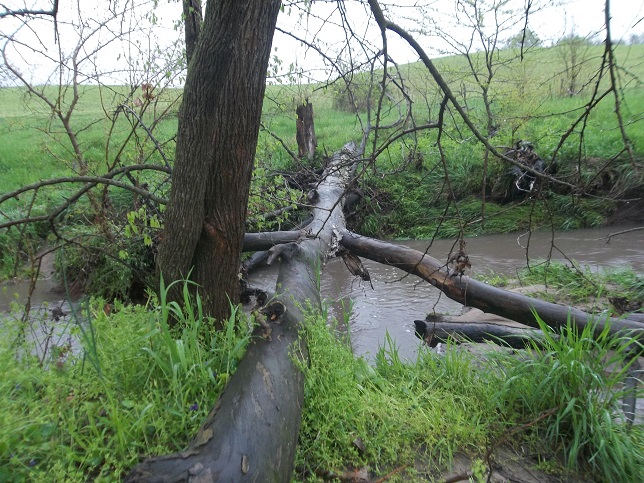
The creek attempted to claim our fencing but we got it untangled, recovered our posts and moved everything up hill.  I had to cross the creek on a fallen walnut tree but we got the job done.  The creek in the picture is down two feet from where it was last night.  The current flood emphasized the need for me to keep fallen branches cleaned up down there as they tangled up our fencing and clogged up the gate that keeps the cows in where the creek hits our property line.  I say creek but it’s not a creek.  It’s the branch.  I know.  City kid.

FallenWalnut

Regular readers know that farming is only one of many things we do.  We are so busy working and playing, it’s hard to find time to write.  Bear with us.

UPDATE:

My lovely bride took this picture at the peak of the flood yesterday.  Can you see the mouse?

Mouse

Doubled Our Footprint…er…Hoofprints

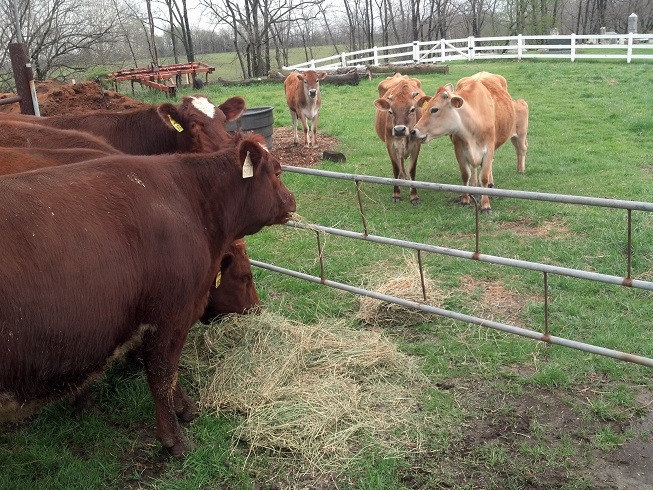
We doubled our hoofprints Wednesday.  We started with two Jersey heifers and their calves and added four Shorthorn heifers.  And it looks like we’re going to go ahead and pick up a couple more.  (Update two days later: now 6 shorthorns.) All registered.  All fat.  Each weighing more than any two of my little Jerseys combined.  Ugh.

These girls know how to eat.  Our Jerseys will look right past second cutting alfalfa.  The Shorthorns licked it right up.  It was pretty amazing.

Shorthorns1

Once they were full of hay we opened up a new strip of pasture and turned the girls out with the Jerseys.  I have to say, I was a little nervous.  Each of the heifers had a strongly negative experience with our electric fence before we turned them out and had been in electric fence previously but…still nervous.  So far so good.

Shorthorns2

Needless to say they went right to work eating everything in sight.  It was late afternoon before we put them out and their bellies were full of hay so I had little fear of bloat.  Everybody seemed to get along.  I only had to stop them from pacing the fence once.  Just me in a lawn chair with a camera.  They seem gentle.  Not pets but they don’t mind me being in the same zip code with them.  Big bellies, big butts, short legs.  They will mature a little on the heavy side for our ideal and they aren’t specifically bred for performance on fescue but…good looking cows.

So.  Now we’re hanging on for dear life.  Rolling through spring pasture.  Huge, heavy hoofprints pushing organic material deep into the pastures.  Pretty cool.  I need them to really abuse a section of pasture or two but I have to be careful not to stress them.  They’ve been on a hot feed in a feedlot for the past few months.  Grass-only is quite the change.  Further, we’re having trouble keeping May (the skinny Jersey) in condition.  She’s doing better right now but she’s not as much of an agressive eater as the other 7 cows.

Wish us luck and feel free to offer advice.

Grazing in the Rain

The cows are busy bulldozing the ground the pigs recently worked.  This is a south-facing slope.  The fescue has recovered to 10 or 12 inches and the cows really seem to like it.  We are grazing the fescue pretty hard right now hoping to knock it back and make room for better grasses and an array of clovers.  The cows are taking quite a bit of the grass.  Normally we try to graze the top third of the plant but right now we are letting them take more.  Some of that is our ability to read the pasture, some of it is experience, some of it is intentional.  Early spring weather and fescue are both forgiving.  I am surprised how much fescue the cows are eating.  I am also surprised how much kelp they are eating.  I suppose they are using the kelp for a source of magnesium and the fescue toxicity is low in the cool weather.

Grass

The cows are hard at work but really prefer to graze in the later hours of the day.  We still feed hay in the morning and Julie is milking once/day every other day, letting the calves take the rest.  The ground is soft from pigs and rain and there is a hoof print at least every square foot and a manure pat every square yard.  I have high hopes for this slope as it recovers.  The cows get a series of 20×20 areas throughout the day, anything they grazed 4 days ago gets fenced out.  They have room to move around, find a place to lay down and always fresh grazing.  The 4-day old grazing needs to be protected as it is beginning to recover.

PastureThe cows are regaining condition quickly.  They had about 3 weeks on the eastern face of this hill ending with the top of the hill.  That was largely a stand of henbit, chickweed, fodder oats, fescue and a mix of clovers.  That hill will now rest for at least 45 days before the cows see it again.  Later in the summer it will be more like a 90 day rest period.  I look forward to grazing this again in June…before it gets too hot as there is little shade on the slope.

CowsGood night cows.  We have nearly 3″ of rain in the forecast for the next 30 hours.  I’ll do my best to keep your hooves on fresh ground and your bellies full.

After this hill we’ll take the cows back over West of the cemetery and work our way to the West.  Hopefully when we get there they will be joined by some new friends.  More on that another time.

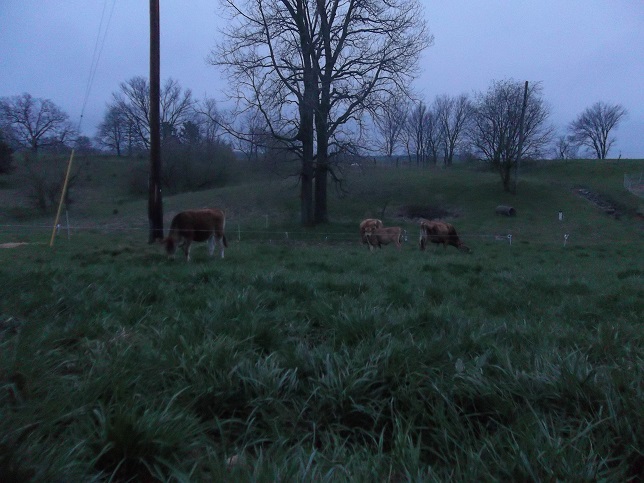
Sorry the pictures are dark.  I had to take pictures after chores were finished…after I got off work.  Lots to do getting ready for the next round of monsoon.

Strolling Through the Pasture April 2013

The pictures in this post are about a week old and are already out of date.  This week we have highs in the 70’s and good chances for rain each evening.  You can almost watch the grass grow right now.

I am grazing my cows on remaining stockpile.  Mostly though, I’m packing them into a small area and feeding them hay.  I’m pushing carbon into the soil mostly on countour to the hill slope.  Will it work?  Well…it should.  We’ll see.  Maybe you’ll see the difference in the pasture over the next few years.

Normally I start taking pictures as I leave the house.  I’ll start todays’ walk by the horse barn instead.  Last month I took a picture of a down locust tree in a sea of fescue nubbins.  We burned the tree then overseeded with clover, orchardgrass, timothy and two kinds of rye grass and here’s what it looks like now (though the camera is pointed more to the right).

AprilPasture1

The horses ate it down to the nubbins but it’s coming back well and it’s coming back with additional diversity.  The real miracle here was that the horses showed me around 20 or so honey locust saplings.  BTW, the picture above is almost the same shot as the one in this picture.  I’ve cut a lot of hedge in the last year.  There is a lot more to cut…and this is just one of my hedge forests.  Many of the stumps are sprouting so I’ll have an ongoing supply of thorns and firewood in 5-10 years.  Also, a pair of rabbits are living in the brush pile we built last year, though I only see them when I am out walking at night.

AprilPasture2

The plan is to allow this to sit idle until July or so.  Once the drought hits I’ll have a stockpile of grass for the cows to tromp and eat through.  There are about 2 acres here.  With luck, that will be just the bridge I need to allow my main pastures to recover fully.  Then we’ll graze this again over the winter.  Next year we’ll allow a different patch of land to go.  This builds up carbon over time, allows ground-nesting birds to have a home and helps us keep our cows fat.

AprilPasture3The top of the hill was also grazed by the horses but not as intensively.  It’s still a thick mass of fescue but was well pounded by running, playing horses and heavily manured.  Good enough.

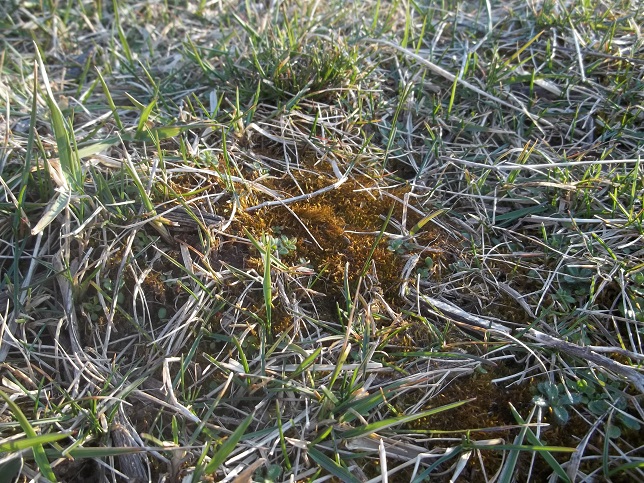
AprilPasture4But there are still clumps of moss growing on the North face of the hill.  Where there is moss there is not grass.  Where there are hooves there is no moss.  I need more hooves…more pressure…to allow the grass to compete.

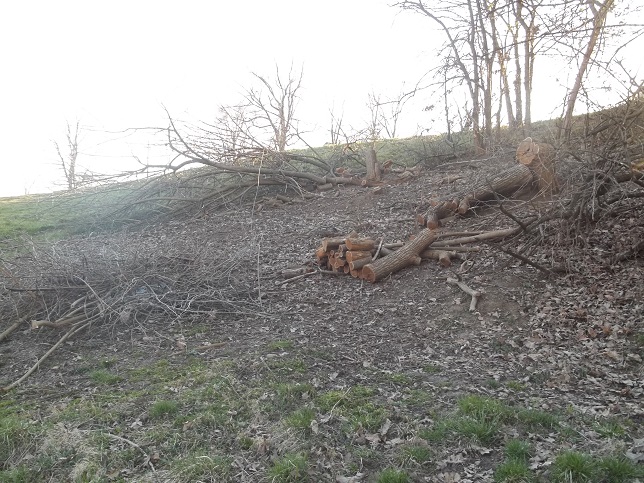
AprilPasture5On the topic of hedge, below the cemetery I cut out a single hedge tree that fell over and continued growing.  One tree, laying on its side, killing grass over a 40′ circle.  This tree was the source of the pile of wood featured in a recent Facebook post.  There is still an equal amount of wood waiting for me to cut now.  I have opened up more area for grazing and rid myself of a sick tree but cost myself small game habitat.  That’s why I build brush piles.  Quail and rabbits need shelter.  If I won’t allow dead and dying trees to create that shelter naturally I have to do it myself.  I also can’t continue cutting out undesirable trees without replacing them with something else or planning for their regrowth .  More on that in a future post.

AprilPasture6

The cows grazed their way through the bottom in January.  There wasn’t much out there for them to eat as it was a serious weed patch, as was most of the pasture before we began.  We spent an afternoon pulling sprouts out with a tractor last winter.  This year it was just graze and let it grow.  It’s growing.  But I’ll need some pressure to keep the weeds at bay and give the grasses a competitive advantage.  To be honest, I’m a little worried.  Goldenrod, ragweed and burrdock are clearly dominant down here.  I don’t want it to look like this:

AprilPasture7There’s a little wedge of pasture West of our house by the road.  When you come to our farm, this is what you see.  Looks great, doesn’t it?  I need to get a tractor in there to pull out the snags and rip out the sprouts but the whole thing is a thorny mess.  Just like the bottom used to be.  It’s an awful lot like work.  I try to let the cows do as much of it as I can.

AprilPasture8The pigs are in their final pasture position before shipping on Tuesday.  You can see the kind of disturbance they create.  That’s what we hire them to do.  Right now I’m not grinding their feed.  Among other things, they get cracked corn, roasted soybeans and whole oats.  The oats are still whole when they come back out.  In a few weeks I’ll have a rich, strong stand of oats on my slope for the cows to graze through…thanks to the pigs plowing, manuring and seeding.

AprilPasture9The layer flock is in the same fence with the broilers on the alfalfa field.  You can see an outline in the picture above showing where the chicken tractor had been moments before.  The layers rush in to scratch through the manure and to gobble up any feed the broilers wasted.  Both this and the neighbor’s alfalfa fields look purple right now from all the henbit blooms (and buzzing with bees).  The hens bit the henbit here.  None of it is left within the fenced area.  The alfalfa is nibbled back but recovers quickly.  Doing this may be risky in terms of the lifetime of the alfalfa stand but we not only get 4 cuttings of alfalfa here, we also get 500 chickens per acre and …I don’t even know how many dozen eggs, not to mention the fertility the birds put back into the soil.  Am I hurting my alfalfa stand?  I really don’t think so.

AprilPasture10Back to the cows.  Molly is chewing here cud in the sunlight.  Life is good.  You can see the distant hillside still recovering from the pigs who were there until October or November.  I see this less as a problem and more as a matter of time.  There is manure, carbon, seeds and living plant roots out there.  With help from cow hooves I’m sure the scars will heal quickly.  I present the grass in the foreground as evidence.  Those same pigs were there in August.  The cows aren’t scheduled to return to the cemetery hill until late May or even June.

AprilPasture11Mostly fescue but it’s growing.  There is a fair amount of clover mixed in as well.  We’ll get there.

Strolling Through the Pasture March 2013

These pictures were taken on March 11th though I was delayed in posting them.  These pictures were taken early in the evening the day after a heavy rain storm.

MarchPasture1A sea of oxidizing fescue.  I mowed a small portion of this hill in December for sledding.  I wish I hadn’t.  The cows grazed the hill to the left in November and again in February.  They won’t see it again till May.

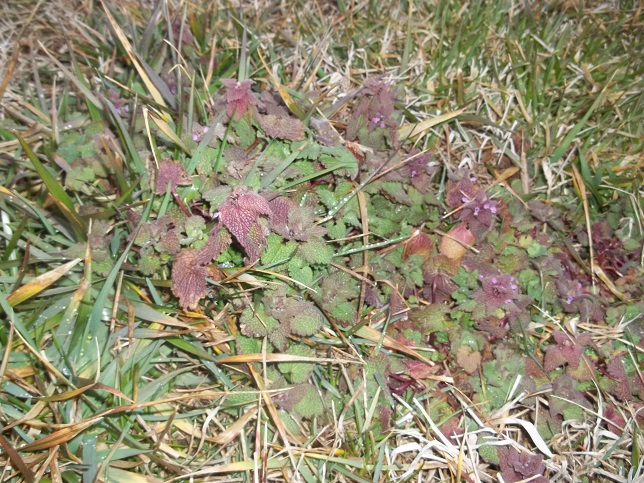
MarchPasture2There are a few clumps of henbit emerging on the hillside.  The grasses the cows prefer are starting to sprout away from the clumps of fescue.  Not much else happening.

MarchPasture3This is the primary sledding hill by the cemetery.  The grass was pretty thin when we left the drought last Fall.  Pigweed stood in tall masses at the top of the hill, honey locust sprouts dotted the slope.  It was pretty nasty.  Hopefully we’ll use the cows correctly to push succession forward.

MarchPasture48-10″ tall fescue.  The cows aren’t interested.

MarchPasture5I invited dad’s horses to graze about 1/4th of an acre down to the nubbins.  This area is always a thick carpet of fescue.  The horses carpeted it with manure and pounded it with hooves.  It was awesome!  When they got to the bottom I could see a the bones of a honey locust I cut down a few years ago.  The tree (and most of its thorns) are now burned up and I have seeded the area with clovers and a variety of grasses.  Wait till you see the recovery picture!

MarchPasture7Nearer to the house the pigs have really made a mess of the pasture.  3 pigs above 250 pounds have to be moved frequently.  I want disturbance not destruction.  Where they dig I kick the clods back into place and overseed with grasses and clovers.  Please notice the pigs are clean and dry.  Trust me when I say they are happy.  They have room to run, work to do, fresh air to breathe, they can see the sun where most pigs are bored, confined, smelly and indoors.  The pasture will heal quickly.  The pork will be delicious.

MarchPasture6The alfalfa was just starting to emerge.  I do some crazy stuff…some of it out of ignorance, some of it because I just don’t have the time to get everything done.  I continued to move my layer flock across the dormant alfalfa field all winter.  If that damaged the alfalfa I can’t see it.  The emerging plant population does not appear to be diminished.  That said, I don’t care for the empty spaces between the alfalfa plants.  Nature will fill those spaces, probably with fescue.  I think I should beat her to the punch.

I’ll post my April stroll soon and will try to show the recovery that follows the pigs.

Southern Indiana Grazing Conference Notes

Last week (Wednesday) I drove across Illinois and into my father’s home state of Indiana to attend the Southern Indiana Grazing Conference.  My oldest (eldest?) son and I left home at 4:00 in the morning and arrived at 9:30 Indiana time.  We were late.  I missed the first speaker.

For my more casual readers, this is going to be a boring post.  No pictures, just farm geek soil management detail.  Rather than bore the reader with the entirety of the notes I took let me introduce the speakers I saw and offer a summary of their main points.

My friend Darby said the first speaker talked about moving commodity beef through an operation.  Low profit, volume sales.  Buy them young, castrate them early and sell them when you can make a profit.

The next speaker was David Hall of Ozark Hills Genetics.  David Hall was worth the trip all by himself.  I was late for the first portion of his talk but his second portion discussed selecting for cattle that perform well on fescue as fescue is the dominant grass in the region and it naturally defends itself from overgrazing.  From The Fescue Endophyte Story:

Studies with animals consuming endophyte-infected fescue have shown the following responses in comparison to animals grazing non-infected fescue: (1) lower feed intake; (2) lower weight gains; (3) lower milk production; (4) higher respiration rates; (5) higher body temperatures; (6) rough hair coats; (7) more time spent in water; (8) more time spent in the shade; (9) less time spent grazing; (10) excessive salvation; (11) reduced blood serum prolactin levels; and (12) reduced reproductive performance. Some or all of these responses have been observed in numerous studies in dairy cattle, beef cattle, and sheep consuming endophyte-infected pasture, green chop, hay and/or seed.

Hall reinforced the lessons I gleaned from various books on selection traits for building a herd.  In short, select cows that breed back within a defined window.  You may leave the bull in for more than 45 days to see that all cows are bred but sell cows that don’t calve in the first 45 days of your breeding window.  Those cows that breed back early and often are able to perform on fescue.  He also had a slide suggesting that cows don’t show a profit until the 3rd or 4th calf.  Optimal economic return is in years 8-11 for commercial cow/calf operations.  Finally, he suggested you keep heifer calves that wean a little light.  Calves in the 450-500 pound range tend to be long-lasting cows.  Calves that wean above that have trouble breeding back, according to his records.

Someone in the audience asked, “Why don’t you just rip out the fescue and plant more palatable annual grasses?”  He responded saying his neighbors (primary customer base) have fescue.  If he is selecting for high performance on a poor forage base he’ll be providing bulls that perform well anywhere.

The next speaker was Jay Fuhrer on Integrating Livestock to Work Within Your System.  In short, he was rotating livestock into crop ground to build soil.  He offered lists of cover crops they use in North Dakota to provide a winter forage base for the cattle.  They keep the cows on pasture during 48″ snowfalls (since the snow mostly blows into big drifts).  A few cows bulldoze through snow to find feed, others come behind and eat what was uncovered.  Most of their water is sourced from the snow but once or twice each week the cows walk a mile to the barn for water.  Amazing.  Beyond the normal turnip, radish and pea crops he adds sunflower.  More on cover crops in the next presentation.

Because they suggest a large diversity of cover crops, the ranch he works with frequently, Black Leg Ranch, has a variety of income sources including hunting and agrotourism.  The ranch owners apparently had many children interested in coming back home.  Mom and dad told the kids to figure out how to run their own enterprise on farm.  Jay had a slide of all the things they are doing to generate income together.  Pretty cool.  The bullet point I found most interesting was custom grazing 2,000 yearling calves stocked at 12 head/acre, moving every 2-3 days.  That’s covering some ground.

Jay was followed by Gabe Brown.  Gabe was also from North Dakota and focused on annual cover crop production.  I’m sorry to say I have few notes of Gabe’s presentation.  I was too fascinated by his operation to stop and write things down.  What I remember was his efforts to escape chemical agriculture, no-till crops in and maintain companion plantings in wide variety to keep soil covered with biomass…always leaving 3-5″ of covering material on the soil.  He showed slides of long lists of seeds he puts into his drill and simply says to set the drill to feed the largest seed and let ‘er rip, being sure to include flowering plants to attract beneficial insects.  His grazing operation was pretty slick, complete with photos of Batt-Latch in action.  Again, he was focused on plant diversity, soil biology and constant cover of the soil.

At this point we were pretty tired.  Early morning, long drive, lots of carbs at lunch…tired.  But Walt Davis took the stage and he was the main reason we came.  He drove home the importance of ranching for profit instead of for production and do so by leveraging your biological capital.  Provide unlimited forage.  Provide a mix of forages (cows can eat enough alfalfa but when mixed with other species they will tend to eat more).  Handle animals so as to prevent stress (stress lessens gains).  Don’t graze based on a calendar, graze based on recovery.  Watch your animals.  They should spend as much time ruminating as grazing.  Check their manure to see if they are getting the right quality for their age and use animals of lower nutritional requirements to condition pasture for high-demand animals.

That leaves us with the final speaker, Ed Ballard, on extending the grazing season.  Ed is a numbers man.  Numbers after 3 in a dark room when I’m tired are a difficult subject.  He presented charts showing the benefits of allowing the animals to graze their own feed as opposed to making feed for them.  He was suggesting it costs $2.50-$4.00 per day to feed hay to cows as opposed to $0.25 to $0.35 cents per day of grazing.  Even if you can’t graze, you are better off buying in hay (purchased in summer) instead of making your own hay as making hay is expensive.  Ed just point blank stated that if you’re not frost-seeding clover in your pastures right now you’re making a mistake.

All of the speakers added to my overall cattle management education.  Ed gave me immediately actionable items.  I need to seed clover.  I need to stockpile forage.

Fence v. Winter Storm

What a mess.  What a total mess.  Cows out of their designated grazing area!  Fence isn’t shocking!  Nothing works and it’s near absolute zero after factoring the wind chill!  Thursday we had a winter storm blow through.  It began with a thunderstorm and 30 mph winds and sideways rain.  Lots of rain.  When I got in my car at 6:30 am to drive to work it was 54 degrees outside.  When I got to work at 8 it was 34 degrees outside and the wind had picked up to 50 mph.  Then it started snowing.  When I drove home in the late afternoon I followed a semi pulling a trailer.  The trailer was being blown by the wind and wagged behind the truck like a dog’s tail.

We didn’t bother bringing the cows in.  They know where the barn is.  They had been in the barn recently but they know better than I do where they are most comfortable during a storm.  They found a sheltered place down in a valley and hunkered down for the night.  We put a few obstacles out by the layers to give them some relief from the wind and noticed several chicken tractor lids had taken flight and nearly landed in the pond.  Goats were warm, pigs got a whole new bale of straw, ducks were just ducky so we told the kids to sleep downstairs by the wood stove, built up a big fire and went to bed early…praying that the power would stay on all night but ready if it did not.

The power stayed on but the cows got out just the same.  At milking time we brought the cows up to the barn to milk.  They were feeling ornery and walked the long way around.  Cows!  Once up, it was time to start looking at the fence.  The charger was ticking but not lighting up.  It was shorting out somewhere.  That’s the worst.

The place to start is to turn off half of the fence.  Part of my fence is pretty OK.  The other part is…well…servicable.  All of it is legacy fence, built by grandpa’s hired men or cousins of mine over the last 40 or 50 years.  I trust the newer part…mostly.  So I cut the switch.

FenceBlues6

As expected, this made no difference to the fencer so I knew which way to begin the long march around the combine shed, through the iron pile and back around the house.  Then I found it.

FenceBlues1

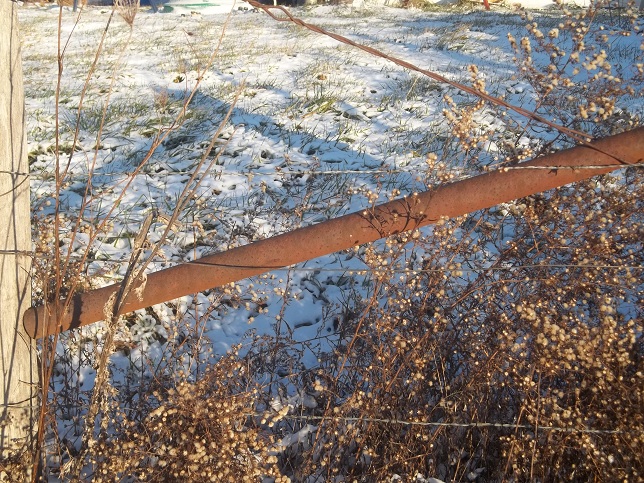
The fence was touching an iron corner brace.  This is one of the wonders of fences built by hired help.  Oh well.  New fences are in the works anyway.  I separated the wire from the pipe and continued my inspection.

FenceBlues2

Not too much fence to walk between break points.  Then I had to walk the strands of fence we use for the cows current pasture, checking at each rebar post to make sure the wire wasn’t touching a post.

Rebar Posts

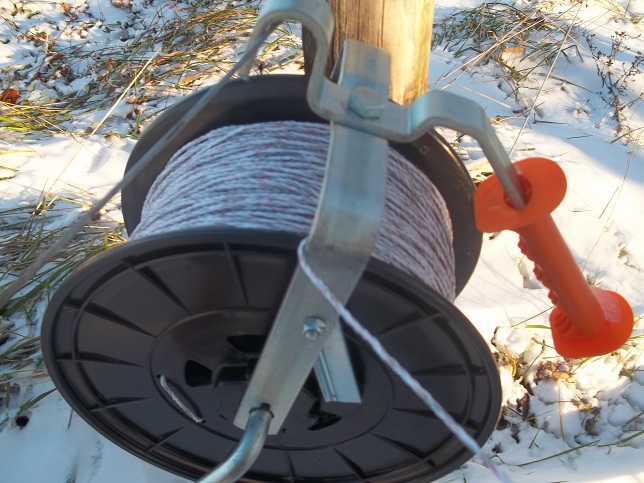
There were a few problems to work out along the fence until the end.  At the end, the spools were supported by another rebar post but the wind, rain and gravity had knocked that post over.  I cheated by hanging the spools off of the perimeter fence.

FenceBlues4

Well, that’s what it looked like later.  I didn’t realize I created a new short on my own.  Nothing worse than fixing one short and creating another.  Had to walk back out to fix it.  That’s what I get for taking a shortcut early in the morning in the cold wind.

FenceBlues5

Back up to the fence charger and it was at full charge.

FenceBlues7

Now, I don’t want to pretend it was all work and I don’t want to say I was all alone out there.  I had help.  But what is the fun of having your own cemetery hill if you can’t sled on it?

Sledding2

So I made a few trips down myself.  The railed sled has carried me downhill for 30 years that I remember.  Dad would carry it up the hills because I just wasn’t strong enough when I was little.  That sucker gets heavy after a few trips.  Now I carry it up the hill for my kids.  Good times.

Sledding1

The storm made a lot of work for us today but it also gave us a chance to play before breakfast.  Hope the storm gave you something fun too.