16 years later…

I met my wife in 1993, I was 16 at the time. I was a senior, starting out at a new high school.  As I walked up the stairs to register for classes a cute blonde girl walked past me on her way out.  I had to say something…couldn’t let her just walk past me!  “Uh…is this the way to the office?”  Quite the line, eh?  Man she was so hot!  That will be 20 years ago in August.

Today is our 16th wedding anniversary.  What do I know about her that I didn’t know 16 years ago?  Or 20 years ago?  In a sense we grew up together. It has been a wild ride so far; college, the first house, children, career changes, farm…exciting stuff!  Through it all we have stood together and kneeled together and, sometimes, cowered together in fear.  What will I know about her in another 16 years?  In another year?

For me it’s a journey and not a life sentence.  I hope she feels the same.  I love you, Julie.

Goldenrod Down

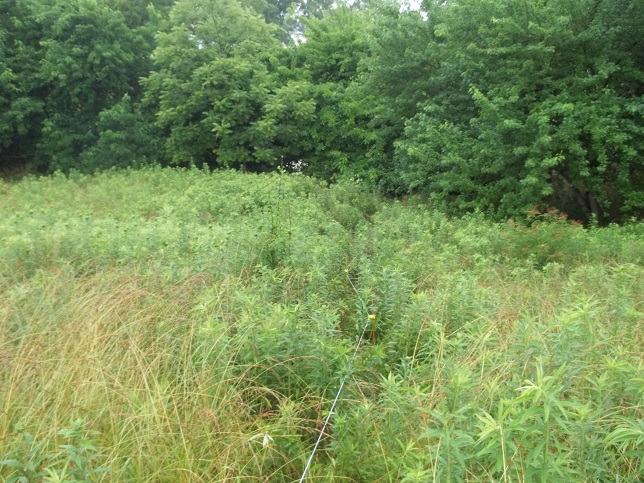
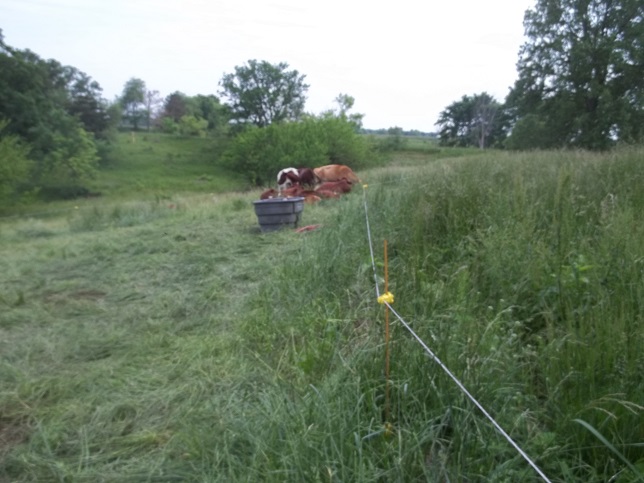
Yesterday we parked the cows under a hedge tree in a dense, tall stand of goldenrod.  The cows were allowed to the right of the fence (the white line).

JulyGrazing3

Panning a bit to the right, looking at the same place it looks like this now, 14 hours later.

TheDayAfterAs you get closer to the fence there is less trampling.  Makes sense.  The cows are well-trained because the fence is consistently hot.  But huge amounts of green material has been pushed into the soil.  My bees may miss the goldenrod (which makes a lousy honey by the way) in the fall but this is a great first step toward making my pastures better.  We’ll rinse and repeat over the coming years, ultimately getting ahead of the weeds.  The cows also showed me two honey locust trees I didn’t know about.  Hafta fix that.

The cows are up the hill now.  Still full from last night but every one of them has their head down, unless they are eating leaves from a tree.

EarlyMorningMove

Grazing According to Plan…and Recovery…and Faith…but Mostly Plan.

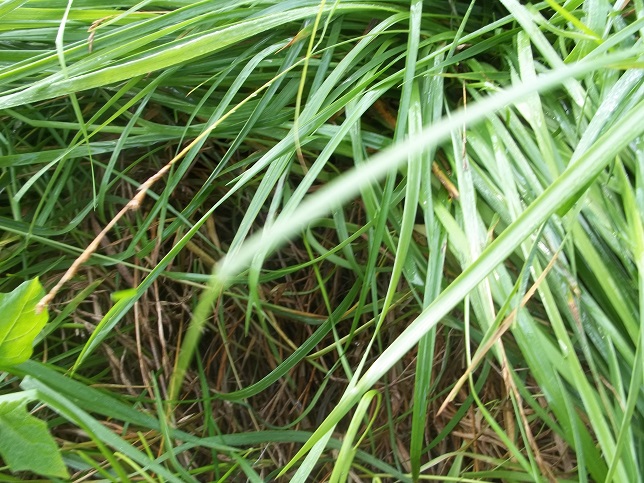
It’s summer.  It’s time to stretch pasture.  If this year follows the normal pattern, it’s about to get hot and dry, though it’s cool and rainy this week.  I am banking on the grazing we did all spring (two complete rotations) to have left enough carbon,  fertility and residual grass to carry the grazing through summer drought and into a stage of strong recovery for fall and winter grazing.  I took this picture 34 days ago:

Trample

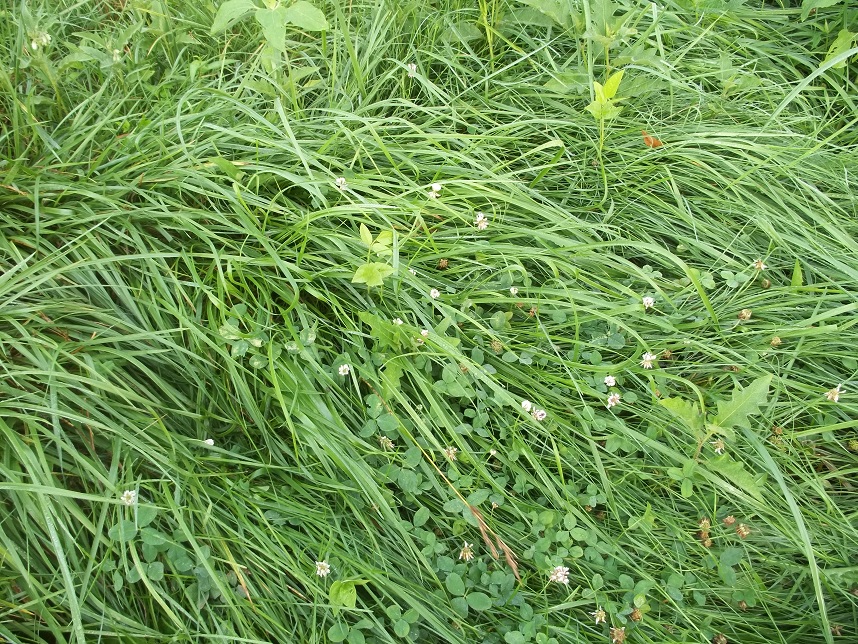
Here is that same spot today.

JulyGrazing1

Recovery happens.  Look at that tangled, matted mess of grass, clover, thistle…probably 50 different plants all within arm’s reach.  (It’s probably laying down because I need more calcium).  I have inches of mulch from stepped on tall fescue matted on the ground all over my farm.  From that I have a diverse, thick stand of forage that’s hard to walk through.  That’s the goal.  Increased forage diversity and density.  If we accomplish that goal we can carry more cattle.  The slope South of the house was a thick tangled mat of leafy fescue this spring, the result of hog manure last winter.  Much of the farm looks like that now except it’s not pure fescue.  It’s amazingly diverse, dark green and leafy.  The frequent rains and cool weather are only helping the cool-season grasses too.

JulyGrazing5

Now, I don’t think 40 days is enough because just beyond the reach of view the recovery is much less.  Then it looks better.  Then worse.  We covered 8 acres in 34 days.  I have to slow things down now that the grass is slowing down.  I have a few acres of reserve we have planned as July grazing.  That should give us the extra time we need to achieve recovery while allowing room for wildlife diversity on the farm and plant species diversity.  Also, if I had tried to graze those few extra acres in the spring I would have been further behind on my primary grazing areas.  The best option was to just let it go but to be successful this requires coordination, planning, preparation and a fair amount of guess work.  For example, we were here on June 11th.

MorningCows

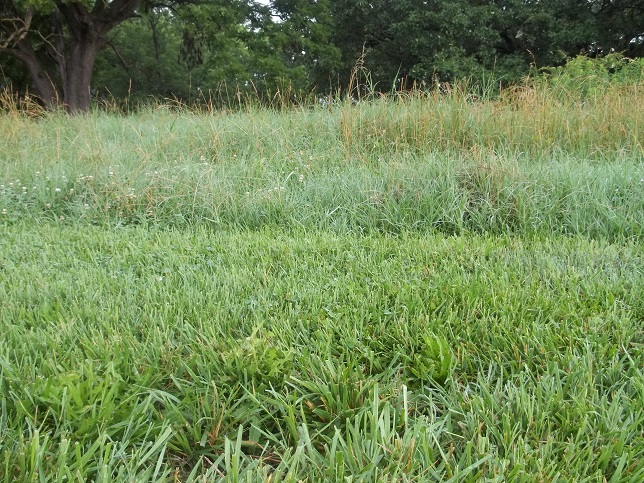
Today it looks like this (from a slightly different angle, sans moos):

JulyGrazing6

All that grass was tromped turned into a sponge and food source for the soil.  The dense mat of dead grass holds moisture as it decays feeding the growing grass.  You can see the mix of new and old grass in the background compared to the mowing line that is the path to the family cemetery.  One might think it’s time to graze it again but I think that would be a mistake.  The grass is tall but the forage hasn’t recovered.  You’re seeing tall wild oats, some fescue and quite a bit of clover but the remaining forbs really haven’t recovered yet.  I could graze it now but I’ll get more bang for my buck if I just hang on a bit longer.  More root growth, more plant diversity, more volume of grass.  I just have to wait.  Besides, drought may start tomorrow and that standing grass is money in the bank.  But let’s say I’m wrong.  (It’s OK.  I get told I’m wrong a lot.  No, a lot lot.  (As if I’m not insecure enough.))  The grass will go to seed, the cows will mat it down and my next recovery will be even stronger and more drought resistant.

It was with these thoughts that I spent some time walking the pasture with my wife last night.  We looked at forage recovery, quality and density and, also, at our cows.  This is the first year I have managed grazing cattle, it’s the first year the pastures have been allowed to rest, it’s the first time these cows have had to graze for a living…lots of firsts.  I have two that are slick and fat, two that are slightly less slick and have less belly (one with ringworm), and two that are carrying good weight but also carrying lots of hair (both are mostly white).  Greg Judy would cull the last four.  I explained to my wife that those four heifers are probably just here to eat grass with the hope of throwing bull calves.  I plan to breed them to a more fescue-tolerant bull but the future herd will probably come from the two slick cows and any others I can find like them.

Then we spent some time talking about the importance of focusing on the forage, not on the cows.  The cows are the result of grazing management.  The cows are the tools we use to manage our forage.  But the grass is the goal…well, the soil but grass is the obvious result of soil health.

JulyGrazing2

I have 3 acres set (maybe 4) set aside that we haven’t touched yet this year.  I have 4-5′ tall weeds out there.  Starting this week the cows are expected to knock most of it to the ground and eat what they can.  We’ll move pretty quick through there in narrow strips.  This is a remodel job.  Should be exciting!  That part of the pasture has always been a nasty, weedy mess.  Now we’re going to remodel before those weeds go to seed.  Then we’ll let it rest until we graze in the fall again then sled on it in the winter.

JulyGrazing3

The rested ground is kind of a weird thing but Greg Judy mentioned it in a video, I had the acreage to spare and though we would give it a try.  I hope there is something they will eat out there.  We’ll see.  I think it will work well from a carbon perspective if the cows can find something to eat.

Numbering the Days of Hay

3 days of work.  15 days of fear.  3 months of worry.  9 months of hoping we have enough stored up.  18 months of hay available at any given time…drought could strike any day now.  Each dry cow needs 25-30 pounds of hay each day to maintain weight in the winter.  Each bale weighs 40-50 pounds.  If I have 10 cows and feed for 120 days (Jan 1 – April 1) I need at least 600 bales to see me through…if they don’t waste any hay.  These are the hay numbers…and I want to believe our days of numbering hay are numbered.

In my last post I talked about how proud I am of my son.  At age 12 he’s eager and able to work.  It’s not just that he has a desire to please me, he sees the value of what we are doing and recognizes that I’m just not healthy enough to put up hay.  And, yes, I equate bad allergies to poor health.  That’s a topic for another day.

My son knocked it out of the park.  I may start referring to him as “Buck”.  He’s 12.  Nearly 6′ tall.  Lifts bales with apparent ease.  How did I get such a son?  With a son like that my allergies are not a factor. Why wouldn’t I want to put up hay (even if he has to re-stack the wagon while I’m eating mulberries)?

HayRestack

Because I am not rich.  Like you, I need the maximum return on my investment.  Like everyone else, I need to make the best use I can of my time.  For example, if I wanted to replace the after-tax income from my day job I would need around 8,000 laying hens.  Then I could spend my whole day washing eggs, grinding feed, moving fence, shooting predators and praying…PRAYING that I’m able to sell all 400 dozen eggs I’m going to collect that day with a minimum of deliveries all to places that buy by the case (so I can re-use the cases to save money).  Let’s compare that to my current job.

I began my day today by making sure my SQL agent jobs were all successful.  Then I verified the status of my weekend backups.  After that I ran a report on the progress of a long-running data migration.  A new employee showed up and we showed him around.  Then I ate a bagel.  Then I took a quick break to deliver eggs to co-workers.  Then there was an ongoing issue with SharePoint backups (you know how those can be) trying to tame our growing transaction logs…an ongoing maintenance issue.  I spent the rest of the morning and a large portion of the afternoon writing the outline for a series of classes I intend to teach on indexing; clustered vs. non-clustered indexes, filtered indexes, indexed views (did you know the first index on a view has to be clustered?  That fact really wows the crowds!).  Finally, toward the end of the day, I needed to truncate and repopulate a set of tables for end-of-month reporting.  An exciting day!  I mean, did you truncate tables today?  I did.

I have a head full of very specific training – so much so I have a hard time breaking down what I do for a living without resorting to jargon.  How can I tell my kids what I do?  “Well, guys, I’m a database administrator.  I make sure electronic file cabinets are sorted.”  Meaningless.  It would be so much easier to tell them I’m a chicken farmer but my skill set solves several problems for our family, even if they don’t understand what I do.  First, it solves my allergy issue.  I can sit in the air conditioning all day resting my body, working my mind…even if I have to rely on farm work to retain my sanity.  Second, it really helps with the whole money issue…you know…eating food, paying for the farm, buying my wife pretty dresses.  Finally, it saves us from having to sell 400 dozen eggs every day.

All of that to say, at this point, it’s not a good decision from a financial, nor from a health perspective for me to ride or even drive the hay wagon.   Heck, just the labor expense of maintaining and running the equipment may force my hand on this issue.  I would be better off to buy in my hay instead of maintaining a tractor, baler, rake, mower and wagons just for that one purpose (26 tires on all that equipment!).  Instead of that, I should manage my fescue stockpile to minimize my own need for hay and, instead, deploy that capital toward appreciating assets.  Again, not putting up hay means I’m dedicating more time to selling things my farm produces, not producing something my farm consumes, feeding it in a feedlot and hauling manure later (more time).

Gabe Brown keeps cattle in North Dakota.  When I heard him speak he talked about planting cover crops to use as winter forage.  48″ snows were not a problem for him.  Low temperatures were not a problem.  The cattle walked a mile or more every other day to get water.  No problem.  He just kept moving the fence a little at a time to give them access to more of the stockpile.

Jim Gerrish wrote a whole book on the topic.  In Kick the Hay Habit Gerrish details how expensive hay is, how much better off the cows are if you let them harvest their own feed and how practical it is for almost all of North America.  He guesses that farmers continue to put up hay because it’s “just what you are supposed to do”…and because they like to…even if it is not in the best interest of their wallet.

Greg Judy suggests keeping 30 days of hay purchased in case of an ice storm that the cows can’t graze through.  Julius Ruechel, Gordon Hazard, Cody Holmes…I could keep listing authors/ranchers who agree.  OK, maybe not Joel Salatin.  Or even my friend Matron of Husbandry.

I’m not presenting a case against hay.  I’m presenting a case for why I believe our days of baling hay are numbered.  For now, though, we have fully-depreciated, functional equipment, we enjoy haying (allergies aside) and it’s just what you are supposed to do.  So we’ll probably keep it up for a while.  Long enough to build strength and character in my sons anyway.

Raising My Replacement

Hard to say why but it’s hard to find kids who want to stand on a dusty hay wagon on a 95 degree day and handle a few hundred bales twice.  But it’s time to cut hay.  And I’m massively allergic.  I’ll spend days coughing, sneezing and wheezing after riding the wagon behind the baler.  But this year it’s not so bad.  My son, at age 12, rode the wagon.  I stood back and watched him succeed.

BuckBaler

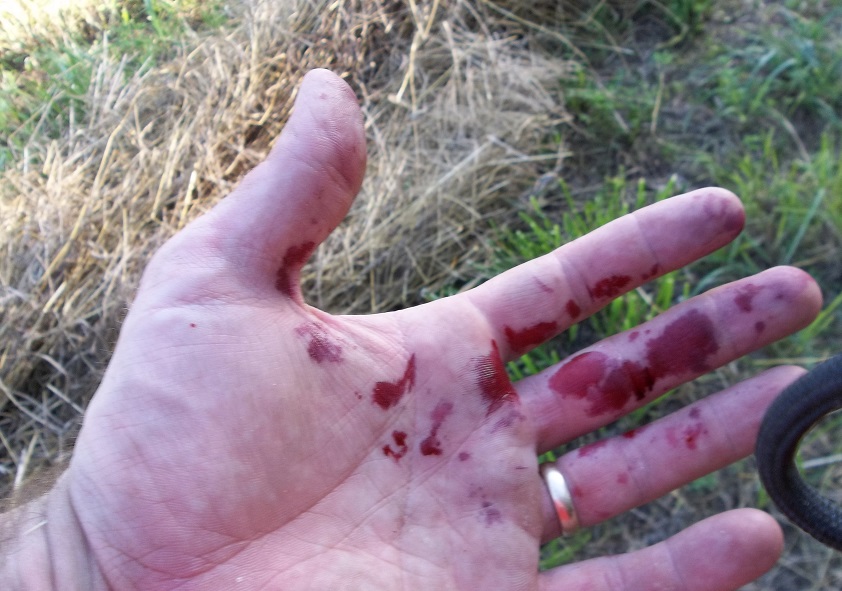
Since he can do that, I can spend more time eating berries.  I was caught red-handed.  Mulberries were juicy!

MulberryJuiceIt gave me time to reflect on what we are doing, why we are doing it and how to get that last sweet dewberry out from under the poison ivy leaf.

PoisonIvyAndBerriesGood luck with that.  Maybe I should stick to mulberries.  Either way, the days of putting up our own hay may be numbered.

Thoughts and Advice…but not from me

I read Thoughts and Advice From an Old Cattleman while sitting in a hotel in Florida last week…along with other reading.  I thought I would share some of my thoughts, but I’ll keep my advice to myself…short of this one thing:  Get this book.

The author details a plan for moving cattle through your pastures on a regular basis, selling and then immediately buying again.  If the market is down, you’ll buy immediately.  If the market is up, you’ll have to pay more for better animals but still, buy immediately.  Different classes of animals do better at different times.  He goes into long detail about feeding, worming, fly killer…all things we don’t do but also talks about getting the most bang for your buck on grass…using low-cost grass to grow calves up to feeder size.

A recurring theme in the reading I have done lately is the disassociation of ranching and tractor ownership.  Gordon goes so far as to say you are better off with 4 ex-wives than with 4 John Deere’s.

Again, I highly recommend this book.  I found it to be very encouraging that a 70+ year old man runs 1,800 head of calves across 3,000 acres (with zero debt!) and humorously complains that he only has enough work to keep him busy for 3-4 hours each day.  Wow.  Poison aside, he’s doing things right.

I am now rethinking everything we have on the farm.  Iron pile?  Buildings?  Corrals?  Fencing?  Ponds?  Chickens?  Cattle?  Which of these things are increasing in value?  Can I make it with a cow/calf operation or should I consider exclusively running or at least adding stocker calves?  How can I put my debts behind me?

What is it You’re Trying To Do?

Q: What is it You’re Trying To Do?

A: Wow.  What do you mean by that?

Q: Why did you move here?

A: Well, it was Grandma’s house.  Almost every Christmas of my life has been here.  It was available, affordable and emotionally satisfying.  Plus it’s a good place to raise the kids.

Q: But can’t you do all that without the animal work?

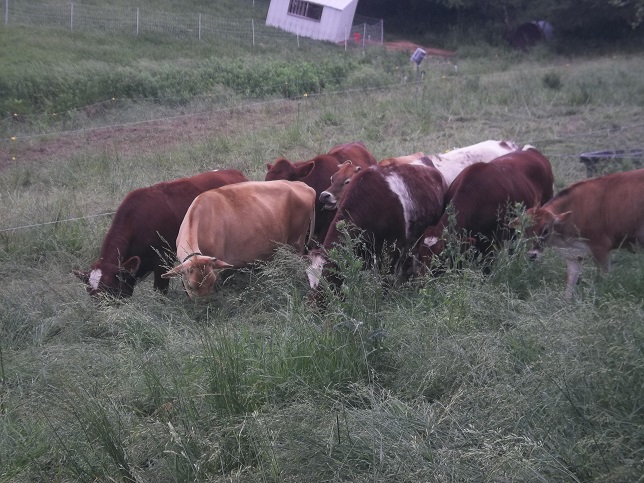
MorningCows

A: Oh.  Well…I mean…I guess.  I could rent the fields to another farmer who may or may not farm in a way I approve of.  He could spray whatever out there, abuse the ground in whatever way, cause erosion and pay me for the abuse but isn’t it better if I just manage it myself?

Q: So what are you managing?

A: Well, I can grow forage without even trying.  I mean, it’s silly how easy it is to grow forage.  I just depend on free sunlight and free, occasional rain.  But grass isn’t worth much so it really doesn’t matter how much I can grow unless I can find a way to add value to it.  Right now we’re using cows to convert that grass into beef and milk.  Milk isn’t worth a whole lot.  Beef isn’t worth a whole lot.  But they are worth more than grass.  Further, using cows to mow saves me from mowing.  Grazing, trampling and manuring also help more grass to grow than would otherwise be there so that means I’m fixing more carbon than my farm would otherwise…so I get a happy green feeling inside.  So, to answer your question, I guess you could say I’m managing grass.

Pasture

Well, except I jokingly refer to myself as the “Head Farm Steward” (a title I am anxious to hand to one of my much more capable children).  Stewardship has little to do with cattle or grass.  It means I’m accepting that I am in charge of a few resources for a short time and have to do my best to increase those resources.  That means more dirt, more carbon, more grass, more earthworms, more dung beetles…but it also means more money.  I mean, 5 talents or 5 acres, I want to hear, “Well done.”  We are currently using grass to convert sunlight, sunlight and time to convert beef into dollars.  Would we see more increase if I planted forests to passively fix carbon, absorb sunlight, mine nutrients out of the soil and create value?  Maybe.  Dunno.  Would it be better to open a composting facility?  Dunno.  Would it be better to build an array of hog floors, haul in nutrients, add value to corn and haul out manure?  Maybe…maybe not.  That sounds like a lot of work.  Also, it sounds like a lot of manure for my few acres to metabolize.

At any rate, “management” sounds/feels different than “stewardship”.  I wish you had asked me what I was stewarding.  That’s an easy question.  I’m stewarding land that has been in my family since 1843.  My land surrounds the graves of my mother’s fathers.  In a way, I’m honoring the work they did when had their turn on this land.  Honoring my father and mother…well, my mom’s father and mother.  Dad’s side are all buried in Eastern Tennessee.

The “what” question takes us to the “how” question.  That takes us back to grass and cows…and chickens.  …and ducks.  …and a small orchard.  …and children.  …and an alarmingly small amount of money.  And it’s the money I am working on growing as I find that it helps with so many problems.  And that’s why I need sunlight, rain and cows.  And that’s why we need Eddie Van Halen (bonus points if you got that reference without using Google).

But here we are.  Taking things of lesser value and adding value to them.  Chicks to chickens.  Chicken feed to eggs.  Logs to lumber.  Sunlight to grass.  Grass to beef.  Girls to women.  Boys to men (ABC BBD (…mmmm hmmmm)).

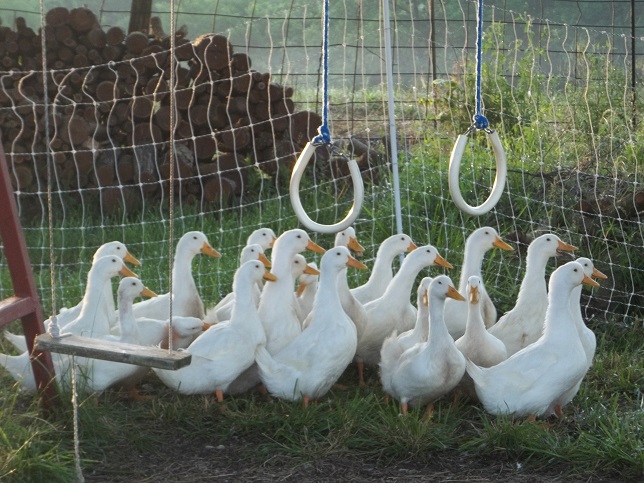
Ducks

So now I ask you, Are you adding value to something each day?  Are you conscious of your need to steward your resources and seek increase?

Fly Predators

Every year our white house is covered in black flies.  The kids take fly swatters out and make a sport of killing 10 or 12 in one swat.  Not this year.

FlyPredators2

This year I got on the Spalding Labs site to buy fly predators.  When they arrived, we waited for them to start hatching then released them in groups in each of the recent grazing areas.  The idea is that they will attack flies in the pupae stage, flying up to 150 feet to find more.  Every 30 days through September the company will send more fly predators so every 30 days we’ll go behind the cows, dropping more predators on manure pats.

FlyPredators1

Fly populations are already getting strong but I hope we’re far enough ahead of the curve to have a fighting chance.  I suspect we’ll have to start earlier in the spring next year.  This year we’ll just run with what we’ve got.

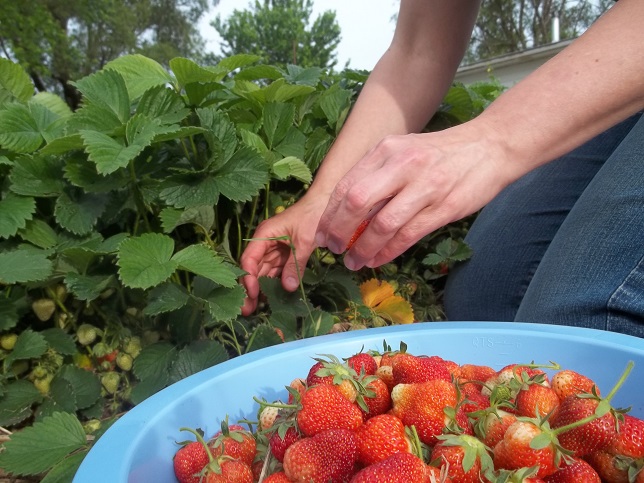
Strawberry Picking

It’s time.  Strawberries are coming in full force.  And just because she’s not wearing a ring doesn’t mean you should go getting ideas.  It wears her out to carry that enormous rock around all day…lol.

Strawberries1

Last year I planted strawberry plants with the Jeavon’s grid in a 20′ row, 4′ wide.  In the fall I had so many runners I planted the other 20′ of the row.  Both ends of the row are very, very productive this year.  Because the row is 4′ wide we can easily reach in 2′ from each side to pull the few weeds that come through or pick the berries.

Strawberries2

Now, having extolled the virtues of 4′ rows, I’m not entirely sure I’ll do it again.  Weeding is a breeze, fertility is high, maintenance is low but I wonder if I wouldn’t get more berries if each plant got more sunlight.  I may plant two rows in a 4′ space when I plant runners in half of the next row (where the onions and cabbages currently are.

Strawberries3

Pay no attention to the pale leaves on my blueberry plants.  I planted into part of grandpa’s rock collection and the soil is a little chalky.  I’ll get the acidity up in time.  Bear with me.

Mulberries are ripening, dewberries are just around the corner.  Broccoli and Cauliflower are finishing up and I need to plant beans in that row.  Maybe I could hire someone to go to my job for me…

Fescue World Domination

Well, not world domination but…my pastures anyway.  Our friend from SailorsSmallFarm asked the following question:

So, probably a dumb question, but if they never eat the fescue, since it’s clearly the boring food in their salad bar, and just trample it in, won’t it eventually dominate the pasture?

Not a dumb question but before I answer I offer a disclaimer: I think this is an exciting topic. If you don’t think growing grass is exciting…come back tomorrow.  I’ll try to put up pictures of kittens soon as those seem to be popular on the internet.  The short answer is, no matter what your forage base, rainfall, livestock, temperature…it’s all up to your skill at grazing management to maintain forage diversity.  As a small point of correction, cows DO eat the fescue.  However, at certain points in the year fescue adds a measure of difficulty to grazing.  For the long answer we have to look closely at fescue.
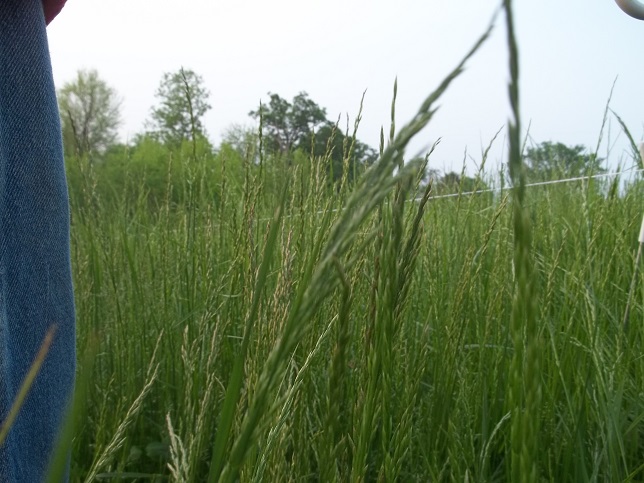
Fescue

What’s wrong with Fescue?

Rather than answer that question immediately I’ll start with what is RIGHT with fescue.  It may be some of the very best forage I can grow.  First, it’s durable.  Horses can eat it down to the dirt, pigs can root through it, making a muddy soup of the soil and it will grow back and will grow thick, tall and lush.  Second, it’s an excellent forage for your winter stockpile.  It has a waxy coat and the green of fescue growing in healthy soil survives long past frost and even into freeze.  From the West Virginia Extension Service:

There is seldom a problem when tall fescue is used as part of a forage system containing other forages, with the tall fescue being used primarily in the spring and winter seasons. The best use of tall fescue is for late fall and winter grazing.

So I just have to make sure I’m offering them other options besides pure fescue.  No problem.

DiversityBack to the winter forage idea, Joel Salatin also emphasizes the value of winter feed in Salad Bar Beef by suggesting you add chicken manure to your stand in the late fall to help the fescue stay green into the freeze.  It may be only a maintenance ration but it really lasts.  He points out that frosted fescue goes up to 14% sugar.  Pretty good winter eats.

So what’s the problem?

Toxicity.  If you do a little research you’ll find out that Fescue will knock the hooves off of your cows and cause them to abort calves by raising their body temperature on hot days.  It lowers circulation causing tips of ears and tails to turn black.  Scared yet?  Should you be?  I don’t know.  Joel Salatin doesn’t warn his readers of imminent cow death in Salad Bar Beef.  Neither does Greg Judy.  But both men maintain diverse swards.  This paper lists three options for dealing with fescue and two of them include spraying it with a strong herbicide until you win then replanting.  Greg Judy discusses this briefly in No Risk Ranching saying he tried.  The first 3 or 4 years after replanting, the pasture was soft and pugged quickly.  The 5th year it was dominated by fescue again.  But the first option listed is “dilution with legumes.”  This is what Greg Judy says to do in No Risk Ranching by seeding red clover into stands of fescue after grazing them hard in the fall/winter.  More on this later.

Many plants, if eaten in isolation, are toxic.  Walt Davis says this even includes alfalfa.  But, when eaten together with other species…even other toxic species, the toxicity of each decreases.  So, is the endophyte in my fescue stand an issue?  It can be but primarily if it’s a pure stand of fescue.  It limits weight gain in hot weather, limits milk production…not good, right?  Right.  But it can be managed by making sure I have a diverse sward.  And good news…I do…well, mostly…ish.

How do I maintain that diversity?  By making sure all plants have a chance to reach reproductive maturity.  Rather than grazing the whole pasture at once and allowing the cattle to stick to favorite grazing and loafing areas, overloading nutrients in some places, overgrazing forage in some places and allowing brushy overgrowth in others, all of my pasture gets grazed, manured, stomped on and rested fairly evenly in a rotation.  That means the cows can’t return to graze the clover or ryegrass out of my pastures before it has a chance to recover and re-establish itself and also weeds that would normally be ignored and allowed to grow are either eaten or stomped into oblivion.

Trample

Trampling…any carbon will do.

It’s the stomping into oblivion that I find most interesting.  The soil is hungry.  How about that?  It’s hungry.  Soil is alive.  It needs to eat.  If I scoop up all the growing grass, bale it and haul it away what is left to feed the soil?  The roots that are pruned off of the plant but not much else.  When the cows step, stomp, jump, run and otherwise disturb the soil with their hooves they are pushing organic material down.  That could be manure, grass, weeds, tree branches, dead bugs…whatever is out there.  It will be broken down by microorganisms and added to the soil structure by worms, moles, mice, dung beetles….things that physically work the dirt.  But I have to have something in contact with the soil.  If the cows are allowed to eat it all I get nothing.  Cows are not inclined to eat fescue down to the ground.  They are more inclined to eat a little fescue along with everything else growing out there and knock the remaining fescue to the ground.  Perfect.  At around the 9 minute mark of this podcast Ian Mitchell-Innes says:

Do not eat everything.  In fact, the more you tread on the ground, the more your return over time because the carbon you put on the ground will be worth more to you, in the long run, than the animal.

He also goes on to say that as soil health increases you’ll see darker greens and more leaf material.  All that extra nutrition punched down into a 4″ circle of soil by 1,000 pounds of beef leads to healthy soil in a number of ways.  The additional organic material helps the soil retain moisture…in fact, helps it to soak up more water before allowing runoff.  With water and food, microbial life in the soil explodes.  Legumes do a good job of fixing nitrogen but microbes do too, then they are eaten by worms.  A healthy worm population can eat 40 tons of dirt each day…but they won’t be a healthy population unless I feed them and feed the things they like to eat.  And it’s mostly the fescue that gets stomped, tromped and abused.  From an article about Greg Judy:

The Judys may get another advantage particular to their area from leaving so much forage behind. Their primary forage base is endophyte-infested fescue. It appears their cattle eat less of it, including fewer of the “hottest” plant parts — the stems and seed heads — when they are moved frequently and not made to “clean up” all the forage. That fescue then contributes organic matter and ground litter to help build the soil.

Trample2

So I just have to make sure the good stuff is out there to eat as they tromp down the mature fescue.  How do I do that?  Where the stands of fescue are the most thick I’m grazing in narrow strips because narrow strips = higher residual while wide strips = higher forage utilization.  I want to knock down as much as I can as the cows race through the stand looking for something to eat.  But the real secret comes before they graze and tromp.  I overseed annuals and legumes into the stand.  Then the cows tromp those seeds into the soil and I have additional diversity just in time for the next grazing cycle.  Beyond the use of annuals I need to keep up a program of frost seeding red clover until I reach the point where the tall grass grazing will enable established stands of red clover to re-seed themselves.  Here’s another article about Greg Judy:

Judy focuses on utilizing the existing  seedbank that is stimulated by the heavy impact of mob grazing to initially  promote the resurgence of a polyculture.   If there is no legume seedbank, an initial seeding of clovers and other  legumes may be necessary. One established, tall grass grazing will ensure the  legumes will reseed themselves, and reduce the need for nitrogen fertilizer.

Rest, Nutrient Distribution and Pasture Diversity

If the cows are allowed to run the pasture in a set-stocking situation, they will find places where soil nutrition is high and the grass tastes good and will eat it down to the roots.  They will find stands of bluegrass, bromegrass, rye, clover or wild oat and they’ll eat it all each time it begins to recover.  They will find tasty saplings and eat them as fast as they can recover.  Over time I’ll be left with a pasture full of cow paths, weeds, briars and thorny trees that tolerate grazing well, not to mention fescue.  I will have very little clover, very little wild oat, very little rye or bromegrass.  I say this from direct observation.  Left to their own, cows will travel long distances (making paths) for one little bite of grass.  The sod will be poor as the root systems won’t develop to their potential.  Manure will be largely concentrated in the loafing areas.  Loafing areas will be compacted.  I could keep going.  I am describing my farm as I bought it. Grazing a mob, the cows ignore a fair portion of the fescue I offer them but they do eat some along with other, tastier forages.  The animal density puts a hoof print in at least every square inch, manure in every square yard and more is better.  Then they are forced to move on, leaving manure, trampled waste and stubs of tasty forages behind for 40-90 days.  In those 40-90 days those forages have an opportunity to fully recover.  They may even develop a seed head.  If I have managed my grazing correctly, the grazing action of cattle will help those species to gain ground in their territorial battle against other species or at least fill in the spaces between plants.  I have clover where I have never seen clover before.  I have fewer thistles than I have ever seen (in fact, I have watched my cows eat thistle).  Bromegrass, rye, foxtail, wild oats start showing up in unexpected places.  Dandelions fill in the holes along with a variety of weeds I have never seen and can’t always identify…but there they are. Impact is the tool but rest is the key.  Not just the time between grazings but the time between pastures.  Almost a third of my farm is held in reserve and is outside of the regular rotation…and I will rotate that third each year.  This gives room for ground nesting birds to do their thing, allows native prairie grasses the chance to go to seed, builds deep, tangled root systems and provides a forage reserve in case of drought.  All of those things are positives.

Grazing

Observation, Change, Control and Experimentation

How do I know if I have managed my grazing correctly?  How do I know if this is working?  There is no set formula for this.  No predetermined function allowing me to pass in cows, land and time to return pasture health and diversity and profitability.  So how do I know if I’m using the time tool, the land tool and the cow tool correctly?  I observe…daily if possible. I define a goal.  I shoot for that goal.  I review my progress, make adjustments and continue moving forward.  Sometimes it works and nobody notices.  Sometimes I fail miserably and I look like an idiot or, worse, animals get sick.  That’s not the goal.  I make adjustments and move on again.  What if I seed millet and cowpeas into the pasture before the cows trample the ground?  What if I frost seed red clover every year?  What if I don’t?  The forage will change over time.  I have to monitor those changes.  I am an active part of the grazing program. The herd will change over time.  Some cows will do better than others even without changing breeds.  David Hall of Ozark Hills Genetics relies on the best performing cows passing their genetics on to future herd members.  Cows that can’t tolerate our conditions will ultimately get culled from our program.  Fescue is just part of our program. Am I worried that fescue will take over the world?  Well, it already has…at least on my farm.  Now I have to give a competitive advantage to other species and leverage the strong points I see in fescue.  Over time the pastures will change…for better or for worse.  Each year the weather will change…for better or worse.  I’ll just have to accomodate those changes and roll with the punches.  But since Joel Salatin and Greg Judy can live with it, I can make it work.  Right now the focus is on knocking as much of it down as I can to build soil health while also establishing a healthy stand of clover.  That should keep me busy for a couple of years. Now, if you want a little homework, study up on midwestern pasture grass identification with me.