Day 3: Chicken and Dumplings

Here’s a vegetable heavy twist on an old favorite.  I love root vegetables and springtime usually offers the opportunity to clean up the stores.
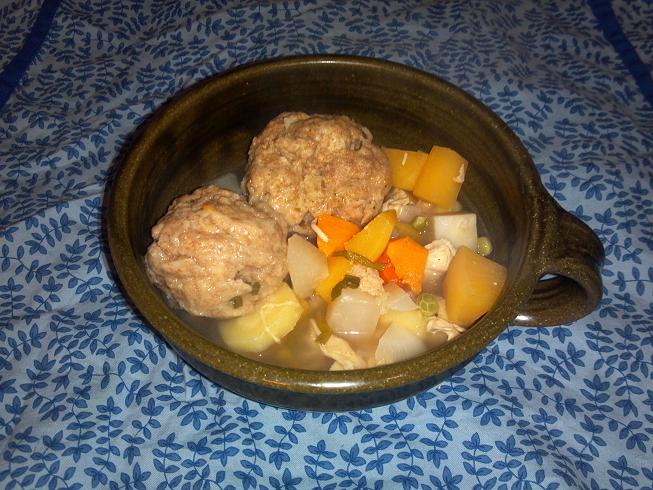
Chicken and Dumplings

  • 2 TBS olive oil
  • 1 red onion, minced
  • 2 cloves garlic
  • 2 C hard apple cider (Woodchuck, green apple)
  • 3 rutabaga, cut in 1 inch pieces
  • 2 turnip, cut in 1 inch pieces
  • 2 carrots, sliced
  • 2 parsnips, sliced
  • 1 sweet potato, cut in 1 inch pieces
  • 4 sage leaves, minced
  • pinch Herbs de Provence
  • 5 C broth
  • 2 C peas
  • 1 C chicken

In dutch oven in 2 TBS oil, saute onions and garlic until golden brown.  Add 2 C apple cider and deglaze pan.  Cook for a couple of minutes.  Add remaining ingredients holding peas and chicken for later.  Bring to a boil, reduce heat and simmer for 15 minutes.  Add peas and chicken.

  • 1 1/4 C whole wheat flour
  • 1/2 C white flour
  • 3 sage leaves, chopped
  • 1 tsp rosemary, minced
  • pinch Herbs de Provence
  • 1 T baking powder
  • 1/2 T salt
  • 1 egg, beaten
  • 3/4 C milk

Mix all dry ingredients together.  Add egg and milk and stir until forms a stiff dough.  After stew has cooked for 15 minutes, drop dough on top in spoonfuls.  Cover and cook 10-15 minutes more or until dumplings are light and spongy.

Basic Herbs de Provence

5 tablespoons dried thyme
3 tablespoons dried savory
2 tablespoon dried marjoram
5 tablespoons dried rosemary
1 ½ tablespoons dried lavender flowers

Mix and store in air tight container.

For tomorrow, make Creme Fraiche:

Creme Fraiche

  • 1 C heavy whipping cream
  • 1 T buttermilk

Heat cream to 105 degrees F.  Remove from heat and stir in buttermilk.  Pour into small jar and cover loosely with plastic wrap, until thick but still pourable.  Stir and taste every 6-8 hours.  In 24 to 36 hours the creme fraiche should develop a slightly nutty sour taste.  Once it does, refrigerate.  May be stored up to 10 days.

Stay Tuned For….

Day 4: Spring Chicken French Salad

Jacquelyne Aubuchon is a guest contributor to this blog and a loving sister and aunt to the residents of Chism Heritage Farm.  You can contact her at Jacquelyne@sew4cons.com or keep up with what she is doing at City Roots and Fruits.

Day 2: Lemon Chicken Pasta

My husband once told me that he had never met anyone who at as many carbs as I do.  So, no meal planning would be complete without pasta in my mind.

Lemon Chicken Pasta

  • 1 lb pasta
  • 3 slices bacon
  • 2/3 cup olive oil
  • 2/3 cup Parmesan cheese
  • 3 lemons, juiced with 1 TBS zest reserved
  • 1/3 C chopped fresh basil
  • 1 C cubed chicken
  • 1 tsp lemon pepper

Fry bacon until crispy and set aside to drain.  In leftover bacon grease, fry chicken to reheat.  Drain and put in bowl.   Boil pasta according to directions.

In a separate bowl, whisk together oil, Parmesan and lemon juice.

Drain pasta and reserve one cup of cooking liquid.  Put pasta in bowl and stir in dressing.  Slowly add cooking liquid until moistened.  You may not need all the liquid.

Chop bacon and add to pasta.  Stir in remaining ingredients and serve.

Serve with french bread and honey butter.

Honey Butter

  • 3/4 C butter, room temperature
  • 1/4 C honey

Cream honey and butter together.  Store in refrigerator until ready to use.

Day 3: Chicken and Dumplings

Jacquelyne Aubuchon is a guest contributor to this blog and a loving sister and aunt to the residents of Chism Heritage Farm.  You can contact her at Jacquelyne@sew4cons.com or keep up with what she is doing at City Roots and Fruits.
Coming soon…?

We are playing with the idea of a regular video blog entry.  We can use this to answer direct questions from readers or just to address questions we are regularly asked…or just to have fun.

So.  Here we are having fun.  It’s a little weird for us too.

Let us know if there is anything you would like to see.  Nothing is off-limits, even for remote viewers.  So do us a favor.  Ask us something in the comment section.

Day 1: Chicken Salad, great hot weather fare

We spend a great deal of time outdoors and our kitchen is not particularly air conditioned.  With spring planting and all the springtime chaos, we like things we can have on had to fix a quick meal.  The first thing we will do with the chicken is make some chicken salad for sandwiches.

Chicken Salad

  • 3/4 C mayonnaise
  • 2 TBS dry white wine
  • 2 TBS fruit chutney
  • 1 1/2 T curry powder
  • 1 C cubed chicken
  • 1 stalks celery diced
  • 1 green onions, sliced
  • 2 TBS raisins
  • 1/2 C roasted nuts of your choice (cashews are good)

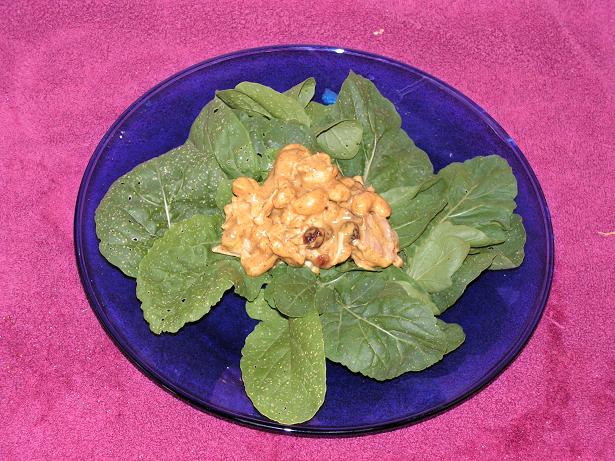
Mix the dressing ingredients:  mayo, wine, chutney, and curry in blender until smooth.  Add chicken, celery, onions, and raisins mixing well.  Chill.  Stir in nuts just before serving.

My brother isn’t a mayo fan, so, in this recipe you can’t really taste the mayo.  (I don’t like jar mayo)  You may need to tone down the spices for your taste, but I think it’s just right.

Where do you get chutney, you might ask?  Well make it with your leftover fruits in the fall.  We love chutney in the cupboards for putting on meats.  If you don’t like having those stores on hand, you can find chutney in the ethnic section of your local grocery store.  Major Grey’s Mango Chutney is pretty common.  Any chutney will do though, I used a dried fruit chutney.

Also, try your hand at making mayonnaise.  It’s so delicious fresh and your salad will be even more good for you.  So many more nutrients.  If you use farm fresh eggs it will be even tastier.  This is a great tutorial here:  Homemade mayonnaise without tears

Serve salad on baguettes with a lettuce salad and dressing for a complete meal.  Another option is to put it on a bed of mache.  Mache’s nutty flavor makes a great companion to this salad.

(Usually it doesn’t have tiny holes in it like mine does, but I have a terrible infestation of potato bugs in my garden and hate chemicals more than them.)

Stay tuned for…

Day 2:  Lemon Chicken Pasta

Jacquelyne Aubuchon is a guest contributor to this blog and a loving sister and aunt to the residents of Chism Heritage Farm.  You can contact her at Jacquelyne@sew4cons.com or keep up with what she is doing at City Roots and Fruits.
How to Roast a Chicken to Feed a Family for a Week

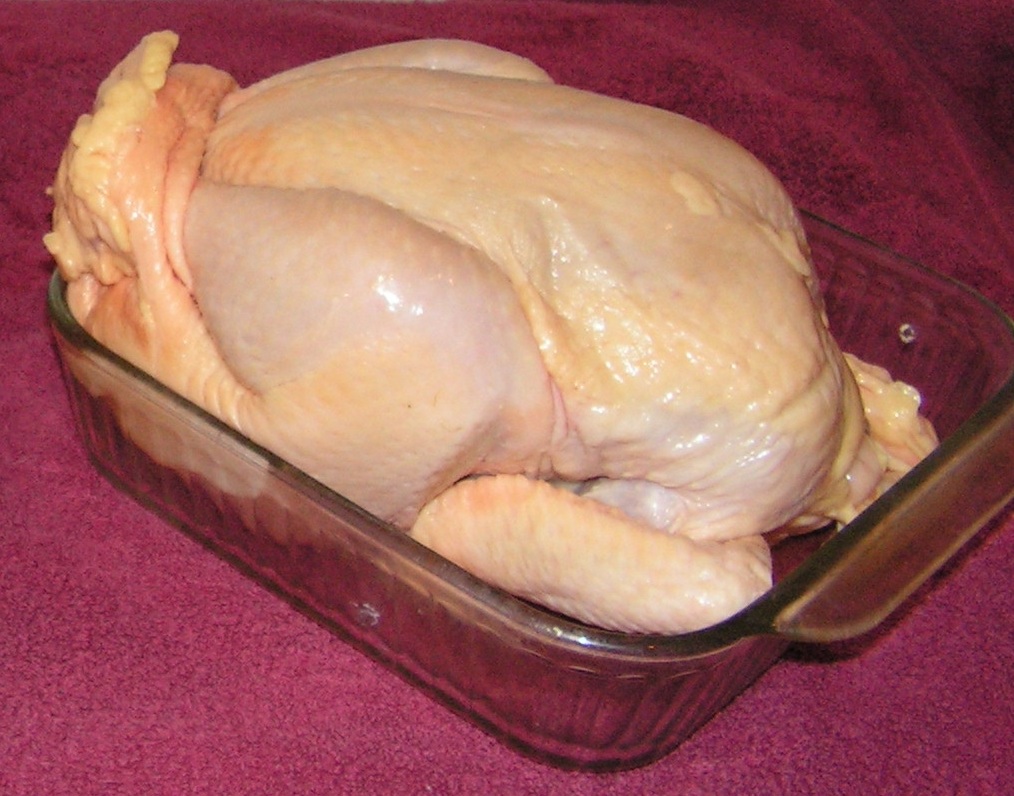
This weekend, while I was at the family farm, we got to discussing the size of the chickens being slaughtered.  I personally am all about a 6-7 pound bird.  At the store I can only get 3-4 pounds birds.  I don’t find this to be enough for what I expect to do.  Christopher (Head Farm Steward) finds that many of his customers want the smaller birds and don’t know what to do with the bigger one.  My family of four can decimate a 3-4 pound bird in one sitting.  I almost never make a meal that doesn’t have left overs.  We eat them for lunch the next day, so a 3-4 pound bird leaves me without my lunch.  While Christopher and I were packing up the birds and working on a million other projects, we decided to provide his readers with a meal plan to help them learn what to do over a week with a large bird.

This weeks menu:

Grocery List:

salad Small bag whole wheat flour
baby carrots flour
1 C baby zuchinni cake flour
1 C baby squash baking powder
2 C spinach cornstarch
½ C green beans instant yeast
5 lemons salad dressing
fresh basil red pepper flakes
red onion salt
2 onion lemon pepper
sage leaves pepper
1 bag carrots herbs de provence
3 rutabaga curry powder
2 turnip 1 lb pasta
2 parsnip orzo
1 sweet potato slivered almonds
chives roasted nuts
1 bunch thyme ½ C cider vinegar
1 head garlic olive oil
celery mayonnaise
peas dry white wine
green onions  honey
raisins
fruit chutney
hard apple cider
Parmesan cheese
1 Chism Heritage Farm Chicken
bacon
milk
buttermilk
heavy whipping cream
3 eggs
2 TBS butter

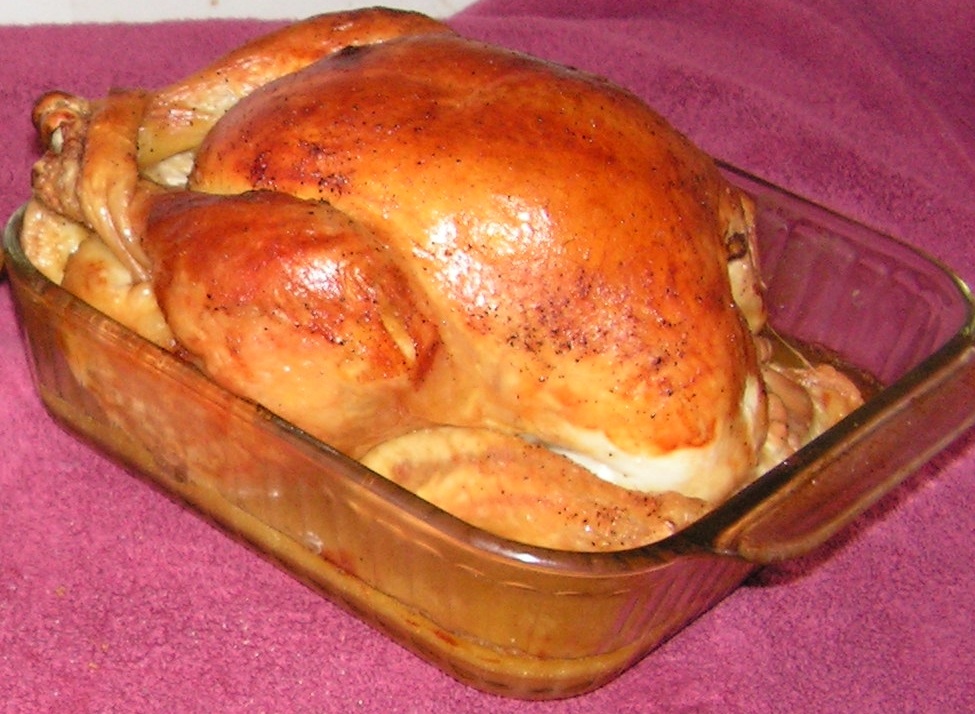
To begin with, we have to bake the chicken.  This is such a nice fix it and forget it thing to do.  The only problem I ever run into is getting the chicken thawed out and remembering it’s ready to bake.  The flavoring on this is simply the chicken.  These have such a nice flavor, nothing else is needed.  On this prep day, you will need to cook the chicken, make broth and start the bread.  Starter for the bread can be prepared ahead of this even.  An excellent tutorial can be found at A Bread A Day.  Ingredients on the grocery list reflect this recipe.

Easy Baked Chicken

  • 1 Chism Heritage Farm Chicken
  • 2-3 TBS melted butter
  • salt and pepper

Preheat the oven to 400 degrees.  (Why 400? It’s a good temperature for this.  If you go 350 you will still cook the chicken, it will just take longer.)  Salt the chicken all over.  Melt butter and brush on breast and legs.  Cook until 170-175 degrees on a meat thermometer.  Brush with drippings every 15 minutes or so for a really nice skin, or forget about it and wonder why your timer is going off and find a perfectly good chicken when you pull it out.  Cook one hour for the first four pounds and add 8 minutes for each additional pound.

  • 3 lb – 1 hour
  • 4 lb – 1 hour
  • 5 lb – 1 hour 8 minutes
  • 6 lb – 1 hour 16 minutes
  • 7 lb – 1 hour 24 minutes


Mostly I just wander off and once in a while smell something and go test it for temperature.  Often I put it in at 3:30 when I leave to pick my son up from school and it’s mostly done when I get home.

After roasting the bird, let it cool for 15 minutes on the counter.  If you want to trim it for immediate eating it’s ready.  For this meal plan, we will take all the meat off the bones and cube it.  By combining it with other ingredients we can make it stretch further.  Once cubed, put in a large zip lock bag and refrigerate it until ready to use.

Chicken Broth

  • leftover chicken bones from cubing chicken
  • 1/2 C cider vinegar
  • 2 carrots, chopped
  • 2 celery stalks, chopped
  • 1 onion, quartered
  • 2 sprigs thyme
  • 3 cloves garlic
  • salt
  • pepper

Place all ingredients in a pot and cover with cold water.  Let sit for one hour.  Turn on heat and bring to a boil.  Reduce heat and simmer for several hours or until you can’t stand cooking it anymore.  Let cool and put in fridge overnight.  In morning skim off fat.  Broth with be gel like consistency.

Stay tuned for….

Day 1:  Chicken Salad, great hot weather fare!

Jacquelyne Aubuchon is a guest contributor to this blog and a loving sister and aunt to the residents of Chism Heritage Farm.  You can contact her at Jacquelyne@sew4cons.com or keep up with what she is doing at City Roots and Fruits.

Dirty, Stinking, Filthy, Chicken Feed Eating Skunk

I love my rifle.  I never imagined myself saying something so…redneck.  But I do.  Last winter a mink had a chicken by the neck…total hostage situation.  One shot took out the mink and saved the bird.  Raccoons molesting my turkeys?  Problem solved.  Rabbits escape their pens?  Got it handled.  Recently I have had an issue with a something tearing open bags of feed in my shed.  Early this morning the wife called out while walking the dog, “It’s a skunk”.

My poor rifle has never been used this early in the morning and was still asleep but it didn’t complain.  It fired two shots at the skunk.  The first shot scared it enough that it stopped running.  The second shot was clean…instant.  He didn’t know anything happened.  One second there was a skunk.  The next second there was dinner for a vulture.  In fact, the vultures really seem to like him.

That little stinker didn’t just stop at feed bags.  He’s been digging in my garden and generally stinking up the place.  I don’t mind a skunk if it just scavenges away from the house.  When they try to move in I have to take action.  I think he was digging up worms.  I need those worms…

I’ll say it again, I love my rifle.  It’s just what I wanted.  A stainless steel Ruger 10/22 with a few minor modifications.  It’s the cat’s meow.  Take some time to understand the gun laws where you homestead.  Learn to use the tool properly.  It’s a real help at times when homesteading.

How Many Meals Can You Get From One Chicken?

Several customers have requested help figuring out how to use a whole chicken without feeding part of it to the dog.  This is more of an issue for singles and empty-nesters than for parents of hungry teens.  I would like this to be a regular feature but I’ll get started simply.  Forgive me if I go too fast.  Feel free to ask for more detail in the comments.

We try to get three meals out of a chicken for the six people in our house.  Most commonly we thaw the chicken well, mix melted butter, garlic, salt and pepper, give the chicken a good coating of the mixture inside and out, place most of a quartered onion in the vent hole and the remainder in the flap at the neck.  We place the bird in a cake pan with the breast up and bake at 350 for about 15 minutes per pound.  As the bird bakes, the breast will brown.  My youngest son likes flaky skin but you can get carried away.  When it’s brown enough for your taste, cover the breast with a tent of aluminum foil until it is finished.  We usually fight over the leg quarters with the evening meal.  The girls eat a bit of the breast too.

After supper we cut off the remaining breast meat for use in another meal and place the carcass in a stewpot with half an onion, a few carrots, a bit of celery and a splash of vinegar.  We usually let this stew for at least 24 hours helping drain the bones of all minerals (see Susan Fallon’s Nourishing Traditions.)  Then we separate the broth from the meat and bones.  We sometimes stop here and just can the broth which you can use for anything.  More often we add the meat back in, add a freshly chopped half of onion, a few carrots and a few stalks of celery along with a few spices.  We allow this to boil for around 30 minutes while we make noodles.

You’re not done with those chicken bones!  When they are finished boiling they will be soft and crumbly rather than brittle.  Soft bones are no longer a choking hazard for the dog or pigs, the cat will love them or they will compost quickly.  You can still find uses for them even when you’re finished eating…there is no waste.

By doing this we can feed six people at least three times, usually with a bit of leftover chicken soup for the pigs.  This kind of use makes a $15.00 chicken easy to swallow.  If you picked the bones clean at the first meal (as sometimes happens) you should still be able to make a good broth out of the carcass.  If nothing else, you can use the broth to make the best mashed potatoes you have ever eaten.

Now, I think we’re doing a good job being frugal with the bird but my sister can do even better.  She’ll be publishing a series here on how to really stretch a chicken.  I’m looking forward to it…even if I’m not a big fan of mayonnaise.

600 Birds Later…

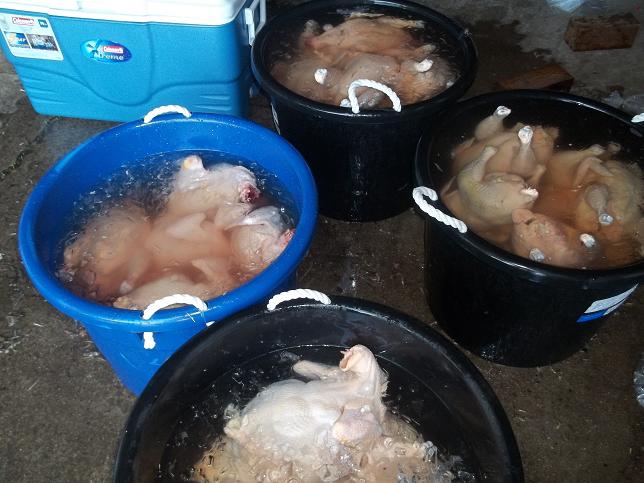
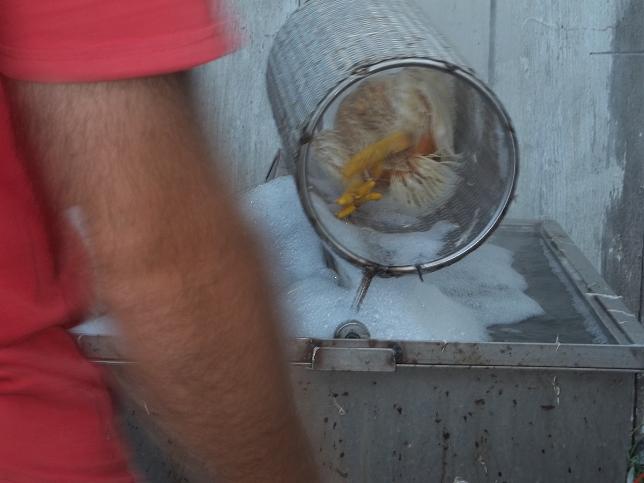
We processed our 600th bird with our Featherman equipment.  We did 56 birds in a little under an hour with just two adults early Sunday morning.  I was kill/scald/pluck/head and feet removal…as usual.  My wife hung them on the shackles and eviscerated, inspected and placed in the pink chill water.  Our kids woke up and joined us when there were a few birds left.  I was happy to see this pace though we haven’t broken any records.  In Pastured Poultry Profits, Salatin says he did 150 birds in 2.5 hours with his wife and young son helping.  I think that’s doable, we just aren’t quite there yet.

We need about an hour to scrub and sterilize the work area.  We need an hour to process 60 birds.  We need an hour to clean up and compost.  Then we need about 2.5 hours per 60 birds to package them because I had so many cut-ups.  Yikes!

The packaging process is the worst.  It’s a big chunk of the reason I need $3 per pound tending toward raising the price.  Darby reminded me, “You may as well do nothing for nothing as something for nothing”.  Something has to change on the packaging front.  Something has to change.  A label printer would save a few seconds and a bit of frustration.  Working to get a good scald would save a bit of time cleaning up birds before packaging.  Otherwise, it just takes time to cut and bag them.

I stand by the Featherman review I published earlier.  The kill cones are great.  The scalder does a good job but I have found the burner to be a bit fiddly.  The roto-dunker needs work as my fingers are cut from sharp edges on the dunker and the motor isn’t powerful enough.  The plucker does a fine job on the birds and the shackles are awesome.  Porter Pond Farm offers independent verification of the issues I am having with our processing equipment.

Raising chickens is easy…even with Cornish Cross.  We lose less than 2% of the birds to natural death.  The percentage goes up just a little bit when you include accidental death from pre-teen feet and very rare accidents when moving the chicken tractors.  Killing and eviscerating isn’t too bad.  It’s manageable work.  Packaging the birds in shrink bags is rough as cutting up and packaging parts eats away at the day.

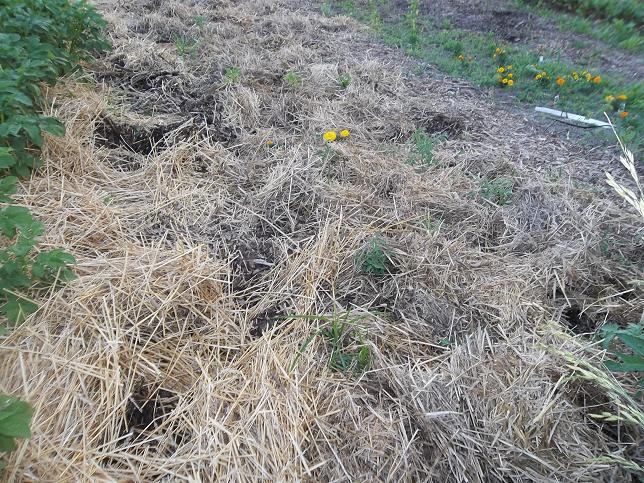
I’m happy to report three 90 degree days later the compost pile is mostly containing the odor.  I put in equal parts sawdust and chicken offal along with a bale of straw on top of it all.  You can smell bad management.  My management must not be too bad…but that means it can be better.

Grandma and the Goats

My grandmother never kept goats.  She cooked.  She reluctantly kept a small garden.  She was never exactly a farmer.  My uncle explained to me that she and grandpa had an agreement:  she kept the house and he didn’t wash dishes and in return, he ran the farm and she didn’t milk cows.

Well.  Things change.  Here is my grandma the Sunday before Memorial Day holding a goat.

I’m sure grandma fed a goat last spring but I could only find a picture of my great-aunt Marion feeding Pixie.

I think that’s nice.

PS

See that hat on my son?  It was in my car when my car was stolen last summer.  I loved that hat.  Sigh…

No Whey!

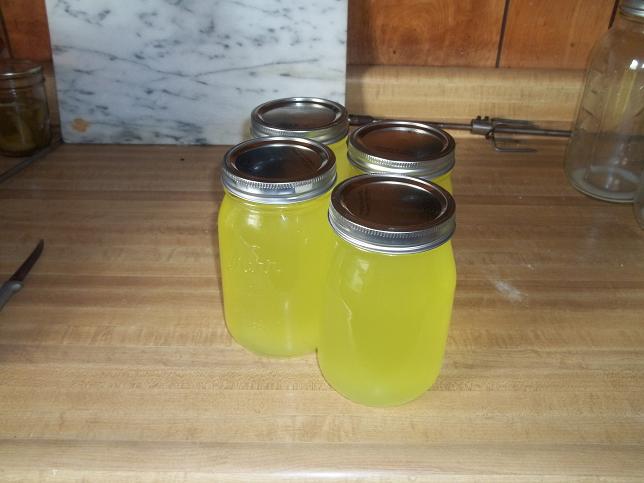
My wife and sister made cheese today.  Sis took the whey home after canning it.  I thought I would show it to you.  Looks like lemonade, doesn’t it?

I wasn’t involved in the process but it looked pretty straightforward.  This is similar to what they did, though they added 1/4 cup of vinegar to 2 gallons of milk to help it curd more.  They made both mozzarella and ricotta.

Anybody out there making cheese?  Soft cheese or hard?