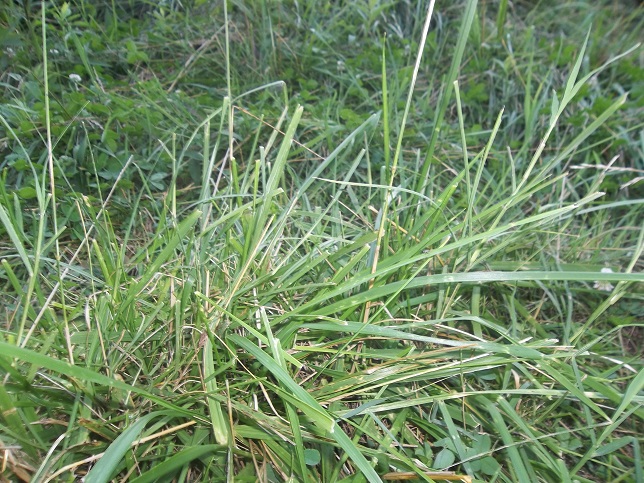
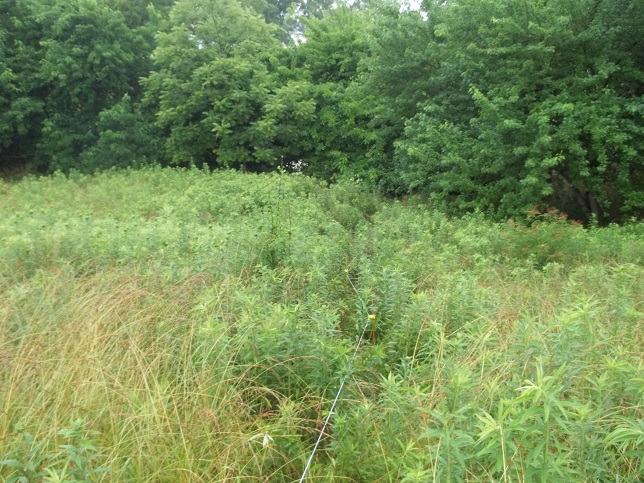
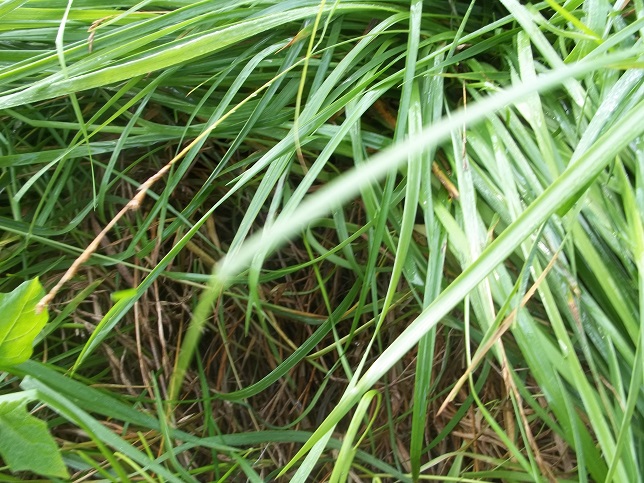
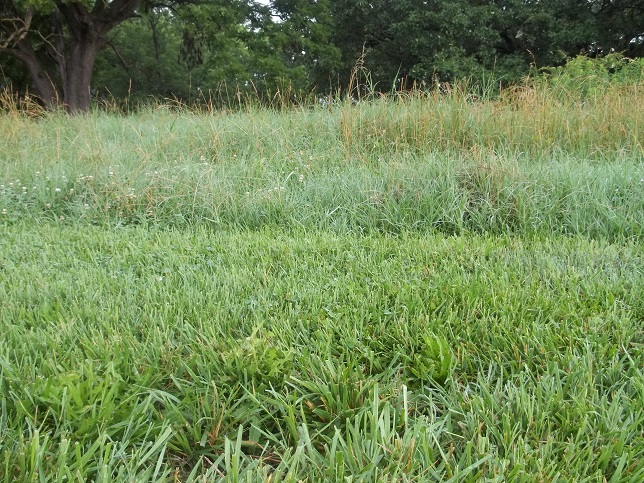
Working Hard is Hard Work…Sometimes

In its original form, this was a post justifying feeling sorry for myself because that’s where I was a month ago.  Fortunately I didn’t publish that nonsense.

So.  Put your hands in the air if you have ever had a bad day.  …or five.  …or if you have ever become emotional after several hard days and long, sleepless nights.  Any hands up?

Let me give you the skinny.  Working hard is hard work.  When it’s hot outside, you’re going to sweat.  Sometimes a lot.  If you are allergic to hay, putting up hay will make you sneeze.  Cows will get out.  At night.  In the road.  Rain won’t come when you need it but will always come as soon as you mow hay.  Rain will find its way into your home.  Ducks are hard to pluck.  Children need fathers who can set work aside and just hang out…just when the pressure to work is the highest.  Husbands need wives who understand that sometimes (and only sometimes) I just want to sit and play video games…accomplishing nothing, learning nothing, improving nothing…just shooting aliens with my brain in the off position…OK Boo?

Sometimes things are so difficult that I regret moving here…but who hasn’t wondered if they made the right choices in life?  If they married the right spouse?  …if they went to the right school?  …if things could have turned out better if they had only done that one thing differently?

Today I live on a farm.  This is where I am.  In some ways it’s who I am.  I could write about the bad stuff that comes with working a farm.  I could tell you what it is and what it is not from a strongly negative perspective.  I could do it in the name of “saving future homesteaders from the heartbreak of shattered dreams.”  But that is all meaningless.  A month after I wrote the first draft of this post I feel radically different about the farm.  It’s still hot out, the days are still long, there is still more work than I can handle but I feel pretty OK about it.  What is different?

You know that thing you love?  You would do it even if it didn’t pay.  You would want to share it with everyone you know and love…even strangers on the street.  It’s amazingly cool and you feel blessed to be able to do it…to be able to share it.  You know that thing?  Sometimes it really stinks.

But only sometimes.

Here’s a tip to make the work more tolerable:  Get paid to do it.  More on this tomorrow-ish.

Grazing From Now Until August

On or around August 1st our borrowed bull will arrive.  Between now and then I have to plan my grazing through my reserve grazing area.  Our heat-sensitive heifer needs us to plan for shade.  Our Jersey cows need to be AI’d before the bull arrives and we have to have the cows away from the perimeter fence so the borrowed bull and the neighbor’s bull don’t try to duke it out through barbed wire.

With me?  Lots of planning to do.  I need 15 or so days of grazing then I need to return to the top of the hill under the walnut tree where we can keep an eye on Mr. Bull.

Here’s the plan in picture form with thanks to Google Maps.  The projected (planned(hoped for(please God!))) dates are listed on the map in the order they will be grazed.

GrazingPlanWell, that’s the rough plan anyway.  Now, I’m not following keylines.  Well, I kinda am.  The lines marked are approximations, just giving an idea.  I am a little concerned about 23 and 24 as there is little shade available in those pastures.  I will probably give them access to 22 for 3 days so they can find refuge from the sun, though I am concerned about the concentration of manure under those few hedge trees.  Don’t worry that 27 looks much larger than 16, the grass under the pond dam is very poor in quality.  If feed runs short I’ll drop a few bales of hay.  It is important that the cows return nutrients to each paddock even if I have to import them.

If you want to see this area from ground level in winter, check out this post.  For readers of some duration, 17 is what the kids call Disemmemberment Hill“…sledding directly into massive, tangled, thorny hedge trees at the bottom of the hill.  Should be less disemmembering this winter as the cows and I have cleaned it up a bit.  In fact, over time it should become less and less disemmembering as I cut firewood and the cows make the slopes more gentle.  That’s the plan anyway.

At least I’ve got a plan.  To be honest, most of the time we wing it but I’m trying to do better.  Who knows where I would be when that bull gets here if I didn’t try for something.

Grazing, Recovery and Litter

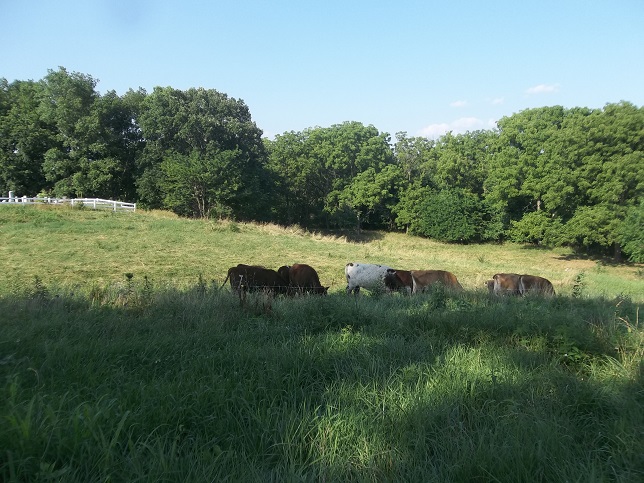
Grass.  How much should the cows eat?  How much should they leave behind?  When can they go back?  And how does litter fit into the equation? They were last grazing this grass 51 days ago.  Look at all the seed heads.

MayPasture15

I let them graze what they wanted and push the rest into litter moving quickly across the landscape.  Today they have returned.  My grazing strategy is largely the same.  The exception is I want a higher utilization of grass to stretch my grazing time longer than 51 days.  We have slowed down.
51DaysLater

You hear grass gurus say, “Let the cows eat the top 1/3rd of the plant then move on.”  What does that mean?  Top 1/3rd?  The grass was about knee-high.  The cows ate some places down to the ground and didn’t touch other places.  They tromped huge amounts of grass into the soil and the ground by the water trough.  How do you measure the top third and convince the cows to graze more evenly?  “Excuse me, ladies.  If I could have everyone’s attention.  Please line up side by side with your heads down and walk slowly through the pasture eating just a portion of the grass in front of you, never returning for a second bite.  Then the grass in front is un-trampled and clean.  You will just have to eat whatever is there.  Please don’t be picky.  Thank you.”

Other gurus proclaim the virtues of leaving litter on the ground to feed the soil.  How much litter?  How much trampling?  How much manure?  Then they tell you not to graze again until the grass has recovered.  OK.  That’s not so bad.  But what does “recovery” look like?  A seed head?  I don’t get many seed heads in December but some of the forage still grows.  What then?  Today I listened to Episode 53 of the Agricultural Insights podcast.  This podcast featured discussion on the 1/3rd grazing, litter and grass recovery questions.  Turns out, I’m not alone in not understanding how to convince a cow to only eat so much plant.  Graeme Hand offered advice (and advises listeners not to take any advice!) on grazing against the top 1/3rd rule.  In short, grass wants to be grazed as that gives it a competitive advantage against weeds and brush and helps it to tiller out into the landscape.  By managing recovery and litter we are progressing more toward perennial grasses and low-risk profitability.  Basically there are a couple of things he wants you to look at but first a summary:

“There has to be a reason to put them in a paddock and there must be a reason to take them out. The reason to put them in is you’re going to make this pastoral grassland healthier by actually coming in there…it’s got good litter, all the plants are recovered… it’s got ground covers, understory, midstory and canopy so that it’s actually got structure, it’s actually got function and then there’s a really good reason to graze it because you’ll actually make it better.  Then you stay there until the animals are starting to say to you, ‘…where our rumens are at the moment and this feed you’ve given us, it’s time for us to move.”(@31:50)

Let’s break it down a little bit.

Has the grass recovered?  Does it look like it has been grazed previously with jagged edges at the top of the blades? (@27:30)  If so, recovery is incomplete.  Incomplete recovery will allow annual weeds to establish and limit the litter available to feed the soil.  This is incomplete (it was grazed at the end of June)

IncompleteRecovery

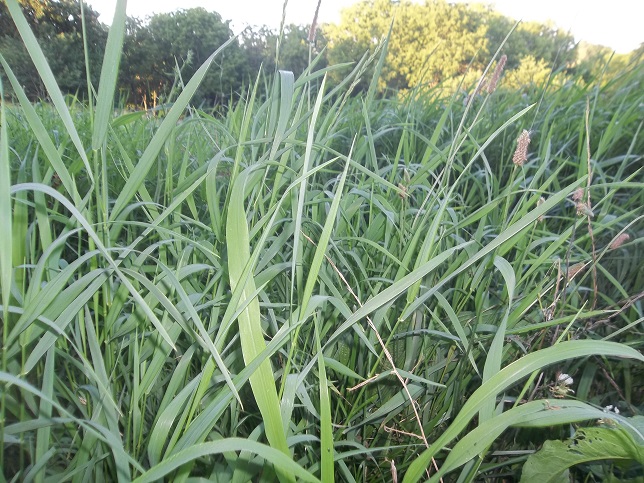
But this grass, last grazed on May 20 (51 days ago), is completely recovered.
CompleteRecovery1

Between the green growing grass and the brown litter you should see a layer of yellow grass that is being pushed down by the growing mass above.  We’re looking for fresh litter since the previous graze (@23:30).  That’s a sign of recovery.  Looking into this stand of grass…well, this laying down of grass…
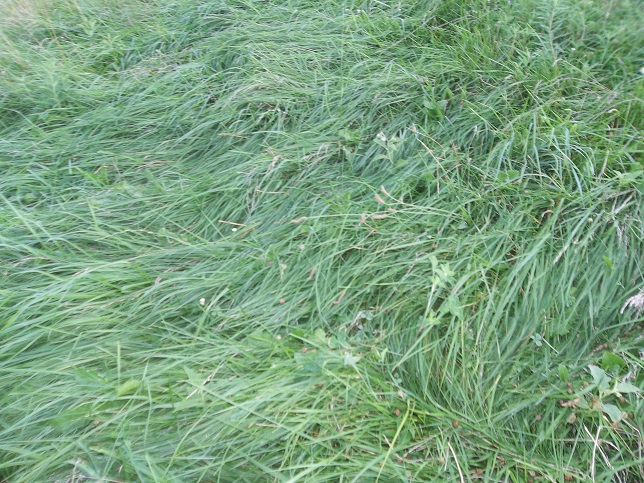
CompleteRecovery2

We can find some fresh yellow.  We can also see that, though we have plenty of leaves, my plant density is poor.  I need more plants per square inch.  And more clover.  Well, maybe next year.

NewAndOldGrass

Earlier in the podcast Hand said, “If the land has got thistles and forbs and weeds it’s pretty clear that your recovery is too short.” (@15:40)

How do you know what the recovery period is on your land?

He suggests you set up trial areas.  You pack the cows in a test area at proper density and move them off when they are down to the litter.  Then allow that area to recover twice as long as your current rotation.  Maybe do this in a corner of a paddock.  If the rested ground looks better than your other pasture, you should be making adjustments.  Hand feels that the difference will be obvious.  The rested ground may be hard for him to look at because it has gone bad.

“A pasture is ready to be grazed when there is the right mix of feed and litter” (@18:20).  Litter is key. “If you want the land to be not eroding, if you want the land to be infiltrating water, if you want the land to be cyling nutrients…you need very large perennial grasses with decomposing litter between those perennial grasses….if you’re not creating that…then you’re actually not doing what we need to do to get that stable, low-cost, low-risk production.”(@21:25)
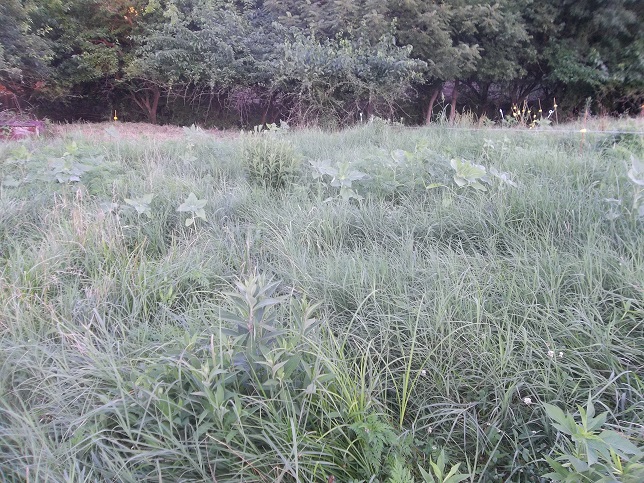
CompleteRecovery3

In the picture above, I have more grass here than I have ever seen before.  When we first moved here it was thorny, pioneer trees, thistle and ragweed.  There is still ragweed out there (along with Queen Anne’s Lace) but a variety of grass is coming on thick.  We are moving toward better water infiltration and nutrient cycling.  And check the sunflowers in the background!  They will be eaten or trampled this week.  Oh well.

How much should the cows eat?

Are the cows pushing litter into the ground?  When they are finished you should have a layer of litter covering the soil but the green should be gone.  Remember, we’re increasing stocking density (different than stocking rate) to achieve grass recovery, soil health and to propel desirable grass species forward.  The goal is to provide everything our cows need from a nutritional perspective by providing everything the grass needs from a nutritional and health perspective.  Doing this right puts dollars in our pockets and builds soil health over time.

Litter

More specifically, when is it time to move the cows?

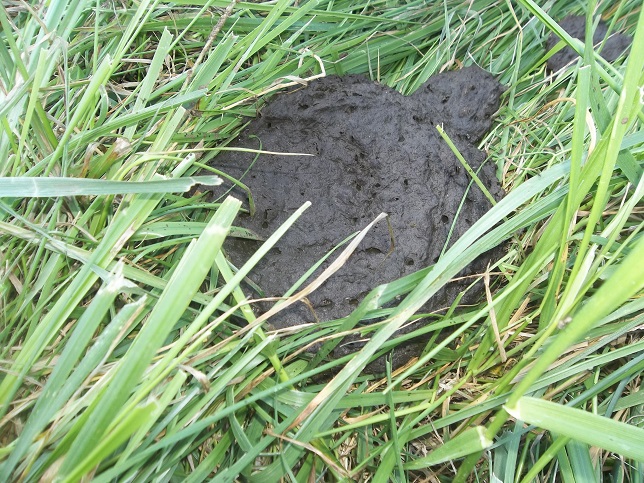
Are the cows eating litter?  “You don’t want the animals eating the soil food.” (@18:30) Is their manure getting runny?  Are their rumens less than full?  Hand says, “We shift them …[when] about 10% of the cows are starting to show slightly hollow on that left hand side, on that gut fill.” (@31:00)

Molly

As long as they’ve got good gut fill, good dung scores and they’re not eating the litter he leaves them there.
DimpledPid

The best thing he said (and this is a paraphrase of multiple quotes) was that incomplete recovery may push the cows to perform better but will, ultimately, bankrupt the operation by impoverishing the soil.  Second to that was his advice to test your own results, not listen to gurus.

BTW, I highly recommend the Agricultural Insights podcast.  Chris Stelzer is really putting together some good shows.  Unfortunately, my carpool doesn’t always want to hear about feeding grass to cows…or milk to dirt…or…

Hot Day, Almost a Bad Day

Well, the good news is no cows died.

We had a hot cow early Sunday afternoon.  She was standing with her tongue sticking out and mountains of drool falling from her mouth.  Heat stress.  How did this happen?  She was standing next to a water tank that was half-full.  The other cows were lounging in the shade.  What on Earth!?

As an immediate fix we moved the cows under a tree and filled a water tank with fresh, cold water.  Then we hosed the hot cow down with cool water.  It didn’t take long and we were out of danger.  She took a good drink of cold water then another.  Ultimately she lay down in the shade with the other girls.

OK.  What went wrong?  We had the cows up for milking…normal thing.  The night before I asked them to mow the driveway.  They obliged.  The next morning I thought they could mow out by the mailbox for me.  They were delighted.  4″ grass and clover mix must have been what they dreamed of.  Then, to top off the tank, I let them graze the ditch.

After the emergency passed, I came inside to fully research what I did wrong.  Turns out, that high-protein grazing early in the day mixed with increasing temperatures was a recipe for disaster.  Good thing they were up by the house!  This PDF provides a good summary of signs and causes.

The cows were stuffed to the gills just as the day got hot.  The full rumen was limiting lung capacity.  The heat of fermentation was compounding the problem.  Plus, this is a heifer who hasn’t shed her winter coat out well.  Greg Judy says that’s grounds for culling.  I think she needs another year as I basically took her off of hot feed and threw her on pasture in April.  She may just need time to adjust nutritionally.  As long as she doesn’t come up open…

So.  We are now introducing the cows to fresh pasture in the evening, moving once/day.  I’m also checking to be sure there is shade available in every paddock.  Consequently, some ground will go ungrazed for the next 4-6 weeks and we’ll skip around on cool days.  Today was 97 degrees.   Two days from now they are calling for 85.  Skipping around will get us through the worst of it.  I’m glad I have pasture in reserve.  I’m glad I bought several extra water tanks.  I’m glad I didn’t cut down all of the hedge trees out there.  I’m glad I under-stocked my farm leaving me with options to handle heat stress and inexperience.  Unfortunately, the cows are translocating nutrients from the top of the hill to the bottom of the hill, where the trees are.  That’s not desirable…but we’ll work with what we’ve got and plant more trees in coming years.

Two other notes:

  1. The neighbor’s cows are all pretending to be hippopotami to deal with the heat and flies, especially the ones without black hides.
  2. The Jersey cows don’t seem to notice the heat.  They graze all day.

One final note, much of this thinking carries through well to pet dogs…if that’s what you have for livestock.

16 years later…

I met my wife in 1993, I was 16 at the time. I was a senior, starting out at a new high school.  As I walked up the stairs to register for classes a cute blonde girl walked past me on her way out.  I had to say something…couldn’t let her just walk past me!  “Uh…is this the way to the office?”  Quite the line, eh?  Man she was so hot!  That will be 20 years ago in August.

Today is our 16th wedding anniversary.  What do I know about her that I didn’t know 16 years ago?  Or 20 years ago?  In a sense we grew up together. It has been a wild ride so far; college, the first house, children, career changes, farm…exciting stuff!  Through it all we have stood together and kneeled together and, sometimes, cowered together in fear.  What will I know about her in another 16 years?  In another year?

For me it’s a journey and not a life sentence.  I hope she feels the same.  I love you, Julie.

Goldenrod Down

Yesterday we parked the cows under a hedge tree in a dense, tall stand of goldenrod.  The cows were allowed to the right of the fence (the white line).

JulyGrazing3

Panning a bit to the right, looking at the same place it looks like this now, 14 hours later.

TheDayAfterAs you get closer to the fence there is less trampling.  Makes sense.  The cows are well-trained because the fence is consistently hot.  But huge amounts of green material has been pushed into the soil.  My bees may miss the goldenrod (which makes a lousy honey by the way) in the fall but this is a great first step toward making my pastures better.  We’ll rinse and repeat over the coming years, ultimately getting ahead of the weeds.  The cows also showed me two honey locust trees I didn’t know about.  Hafta fix that.

The cows are up the hill now.  Still full from last night but every one of them has their head down, unless they are eating leaves from a tree.

EarlyMorningMove

Grazing According to Plan…and Recovery…and Faith…but Mostly Plan.

It’s summer.  It’s time to stretch pasture.  If this year follows the normal pattern, it’s about to get hot and dry, though it’s cool and rainy this week.  I am banking on the grazing we did all spring (two complete rotations) to have left enough carbon,  fertility and residual grass to carry the grazing through summer drought and into a stage of strong recovery for fall and winter grazing.  I took this picture 34 days ago:

Trample

Here is that same spot today.

JulyGrazing1

Recovery happens.  Look at that tangled, matted mess of grass, clover, thistle…probably 50 different plants all within arm’s reach.  (It’s probably laying down because I need more calcium).  I have inches of mulch from stepped on tall fescue matted on the ground all over my farm.  From that I have a diverse, thick stand of forage that’s hard to walk through.  That’s the goal.  Increased forage diversity and density.  If we accomplish that goal we can carry more cattle.  The slope South of the house was a thick tangled mat of leafy fescue this spring, the result of hog manure last winter.  Much of the farm looks like that now except it’s not pure fescue.  It’s amazingly diverse, dark green and leafy.  The frequent rains and cool weather are only helping the cool-season grasses too.

JulyGrazing5

Now, I don’t think 40 days is enough because just beyond the reach of view the recovery is much less.  Then it looks better.  Then worse.  We covered 8 acres in 34 days.  I have to slow things down now that the grass is slowing down.  I have a few acres of reserve we have planned as July grazing.  That should give us the extra time we need to achieve recovery while allowing room for wildlife diversity on the farm and plant species diversity.  Also, if I had tried to graze those few extra acres in the spring I would have been further behind on my primary grazing areas.  The best option was to just let it go but to be successful this requires coordination, planning, preparation and a fair amount of guess work.  For example, we were here on June 11th.

MorningCows

Today it looks like this (from a slightly different angle, sans moos):

JulyGrazing6

All that grass was tromped turned into a sponge and food source for the soil.  The dense mat of dead grass holds moisture as it decays feeding the growing grass.  You can see the mix of new and old grass in the background compared to the mowing line that is the path to the family cemetery.  One might think it’s time to graze it again but I think that would be a mistake.  The grass is tall but the forage hasn’t recovered.  You’re seeing tall wild oats, some fescue and quite a bit of clover but the remaining forbs really haven’t recovered yet.  I could graze it now but I’ll get more bang for my buck if I just hang on a bit longer.  More root growth, more plant diversity, more volume of grass.  I just have to wait.  Besides, drought may start tomorrow and that standing grass is money in the bank.  But let’s say I’m wrong.  (It’s OK.  I get told I’m wrong a lot.  No, a lot lot.  (As if I’m not insecure enough.))  The grass will go to seed, the cows will mat it down and my next recovery will be even stronger and more drought resistant.

It was with these thoughts that I spent some time walking the pasture with my wife last night.  We looked at forage recovery, quality and density and, also, at our cows.  This is the first year I have managed grazing cattle, it’s the first year the pastures have been allowed to rest, it’s the first time these cows have had to graze for a living…lots of firsts.  I have two that are slick and fat, two that are slightly less slick and have less belly (one with ringworm), and two that are carrying good weight but also carrying lots of hair (both are mostly white).  Greg Judy would cull the last four.  I explained to my wife that those four heifers are probably just here to eat grass with the hope of throwing bull calves.  I plan to breed them to a more fescue-tolerant bull but the future herd will probably come from the two slick cows and any others I can find like them.

Then we spent some time talking about the importance of focusing on the forage, not on the cows.  The cows are the result of grazing management.  The cows are the tools we use to manage our forage.  But the grass is the goal…well, the soil but grass is the obvious result of soil health.

JulyGrazing2

I have 3 acres set (maybe 4) set aside that we haven’t touched yet this year.  I have 4-5′ tall weeds out there.  Starting this week the cows are expected to knock most of it to the ground and eat what they can.  We’ll move pretty quick through there in narrow strips.  This is a remodel job.  Should be exciting!  That part of the pasture has always been a nasty, weedy mess.  Now we’re going to remodel before those weeds go to seed.  Then we’ll let it rest until we graze in the fall again then sled on it in the winter.

JulyGrazing3

The rested ground is kind of a weird thing but Greg Judy mentioned it in a video, I had the acreage to spare and though we would give it a try.  I hope there is something they will eat out there.  We’ll see.  I think it will work well from a carbon perspective if the cows can find something to eat.

Numbering the Days of Hay

3 days of work.  15 days of fear.  3 months of worry.  9 months of hoping we have enough stored up.  18 months of hay available at any given time…drought could strike any day now.  Each dry cow needs 25-30 pounds of hay each day to maintain weight in the winter.  Each bale weighs 40-50 pounds.  If I have 10 cows and feed for 120 days (Jan 1 – April 1) I need at least 600 bales to see me through…if they don’t waste any hay.  These are the hay numbers…and I want to believe our days of numbering hay are numbered.

In my last post I talked about how proud I am of my son.  At age 12 he’s eager and able to work.  It’s not just that he has a desire to please me, he sees the value of what we are doing and recognizes that I’m just not healthy enough to put up hay.  And, yes, I equate bad allergies to poor health.  That’s a topic for another day.

My son knocked it out of the park.  I may start referring to him as “Buck”.  He’s 12.  Nearly 6′ tall.  Lifts bales with apparent ease.  How did I get such a son?  With a son like that my allergies are not a factor. Why wouldn’t I want to put up hay (even if he has to re-stack the wagon while I’m eating mulberries)?

HayRestack

Because I am not rich.  Like you, I need the maximum return on my investment.  Like everyone else, I need to make the best use I can of my time.  For example, if I wanted to replace the after-tax income from my day job I would need around 8,000 laying hens.  Then I could spend my whole day washing eggs, grinding feed, moving fence, shooting predators and praying…PRAYING that I’m able to sell all 400 dozen eggs I’m going to collect that day with a minimum of deliveries all to places that buy by the case (so I can re-use the cases to save money).  Let’s compare that to my current job.

I began my day today by making sure my SQL agent jobs were all successful.  Then I verified the status of my weekend backups.  After that I ran a report on the progress of a long-running data migration.  A new employee showed up and we showed him around.  Then I ate a bagel.  Then I took a quick break to deliver eggs to co-workers.  Then there was an ongoing issue with SharePoint backups (you know how those can be) trying to tame our growing transaction logs…an ongoing maintenance issue.  I spent the rest of the morning and a large portion of the afternoon writing the outline for a series of classes I intend to teach on indexing; clustered vs. non-clustered indexes, filtered indexes, indexed views (did you know the first index on a view has to be clustered?  That fact really wows the crowds!).  Finally, toward the end of the day, I needed to truncate and repopulate a set of tables for end-of-month reporting.  An exciting day!  I mean, did you truncate tables today?  I did.

I have a head full of very specific training – so much so I have a hard time breaking down what I do for a living without resorting to jargon.  How can I tell my kids what I do?  “Well, guys, I’m a database administrator.  I make sure electronic file cabinets are sorted.”  Meaningless.  It would be so much easier to tell them I’m a chicken farmer but my skill set solves several problems for our family, even if they don’t understand what I do.  First, it solves my allergy issue.  I can sit in the air conditioning all day resting my body, working my mind…even if I have to rely on farm work to retain my sanity.  Second, it really helps with the whole money issue…you know…eating food, paying for the farm, buying my wife pretty dresses.  Finally, it saves us from having to sell 400 dozen eggs every day.

All of that to say, at this point, it’s not a good decision from a financial, nor from a health perspective for me to ride or even drive the hay wagon.   Heck, just the labor expense of maintaining and running the equipment may force my hand on this issue.  I would be better off to buy in my hay instead of maintaining a tractor, baler, rake, mower and wagons just for that one purpose (26 tires on all that equipment!).  Instead of that, I should manage my fescue stockpile to minimize my own need for hay and, instead, deploy that capital toward appreciating assets.  Again, not putting up hay means I’m dedicating more time to selling things my farm produces, not producing something my farm consumes, feeding it in a feedlot and hauling manure later (more time).

Gabe Brown keeps cattle in North Dakota.  When I heard him speak he talked about planting cover crops to use as winter forage.  48″ snows were not a problem for him.  Low temperatures were not a problem.  The cattle walked a mile or more every other day to get water.  No problem.  He just kept moving the fence a little at a time to give them access to more of the stockpile.

Jim Gerrish wrote a whole book on the topic.  In Kick the Hay Habit Gerrish details how expensive hay is, how much better off the cows are if you let them harvest their own feed and how practical it is for almost all of North America.  He guesses that farmers continue to put up hay because it’s “just what you are supposed to do”…and because they like to…even if it is not in the best interest of their wallet.

Greg Judy suggests keeping 30 days of hay purchased in case of an ice storm that the cows can’t graze through.  Julius Ruechel, Gordon Hazard, Cody Holmes…I could keep listing authors/ranchers who agree.  OK, maybe not Joel Salatin.  Or even my friend Matron of Husbandry.

I’m not presenting a case against hay.  I’m presenting a case for why I believe our days of baling hay are numbered.  For now, though, we have fully-depreciated, functional equipment, we enjoy haying (allergies aside) and it’s just what you are supposed to do.  So we’ll probably keep it up for a while.  Long enough to build strength and character in my sons anyway.

Raising My Replacement

Hard to say why but it’s hard to find kids who want to stand on a dusty hay wagon on a 95 degree day and handle a few hundred bales twice.  But it’s time to cut hay.  And I’m massively allergic.  I’ll spend days coughing, sneezing and wheezing after riding the wagon behind the baler.  But this year it’s not so bad.  My son, at age 12, rode the wagon.  I stood back and watched him succeed.

BuckBaler

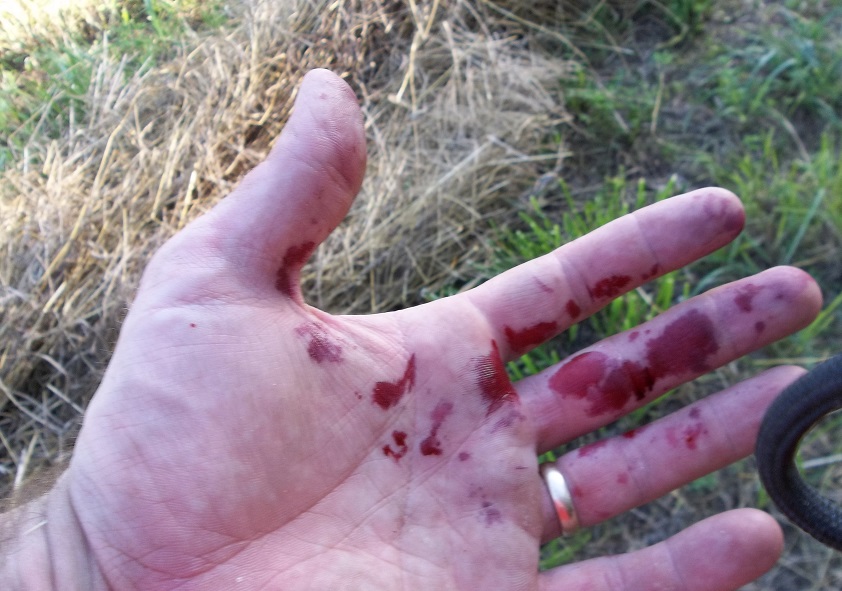
Since he can do that, I can spend more time eating berries.  I was caught red-handed.  Mulberries were juicy!

MulberryJuiceIt gave me time to reflect on what we are doing, why we are doing it and how to get that last sweet dewberry out from under the poison ivy leaf.

PoisonIvyAndBerriesGood luck with that.  Maybe I should stick to mulberries.  Either way, the days of putting up our own hay may be numbered.

Thoughts and Advice…but not from me

I read Thoughts and Advice From an Old Cattleman while sitting in a hotel in Florida last week…along with other reading.  I thought I would share some of my thoughts, but I’ll keep my advice to myself…short of this one thing:  Get this book.

The author details a plan for moving cattle through your pastures on a regular basis, selling and then immediately buying again.  If the market is down, you’ll buy immediately.  If the market is up, you’ll have to pay more for better animals but still, buy immediately.  Different classes of animals do better at different times.  He goes into long detail about feeding, worming, fly killer…all things we don’t do but also talks about getting the most bang for your buck on grass…using low-cost grass to grow calves up to feeder size.

A recurring theme in the reading I have done lately is the disassociation of ranching and tractor ownership.  Gordon goes so far as to say you are better off with 4 ex-wives than with 4 John Deere’s.

Again, I highly recommend this book.  I found it to be very encouraging that a 70+ year old man runs 1,800 head of calves across 3,000 acres (with zero debt!) and humorously complains that he only has enough work to keep him busy for 3-4 hours each day.  Wow.  Poison aside, he’s doing things right.

I am now rethinking everything we have on the farm.  Iron pile?  Buildings?  Corrals?  Fencing?  Ponds?  Chickens?  Cattle?  Which of these things are increasing in value?  Can I make it with a cow/calf operation or should I consider exclusively running or at least adding stocker calves?  How can I put my debts behind me?