Well, not world domination but…my pastures anyway. Our friend from SailorsSmallFarm asked the following question:
So, probably a dumb question, but if they never eat the fescue, since it’s clearly the boring food in their salad bar, and just trample it in, won’t it eventually dominate the pasture?
Not a dumb question but before I answer I offer a disclaimer: I think this is an exciting topic. If you don’t think growing grass is exciting…come back tomorrow. I’ll try to put up pictures of kittens soon as those seem to be popular on the internet. The short answer is, no matter what your forage base, rainfall, livestock, temperature…it’s all up to your skill at grazing management to maintain forage diversity. As a small point of correction, cows DO eat the fescue. However, at certain points in the year fescue adds a measure of difficulty to grazing. For the long answer we have to look closely at fescue.
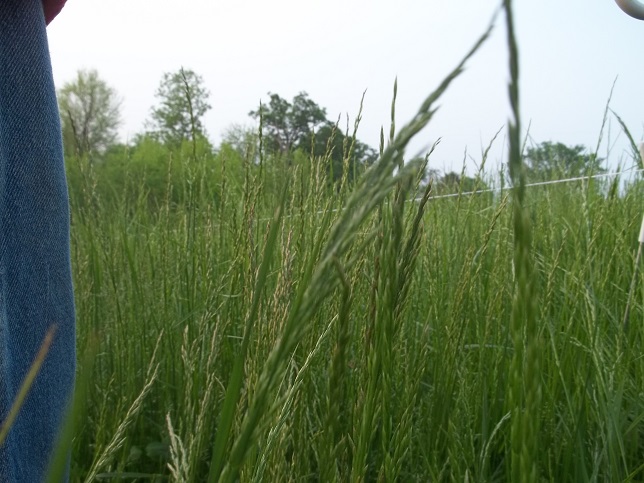
What’s wrong with Fescue?
Rather than answer that question immediately I’ll start with what is RIGHT with fescue. It may be some of the very best forage I can grow. First, it’s durable. Horses can eat it down to the dirt, pigs can root through it, making a muddy soup of the soil and it will grow back and will grow thick, tall and lush. Second, it’s an excellent forage for your winter stockpile. It has a waxy coat and the green of fescue growing in healthy soil survives long past frost and even into freeze. From the West Virginia Extension Service:
There is seldom a problem when tall fescue is used as part of a forage system containing other forages, with the tall fescue being used primarily in the spring and winter seasons. The best use of tall fescue is for late fall and winter grazing.
So I just have to make sure I’m offering them other options besides pure fescue. No problem.
 Back to the winter forage idea, Joel Salatin also emphasizes the value of winter feed in Salad Bar Beef by suggesting you add chicken manure to your stand in the late fall to help the fescue stay green into the freeze. It may be only a maintenance ration but it really lasts. He points out that frosted fescue goes up to 14% sugar. Pretty good winter eats.
So what’s the problem?
Toxicity. If you do a little research you’ll find out that Fescue will knock the hooves off of your cows and cause them to abort calves by raising their body temperature on hot days. It lowers circulation causing tips of ears and tails to turn black. Scared yet? Should you be? I don’t know. Joel Salatin doesn’t warn his readers of imminent cow death in Salad Bar Beef. Neither does Greg Judy. But both men maintain diverse swards. This paper lists three options for dealing with fescue and two of them include spraying it with a strong herbicide until you win then replanting. Greg Judy discusses this briefly in No Risk Ranching saying he tried. The first 3 or 4 years after replanting, the pasture was soft and pugged quickly. The 5th year it was dominated by fescue again. But the first option listed is “dilution with legumes.” This is what Greg Judy says to do in No Risk Ranching by seeding red clover into stands of fescue after grazing them hard in the fall/winter. More on this later.
Many plants, if eaten in isolation, are toxic. Walt Davis says this even includes alfalfa. But, when eaten together with other species…even other toxic species, the toxicity of each decreases. So, is the endophyte in my fescue stand an issue? It can be but primarily if it’s a pure stand of fescue. It limits weight gain in hot weather, limits milk production…not good, right? Right. But it can be managed by making sure I have a diverse sward. And good news…I do…well, mostly…ish.
How do I maintain that diversity? By making sure all plants have a chance to reach reproductive maturity. Rather than grazing the whole pasture at once and allowing the cattle to stick to favorite grazing and loafing areas, overloading nutrients in some places, overgrazing forage in some places and allowing brushy overgrowth in others, all of my pasture gets grazed, manured, stomped on and rested fairly evenly in a rotation. That means the cows can’t return to graze the clover or ryegrass out of my pastures before it has a chance to recover and re-establish itself and also weeds that would normally be ignored and allowed to grow are either eaten or stomped into oblivion.

Trampling…any carbon will do.
It’s the stomping into oblivion that I find most interesting. The soil is hungry. How about that? It’s hungry. Soil is alive. It needs to eat. If I scoop up all the growing grass, bale it and haul it away what is left to feed the soil? The roots that are pruned off of the plant but not much else. When the cows step, stomp, jump, run and otherwise disturb the soil with their hooves they are pushing organic material down. That could be manure, grass, weeds, tree branches, dead bugs…whatever is out there. It will be broken down by microorganisms and added to the soil structure by worms, moles, mice, dung beetles….things that physically work the dirt. But I have to have something in contact with the soil. If the cows are allowed to eat it all I get nothing. Cows are not inclined to eat fescue down to the ground. They are more inclined to eat a little fescue along with everything else growing out there and knock the remaining fescue to the ground. Perfect. At around the 9 minute mark of this podcast Ian Mitchell-Innes says:
Do not eat everything. In fact, the more you tread on the ground, the more your return over time because the carbon you put on the ground will be worth more to you, in the long run, than the animal.
He also goes on to say that as soil health increases you’ll see darker greens and more leaf material. All that extra nutrition punched down into a 4″ circle of soil by 1,000 pounds of beef leads to healthy soil in a number of ways. The additional organic material helps the soil retain moisture…in fact, helps it to soak up more water before allowing runoff. With water and food, microbial life in the soil explodes. Legumes do a good job of fixing nitrogen but microbes do too, then they are eaten by worms. A healthy worm population can eat 40 tons of dirt each day…but they won’t be a healthy population unless I feed them and feed the things they like to eat. And it’s mostly the fescue that gets stomped, tromped and abused. From an article about Greg Judy:
The Judys may get another advantage particular to their area from leaving so much forage behind. Their primary forage base is endophyte-infested fescue. It appears their cattle eat less of it, including fewer of the “hottest” plant parts — the stems and seed heads — when they are moved frequently and not made to “clean up” all the forage. That fescue then contributes organic matter and ground litter to help build the soil.

So I just have to make sure the good stuff is out there to eat as they tromp down the mature fescue. How do I do that? Where the stands of fescue are the most thick I’m grazing in narrow strips because narrow strips = higher residual while wide strips = higher forage utilization. I want to knock down as much as I can as the cows race through the stand looking for something to eat. But the real secret comes before they graze and tromp. I overseed annuals and legumes into the stand. Then the cows tromp those seeds into the soil and I have additional diversity just in time for the next grazing cycle. Beyond the use of annuals I need to keep up a program of frost seeding red clover until I reach the point where the tall grass grazing will enable established stands of red clover to re-seed themselves. Here’s another article about Greg Judy:
Judy focuses on utilizing the existing seedbank that is stimulated by the heavy impact of mob grazing to initially promote the resurgence of a polyculture. If there is no legume seedbank, an initial seeding of clovers and other legumes may be necessary. One established, tall grass grazing will ensure the legumes will reseed themselves, and reduce the need for nitrogen fertilizer.
Rest, Nutrient Distribution and Pasture Diversity
If the cows are allowed to run the pasture in a set-stocking situation, they will find places where soil nutrition is high and the grass tastes good and will eat it down to the roots. They will find stands of bluegrass, bromegrass, rye, clover or wild oat and they’ll eat it all each time it begins to recover. They will find tasty saplings and eat them as fast as they can recover. Over time I’ll be left with a pasture full of cow paths, weeds, briars and thorny trees that tolerate grazing well, not to mention fescue. I will have very little clover, very little wild oat, very little rye or bromegrass. I say this from direct observation. Left to their own, cows will travel long distances (making paths) for one little bite of grass. The sod will be poor as the root systems won’t develop to their potential. Manure will be largely concentrated in the loafing areas. Loafing areas will be compacted. I could keep going. I am describing my farm as I bought it. Grazing a mob, the cows ignore a fair portion of the fescue I offer them but they do eat some along with other, tastier forages. The animal density puts a hoof print in at least every square inch, manure in every square yard and more is better. Then they are forced to move on, leaving manure, trampled waste and stubs of tasty forages behind for 40-90 days. In those 40-90 days those forages have an opportunity to fully recover. They may even develop a seed head. If I have managed my grazing correctly, the grazing action of cattle will help those species to gain ground in their territorial battle against other species or at least fill in the spaces between plants. I have clover where I have never seen clover before. I have fewer thistles than I have ever seen (in fact, I have watched my cows eat thistle). Bromegrass, rye, foxtail, wild oats start showing up in unexpected places. Dandelions fill in the holes along with a variety of weeds I have never seen and can’t always identify…but there they are. Impact is the tool but rest is the key. Not just the time between grazings but the time between pastures. Almost a third of my farm is held in reserve and is outside of the regular rotation…and I will rotate that third each year. This gives room for ground nesting birds to do their thing, allows native prairie grasses the chance to go to seed, builds deep, tangled root systems and provides a forage reserve in case of drought. All of those things are positives.

Observation, Change, Control and Experimentation
How do I know if I have managed my grazing correctly? How do I know if this is working? There is no set formula for this. No predetermined function allowing me to pass in cows, land and time to return pasture health and diversity and profitability. So how do I know if I’m using the time tool, the land tool and the cow tool correctly? I observe…daily if possible. I define a goal. I shoot for that goal. I review my progress, make adjustments and continue moving forward. Sometimes it works and nobody notices. Sometimes I fail miserably and I look like an idiot or, worse, animals get sick. That’s not the goal. I make adjustments and move on again. What if I seed millet and cowpeas into the pasture before the cows trample the ground? What if I frost seed red clover every year? What if I don’t? The forage will change over time. I have to monitor those changes. I am an active part of the grazing program. The herd will change over time. Some cows will do better than others even without changing breeds. David Hall of Ozark Hills Genetics relies on the best performing cows passing their genetics on to future herd members. Cows that can’t tolerate our conditions will ultimately get culled from our program. Fescue is just part of our program. Am I worried that fescue will take over the world? Well, it already has…at least on my farm. Now I have to give a competitive advantage to other species and leverage the strong points I see in fescue. Over time the pastures will change…for better or for worse. Each year the weather will change…for better or worse. I’ll just have to accomodate those changes and roll with the punches. But since Joel Salatin and Greg Judy can live with it, I can make it work. Right now the focus is on knocking as much of it down as I can to build soil health while also establishing a healthy stand of clover. That should keep me busy for a couple of years. Now, if you want a little homework, study up on midwestern pasture grass identification with me.

 Here it is again, from a different angle and 3 weeks later. No rain fell until we got half an inch last night.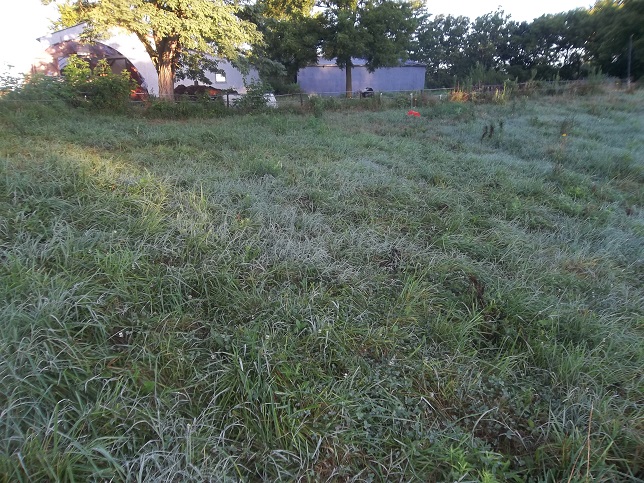
 The plant density under the tree is low, in part because of the shade, in part because cattle have shaded themselves under this tree for …how many years? and the soil is compacted. I’m not going to eliminate the shade. I do try to rest the grass and allow it to break up the soil.
 Down the hill to the West and we’re in the triangle (cleverly named for its shape). What a weedy mess. This is also compacted both from cattle and from the road that went through here ? years ago. But it has recovered and is ready for grazing.
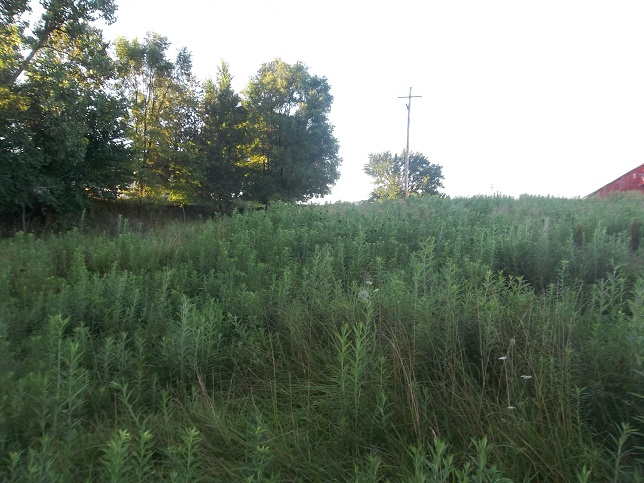 Down the hill to the North I stop for a shot of Grandpa Tree…only I can’t seem to get far enough back to fit him in the shot. What a massive old burr oak! It would take three of us to link arms around it…you know…if you were inclined to measure a tree in terms of arms linked. That tree has just always been here and has always been enormous. Hope it is still standing when I’m not.
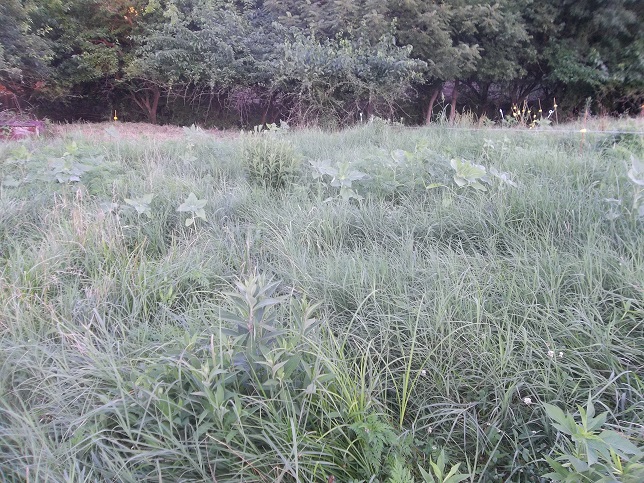
 Down the hill from Grandpa Tree to the North and we’re in the bottom. Last time we grazed here I was in Florida. The water tank was overfilled making a muddy mess in a large circle around the tank from cow hooves. That hasn’t recovered yet. It may not recover for a couple of years. Not much I can do. Otherwise, the bottom is recovering nicely. Dad is concerned about the broadleaf weeds out there. I understand and kind of agree. On the other hand, it’s nice to catch sunlight at different layers and put down roots to different depths. It’s nice to mine nutrients differently and offer the cows variety. It’s nice to not start the tractor. As long as on species doesn’t dominate all the others I think I’ll let it go. Maybe I’ll bunch up the cattle more tightly as we graze through this time and knock more things down. I am going to have to do something about the thorny saplings down there though.
 The most interesting thing I saw across the creek was the damage the Japanese beetles had done to the multi-flora rose bushes. Those poor bushes are just skeletons now. Wow.
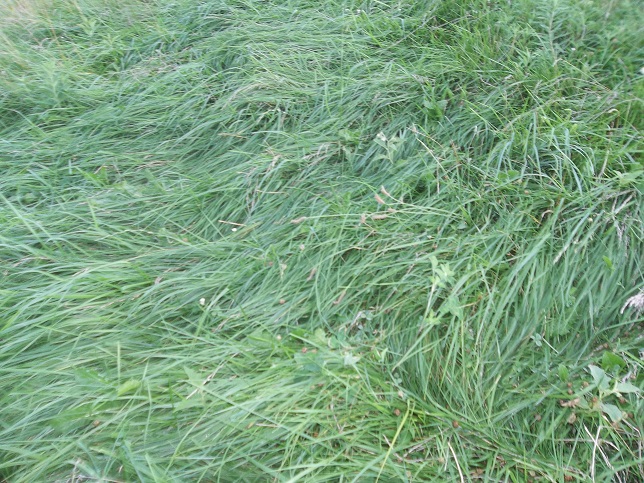
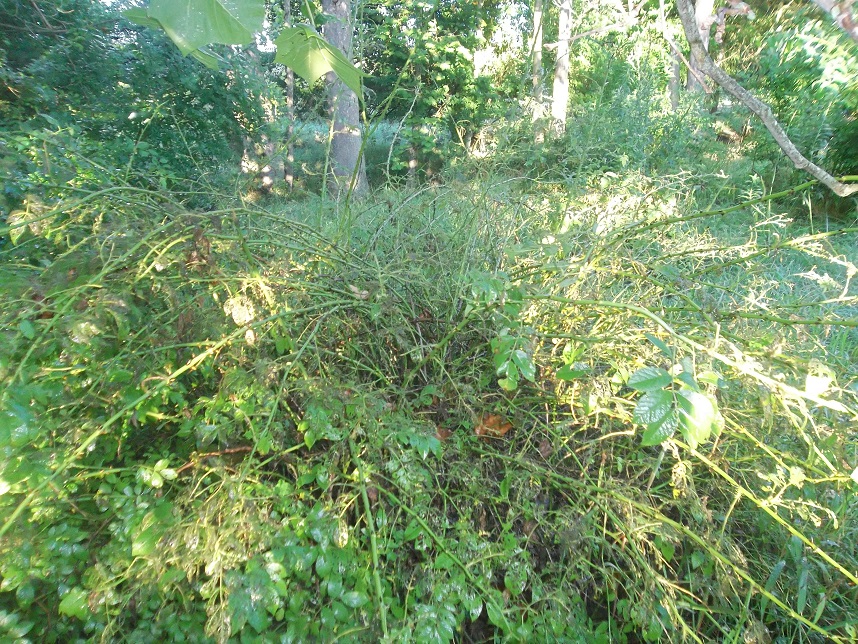 Recovery across the creek looks pretty good. Tons of forage down there, all recovered, all lush, green and ready to graze.
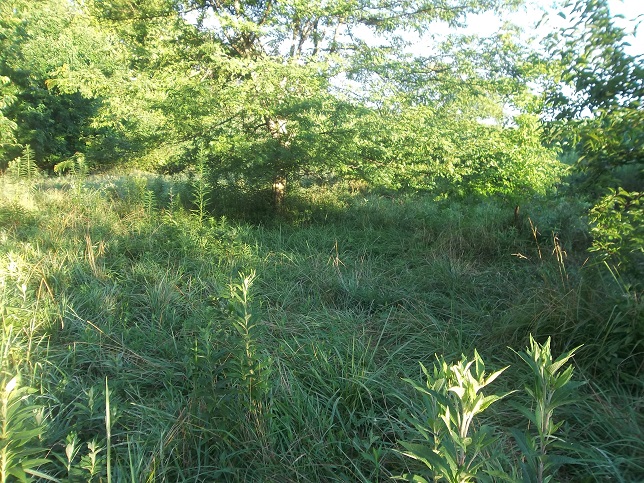 It looks great, in spite of the fact that it’s a weedy mess full of thorny trees. In spite of the fact that it’s July and we haven’t had any rain for 3 weeks. In spite of the fact that my neighbors are running low on pasture. For comparison sake, I took a picture across the fence (at my own property) a cousin runs cows on. There is no rotation. There is no recovery. Every blade of grass is ragged from grazing. If nothing else, compare the percentage of brown in the picture. That is not to disparage my cousin but to show the value of plant recovery. I should also point out that he is running 12 cow/calves on 40 acres, I am running 8+2 on 13 acres…and I can’t keep up.
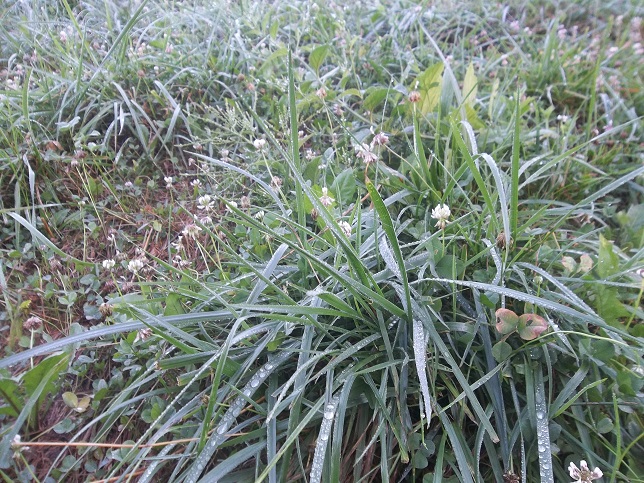
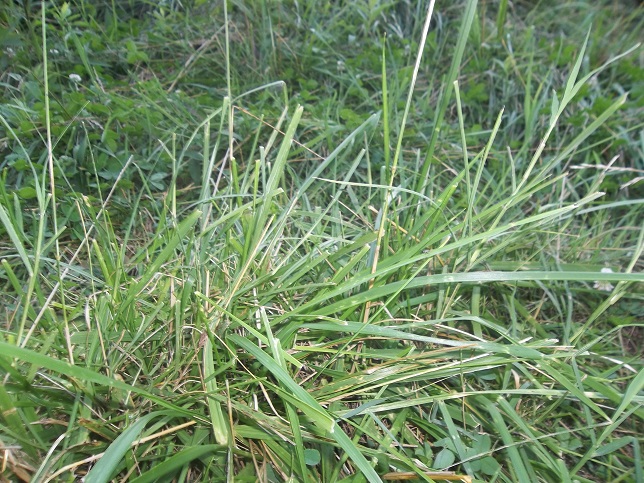
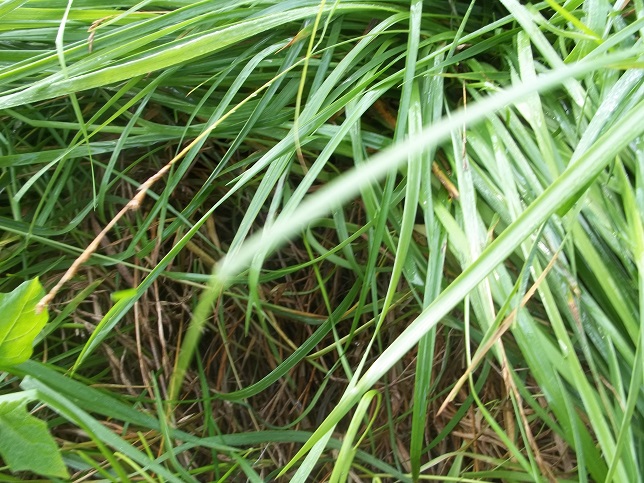
 Remember looking at recovery earlier this month? The grass should look like it has never been grazed. We looked at this clump of grass as an example of incomplete recovery. This may not be the same clump but it’s within 5 feet. Pointed blades of grass? Check. Yellowing blades of grass adding to the litter? Check. We are recovered. I won’t be grazing this plant for another two to four weeks but it’s ready if I need it.
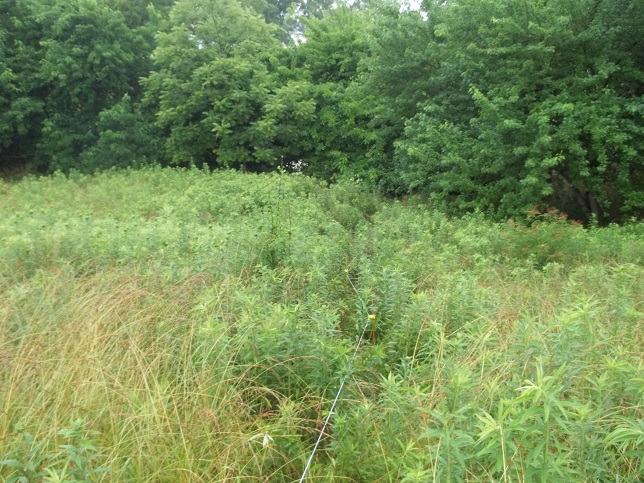
 Disemmemberment hill is recovering slowly. It’s a matted, tangled mess of goldenrod stems, grass, manure and whatever else was growing there at the time. There are still some solid stands of goldenrod growing there. I think I should go ahead and chop them with my sicket. I don’t think we can mow this hill without having to repair the tractor tires when we are finished. The whole hill is a thorny mess.
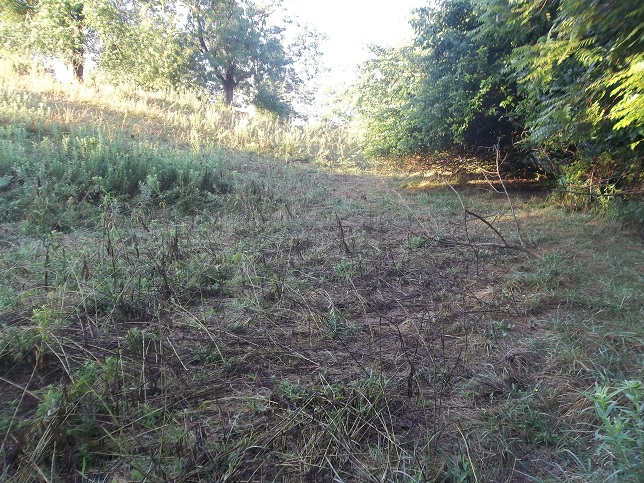 There is a good layer of litter on top of the hill.
 The grazing plan worked out a little differently than we expected but we’re roughly where we should be. If you follow that link you’ll see we should be on #27 today. The layout worked differently in situ. We have actually spent two days grazing an area somewhere between #26 and #27 and look how fat the cows are. They wouldn’t even get up when I walked over to them.
 There is some sort of grass growing there I haven’t identified but I’ve always called “water grass”. It’s nearly 6′ tall and has a thorny-looking seed head.
 The cows seem to like it.
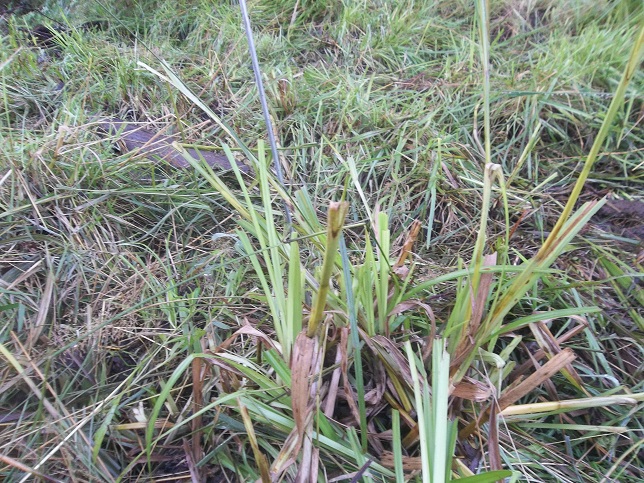 They also appear to like willow trees.
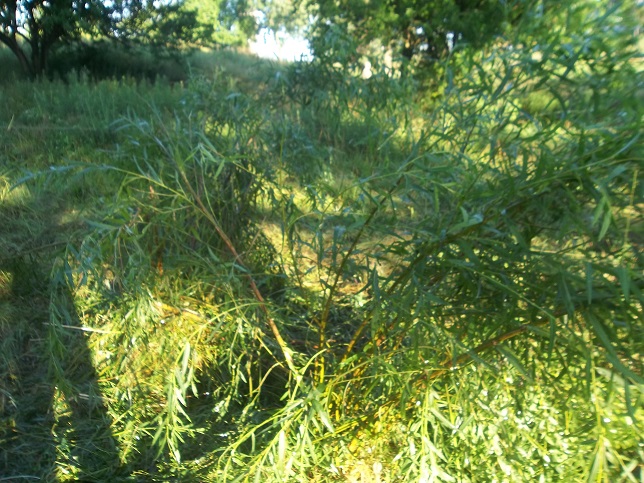 Back toward the house the steep, south-facing slope is always a dry, hot area. I don’t know if you can see but there are a number of cow paths cut on countour around the face of the hill. That added compaction makes it harder to get forage established here…keeping things dry.
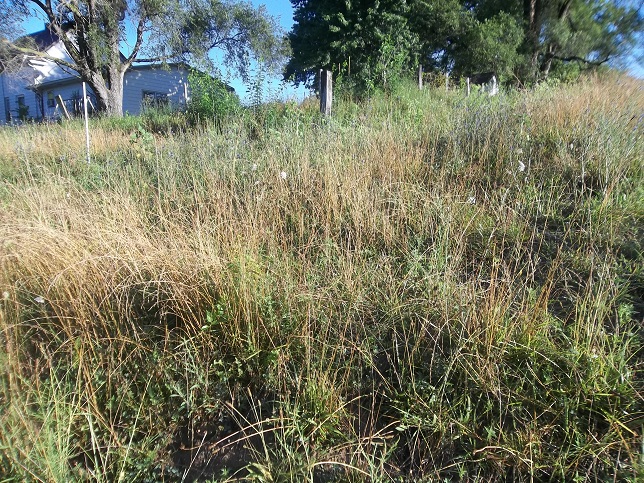 Pastures change and it pays to watch your keylines. Where the slope ends 10 feet downhill from the picture above we see lush forage.
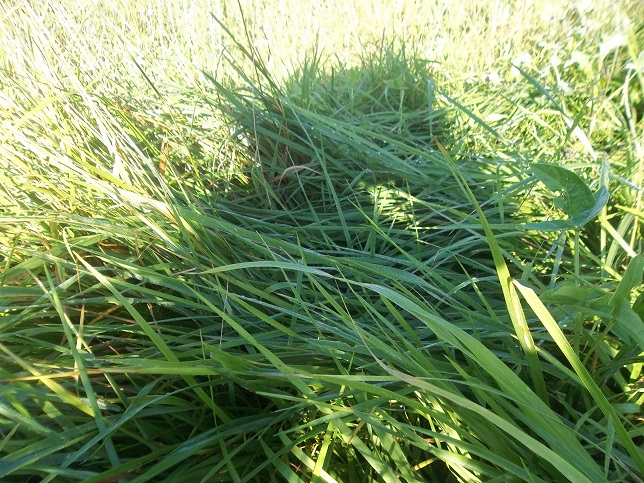 Wrapping things up, walking West through the chicory field, can you see where the fence was last time I grazed through? We had a big rainstorm and a tornado nearby the night the cows were standing to the left half of the picture.
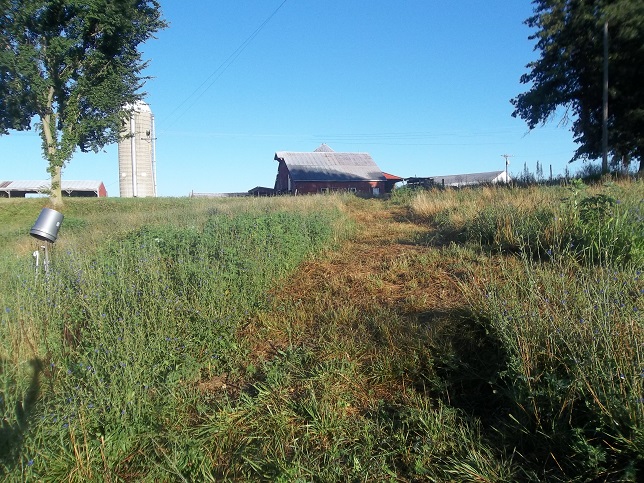
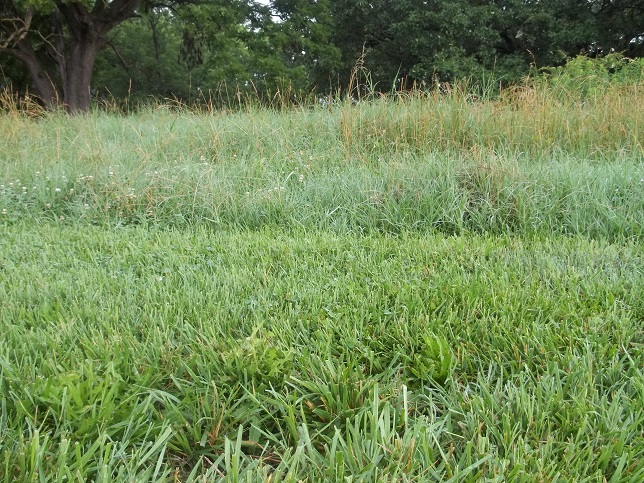
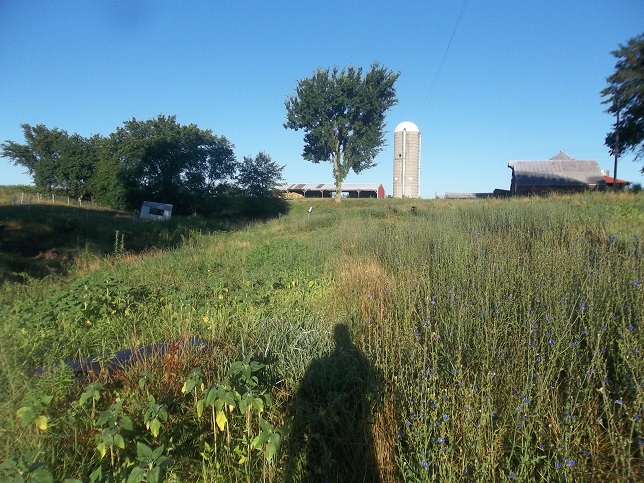 We needed to service our well so we mowed a path through this pasture on the hottest day this summer. It looks like a dead zone out there. It will be interesting to watch that for recovery in the coming weeks. I’m going to have to graze over that ground even though it has not recovered.
 Well, time for breakfast. See you later.












 Chism Heritage Farm