Moving the Mob

I recently played with the logistics of an attempt to mob graze the entire state of Illinois and threw out big, meaningless numbers along the way. Let’s add a little meaning. These first two show some pretty big mobs. Watch the animals move. They just keep coming.

This one though…this one is ridiculous. I imagined grazing cattle through the state of Illinois. How about driving cattle from North Australia to South? Illinois is only 600 km long. These cattle went 1500 km.

And if you want more detail on moving 18,000 cows through Australia…well, here it is.

Someday…

Just a Dash of Prepper

Not that we are crazy. Well, we are. But not that we have school bus bunkers buried in the back 40. (Maybe that’s not so crazy…) But it seems to make sense that from time to time the power is going to go off. And there are things I could do to make that more manageable in the winter like having a wood-burning cook stove and something to eat…just in case.

And I have heard of people who go to work in the morning and come home that afternoon unemployed. Scary! So it seems to make sense to have a lump of cash laying around to help stretch us through lean times. And my resume up to date…just in case.

And sometimes, when you are minding your own business as you drive down the road, a tire on your car will express its mortality. So we maintain a spare tire in our car…just in case.

And when government falls, the dollar fails and we all stretch cow hides across our dune buggies and search the plains for petrol, I’m covered. I can make whiskey for barter in Bartertown. I just hope I have enough hair left to have a cool mohawk.

But did you see the recent pictures of Buffalo, NY? Windows pushed into houses by the weight of snow. Second story windows partially covered by snow.

What would I do? I mean, assuming I had advanced notice.

First things first. My parents would be trapped at their house for who knows how long. I would probably suggest that they come camp out here or at least bring a vehicle up here for easy access to the main road.

I would have the kids start bringing in firewood and lots of it. Not the cool fire, warm day stuff, the dense, hot oak or hedge. Just keep bringing it in. Power goes out we can still cook and we can melt snow for water. We also need to make sure all of the toilet buckets are clean and half-filled with fresh sawdust.

I need to make sure we have plenty of dog food for Reggie. We can manage without it for a few days but I would rather we didn’t have to. I’ll have to add that to a list or have an online retailer deliver it two days from now. Will the storm be here by then?

Otherwise we are ahead of the game here. There is plenty of meat in the freezer and canned goods in the cellar. Maybe a little short on wine…. The car is full of gas. We could just drive South to avoid the storm but we have livestock.

And that’s where I hit a brick wall.

Right now the chickens are in a hoop house. It would be no big deal to put a dozen bags of feed in there along with a barrel of water. Common sense, really. But the tricky part is not knowing how much snow it takes to collapse my hoop structure. What would 6 feet do? 6 feet of wet snow? 6 feet of wet snow and high winds? Will I hear it when the collapse kills my birds?

Same with the cattle. Six feet of snow is too much to graze through and it’s too much for my barn to hold up too. So now what?

SnowCows

Well, I guess I need to get the cows somewhere that is sheltered from the wind. Exposure will kill them faster than starvation. Do they need a roof over their heads or do they just need shelter from wind? I could line up a wall of bales on edge to protect them from wind AND give them feed at the same time And not have to worry that the collapsing barn will crush my cattle. So now I guess it’s just a matter of ensuring the cattle have plenty of bedding material and we can call it a day. Or maybe not. Let’s look at a few examples from around the world:

So now the good news. We don’t get snowfalls like that. A foot of snow is usually the upper limit in a 24 hour period. So this is just an exercise in thought. I really don’t know how we would handle it but I welcome your comments. It only gets worse after the snow gets here. Then it melts and floods the area. Tree limbs down, power outages, soupy ground, culverts washed out of roads and more cold coming. Cows washed away, pigs swimming downstream, dogs and cats living together, Mass Hysteria! Then think of all the babies born 9 months later…

It’s enough to make a guy want to be paranoid in town.

So. Anybody have any experience weathering livestock through a severe winter storm beyond what Pa did in the Little House books? Surely one of you Canadian readers…

OK, November. How Much Grass Do You Need?

Well. It happened. November.

Shoot. Now what?

Oh, how I yearn for those warm summer days. Not the hot summer days. Not the dry summer days. The warm ones…topping out around 85 degrees. Those are nice but they are gone. Gone. They won’t return for another six months.

Six months.

Warm season grasses are gone. The clover has been killed back by frost. The soil is frozen an inch deep making it hard to move fence posts. Cool season grasses are still growing a little on warm days but the pasture won’t be ALIVE again for until May.

What am I going to do?

Well, here’s the plan. We want to continue grazing cattle for the duration. We want to keep the ground covered for the duration. That’s about it.

So here we are on November 20th. What is left to graze? Take a look at the map. I have shaded in areas that have been grazed since Oct. 1. Red shaded areas are where I grazed the alfalfa field down to the nubbins. The blue area was grazed lightly and may be grazed again. Everything else averages 18″ tall. The yellow border wraps the farm.

TheFarm

It looks like so much more area when you are on ground level. The cows are currently growing that red block at the south west corner and will finish up all of the alfalfa west of the pond by the first of December. If not sooner. I am also supplementing them with a round bale. I just unwrap and carry a layer each morning and give them a new strip of alfalfa to graze. Then we give a second strip of alfalfa around noon. Seems to do the trick.

AlfalfaGrazing

Strip grazing the alfalfa field is a little tricky. First I have to be concerned with my cattle for a number of reasons. Alfalfa can cause bloat…even if I am careful, there is very little shelter out there from weather so I have to be attentive to their needs and they are a long way from the water spigot making it hard on the farmers caring for the animals. There is nothing quite like a basement full of frozen hoses! Beyond the cattle I have to be concerned about the alfalfa stand itself. I don’t particularly want a pure alfalfa stand (cause it causes bloat) but I also don’t want to kill it with hooves on mud. I do want to remove the stems to limit next year’s alfalfa weevil population and I do want to add manure. And I need to utilize the foot or so of alfalfa that grew back since the last hay cutting. This forage would otherwise be wasted. Grazing it now saves more durable forages for later. So here we are. And right by the hard road too…where people can watch me screw up my alfalfa field.

Anywho. I have to race across the alfalfa because it just isn’t built to last. Snow will push it down to the dirt, knocking off the leaves and leaving behind the stems or the freeze thaw will …knock off the leaves and leave just the stems. The cows aren’t big fans of stems. But I’m a big fan of the cows spreading manure across my alfalfa field. It doesn’t make up for the four cuttings of hay we remove but it’s that much less manure I have to scrape up from somewhere else. So we’re trying to rock right on through the 17 acres of alfalfa before January 1.

SO. How much grass does November need? No more grass. But the alfalfa west of the pond and the rest of a round bale should do it. I hope.

Now, November. Tell me how much firewood you need.

Grazing in the Late Fall

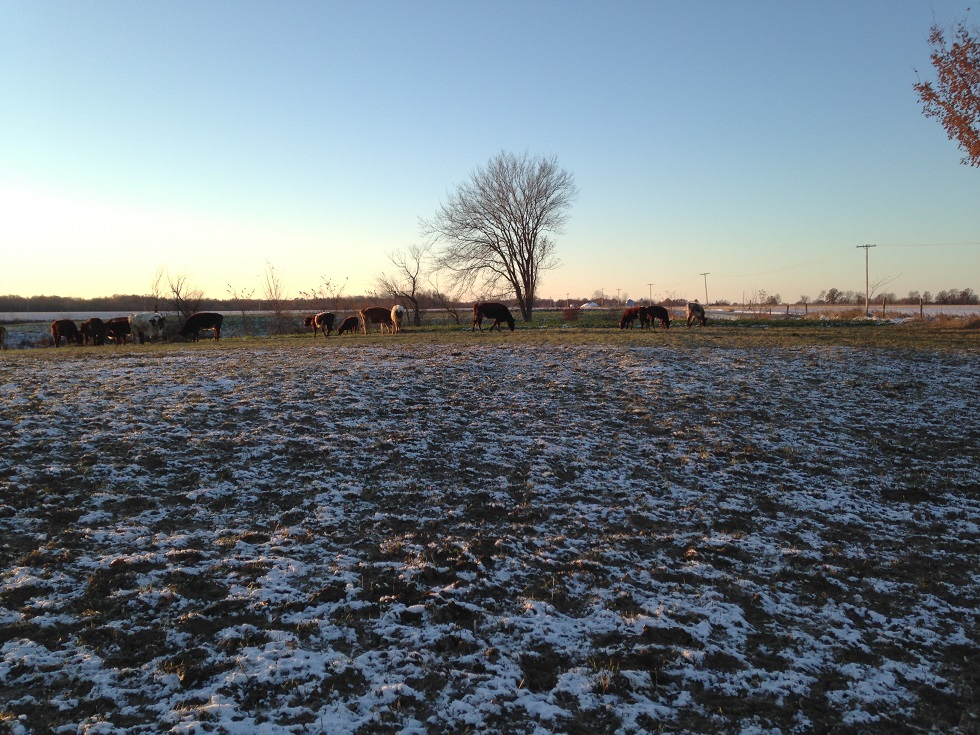
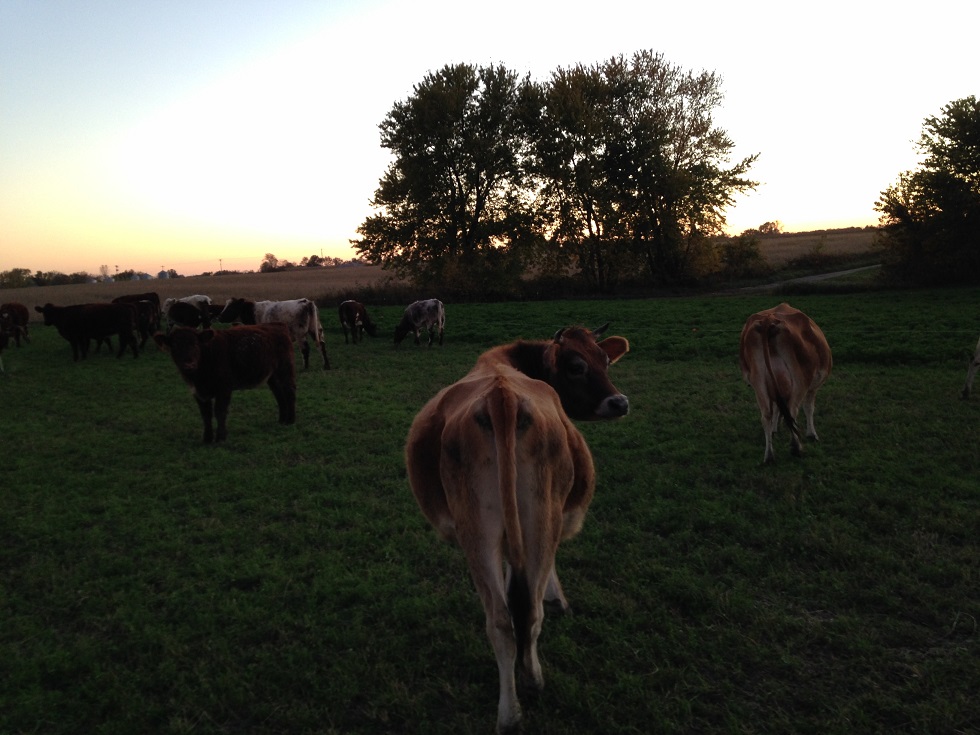
Cool autumn days and cold nights make this just about as easy as it gets grazing cattle here. The new heifers have settled in. The milk cows are only being milked by their calves. Everybody is in one big happy herd. Well, one big herd. Most of the pushing wars have ended though Julie and I watched a calf get pushed under the wire today. I said “most”.

So we have them bunched tight. Tight enough you can’t step in the pasture without hitting a land mine. Tight enough that they are eating everything down to a common height. We move them when they need to move giving them something that looks like this (well, they don’t all look like this)…

NewSpot

…leaving this behind…

OldSpot

I moved the cows to the spot above around 7:30 this morning. I moved them off again at noon. Moved them again at sunset. Tight bunches. Massive impact. Quick moves. Fat cows.

Flora

Well, fat most of the time. If I do my job. And we are trying to leave enough grass standing that it has a chance to recover slightly before it goes dormant. Further, we leave enough grass we can graze it again if we have to. Well, a man can have his ideals, can’t he? This fescue was grazed two weeks ago and I think it looks pretty good for November. You can clearly see old, grazed growth and fresh, green growth. You can also see how much other stuff is blanketing the soil. See how shiny fescue is?

Fescue

I plan my grazing out in my head well ahead of time complete with contingency plans and emergency backup plans and, of course, hay. If a bad storm kicks up we can take them to the barn. If feed runs low we can haul out some bales. But I prefer it if my cows have a nice, clean place to lie down each night, if they spread their own manure and if they at least get a bite of something green every day. But I have a lot to learn too.

Pasture is Always Better? Always?

I’m up against the idea that pasturing animals is always better. Always.

Better for what? Better for who? Under what conditions?

This may seem like a strange point for me to argue but I don’t think it is necessarily so. Let me skip to the end and say that at under certain conditions it may make sense to preserve your pasture and increase animal health and comfort by sheltering the animals.

There. I said it.

feb dot

What problem are we trying to solve?

I have been struggling with this question quite a bit recently, and mentioned it in a recent post. What problem I am really trying to solve by putting pigs on pasture. Am I solving a pig health issue? An ecological issue? A monetary issue? A pride issue? The answer to all may be “Yes” but let’s introduce the fourth dimension: Time. How long do you leave pigs on one specific pasture? Does a heavy rainfall change our management plan? Does incorrect timing hurt animal health, the ecology, our pocketbook or our pride? Yes.

Am I really concerned about animal health? Or am I primarily concerned about what people will think of me if I deviate from the pasture model for a few days? Do you think customers want to mess with explanations?

Q: Are your animals pastured?
A: Well, it depends…(and they roll their eyes and walk away.)

This is a little like the “Organic” question.

Q: Are you organic?
A: No. But…

They are finished with the conversation. The prospective customer has bought into the illusion that “Organic” is a meaningful term when in truth it is a government-owned monster with no teeth. Not only that but organic standards vary as you cross borders. What does it mean?

I could tell my customers, “Yes, my pigs are on pasture 24/7. No matter what. Why, just last week we had 20 inches of rain in 24 hours and 50 piglets were drowned when they washed down the creek. Further, the muddy wallow created by the herd washed out decades of topsoil but, by golly, we have pastured pigs.”

And it’s not just about pigs. There are times when the pasture is better served if the cows are in the barn and the chickens are in the greenhouse on deep bedding.

But not everyone agrees. And that’s OK. We don’t have to agree all the time. Right? Variety is the spice of life. Celebrate diversity and all that.

But it’s not cool to say that “All pigs are better off on pasture” without any qualifications. And because I’m so heavily immersed in P. G. Woodhouse at present I am inclined to say, “I rather believe my pigs are dashed happy on the stone floor.”

So let’s start at the beginning.

Q: What problem are we trying to solve?
A: We need to increase the farm’s fertility and water holding capacity.

Q: So what do pigs have to do with this?
A: Oh shoot! Pigs are the mechanism, not the problem.

The problem has nothing to do with pigs at all. I’m trying to solve a fertility issue. Pigs are a tasty solution provider. But if we’re going to use pigs to help increase fertility we had dashed well make certain their needs are met. They need to be warm, comfortable, well-fed and active. And I guess if I’m providing fresh bedding of sufficient depth it doesn’t matter if there is concrete under the pigs or not. The problem is fertility. The solution is husbandry…on or off pasture.

And I’m not alone in such thoughts. But maybe that’s why Salatin calls himself “Farmer” instead of a “Permaculturist”. Wanna see what he uses for winter housing for his pigs? It’s concrete. He puts concrete sidewalks in hoop structures so the pigs can’t “make huge craters that go all the way down to China“.The best picture I can find of it is on another blog.

Click image for source.

I don’t…can’t…won’t do everything following Mr. Salatin’s example but a big part of why any of us do anything we do is because we read a book or two of his. He is HUGELY influential to the current generation of alt. farmers. His video, Pigs ‘n Glens, shows, appropriately, pigs in glens. But it also shows pigs in hoop houses. He gives an example of an effort to get pigs off of pasture, being late, and having to wait out a heavy snow storm before bringing the pigs in. So for a short time his pigs were on pasture in the snow but that’s not the design.

Where are his pigs in the winter? On pasture? Nope. And why? I asked a friend of mine who met Mr. Salatin some years ago.

Pigs on dirt, might work in some places, and people only get to the first part of Salatin’s talk, hear the word pasture and that’s it.  Never mind there are photos of their hogs in barns or hoop houses during the winter.  I think I have a Smithsonian from 2000 and in it there’s a photo of Joel in a barn with lots of big hogs on deep bedding.  He values his pastures too much, and I’ve seen his pig glens up on the mountain, they are very small and only visited once a year.  No one wants to listen to that, it’s too extensive to only use that land once.

Well, things change. We learn. We adapt. Apparently he now visits pastures more than once but let’s let him tell us all about it. He leaves 50 pigs in on a half acre for “about 5-10 days” (at 1:30), returning 3 times/year (things change). That’s very different than a recent Acres USA article suggesting that you can just leave pigs in place for two months. Salatin specifically says “landscape massage” (5:00) when discussing managing the disturbance. Managed disturbance.

What does “managed disturbance” mean? Salatin says you don’t want too little disturbance. You don’t want too much disturbance. You want just enough. Just enough to encourage grass growth, not so much that you encourage weed growth (see the 3 minute mark).

So how do you do that? Well, it depends. But where I live I have to keep the pigs moving from pasture to pasture before they turn it into soup. If it is raining, they have to move more quickly…or not be there at all.

And that’s where I’m content to leave it. Where are my pigs? It depends. It depends on seasons. It depends on rainfall. It depends on heat. It depends how big the pigs are. It depends on what I need pigs to do. But I have no problem housing my pigs on fresh pasture, cattle bedding or asking them to work over the concrete slab. Wherever they are, it’s up to me to make sure their needs are met and meeting their needs every day is what is best for the pigs. I use pigs to help solve my fertility problem but that creates new problems for me to solve. Husbandry problems. Chasing dollars around a muddy pasture won’t save the world. Proper land and animal husbandry will.

Grazing Where You Shouldn’t Graze

The cows were recently on the alfalfa field. I know it’s kind of edgy to graze green alfalfa this time of year but that’s where we are. I’m trying to save my fescue for later. The alfalfa will be useless in 30 days so the goal was to sprint across the field now. The key appears to be to keep the cows full and to keep the cows full of dry fiber. Hay. But Sunday I didn’t stick to my plan. I offered the cows hay but didn’t ask them to clean it up because the day before I gave them a grazing area that was too small. The cows were hungry. I was in a hurry. So I let them eat some hay then moved them onto fresh, young, dew-covered alfalfa early in the morning.

If you don’t know, that’s a recipe for death. Bloat. The rumen fills up with methane and the cows have a hard time expelling it, front or back. If it continues expanding the cow can suffocate. Obviously, bad mojo.

EarlyBloat

Sure enough, 41 started to look pretty uncomfortable as the morning progressed. Fortunately dad pointed her out to me as we were working on something else. There are any number of real, medical solutions to bloat if you catch it in time but we didn’t have any of those on hand…you can either call me risk-tolerant or just stupid. Take your pick. Since she was still acting normal, on her feet with her ears up, we just needed to work through the gas. Dad started to walk the herd a little bit. Just a gentle walk. This is the time you want to be upwind of your herd, not downwind. Wow. She was looking a little more comfortable so we came to a stop. The cows were all full and just wanted to take a nap in the sunshine. 41 tried to lay down with the herd. She grunted, burped, grunted and burped again. Then she stood up. Then back down. I went to the barn to get the nicest bale of grass hay I could find and began to spread it out, flake by flake, in the alfalfa field. By spreading it out the cows are less likely to try to make a bed of it and more can eat the bale at one time.

A little more walking and a little more waiting and suddenly we could see a slight depression on her left side. Whew! When I came back to check again later the hay was all gone.

What did I learn? The cows need their fiber. They need to eat fibrous growth, not this young, all-protein alfalfa. It breaks down too quickly and leads to trouble…not to mention the splatter behind the cattle. I knew this already but I guess the lesson was reinforced. Maybe I learned a little bit about my own level of risk-tolerance. I am, it appears, more willing than most to make mistakes then hop on the ol’ internets and tell the world about those errors.

That’s nice and all but I also learned that not all cows are created equal.

NoProblem

The next day we kept the cows full and put them on fresh alfalfa in the warm afternoon sun. Guess what? Happened again.

So I moved the cows onto a field they haven’t grazed since July. In most places the grass (fescue) is 18″ tall and has yet to form a seed head. Good stuff. Beyond that, there are a good selection of weeds and tree leaves available in their new location. Thick stems break down slowly compared to thin, green alfalfa. Tree leaves have tannins that help balance things out. They went right to work when they got in the new area shortly after sunset.

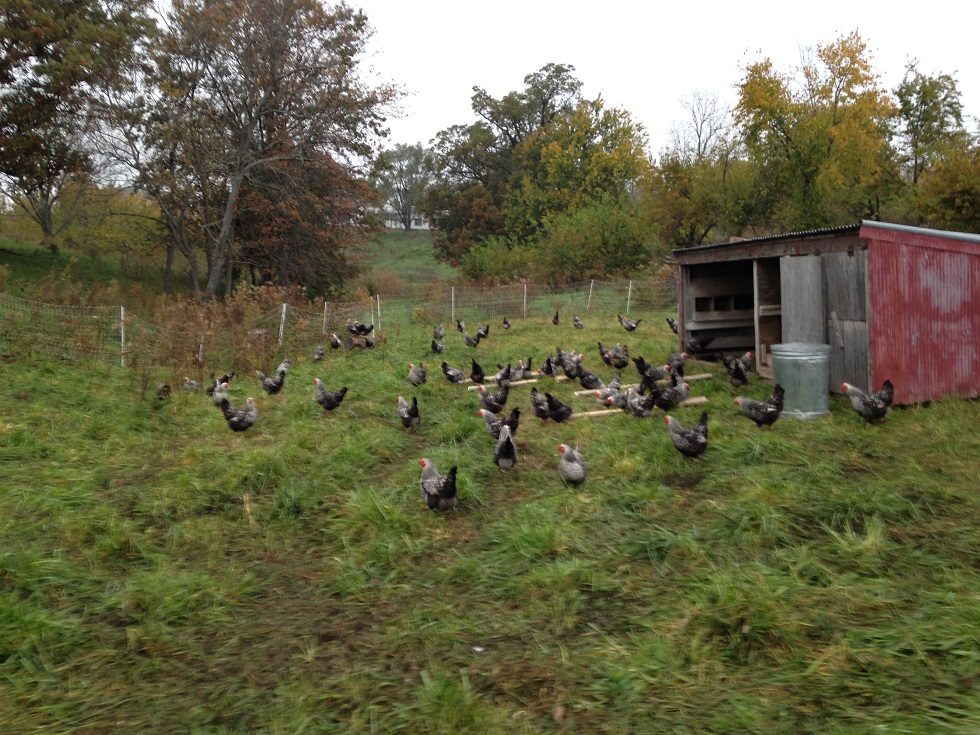
Two days later the pullets were moved to that exact spot to clean up after the cows. Busy schedules are preventing us from harvesting the older birds. That flock are still out on the alfalfa field cleaning up the mess the cows made there. Yolks from both flocks are bright orange right now.

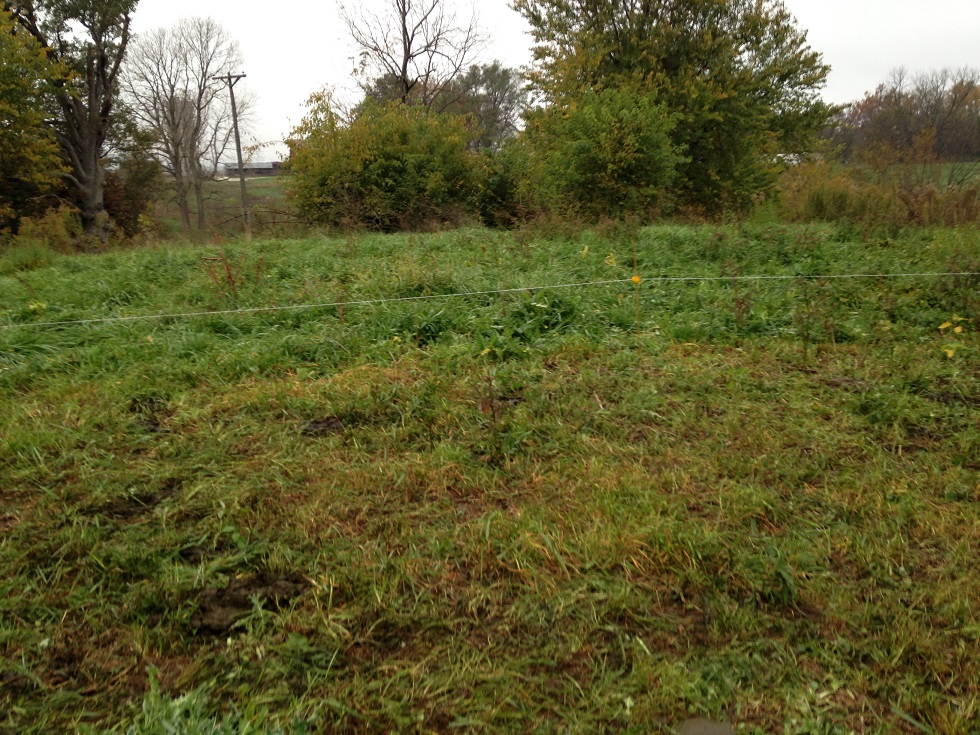
PulletsOnPastureThe picture is fuzzy in the early morning light but I think you can see the cows didn’t strip the grass down to bare earth. There are a few places uphill where we are asking them to help with the remodeling but here we are leaving residue. Uphill from here we have a solid stand of thistle and goldenrod with just a pinch of spiny amaranth. The cows helped us out there as you can see by the fence line.

CowRemodeling

They are a little loose on the fresh green grass but are not needing the intensity of care required when they were on the alfalfa field. Have I learned my lesson? Well, sorta. I plan to return to the alfalfa field after we get a good killing freeze so the cows can rid me of stems (alfalfa weevil live in stems) and add a layer of fertility. But I have to attend to their fiber needs.

How Many Reels of Fence Do I Need?

We have a dozen rolls of polywire fencing but how many do we need? I mean really need?

Ignore the fact that we keep our cows in two herds, beef and dairy. Let’s just talk about the beef herd. How much fence do we use?

We could get by with five. Easily.

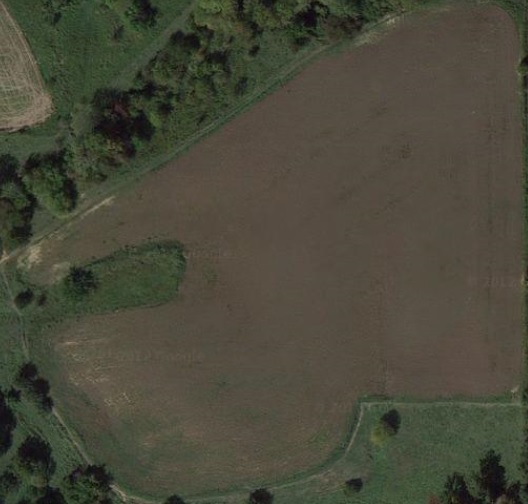
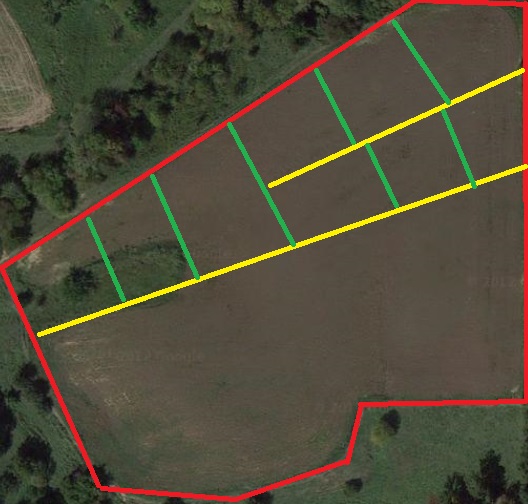
Let me explain. We need two reels running in parallel the length of the pasture (let’s call those lines). Then we use one reel for a back fence, one for a front fence and the third defines the length of tomorrow’s grazing area (let’s call those cross fences). Those three cross fences rotate forward the length of the two parallel lines. Clear as mud? Let’s use pictures. This is an overhead view of the field north of the hog building. For decades it was where the sows and boars were kept. I remember it being a moonscape as a kid, now the fences have all been pulled down into the earth by grasses and trampled by cattle.

PigPasture_Bare

The satellite image has not been updated recently so the picture shows a lot of damage done by the cattle in the past. See those well worn paths across the field? That’s from the cattle lounging in the bottom or in the wheat field further north and trekking across the field every morning to eat silage and hay at the barn. The whole herd walked in a line right there several times each day, every day for years. There is good fence to the south and west of the field. I just need to build temporary fence to the north then subdivide the grazing to concentrate their activity as they pulse across the landscape. Because my cattle walk in a place only once every three or more months the old cow paths are healing. Instead there are deep roots and tall forages. Unfortunately, there are also tall weeds but that’s part of the healing process.

On the picture below I show the permanent fence in red, the north line in yellow and the cross fences in green. Those daily subdivisions are quite large. In September we were just trying to skim out the annual forbs (chicory, dandelion, clover and ragweed) while maintaining and fertilizing the standing fescue. Fescue is at its best when everything else has frozen out. The little extra dose of nitrogen left by grazing animals will make it even better…for longer. Better still where the layer flock passes.

PigPasture_Fenced

Every day we moved the cows. Every day we moved the water. Every day the cows got fresh salad and clean sheets. Every day a new section of the pasture got a workout. The strategy is only a little different in the clover field. Not much in that field will survive a frost. Hopefully I can finish grazing it before the forage is killed back by frost. In recent years this has been a lot of corn and beans.

Clover_Bare

Dad lightly disced the field in the spring and spread a pasture mix heavy in legumes (60%). We took a cutting of hay in late July and it has since recovered. The ground is a little lumpy, there are a few weedy patches (shattercane and cocklebur) but for the most part it’s a very nice field. Hopefully the cows can flatten it out a bit so the hay wagon won’t be such a bumpy ride. Because of the grazing strategy here we are grazing smaller areas. We want fair utilization, a lot of trampling and good manure distribution. We try to leave a blanket covering the soil but still give the cows what they need as measured by gut fill and manure consistency.

CloverRemains

We also have to move things along quickly enough to cover the field before frost. Really I should have until early November before snow pushes it all down but I need to be in the alfalfa field after it frosts and dries. So here’s what we planned:

Clover_Planned

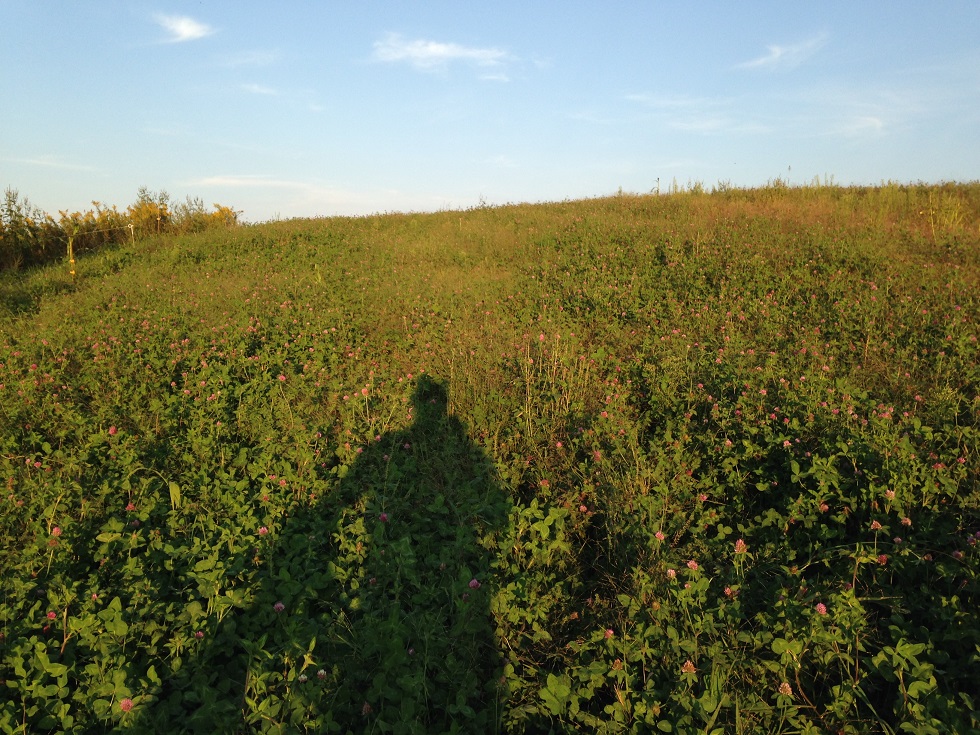
Try to imagine yourself as a 13 year old boy trying to walk a straight line to the opposite corner of a field…when the corner is hidden by two hills.

RedClover

What really happened is he went wide on the initial fence. We cut a portion of the area in half with another roll of fence then applied our subdivisions. It worked. The pasture sizes vary wildly but it’s cool. We were counting on cool weather in these open areas but it got to nearly 90 degrees. When it got hot we removed the back fence and allowed the cattle to lounge in the shade of the few trees in the first subdivision. That’s not ideal but it also wasn’t a big deal. The cattle tended to concentrate their manure in the shade and caused additional disruption near the trees but they appeared to do their grazing in new areas, not in old ones.

Clover_Actual

From here we’ll attempt to define a mostly parallel fencing line to the south and keep movin’ on. I think we are currently using 7 reels of fence but only because we are lazy. We could easily get by with five. You just have to think through each movement and how to get the most out of your available resources. Pasture size is dictated by available forage, livestock needs and your management goal du jour. This winter we will really bunch them up in smaller pastures to utilize the stockpiled forage and distribute manure evenly. When it is warm and rainy we give them larger areas. Seasons change. Cattle needs vary. You’ll just have to figure some of this out on your own farm.

Let me give you another example of variation. We have gotten nearly a foot of rain in the last two weeks. We had seven inches of rain in 24 hours last week. This field is so new that there isn’t a dense net of roots protecting the soil. Hooves can sink in. To prevent lasting damage we just move the herd faster. Maybe we offer smaller grazing areas and move them twice daily but they don’t get a chance to make a mud pit. You must be flexible to change with both livestock and pasture needs.

With a mere 5 reels of fence you should have everything you need to put your cows in motion. A drink of water, a pinch of salt and a little shade on hot days and you’re on your way…these could all be delivered to a small herd with a single portable structure.

Additional thoughts:

  • An important thing to consider is placement of your reels. If you are planning to make any adjustments to your fence, put your reel on the end you will adjust. Sometimes we have to roll up a little bit to let the cows into a new stretch. No big deal if the reel is in the right place. For example, try to place the reel of your cross fence so the cattle will show you their left side to you as they walk into the new pasture…and you should make the cattle walk past you to go to new pasture every day. This gives you a chance to look at the gut fill of a portion of the herd as well as a chance to look at other details. Are their coats shiny? Are their rumps and tails clean?
  • I have a few 1400′ reels of fence and I find they are difficult to roll up. I think the best reels are the ones that are only half filled as they are less likely to fall off of the spool. If I need more than 700′ of fence on my little farm I should reconsider my fencing plan.
  • We use a mix of pigtail posts and rebar posts. Rebar posts will take abuse, pigtails won’t. But we have had our share of fence shorts because the insulator on a rebar post twists and grounds out the wire. I prefer pigtails for ends, corners and cross fences then use rebar for lines. Pigtails also hold the wire more securely when deer run through the fence. If I had to make a choice I would choose pigtails.
  • 5 reels would cost around $250 for string and reels, another $50-100 for posts and insulators. That’s all the fence you would need for your first few hundred head of cattle. You might want to offer more space or move them less frequently in the spring but by the time you have 100 head of cattle you can probably afford another reel or two.
  • Don’t skimp on the energizer. And get one with a remote!
  • I would like to try polyrope but it ain’t cheap.
  • I don’t seem to know if I’m writing this blog for me or for you. Or for you. Or you. Or maybe just my kids. Maybe this is the manual for our farm…what I’ve learned so far. Whoever this is aimed at, thanks for reading. I hope it is clear.

Could I Farm the Whole State?

No. I could not farm the whole state. It isn’t going to happen. It would cost something like $176 billion to buy the farmland. Besides, we are better off with a half million small farms than with one giant farm as more farmers can do more work, cast more vision and solve more problems. Break the herds and flocks listed below out to an appropriate number of farmers if you want but keep the big total listed below. That’s realistic. Let’s have some fun with one big herd today though.

We use cattle to cycle nutrients and fix carbon. To build healthy soil. They also heal riparian areas. This is accomplished by timing exposure, measuring mob density and allowing adequate plant recovery. The problem I have is I don’t have a mob. I have 60 hooves, not 60,000,000 hooves. Not yet anyway…

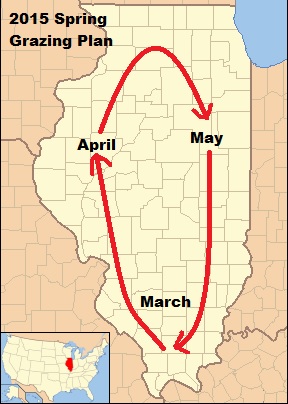
What would happen if we used the whole state of Illinois as a pasture? Pretend I could rent it or buy it. Work with me here.

First, let’s make room for people. We need people. People are good. More people allow us to achieve a more complete utilization of the land and resources because I can’t do it all. I need help harvesting the nuts and berries. I need help making the calculations for the jump to light speed. I need guitarists and poets and artists and carpenters. I need bakers and brewers and electricians and computer programmers. I need inventors and dreamers and deadbeats. Biographers, journalists, morticians, pastors, truckers, used car salesmen and bankers. I need overweight doctors, professors without truth and people with Facebook accounts who think they have all the answers. I need people who can manage resources efficiently and people who will gamble it all away in one roll of the dice. I need people cheering for the red team and people cheering for the blue team and people who think they are above the game. I need opportunities to serve in a community and a community to help me when I’m in trouble. So let’s leave room for the people. The cows are a tool. The dirt is the place. The people are the purpose.

Illinois has a population of 12 million. 8 million of those live in or around Chicago. People are often shocked to learn you can drive 5 hours out of Chicago and still be in Illinois. In fact, There are 37 million acres in Illinois. So let’s give everybody an acre. They don’t have to live on that acre, but we’ll reserve that land for retail, roads, recreation, housing, gardening…whatever. Everybody gets an acre. In fact, let’s reserve another 3 million acres for the unborn. Normally we, as a nation, allocate equal space for lawn and for recreational horse pasture. I may not be leaving that much cushion. You may have to buy your horse hay from Missouri.

That leaves us with 22 million acres. Awesome possum. Cool beans. We currently farm 26 million acres in Illinois so we are ahead of the game already.

In Illinois we basically need a little less than two acres per cow and her follower. That would mean we need to come up with 11 million cows (and 110,000 bulls!). But there are only a million cows in the state currently. Heck, Texas doesn’t even have 11 million cows. But we have the appropriate soil and sufficient rainfall and we would harvest something like 10 million calves each year. Basically one beef for every non-vegetarian resident. The USDA says we ate 195 pounds of meat per person in 2000 so you probably won’t be able to/shouldn’t eat the whole beef. We’ll have to sell a portion of our production outside of the state.

And 11 million is just the starting point. We have some of the best soil in the world. Right here. If we can grow 400 bu/acre corn we can surely build grasslands to support one cow per acre…or maybe just one per 1.5 acres. But let’s stick with one cow per two acres and add in sheep instead.

We can comfortably run 4 ewes per cow…so 44 million ewes. So 88 million lambs each year. 88 million. Not only do I need to gobble up a whole beef each year , I need to eat 7 lambs each year. That’s too much meat. Lamb may become the new chicken. The cheap meat. We’ll have to export some of it to Indiana and Missouri…or other states if our neighbors catch on and appropriately stock their land.
GrazingIllinois

But we aren’t finished. Imagine the mess behind the herd. We need a big-ole flock of layers to follow behind them and clean up the mess. We currently run 10 layers per cow and I think that ratio is about right. So we need to run something like 110,000,000 layers free-ranging behind the cattle. The flock may force us to rotate some grazing land into grain production seasonally but that really shouldn’t hurt our grazing total. We’ll also need some help hatching those eggs, let alone collecting and packing and selling 6 million dozen eggs every day. BTW, that’s half of the current egg production of our entire nation so maybe we should cut back our egg production…if for no other reason to lessen our grain needs. We will be grazing around 400 square miles each day with our herds and flocks so the more we distribute the materials handling the better. We should have egg-packing and distribution facilities all over the place. We could probably butcher the flocks and make canned soup and canned cat food and…whatever else while we are in Chicago each fall and they can compost the remains for sale to the millions of Chicago gardeners. We’ll pick up the new flock of 110,000,000 pullets when we pass University of Illinois. Maybe the pullet logistics could become an ongoing research program.

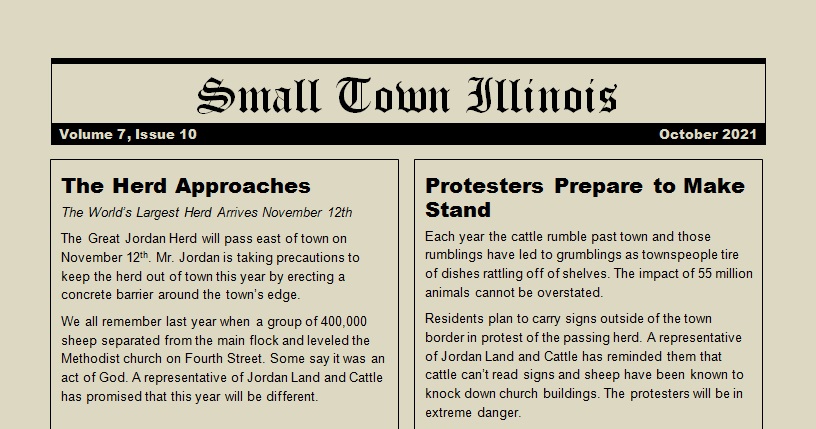
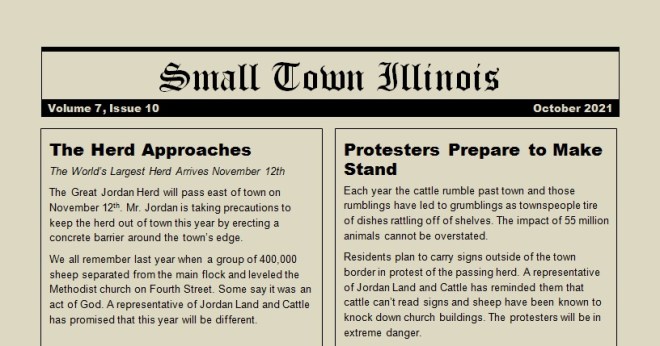
The flocks and herds will pass by quickly going from Jerseyville to Jacksonville in two days. One day the grass is waist-high, the next there is a carpet of grass and manure. Like sweat after a workout it only lasts a little bit then the recovery continues until the next workout. Every three to five months the herd will pass between Effingham and Olney then on past Harrisburg so we can wave at Metropolis then up again between Pinkneyville and Chester, across the flat stretching from St. Louis to Peoria to Rockford, skirting the freightened masses of Chicago who have never seen cattle before as we wind down to Champaign and back around again. Every three to five months we’ll graze, trample and manure the entire state, building inch after inch of soil on a dense fabric of roots and trampled grass blades…a blanket that cushions and protects the soil from ice, wind, sun and rain. Schools will let the children out for the day to see The Jordan herd pass by…a sight their grandparents never imagined. Letters will be written to editors complaining about the flocks of wild birds that accompany the herd migration and late pizza delivery caused by cattle crossing the road for hours. Chickens will follow behind…all 110 million of them, scratching out bugs and leaving additional manure. (How would that even be possible? Thousands of school buses converted to chicken houses driving from place to place? Maybe train cars full of chickens? Train cars full of chicken feed? Honestly, I can’t imagine the daily distribution needs.) A few days later there will be clouds of dung beetles. Deer and wild turkey and quail will graze with and behind the herd, not to mention the swallows swooping in above the herd as it grazes quietly along.
 

Newspaper

But surely we can do more with that ground. Cows appreciate shade on hot days. What if we planted rows of trees on contour? Miles and miles of diverse tree stands. Canopy layers of oak, hickory, chestnut or walnut. Lower layers of apple and cherry and filberts all on neat rows slowing the downhill flow of rainwater. Even lower layers of gooseberry and raspberry and strawberry. Black locust mixed in for nitrogen and wood products. All 12 million people in Illinois could have 50 pounds of cracked walnuts, 100 pounds of chestnuts, boxes and boxes of apples and cherries and strawberries. Of course, nobody wants all that food so we’ll have to hire people to harvest the abundance and build huge processing facilities to make brownies and High Fructose Chestnut Syrup and hard cider and applesauce and apple pie and caramel apples. Not to mention the massive squirrel and rabbit harvest…also enjoyed by the numerous birds of prey.

We would need something like one hired hand per thousand head of livestock so we’ll have at least 55,000 employees (probably on horseback) helping to manage the herd, culling old, open or injured animals, castrating young bulls and rams, keeping the mob grouped and moving. This does not count the teams that move ahead of the herds to build fence. (Not the kind of fence that subdivides the pasture for daily moves, the kind of fence that keeps the cows out of town…the houses from being smashed…and the cars from being trampled (we hope) by FIFTY-FIVE MILLION ANIMALS.) Probably another employee per thousand layers. Nor does this count their families that will accompany them on the migration amounting to a population larger than the city of Springfield. We’ll need many, many more people to help us transport, slaughter and distribute the meat. Thousands more to handle the abundance of nuts, fruit…just the raw materials. More to take those raw materials and produce finished products ranging from rawhide bones for pets to dining room tables to gooseberry pies. Think of the regulators required to keep us all safe! Think of the lawyers we’ll hire to keep us safe from the regulators!

And this is just the beginning. Remember, we set aside 15 million acres for humans. That leaves room for zucchini and tomatoes and flocks of chickens at home. Different strains of chickens…regional breeds. Maybe goats. Certainly pigs…everybody loves bacon. Pork may become that treasured annual delicacy bringing family together for harvest and celebration. Maybe one farmer in 20 farrows, allowing many others to keep a pig or two at home to make good use of uncollected tree nuts and garden waste. Maybe even home dairy. Heck, maybe small raw milk dairies to supply milk and cheese for neighbors…nevermind. Illinois doesn’t like raw milk. Sigh. Woodworking shops, welding and repair, bakeries, septic tank clean out… Heck, we’ll keep everybody so busy managing our abundance they won’t have time to write silly legislation to “fix” the world’s problems…let alone write starry-eyed, idealistic blog posts.

Do you know the difference between “riches” and “wealth”? What if I suggested rich people have an abundance of money and wealthy people have an abundance of time? How’s that sitting with you? (I’m thinking about this as I read P.G. Wodehouse.) Anyway, look man. When the herd is in your neighborhood, help us out. I’ll cut out a few head for your butchers and we’ll be back in a few months. When the herd is away, harvest the abundance of the forest. Bake a pecan pie sweetened with honey and pour a few mugs of hard cider. Sell the surplus production from your land then go fishing. No big whoop. Either you can lease me your grazing rights or you can lease space from me to plant your trees. Nobody is giving anybody anything. We all work hard. We all hold our heads up. We all become more wealthy (free time) and the money and resources we generate stay right here. You can buy that cool new techno-gadget if you want. I’m going to park my tookus under a tree near the herd and do some reading. Lamb for dinner. Again.

And what if we expanded the herd further? What if we worked with neighboring states to put together a larger migratory herd (probably herds)? Cottage industries springing up to help meet the needs of the families that stay with the herd year-round. There were somewhere north of 60 million bison ranging the plains 400 years ago….so…why not? Tens of thousands of people staying with the herd or working regionally with the herd as it passes through their area. Why not?

I’ll tell you why not. The EPA would shut it down.

Click image for source.

My goodness! How did the waterways survive before we shot all those horrible buffalo? What we need are more tractors! We need to rip the soil so the rain will wash it away. Put that stuff in the Gulf of Mexico where it belongs! By golly, God gave us a crater to fill and we’re gonna fill it! While we are at it, let’s poison the drinking water with weed sprays and bug sprays and anti-fungal sprays. Apparently cow poop in a stream and voluntary consumption of raw dairy will bring about the end of the world and don’t even mention the dead buffalo Lewis and Clark found in the Missouri River. Let’s sterilize the whole state right down to the bedrock. And it’s important that we tile the state to drain the rain away as quickly as possible too…in large part because atrazine in the ground water has become a bit of a problem. By golly, we have to feed the world and corn is the only way to do it.

So we’ll just continue on our current course. Eating corn flakes and puffed corn curls covered in corn starch cheese and drinking fizzy corn drinks and feeding corn to diarrhea-covered cattle in EPA-approved feedlots. Wasting our unhappy lives in cubicle-filled bureaucracies, out of touch with the natural world, never facing the reality of death…believing pharmacies and money can cure a lifetime of poor health choices…never accepting that the hamburger came from a beautiful living animal…and that it is OK to have mixed feelings about eating animals…that this is a discussion we can have. It’s OK to revere life…and take it carefully. Respectfully. To ensure our animals live each day with purpose. To ensure our people live each day with purpose. To save our soil for future generations. Nope. We can’t have that.

Pasture Acne…er…Transition, Healing and the Return to Health

Have you ever tried a new shampoo and had your face break out? I have. For Pete’s sake I’m 37 years old. Can I stop having pimples now? Please?

Actually it’s worse than that. Have you ever switched from using shampoo to…to not using shampoo? Have you ever gone pooless? Some people have to go through a period of…adjustment. Your hair may be greasy for a little while. I used to use shampoo almost every day and my body compensated by producing an excess of oil to replace what I was stripping out. It took a while for that to level out. I also had to learn how to use the baking soda and vinegar, in what proportions and how often (not very often). It was both an adjustment of the environment/terrain and an adjustment in management. If I didn’t get all of the baking soda out I had this crazy Zach Morris ’90’s hair almost parted, almost spiked. (If you don’t know who Zach Morris is…go to the Google. The show was cool in its time but is totally unwatchable now.)

Same with food. It is not uncommon for people to try real food for the first time and have …well…a biological response. It’s amazing how well sauerkraut can clean out some people’s pipes…let alone dairy. If your internal biological terrain is engineered exclusively for Twinkies, double cheeseburgers and Coke, it may not know what to do with yogurt. Cut the caffeine and sugar out of your diet and see how your body reacts. If you are normal, your body will DEMAND caffeine and sugar by making your head hurt. The more disciplined of you may find yourselves divorced. Good luck.

If I leave an open area of my farm unmanaged for a length of time what happens? The grasses begin to surrender ground to pioneer species. Raspberry seeds will be carried in by birds and thorny canes will rise up as tall, stale, oxidized grass shades out new grass beneath. Same with honey locust pods. Squirrels will bury acorns and hickory nuts and trees will begin fighting each other for dominance. In a few short decades we’ll see a transition from grassland to forest.

IMG_20140618_132357

It really is the same thing in the hay fields. A monoculture won’t last. We have an alfalfa field that is speckled with weeds and grasses. Most folks spray their fields to stop the advance of “evil” but I tend to be pretty chill about it. The first step in recovering health (diversity) in my alfalfa field is the emergence of grasses. Why do I want an alfalfa field anyway? What do those new plants mean? Do they mean my hay will have less value on the market? Why am I selling hay? Do the grasses mean alfalfa weevil will have a hard time? Good. Does the grass mean my cows are less likely to bloat while grazing? Good. Does it mean we are putting roots in a variety of zones in the soil, building organic material and fertility over time? Good.

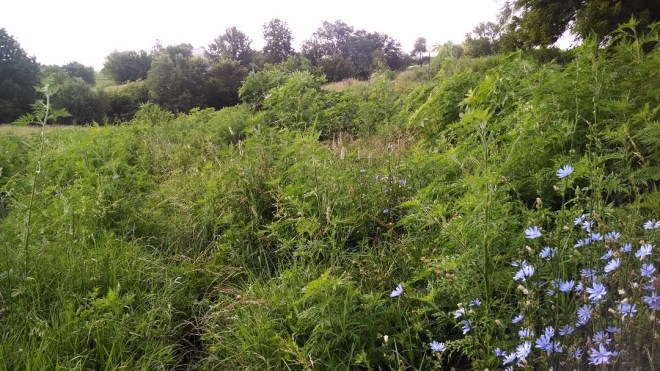
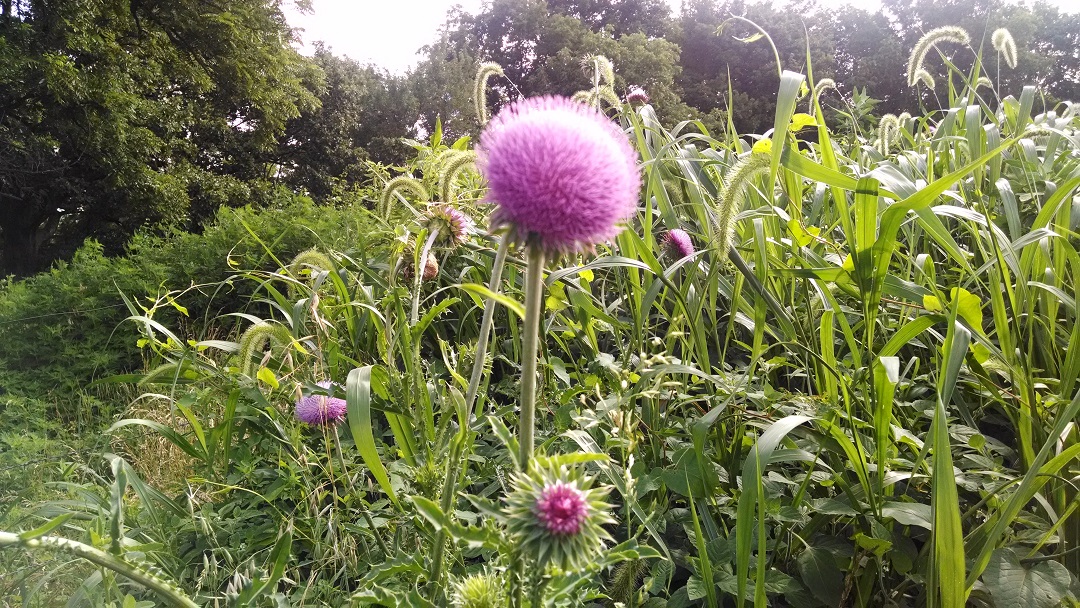
Our pastures are changing quickly. Plants are emerging that have not had the opportunity in …well, maybe in decades. It’s a mess out there; cow poop, matted, brown grass, muddy areas where the waterer sat for a day, flies. And that’s the good stuff. I have so many acres and so few cattle I’m having trouble grazing everything. Steve says I just need to speed up grazing and clip behind them. Ugh. The open, sunny areas where the cows can’t get shade are on hold until fall. Most of those areas have gotten little manure over the years. One in particular is a compacted mess as it was the travel path to and from the barn for years after it was the breeding pasture for the swine herd. You would not believe the weeds in there. While I see the weeds as a reparative mechanism (not the problem itself) I’m going to mow before those weeds set seed, allowing the biomass to accumulate as mulch for the layers to scratch through. Maybe I shouldn’t (Grandpa Tom said it costs $100 every time you mow) but I just can’t bear to see the mess…even if the mess exists to heal the landscape. I can manage for grass and eliminate thistles. I can manage for legumes and win the battle against ragweed (which makes the milk taste a little sweet, a little…I don’t know…like I remember of the milk that remains at the bottom of your Rice Krispies. Genus Ambrosia…which, as we remember from Greek mythology, makes one immortal).  After cutting the trees I’m going to mow to hit the reset button and allow other forage species an opportunity to grow free from the shade of 7′ tall ragweed plants. I could certainly let it run its course then allow the cows to trample it in the fall but…well…it ain’t pretty. Any way you slice it. So I’ll try to use the brush hog without spending $100 (Update: Fail!).

WeedyMess1

In the shady places the cows are eating poison ivy, ragweed and plantain. They are trampling the goldenrod. Those places have looked ugly for decades but things are looking up. The cows are making improvements. They even found a hawthorn grove I didn’t know I had. I had never been able to penetrate the poison ivy to see in there…even in winter.

WeedyMess2

The cows are doing great but I don’t have enough of them. Even if I did we would have to go through a transition period. There are huge portions of the farm that may not look that great for a while. I once knew a woman whose 3rd molar roots had grown into her sinuses. She had the wisdom teeth removed and her sinuses drained for the better part of a week. She just sat with her face hanging over a trash can. Sounds gross but she is undoubtedly better off. It just required a few days of ugly adjustment as she returned to health. Do I want pretty pastures or do I want healthy pastures? Healthy microbes lead to healthy worms. Healthy worms, healthy pastures. Healthy pastures, healthy cows. Healthy cows, healthy people.

Pasture acne is part of the return to health. Things are changing for the better…even if it looks worse for a little bit. I could sustain and mask the lack of health with a bottle of chemical but…let’s not. Let’s move forward, away from monoculture. Away from “hay” fields and toward health.

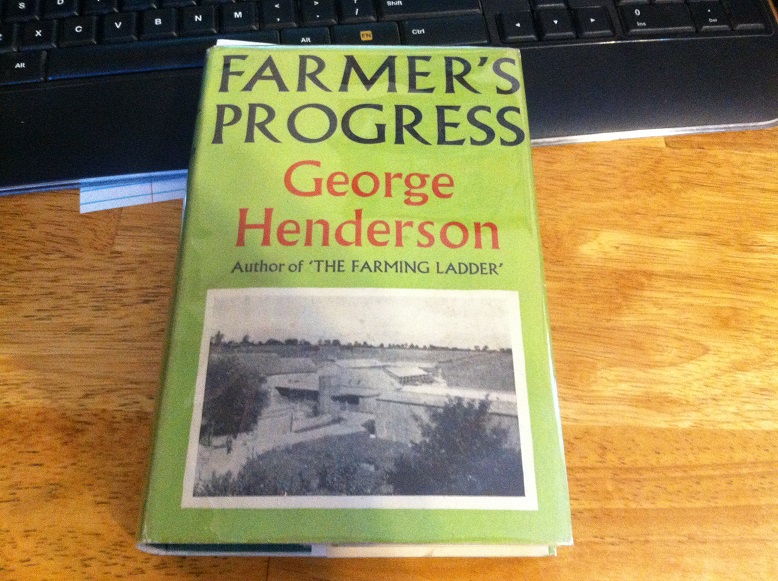
Farmers Progress Chapter 8: The Management of Livestock

This is the continuation of a series as I read through Farmers Progress. The goal here is to jot down my initial reflections of Mr. Henderson’s works, not to republish his work. I do include a few quotes but I try to keep them short. I highly encourage the reader to find a copy of this book. It has changed the way we are approaching things…and how we filter incoming data. Just keep in mind, the focus of these books is entirely on efficient production of the highest quality products, not on marketing. I fear what I could produce if I followed Mr. Henderson’s advice to the letter. Not only would I have to quit my job, I would have to hire a marketing team.

FarmersProgress

Mr. Henderson begins this chapter telling us that, of all the things he does, looking at livestock is his chief interest and pleasure. Then he starts in about his own animals.

Poultry is the most important stock on our farm, from the point of view both of finance and the maintenance of fertility, though it makes possible heavy stock with pigs, cattle and sheep, to such an extent that most farms carrying as many animals in one or other class might regard themselves as a pig, cattle, or sheep-breeding farm.

It is important to note these aren’t simply egg flocks. These are parent flocks for hatching eggs and for raising cockerels for meat and pullets for replacements and for other producers. He next reflects that he can pick birds from their own lines out of other farmer’s flocks because of the familiarity they have with their own chickens. Not only has he bred a closed flock successfully for decades, he has reared them successfully as well. Then he offers a few tips for raising birds:

…we never saw any virtue in running chickens out in a biting wind and a few inches of mud early in the year. They will survive but it confers no lasting benefit when compared with the conditions of those reared in the more genial climate of a large brooder house, with plenty of fresh air and controlled humidity, and of course in equally small units.

and later

With laying stock, large, well-littered houses seem to provide the best conditions for winter production, especially if the eggs are required for incubation. The so-called deep-litter system works well in a dry winter, but when the weather is mild and damp there seems little virtue in leaving the litter in…

I enjoy our chickens. I really do. Most of the time. But I can’t begin to imagine the kind of work Mr. Henderson describes…a 1,700 bird breeding flock, raising pullets, raising cockerels for meat, culling breeding stock and maintaining separate breeding lines, collecting eggs, feeding, watering, moving portable houses and hatching 1,000 chicks each week on top of everything else. I just can’t imagine it. How did he market all of that? How did he sell cull hens, day-old chicks and 650 dozen eggs each week?!?!? But I agree that poultry are a solid foundation on which to build fertility.

IMG_20140626_104045

Stop watching! I can’t do this when you’re watching me!

I totally agree with him that the birds are more healthy when sheltered from the wind, rain and cold and Oxfordshire doesn’t get nearly as windy and cold as it gets here. We move our birds to a deep-littered greenhouse for the winter, collecting the litter for later fertility. This year the birds were indoors from January through March. Next year we will probably move them in a little sooner. I have a lot to learn about providing for the needs of our birds. We went through a short spell where our whites were very runny. Apparently this is caused by a build-up of ammonia. Maybe, as Henderson suggests, I would be better off removing and replacing bedding instead of just adding more and more. We used sawdust this year because that’s what we had. Next year I would like something a little more course…something that will not clump and mat easily.

Beyond fertility and bedding, Henderson gives insight into how to feed the flocks and lists how to modify the ration to use substitutions. The man fed a lot of potatoes during war rationing.

Up to 50 per cent can be fed in the rations, although it will take 4 oz. of potatoes, 1 of meal and 2 of grain as a minimum to keep a bird in full production and the meal will need to be up to 20 per cent protein, unless the birds have access to short grass and insect life on free range.

See? I told you. Buy the book.

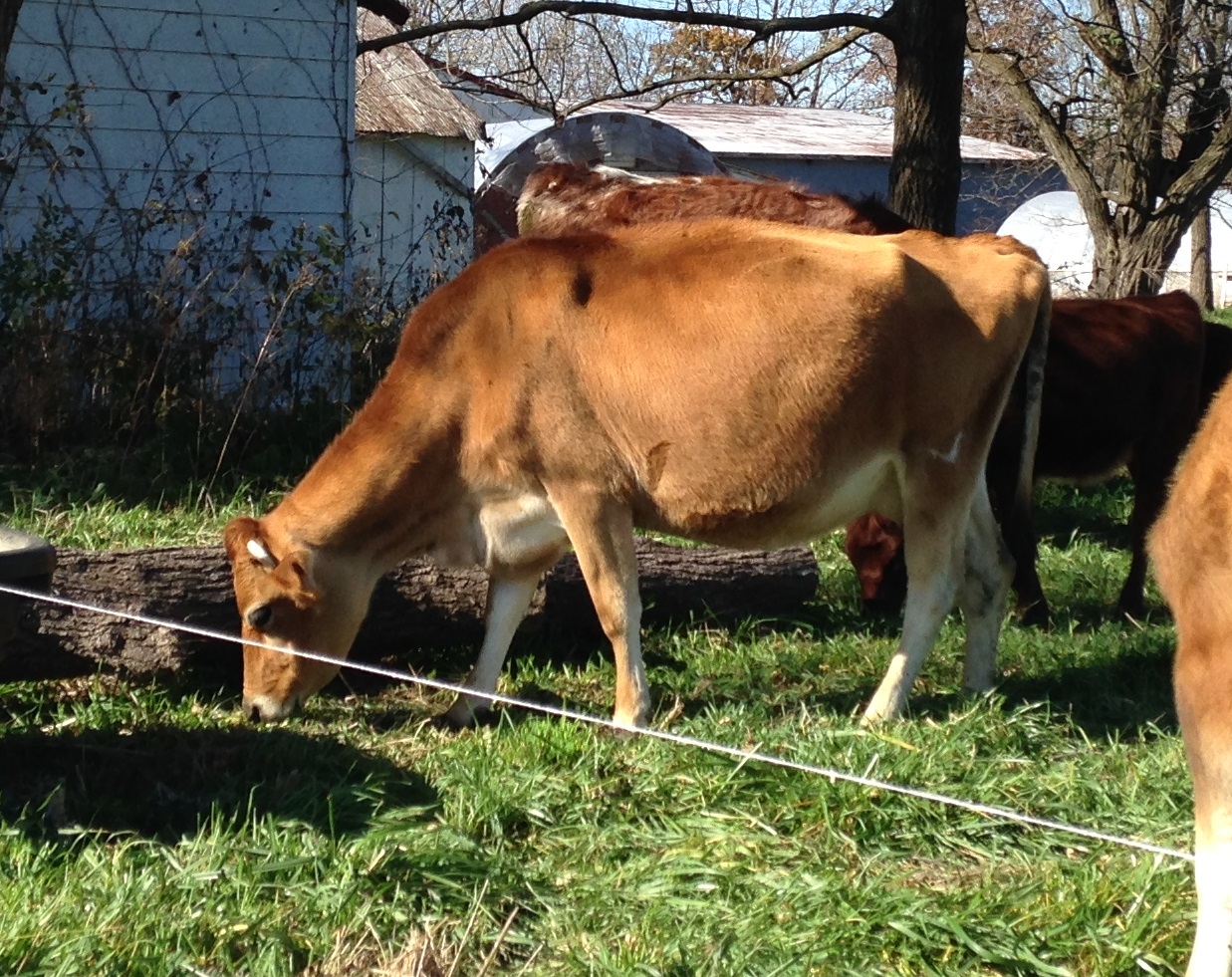
From here Henderson offers a few notable quotes on British dairy practices of the time. We have two Jerseys of our own, Flora and May. Flora is beautiful, light colored and fattens easily. She gives a lesser quantity of creamy milk than does May and she can be a real pain in the rear. But she’ll mostly tolerate handling well. May, on the other hand, is dark, tends to be thin and gives a large quantity of thin milk. She has stated clearly that she is not a pet and she only comes in to milk because we offer her a snack. And she can be a pain in the rear. But they are our cows and they calve every year. The calves are much more important to us than is the milk…the milk is close to worthless actually when you account for labor and facility usage.

You can force a cow to give a high yield for a few lactations, or you can be content with a moderate yield over a period of years and of course many more calves.

And that’s the goal. We share milk with the calves, feed some to the pigs and cats and bring home around 2 gallons each day. They bred easily as heifers and calf without difficulty each time. Hopefully we’ll get 8 or 10 more years with them.

jerseys

That’s really all there is to say. But then Henderson calls the whole thing into question with this beauty:

The greater part of British dairy farming requires 5 acres to a cow, and even [then] a lot of concentrates, to produce an average of something under 500 gallons. If half that land were devoted to growing corn for pigs and poultry we should be self-supporting not only in potatoes and milk, as at present, but in bacon and eggs.

IMG_20140625_214440

And so the chapter goes. Pigs and sheep are next on his list. Pigs are a source of valuable manure, sheep are essentially without monetary value but do a good job adding manure and cleaning up behind other stock. Both sections offer the reader numerous tips and feed suggestions and are worth reading…if for no other reason to encourage the reader to grow fodder beets. He closes the chapter with this:

…it does sadden me a lot to see all the wonderful opportunities which are being lost to make our country once more the stockyard of the world. It could be done by each individual farmer making just one little effort to do a little better…

And there it is. We, in the US, could easily be the stockyard of the world. Also the forest of the world. Also the fishery of the world. This is the day I will make an effort to do better…even if just a little. I hope you will pledge to do the same and will encourage me with your success stories.

Updated: Changed my phrasing about sheep near the end. In the original post I reported Henderson saying “sheep are essentially without value”. That’s not what I meant to say. Mr. Henderson clearly cherished being a shepherd, treasured the contribution the stock made to the farm but acknowledged that the whole crop of lambs brought less money than one heifer.