Raking and Baling

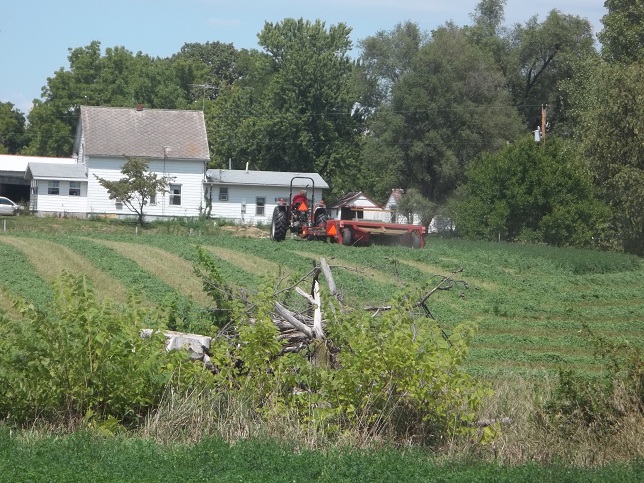
Dad raked the hay late Wednesday morning while I was working.  He began by raking every other row then turning the rig around and raking the ones he missed into the already raked one.  Two, two, two windrows in one. (Let me know in comments if anybody got that reference…)

Then, late in the afternoon, after your tireless but tired author got off work, it was time to bale the hay.  Until then I had never run the baler.  I am the stacker.  But there was no limit to my sneezing that day so dad took over at the halfway point and my kids filmed and narrated.

My 8 year old has lots to tell you.  I think it’s hilarious.  He made 40 minutes of video and never stopped talking.

I hope I’m as young as my dad is when I’m his age.  Anyway, it went OK.  There is a lot to keep track of driving the tractor.  Stuff I had never thought of before.  You have to drive close to the windrow turning left and far when turning right…but not too close or too far.

Running the baler was important to me.  As we read Jim Minick’s The Blueberry Years, we took note of several times he pointed out having helped with a job but never been in charge of a job.  As a consequence, he didn’t really know how to do the job.  I need to know how to do the job (whatever the job is) from start to finish.  It was important that I run the baler this time.

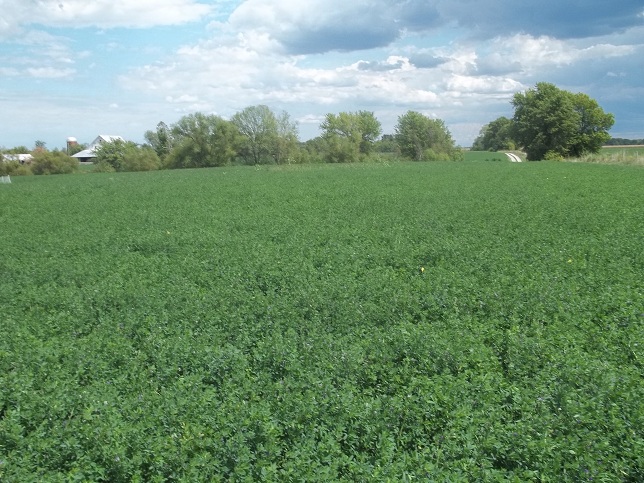
Our alfalfa field looks denuded in the video but in the week since we baled it has rained and the field has greened up considerably.  Hurricane Isaac should bring us rain this weekend too.

The alfalfa hay took us about an hour to bale.  Then I worked on the garden with some of the kids while dad and other children greased and cleaned the baler to prepare it for winter storage.  The hay conditioner, rake and baler have all been cleaned up and put away.  Another season down.  Over the weekend we unloaded the wagons and stacked the bales neatly in the barn.  There is still more work to do but at least that job is behind us.

Mowing Hay in Pictures

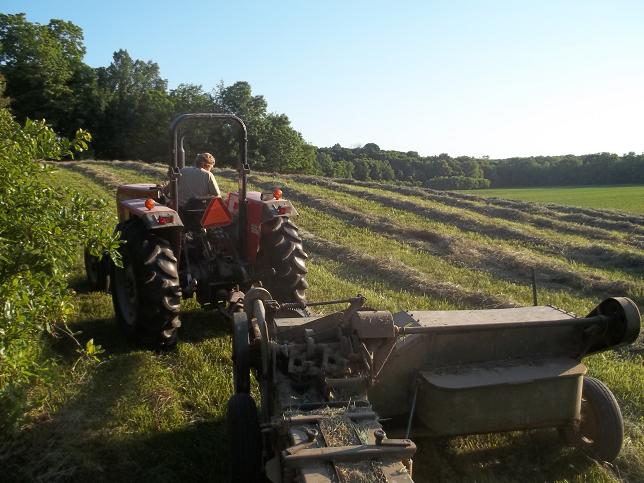
We made our final cutting of alfalfa on Sunday.  My eldest son and I took a few pictures as dad was cutting the hay.  It was neat to see the swallows swooping in and grabbing bugs behind the mower.  There were also quite a few dragonflies out.  Most of the dragonflies and swallows are already on their way out.  Dad noticed the barn swallows started leaving about 10 days earlier than normal this year.

Watch for the swallows catching bugs in this video:

The Wind Blew…

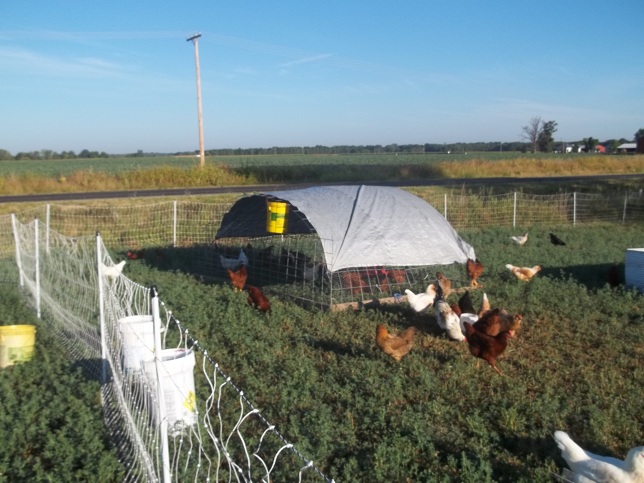
The wind blew.  The rain fell.  One of my chicken tractors tried to go over the rainbow and landed on the fence.

That’s really no big deal.  We have one of the hog panels off of it so it’s wide open.  It just gives the pullets a little extra shade and water on hot days. Last night it was empty.  Nobody got hurt.

The tractor is pretty simple.  Four 2x4s screwed together at the corners with a bit of plywood under each corner for a gusset.  The panels are held on the frame with fence staples.  The tarps are held on with tarp straps.  The screws at the corners failed when it tried to land on the wicked witch.  I put it all back together in front of the ever-critical chickens while the wife and kids splashed in the pond.

I can always count on them for help.  This time I left the sail off…I mean the tarp that covers the side.  That should help airflow and shouldn’t impact shade since the sun is almost straight up this time of year.

Since I touched on the Wizard of Oz a couple of times I’ll finish with this just for giggles.

Make Hay While the Sun Shines

Boy is the sun shining.  Every day.  Sun, sun, sun.  Nothing but sun.  All the sun the grass can eat.  It’s time to put that grass away for later.

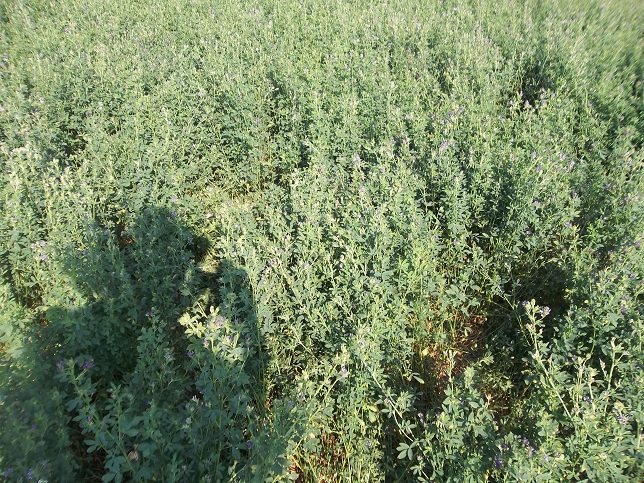
Let’s focus on the alfalfa field for now.  The alfalfa field looked like this (well, not as many blooms).  You want to allow the plants to get to about 10% bloom before you cut.

So we cut it three days ago with dad’s hay conditioner.  It gobbles up the hay, crimps the stems and lays it gently in a windrow out back.

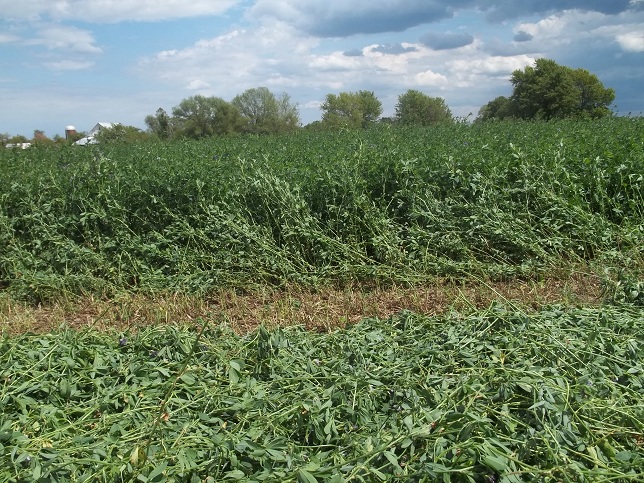
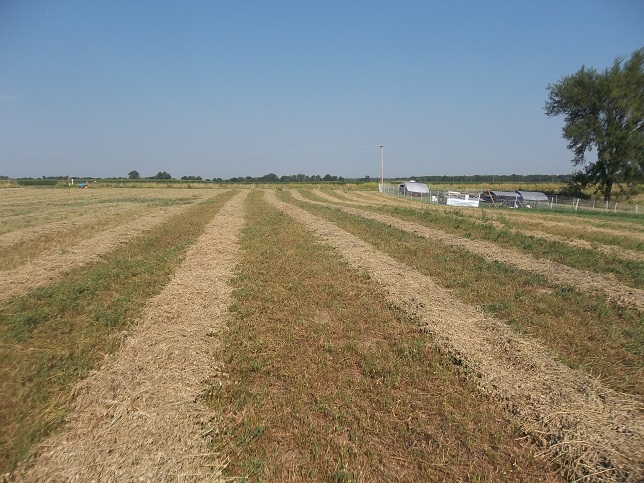
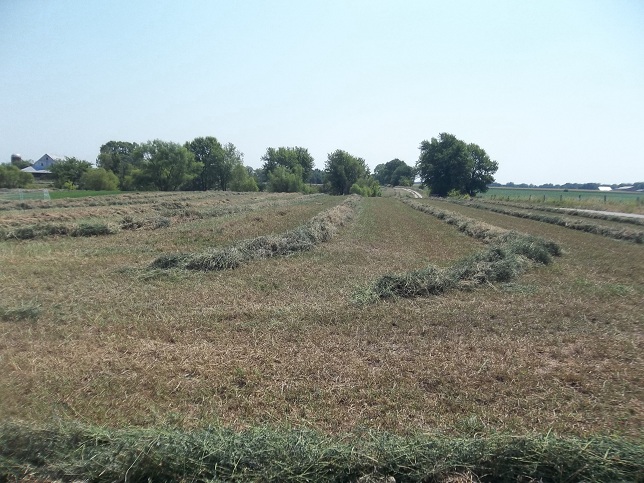
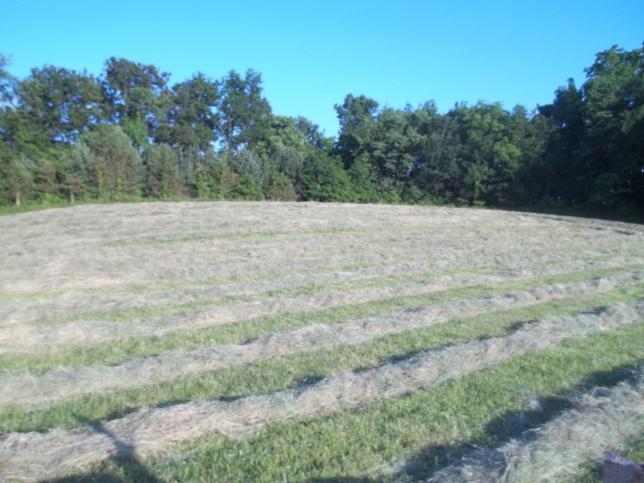
When you’re finished and it has cured for a couple of days you get a field like this:

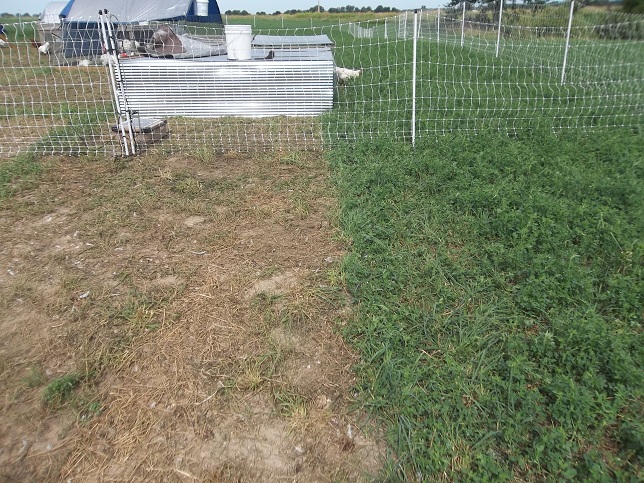
If you look closely there’s a spot on the left where the alfalfa was killed.  Our chicken tractors were on that spot when we got about 3″ of rain across a week but the bulk of the rain came toward the end.  The chickens turned that spot into mush.  The alfalfa gave up the fight.  Otherwise, the chickens don’t seem to have hurt the stand and remember, they do this when they go past:

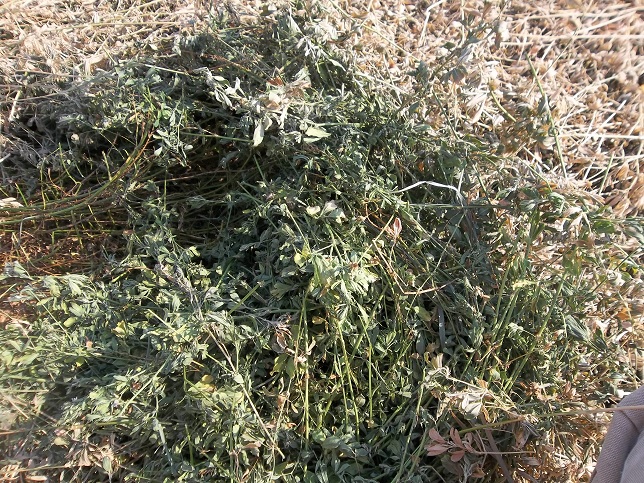
So, I have long windrows of alfalfa.  It looks dry

but if we look closer we see it needs to be raked before we bale.  The stuff underneath isn’t quite ready yet.

Grab a handful of stems and give them a twist.  If they don’t break, they’re not ready.  If they’re not ready you’ll end up with moldy hay at best, a barn fire at worst.  But then, if it’s too dry all of the leaves will fall off and the hay will be all stems.  Quality hay is a skill.  It’s a skill I continue to work on and probably will for the rest of my life.  Sigh…

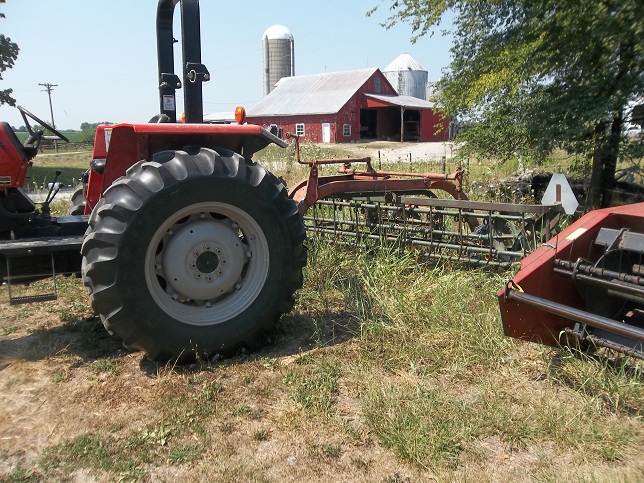
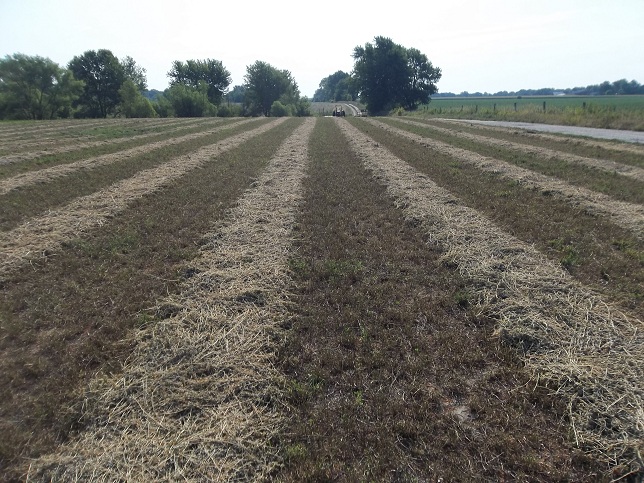
Next I rake the windrows together, turning the hay so it will dry better, combining rows so we make fewer passes up and down the field baling.  What’s a rake?  This is a rake.

So this….

becomes this…

A few hours later and we’re ready to bale.

We baled and baled and baled.  The bales may get moldy from all the sweat I soaked them with.  No pictures of the baling process this time but you can look at the blog post from an earlier hay cutting.

The fields are bare now.  Ready to grow back again, hopefully encouraged by a coming rain.  Before the rain gets here I need to clean up the small piles of hay we missed with the baler.  It’s not hard work, just one wheelbarrow at a time.  Sometimes I carry an armload of hay as I ride my bicycle.  That makes my wife laugh.  Why is she always laughing at me?  (lol)

Now it can rain.  Please, Lord, let it rain.  I’ll take a light rain that lasts 3 weeks.  I’ll take a series of downpours over the next three days.  Last night it sprinkled just enough that you could smell the rain on the hot tar of the road.  That’s a summer-only smell…and I would like to smell more of it.  Just let it happen, Lord.  I’m ready.

Can I get an Amen?

Featherman Product Review Update

This post serves as an update to my original review in April 2012.  Though I think that post is still worth reviewing, the scalder and I have gotten to know each other better and I have more to say about it.

I’m nearly 900 birds into my new Featherman equipment.  Today we processed 75 birds in just under an hour working at an easy pace.  As usual, I was kill, head removal, scald, pluck, foot removal and tail gland removal.  I also plucked whatever the plucker missed.  Three of my children stood at the table to hang up to 8 birds for mommy and to help me pluck feathers.  The oldest daughter also cut feet and glands.  My wife eviscerates 4 birds at a time cutting all crops, setting down the knife, pulling the crop and trachea from each, picking up the knife, cutting all the vents, setting down the knife and gutting each bird.  Finally, the oldest son collects the finished birds from the shackles, removes the lungs, inspects and rinses the birds and places them in chill water.  We started at 8:45 and by 10:30 we were scrubbed, had the offal in the compost and relaxing for a few minutes to write a blog post (this one).  Again, 75 birds took an hour to dress out for 2 adults and 4 children (aged 11, 9, 7 and 6) working at an easy pace.  This was not possible before we had our Featherman setup.

Even with our Featherman setup, I have a few issues.  Every part of the process hinges on the scalder.  If the water is too cold you don’t get a good pluck.  That translates into extra time spent picking feathers out later.  If the water is too hot, the skin tears and you end up with a mess you have to salvage by cutting up the bird.  When we processed on Wednesday we spent 3 frustrating hours trying to keep the scalder lit and warm.  When we finally finished I was sufficiently frustrated that I emailed Featherman to ask what could be done.  Was I using it wrong?  Am I trying to force the equipment beyond its design?  Should I sacrifice a chicken before firing up the scalder each time to appease the scalder gods?

David replied just over 2 hours later.  I’ll say that differently.  The owner of the company replied to my email almost immediately.  That’s cool.  Anyway, here’s his full reply.

Hi Chris,

I very much appreciate the time you’ve taken to outline the problems. I regret you are having them, but this is how we learn, grow, and improve. I am confident we can rectify every problem area you have identified.

I’m just back from Falling Sky Farm In Arkansas and got a big education there. Cody does 8000-9000 birds per year. At this level they are more intimate with the equipment than I can ever be. Although he doesn’t use our scalder (but one with the same burner) he says he had to move indoors. The slightest bit of wind kept it from warming up.

If you are committed to an outdoor space-the way my wife and I always did it-do your best to shield the scalder from the wind while still giving it plenty of combust/exhaust air.

Steel baskets with sharp edges remaining are a huge mistake. I will let our machining and our shipping people know. A potential injury like that should never have gone out. I got cut at the beginning too. They were all supposed to be well sanded down. Due to the extra weight and chore of sanding, we have redesigned with a heavy wire mesh (1″ opening) rather than the flat and sharp expanded metal. We are adding fingers at the ends to help deter heads and feet from dragging on the outside. If you want to swap yours we will be accommodating. They are not out of production yet, however.

I have seen the Ashley and Poultryman scalders – with identical burners as ours – produce at 200 birds per hour. There is no reason ours cannot. You do have the new model scalder, correct? Our first scalder is limited by the burner to 70 bph. Either there is a perennial problem with wind or there is some obstruction in the gas or the air is choked. Look at the flame. It should be a bright blue with only a bit of yellow at the tip and about 1 1/2″ long. If not, check for dirt in the orifice (clean with air, not an object), adjust the air intake cover to see if that helps. If the flame looks good then it is environmental cooling.

Poor location of the scalder, too much or too little air flow, jostling causing movement of wires or thermocouples or pilot light or air intake cover, dirty burner orifices – all of this I have seen or personally experienced as I used the equipment. On one video shoot we waited four hours for water to heat outside, finally broke down and set up inside a green house and zipped along fine (rooster video with roto-dunker). Stainless takes up and gives off heat incredibly rapidly and I’m guessing and hoping that is the culprit here but it is always a challenge to sleuth from far away.

I’m very keen for your demo to go well and for the quirks to disappear. Please keep me informed and let us know what we can do.

One last suggestion. Get a digital thermometer and put the probe safely in the scald water so that you know immediately if the temperature is falling off.

Thanks again,

David Schafer
Featherman Equipment
www.featherman.net
660.684.6464 farm

I was and am pretty satisfied with his response.  The fire under my scalder looks good so I need to find a way to shield my scalder from wind if we continue to do my part of the job outside.  It was pretty breezy toward the end of our processing on Wednesday.  Also, primarily because of sharp edges, we’re working on replacing my roto-dunker with the one he mentioned above.  David writes later to say that, like the newly redesigned scalder, the roto dunker will evolve in time.

I’m watching the roto-dunker closely. I don’t think we are done with it yet. Nobody knows better than I the frustration of equipment mishaps at processing time. This business from Heaven was born of blood, sweat and tears. We are a long way from being finished with a line of equipment.

I am at the summer break in my schedule.  900 birds down, 300 to go in the fall.  Here are my thoughts regarding my Featherman purchase:
-The cones and stand are great.  If you want to process 200 BPH, you’re going to need more than 8 kill cones…lol.  Look for a post coming up on how we clean up the stand.
-The scalder heats up quickly and it does work well but wind and cold weather both tax its abilities.  In May I heated water three times from one 20# propane tank.  That shows it can be efficient at heating water when conditions are right.  Conditions were wrong, wrong, wrong Wednesday.
-The roto-dunker can be your friend.  If your birds dress out below 4 pounds it will turn two in each side.  If above 4 pounds, one in each side.  As I say above, using the roto-dunker under those parameters frees me to go do other things for a few minutes.  That time counts when I’m working to keep my cones full.
-The plucker is absolutely trouble-free.  I do wish I had gotten the turkey plucker though.  I had gotten the milage out of my poor Whizbang plucker.  I remember the frustration of using it on large batches of birds last year.  The Featherman plucker has asked nothing of me.  Not so much as a hiccup.
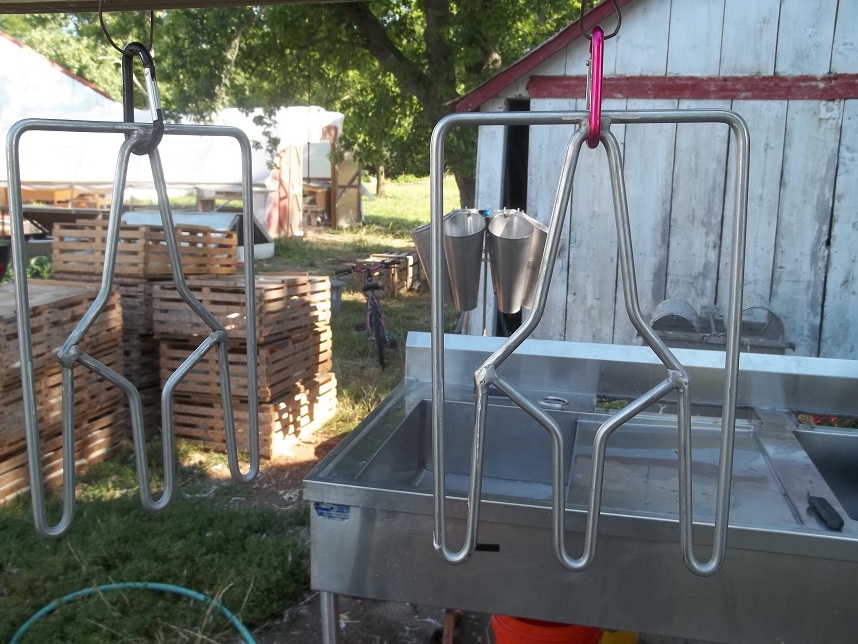
-Evisceration shackles of any make will speed up your process and help your back but the Featherman shackles are, not surprisingly, the best value we have found.  I hung ours with some inexpensive carabiner clips.
-The chill tank is durable, easy to clean and holds a lot of birds.

I wrote to David because I was frustrated with his scalder.  Looking back, I was really frustrated with the wind.  Any scalder would have given me the same trouble and any other scalder would have cost me more money.

Thanks David for all you do to help small farmers like me and for taking the time to respond to my questions.

Mulberries, Hay and other Delicacies

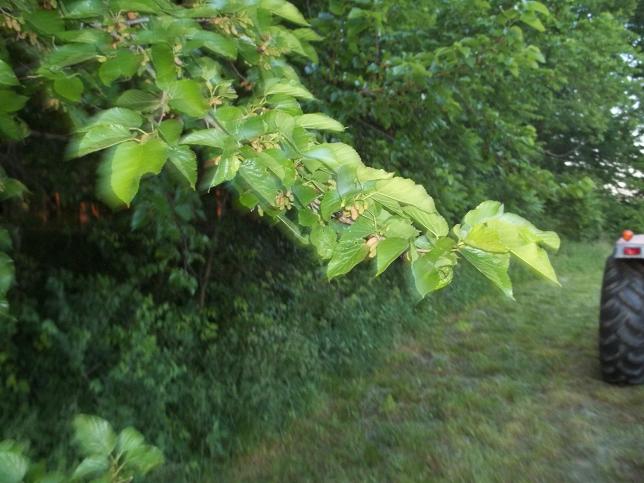
Do you have mulberries where you live?  Do you even notice them?  We have them here.  When I was a kid in New Minden we had one in our back yard next to the gate that led to the alley and Mrs. Ruth’s yard.  There was a crotch in the tree just right for a 7 year old to park in and make himself sick eating berries.  I did.

Today we baled hay in the bottom where mulberry trees abound.  I picked a handful while I was walking out to where dad was ready to bale.

I picked another handful when the baler went under a mulberry tree.

I picked yet another handful for good measure.  Don’t mind the hay hook.

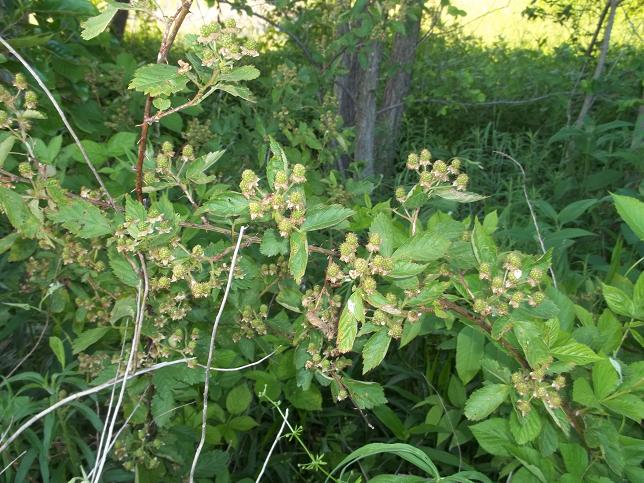
I also took inventory of the dewberries crop.  Not as many as I would like to see…

…and the blackberries.

We pick and freeze as many as we can get my hands on but we really don’t go past the edge of the woods because there’s a bumper crop of poison ivy out there every year.  This year is no exception.

Each spring we clean out our freezer and find forgotten gallon bags of berries and make a big batch of mulberry, dewberry, blackberry, strawberry mixed jam.  Yeah.  It’s pretty good…better on ice cream.

So anyway, we were out there to make hay.  I’m a little allergic to hay.  On the third pass I started sneezing.  By the fourth pass my hankie was soaked.  Dad runs the baler clockwise around the hayfield.  Both of dad’s main fields are on a slope so it’s an interesting ride.

Between the two fields in the bottom and the barn lot we put up another three wagons of hay.  We have had an unusually dry spell so this is far and away the best first-cutting hay we have put up in years.  Isn’t it pretty laying in windrows?  That hill made about 65 bales.

Hang on…ACHOOO!!!!

Hay Wagon Rebuild Part 2

Yesterday we got the materials lined up so we could rebuild the wagon.  Today, after a long, hard day we got the wagon back together.

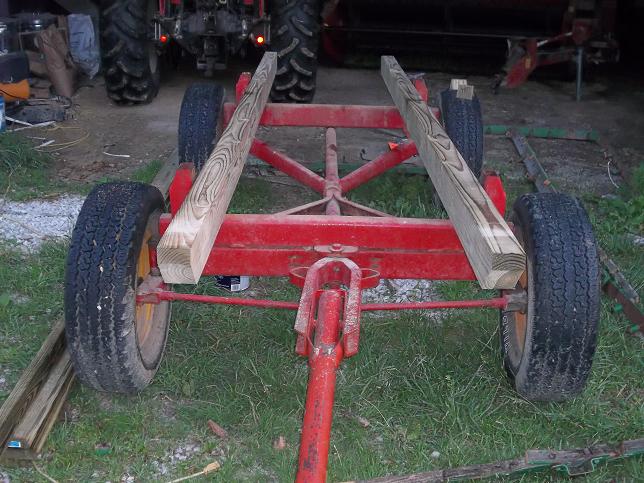
The kids were all there helping grandpa while I was at work.  I came home in the afternoon and we got it wrapped up just in time to bale up the alfalfa.  The wagon isn’t really finished, we just did enough to use it to haul hay.  It was originally grain-tight with side walls but those will have to wait.  We were running short on time so we just threw together a headache rack out of scrap material.  We have plans for something more permanent.

Then off to the field.  We had a couple of hiccups with the baler but the bales are tight and heavy.

Dad drives the baler, I catch, carry and stack the bales.  It was a little breezy and about 75 degrees.  I wish all baling weather was as nice.

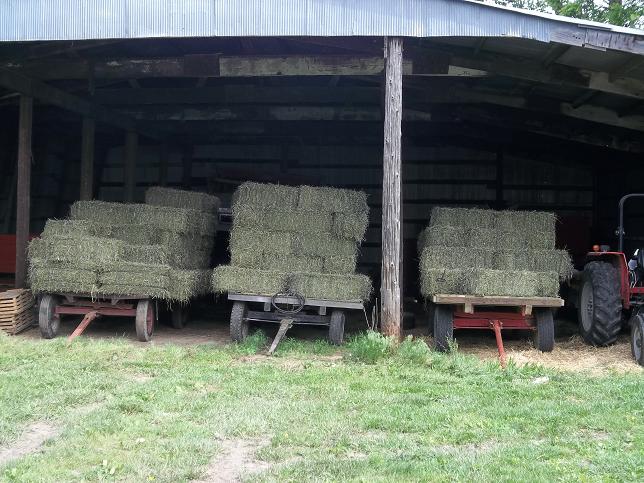
Here’s the rebuilt wagon loaded with hay.

We have quite a bit of metal to put on to hold the sides in place…once we build new sides.  But it’s not an impossible project.

The icing on the cake was the ant colony that had moved into the hay elevator motor.  The motor burned up so we couldn’t unload the wagons.  Oh well.

Hay Wagon Rebuild Part 1

Dad and I drove to Calhoun this winter in response to a CL listing for a hay wagon.  The price was right so we brought it home.  Originally this wagon was grain tight.  Years of outdoor storage had taken its toll on the wood and there really wasn’t much left of it.

All of the sub-frame was both broken and rotten.  There were numerous attempts to cobble things back together again but even those were failing.  The running gear was sound and the tires were good.  That’s about all I had to work with.  That was enough for the money.

I used it as it was for a few months hauling brush to my wood chipper but now that hay season is upon us, I need my hay wagon.  Dad measured the wagon well and we plan to rebuild the deck just as it was originally.  That will take some doing as most of the hardware has seen better days.

Dad began the long process of disassembly a few days ago.  It would be nice to paint the frame with the bed off but the schedule just doesn’t allow.

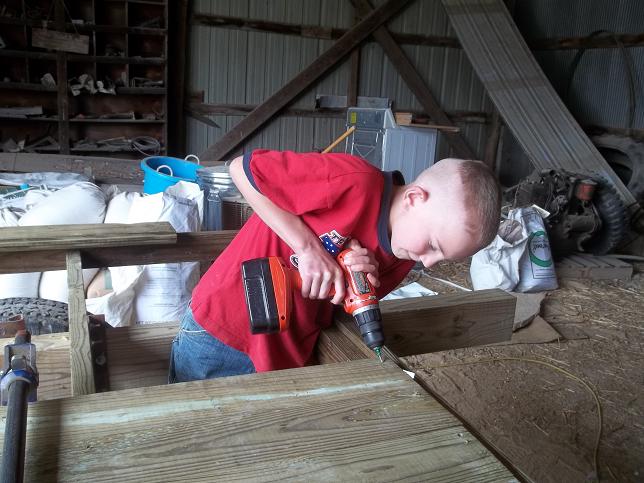
I need this wagon today.  Can we finish it in time?  I need to stop burning daylight and go drill some holes before work!  I’ll offer more details including costs in part 2.