Could I Farm the Whole State?

No. I could not farm the whole state. It isn’t going to happen. It would cost something like $176 billion to buy the farmland. Besides, we are better off with a half million small farms than with one giant farm as more farmers can do more work, cast more vision and solve more problems. Break the herds and flocks listed below out to an appropriate number of farmers if you want but keep the big total listed below. That’s realistic. Let’s have some fun with one big herd today though.

We use cattle to cycle nutrients and fix carbon. To build healthy soil. They also heal riparian areas. This is accomplished by timing exposure, measuring mob density and allowing adequate plant recovery. The problem I have is I don’t have a mob. I have 60 hooves, not 60,000,000 hooves. Not yet anyway…

What would happen if we used the whole state of Illinois as a pasture? Pretend I could rent it or buy it. Work with me here.

First, let’s make room for people. We need people. People are good. More people allow us to achieve a more complete utilization of the land and resources because I can’t do it all. I need help harvesting the nuts and berries. I need help making the calculations for the jump to light speed. I need guitarists and poets and artists and carpenters. I need bakers and brewers and electricians and computer programmers. I need inventors and dreamers and deadbeats. Biographers, journalists, morticians, pastors, truckers, used car salesmen and bankers. I need overweight doctors, professors without truth and people with Facebook accounts who think they have all the answers. I need people who can manage resources efficiently and people who will gamble it all away in one roll of the dice. I need people cheering for the red team and people cheering for the blue team and people who think they are above the game. I need opportunities to serve in a community and a community to help me when I’m in trouble. So let’s leave room for the people. The cows are a tool. The dirt is the place. The people are the purpose.

Illinois has a population of 12 million. 8 million of those live in or around Chicago. People are often shocked to learn you can drive 5 hours out of Chicago and still be in Illinois. In fact, There are 37 million acres in Illinois. So let’s give everybody an acre. They don’t have to live on that acre, but we’ll reserve that land for retail, roads, recreation, housing, gardening…whatever. Everybody gets an acre. In fact, let’s reserve another 3 million acres for the unborn. Normally we, as a nation, allocate equal space for lawn and for recreational horse pasture. I may not be leaving that much cushion. You may have to buy your horse hay from Missouri.

That leaves us with 22 million acres. Awesome possum. Cool beans. We currently farm 26 million acres in Illinois so we are ahead of the game already.

In Illinois we basically need a little less than two acres per cow and her follower. That would mean we need to come up with 11 million cows (and 110,000 bulls!). But there are only a million cows in the state currently. Heck, Texas doesn’t even have 11 million cows. But we have the appropriate soil and sufficient rainfall and we would harvest something like 10 million calves each year. Basically one beef for every non-vegetarian resident. The USDA says we ate 195 pounds of meat per person in 2000 so you probably won’t be able to/shouldn’t eat the whole beef. We’ll have to sell a portion of our production outside of the state.

And 11 million is just the starting point. We have some of the best soil in the world. Right here. If we can grow 400 bu/acre corn we can surely build grasslands to support one cow per acre…or maybe just one per 1.5 acres. But let’s stick with one cow per two acres and add in sheep instead.

We can comfortably run 4 ewes per cow…so 44 million ewes. So 88 million lambs each year. 88 million. Not only do I need to gobble up a whole beef each year , I need to eat 7 lambs each year. That’s too much meat. Lamb may become the new chicken. The cheap meat. We’ll have to export some of it to Indiana and Missouri…or other states if our neighbors catch on and appropriately stock their land.

GrazingIllinois

But we aren’t finished. Imagine the mess behind the herd. We need a big-ole flock of layers to follow behind them and clean up the mess. We currently run 10 layers per cow and I think that ratio is about right. So we need to run something like 110,000,000 layers free-ranging behind the cattle. The flock may force us to rotate some grazing land into grain production seasonally but that really shouldn’t hurt our grazing total. We’ll also need some help hatching those eggs, let alone collecting and packing and selling 6 million dozen eggs every day. BTW, that’s half of the current egg production of our entire nation so maybe we should cut back our egg production…if for no other reason to lessen our grain needs. We will be grazing around 400 square miles each day with our herds and flocks so the more we distribute the materials handling the better. We should have egg-packing and distribution facilities all over the place. We could probably butcher the flocks and make canned soup and canned cat food and…whatever else while we are in Chicago each fall and they can compost the remains for sale to the millions of Chicago gardeners. We’ll pick up the new flock of 110,000,000 pullets when we pass University of Illinois. Maybe the pullet logistics could become an ongoing research program.

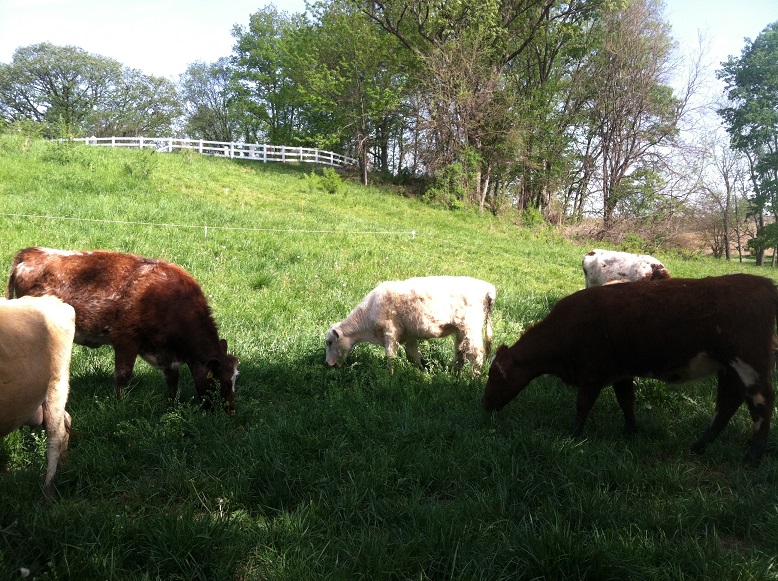
The flocks and herds will pass by quickly going from Jerseyville to Jacksonville in two days. One day the grass is waist-high, the next there is a carpet of grass and manure. Like sweat after a workout it only lasts a little bit then the recovery continues until the next workout. Every three to five months the herd will pass between Effingham and Olney then on past Harrisburg so we can wave at Metropolis then up again between Pinkneyville and Chester, across the flat stretching from St. Louis to Peoria to Rockford, skirting the freightened masses of Chicago who have never seen cattle before as we wind down to Champaign and back around again. Every three to five months we’ll graze, trample and manure the entire state, building inch after inch of soil on a dense fabric of roots and trampled grass blades…a blanket that cushions and protects the soil from ice, wind, sun and rain. Schools will let the children out for the day to see The Jordan herd pass by…a sight their grandparents never imagined. Letters will be written to editors complaining about the flocks of wild birds that accompany the herd migration and late pizza delivery caused by cattle crossing the road for hours. Chickens will follow behind…all 110 million of them, scratching out bugs and leaving additional manure. (How would that even be possible? Thousands of school buses converted to chicken houses driving from place to place? Maybe train cars full of chickens? Train cars full of chicken feed? Honestly, I can’t imagine the daily distribution needs.) A few days later there will be clouds of dung beetles. Deer and wild turkey and quail will graze with and behind the herd, not to mention the swallows swooping in above the herd as it grazes quietly along.
 

Newspaper

But surely we can do more with that ground. Cows appreciate shade on hot days. What if we planted rows of trees on contour? Miles and miles of diverse tree stands. Canopy layers of oak, hickory, chestnut or walnut. Lower layers of apple and cherry and filberts all on neat rows slowing the downhill flow of rainwater. Even lower layers of gooseberry and raspberry and strawberry. Black locust mixed in for nitrogen and wood products. All 12 million people in Illinois could have 50 pounds of cracked walnuts, 100 pounds of chestnuts, boxes and boxes of apples and cherries and strawberries. Of course, nobody wants all that food so we’ll have to hire people to harvest the abundance and build huge processing facilities to make brownies and High Fructose Chestnut Syrup and hard cider and applesauce and apple pie and caramel apples. Not to mention the massive squirrel and rabbit harvest…also enjoyed by the numerous birds of prey.

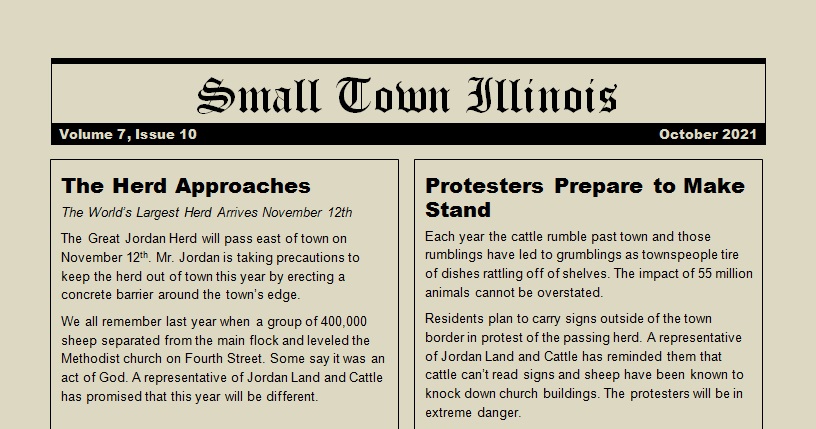
We would need something like one hired hand per thousand head of livestock so we’ll have at least 55,000 employees (probably on horseback) helping to manage the herd, culling old, open or injured animals, castrating young bulls and rams, keeping the mob grouped and moving. This does not count the teams that move ahead of the herds to build fence. (Not the kind of fence that subdivides the pasture for daily moves, the kind of fence that keeps the cows out of town…the houses from being smashed…and the cars from being trampled (we hope) by FIFTY-FIVE MILLION ANIMALS.) Probably another employee per thousand layers. Nor does this count their families that will accompany them on the migration amounting to a population larger than the city of Springfield. We’ll need many, many more people to help us transport, slaughter and distribute the meat. Thousands more to handle the abundance of nuts, fruit…just the raw materials. More to take those raw materials and produce finished products ranging from rawhide bones for pets to dining room tables to gooseberry pies. Think of the regulators required to keep us all safe! Think of the lawyers we’ll hire to keep us safe from the regulators!

And this is just the beginning. Remember, we set aside 15 million acres for humans. That leaves room for zucchini and tomatoes and flocks of chickens at home. Different strains of chickens…regional breeds. Maybe goats. Certainly pigs…everybody loves bacon. Pork may become that treasured annual delicacy bringing family together for harvest and celebration. Maybe one farmer in 20 farrows, allowing many others to keep a pig or two at home to make good use of uncollected tree nuts and garden waste. Maybe even home dairy. Heck, maybe small raw milk dairies to supply milk and cheese for neighbors…nevermind. Illinois doesn’t like raw milk. Sigh. Woodworking shops, welding and repair, bakeries, septic tank clean out… Heck, we’ll keep everybody so busy managing our abundance they won’t have time to write silly legislation to “fix” the world’s problems…let alone write starry-eyed, idealistic blog posts.

Do you know the difference between “riches” and “wealth”? What if I suggested rich people have an abundance of money and wealthy people have an abundance of time? How’s that sitting with you? (I’m thinking about this as I read P.G. Wodehouse.) Anyway, look man. When the herd is in your neighborhood, help us out. I’ll cut out a few head for your butchers and we’ll be back in a few months. When the herd is away, harvest the abundance of the forest. Bake a pecan pie sweetened with honey and pour a few mugs of hard cider. Sell the surplus production from your land then go fishing. No big whoop. Either you can lease me your grazing rights or you can lease space from me to plant your trees. Nobody is giving anybody anything. We all work hard. We all hold our heads up. We all become more wealthy (free time) and the money and resources we generate stay right here. You can buy that cool new techno-gadget if you want. I’m going to park my tookus under a tree near the herd and do some reading. Lamb for dinner. Again.

And what if we expanded the herd further? What if we worked with neighboring states to put together a larger migratory herd (probably herds)? Cottage industries springing up to help meet the needs of the families that stay with the herd year-round. There were somewhere north of 60 million bison ranging the plains 400 years ago….so…why not? Tens of thousands of people staying with the herd or working regionally with the herd as it passes through their area. Why not?

I’ll tell you why not. The EPA would shut it down.

Click image for source.

My goodness! How did the waterways survive before we shot all those horrible buffalo? What we need are more tractors! We need to rip the soil so the rain will wash it away. Put that stuff in the Gulf of Mexico where it belongs! By golly, God gave us a crater to fill and we’re gonna fill it! While we are at it, let’s poison the drinking water with weed sprays and bug sprays and anti-fungal sprays. Apparently cow poop in a stream and voluntary consumption of raw dairy will bring about the end of the world and don’t even mention the dead buffalo Lewis and Clark found in the Missouri River. Let’s sterilize the whole state right down to the bedrock. And it’s important that we tile the state to drain the rain away as quickly as possible too…in large part because atrazine in the ground water has become a bit of a problem. By golly, we have to feed the world and corn is the only way to do it.

So we’ll just continue on our current course. Eating corn flakes and puffed corn curls covered in corn starch cheese and drinking fizzy corn drinks and feeding corn to diarrhea-covered cattle in EPA-approved feedlots. Wasting our unhappy lives in cubicle-filled bureaucracies, out of touch with the natural world, never facing the reality of death…believing pharmacies and money can cure a lifetime of poor health choices…never accepting that the hamburger came from a beautiful living animal…and that it is OK to have mixed feelings about eating animals…that this is a discussion we can have. It’s OK to revere life…and take it carefully. Respectfully. To ensure our animals live each day with purpose. To ensure our people live each day with purpose. To save our soil for future generations. Nope. We can’t have that.
Where Are The Cows Now?

Cows are on the move. We have cooled off significantly and can now graze places we skipped in the hot part of summer. But we are moving fast to leave as much plant material behind as possible so plants will recover quickly. Think of it this way, the leaf is a solar cell. The more leaf area we retain the more energy we cna catch and store…the more roots we can put down…the more nutrients I can mine and cycle through the soil. The more sunlight we can capture, the more biomass we can generate. The more biomass we can generate, the more food I have for my cattle (well, unless it’s snakeroot).

SO

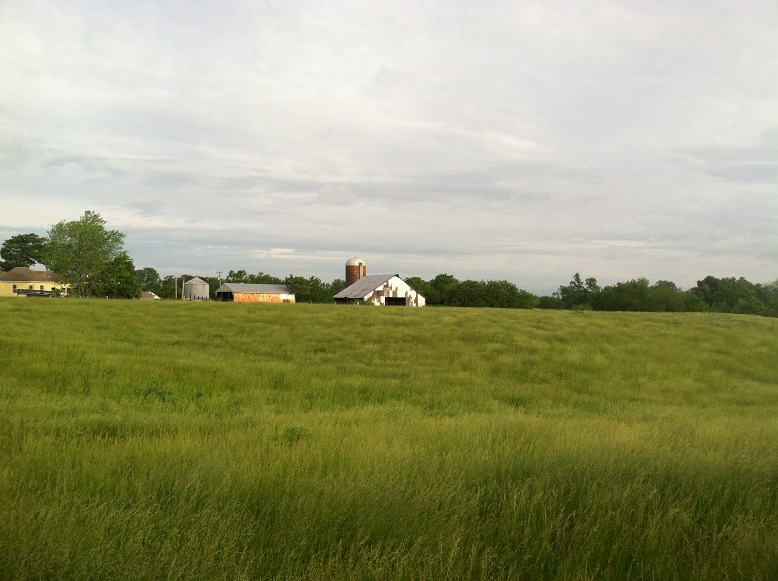
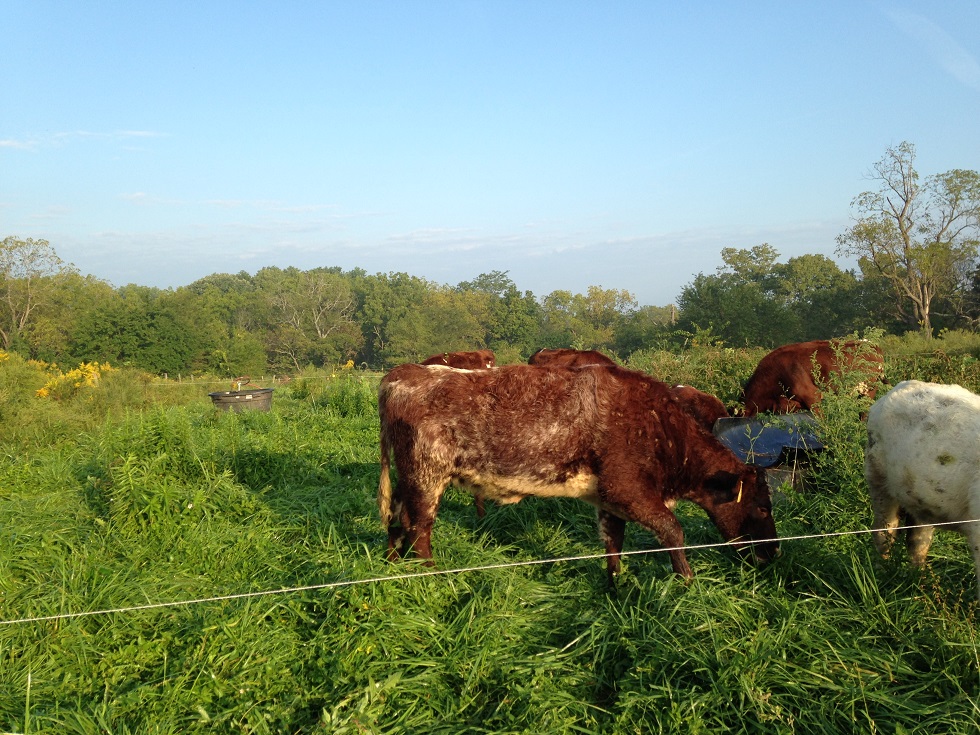
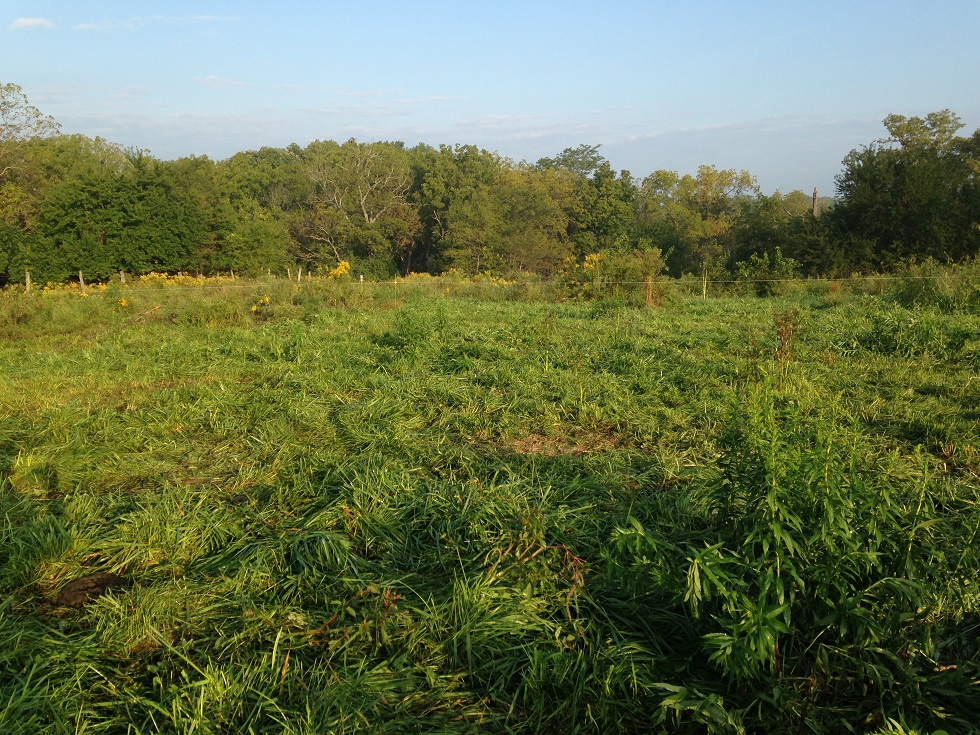
The cows are on the move. We’re trying to get them to gobble up as much of the clover and chicory and dandelion as possible before frosts arrive…and we only have about a month remaining. We are trying to convince them to skip right on past the fescue in favor of other, more fleeting morsels because the fescue will stand up to the frost. The clover will just wilt and die. We need to move fast to continue fattening our cattle before the cold weather hits. Here is a shot of a pasture they just moved into up on the flat by the hog house:

Before

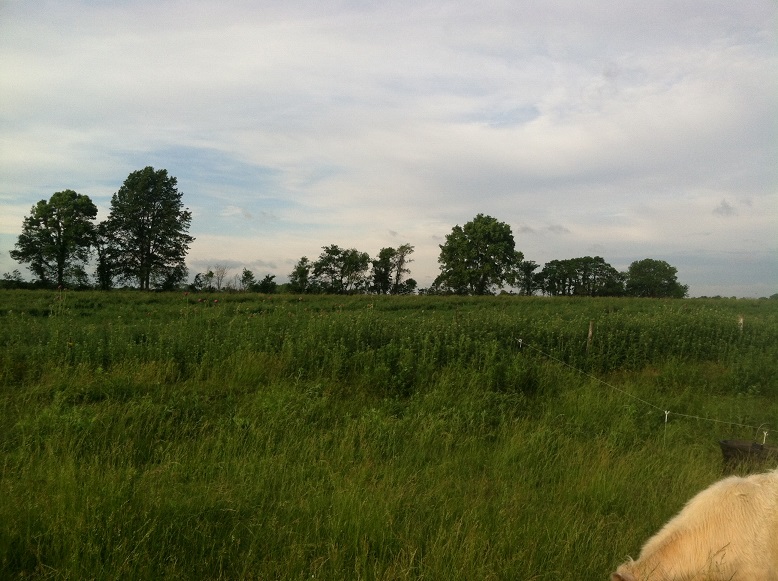
And a picture of the previous pasture they have left behind. Where they slept the ground is carpeted with manure, otherwise it is scattered fairly evenly. Still plenty to eat in the paddock. At least another day’s worth of grazing. We’ll save that for another day. The broadleaf weeds will die back shortly and the fescue will really start to come on.

After


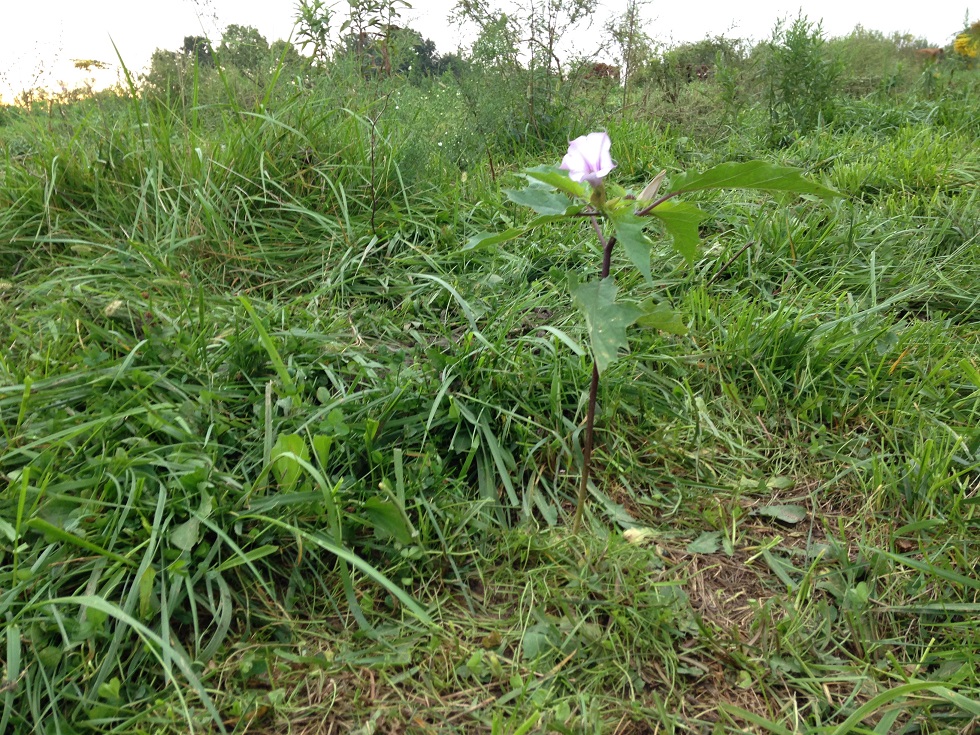
Speaking of broadleaf weeds, there are some things the cattle just won’t eat…unless they are forced to. I can’t seem to get ahead of the cocklebur or jimsonweed but the cows just eat around them, pointing them out to me.

Untouched

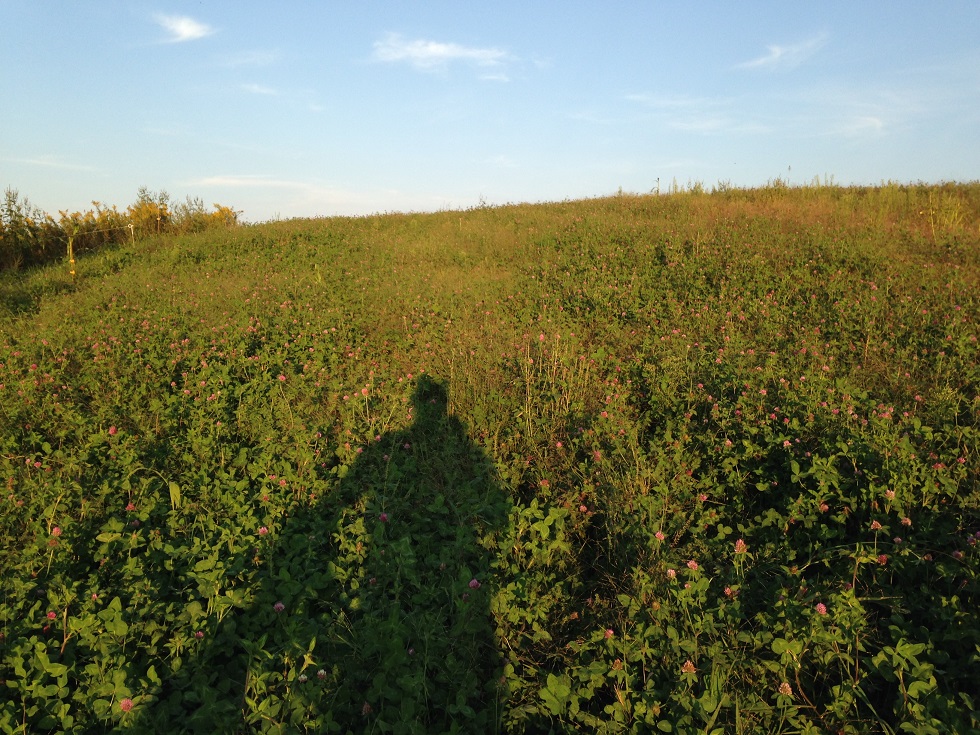
This week the cattle are on the 9 acre field dad seeded to about 60% clover last spring. He just did a light discing of the corn stubble and broadcast the seeds from the tractor. Seems like it worked well.

RedClover


Julie captured the butterfly migration in this field a few days ago.

I have 11 head of cattle, 9 acres of clover to cover and only a month to do it in. But the speed of movement is not my biggest concern. That’s just a matter of building fence and providing water. My biggest concern is the density of clover in that stand. We try to keep our cattle full and only move in the afternoon, when the fresh pasture will be dry. The first thing the cattle eat is the clover. But since the previous day’s allotment was larger than required, the cattle are entering with a full belly. If they were grazing clover covered in morning dew and with empty stomachs we would probably lose some cattle to bloat.

So we move over large areas, we move quickly, we check their gut fill (the triangular void between the last rib and the pelvis on the cow’s left (not the cow’s right!)), we move in the afternoon and we are always checking the quality of their manure. I know, right? Manure. Between the gut fill and the manure consistency I pretty much see what needs to be seen. Obviously we are always looking for somebody lagging behind or with a drippy nose, droopy ears or head down but with a mere 11 head we know each one personally any change stands out to us.

After this clover field we will have a mere 32 acres of pasture remaining for our few cows and calves. It will have to last until April. Maybe even May. Shouldn’t be a problem. With the clover field carrying the cattle this month, the rest of the farm has an opportunity to rest and recover. Hope it works out. Looks good on paper anyway. In fact, the paper says I don’t have enough cattle. Sigh.

This post was largely conceptual. I’ll go a bit into the mechanics and logistics of laying out the fence, providing water and just moving the animals in an upcoming post.

Trying my Patience

I love the Marx brothers. From Duck Soup:

Sir, you try my patience!

I don’t mind if I do. You must come over and try mine sometime.

Today the chickens were out. The milk cows were out too. Did I mention the pigs? Oh, you can bet the pigs were out. Yes-sirree!

You know what doesn’t work when you are trying to contain animals? Let’s make a list of things that don’t work.

  • Throwing whatever is handy
  • Yelling at the animals
  • Beating the animals
  • Yelling at your wife
  • Slamming the truck door
  • Yelling at the kids
  • Running and yelling
  • Standing and yelling
  • Crying and yelling

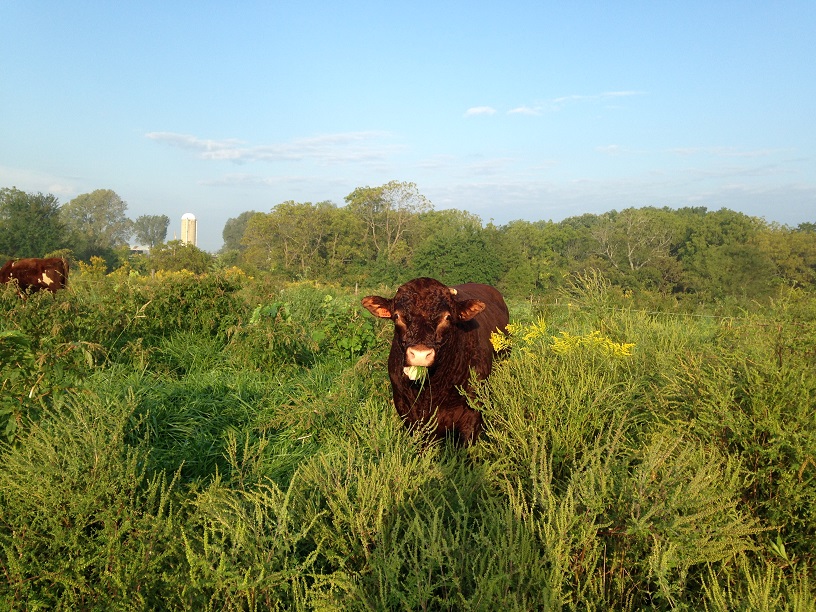
I think you get the idea. So, deep breath. Flora is in season. She didn’t settle last cycle. Sigh. So she found her way to the bull and took her friend and their calves with her. The bull.

DaBull

We grabbed a reel and calmly surrounded the cows then Julie led the way back to the barn building fence as she went. I followed behind. Before we could go we had to sort out which calves belonged with which group but that wasn’t a big deal. Everybody loves mom.

Just when we thought we had our problems all squared away we noticed three pigs in with the horses. Huh. Pigs. In with the horses. Three of them. Huh. “What do you think, Boo? Did the fourth stay in his pen?” Nope.

The pigs came running to see us. And why not? We bring them treats. They love to see us. But one pig couldn’t negotiate the gate to the horse pasture so I had to help him out. Then they just followed me to their pen. I thought it was kinda funny so I caught it on video. Sorry for the poor quality.

Again, no yelling. No running. No bad words or thrown objects. Listen to the noises they are making. Can you hear the happy in the noises they are making? The optimism? If they only knew…

Chickens were a little more difficult. I moved them to a new location this morning and about 20 of them moved themselves back. It took several sessions and some creative use of extra fence but we eventually walked the chickens back into their enclosure. They were glad to find food again.

I had hoped to catch a couple of roosters for dinner tonight but…well, no such luck. No lost tempers. No bad words. Just Julie and I…me…I…erm…Just the two of us and a flock of Silver Laced Wyandottes. Hmmm. (That could be a geriatric Flock of Seagulls country cover band.)

Since we already had fence in place, and since the cow was obviously open, we then walked the milk cows back to the pasture to hang with the bull tonight. Hopfully that’s all we need because the bull leaves in 13 days.

I find that patience is gained slowly. But I’m getting there. Days like today help.

Moving the Cows to Fresh Pasture

A reader recently asked if it’s a big deal to move the cows. Not really.

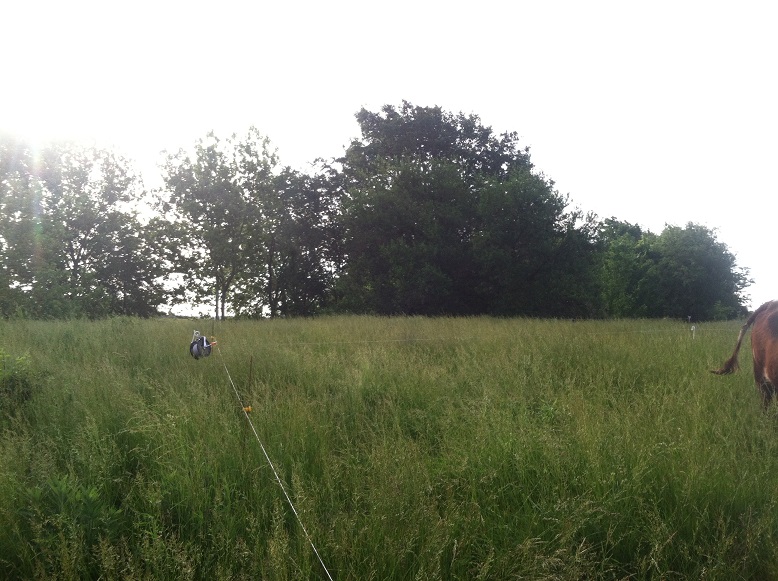
The cows were grazing along a fence line I have been working to clear on the southern edge of the property. From there I needed to move them back to the center of the property. We set up a temporary lane and walked them to the next spot. Julie led the herd and I followed to encourage the stragglers. Nobody yelled. Nobody got their blood pressure up. No big deal. It doesn’t matter that the calves squirt under the wire. They won’t leave mama. Everybody knows the routine. We are all well trained.

In this video they walk up the lane to the barnyard. We held them in the barnyard for a short time while we tore down and rebuilt fence. I had almost a mile of fence to tear down so it took a little while.

I had a similar situation Saturday morning when a calf knocked down a fence that wasn’t powered. The herd was scattered across a couple of acres. Once again, I just walked behind them zigging and zagging like a border collie, maybe a pat or two on the rump, and they went where they were supposed to. (then I powered the fence.) The dairy cows got out later on the same day. Different fence, not powered. So we really fixed the fence…all of the fence. At least moving them from A to B went well.

I enjoy working with my cattle…less so with other people’s cattle. I really should break down and buy a Bud Williams DVD. I know I need to get better.

Calving Season is Over

We are finished calving in 35 days. That’s a tight window for some, a long window for others. I’m just glad it worked out so well. 5 healthy calves born without assistance.

Heifer

111 calved early this morning. She’s the last one. In some ways, 111 is the best of the herd. She is short, fat, slicks out easily and has a good disposition. However, she has at least six teats and she calved about 3 weeks after the main part of the herd. Hopefully this little girl will strengthen the group.

We plan to use the same bull again this fall. He was sized correctly and has thrown small, vigorous calves. If I have my druthers I’ll use that same bull again next year too.

I have more grass than cattle and with corn futures low and drought in the west feeder cattle are going high. It’s a good time to be selling cattle. Not a good time to be buying. Sigh. Oh well. At least I have the calves I have and I can get a good price for the heifers that didn’t breed last year.


Simplifying the Cow…Mr. Miyagi Style

Daniel LaRusso was an idiot. He was an immature, hot-headed show off and he should have known better than to repeatedly pick fights with the Cobra Kai. But as the movie progressed Daniel grew up a little because of Mr. Miyagi. What did Mr. Miyagi do? Well, most importantly, he filled an emotional and developmental need in Daniel’s life. But in terms of karate training, he focused on what was important…simple things: belts hold pants up, hard work pays off, stick with it to the end (or <squish> just like grape). Daniel [Spoiler Alert!] was “the best around (Nothing’s ever gonna keep you down!)” because Miyagi required and enabled mastery of a few simple things: block punches, block kicks, punch with balance and a use a special, secret move that “if do right, no can defense”.

So, for the sake of my growing children, let’s break this farm thing down to simple things without secrets so if do right, no can go broke. It’s going to take me more than 90 minutes to teach my children these lessons – lessons I am still learning – but we will begin at the beginning. What is the essence of cow? More simply: What is cow? More simply: Cow?

It’s not about breed. It’s not about color. We are looking to add value to captured sunshine and enable future sunshine to be captured even more efficiently. We use cows. We can make fat cows. We can multiply our cows. We can multiply our cows and make the multiples fat. The cow is a leather-bound sunshine assimilation unit that tastes great with onions and mushrooms. That is cow.

I have seen unhappy cows. Hunched up, head down, shaggy, covered in mud and manure, ears drooping. Sometimes because of mismanagement, sometimes because they got a bad start in life, sometimes…who knows. I have one of those and she’s heading to the meat cutter. This is not cow. It just looks like cow.

WhiteCalfA happy cow is clean, her coat is laying neatly (though may be a little fuzzy in winter), her eyes are clear, she is not hunched up and ears are not drooping (unless she’s a brahman). If she is not grazing she is laying down in a dry, clean place chewing her cud. This is cow.

ZenCows

It takes grass to make cow and we want to make cow with grass…not with diesel fuel.  Grass makes cow. [I could be saying “beef” but saying “cow” seems more Myiagi and keeps the lame analogy going.] If you don’t have grass you can’t make cow. You only need sunlight and rain to make grass but having cow helps you make more grass and do it more quickly. And more grass means more cow…and more grass, if do right, means no can go broke. Quality forage is a science of its own but let’s keep things simple. How much grass does it take to make cow? It takes enough grass to fill this hole behind the rib and in front of the pelvis on the cow’s left…and keep it filled every day. How do you measure each day’s pasture? You offer enough pasture to fill that hole, little enough that the majority of what is left gets trampled and manure is scattered about. We line up a couple of parallel fence lines and move the cows throughout the day until they are full (there are more advanced and seasonal fencing techniques but let’s keep it simple today). If we are on the ball they will have enough fresh pasture overnight that they still look full in the morning when we come to move them. It’s no big deal. Fill that rumen. If it’s not full, give more pasture. If you miss today, do better tomorrow. Easy peasy.

Rumen

Let’s add a little complexity. Cows need more than full bellies. They need a balance of protein, energy and fiber. It is good to look at the side of the cow. It is better to look behind the cow. Look at the cow pat. Does it look like a stack of cookies? The cows need more protein. Does it spray out from the cow when she coughs? She needs more fiber…or she needs wormed (sell her). If it’s nicely piled up with a dip in the center the cow is getting what she needs. There are times when the grass is too lush and you will need to fill the cows up with dry matter (hay). There are times when the pasture just doesn’t have the protein the cows need and you will have to provide some level of supplementation but we’re getting away from simplicity. Graze tall, diverse swards a little at a time and things should be fine here in Illinois…especially if they can reach the lower limbs of trees.

CowPat

There are a few other things cows need like shade (hugely important when it is above 80 degrees!) and salt but that’s a good start. We will spend the rest of our lives learning about cattle and grass but if you only learn a few things, know how to keep them full and how to read manure. Understand what we have them for. They are pretty, yes, but that’s not why. They are fun too but that’s still not why. We have cows because we have grass…and because we want more grass. We are grass farmers. Cows fertilize, cultivate and harvest our fields.

Look at the rumen, look at the manure, buy a belt to hold your pants up and face down adversity. You’re the best around. Nothing’s gonna ever keep you down.

For another look at cow simplification, Hubert Karreman listed 5 (6) preventative measures for animal health in a recent Agricultural Insights Podcast:

  1. Don’t exceed the land’s biological carrying capacity
  2. Offer high-forage diets (75-80%)
  3. Offer good Grazing
  4. Ensure fresh Air
  5. Provide dry Bedding
  6. Give access to sunshine

At this point you’ll have to subscribe to hear that podcast but I think it’s worth it. I haven’t read Mr. Karreman’s books. If you have, let me know what you thought.

This Week in Grazing

Maybe I should start a podcast with that title. (in my ample free time…lol)

It’s tough grazing out there to the east. The soil is dry and hard…not signs of health…not conducive to plant health or cow health. So the fescue grows a few inches tall and throws up a tall seed head and white clover grows where it can. There is a little red clover too but there is a lot of exposed dirt and moss. I need the hooves and claws (do chickens have large talons?) to break up the moss and manure and plant material to cover the soil with a protective blanket. Future grass will grow better and be sweeter.

GrazedAndUngrazed

You can see how much pasture the cows are just walking past in the picture above. The cows have grazed out the yummy bits in the left center of the picture, trampled quite a bit more and left the rest. I’m not running them at a high enough density to really impact the pasture at this time, I’m focusing on speeding them along about half as fast as when we were last here in April..55 days ago. I want the cows to get all the energy they can, leaving manure behind. At the current pace it will take me 120 days to cover the entire farm. That will be October 1. I can live with that.

EastPastureFescue

But there are large sections of my pasture where there is no shade. I’ll just skip those until fall, waiting for cooler weather. What I really need to do is add to my tree inventory. And paint that old barn. More on trees in a minute.

Alfalfa

There is a fence of questionable quality keeping the cows separate from the alfalfa field. I don’t particularly want an alfalfa field but you play the cards you were dealt. Complaining about the alfalfa field is a little like complaining about eating ice cream. Where the fence lies the cows can’t trample and manure so we have a nice forest of thistle. I could spray the thistle out. I could chop. I could do any of several things but I would prefer to move the fence north or south by about 10 feet and let animals do the work. There are only so many hours in a day and only so much I can do. If it would stop raining for a couple of days we could cut hay…but there I go complaining about ice cream again. Soon I’ll be wishing for rain…

Tomorrow

It has been hot out this week [Note: this post was written a week before it was published]. Not August hot but regularly above 90 with humidity above 70%. Some of our cows do ok with that, some pant and drool because they still have a winter coat. Those cows need to leave the farm. We have enough trees that I can section off a portion of a tree lot to give the cows a one-day loafing area in the heat. Then we open up new pasture for the cows morning and evening. The cows reminded me how important this is yesterday when it was 85 out and they were standing in full sun panting. I have to do better. On weekends I subdivide further but it’s not fair for me to ask Julie to roll up fence wire with all the other stuff she has to do during the week so we try to keep things simple.

Anywhere I stand on my farm I am surrounded by trees. Honey locust, black locust, a variety of oaks (shingle, white, burr, red, pin), shagbark and pignut hickory, hackberry, wild cherry, osage orange, redbud, walnut, cottonwood, black willow, sassafras, elm, mulberry, sycamore, sugar and silver maple, sumac, even a few pines and junipers, maybe a persimmon or pawpaw…all of these are valuable both for shade and as forage and many make great firewood and posts. The leaves are high in protein and tannin and the cows eat every leaf they can reach. The trees mine nutrients and water (I repeat myself) and contribute greatly to the available organic material in the soil. You would think I live on the prairie but there is a lot of forest in the river hills. Our goal is to maintain open savanna under a healthy canopy, not allow an overgrown tangle of fallen limbs, multi-flora rose and poison ivy to rule the forest. This requires managed disturbance (including chainsaw disturbance). The cows get in there, eat the good stuff, trample the rest and add a dose of bacteria to an otherwise fungal environment. Adding more trees to the open spaces and in greater variety will only make our farm more productive and help keep our cows happy.

This week in grazing I’m dealing with heat, rain, pasture health and tree planning. I know the time is coming when the heat will worsen and the rain will cease. I need to plant about 10,000 trees. That’s going to take a while…even if I could plant 1,600 trees in a day. But I have to be serious about increasing my tree numbers as my herd numbers grow.

Calving When it’s Time to Calve

From Wednesday’s Pharo Cattle Company PCC update:

Just one week after the official beginning of our calving season, we are almost two-thirds done calving.   That is impossible for those who do not calve in sync with nature.  Since all calves are born with a summer hair coat, doesn’t it make sense to calve in warm weather?

That’s pretty much the boat we are in. Our animals were all naturally serviced in a short window and it has taken 17 days for four out of five calves to hit the ground. The cows were on pasture all year but we turned them on new grass 2 months ago. They are fat, healthy and clean. The grass is tall. The air is warm. Calves are all coming unassisted. We just look away for a second and look back and there’s a calf up nursing.

Curly

Certainly some of the vigor we are seeing in our calves is due to the bull we used but there is more than just that. Certainly some portion of calving ease is due to herd genetics but that doesn’t account for the whole picture either. The calves are warm. Their bellies and moms’ udders are kept clean by tall, fresh grass. They are standing, running and romping on firm ground. Mom is making milk just at the time when the pasture is at its peak of production.

Edith

So now the question…should I breed at the same time this year? Last year the bull arrived on July 27th. Three heifers did not breed. Did they miss because they were inferior animals? Too tall? Infertile/unhealthy? Were they just too hot when the bull was here? So far, all heifers bred on their first cycle but the bull was here until the end of September. Do those other three really have an excuse? Really?

I don’t know. I mean, I guess I can stick with the same window and continue selecting for cattle that will breed in the heat. It’s hard to know what is best.

Clover

Our pastures are dominated by infected fescue. Infected fescue does all sorts of bad things to cattle including increasing their body temperature. Lots of ranchers just to the west of us breed in December to calve in the fall flush of growth and take advantage of stockpiled fescue when it is of the highest quality…when it is frozen. Then they wean in the spring when calf prices are high but to this point we have allowed the cow to wean the calf herself…at about 9 months. That’s no big whoop either.

Henry_Edith

I don’t know if I am doing the right thing. We aren’t worried that the calf will be cold. The cows are fat, clean and in good health. We are doing what other, apparently knowledgeable, apparently successful farmers and ranchers do. We are doing what the deer do. It seems to be working out well.

Tell Me You Were Kidding about the Poop!

“What do you mean, ‘Tail covered in manure‘?!?!?!?” asked an alarmed friend.

Well…um…not exactly covered. I meant that to be a humorous post about the down and dirty of the daily chores, not a confession that I’m milking a sick cow in unsanitary conditions. I’m not milking a sick cow and we keep things clean. Very clean. I am milking a cow that is on some pretty lush spring forage, is refusing to eat any hay and has loose manure…some of which splattered on the hair at the tip of her tail…the part that beat me on the head as I milked so we dang-near give her a sponge bath before milking.

I might say “I’m covered in ticks” when I have two ticks on my person. Any manure on the cow’s tail is too much manure on the cow’s tail when that tail hits the back of your head. She wasn’t coated in manure. She wasn’t really covered in manure. The tip of her tail was splattered lightly. That’s part of spring but it’s not part of milking.

I keep an eye on the cow manure every morning and evening. It’s just part of the routine. What did they eat in this paddock? Are their ears up? Anybody lagging behind? Eyes clear? Are they full? What does the manure look like? All of those questions can be answered in less than a minute.

We have gone through some dense bromegrass, orchardgrass, fescue and red clover pasture and we have been getting at least an inch of rain every week for about the last month. Things are growing like gangbusters out there so the forage is pretty rich and immature (high in protein). This site talks about manure consistency and what it means. Ours looks a lot like the last picture. Very thin. Very green. Very splatterish.

Julie (who is listed in my phone as Beautiful Wife) texted me yesterday (I had to dress this up a bit as it arrived out of sequence):

CowManure

So that’s that. Too much protein and it comes out wet. I need more energy in my forages…which should start to happen any day now as the grass is 3′ tall and going to seed. But let’s just plow through that mess and move on.

Cows poop. Poop happens. But you don’t want poop in your dairy. We could go ahead and let poop happen in the dairy then hide the evidence with pasteurization or we could work our butts off to keep the cow clean, keep the dairy clean, keep our bucket clean and keep the milk clean.

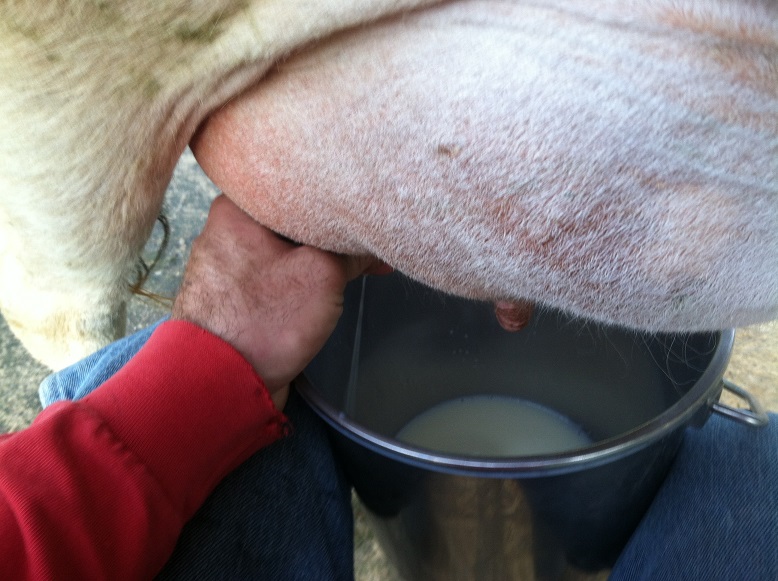
Remember that picture earlier this week?

MilkingFlora

Where is the bucket? We are milking on a clean concrete pad but the bucket isn’t on the concrete. The cow just stepped there! I hold the bucket up between my knees, really close to the clean udder. What you don’t see is me milking out about a quart then pouring it into another pail…a pail with a lid. Then I go back for more. If something should happen to the bucket (like a splattering of cow manure) I continue milking but stop collecting the milk for household consumption. We let the waste milk clabber up and we give it to the piggies. You also don’t see the filter we use in the kitchen to help us prove the milk is clean (not to clean the milk…though we do allow it to filter a stray hair or two.) Switching to the milking machine has given us even more bio-security both from a cleanliness standpoint and in terms of speed to chill. Here’s a cool video showing what is involved (not us). You can learn more about the video below at this link.

As my father reminded me, “Cleanliness is next to godliness”. But we don’t wash our bodies with antibacterial soap every day to kill even the beneficial bacteria covering us do we? Oh. Some of you do? Huh. OK. Well. We don’t cook ourselves through at 138 degrees for 2 seconds each day to purify our bodies. We wash our hands, eat well, get regular sleep, get a little sunlight and rely on our healthy, functioning immune systems to keep the baddies at bay. When drinking raw milk you also have to keep the pasture healthy, the cow healthy (let it graze fresh, tall grass in the sunlight, let it get a little exercise), wash your hands and keep the cow poop out of the bucket. If Flora comes to the barn with a truly messy tail we take a moment outside to clean things off. Then we brush her to remove loose hair. By this time she’s usually a little antsy so we put her in the head stall and get to work.

Let’s go back and revisit that previous paragraph. I have read a number of arguments that suggest there is no difference in the health of a cow on pasture and a cow in a confinement dairy. Further, there are not enough acres of grassland to support nation-wide grass-based dairy. Confinement dairy works because we have access to cheap energy and because we have bred cows that make large volumes of fluid milk on high-powered feed. Confinement cows, however, rarely last past three lactations (remember the argument that there is no difference in health!). Grazing dairies usually have surplus heifers they sell to the confinement dairies. The acres involved are much less of a problem but I’ll outline it briefly then suggest a solution. A cow has to spend X hours each day eating and digesting (varies based on body weight, temperature and stage of life). Any time spent walking to and from the dairy is time that is not spent grazing or, more importantly, ruminating. Even after overcoming the near total lack of grazing-adapted dairy genetics in North America, we have to reduce the number of cows per dairy and increase the number of dairies. I don’t see the downside here…moving away from EPA hazard 4,000 cow confinement dairies that turn 5-year old cows into hamburger and consume massive quantities of oil, however efficiently, to many, many 200 head grazing-only operations. Not to mention decentralization. I have heard so many arguments against Wal-Mart that can basically be summed up in one point: Wal-Mart is too big. Well. If we hate big corporations, don’t we also hate the big organic milk producer that is organic in name only? Isn’t more selection more better? Isn’t this what the Net Neutrality fuss is all about? Desiring competition in the marketplace so we don’t all have to bow at the alter of the big cable provider? Don’t we want competition in milk production? Don’t we want cows to eat grass? (I’m about to go full-on rant here so I should just stop now.)

I’m really not interested in arguing for or against raw milk. This product is not for sale and the bulk of our milk goes to the pigs (’cause we can’t drink it all). I think there are all sorts of problems in American dairies from the mineral-deficient land to cattle stuck indoors to dishonest or misleading dairy protections to the overweight, immuno-compromised consumers. For my fully-vaccinated, athletic and generally healthy family, raw dairy from our own clean, healthy cattle grazing on clean, healthy, well-mineralized pastures, milked in a clean environment with clean, sterile equipment and milk that goes from teat to fridge in under 15 minutes is no problem. But I’m not interested in making that decision for you. I generally shy away from telling people what to do, I focus on telling people what NOT to do as in “Don’t screw up like I did”. Nor will I recommend that you go buy raw milk because it is “better”. If raw milk is your bag, get to know your dairyman. If you dig pasteurized milk, well, you can pasteurize the raw milk you buy from your dairyman. I know several families that re-pasteurize store-bought milk. If you want to buy pasteurized milk at the store go to town but pasteurized milk is not sterile. Similar thinking applies to ham and spinach…and sprouts are deadly.

If you are milking the cow, keep things clean. Don’t give infection an opportunity. If you are buying the milk, educate yourself then go see what goes on at the dairy.

Another Addition

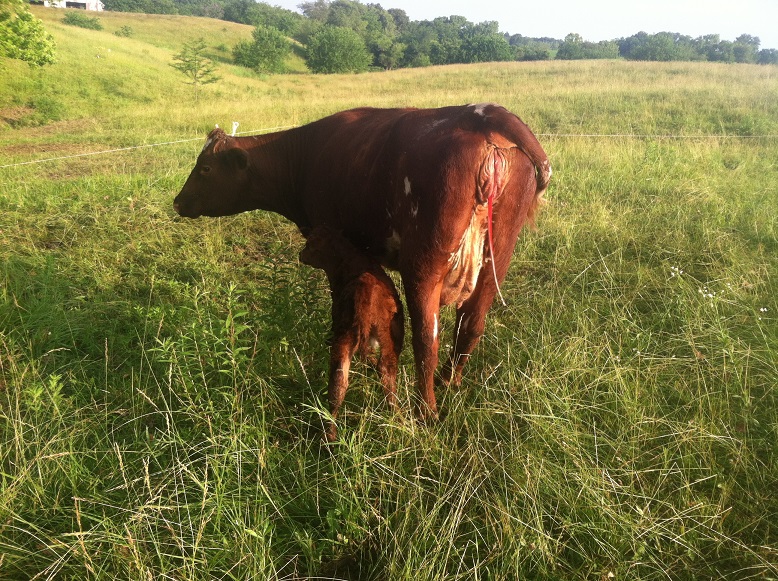
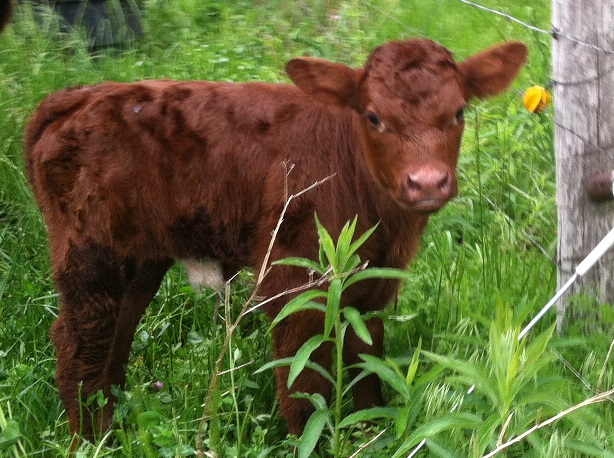
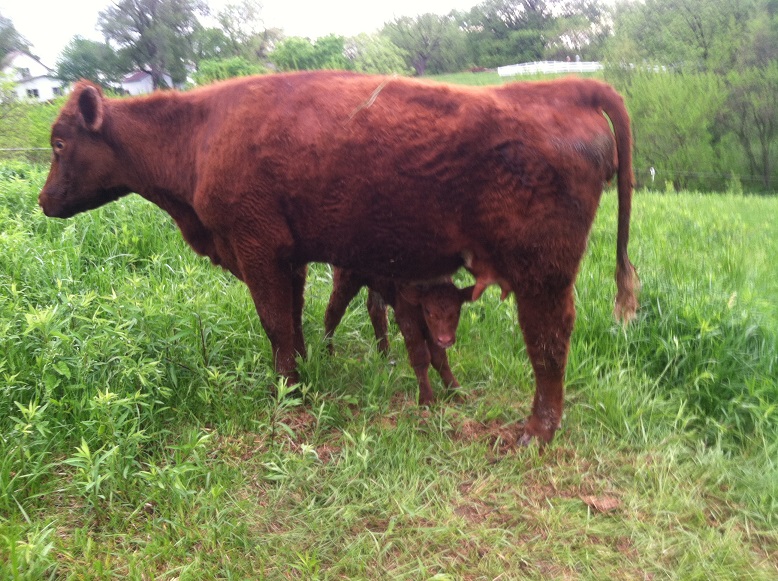
41 gave us a bull calf yesterday afternoon. Another surprise, unassisted calving. He’s a strong bull calf with a big head. Here he is hiding behind mom when we caught him nursing this morning.

BullCalf

The new calf was born yesterday afternoon. He had all kinds of energy last night but we hadn’t seen him latch on and nurse. I went to bed a little concerned but this morning we caught him in the act and we saw his meconium so that’s it. Red calf with a white belly doing everything he is supposed to do. Now we just have to get 41 ready to breed again in August.

We are still sprinting across the pastures trying to cream off the energy. Things are firming up if you know what I mean, but the white calf still hasn’t slicked out.

WhiteHeifer

I don’t think she’s going to make the team. To this point the white calf is the very definition of a poor do-er. I’m going to have to worm her and see if she comes along.

Just Mable (we usually say May-Belle), 111 and 76 remaining to calve. We’re overdue for some heifer calves here…but I would prefer that May give us a bull calf as she’s a Jersey bred to a Shorthorn bull.