Why Does the Salatin Model take 20 Acres?

Why Does the Salatin Model take 20 Acres?  That’s an excellent question someone asked the blog.  Though I have only met Salatin once and can’t begin to read his mind, I’m willing to take a stab at it.  This is my opinion, not his.  It doesn’t take 20 acres.  He suggests what is possible with a mere 20 acres.  But since I have 20 acres I’ll explain why I think it’s a good number when you are starting out.

First, 20 acres isn’t a lot of ground.  It’s an amount of ground that could be purchased for a reasonable price when the book “Pastured Poultry Profits” was published in the 90’s.  If the idea is to get in cheap and get rolling quickly, buying 20 acres generally fits the bill.  If you get started and decide raising chickens isn’t for you then you could still keep the land as recreational ground or take a stab at growing something else.

An acre will raise 300-500 broilers depending on how fast they grow out, how good your feed ration is, temperature, rainfall, bug population and numerous other factors.  Let’s just say 400 birds per acre per year.  As pointed out in the book, once your broilers spend a day on an area of ground you’ll need to wait until next year to bring them back.  Otherwise you’ll saturate the soil with nitrogen and (probably) kill or at least damage your grass.  If you are buying in all of your feed (as Salatin indicates in the book) and using all of your land for poultry production (assumption in the book) and the land is relatively flat, level and well drained you can raise 8,000 Cornish Cross birds in a year.  But wait, there’s more.  His goal is to net you $25,000.  That means each acre of birds has to put $1250 in your pocket over expenses.  So you have to buy the chicks ($1 each), feed each bird 15 pounds (or $4.50) worth of of feed.  300 birds at a time are brooded together then split up into groups of 60 in chicken tractors.  Along the way you’re paying for the brooders, lamps, water, electricity and time handling.  Then, once in chicken tractors, you take time each day to feed, water and move them.  At my efficiency level, by the time the birds are grown I have spent about 2 minutes with each bird.  It takes me a further 2.5-3 minutes per bird to kill, dress and pack them.  That time is worth something.  You aren’t going to process many birds alone so you’ll have to pay some help.  Finally, the purchase price of chicken tractors, processing equipment, fence and freezers have to be spread across multiple batches of birds across a number of years…adding to your costs.  If you don’t buy processing equipment, add in the cost of transportation and processing off-site.
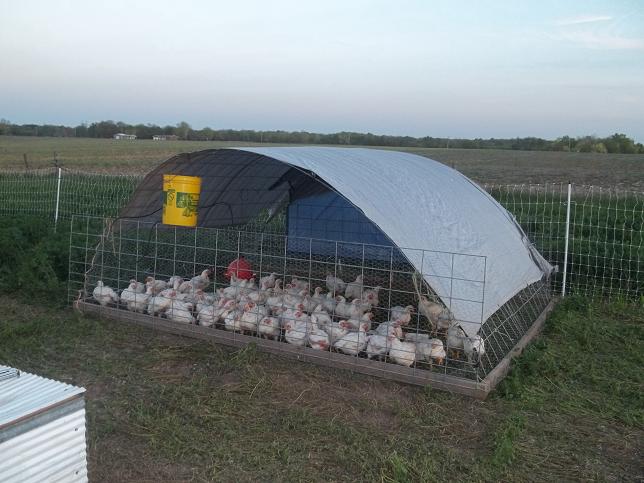
SO, to net $25,000 on your 20 acres you have to make $3.13 above costs for all 8,000 birds.  OK.  That’s not too bad.  Let’s say the birds average 4 pounds and you are charging $4/pound for the whole bird.  You have just made your margin.  But you still have to sell 8,000 birds.  That takes time.  Our first three years were 500, 900 then 1200 birds and I suspect we’ll stay at or below 1200 next year.  Salatin outlines a similar schedule.  It takes time for you to learn marketing.  It takes time for word of mouth to spread.  It takes time to build skill with the livestock, learn about seasonality, learn how to process and package.  It takes time to train customers to buy in bulk rather than just a chicken or two every other week.  But you only have to manage 20 acres while you’re learning and growing your small business.

If you are looking to get started, have room to grow and ultimately earn a fair portion of your annual farm income from seasonal broiler production, read the book and get to work.  If $25k doesn’t quite go far enough you could augment your income with any number of additional enterprises on the same land.  Anything from large market gardens, pecan trees, cows, sheep, apples, nursery stock…who knows.  Let your imagination run wild or check out Salatin’s other books  (especially You Can Farm and Family Friendly Farming) and works by other authors like Making your Small Farm Profitable for lists of suggestions.  The chickens are just one option to boost your small farm income.   But that, I think, is why Salatin suggests a small parcel: manageable costs, manageable workload, steep but manageable learning curve.  Again, the book lays out what is possible with 20 acres but in no way requires 20 acres.  One acre will keep you busy with chickens the first year.

Now, if you really want your noodle baked, he suggests elsewhere that you should rent until you build wealth then buy to preserve your wealth.  Stay light, portable, flexible and out of debt.  Pastured chicken is the new black.  Who knows what tomorrow will bring.

There’s Only One Way Outta Here

Under normal conditions you could exit my house by driving West or by driving East.  Starting Friday you could only go East.  Though it hasn’t made the international news, somebody turned over an anhydrous ammonia tank on the road to Rockbridge and dad described it as the scene from E.T.  Plastic, flashing lights, evacuations, teams of “scientists” in suits.

OK.  Well.

Let’s lay a foundation here.  First I want to say that I don’t believe anyone was injured as a direct result of this accident.  From what I have put together, the driver of the truck lost the tank somehow (hitch came loose?) and it started chasing him down a hill.  He tried to stop but ended up in the ditch next to a pond with the anhydrous tank crashing through the back window of his truck.  He escaped before ammonia flooded the cab of the vehicle.  Had he been in there…

Now, I’m not a big fan of anhydrous ammonia.  We (as a planet) use 1% of the power we generate manufacturing it.  Depending on who you read it kills a lot of earthworms when used in a field.  It falls deeply under the umbrella of chemical agriculture.  It is used to store cheap nitrogen in the soil to boost corn yields the following summer.  It is dang-near ubiquitous in modern agriculture.  We have bulldozed out the fence rows (where rabbits and quail lived) in favor of flat, tiled fields farmed all the way to the ditch.  We have to farm every square inch and need every advantage we can get.  Farming is a business after all.  It’s a business, requires efficiency and 100% resource utilization.  Tomorrow we’ll invent solutions to the problems we are creating today.  Today we need anhydrous.

So.  We have a compound of Nitrogen and Hydrogen.  A naturally occurring compound in unnatural concentration.  This compound is being sprayed on all the fields in the midwest where corn will be planted next Spring but you spill 1000 pounds on the side of the road and the hazmat team has to show up and deal with it?  Where is the hazmat team when it is being injected into the field outside of my home?  I mean, even if it got dumped into the pond at the bottom of the hill you’re going to end up with ammonium hydroxide…a household cleaner.  Is this a big deal?  YES?!?  Is it a big deal because of the scale or should I not have ammonium hydroxide in my home?  We can at least be consistent!

Now, I don’t want to be misunderstood.  I am no fan of chemical fertilizers of any flavor but I am also not a fan of state and federal bureaucracies infesting neighboring hillsides.  Why are they here?  Get the neighbors evacuated and let things run their course.  I mean, it’s not like the hazmat team is going to clean up the lawyers too!  If anhydrous ammonia is a problem why do we spray tons and tons of it on the soil surrounding my farm?…on the soil that washes into my pond?!?!

So anyway, there’s one way outta here.  Practice crop rotation, diversify our farms again and fertilize with composted animal manure or (gasp!) composted human manure.  But what do I know?  I don’t have a job with the department of ag, I don’t clean up spills, I’m not a firefighter, I don’t work for the EPA, I’m not a legislator, lobbyist or lawyer.  I’m just a computer geek with a biology degree pretending to be a farmer…certainly not an expert.  I do know my road has never been blocked for a week because horse manure got spilled on it.

Looking up a Hay Wagon’s Skirt Part 1

I get a ton of searches for “hay wagon rebuild” or something similar to that.  I assume readers are looking for these two articles.  Those two aside, I think I can provide more detail.  So, this is the first of a series looking under each of the four wagons on our farm and my thoughts on each one.  Hopefully you’ll find them to be helpful as you plan out your next hay wagon rebuild.

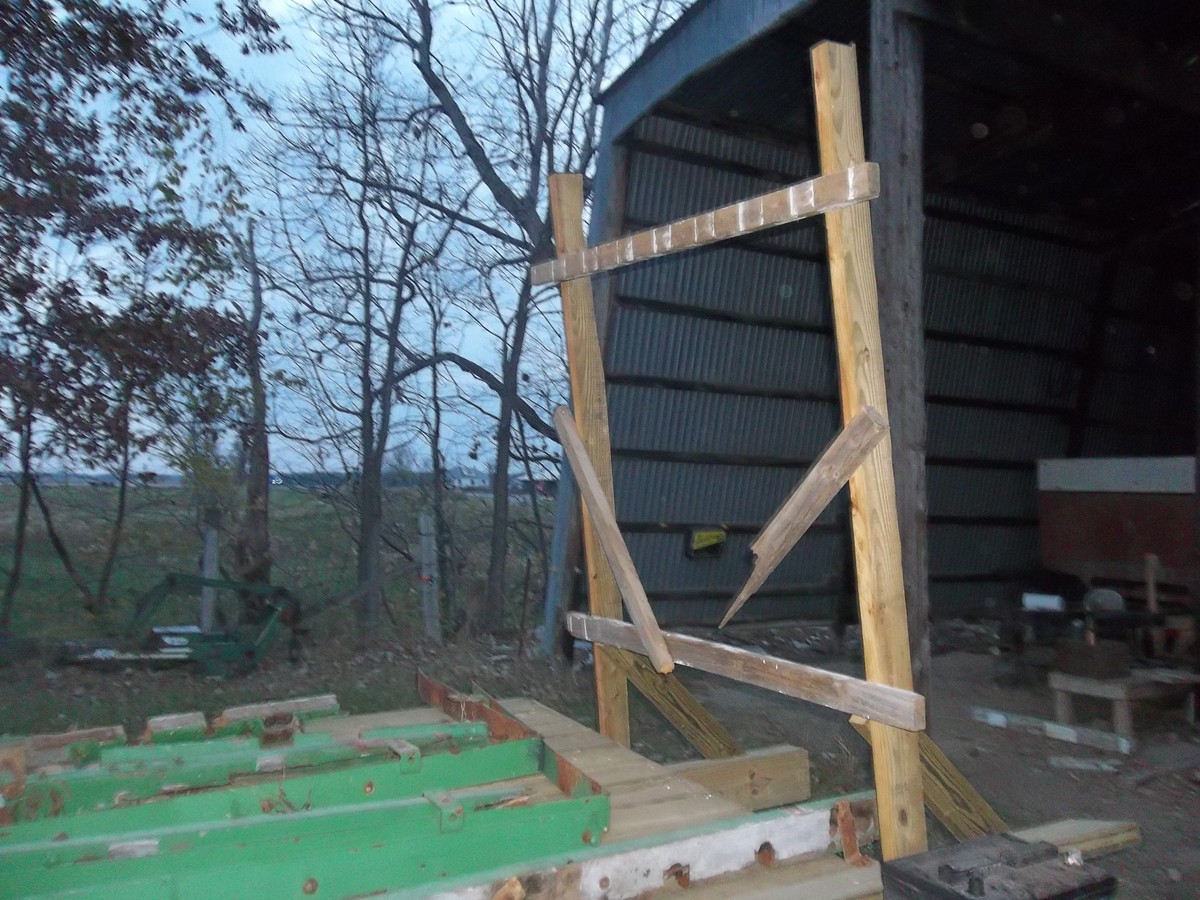
This is the wagon we rebuilt above.  It really isn’t a hay wagon, though we used it as one this summer.  It’s a grain wagon, complete with sides.  It was pretty rotten when we hauled it home and we are working to rebuild it as time allows.  Time hasn’t allowed so it’s still just a flat platform.  We used the original design as our pattern when rebuilding this one and it turned out well.  Most of the iron we need to rebuild it as it was is laying on the bed waiting for me to clean it up.

The running gear is sound.  It has good rubber and turns well in both directions.  You may not realize why that’s important so just trust me.  It’s important.  We bolted two 4×6 beams to the rear of the running gear.  This allows the front to flex over uneven ground.

Above the beams we knotched 2x4s to support the floor.  These could be doubled up.  Each are bolted to an angle iron which is then bolted to the 4×6.  We knotched them to match the design of the previous bed.  It helps to keep the bed lower to the ground.

Then we used treated 2x tongue and groove flooring across the platform.  The surface can be a bit slick but it’s solid.  We started with a reasonably straight board and the tongue sticking out on the edge which we later cut off.  Each board was …convinced… to snuggle up to its neighbor.  Finally we put 2×4 edging around the bed.  This should be a 2×6 because of the thickness of the floor but we were anxious to get into the field.  I have since purchased the 2×6 edging but, like so many other things, haven’t installed it yet.

Finally we attached a headache rack to the back.  Maybe it looks a bit hoosier but when it’s time to bale, it’s time to bale.  We had to get on the road.  It worked so it stayed even though one of the scrap boards we made it with has broken.  (Just to show how cheap I am, one of those horizontals are discarded treated boards from my father-in-law’s fence.  A fence he built 5 or 6 years ago.)

So there you go.  You can stretch them out so they are long and heavy if you want but I prefer them to be shorter.  There are any number of ways to build your deck on the running gear and I’ll be detailing our other wagons soon.

What Does “Romantic” Mean?

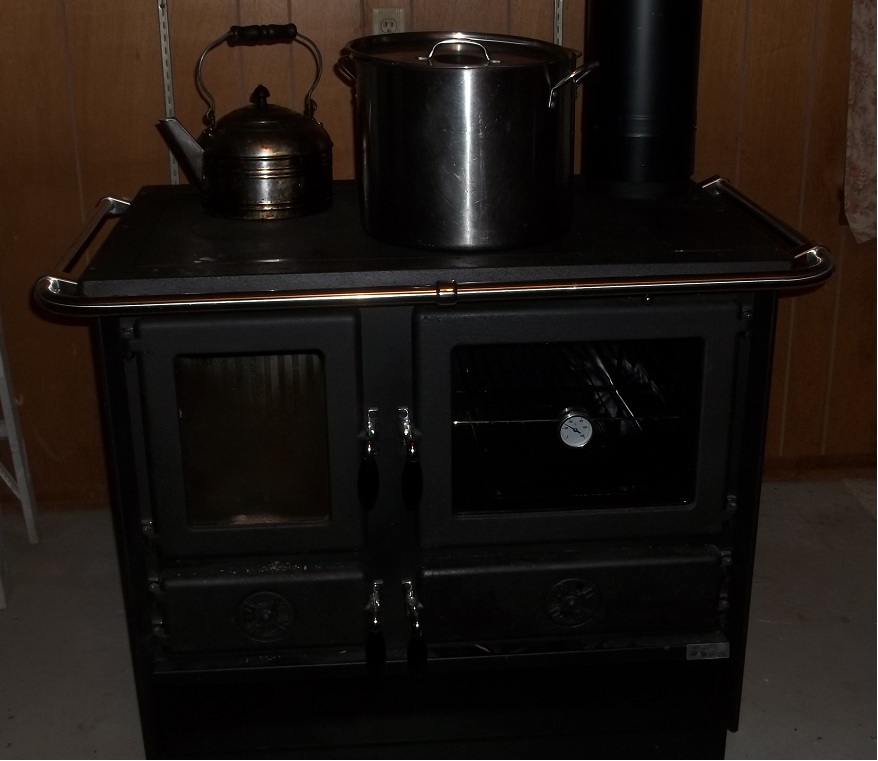
Ah, the fire.  The warmth.  The light.  Somehow the food tastes different when cooked on the wood cook stove.  There’s a slight crackle.  Instead of the normal 57 degrees in the house, we have one room that’s 90.  There’s always hot water.  You come in from outside and park your tookus next to the stove and you are instantly warmed up.  It’s the fulfillment of some romantic dream of hers.  Best thing ever.

Well.  Sort of.

Sopka Magnum Wood Cook Stove

The crackle, the smell, the warmth all come at a cost.  My time.  You see, my lovely bride loves the wood cook stove.  To her it’s just a matter of splitting some kindling, lighting a fire and keeping it fed.  Works well enough.  But from my perspective it’s hours with the chainsaw then hauling, splitting, stacking, restacking when it falls over, etc.  My days off.  My weekends.  Every trip out in the woods I’m looking for a standing dead tree or a snag to cut down.  What will I do when the woods are clean?  Where can I start growing the forest I’ll need over the coming years?  Should I burn that log or should I run it through the sawmill?  Oh, the stress!  Oh, my leg!  Oh the guilt! (Anybody get that reference?)

Why are we burning wood when it’s barely getting to freezing at night?  I think the word “romantic” is French for “because she wants to”.  Why isn’t it romantic to sit under a pile of blankets reading a book?  Oh well.  The kids are a big help and do most of the stacking and carrying.  My oldest helped split this time too.

Hogs Loading Themselves

I would rather not relate my first two experiences loading hogs.  I’ll do it but only because I love you.

There were a lot of…adjectives.  Maybe some high temperatures.  A fair amount of running, yelling, pushing, lifting and other unpleasantness.  This was capped off when we got to town and one escaped the chute and ran around the street near the packer.  That was awesome.

One of our goals is to ensure our animals have a wonderful life right up until the end.  I don’t want loading into a trailer to be unpleasant for man or beast.  I have found a better way.

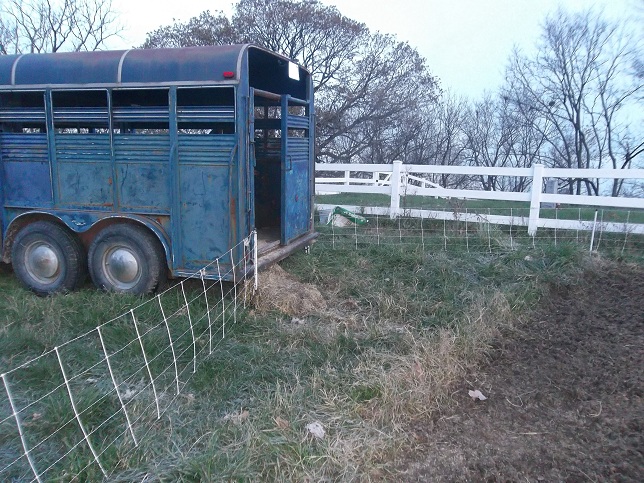
The pigs load themselves.  Rather than attempt to load the pigs the morning I drive to town, I back the trailer out there the night before.  I butt the electric fence up against the sides of the trailer and put their feed inside.  Curiosity and appetite lead them into the trailer and I close the door.  No muss, no fuss.  Up they go.  I have loaded them this way twice now.  Old timers think it’s a fluke…just like the electric fence I keep them in with.

Monday night the fourth and final pig showed resistance to loading into the trailer.  Rather than pressure the animal to fit my schedule, I backed off.  3 of them were loaded into the front partition.  The fourth was reluctant.  I put some apples by the door and went to eat supper.  After supper he still hadn’t loaded.  I decided bring the cows up, feed the goats and close the chickens.  When I got back his curiosity had won out over his caution and I closed the door while he munched away at the apples.

This represents a major epiphany and is entirely my father’s idea.  Thanks Dad.

Where have you found frustration with livestock?  How have you overcome it?

What is the Value of My Wife?

OK.  I’m a little worried that if I reveal this I’ll see different results but I’m going to do it anyway.  I read what you search my site for.  Readers search for all kinds of things.  Very interesting things.  Like the title of this article.  What is the value of my wife?  Now, I think they were looking for this article but I’m going to answer the question anyway.

We could look at this several ways.  Maybe the reader was evaluating his wife and sought a bit of wisdom from my not-quite-near-daily pontifications.  Maybe the reader is thinking of selling her and upgrading to a newer model year.  Maybe the reader wants to buy my wife (a wise investment if possible) I dont’ know.  But I suspect they are searching for a post on how much I love, honor and cherish my lovely bride.  How much I depend on her.  How strongly I feel that I could never trade her for a newer model year because they just don’t make them like that anymore…not that I have been out shopping.  Maybe I should stop here before I get into trouble.

SO.  Let’s indulge the reader.

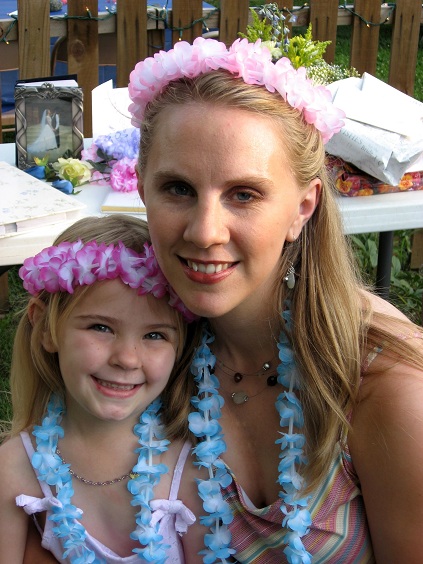
I met Julie nearly 20 years ago.  She was is hot.  What’s the value of beauty?

My folks moved just before my senior year.  I was going in to register for school, heading up the stairs toward the office.  She was coming out of the office walking down the stairs.  I’ll never forget our first conversation.

Me: “Um, where is the office?”

Her: “Right over there.”

How great is that?  I should have kissed her then.  Instead I went in to register for classes.  She met her mom at the bottom of the stairs and I learned much later the conversation included this line from her mother: “He must be a new kid.  You should show him around the school.  You never know, you might marry him someday.”

So there you go.  I immediately started dating her best friend.  Yeah.

Now I’m going to skim over youth group, high school, going to my senior prom with different people, going to her senior prom together, going to college, being married with 2 years of college left (ages 19 and 20), being newlyweds living in an apartment above her aunt (awkward), being newlyweds living in a crappy rent house, buying our first house, buying a second house (foolish), gutting and remodeling a 100 year old house we bought out of foreclosure, 3 kids are born and now we’re 7 years into marriage.  OK.  Catch your breath.

7 years.  We’re piling up an enormous amount of debt remodeling our house with a construction loan, there is no kitchen, we’re building a too-big garage with additional debt, working long hours, being super-involved in church and community and raising kids and then one day it all came to a head.  We had grown apart.  We weren’t married so much as we were roommates.  Pretty ugly situation.  Worse than you think.  We didn’t even hang out.  We were just there.  Sometimes.  I started living another life and dreading both.

Now, I don’t want to get preachy but since I do believe in God it spills out from time to time.  By God’s grace we not only patched up our relationship, we made it better than it had ever been before.  We closed the door to the world, bought a Nintendo Game Cube and played Mario Kart Double Dash with the kids all summer.  We talked.  We went to counseling.  We went to church.  We read books…lots of books.  But outside of work I was next to my wife every minute of the day…a habit I still continue.  SO what’s the value of faithfulness?  Of commitment?  She said “for better or worse” and stuck with it when it was worse.  Tell me what that’s worth.

She homeschools our kids.  I didn’t talk her into it.  I didn’t force my wife to submit to my will.  I never told her, “YOU WILL STAY HOME AND BE A MOM!”  Not at all.  Given her choice in the world and assuming that we have enough sense to live within the restrictions of our household income (regardless of how high or low), she chooses to stay home.  But a big chunk of that is her willingness to stay home AND work harder than anybody I know.  There is no Dr. Phil in the afternoon.  She doesn’t spend hours on Facebook.  The TV does not babysit the kids for her.  She finds a task and applies herself to it.  And, getting back on course, at the ripe old age of 22 she told me she wanted to apply herself in the home.  “OK, dear”.  Again, there are several things that make this possible.  We live within our means.  I would buy her anything.  ANYTHING.  I can’t buy her everything but I could buy her anything (look for a post on that another time).  But she wants little.  I have to beg her to buy clothes.  We were moving a few years ago and one of her friends offered to pack her closet.  The friend asked, “Where are your clothes?”  Julie answered, “Right there.”  Friend “You always look so nice!  How do you do it with so few clothes?!?”  She coordinates different things so she always looks different but, honestly, has very few clothes.  Fewer still that she didn’t pick up at a thrift store.  She hates kitchen gadgets, she makes Christmas tree ornaments, she has never paid for a manicure.  She’s very, very low-maintenance.  A good night date to her would be a steak and salad, a glass of wine and a movie at home without the kids.  If we really went out (like out-out (like drive to the big city and go to an actual sit-down restaraunt where they bring the food to your table and stuff?)) she would go for mexican and a strawberry margarita.  Easy.  So what’s the value of that?

Several years and several houses ago I said to her, “Honey, I want to farm.”  Now, that’s just crazy talk and you all know it.  If you don’t know it, well…it is.  Crazy.  Farming!  I’m just about as city as city can get.  My parents raised us in a bedroom community but kept a garden.  Dad did a lot of carpentry work in his free time so I could hit the right nails but hammering and gardening are a far cry from farming.  Besides, I have allergies.  What did she say?  “OK.”  She got books from the library.  We read them together.  She helped make our garden bigger.  She canned and canned and canned.  She conspired with me to have chickens in town even though it was illegal and we lived next to THE cop.  When it was time, she packed up our suburban paradise and moved to a house where the septic tank was failing, the roof leaked and the spiders were large.  She made it a home.  Now we get up at 5, do a little housework, make breakfast and she sends me off to the city to sit at a desk while she milks, feeds, lays out new pasture, organizes school, reads to the kids, makes a few sales on the phone, makes applesauce, gathers, sorts, cleans and packs eggs, cooks and generally does everything all while looking great.  How does that rate?  What’s the value of her work ethic?

So.  How does an average-looking guy of average intelligence and below-average manners keep the interest of a girl like that?  I have no idea.  If I’m asleep don’t wake me up.  I do try hard.  I am nearly domesticated.  I wash a lot of dishes with a minimum of breakage.  I fold laundry.  I can even wash and hang it on the line.  I can cook a few things (better if the grill is involved).  I can reach things on high shelves, pick up heavy things, open any jar and squish spiders.  I excel at generating crazy ideas and I can really crank out the work even when it’s not required.  But these are all things required of any man…well any able-bodied man.  I have yet to accomplish anything that any but my children would call superhuman.  Everything I do is well within my ability…within the reach of an average person.  The things Julie accomplishes amaze me.  She does more before 8am than most marines do all day.  So, what’s the value of her opting to be with me?  All she had to do was to look at another guy.  She looked at me.  What’s the value of that?

Objectively, she earns her keep and then some.  Subjectively she’s priceless.

I’ve never wondered what her value is.  I’m just thankful she’s mine.

I love you Julie-Boo.  I couldn’t do this without you.

Chestnuts Roasting in a Closed Oven

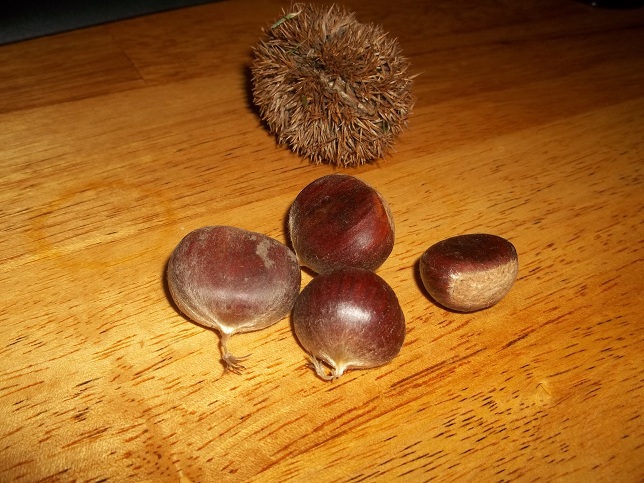
I had never eaten a chestnut.  Until today, I wasn’t entirely sure what a chestnut was.  I even ordered 25 trees from a supplier in Florida that will arrive spring of 2013.  No idea.  Just doing what I thought sounded like a good idea.  Get some trees in the ground.  Grow lumber for future generations.  Harvest nuts.  Go.

We were picking up apples at Eileen’s  house on Sunday and I noticed what I assumed were buckeyes.  I asked the kids to leave them lay because I don’t want buckeye trees on the farm.  They are toxic to cows and horses, useless for lumber and are not welcome here.  Anyway, I did little more than glance at them and focused, instead, on apples.

But they weren’t buckeyes.  They were chestnuts.  I think they are Chinese chestnuts.  I realized my mistake today and drove back to pick them up after work.  In the cold.  In the wind.  Thankfully, not in the rain.  A cold front came through and dropped the temperature about 20 degrees in 10 minutes.  I didn’t have a jacket with me.  Remember to wear gloves next time you pick up chestnuts, OK?

We roasted a handful in the oven and, true to the description, they are like eating a slightly sweet, nutty potato.  Maybe I’m missing something.  Where is the wonder and majesty?  Maybe in the 68 years since Mel Torme wrote The Christmas Song chestnuts have changed.  Maybe we have more sweets in our diet now.  I dunno.  Though I plan to roast some at Christmas, the jury is still out on the whole chestnut experiment.  However, we’re going to plant some, we have trees coming in the mail and we’ll figure something out.

Now, I want to say a word about Eileen.  When I was younger (maybe just young) I hauled manure from Barney’s for Eileen’s asparagus (Barney deserves a blog of his own), I rebuilt her wooden swing that her cousin had made for her but the tornado threw into the ditch (Babe deserves a blog post) and I helped her pick veggies, cleaned up her fallen limbs and ate lots of her cookies.  She gave me a couple of her deceased husband’s ties.  Years later I did some really stupid stuff and hit a particularly low point in life.  Eileen made it a point to tell me in front of a large group that, to her, I was still as good as gold.  Eileen means a lot to me.

I think it’s great that, though Eileen is now in a nursing home, I am still welcome at her house.  It may not always be that way but, though she has no idea I was there to get apples and chestnuts, I know that I have her blessing even if it comes by proxy through her son.  Thanks Larry.

Gardening with Zombies

Not the Halloween type of zombies or the ones that dance with you while you and your teen-aged girlfriend try to walk home from seeing a movie.

Real, honest to goodness Zombie Apocalypse type of zombies.  Over the years we have read a number of survival books from true accounts of people stuck on boats or on mountains to fictional accounts of  little boys crashed in the Canadian wilderness to full on TEOTWAWKI (The End Of The World As We Know It).  The main character of a book I’m reading is a big fan of guns and beans (who isn’t?), owns a cabin as a BOL (Bug-Out Location) and has plans to use an abandoned lot nearby for a garden if he has to bug-out.

It’s that last point that bothers me.  It’s as if to say, all you have to do is turn some soil over, tip the seed envelope toward the ground and “Voila!” – food.  Haven’t these people seen Second Hand Lions?!  You know, where they planted a garden out of various seed packets and it all grew up to be corn.

Ugh.

Gardens take time.  Gardening is a skill.  Canning is darned near an art.  Heck, all of it is an art, one that has to be developed over time in your own climate with seeds that are well-suited to grow where you live…viable seeds that haven’t been sitting in a can on a shelf in a storage unit for 10 years.

So our hero in the current book spends his Sunday afternoons shooting with the guys, practicing tactics for urban warfare.  He has to know how to use his weapon so he is ready if he needs it.  It’s preparedness.  He fills a cabin with beans, rice and pancake mix (yes, pancake mix) because he wants to eat beans and rice and pancakes.  He buys a couple of seed packets at the big box store just in case.  Just in case?

Ugh.

I don’t even know what to say.

Well, I guess I’ll have to figure it out because I can’t drop off the blog post here.

Now, look.  I’m very much in favor of arming your family with an array of handguns and ARs customized to fit each member of the family from ages 3 to 60 (younger than three can pass the ammo!).  You wouldn’t say, “Well, yeah, I now own a Glock so I’m ready for the Zombie Apocalypse.”  You learn how to use it!  I’m very much in favor of beans, rice and pancake mix but you can’t just stop there and call it macaroni!  You have to learn how to cook it.  If gardening is part of your survival prep, plan for it.  Learn how to do it!  I mean, the author is very pointed about the fact that our ‘hero’ is rather useless around the house and doesn’t know anything about gardening.  He just buys guns and beans and pancake mix.  Months worth of beans and pancake mix.  (And he expects his wife to be pleasantly surprised that we’re having beans for dinner.  For the next 9 months. (Oh, and we might have to shoot the neighbors to keep them from eating our beans!))

Do you know how to garden?  Most folks grow a good crop of weeds every year.  Not necessarily bad if you know which weeds are best to eat but not ideal if you’re trying to grow onions.

And you can’t keep onion seeds in storage for more than a year!

I have gone astray.  Let’s get down to it.

Soil.  It takes roughly 7 years to get decent soil in your garden plot.  You need manure, animal or human.  It takes 3-5 years for a grafted fruit tree to grow.  It takes 10-15 years for a fruit tree to bear if grown from seed (and if it’s an apple you might be unpleasantly surprised).  Did you plan that timeline into your SHTF scenario? No?  Well, good thing you’ve got a Glock.  Maybe you can help someone with a garden defend it from marauding vegetarian Zombies.

My friend Linda Brady Traynham died not quite a year ago.  She and I discussed this topic at length over the phone one evening.  She had written about it in 2009 but she makes the point better than I can as she reviews the book Patriot.  Here are the highlights:

 I had been using the term”survivalist” as convenient shorthand, but Mr. Rawles showed me the error of my ways:  we want to be prepared to thrive, not just to survive.  We’re capitalists … and we want a better ROI than just living through the breakdown of commerce and law and order.

“I may have to live through wars in ‘injun territory,’ but I refuse to do so without ample supplies of whipping cream, fresh porto bello mushrooms, and a lifetime supply of OPI nail polish.”  Two years into the bad times our heroes have fended off assorted attackers and formed a Dudly Do Right squad to patrol a big chunk of territory assisting those they think worthy of it.  Their standard breakfast is dried wheat softened with heated water.  Lunch is a big pot of steaming rice.  Period.  Dinner is the elk or venison du jour when hunting is good and more rice.  Dehydrated peanut butter or jerky if it weren’t.  Yeech.  The calorie count is a bit higher, but other than that we’re talking Gulag food.  On special occasions they have a tasty MRE.

…Call me effete, but I’d have turned some of the ingredients into elk-fried rice and told those men that they had enough trenches, go hunting and don’t come back without something that can be milked, and I don’t care if it is domestic or a mountain goat.  One of you other idlers go find a bee hive.

Three years into their communal survival experiment they still haven’t planted a garden!  They keep wonderful around the clock lookouts, of course.  They make terrific IED.  Nothing was more important than a garden, and couldn’t someone not on duty have built a still?  They couldn’t even have made soap out of ashes for lack of sufficient spare fats.

Nail polish.  LOL.  She hit the nail on the head.  In your Red Dawn fantasy scenario you should plan to dig more than the graves of your fallen enemies.  You should plan to garden.  You should find a source of milk and convenient protein.  If you can keep a couple of chickens at your house now you should.  You can pack them with you to your Bug-Out location if needed.  Same for rabbits.  It’s more than just bullets, beans and exploding zombie heads.  Learn to do this stuff now and plan to be comfortable.  What if you get there and the zombies don’t find you?  You just going to watch each other field strip your guns for years?  You need something to do!  Garden.  Keep chickens.  Grow something.  As Linda points out, it may even enable you to make a valuable contribution to your gun-toting community.

Heinlein said, “A human being should be able to change a diaper, plan an invasion, butcher a hog, conn a ship, design a building, write a sonnet, balance accounts, build a wall, set a bone, comfort the dying, take orders, give orders, cooperate, act alone, solve equations, analyze a new problem, pitch manure, program a computer, cook a tasty meal, fight efficiently, die gallantly. Specialization is for insects.”  

Learning to do anything is simply a matter of putting in the time.  If you want to learn about gardening, the time to start is now.  I can teach you to hit a target at 15-20 yards with a 9mm handgun with an hour of instruction.  You’ll need the rest of your life to learn to garden well.  Start now.  I still have a long way to go myself.

Now, we can’t talk about a well-armed family thriving with a productive garden (and composting their manure for said garden) during the ongoing zombie apocalypse without noting a couple of problems.  These are from Survival Mom’s list of 28 Inconvenient Truths About TEOTWAWKI:

22. Growing your own food is a bigger challenge than you ever thought possible.
23. A green garden can be spotted from miles away, thus endangering your food source and your family.

So.  If you believe there is any possibility of a zombie apocalypse, post-nuclear apocalypse, trucker strike, currency disruption, ice storm, 7 fat and 7 lean years or long-term unemployment (nothing stretches unemployment like not buying food!) and, as Linda points out, thriving sounds better than just surviving, maybe you should take a first step.  Besides, who needs that much lawn?

Apple Picking…up

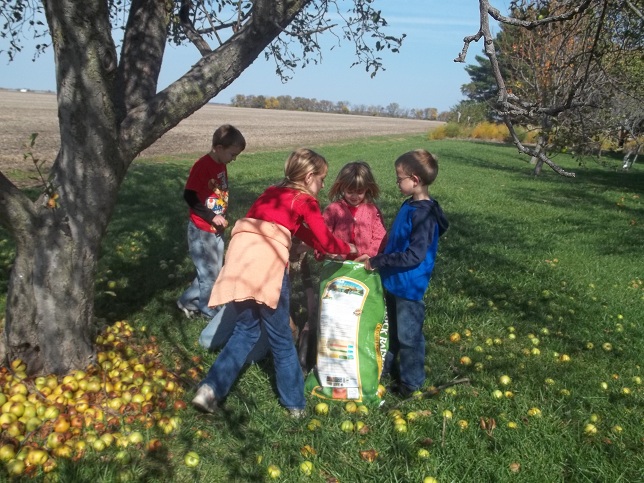
We were invited to pick apples at a friend’s house.  Well, we were invited to pick up apples at a friends house.  Their trees had a bumper crop of silver dollar sized apples this year and during a recent wind storm many of them fell to the ground.  He invited us out to clean them up because he was overwhelmed by the crop.

We had two hours between morning chores and lunch for three adults and six children (sister and nephews were visiting) to pick up the apples.  It was just enough time to clean up under one tree.

That one tree gave us five large tubs of apples and six feed sacks full of spoiled apples for the pigs and still left several bushels hanging from the tree.

Lunch was at my mother’s followed by a birthday party for our oldest son at our house.  Then we began cooking the first batch of applesauce.  Not time to loaf.  We work in this army.  We’ll be cooking apples for days.

Processing Day 10/20/12

We will begin processing chickens as soon as we’re finished milking in the morning on 10/20.  If you are interested in seeing how we do this, show up any time after 9.  If you are coming to pick up fresh chicken, whole or cut up, show up any time after 11.  If you don’t come on butcher day the birds will be frozen.

The weather promises to be cold and breezy so we’ll work pretty fast to get done quickly.

Wish us luck.  These are the last birds of the season.  If you miss out, we have a few in inventory.  Otherwise we’ll see you in April or May.

Finally, if you want to come out but don’t know where the farm is, shoot an email to chismheritagefarm@gmx.com and I’ll help you find your way.