Chicken in the Mornin’

So.  How does this work in the morning?  What do you do with your chickens each day?

I’m glad you asked.  Have you seen the Walmart cheer?  We don’t do that.  We walk or bike down to the alfalfa field (half mile?) and are greeted by the entire flock.  Then there are a couple of checks we do every time.

1. Are any layers dead?  It happens.  Something penetrates our fence, enduring the pain of electrocution in desperation for a free chicken dinner.  Or it flies in.  Whichever.  But it happens rarely but sometimes birds die.

2. Do they have water?

3. Do they have feed?  We now keep a 300# pasture feeder in the field.  We only feed the birds once each week.  It’s great.

4. Do they have shell?  No shell means broken eggs.
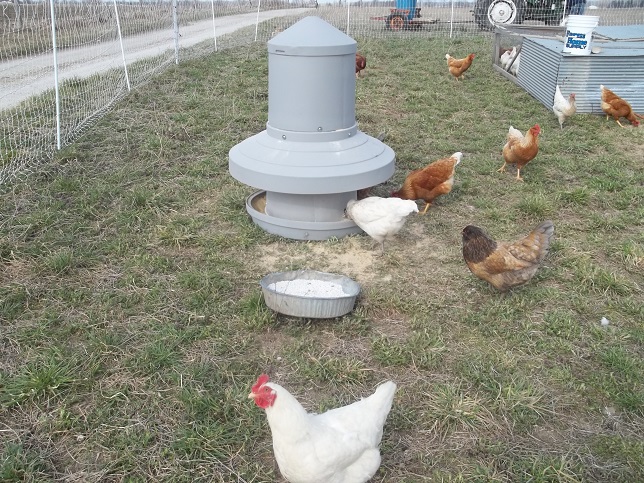
LayerMorning

Then we check the chicken tractors.

2. Do they have water?  Do the birds have access to that water?

BroilerWater

3. Are any broilers dead?  It’s rare but it does happen.  Most commonly happens when they are very young and pile on top of each other.  It can happen when they get just about butcher weight.  But it can also happen after a heavy rainstorm.  You will know because the birds will probably be laying on their face.  We have only had two deaths in a chicken tractor related to predation.  One morning we found two dead chickens in the same tractor.  They were young birds.  One was killed by talons of a predator through the chicken wire side.  The other was crushed under a pile of chickens trying to get away from the owl.  However, the owl never returned.  He banged into the side of the tractor and left a pile of his own feathers on the ground.  You may also find a bird laying on its back and looking purple.  Heart attack.  We had an americauna rooster die of a heart attack so it’s not just a CX thing.

Broilers

4. Do they have feed?  We always feed the broilers.  I want to know if I fed them too much or not enough last time.  I want to offer them too much feed…but only a little too much.

Feed or not, I pull the feeders from the chicken tractors one at a time.  Then I use the dolly to move each tractor forward, waiting on the chickens to move, being careful not to run over any birds.  We find this goes better in the cool of the morning when the birds are hungry than in the evening when they are fat and the temperature is higher.  The dolly was a trade for 8 chickens.  He made it from sucker rod, angle iron and lawn mower wheels.
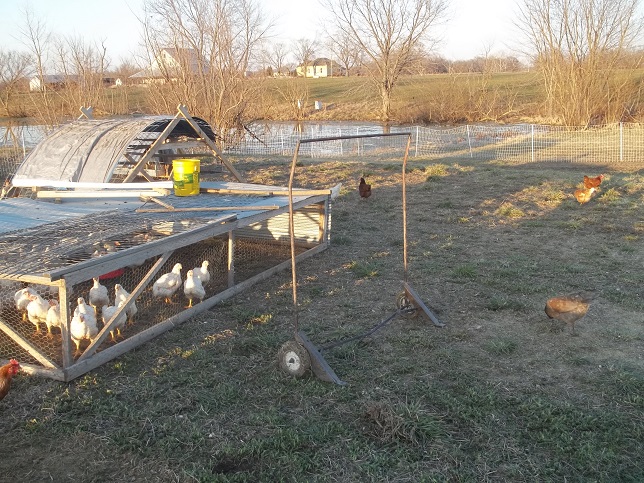
Dolly

The layer houses also need moved because they too make serious deposits on the ground.

LayerMorning2

Feeders are filled and replaced, the water is filled again and we’re done for a couple of hours when we come back to feed and water again.  The broilers need our attention about every four hours or so.  If they go short on water they die.  If they go short on feed they don’t grow the way we need them to.

We can easily get away with checking the layers once/day when we gather the eggs.  All it takes is excess feed and water capacity.  But the broilers need our attention regularly.  Consequently we’re shortening our broiler production windows.  Keeping the two groups of birds together saves on time, reduces our fencing needs and limits waste from the broiler feeders.  Any food that hits the ground gets picked up by the layers eventually.

Delayed Chicken Processing

The chickens just aren’t paying attention to our butchering schedule.  If you want a fresh, never frozen, hormone- and antibiotic-free, humanely-raised, pastured chicken you’re going to have to wait another week.  If you want a frozen, hormone- and antibiotic-free, humanely-raised, pastured chicken you’re going to have to wait another week…cause we’re all out.  Either way…we’re moving our processing date to the 20th.

Broilers

Strolling Through the Pasture April 2013

The pictures in this post are about a week old and are already out of date.  This week we have highs in the 70’s and good chances for rain each evening.  You can almost watch the grass grow right now.

I am grazing my cows on remaining stockpile.  Mostly though, I’m packing them into a small area and feeding them hay.  I’m pushing carbon into the soil mostly on countour to the hill slope.  Will it work?  Well…it should.  We’ll see.  Maybe you’ll see the difference in the pasture over the next few years.

Normally I start taking pictures as I leave the house.  I’ll start todays’ walk by the horse barn instead.  Last month I took a picture of a down locust tree in a sea of fescue nubbins.  We burned the tree then overseeded with clover, orchardgrass, timothy and two kinds of rye grass and here’s what it looks like now (though the camera is pointed more to the right).

AprilPasture1

The horses ate it down to the nubbins but it’s coming back well and it’s coming back with additional diversity.  The real miracle here was that the horses showed me around 20 or so honey locust saplings.  BTW, the picture above is almost the same shot as the one in this picture.  I’ve cut a lot of hedge in the last year.  There is a lot more to cut…and this is just one of my hedge forests.  Many of the stumps are sprouting so I’ll have an ongoing supply of thorns and firewood in 5-10 years.  Also, a pair of rabbits are living in the brush pile we built last year, though I only see them when I am out walking at night.

AprilPasture2

The plan is to allow this to sit idle until July or so.  Once the drought hits I’ll have a stockpile of grass for the cows to tromp and eat through.  There are about 2 acres here.  With luck, that will be just the bridge I need to allow my main pastures to recover fully.  Then we’ll graze this again over the winter.  Next year we’ll allow a different patch of land to go.  This builds up carbon over time, allows ground-nesting birds to have a home and helps us keep our cows fat.
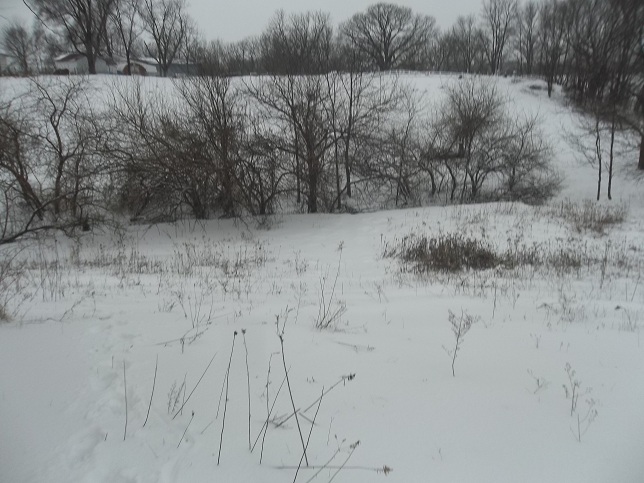
AprilPasture3The top of the hill was also grazed by the horses but not as intensively.  It’s still a thick mass of fescue but was well pounded by running, playing horses and heavily manured.  Good enough.
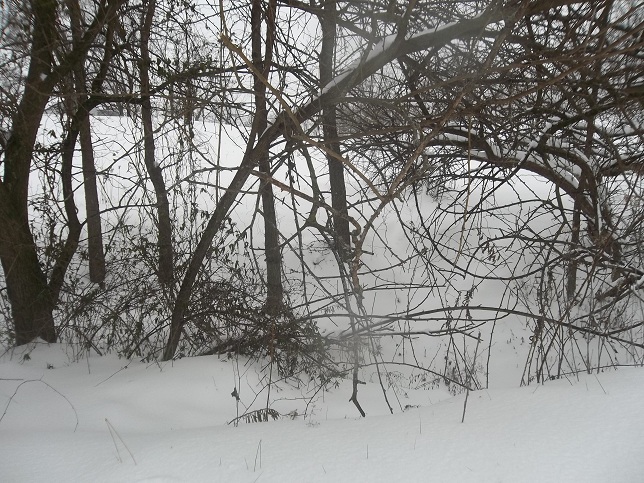
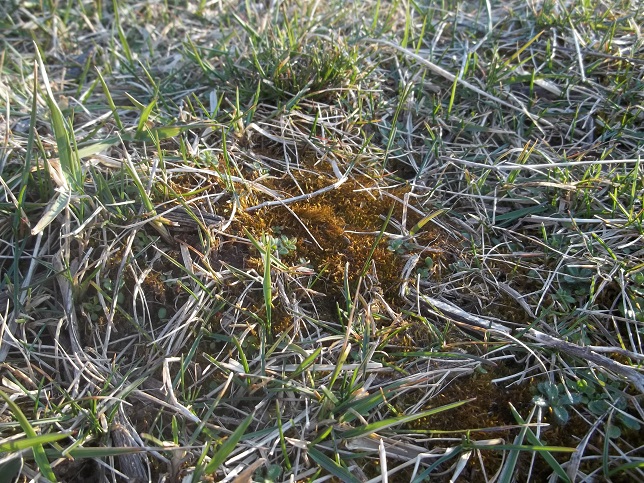
AprilPasture4But there are still clumps of moss growing on the North face of the hill.  Where there is moss there is not grass.  Where there are hooves there is no moss.  I need more hooves…more pressure…to allow the grass to compete.

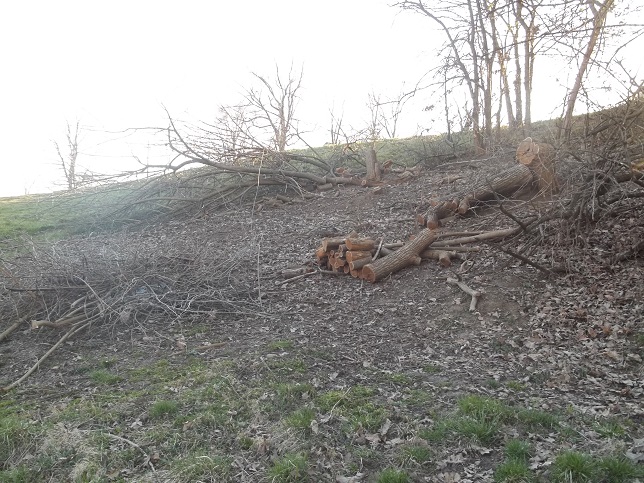
AprilPasture5On the topic of hedge, below the cemetery I cut out a single hedge tree that fell over and continued growing.  One tree, laying on its side, killing grass over a 40′ circle.  This tree was the source of the pile of wood featured in a recent Facebook post.  There is still an equal amount of wood waiting for me to cut now.  I have opened up more area for grazing and rid myself of a sick tree but cost myself small game habitat.  That’s why I build brush piles.  Quail and rabbits need shelter.  If I won’t allow dead and dying trees to create that shelter naturally I have to do it myself.  I also can’t continue cutting out undesirable trees without replacing them with something else or planning for their regrowth .  More on that in a future post.

AprilPasture6

The cows grazed their way through the bottom in January.  There wasn’t much out there for them to eat as it was a serious weed patch, as was most of the pasture before we began.  We spent an afternoon pulling sprouts out with a tractor last winter.  This year it was just graze and let it grow.  It’s growing.  But I’ll need some pressure to keep the weeds at bay and give the grasses a competitive advantage.  To be honest, I’m a little worried.  Goldenrod, ragweed and burrdock are clearly dominant down here.  I don’t want it to look like this:
AprilPasture7There’s a little wedge of pasture West of our house by the road.  When you come to our farm, this is what you see.  Looks great, doesn’t it?  I need to get a tractor in there to pull out the snags and rip out the sprouts but the whole thing is a thorny mess.  Just like the bottom used to be.  It’s an awful lot like work.  I try to let the cows do as much of it as I can.

AprilPasture8The pigs are in their final pasture position before shipping on Tuesday.  You can see the kind of disturbance they create.  That’s what we hire them to do.  Right now I’m not grinding their feed.  Among other things, they get cracked corn, roasted soybeans and whole oats.  The oats are still whole when they come back out.  In a few weeks I’ll have a rich, strong stand of oats on my slope for the cows to graze through…thanks to the pigs plowing, manuring and seeding.

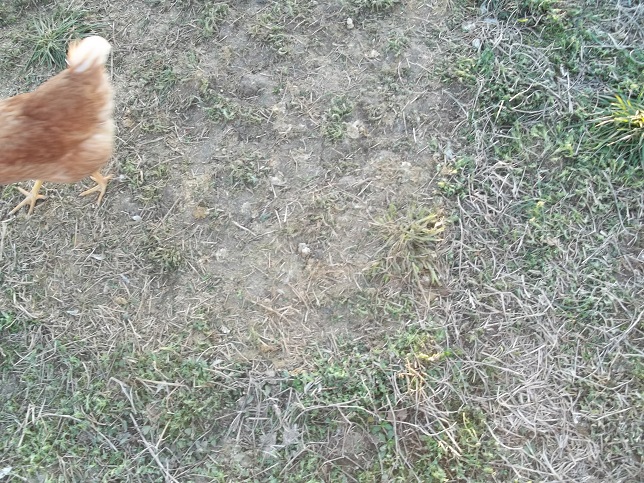
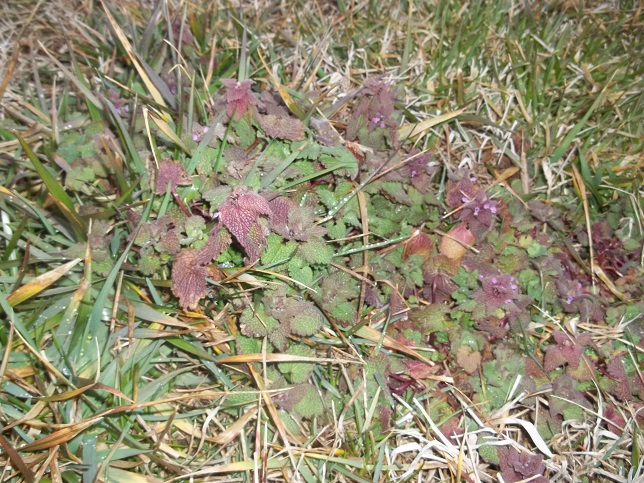
AprilPasture9The layer flock is in the same fence with the broilers on the alfalfa field.  You can see an outline in the picture above showing where the chicken tractor had been moments before.  The layers rush in to scratch through the manure and to gobble up any feed the broilers wasted.  Both this and the neighbor’s alfalfa fields look purple right now from all the henbit blooms (and buzzing with bees).  The hens bit the henbit here.  None of it is left within the fenced area.  The alfalfa is nibbled back but recovers quickly.  Doing this may be risky in terms of the lifetime of the alfalfa stand but we not only get 4 cuttings of alfalfa here, we also get 500 chickens per acre and …I don’t even know how many dozen eggs, not to mention the fertility the birds put back into the soil.  Am I hurting my alfalfa stand?  I really don’t think so.

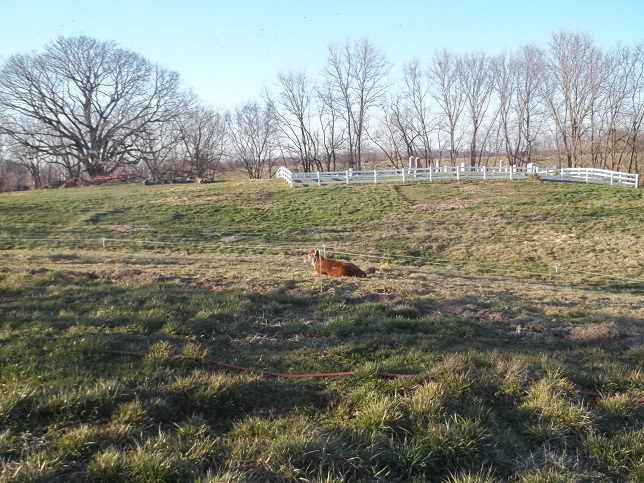
AprilPasture10Back to the cows.  Molly is chewing here cud in the sunlight.  Life is good.  You can see the distant hillside still recovering from the pigs who were there until October or November.  I see this less as a problem and more as a matter of time.  There is manure, carbon, seeds and living plant roots out there.  With help from cow hooves I’m sure the scars will heal quickly.  I present the grass in the foreground as evidence.  Those same pigs were there in August.  The cows aren’t scheduled to return to the cemetery hill until late May or even June.

AprilPasture11Mostly fescue but it’s growing.  There is a fair amount of clover mixed in as well.  We’ll get there.

Instant Garden Just Add Water

Well, not an instant garden.  Took us about 4 hours.  For the most part my rows are still defined from last year as several of them are still planted.  We put up strings to help guide us, pulled all remaining carrots, weeded the garden and fed the weeds and small carrots to the goats, then got down to brass tacks…er…horse manure.

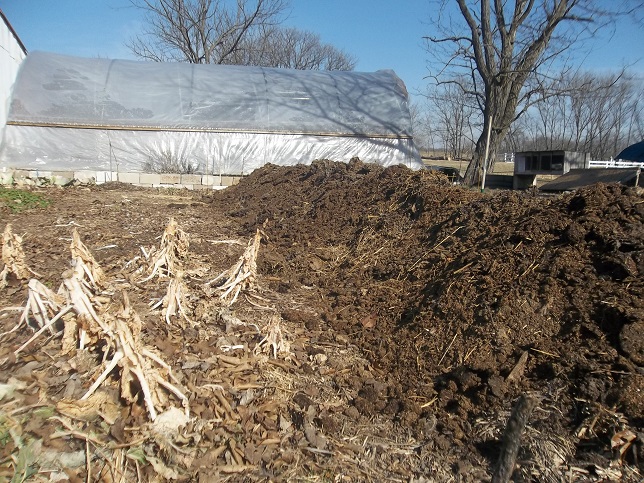
I spent the winter gathering horse, pig, rabbit and chicken manure…all mixed with sawdust and straw.  We turned that pile a couple of times and watched the temperature vary.

Manure

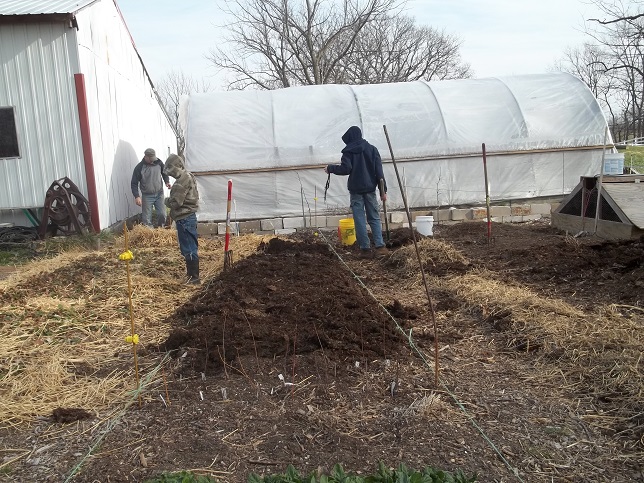
I don’t own a broadfork but I might make one.  As a substitute I used my pitchfork to loosen the soil 12″ deep.  I didn’t turn the soil, I just broke it up a bit.  Then we began delivering manure one fork full at a time.

InstantGarden1One 12 year old, one 36 year old and a couple of pitchforks.  The youngest two used rakes.  Julie and the oldest daughter were at a hair appointment.  Can you believe that?

InstantGarden2So we worked.

InstantGarden3…and worked…

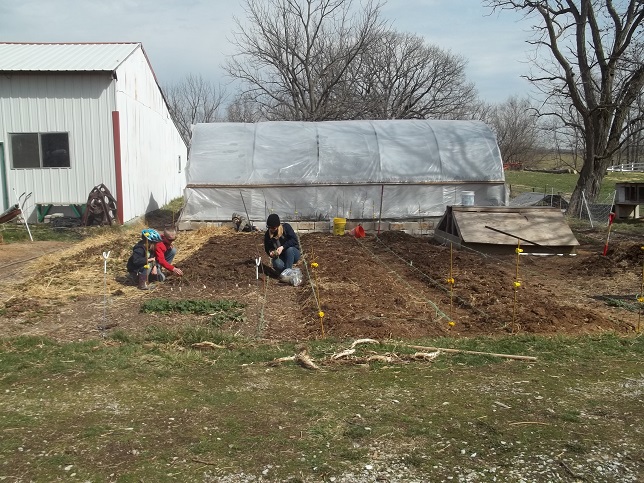
InstantGarden4…until finally mom showed up and we let her do the rest.  Mom took over planting onions, cabbage, brussels sprouts, broccoli and cauliflower and sent me off to find something else that was heavy and needed moving.  Like the brooder.

InstantGarden5

The center row is currently vacant but we’ll plant peas there tomorrow.  The next row to the right is this year’s potato row so that’s on tomorrow’s list too.  We also plan to plant tomatoes and peppers in the greenhouse tomorrow-ish.  Once again, rows need to be cleaned out before we can start.  Ugh.

I’m very pleased with the amount of work we accomplished in a very short time.  The garden is well established, we just have to maintain the fertility year by year.  Everything needs a good covering of wood chips and we’ll coast through this growing season as we usually do…light weeding on Sundays, ignoring it otherwise.  Just add water.

Strolling Through the Pasture March 2013

These pictures were taken on March 11th though I was delayed in posting them.  These pictures were taken early in the evening the day after a heavy rain storm.

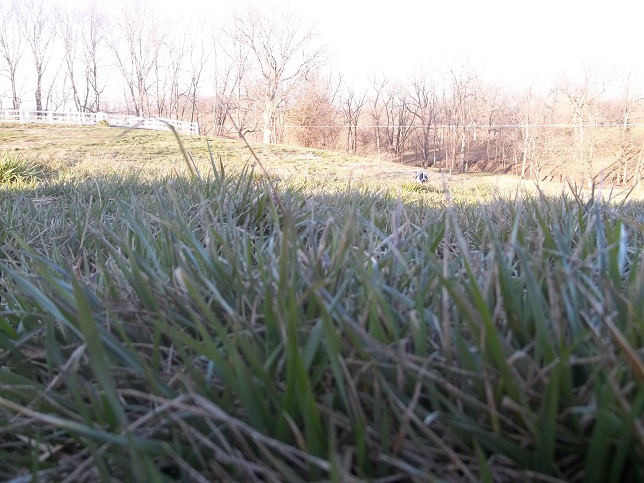
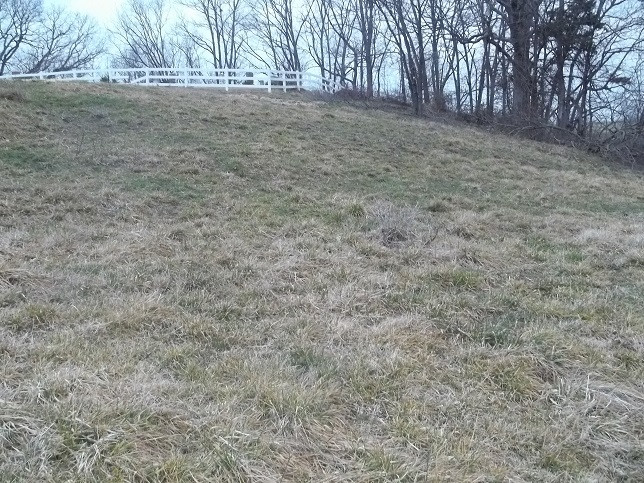
MarchPasture1A sea of oxidizing fescue.  I mowed a small portion of this hill in December for sledding.  I wish I hadn’t.  The cows grazed the hill to the left in November and again in February.  They won’t see it again till May.

MarchPasture2There are a few clumps of henbit emerging on the hillside.  The grasses the cows prefer are starting to sprout away from the clumps of fescue.  Not much else happening.

MarchPasture3This is the primary sledding hill by the cemetery.  The grass was pretty thin when we left the drought last Fall.  Pigweed stood in tall masses at the top of the hill, honey locust sprouts dotted the slope.  It was pretty nasty.  Hopefully we’ll use the cows correctly to push succession forward.

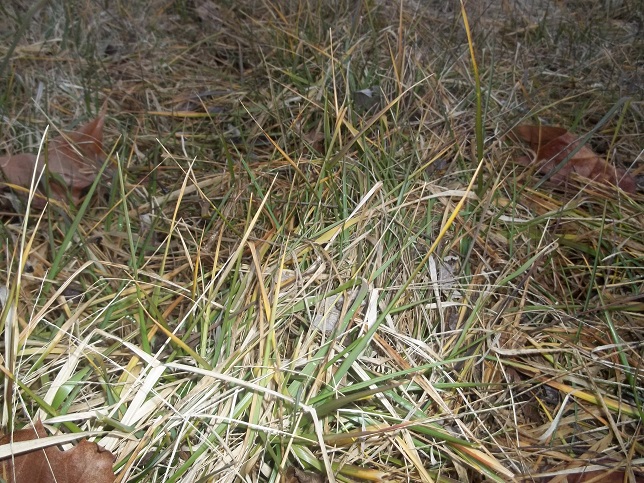
MarchPasture48-10″ tall fescue.  The cows aren’t interested.

MarchPasture5I invited dad’s horses to graze about 1/4th of an acre down to the nubbins.  This area is always a thick carpet of fescue.  The horses carpeted it with manure and pounded it with hooves.  It was awesome!  When they got to the bottom I could see a the bones of a honey locust I cut down a few years ago.  The tree (and most of its thorns) are now burned up and I have seeded the area with clovers and a variety of grasses.  Wait till you see the recovery picture!

MarchPasture7Nearer to the house the pigs have really made a mess of the pasture.  3 pigs above 250 pounds have to be moved frequently.  I want disturbance not destruction.  Where they dig I kick the clods back into place and overseed with grasses and clovers.  Please notice the pigs are clean and dry.  Trust me when I say they are happy.  They have room to run, work to do, fresh air to breathe, they can see the sun where most pigs are bored, confined, smelly and indoors.  The pasture will heal quickly.  The pork will be delicious.

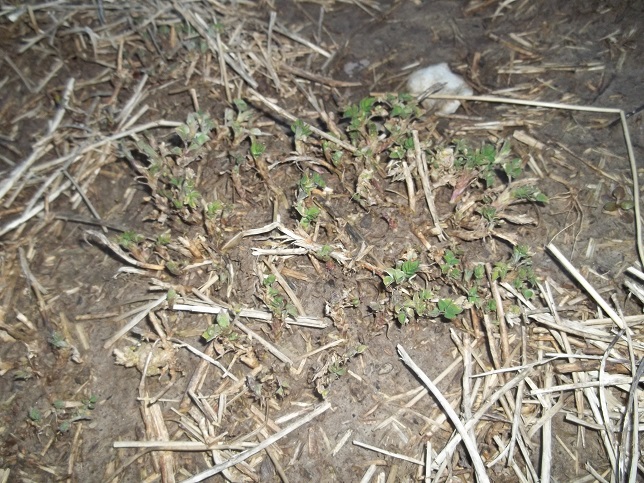
MarchPasture6The alfalfa was just starting to emerge.  I do some crazy stuff…some of it out of ignorance, some of it because I just don’t have the time to get everything done.  I continued to move my layer flock across the dormant alfalfa field all winter.  If that damaged the alfalfa I can’t see it.  The emerging plant population does not appear to be diminished.  That said, I don’t care for the empty spaces between the alfalfa plants.  Nature will fill those spaces, probably with fescue.  I think I should beat her to the punch.

I’ll post my April stroll soon and will try to show the recovery that follows the pigs.

Dreaming of June

Look at the Blueberry plants!  Oh!  One more year and we can stop pinching the blossoms and start eating them fresh!  Can’t wait!

BlueberriesAnd it looks like the strawberries are really going to make this year.  We’ll have jam, we’ll freeze some, we’ll eat mountains of them fresh with spinach!  I mean, here it is, pretend June 1st and we’ve already eaten so many of them…

Strawberries

And the green beans!  We’ll be busy canning all July to handle the crop that’s out there.  Bush-type beans planted 8″ apart in a grid as demonstrated by Jeavons really do well.  It helps that this row received 6″ of compost and another 4″ of mulch in the last year.

GreenBeans

The potatoes are really coming on.  We’ve already hilled them twice and have high hopes that the drought will hold off this year.  Last year the drought started around June 15th and the potato plants withered quickly.  In fact, I started digging potatoes before July 1.  This year I don’t want to dig the main crop until at least August 1.  Just soon enough to plant our fall crop of broccoli in the same row but late enough that a fair portion of the potatoes will keep.

Potatoes

The rhubarb is doing well but the plants are a bit crowded.  I need to move them to a new home.  I really don’t know where to put them.  The rest of the row is just odd plantings.  Some onions, some lettuce (it’s about to bolt), some marigolds.  I may put in a little buckwheat in this row.

Rhubarb

But this year is THE year for tomatoes!  I’ve never seen anything like it.  We put down layer after layer of chicken manure, horse manure and 10″ of well-composted wood mulch last year and this year I have the best crop of tomatoes ever.  The peppers were looking a little leggy early on but they are bearing now.  The jalapenos are long and flavorful.  Takes 2 pieces of bacon to wrap one popper.  If you look carefully, you can see we planted oregano between plantings of tomato and pepper.  That kind of planting brings in a lot of wild pollinators.

Tomatoes and peppers

Well.  One day winter will pass.  One day I’ll be out working in the garden thinking, “what was so bad about winter?”  But today, looking out at a foot of snow and more falling from the sky, I’m wondering if it will ever end.  You can see a brooder in the potato picture above.  That brooder has 140 chicks in it.  I say chicks but they are nearly a month old.  They should be on pasture.  I may have to sacrifice two rows of the garden to make a pretend pasture for them…feeding them hay daily.

It is nice to have an excuse to sit down for a few days though.  You can assume I’m working when I disappear from the blog for a few days.  I have been working a lot lately.  Let me know if the snow gave you a chance to do some dreaming.

Green Acres of My Life

My father has known me for 36 years and, next to Julie, qualifies for the title of “Best Friend.”  He’s pretty well in tune with my likes and dislikes.  Dad said, “You should watch the first episode of Green Acres and write a blog post about it.”  So, Dad.  Here it is.

Now, before we get too carried away I invite you to watch it for yourself.  Julie found herself crying in laughter and sympathy with Lisa (Oliver’s wife).  Oliver’s enthusiasm and naivety mirror my own.  In fact, though we lack a hole in the floor leading to the cellar, the show hits a little too close to home.

Oliver reads the blogs of his day, USDA bulletins, every spare moment of his life.  That sounds familiar.  He spends every moment growing anything he can including mushrooms in his office desk drawer.  His job is just something he does well though mechanically and without enthusiasm.  He lacks that feeling of accomplishment, purpose and fulfillment.  That good kind of tired you get after a day of physical labor.  He says:

“A farm would give me a feeling of accomplishing something.”

and later…

“This has been the dream of my life: to buy a farm!  Move away from the city.  Plow my own fields.  Plant my own soil.  To get my hands DIRTY!  Sweat and strain to make things grow!  To join hands with you, the farmers…the backbone of our economy.”

Like Oliver, I wanted a real farm like the one I was born on.  Unlike Oliver I actually bought the one I was born on (er…well, the one my parents lived on when I was born at the hospital).  Like Oliver I bought a run-down house with sheds that are falling in on themselves, failing fences and odd bits of junk everywhere.  Unlike Oliver I wasn’t suckered into it.  Like Oliver I have a beautiful, sophisticated, thin, blonde wife.  Unlike Oliver my wife came along willingly…and doesn’t have a Hungarian accent.  Like Oliver, I bought with big, unrealistic expectations, no experience and inhuman optimism.  That optimism has been just about beaten out of me.  Maybe this year we can limit our losses to just a couple thousand dollars then turn things around to positive numbers in our 5th year.  I don’t know.  The infrastructure needs are so great.  It looks to me like Oliver just pours money into the farm every episode.  My pockets aren’t deep enough for that.  Fortunately I don’t have a Mr. Haney in my life.

Look.  I don’t have any help for you if you have decided to get your hands dirty and join the backbone of the nation.  You’ve picked a tough row to hoe.  I think we can do it (or I wouldn’t be trying) but it’s not easy.  I have to suggest that Oliver’s adjustment would have been easier if there had been no house at all…if he had only had the sense to send Mr. Haney packing then take a match to the empty house at the beginning of episode 2 and build new.  My land itself is a fixer-upper.  I don’t have time to deal with the house issues.  Neither does Oliver.  I like to encourage my farmers that they can succeed.  You can.  But try not to put yourself behind the 8 ball from the beginning just because you were born somewhere.

Channeling Lisa, my wife, lovely as ever, upon viewing the farm as we return from a business trip to Florida, looks at me from the passenger seat and says, “Let’s go back.”

Green Acres offers a response, “Keep Smiling.”

If you’re going to do this, Keep Smiling.

Playing in the Rain

RainyDay

Sunday we had a strong wind out of the South, warm temperatures and an inch of rain.  The kind of rain that paints the ground green.  Mom was out of the house so I took the kids on an adventure.

I have to cut wood.  Have to.  I have a number of trees down and I’m running out of time.  But we don’t have to kill ourselves cutting wood.  I told the kids I would use one tank of gas in the chainsaw while they dragged limbs and stacked firewood and then we could have some fun.  Well, we had fun the whole time.  Dripping, soaking, pruny-fingered, wet sock fun.

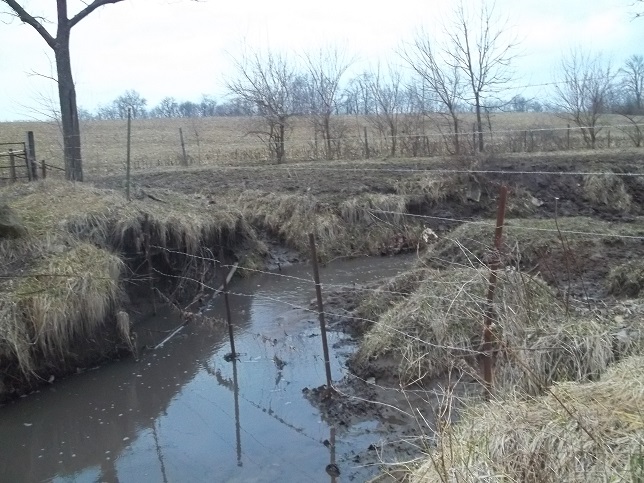
Our chores behind us, we tromped off through the pasture to the branch to see how deep the water was.  It was deep.  And swift.  Normally the branch is just a trickle.  It’s the weak point in the fence that the neighbor cows use to come steal food.

Branch

We threw sticks in the water and watched them float away.  We probed the water to see how deep it was.  I warned the kids of the danger.  The youngest fell in anyway.

I have a million things to do.  I don’t have time to splash through the puddles, exploring pastures I have played in my entire life but if I don’t do this now, when will I?  The farm is a family experience…I have to experience it with them.  That’s kind of the point.  I can sacrifice sleep to get the taxes finished.  The kids won’t wait.

Freezer LaBoeuf

Well, we had a calf.  This was not unexpected.  It was kind of a crossed finger thing.  A friend was getting some straws in, offered to pasture my cows and ended up turning our heifer out with his bull.  So…calf.

Cousins

He was born around sunset on a cold, snowy evening.  We were trying to keep the chicks in our brooder alive during a severe cold snap and, dang, if Flora didn’t go into labor.  That’s all we needed.  Obviously this has a happy ending but it gets worse before it gets better.

He didn’t get up.  He lay in the straw, wet and cold, while mamma licked him clean.  But he didn’t stand.  He slowly crawled out into the snow.  I grabbed him up and carried him back into the straw, covered him with my coat and hat and started rubbing his cold legs.  Not much happening.  Nothing else to do, we took him inside to the wood stove to try warming him up inside.  Then we grabbed a halter and rope, tied up Flora and milked about a gallon our of her.  Once he had something warm to drink he started looking better.  By the time we had 3/4 of a gallon in him he was up and around…a bit of a nuisance.  The kids named him “Freezer”, not because he got cold but because that’s where he’s headed.  Freezer LaBoeuf.

He was dry, the straw was deep and fresh so we took him back to Flora for the evening.  It got down to 12 degrees that night so we went to bed with fingers crossed.  I’ll be danged if I put a calf in a dog crate in the back room for the night.

Morning came and he was looking good…hungry, but good.  He couldn’t figure out what part of the mom was the tasty part and mom, being a heifer, wasn’t interested in being nursed, though she was spraying milk out of two teats.  So, we grabbed her halter and rope and got to filling a bucket.  Now, this isn’t the easiest thing in the world to do.  Flora’s teats are about as big as a thimble.  We milked about a half-gallon, filled a bottle to feed the calf then went back to milking.  Another half gallon, another half gallon.  We took turns milking with one finger and the thumb.  Ugh!  Lord!  Let it end!  She kicked, she walked around, she wapped us in the face with her tail.  Pretty awesome, eh?

We kept that up all day Saturday and Sunday morning.  Oh, you should have seen us out there Saturday night after church.  An hour of milking an engorged but reluctant cow.

Allow me to interrupt my narrative here to remind you we’re trying to keep chicks alive in the brooder, it’s 12 degrees outside and the world is covered in snow.  Great sledding, lousy for livestock husbandry.

Where was I?  Oh yeah.  Sunday, Julie was pooped.  We lost 40 chicks in 3 nights, the calf was proving to be a lazy mooch, and the kids all had minor sledding injuries and major tiredness issues.  It was time for that darned calf to help with the milking chores himself.  So, the wife set to work.  She milked a little.  He got curious.  She gave him a finger covered with milk.  He stuck around…betrayed by his stomach.  20 minutes of teasing the calf with the promise of a meal and he found a thimble teat he could hold on to.  You could see his whole world had changed.

Freezer

Later in the morning, we went to check our little bull calf to see if he had mastered his new discovery.  He was gone.  Mom had decided it was better out in the pasture with the other two than to be cooped up in a stall.  She pushed the gate open (it was just held with twisted baling wire, not exactly secure) and trotted off with her little man.

I was so proud.  So relieved.  So tired.

We’re done calving in winter.

Snow Day

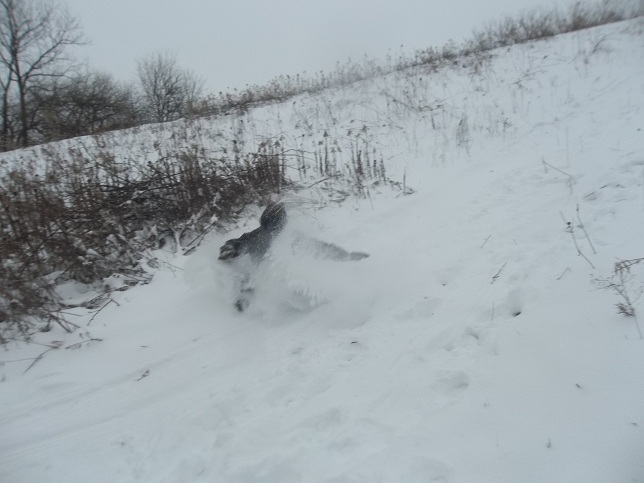
I can telecommute to work when the weather is poor.  That means there are no days off.  It snowed a lot today starting around noon.  It’s now 5 and we have something like 4-6″ out there.  It’s time to go sledding.  I ditched work at 4, sprinted through our chores and headed to the hill.  The kids caught up with me later.

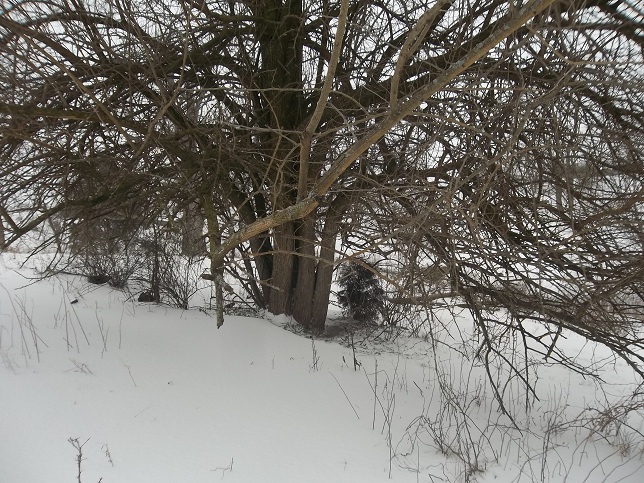
Now, if you are at all familiar with the John Cusack movie “Better Off Dead” you’ll understand when I say that this hill is our K12, dude.  It starts by the big, overgrown octopus of a hedge tree (which is not long for the world).

SleddingK12

Then we sled a greater-that-45-degree hill, ramping over cow paths and hoping not to hit any stumps.

SleddingK12_2

And just as we reach top speed, the ground levels out for about 10 feet.  We have to stop immediately or we’ll meet our death in the hedge-tree-guarded creek bed.

SleddingK12_3

The oldest daughter calls it “disemmemberment hill”.  Yes, that’s how they spell it.

SleddingK12_4

The snow gave way to ice pellets and high winds.  Time to head inside and dry out.  I think semi-perilous adventures like sledding disemmemberment hill are important moments in my children’s lives.  By the way, no one was disemmembered today, though I did catch several ice pellets in the eye.