It’s a Long Walk

My oldest and I attended the Southern Indiana Grazing Conference a few years back. First, I want to express how valuable that conference was to me personally. Every speaker gave me pages of notes I still act on. Gabe Brown was one of those speakers. Just as a side note, Gabe mentioned that cows have legs and a little walk does them good. He grazes through the winter but if the cows want a drink they have to walk back to the barn.

Walk.

CowsWalking

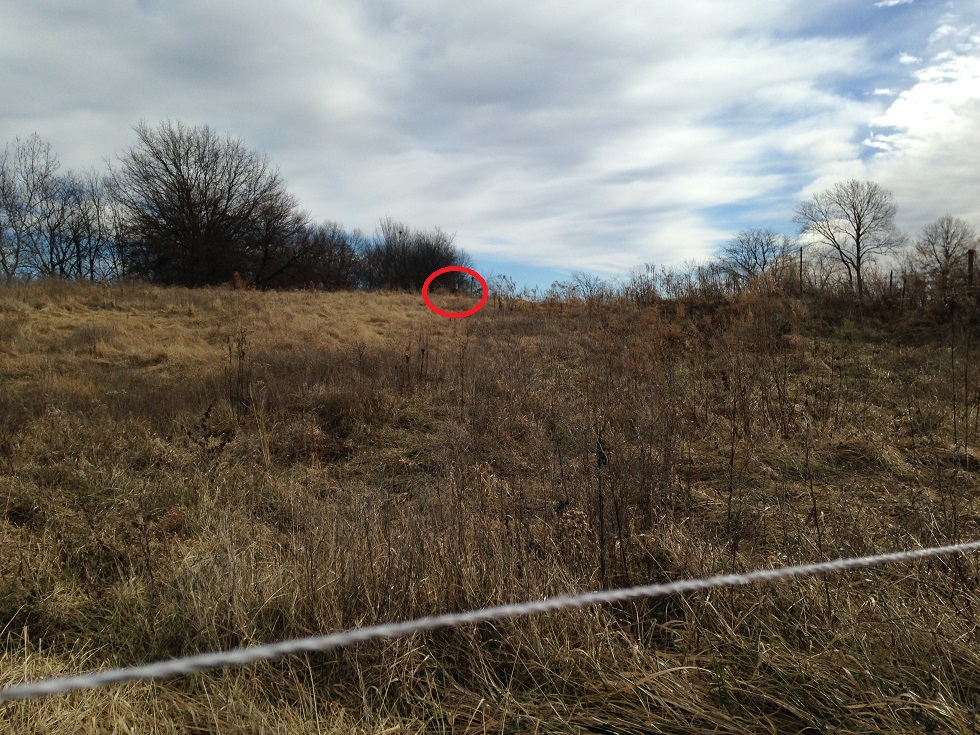
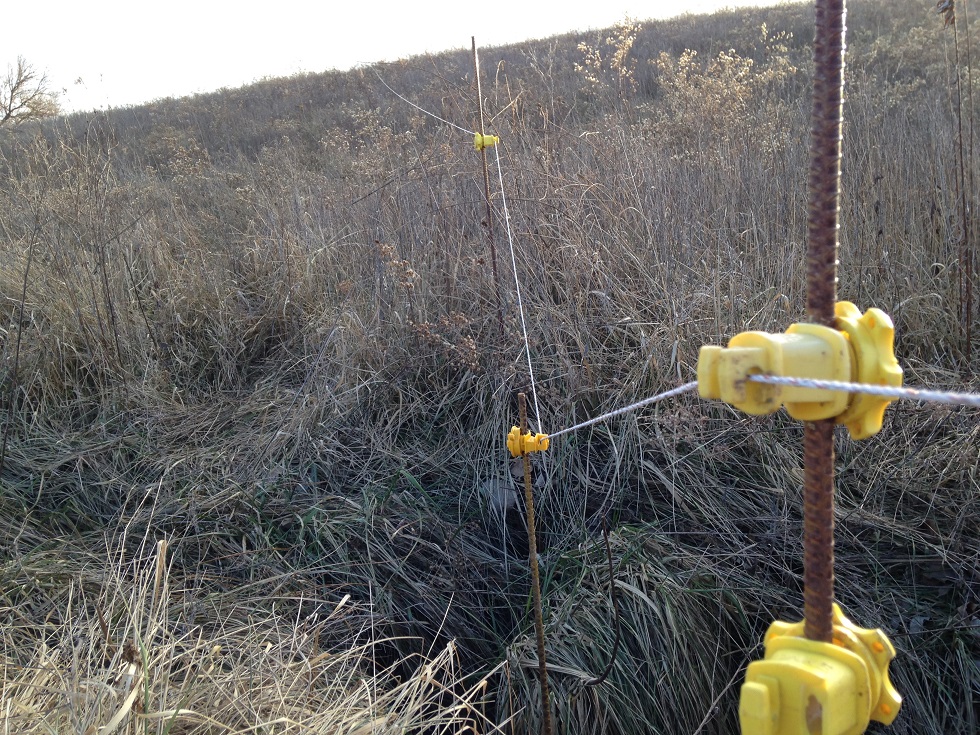
If nothing else, it helps their digestion. Might work for you too. Maybe you should go for a walk. The netting you see in the picture above is for the chickens. That’s not the cow fence.

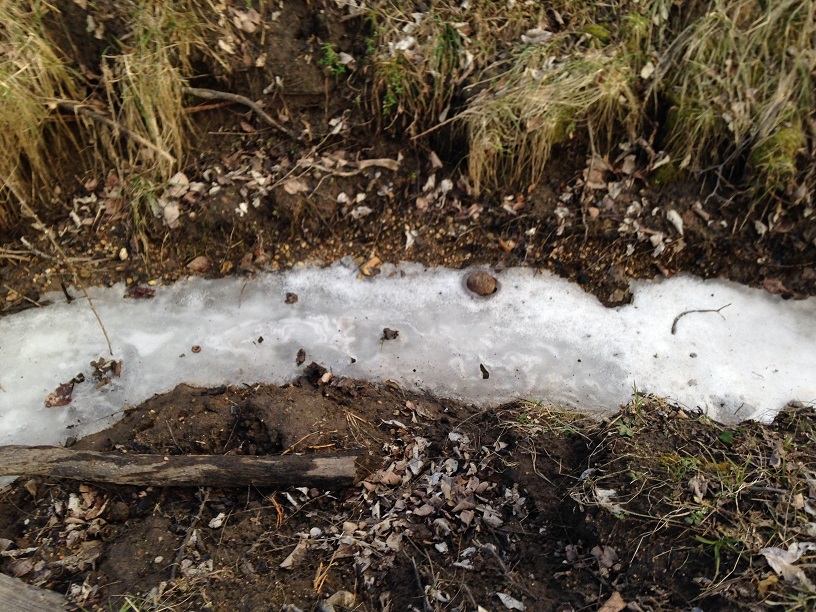
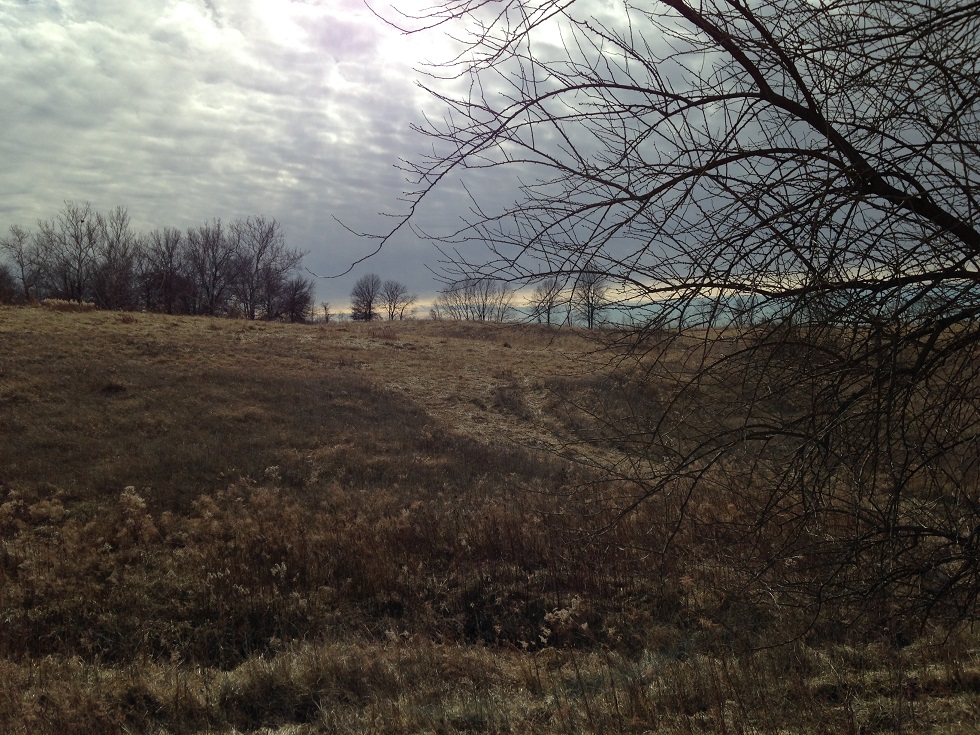
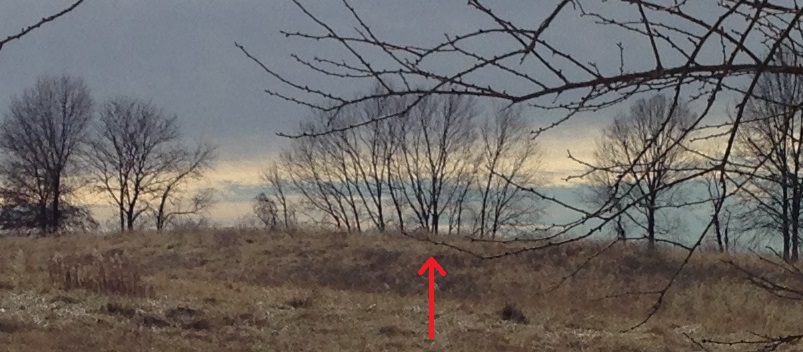
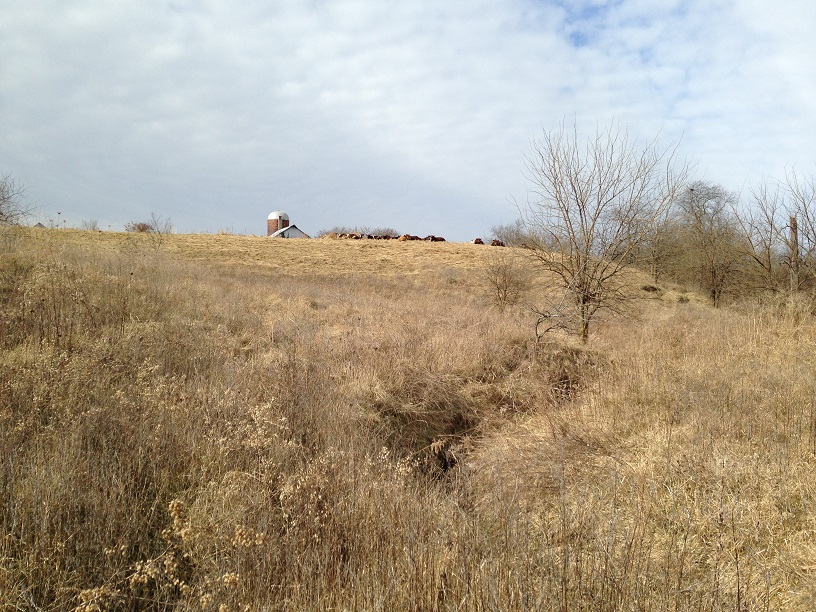
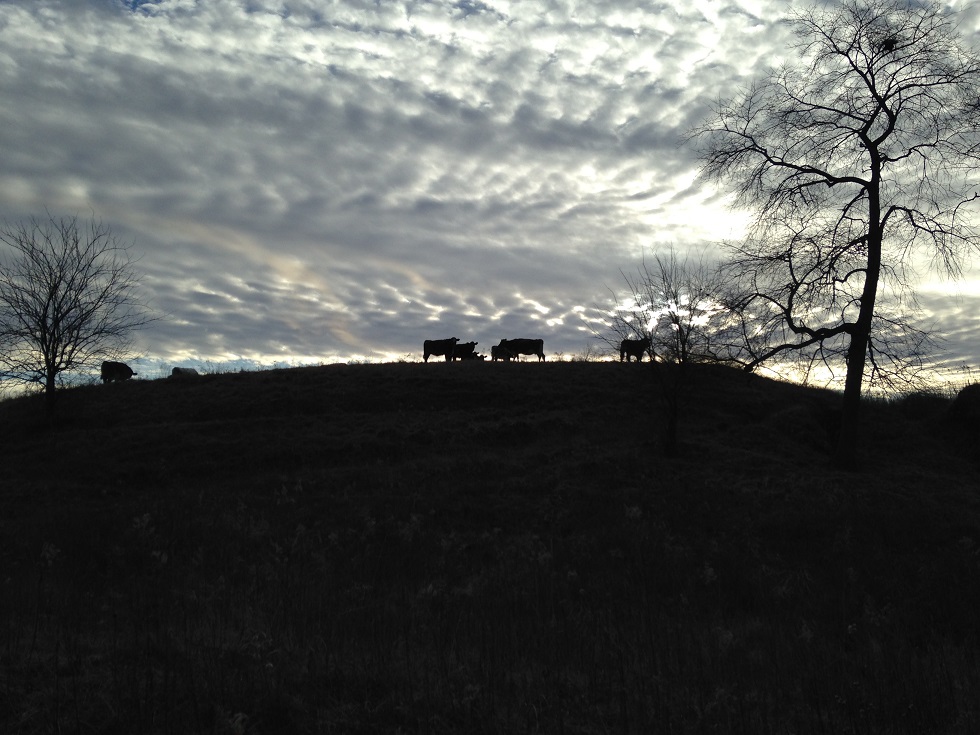
My cows don’t have to walk too far. Just through a couple of small valleys and they only seem to make the trip once/day. They mostly just drink from a stream that is somehow still running when it’s below freezing out there.

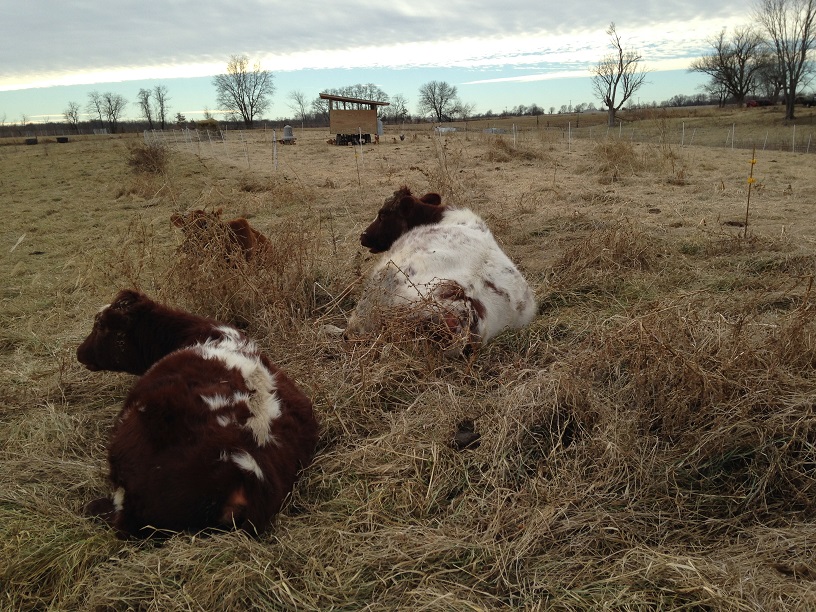
They were just hanging out today. Mrs. White is a noisy cud chewer. (Mrs. White has red on her face. Look, man. I don’t name them. The white one is Snowball or 13.)

I want to make a note about the heifer dust. It’s looking a little…erm…firm. I’ll have to keep an eye on that and may need to up the protein somehow.

The title of this post was inspired by David Allan Coe. It’s a long walk to Nashville. Just FYI.

Dear Charles,

In Sunday’s Reading Journal I mentioned that Julie and I could only even attempt to farm because I have an established career off-farm. I am my own financial backing. I know next-to nothing about marketing, herd management, and grass management. Farming is so much harder than it looks in a book. But we are learning. We are living on-campus and paying for our education. My off-campus job requires me to sit at a desk in the air conditioning for hours on end, 5 days each week solving challenging tech puzzles with people I consider friends. I suppose there are things I could have done to accelerate our farm’s earnings but I’m OK with moving slowly…adapting my lifestyle as I learn.

But I almost missed it.

I got tired of tech. Long, late nights and listening to morning radio as I returned home for 2 hours of sleep then back to it again. On-call rotations working with remote technicians in remote places. No sunlight. Cubicle hell. Low pay.

But I enjoyed woodworking. I made bookshelves, a hutch for our kitchen, beds for my kids, crown molding…I wanted to work in a wood shop. Surely that would be better than working in a data center for another minute.

I met a man who owned a cabinetry shop nearby. He spent quite a bit of time with me on a Tuesday evening and was probably late for dinner. He said he could tell by the sound his equipment made whether or not the employee was running the machine at capacity. He explained to me that he would be happy to hire me but he hoped I would reconsider. I would be better off, he said, to stick it out and apply myself in my career. In time it would bear fruit.

That was 2003. I would like to thank Charles for his advice.

Dear Charles,

You were right. I will never know what could have been and I don’t care. I have no regrets (about that decision anyway). I continue to do a little woodworking as a hobby but stayed the course in my career. And, surprisingly, I’m not unhappy.

Some of this is because I have simply decided to be happy where I am. …to grow where I am planted. But some of it is maturity. I live in a dream world…on my family farm with my wife and children, next to my parents. I don’t think this could have happened if I had given up on my career.

At what I feel was a critical point in my life, you gave me the push I needed. I stuck it out. I studied. I worked. I did what you said I should.

And, at least to this point, I am winning.

Thanks for the help.

Chris Jordan

My job can’t make me happy. Neither can my farm. I have to make me happy. Most of that is a simple decision.

Will I ever farm full-time? I think so. But I can’t make that leap immediately. I have a lot of learning and growing to do. Biological processes take time.

But wait! There’s more.

It is true that Julie and I are only here because I have a job. But Julie and I are also only here because Julie doesn’t have an off-farm job. If you ever want to make me angry ask, “Chris, does your wife work or does she stay home?”

Julie does more before 9 am than most Army folks do all day. Julie makes everything work. Chris is just a worker. Just like his job, Chris has to wake up every morning and make a decision to continue in his relationship with Julie. Chris has to make decisions to keep strengthening bonds and support, encourage and enable her in her work. I choose how I feel about Julie. And I choose to love her. Every day.

I could continue listing factors that make living here possible but that has nothing to do with Charles. Today I was thinking about Charles.

Reading Journal 2015 Week 5

This is turning into an endurance race and I’m stretched a little thin. To help with the time crunch I have started getting up at 4:30 but making myself go to bed at 10. I may have to start staying up 30 minutes late though. Another thing I am doing is allocating blocks of time for specific activities. Not really my bag but it seems to work.

This week was particularly tough because of the programming book I included. The book is great and easy to understand. Knocking out 4 chapters/day while writing out all the code? Not easy…even though I came into this experienced. Next week I plan to back off a bit. A reader recently sent me a link to Henderson’s Farming Manual and that should do for the week. Want to read it with me?

Skip around if you want but please take a moment to read the “Article You Hafta Read” section below.


Born Again Dirt by Noah Sanders

What is the book about?
It’s kind of a Bible study, kind of a lecture on proper Christian attitudes on the farm. Kind of a book about Christian life and attitudes. Kind of a book about permaculture that doesn’t say the word “Permaculture”.

Is it a classic?
No. Yes. Maybe. Honestly, I would have a better idea on this one if Julie had read it with me. This is a discussion book, not one to read in isolation. I had a hard time narrowing down the favorite passage section because I kept finding ideas I wanted to run with. Not that these ideas are necessarily new or profound but the book lays the ideas out neatly and in a way that begs for discussion. So fun to read? Yes. Good for discussion? Yes. Food for thought? Yes. Classic? …maybe.

Will you read it again?
No. Yes. Maybe. I think I will refer to it from time to time. More later.

Does it belong on your bookshelf?
Um…I would have been happy to borrow it. I’ll probably loan it out. Maybe it won’t come back. Maybe it will. Not too worried.

Can you relate a favorite passage?
I list this passage in direct contrast…or maybe in support of…hmmmm. I’ll try again. I list this passage to accompany the ending quote I used last week when discussing Gladwell book (Outliers). Sanders says the following:

If you are a farmer, then you realize that you aren’t in control of everything that affects your farm. Rain, hail, drought, disease, and pests can impact the production and fruitfulness of our farms, and we can’t do anything about it most of the time. Even if nothing ever went wrong, we still can’t take credit for things going right. We can’t make things grow. We can plant seeds and care for animals and water the ground, but unless God causes increase we won’t accomplish anything.

As Christian farmers we must recognize that we are completely dependent on the Lord to make us succeed. A successful farm comes not from our own strength or skill, but from God blessing our faithfulness.

Arkush said that’s fatalistic and pessimistic, belonging to a feudal system. I mean, “The Earth is the Lord’s and the fullness thereof.” My farm is not mine. I just get to use it for a while. “Everything in the Heavens and the Earth is yours, O Lord. We adore you as being in control of everything. Riches and honor come from you alone and you are the ruler of all mankind; your hand controls power and might and it is at your discretion that men are made great and given strength.” It’s all his, man. The cattle on a thousand hills. The gold. All of it. And anything I do I do in his power.

So do I agree with both thoughts? Um… Well, you know, either you believe in God or you don’t. If you do believe in God, what kind of a god is God? Is God the kind of deity standing idly by as we spin out of control, are we pets to be looked after or are we companions to be blessed? I choose the latter. Any post-creation example in the Bible of a miracle requires action by man. The widow had to get jars and pour oil. Noah had to build the ark. Seriously? Did God need some dude to build a boat to save animals? Moses had to keep his hands up. Hands. Someone had to get jars of water for Jesus. Why didn’t Jesus just miracle up some bottles from a future French vineyard? Because we have to do our part. There isn’t much I can do to make a seed sprout…short of making the conditions right. And I’m not sure the Chinese proverb listed by Gladwell contradicts the book of Proverbs…”All hard work leads to profit, but mere talk leads only to poverty.

Back to the book.

This sounds familiar:

the income for the average farming family is now the same as for other farming occupations. However, the study admitted that eighty-seven percent of their income came from off-farm jobs!

The author is referencing a publication from 1997 called Rural Conditions and Trends but I can’t seem to dig it up. But I don’t doubt the trend but I’m not sure it’s honest. There are all kinds of distortions in these figures. Let’s go a little different direction. Where I live the average age of farmers is above 65. Why is that? Is it because nobody younger wants the farm? That doesn’t appear to be the case here. Plenty of kids Julie and I went to school with are still working on their family farms…but they have businesses of their own. Often they haul grain or rock so their occupation is “Truck Driver”. The oldest in the family typically owns all of the land and has a big life insurance policy to help manage the transfer.

Many of the farm wives around are school teachers or nurses. They are the primary source of off-farm income. What happens to the on-farm income? It gets plowed back into the farm to lower the taxable income. New trucks, new tractors, new buildings…it seems the worst thing a farmer can do is show a profit. Of course 87% of income comes from off-farm! Just like the average age of farmers, we haven’t identified a problem…we have identified a strategy. I’ll hit this topic more personally in a bit.

Here’s a gem:

I believe our farms should be homes that are beautiful and fruitful, not just workplaces where we also live. Many times our farms can take over our lives because we never leave our work and go home. We tend to work all the time because we live where we work. However, as good as work is, our lives are to be primarily relationship-oriented (God and people), not work-oriented. Therefore we should view our farms as, first and foremost, our homes, and not a production factory where we live.

Who should read this book?
There is a lot here and this isn’t one to skim lightly through. This would be a great thing for a farming couple to work through or maybe even share with a Bible study group. Especially a group with little or no experience with sustainable farming practices.

Take home messages:
The chapter on marketing and pricing is very good noting that

A good steward doesn’t waste or just retain his master’s property – he adds to it.

If we aren’t seeing increase …well? We might as well put our money in a hole in the ground. And Jesus said that behavior isn’t rewarded.

If we were doing our job of honoring the Lord the Earth would be beautiful, fruitful and habitable. My farm is a reflection of my efforts toward God’s design. Yipe! He quotes a lot of scripture in this book…all of it pointed at me.

One who is slack in his work is brother to one who destroys.
Proverbs 18:9

And just go ahead and read Proverbs 24:30-34. Go ahead. Then come tour my farm. See my thorns, weeds and weak fences. My failing buildings. My junk piles.

I have some work to do.


Hello World!: Computer Programming for Kids and Other Beginners (Second Edition) by Warren Sande

Let’s go to Christmas of 1994 together, shall we? Julie’s parents bought a 486 computer with 4 MB of memory and a dot matrix printer! It even had a “Turbo” button! At the time memory was something like $100/MB but we needed more…somehow. We had trouble getting Warcraft: Orcs and Humans to load if we exited Windows to go back to DOS. The solution was to put a menu in the Autoexec.bat. We gave it 20 seconds to choose to boot to DOS with anything unnecessary stripped out of the boot cycle or just to boot to Windows. Our problems were solved. And it was all magic in the land before the Google.

This book took me back to that time. That level of excitement. Even one of the games I played at that time. I can’t tell you how much fun I had playing this book…I mean…reading this book this week. I want to be clear here, I started off working through 4 chapters each day in this book but that pace could not be maintained. There is just too much work required of the reader. I did not finish this book but I will. One week just isn’t enough time.

What is the book about?
Breaking python programming down into bite-sized portions while making it interesting and available to the uninitiated.

Is it a classic?
No. Things change too quickly in tech. This book is pretty awesome though.

Will you read it again?
Only as my kids go through it.

Does it belong on your bookshelf?
Yes.

Can you relate a favorite passage?
Chapter 10 makes a clone of Ski Free! I spent hours playing Ski Free more than two decades ago and had totally forgotten it.

Who should read this book?
Anyone who wants to dip their toes into a deep body of water. Might be dangerous out there. Might be fun too. Adventure awaits! Make it up as you go along. I recommend it for 14+ and work through a chapter/day, repeating most chapters and giving a little cushion of time. Give yourself 2 months to really get it done. This is not a novel. You have to re-train your brain.

Whatever you think of Heinlein, programming a computer is on his list of things everybody should be able to do. This book is a great place to start.

Take home messages:
Programming doesn’t have to be boring.


Article You Hafta Read

I imagine you, reader, want to ask me a question. Maybe something like this, “Chris, this is a farm blog. You use your farm blog to discuss your efforts to inspire your children to advance your ambitions and make them their own. Why do you talk so much about computers?”

I’m glad you asked. Are you ready for my answer?

I know which side my bread is buttered on.

With that introduction, I think you should go read this article then come back for some more thoughts. If you don’t want to click I’ll summarize. The author is, appropriately enough, a writer. She is discussing how writers afford to write and the dishonesty with which they address that very subject. Let’s apply that to farming.

I am the seventh generation on this farm. You know how much money and land I have inherited to get here? ZERO. I took over a crappy, smelly, leaky, drafty farmhouse on a farm with porous fences, failing pond dams and pastures filled with cowpaths and thorny trees. This wasn’t a working farm when I took over. This was a big hole that eats money.

My farm is sponsored by my incredible job in town. A job that requires me to continually update my skill set or they will pull their sponsorship. My farm is also sponsored by my job in Florida…a job I do on my vacation time…another job that will pull my sponsorship if I don’t stay certified in my tech field. Yeah. My farm is also sponsored by some other work I do on the side here and there.

The author above says she is largely sponsored by her spouse. I feel the same way. In addition to everything else she does, Julie runs the farm when I’m at work. But it doesn’t stop there. Mom and dad are always around. Dad checks chicken water, waters rabbits, owns tractors I don’t and lets me use them. And it doesn’t stop there. I have somehow managed to surround myself with supportive, caring people. Did you read above where I said, “Julie’s parents bought a 486 computer…”? That computer is a big part of the reason I have the job I have (and a big part of the reason their youngest son has the job he has). And they buy chicken from me!

But having people rooting for me isn’t enough. I still have to do the work. I still have to code. I still have to build fence. I still have to be loving toward my wife and repay the investment others have made in me.

Someday someone might ask, “Chris, how did you build the farm into a dominant, interplanetary enterprise?”

I will answer “I surrounded myself with loving, encouraging people, worked hard at my town job and read like it was going out of style. We also lived on less than I earned and reinvested all farm income.”


This Week in Media

On the topic of 100 hour weeks I found the following video.

…figure out if something really makes sense or if it’s just what everybody else is doing.

If you have read my blog for any length of time at all you know I am constantly wrestling with my own motivations. I thought this was a powerful video.

You should take the approach that you are wrong. Your goal is to be less wrong.

Just watch the video. I can’t transcribe it all.


Please give me some feedback on this post. I read a lot. Like, a lot, lot. I like to share with my readers when I find a book that helps a farmer out. But I also like to be entertained so I include links to movies and music. Fun books too. Please let me know if there are questions I can answer for you or if you have any suggestions to help make this format more meaningful.

Also, let me know if you are doing any of the reading with me…even if you are running behind. Share your favorite quotes. Tell me if I missed the point.

Click here to see all entries in my reading journal.

Back to the Barn. Again.

I keep the cattle on pasture as much as I feel like I can. Feel. We play it by ear. I don’t want to pamper my cows but I also don’t think it’s good for them to be out in rain on a 33 degree night when the temperature is dropping. Especially when it’s so easy to just open a gate and stand up a temporary fence so they can be warm and dry in the barn. I am also concerned for the pasture itself. Plus, it’s no fun walking way out in the pasture to check cows when it’s sleeting and the wind is blowing. Let’s save the farmer (Julie) a little trouble.

MrsWhiteSycamore

Saturday’s forecast keeps changing from 3-5″ of snow to half an inch of rain and back again. They can’t seem to decide. Either way the cows will come in Friday evening. No soupy pastures. No cold, muddy cows.

Take a look at the picture above. That’s fresh ground. The cows are always moving to fresh ground. There are good root systems under the standing grasses, plenty of stuff above ground…we don’t let it get all trampled, manured and soupy. It is getting torn up around the mineral feeder though. That’s on me. For the most part, we are adding manure without degrading the forage stand. That’s a big part of the plan to move cows in before the storm.

CattleBarn

Please understand, this is not a prescription. The world is full of cattle living life outdoors. This is just us doing what we are doing this weekend. I’m not telling you how to do it. I’m making a judgement call and a note in my journal. “On January 30 we took the cows to the barn because of weather.”

Friday morning or Friday evening I have to find time to move a dozen or so square bales of hay to the cattle barn and a half dozen bales of straw. There is no loft in the cattle barn. Note to self: Add “Build a loft in the cattle barn” in May to the year’s work list. Also add “Cut wood for loft with sawmill” in April/May and “Cut trees for sawmill” in February.

Saturday the cows and I will be indoors. They will be chewing cud. I working my way through a small stack of books and a big cave in Minecraft.

Not So Good Hay

We had a wet summer. Don’t look a gift horse in the mouth and certainly don’t complain about rain in the summer…but Geez! We were two months late getting first cutting hay out. The alfalfa was all stemmy and went to seed.

We didn’t cut until July. Even then it got rolled it up wet. It must have rained every three days…not a way to cure hay. You reach a point where the future hay is negatively impacted by not cutting the old stuff. We were there. We had to get that stuff out so we could grow better next time. So my cousin cut and took his share.

30 bales of stems that were fat and woody and had fallen over onto the ground with new growth coming out of them. Awful stuff. Not a single bale I can feed to a cow out of the first cutting. But at least it didn’t burn up. I saw these at a friend’s house recently. He’s lucky it didn’t catch fire. Some years ago my cousin had sudangrass where he later planted the alfalfa field. There are still three or four black bales at the south edge of my property entirely blackened. It happens.

BurnedHay

What in there would catch fire you ask? Well, you have a wet mass of organic material. Biology begins to work. Life creates warmth. Respiration. Reproduction. Growth. Waste. Cellular Mitosis. The bale in this case is little more than a big compost pile wrapped in plastic netting. That can burn. So can a compost pile. So can a pile of wood chips.

Half of my bales are only good for compost. So that’s what we’ll do with them. I’ll gather up the feedlot manure and make a lasagna with alfalfa hay and feedlot and bedding. Then we’ll spread that on the fields. The alfalfa all went to seed so that will be nice.

The other half of my bales? Well…not so good. But not so bad. I just have to play it by ear and let the cows make bedding out of the bad stuff. Or let the chickens scratch through it. Sometimes the center of the bale is moldy but usually it’s just the outer 6-8″. I stand the bale on end and peel off the outer layers. See this smoke?

MoldSpore

That’s not smoke. It’s mold spore. That first 30 bales I was talking about earlier all sprouted mushrooms last summer.

Compost is the only solution. I can’t even use it for pig bedding as it would make them sick.

It’s hard to put up a good round bale in wet weather. Most of our small square bales are excellent though…this year anyway. Squares are easier to evaluate. You know what they should weigh as you lift them by hand. You can dig into the pile and feel for warmth or moisture or you can tear a bale apart and inspect it easily and you can move it by hand. It’s hard to move a round bale by hand. Even just the center of one.

BaleCenter


At this point I’m tending to unroll a bale down the hill and just let the cows pick through it, making bedding of what they don’t want. Dad and I have some concerns about how long a thick mat of hay will persist on the ground but we’ll just have to play it by ear. Hopefully the chickens can scratch it out and the worms will decompose it.

I don’t have any advice here. More than half of my hay is worthless. It’s hard to put up good hay, especially early in the season. I would prefer to just buy it in but hay quality is a concern there too. Maybe dad will weigh in with some ideas for how to ensure hay quality. Hopefully dad and I will have a better hay year in 2015, but still moist.

My Iron Skillet

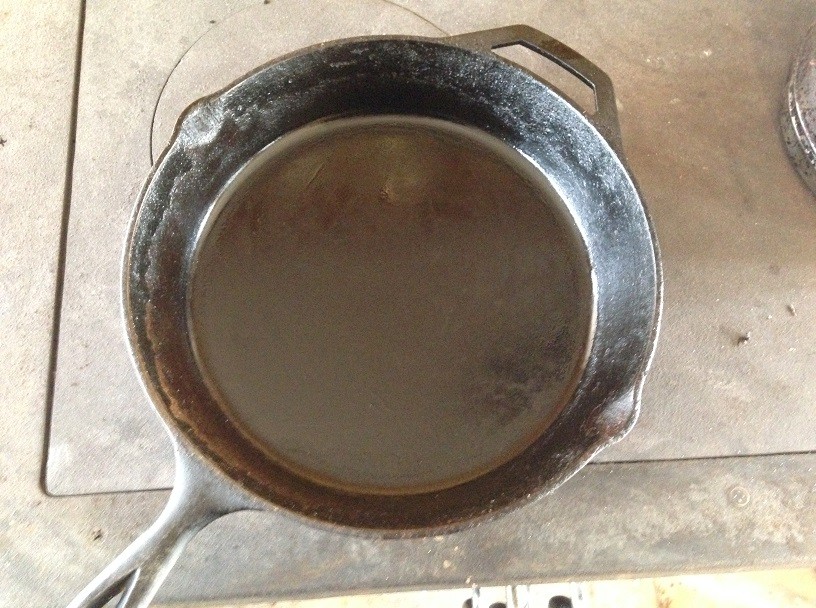
I love our iron skillet. This is our second iron skillet. The first skillet was a wedding present but Julie didn’t keep it. Too heavy, too hard to wash. The dishwasher did bad things to the seasoning. But now we know better. We wonder which of our grandchildren will want it when we are gone? It will still function as a non-stick surface or assault weapon in 100 years.

From the factory the cooking surface was rough. I sanded the skillet with wet or dry sandpaper wrapped around a block of wood and lubricated the sandpaper with a drop of cooking oil to work the day we bought it. I ran out of patience before it was entirely polished but it was close. After that it was just years of scraping it clean with a metal spatula and cooking bacon grease into the surface. mmmm….bacon.

We cook eggs every day. We have made apple pie in it. We cook potatoes. Skillet chili. Pancakes. We fry steaks. On and on and on it goes.

How do we wash it? I don’t. I scrape it clean then cook a new layer of bacon grease in it, wiping it out with a paper towel. You really should use animal fat instead of vegetable oil as vegetable oil becomes sticky. Then we store it in the oven until next time. That’s it. I know, this won’t work in a commercial kitchen.

If the skillet has dried chili in it from the last meal (…ahem!) things are a little different.

ChiliSkillet

I heat up the skillet then pour a little equally hot water into it. That boils off the bad stuff. Then I melt in a quarter-sized drop of bacon grease, scratch that around, wipe it out with a dry paper towel and call it good. BTW, if you use cold water in a hot skillet you will have a lump of cracked iron that is vaguely shaped like a skillet, not a skillet.

CleanSkillet


The sides of the skillet are never polished like the bottom is. You don’t scrape and scratch and chisel away at the sides like you do the bottom. That’s just how it is. If you cook in your skillet for years and years and years the outside will accumulate burned grease coating that is almost impossible to get off. Almost impossible. If you want to be free of the accumulation, throw your skillet in an outdoor fire. When it cools down, give it a little scrub, add some bacon grease and get cookin’ again.

One tip I think helps to keep the non-stick non-stick is to heat the skillet. I know, you people with your new-fangled teflon-coated aluminum skillets just pop the egg in and turn the burner on but these beauties, they need a little more time. Take a little bit to get the skillet warm before you pour in the egg. That instant sear on the bottom of the egg ensures it won’t stick. We usually put the skillet on the stove when we light the stove. By the time the fire is burning well, the skillet is warm enough to use.

Reading Journal 2015 Week 4

As usual, my eyes were bigger than my stomach this week. William Corbett got pushed off and I’ll add some details below. I am only 25 pages into Born-Again Dirt so that will happen next week. I’m afraid that means I didn’t complete any farm reading this week…you know…for my farm reading journal. This is due, primarily, to a lack of discipline on my part. I read Outliers Wednesday on a whim. I may have played a little Minecraft when I should have done a little reading. So next week…

Anyway.

Outliers: The Story of Success

What is this book about?
I’ll let the author tell you. Here he his at his most succinct on page 267. I’ll edit it a bit to make it even shorter.

…success follows a predictable course. It is not the brightest who succeed. […] Nor is success simply the sum of the decisions and efforts we make on our own behalf. It is, rather, a gift. Outliers are those who have been given opportunities – and who have had the strength and presence of mind to seize them.

How does one seize the opportunity? Get up early, dedicate yourself to your purpose and just get it done. The issue he raises is that not enough people are given that opportunity and we, as a society, need to focus on providing opportunity and recognizing the value of work.

Is it a classic?
This book has been covered everywhere and by everyone for the last 5 years. That indicates it may be a classic but it may prove to be a fad. I’m leaning toward classic.

Will you read it again?
Not right away. It’s a fast read though.

Does it belong on your bookshelf?
I don’t think so. You can find it online for free, you can listen to the audiobook on YouTube or you can get it from the library. I see no need to own it. However, the audiobook could not keep my attention. I had to read the real book.

Can you relate a favorite passage?
Quite a few, actually. But we’ll stick with my favorite theme.

Lareau calls the middle-class parenting style “concerted cultivation.” It’s an attempt to actively “foster and assess a child’s talents, opinions and skills.” Poor parents tend to follow, by contrast, a strategy of “accomplishment of natural growth.” They see as their responsibility to care for their own children but to let them grow and develop on their own.

and later…

“[Middle-class kids] acted as though they had a right to pursue their own individual preferences and to actively manage interactions in institutional settings. They appeared comfortable in those settings; they were open to sharing information and asking for attention…”

…skip ahead a bit…

By contrast, the working-class and poor children were characterized by “an emerging sense of distance, distrust and constraint.” They didn’t know how to get their way, or how to “customize” – using Lareau’s wonderful term – whatever environment they were in, for their best purposes.

Skipping to the end and pulling out a few snippits…

When it comes to reading skills, poor kids learn nothing when school is not in session. … Virtually all of the advantage that wealthy students have over poor students is the result of differences in the way privileged kids learn while they are not in school.

Think back to Alex Williams, the nine-year-old whom Annette Lareau studied. His parents believe in concerted cultivation. He gets taken to museums and gets enrolled in special programs and goes to summer camp, where he takes classes. When he’s bored at home, there are plenty of books to read, and his parents see it as their responsibility to keep him actively engaged in the world around him. It’s not hard to see how Alex would get better at reading and math over the summer.

OK. That’s bananas. Julie and I exercise a decided lack of discipline when it comes to books. Books we buy, books we borrow from the library, books we borrow from friends. Come by our house unexpectedly and you’ll find piles of books on end tables, stacked on the floor or covering tables. We don’t send our kids to summer camp, we don’t drive to the museum regularly but we do work to engage our children…either in things we are interested in or we work to ferret out what they are interested in. We discuss topics at the dinner table together and talk about our plans, dreams and our limited budget. At the same time, though, they are expected to entertain themselves…find their own books or build something or go outside and try not to kill each other with swords. I guess that’s what you get when you bridge between the worlds described above. I suppose we are middle class…but we really don’t live like it. More like poor farmers with too many bookshelves, a leaky roof and one, old minivan.

Another part stuck out to me on a similar theme. A man named Terman found, followed and studied children with exceptionally high IQs throughout their lives. Ultimately, he divided them into three groups based on success. The most successful were group A.

In the end, only one thing mattered: family background.

The As overwhelmingly came from the middle and the upper class. Their homes were filled with books. Half the fathers of the A group had a college degree or beyond, and this at a time when a university education was a rarity. The Cs, on the other hand, were from the other side of the tracks. Almost a third of them had a parent who had dropped out of school before the eighth grade.

I’m going out on a limb here to suggest the books on the shelves weren’t a collection of trinkets. They were carefully chosen part of the family. The books were assimilated into and allowed to change and help define the family culture. But I’m way outside of the text here.

He had a lot to say about KIPP schools. I hadn’t heard of that before. The kids arrive at school around 7:15 and return home around 5. Homework keeps them busy until 10 or so. On Saturdays school is only until 9:30. The school is designed to immerse the kids in learning…to keep them busy, working, and moving forward. It has a high level of success in the worst neighborhoods…neighborhoods where the kids don’t receive educational support from home. They made it a point to say that test scores appear to diverge the most over summer vacations as children wealthier families tend to continue learning over the summer, children from poor families lose a little ground. The KIPP school seems to replace the family at some level…for 10 hours each day. Like Psi corps.

Who should read this book?
You should. You and anyone who has ever told me that “I’m only successful because I’m tall, blonde and male.”

Take home messages:

I have an October birthday and grew up believing I was exceptionally stupid, exceptionally clumsy, unattractive and short…but I was at least a year younger than anyone else in my class! What if I had started school later? Who would I be? Even Bastiat couldn’t say. But I don’t have any regrets and my parents shouldn’t either. I turned out OK.

Allow me to summarize the book. Opportunities abound. Work sucks. But those precious few who embrace opportunities and work hard can achieve extraordinary success. He puts a number to “work hard” saying it’s 10,000 hours of dedicated, correct practice (correct practice because if you practice incorrectly you can get really good at doing whatever badly.) But opportunities for hard work spring from family support, family culture and all kinds of things out of your control. And this is where I felt the book let me down. He seems to attempt to walk some line between simple hard work and dumb luck. Jewish immigrants became clothing manufacturers…not because there was an opening in that market and they were lucky to be prepared. They found that opening in the market because they were desperate. They could only do what they knew so that’s what they did. They identified a market opening and exploited it. It wasn’t timing, it wasn’t luck. They just did the best they could with what they had. Maybe they got a leg up by some incredible timing but…

…that’s kind of the point. His examples are extreme. The book focuses on 0.001% of people. The Outliers. Nevermind that there are lots of Millionaires Next Door who did nothing special, just worked hard, built a solid business and lived frugally after embracing whatever opportunity they happened to come across. That includes every owner of every business I have ever worked for. Well, Bill Canfield may be a truly extraordinary person.

I’m going to throw in one more quote from Outliers will reference it next week when we read Born Again Dirt.

The historian David Arkush once compared Russian and Chinese peasant proverbs, and the differences are striking. “If God does not bring it, the earth will not give it” is a typical Russian proverb. That’s the kind of fatalism and pessimism typical of a repressive feudal system, where peasants have no reason to believe in the efficacy of their own work. On the other hand, Arkush writes, Chinese proverbs are striking in their belief that “hard work, shrewd planning and self-reliance or cooperation with a small group will in time bring recompense.”


Java Programming for Kids

This is not Java for kids, it’s just intro to Java. I applaud the effort but I’m afraid there is nothing here to grab their attention and keep their attention as they work. Nothing at all. If you want to learn Java you are better off to begin at YouTube. There you can find someone who speaks your language…says things in an understandable manner. The book was OK. Not great in any way. It doesn’t belong on my shelf. It doesn’t belong on your shelf. It’s not a classic.

Let me be clear. My criticism is not with Java itself. Clearly Java is a useful solution for a variety of problems. It’s the examples in the book that I take issue with. Let’s write a little code in Java, shall we? I’m going to add 5 and 7. Ready? First we have to write our code. You can use notepad but I like Notepad++.

public class AdditionExample
{
public static void main(String[] args)
{
int firstNum = 5;
int secondNum = 7;
int sum = firstNum + secondNum;
System.out.println(sum);
}
}

Now that code has to be compiled. (If you are going to play the exciting copy of our home game you’ll need to install the JDK. Just Google it. Be sure to update your PATH environment variable too.) Save your script as AdditionExample.java and remember where you saved it. Open command prompt, navigate to that location and type “javac AdditionExample.java”. That compiles your code. Now, to execute it you simply type “java AdditionExample” as below:

D:\JavaForKids>javac AdditionExample.java

D:\JavaForKids>java AdditionExample
12

Isn’t that great kids? Look. All that to make the computer say 12!

That gibberish code above is not unique to Java but it’s completely unreadable. Public class? Public static void? String[] args? What is that stuff? He briefly covers that later in the book but it is still gibberish…not meaningful. But that’s kind of the way it is. Let’s write the same thing in VBScript as an example.

Dim firstNum
Dim secondNum
Dim sum

firstNum = 5
secondNum = 7
sum = firstNum + secondNum

wscript.echo sum

Now save that to AdditionExample.vbs and double-click on the file to execute it. What happens? We get a pop-up window telling us “12”. Isn’t that neat kids?

So maybe it’s not the book’s fault. Maybe programming is just boring. Maybe I am boring. Maybe so. But even still, this book is kind of lame. The premise is you can learn to program while making your own calculator. Calculator. A text-based calculator. If you plan to teach basic programming concepts to your children I don’t think this is the place to start. If you or your children already have a handle on the jargon and concepts and are ready to move into Java this book might be OK but, again, YouTube is probably better. Heck, most of what this book covers is covered in the Java howto on the Oracle website.

But I could be totally wrong. I have a real handicap in this topic. I have no memory of learning computerish stuff. I’m sure it didn’t come naturally but I don’t remember doing it other than “Load BC.exe,8,1“. So I don’t know how to teach it. For this reason I tend to leave my work at work and my kids have no idea what I do for a living…just that I work on a computer. I don’t know how to bridge the gap.

And that’s how I excuse including this book in my farm reading journal. I’m trying to bridge the gap. My kids can manage the farm today. If I break my leg some things will need to be cut back and they may need a little instruction but I’m sure the four of them can figure out what little I know. But there is no way my kids could take over my day job…the work that currently pays for the farm. There is a portion of my life that is partitioned away from my family and I think that is a mistake. My blog is a farm blog but it focuses on involving the kids. I want my kids involved in every aspect of my life. You’ll see more programming books in the near future. I hope you understand. In fact, next week I plan to begin working through JavaScript for Kids. The first code we write puts cats on the screen. Cool. That said, Julie showed an interest in learning and teaching Python as she was reading a Minecraft book Thursday morning so we may start with Python for Kids instead.

Should you read this? Is it a classic? Will I read it again? Does it belong on your bookshelf?
No.


Cottage Economy not revisited

I had planned to read the second half of Cottage Economy this week but I just didn’t want to. There is only so much preaching on bread and beer I can take in one dose. Julie and I were laughing at the extreme level of sexism displayed in the book. A man simply can’t love a woman who can’t bake bread. I want to believe he was considered a pig in his time. Further, it is more important to God’s kingdom that a father ensure his daughter can bake bread than that she can recite scripture.

I put it down. I’ll pick it up again if I feel the need to laugh. The opening statements concerning personal responsibility are gold. The rest of the first half? Not so much.


 Article of the Week

Should we go to Mars? How can we pay for it? I know, let’s set up an interplanetary internet using satellites in space…faster than anything we have now. From arstechnica.com:

Musk’s venture will be considerably more expensive, possibly costing as much at $10 billion. It could take more than five years to get operational. “But we see it as a long-term revenue source for SpaceX to be able to fund a city on Mars,” Musk said on Friday night. “It will be important for Mars to have a global communications network as well. I think this needs to be done, and I don’t see anyone else doing it.”

What does space have to do with farming? Variety is the spice of life. I wish you could alter time, speed up the harvest or teleport me off of this rock.

And I say we farm another rock. Diversify our risks as a species. But it’s hard. Mars is a long way away. Let’s look at the solar system if the moon is just one pixel. That means the nearest star is an almost incomprehensible distance away. Just something to think about while you scoop manure as scooping manure doesn’t require much brain power.

Also consider that low Earth orbit is out of any government’s jurisdiction…for now. There is no preventing the dissemination of information. And the promise is faster internet…anywhere on Earth…for everybody. And the proceeds go to Mars. Sign me up!


This Week in Spending Money

I maintain a big line in my budget for books and education. A big line. In years past I have forked over as much as $8,000 of my own money for two weeks of tech training…not counting the loss of vacation time. That’s just what you have to do to stay current in my line of business. Sometimes I get asked, “Chris, how did you learn all this computer stuff? Why can’t I do it?” You can. Just spend 10 or 20 years learning all about it. In 20 years you will be amazed how much you don’t know. I don’t know anything so I still spend money and time learning more. This week, in an effort to increase my own understanding and spark a fire in my children, we bought 5 more books.

Now you, dear reader, may say, “Gosh Chris, you sure spent a lot of money on books this week!” Yes I did. And if just one of those books sparks something in just one of my children (or even my wife! (or even myself)) then the return on investment will far outstrip anything else I could have put that money into. And why all this computer stuff? First, because it’s what I know and do. Second because it’s something that can be done anywhere. I can sit here at my desk and code for a customer in Alaska. No big. I read the book Ranching Full-time on Three Hours a Day some years ago and shortly after spoke to David Hall (who lives near Cody). David expressed a similar amount of time was needed by his cattle operation so he also had rental property, an insurance office and, until recently, an implement dealership. Put your time to work. There are other things we can do on the farm, even if it’s not farming.

But there is something more I want to share. Something that makes me a little bit sad. My wife and children have no idea what I do when I leave here. I come home at night and I’m greeted with a kiss from Julie and hugs from the younger children. Julie asks, “What did you do today?” I realize she’s not really asking but I need you to understand I can’t really tell her. My job is something I do by myself. In absolute isolation…even from my family. I drive there alone. I work alone. I drive home alone. I can’t find an intelligible way to communicate what I do. So I don’t talk about it.

And that hurts a little bit.

There is a part of me I can’t seem to share with my family. Half of my day. Every week day. So I just say, “Oh, the usual.” and we go on about our day.

What if I told them? What if I really said it? “Well, this morning my inbox was flooded with errors. Apparently the SharePoint database backup routine failed last night and the transaction logs grew too large. We didn’t run completely out of disk space but it was a near miss. Then Mike stopped by with a query that suddenly needed a little over a minute to run. I guess the database outgrew its design so we had to tweak it a little. I added an index and got it to a little over a second. Then we had a rush job to write an XML query for a load process. That got pretty rough, let me tell you. After that it was just helpdesk tickets all day long. Nothing too exciting.”

I lost Julie at SharePoint.

But today, as I was installing the newest version of Python 3 for a book I was planning to work through, Julie asked why I wasn’t installing Python 2. The Minecraft Mod book says we need Python 2. Julie has never been more attractive.


Please give me some feedback on this post. I read a lot. Like, a lot, lot. I like to share with my readers when I find a book that helps a farmer out. But I also like to be entertained so I include links to movies and music. Fun books too. Please let me know if there are questions I can answer for you or if you have any suggestions to help make this format more meaningful.

Also, let me know if you are doing any of the reading with me…even if you are running behind. Share your favorite quotes. Tell me if I missed the point.

Click here to see all entries in my reading journal.
Hatchet Job

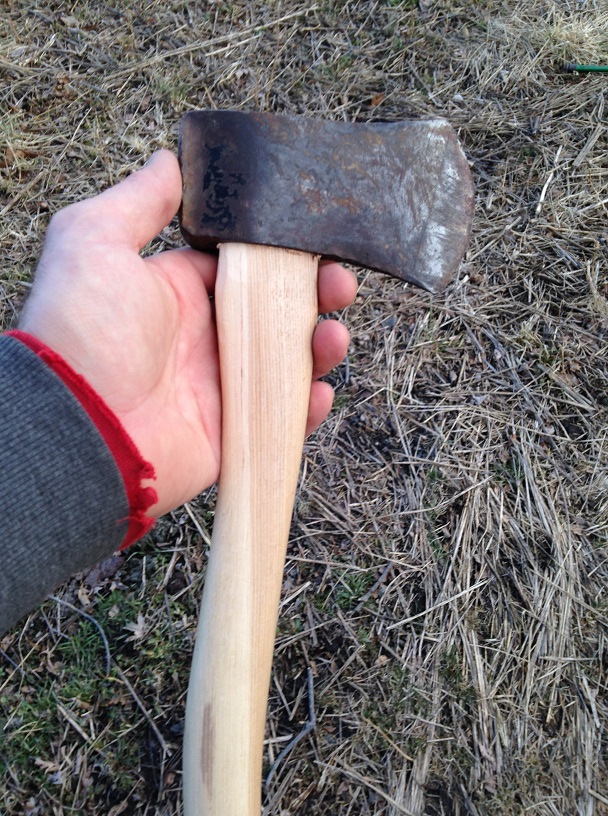
I broke my hatchet handle last spring. Sigh.

The local hardware stores don’t seem to carry hatchet handles anymore. Axe? Yes. Sledge? Yes. Hatchet? No. Just buy a new one with a fiberglass handle.

But that’s not what I want.

I like my hatchet. I like my hatchet a lot.

SO I ordered a new hatchet handle from Amazon. It turned out about like you would expect.

Have you ever played baseball with a wooden bat? How do you hold the bat? You put the label up, right?

Why?

So the strength of the wood is oriented to apply pressure on the ball…and so the bat doesn’t break. You want to leverage the grain of the wood. If you hold the bat wrong the bat will flex and lessen the pressure on the ball or, worse, break.

And that’s the problem with my hatchet handle. I couldn’t dig through a bin at a store to find the one that has the right grain orientation. I just asked Amazon to send me one.

So here it is.

Hatchet1

Well, that’s nice. I can use it again. It won’t hold up but I can use it again. Here’s a close-up of the grain so you can see more clearly.

Hatchet2

This stinks. I use my hatchet for everything in the winter. I cut sprouts, trim limbs from trees, hammer fence posts and chop holes in ice. I keep my hatchet with me all the time. Usually it is sharpened and painted. Give me a little bit.

I don’t have high hopes for this handle. I don’t have high hopes for my handle supplier. I may have to start making my own.

So. There it is. Bat with the label up and pick your own tool handle.

Strolling Through The Pasture January 2015

Let’s go for a walk, shall we?

There’s lots of grass out there. Just under the cemetery hill the fescue recovered completely since the last grazing some time in September…er…October…er…Fall.

TallGrass

It’s still pretty green down in the bottom. But across the little stream…

Creek

…in the woods there is little grass. The squirrels have been busy taking hedge apples apart. There is not much grass standing in there.

HedgeApplesAcross the fence to the 40 things are a little different. This is north of the hog building in a messy field full of buried field fence, broken fence posts, tree limbs, stumps and thorny trees.

HogLot1I have quite a bit of work to do in this field this spring. We intend to start the chicken tractors at the east end of the field and run them slightly downhill across the field. Should be awesome. But that will force me to clean up the mess out there. And it’s a big mess…including the log that looks like a dead cow.

HogLot

Did I say it’s a mess? The remnants of fencing and watering supplies litter the area. I don’t even know what to do with this. I guess hook it back up and have a water supply…after I haul away the scrap.

HogLot2

Further east are the clover field to the north and the pasture where the cows are currently grazing to the south. I think we can safely say the cows are grazing the not-clover field. There was no clover out there last year. None. Not until dad and I cut hay and spread manure that is.

Clover

I didn’t graze the east field again after we cut hay. It’s a little hard to get to anyway so we just didn’t go there. I guess we had some seeds in our compost. No surprise, really, but it is a nice surprise to see evidence that clover once stood here. But not enough clover.

RemainingPasture

That’s all grass and weeds. I plan to overseed a mix of legumes to improve the pasture. That in addition to the seeds the cows deposit, the pasture should fill in with variety over time but I would rather speed things along. I like to see the mouse nests out in my fields. I’m glad to have something besides chicken for predators to hunt for…minks especially.

MouseHome

It is obvious where we cut hay on this field. I’m not sure what that little, scrubby gray weed is but cutting in July seemed to really set it back.

HayLine

It is interesting that the cows came across their first growth of what I believe is big bluestem and they left it alone. They either just missed it or it didn’t smell like fescue and orchard grass.

DontLookAtMe

Lots of brown grass and weed skeletons out there. The cows seem to relish it though. Much more than half of my farm remains ungrazed. More than half of my edible hay remains (more on that soon). We are sneaking up on February. I’m not saying we’re in the clear but I feel good about what’s happening. This walk wasn’t the entire farm as I have done in the past. This was just a straight line east from our house.

An Hour’s Worth of Sunday

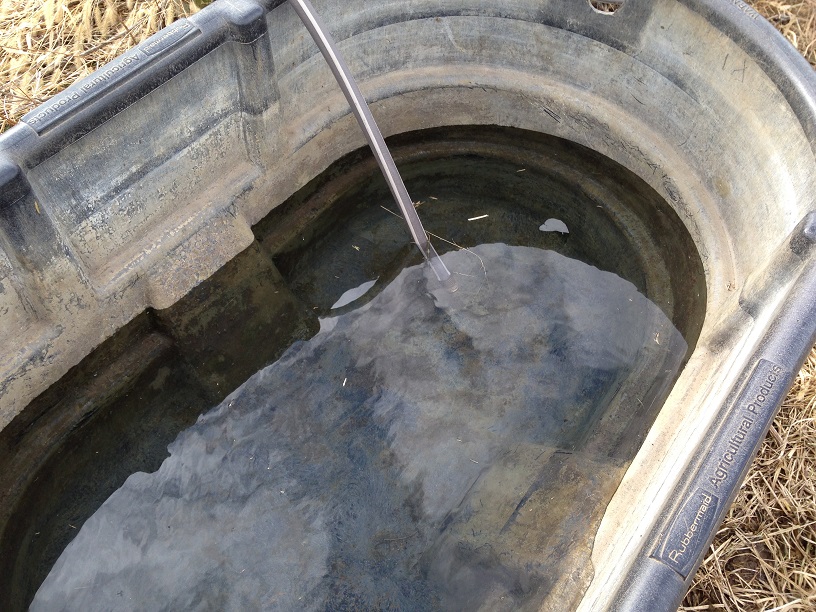
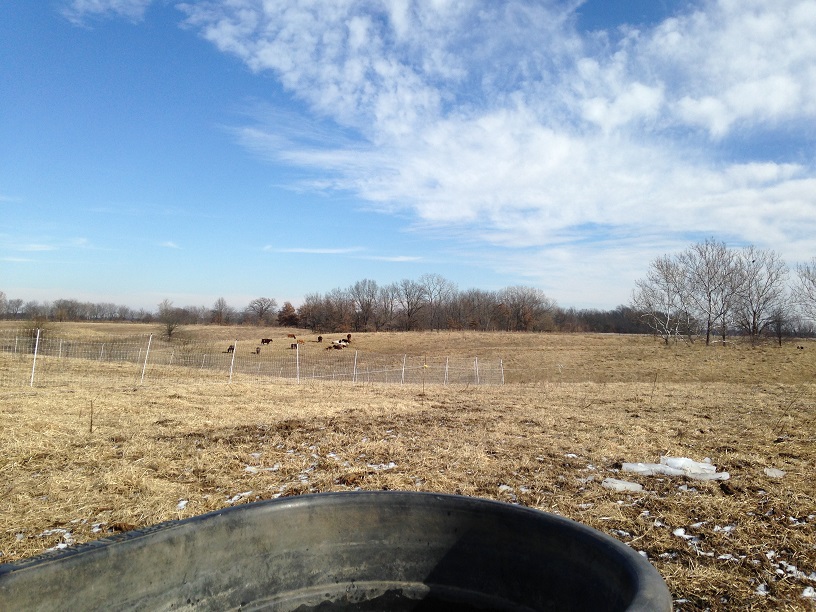
I needed to fill the cow’s water tanks. I couldn’t do this early in the morning when I do my normal chores because (sigh) my hoses were frozen. It takes about 40 minutes to fill three tanks if I use different hydrants to fill two at once. What can I do with that time? Stare at the cows?

StaringAtCows

The cows are grazing in strips. I lay out a north-south strip roughly 40 paces wide and give them access to roughly 20 paces worth of pasture each day until we get through it. In addition to that, I maintain a corridor at the south fence line so the cows have access to mineral and water in a place that is fairly convenient to Julie and me as long as we keep the hoses well-drained on a slope. Which I didn’t do on Saturday. Anyway…

SlowFill1

So I have most of an hour to kill. Cows are going to need a new strip. That’s not Julie’s favorite job but I think it’s fun. I start at the north end of the property because I want my spool at the south end. That allows for the ever-growing corridor to water and mineral. I stepped 40 paces off of the current fence to find my starting position.

StartOfRow

I didn’t bring my fence remote with me so I can’t attach the fence at this time. But I don’t really need to yet.

StartOfRow2

Then I looked in the distance to try to find a target that looked roughly 40 paces from the other end of the current fence.

Trees

If you start at the thicket on the left and count over a few trees to the right you’ll come to a rounded cluster of sassafrass trees way over ther together. There’s a dark one in the center of the clump I’ll shoot for.

ThisTree

Let’s pause for a moment. I know a pace is not a standard unit of measure. It’s only marginally helpful to the reader for me to say that. I have a bakers dozen cows on pasture and I’m giving them an additional 60×120 each day. But the cows aren’t out there with a tape measure or a transit. The precision comes by watching the animals. Are they full? Are they clean? Are they calling out for dinner or are they grunting and burping? What are they leaving behind? Is the ground scalped or did they leave a protective blanket on the soil? That’s how you measure. It happens that I carry my feet with me so I use those to help guide me.

Burp

So I walked through hill and dale, leaving a string behind me. Always aiming for the tree in the distance…a tree I couldn’t always see.

NoTree

Once I arrived at the southern fence I stepped off the gap between old and new…45 paces. Not bad. I mean, horrible from a percentage perspective but cows don’t calculate percentages. Good enough is good enough.

ReelsApart

So I checked my water tank. A few minutes remaining.

NotFull

With 15 posts in hand I headed off to the north placing a post every 12th pace. Well, 12 or so. I wasn’t really placing the posts, I was just spearing them into the ground. I’ll come back later with a hammer to drive them into the frozen earth.

15Posts

15 got me halfway so I went back for more. While I was up there I moved the hose to the other trough.

SpearedIn

It’s important to fence the ditches to contain the cattle. I do want the cows to cross the ditches, pushing earth around so the ditch becomes wide and shallow, rather than steep and deep. I want the water to meander slowly on its way, not cut into the earth violently. I could do this with a bulldozer but the cows are here so…

CutInPasture

I’m a little particular about placing my insulators at ditches. I always want both forks of the insulator to touch the wire. That’s not possible in the dip but at the edges it’s no big whoop. I’m sorry if that is unclear. See how the insulators on each side of the creek face opposite directions? If they were turned the other way, on each side the wire would only be held by one hook. So any passing deer could easily knock my fence off of the insulator. After that the whole fence would short out as the wire rests against the metal post. This one small change ensures that the insulator will hang on to the wire as the deer bends the post, stretches the fence wire then releases somewhat magically as the string tension launches the insulator through the air to be found some time in the spring.

Insulators

I stepped off the remaining pasture. If the weather holds we’ll finish up that pasture in mid-February. Then I’ll take the cows north of the hog building. There’s not a lot of pasture back there but I really want to clean that field up and I need the cows to help me find saplings, stumps and odd bits of junk.

HogLot

Anyway, for now we are going from over there to over here.

RemainingPasture

By this time all of my tanks were full. I disconnected my hoses and left the posts speared in the ground until later in the afternoon. I like the cows to go to bed with full water tanks so I came back around 4:00 with the kids to top things off and drive the posts.
WaterHelpers

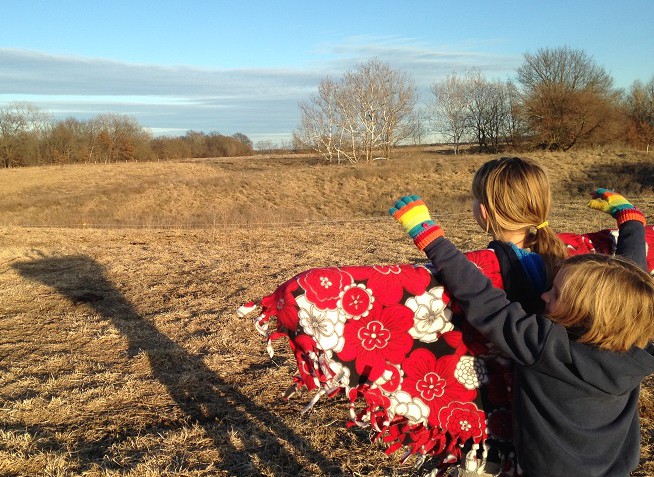
The kids needed to go outside and play. Barn cats are valid playmates.

Zippy

We left mom at home though. After about 20 minutes the hoses were drained again, the chickens were watered, the eggs collected, the fence completed, the cows had hay and we made monster shadows.

MonsterShadows

The cows stayed on the hill.

DisapprovingCows

We crossed the old bridge and ran up the hill.

OldBridge

I mean we ran. The kids were pretending to be in Minecraft and imagined that the darkening skies would soon allow skeletons and zombies and giant spiders to spawn. It helps to play through our day.