Hopeful. Cautiously Hopeful.

It snowed. Then it snowed again. Then, to add insult to injury, it snowed again…on March first.

Sigh.

There are some years Julie and I plant peas and radishes outside in the last week of February. This is not one of those years. This was a cold, snowy, cold, dreary cold winter. Did I mention it was cold? Oh, it was cold all right.

But the forecast this week calls for 50’s and 60’s in the day and mid-30’s at night.

You know what that means? Well…you know what that may mean? Well…you know what we hope that means?

We hope that means we can move the broilers out of the brooder and onto pasture. And they need to go. They really, really need to go.

I plan to run the chicken tractors on a slightly sloping hill north of the hog building. That should help drainage (I killed an area of my alfalfa field where chicken tractors were parked during a heavy rainstorm) and will make moving the chicken tractors easier each time.

BarnTime travel with me 5 days into the future.

I’m back. You may not have known but I shelved this post for a few days. I was hopeful but cautious. I’m cautious even about crossing my fingers publicly. Let me sum up what you missed.

It warmed up.

Ta da! 75 degrees yesterday! Moving fence for cows I was stepping about half of the posts into swamp, half of the posts into ice. Weird.

I didn’t put the chicken tractors on the slightly sloping hill north of the hog building. I put the chicken tractors where I ran them last spring. That’s not ideal but it’s not awful either. It just is what it is.

Why didn’t I put the chicken tractors up north?

HogLot1

Because I still haven’t grazed and cleaned that field. It is full of saplings and dilapidated fencing and tree limbs and thorns, brambles and bric-a-brac. I need the cows to bulldoze, clean and fertilize it before I even attempt to drag a big metal box full of chickens across it.

So that’s the haps. Many of the broilers are in tractors on the field. Not all of the chickens. The forecast is calling for warm weather but it is also calling for an inch of rain tomorrow. An inch of rain can kill little birdies. I’ll have to come up with some tarps. It’s always something.

But I remain hopeful. Cautiously…

Melting Away

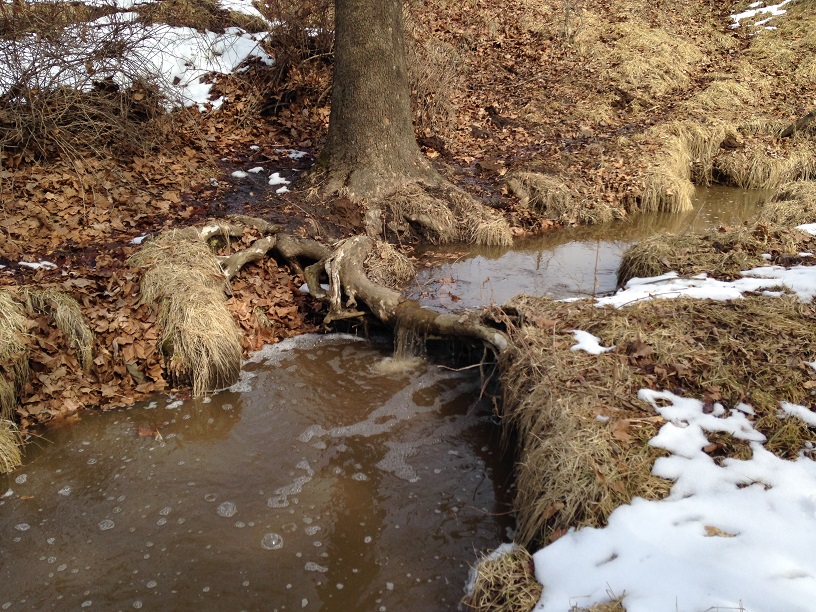
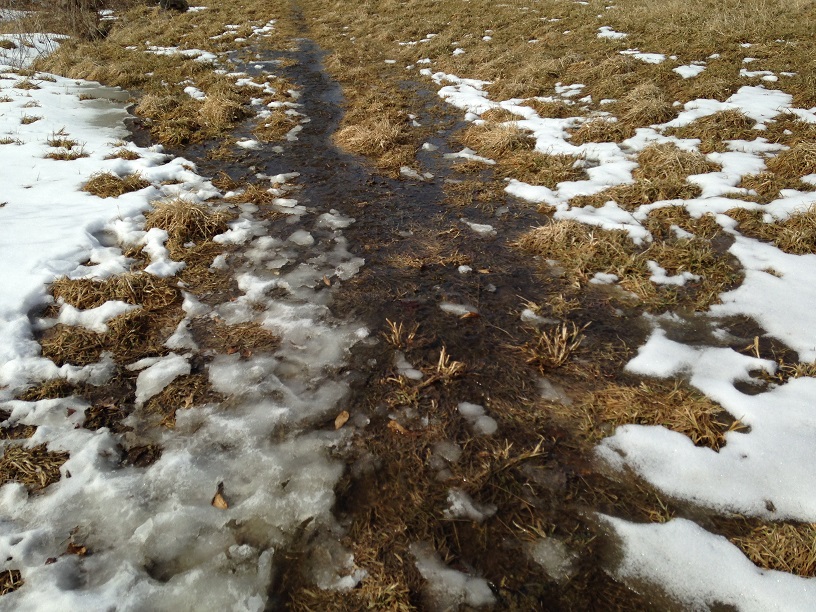
Weeks of cold and snow. Snow on March first. That may not seem like a big deal to readers further north but many years we have our first rows of peas and radishes in the garden at the end of February. Snow. Snow. Snow. I’m so tired of snow. Heck, the cows are tired of snow…tired of being locked in the barn lot. But now it is finally melting.

Snowmelt1

Which means mud. Mud, mud, mud. I’m so tired of mud.

Snowmelt3

Guess there’s no pleasing some people.

February’s average temperature was somewhere around negative infinity. This week the average high temperature is 55. That’s quite a change. So much of a change I doubt we’ll have a maple run this year. But it really saves my bacon because the chicks are ready to exit the brooder. A few more days of warmth and melting and runoff and we’ll get things going outside, a little at a time.

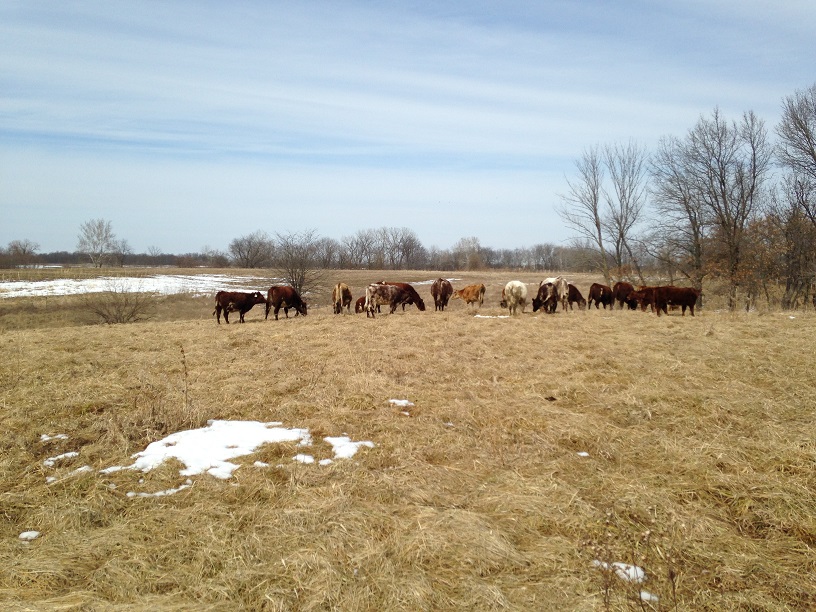
With tails and heels in the air the cows ran out to pasture today. Of course, two of them found a low place in the temporary fence and invited themselves to cross it. And to make things worse I put the heifers we weaned at Christmas back into the herd so there was a little pushing and shoving and other family reunion stuff. But then they put their heads down in fresh grass and went to work.

CowsBackOut

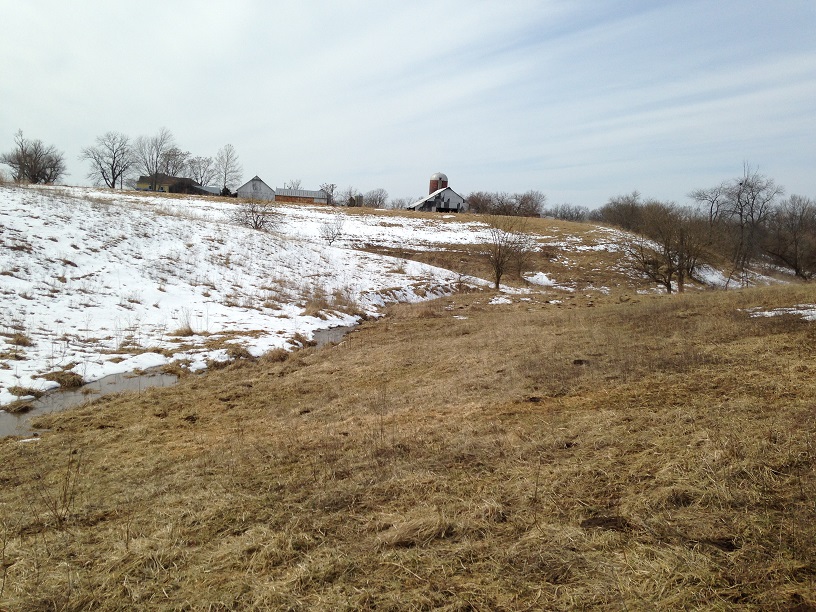
Not all of the pasture is snow-free. The north-facing slopes are still covered.

Snowmelt2

I’m hoping to keep the cows up high where drainage is good both for cow health and for pasture health. I don’t want to let them churn up a mud bog. I noticed a line in the snow where the cows grazed a month ago when they were last here. That line is where the fence stood, where the cows had trampled up to. The cows were reluctant to cross that line. Calves always lead the way.

DangerCalf

Just making a few notes about the transition here. Should be nearly 60 degrees today. Hopefully that will take care of the remaining snow.

Reading Journal 2015 Week 10

Let’s listen to Glenn Miller for a minute.

You know what I wasn’t this week? I wasn’t in the mood for reading. In the novel Dune Gurney Halleck says “Not in the mood? Mood is a thing for cattle or making love or playing the baliset, not fighting!”

I love Dune. That’s one of those books I can read over and over. But, in spite of Gurney’s rebuke, I did little reading this week.

Oh, I read blogs like flipping through pages of a magazine but my week sort of just zipped past. My commute home on Friday took several hours longer than normal, I have a few projects going on at work….on and on the excuses go. It’s not that I’m emotionally down, it’s not that I’m burned out…it’s that I have allowed other options to consume my time. And maybe some of those options were less than optimal.

So yesterday I picked up a motivational book Julie read some time ago called Mach II With Your Hair On Fire: The Art of Vision and Self Motivation. Yes, this is one of those cheesy lightweight business motivational books. Yes, it’s a book about network marketing. But it was just what I needed. And I have more to say about network marketing later.

Let’s start with a quote from chapter 3. I hope this challenges you too.

Most people have goal setting confused with desire. People think that if you write down all the things you desire, that’s goal setting. It’s not. Everyone is a goal setter and a goal achiever, whether consciously or not. Goal setting only works when your goal becomes your MINDSET or EXPECTATION. If all you do is think of things you want and write them down, your “wanter” will be working really well, but your “getter” will still be asleep. Goals have to become beliefs and expectations. You have to believe what you want is actually inevitable.

He talks about his tendency to believe he would fail…he expected to fail. And he did fail. Now you, reader, know better than to believe in all this “attitude” mumbo-jumbo. You have read this stuff before. You don’t believe in it. It doesn’t work. Successful people are born to be successful. For example, I was recently told I am only successful because I am blonde, tall and male.

You are right.

Absolutely right.

You will never amount to anything – but not because of your sex or height or hair color – but because you are a victim. He talks in the book about it isn’t enough to want something, to work hard, to be good and to become educated. Those are great things for you to do but hard work and education do not always lead to success. The author says you have to factor in attitude. My critic focused all attention on envy and gave no attention whatsoever to opportunity…let alone reason.

He goes on in that chapter to talk about the importance of policing your thoughts. It’s easy to focus on negativity. It’s easy to say your idea will never work…and so you never try. And when you finally get enough energy and focus to start that project you have delayed…well…then what? Who would want to read a book I wrote? Tall people have insecurities too.

And those things you repeat to yourself become reality.

To the degree there is clarity, the mind does not distinguish between an actual experience and one that has been vividly imagined!

Prove it to yourself.

Have you ever cried at a movie?

Have you ever screamed at a movie?

Have you ever laughed at a movie?

For further emphasis he retells a story of a mild childhood embarrassment. The event happened once and caused no lasting injury but he has replayed that embarrassment over and over in his mind to the point that it has, effectively, happened to him thousands of times. That sounds familiar. In fact, it is worse than he says. As I relive each bad event I tend to make it worse than it was. Not only did the event happen once, it happened differently than I remember it. And I’m probably the only person who remembers it. I have it memorized. I can see it clearly at this moment. And I can tell you, it holds me back. But the truth is, there is a beautiful, supportive, intelligent woman who loves me. My 15 year old self could not have imagined that happening. I met her when I was 16 and still couldn’t see it. Honestly, it took me until I was nearly 30 years old to believe that she married me out of anything other than pity. I’m not kidding. Every day I thought she would realize her mistake and walk away.

That kind of held me back in our marriage. What is holding you back? What reality have you invented for yourself?

So here I am writing in my reading journal. As he points out in chapter 6 I have committed to something. I’m going to get it done. Even if I journal my reading of “The Little Red Hen”. I have a goal to read a book each week.

A commitment is a decision to do something, to be something, no matter the obstacles; no matter whether you still feel like it next week, no matter how hard it gets, no matter how many times you fail, no matter what results you are creating. A commitment pays no attention to the outcome, other than to refine strategy. Results do not alter the commitment to persevere.

So I am writing this post. Also, I am still married.

Bing will tell you all about it.

Let’s make up a new world. Let’s imagine something big. Something wonderful. Let’s imagine a Christmas surrounded by our parents and children and grandchildren in a warm home. Both ham and turkey have been roasted and smell wonderful. Presents are piled near the tree and the children can hardly wait. My children and I reflect on the year that has passed. We sold our first thousand calves in April and brought in enough money to meet our operating expenses for the year. The remaining calves, eggs, chickens and lumber sold from the farm were just extra. In fact, it’s time to expand again…this time we are going abroad. I sit at the table talking big but doing nothing. Julie looks beautiful even as she manages the work in the kitchen. She is always working. I decide it’s time to sneak up behind her and give her a kiss. The grandchildren blush and turn away…but they know I love their grandma. She asks me to wash the dishes. Oh well.

What do you see? As the book asks, what movie do you create in your mind?

Julie has a similar vision. She has it written on paper. Look man, don’t discount writing things down. Write the vision, make it plain so he that read it may run with it. It’s in the Bible, man. Not only has she written it, she listens to the audio of it each morning. I would love to share it with you but I can’t. Maybe she will but I can’t. It’s hers. And it’s quite personal. The point is, she has it on paper where we can see it and she plays it for herself each morning. That recording, though personal, is VERY POSITIVE. And that’s how she starts her day.

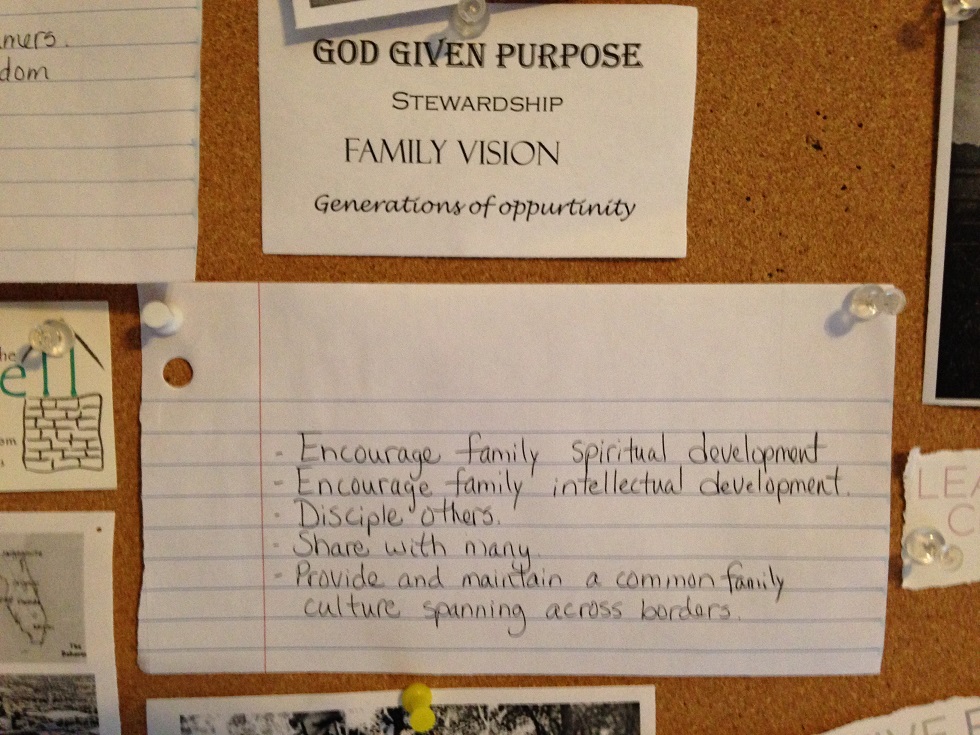
But she sees it outside of writing too. I have shared a portion of her vision board before.

FamilyVision

It’s all over our house, man. Reminders of where we are going. And we are going up. It is inevitable.

In a way, as pointed out by the book, we are telling ourselves lies. But are you honest with yourself about your failures? His example is that someone may imagine themselves as a 150 pound person. When you lose 25 pounds you still see yourself as a 150 pound person…so you soon become a 150 pound person again. Even when 125 pounds was the truth, you couldn’t see the truth. We lie to ourselves…good or bad. What lie do you want to believe?

This is a powerful thing, man. Do you hate your job? Do you want to love your job? List out the positives of your job. Only the positives. Write out your ideal day. Every morning before work play out a movie while reading your list. Soon, your dream will come true. If you dwell on the differences in your marriage you will soon be divorced. If you focus on alignment, you will soon be aligned. That’s how it is. Go ahead. Tell her she’s fat and ugly and can’t cook 20 times each day. Tell her to her face and you’ll probably get slapped. Tell her in your mind and you’ll probably get divorced. True or not, your mind makes it real.

The whole book is summed up early on with one simple quote.

Whether you think you can or you think you can’t, you’re right.


Now, concerning network marketing. We seem to have applied a negative connotation to the phrase. And, maybe, for good reason. But let’s network market some eggs. First, I give a free dozen eggs to a random lady at work. She says, “Um…thanks?” A week later she buys two dozen. She tells a co-worker. That co-worker buys two dozen. My network is spreading. Networking is good business. The issue we have is with pyramid schemes. Some central person at the top raking in the dough by setting up some tool at the bottom. I’m sure that happens. But sometimes, word of mouth is just a good business model. Pay commissions instead of paying for advertising makes for more targeted, personal advertising. Not that I’m here to sell you on a network marketing company. Just sayin’.

Thanks for taking time to read this today. I know I have lost focus on my farm blog…I tend to write more about life issues and video games. But I put a lot of myself into the blog. The cows are in the barn. Chicks in the brooder. Snow is melting and it’s muddy outside. We just can’t do much so our time is being spent in close proximity. And that’s cool. But it can’t help but bleed through on the blog.

Click here to see all entries in my reading journal.

Reading Journal 2015 Week 9

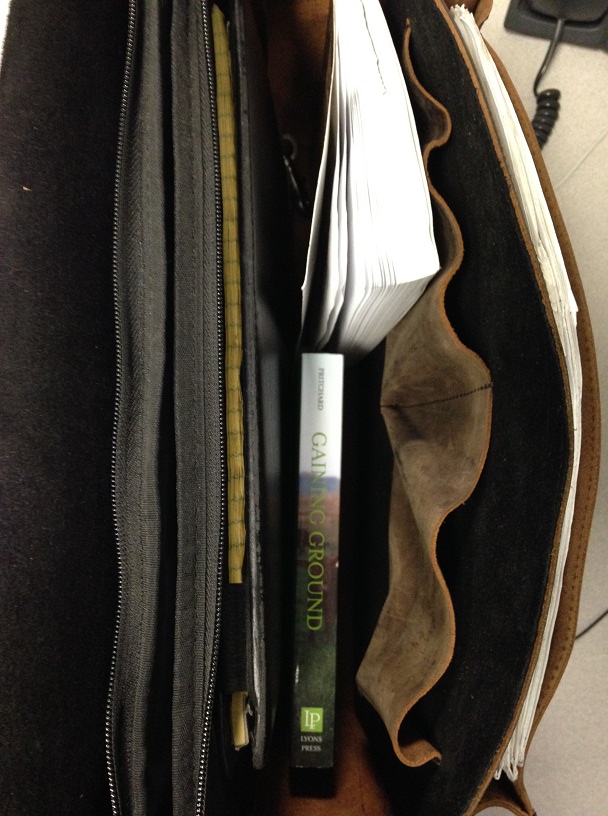
Well, this didn’t work out as planned. I thought I would read Gaining Ground this week but only succeeded in carrying it around with me for a week.

Satchel

I did start and finish Robinson Crusoe and sped my way through something unexpected, The Dilemmas of Family Wealth. On that last one, I feel I should clarify that family money is no problem I suffer from. Rather, I hope to equip my children with a soil-building, cash generating machine that will enable them to live life to the fullest, pursuing their own interests, finding enlightenment and fulfillment on their own terms…not just tagging cows for the old man.

So let’s talk for a minute about reading whatever I wanna and about my kids. My kids read whatever they wanna. Here is a post that talks about why.

Another four inches of snow fell last night. You know what sounds nice? Nicaragua. 93 degrees in Managua today. Sigh.

Let’s get started. We’ll start on a tropical island.


Robinson Crusoe by Daniel Defoe

Guy ignores his father’s advice and ends up shipwrecked on an island. He deals with scarcity and economy as he scratches out an existence on the little island. Seriously? You haven’t read this?

This is a classic among classics. Classics are classics because people still read them. Some are more classic than others though. For example, I have never survived the meat grinder that is Don Quixote…short of watching Peter O’Toole and Sophia Loren.

I focused on economy as I read. What is most important to Rob? The ship wrecks. His companions are all washed away. He is alone and has an unknown but limited amount of time to retrieve goods from the ship before it washes out to sea. What is first? That choice is faced over and over. How to make the most of his time and resources. So let’s bring this on home. Rob had to farm. He kept goats, grew barley, etc. Barley. Barley from seeds he found in a coat pocket. Starting small, with very little, showing a small profit, saving that profit instead of consuming it and re-investing it in the future, Rob ultimately had more barley than he needed. It took time.

It takes time. we bought 6 cows. How long will it take us to increase that to 30 cows? A long time…even in a perfect world where all cows breed each year. Half of the cows born each year are male. Math that out for yourself. But you save heifers and reinvest them. You save and hatch a few chicken eggs and duck eggs. You build your customer base slowly as your production increases. Little by little, over time, focusing on keeping the most important things at the top of your list.

Economy aside, you know what Rob wanted more than anything? Companionship. The Bible says that’s what God wanted too. That’s why He made us.

I spend a lot of blog time praising my wife. I do that in real life too. I need my wife. I need her support. She is my companion. Isolation in our marriage is just a few criticisms away. If I want her to leave me alone I just have to say a few magic words and she’ll disappear. Vanish. In fact, I can make her disappear with a lack of words as well. I can just neglect her out of my life. I also have to be careful with my expectations. I expect to be married the rest of my life and I don’t want to be a broken down old man married to a broken down old woman when we’re 50. We have to make careful choices right now to care for our bodies. She should not be carrying 50 pound feed sacks across ice. I shouldn’t carry two hay bales at once. Those kinds of actions limit our potential over the long haul.

And Robinson Crusoe was in it for the long haul. He played the long game and <SPOILER!> he won.

You may be asking, reader, if everything I read has to involve my farm and my marriage.

Yes. Yes it does.

Do you think eggs matter to anybody? Eggs don’t last. My marriage matters to me…even if you don’t care. My marriage has to last. I was made to worship God. I have vowed before that God that my marriage would work. I have a limited amount of time and resources to invest in my relationship. What do I do first?


The Delimmas of Family Wealth by Judy Martel

Hoo boy. I SPRINTED through this book. Sprinted. This book requires serious, personal reflection time but it is hard for me to apply because I’m not the target audience. I’m ready to step aside and let the next generation run but they aren’t ready yet and we are certainly don’t have money to burn. Is it a classic? I don’t know. I won’t know for some time. I gathered some ideas that will help me guide my family for a few decades but you’ll have to check in 50 years from now to see if I garnered anything of value.

Let’s begin at the beginning. What do I want for my children?

I don’t want my children to take the farm. I hope one or more of them will but I can’t look at my oldest son and say, “Son, this will all be yours someday.” He wants to be an engineer. Oldest girl? Baker. Next child? Pastor/carpenter/taco stand owner. Last child? She just wants to live with us. And she can. So maybe she’ll take the farm. But maybe she’ll grow out of being 8. I don’t know.

But here’s what I do know. I can’t make my kids do this. Nor do I want to. I need to build a base of resources upon which I launch subsequent generations into successes of their own. The farm is our foundation of wealth. We are not slaves, the farm is not our master. The farm is our launch pad.

Martel includes this quote from James Hughes, author of Family Wealth: Keeping It in the Family, a book Julie and dad and I read within the last year.

…most succession plans fail because the first generation tries to impose its dreams on the second, setting up a cycle for dysfunction and eventual collapse. “The families that fail fast are the ones where the first generation says to the second ‘you’ll do this for us, and then we’ll do something for you,’ he says. “It’s better to ask, ‘what is your dream, and how can the family enhance it?”

What are my kids’ dreams? Who are they? Who could they become? What’s the point of having any resources at all if we don’t use them to answer these questions?

So what is the farm then? This is home. This is the place we return to when we are hurt, when we need to heal up, when we need to rest. We are safe here. If there is nowhere else to go, if all the world is against us we can return here.

House

That’s what this house means to me. This was grandma’s house. There were always bags of cookies in the freezer and probably some ham in the fridge. I was loved and wanted here…welcome. If I needed anything at all (need, not want) I could count on grandma and grandpa to help me. When we came to visit I was warm and safe and slept soundly on the couch to the sound of the clock ticking on the mantle. My sister slept on the other couch. Mom and dad slept upstairs. Grandpa slept in his recliner until he went to bed. Even as a teen, I brought a date here to watch Aladdin. We sat on the couch laughing, grandma slept in her recliner.

You know who loved us? Who hated beards but never judged us? Who was more supportive and understanding and loving about the mistakes my cousins and I made in life than anybody else? My grandma. My Bible-reading, popcorn-eating, cookie-baking grandma who had made serious mistakes of her own in life. This was NOT the place to turn when you were short on money but it was the place to turn when your heart was broken. Grandma loved us.

Grandma was perceptive and intuitive. In a certain mood I might say she was manipulative…lol. But she was also creative. She made bookshelves. She made cabinets. She painted pictures and saw blades that are probably in every family’s house. She and her sister wrote a cookbook that mom and her sister just republished so we can still cook up our favorite grandma dishes. Those are, to me, happy smells. They are more than just oatmeal chocolate chip cookies and frozen fruit salad. They are emotion.

Grandma represented love and Grandpa, to my mind, exuded strength. Grandpa was a big, big dude. Remember, his job as a child was to restrain his older brother when Billy had seizures. And he had to carry the milk cans from the white barn down the lane, across the bridge and up the hill because the milk truck couldn’t drive back there…after he milked the cows by hand. That’s a path we still travel.

BarnPath

Through tornadoes, wild animals, recession and ’80’s farm debt, there was comfort in my grandfather’s strength. Maybe I’m showing that the boy in me worshiped the man. Maybe. But maybe it wasn’t just me. Maybe that’s why grandpa positively impacted so many people. Uncle Jack’s eulogy is included in the family cookbook. I’ll quote a little. I’ll start after the story of lifting a little boy up onto the back of his horse to spare him from school bullies…an act that got him out of a traffic ticket years later when said little boy became a police officer.

He himself was a faithful hero. He was the kind of hero who takes on impossible burdens, and never gives up. At the age of 16, he had to drop out of school and become sole support of a family of five, in the midst of the Great Depression. He bought a tractor, one of the first in the community, and began a career of innovation and hard work that lasted 60 years. When his doctor told him he had only two or three years to live, he continued to farm for four years before he retired and had a final sale of his machinery – a month before he died.

About his cancer, he told me, “I’m not afraid of dying, but I hate the idea of becoming helpless and worthless.” The tedium of his illness drove him crazy. He knew farmers who, discovering they had terminal cancer, put their affairs in order and killed themselves. But I knew he’d never do that, because he saw it as his duty to set a good example to the end. He’d spent his life demonstrating, for us, how a man should live. Now he spent these final years showing us how a man dies.

I don’t really want to write a post where I cry and tell you how much I loved my grandparents. I want you to know that this place where I am now…the room where my grandparents watched Johnny Carson and snored in their recliners…this is home. I feel safe here. I want to give that to my children. Grandpa didn’t give me cattle or chickens or stock dogs. He built a pond. That’s true. But I am buying it from the bank at a price I myself find shocking. My grandparents gave me love and a legacy of creativity and integrity and hard work. My grandparents set the stage for me to live my life and helped teach me to be happy and hard-working no matter what. And to worship the Lord. They taught their children who taught their children. Now I teach my children.

That’s wealth. Real wealth. Do you know who I am not? I am not my grandfather. I miss by a few inches and about 60 pounds. I lack the personal discipline and character he developed. But I can love my children. I can love them for being who they are and I can apply my own resources to helping them fulfill their individual purposes, not to bend them to my will. Reading these books is not an expression of my love of money. It is an expression of love for my family following the path grandma and grandpa walked before us.

So with tears wiped and nose blown maybe I should talk about the book a little bit…in my book post. We have clearly established what we’re trying to do. Now how do we do it?

One thing Martel points out is the need for the next generation to share our common vision. There is a worksheet included that boils down to two questions for family members:

  • Who actually understands what we are trying to do here?
  • Are we succeeding?

It may turn out that nobody knows what is going on. Maybe we need to state it more clearly. Maybe I should state it more clearly.

Kids, I want you to learn everything you can about everything you can. I enjoy working with animals and tromping around outdoors. I think owning a farm is a hoot and I see business potential here…though we have yet to fully realize it. I hope the farm will teach you the rewards of hard work, help you appreciate and understand the world around you and will give us a source of income from which we can launch other businesses. Whatever you want to do, I’m with you. The land is just the place. You are the purpose. Or as your mother wrote it:

We work together as a team to steward God’s resources, create a welcoming home, share with others, encourage one another, learn and explore new ideas and pursue our God given purpose.

My grandparents didn’t make anybody stay home on the farm. They also didn’t make anybody leave. But had grandma and grandpa been intentional about building a family business here, things might be different. Aunts and uncles may still have moved away but there would have been something more than the cemetery to link their children to this land.

The cemetery is a good example of another quote I liked from this book. The cemetery committee is voluntary. You want to participate? Great. The committee’s goal appears to be to see to it that our family memorials are cared for and our own place is prepared. I want the cemetery to be the kind of place I would like to be buried. To make that happen, there is a committee to oversee the cemetery and it’s made of adults who contribute willingly. Here the author is quoting David Gage.

The potential roles for siblings working together are extremely diverse – from running the business to being a “silent” investor with a seat on the board of directors. If they, as adults, are given the opportunity to work out their roles and their partnership themselves, they will be more invested in the outcome, and will have a better chance of feeling good about their arrangement – much better, Gage maintains, than if a parent selected those roles for them.

There is no reason my aunt and uncle and parents can’t work together outside of the boundaries of a formal family business. In fact, they do. But the family business structure could be a way Julie and I can facilitate that cooperation. We just have to structure it correctly. There is a TJED home school quote we repeat to ourselves constantly. We seek to inspire, not require. Did you read the link at the top about helping your kids to develop a passion for reading? Let me sum up. If you want your kids to read, you should read. Early and often. That inspire quote is in this book too. Quoting Robert Mondavi’s book Harvests of Joy the author includes:

The greatest leaders don’t rule. They inspire.

This is important, as the author points out, because at some point a family business is likely to be sold. And that may be the best thing. Culture, economy, legislation and talent in the family change. What then? I can’t anticipate what will happen in the future. The best thing I can do is to help my children become thoughtful, mature adults who can branch out, do their own thing and feel that they, themselves are the founding generation so the wealth will grow rather than evaporate.

…what some founders fail to take into account is that future business entrepreneurs are vital for wealthy families because it is through the sale of a successful company that much of the great wealth in this country is earned. These supplemental fortunes help to offset the original asset base that is being depleted as the family grows, simply through the care and feeding of too many mouths. While the family begins to write a multigenerational narrative that will be funded through the wealth created by the founder, the money is being stretched to pay for more members who come into the fold. New family entrepreneurs are needed to replenish the financial capital.

So, by golly, we will have engineers and bakers and taco makers…or the book talks about soldiers, farmers and poets. So I’ll invest in their success. And their children? Who knows. But that’s a more interesting investment than anything listed on an exchange. And it sounds like more fun than buying yacht.

I really can’t cover this book. I found it to be a valuable read but there is just too much here…and as I hope you can tell it is all very personal and important to me. The introduction strongly suggests that the book be read with a group. I agree. And I know just the group to read it with.

I do want to say, though, that the book points out the necessity of connecting future generations with the family’s past. Who are we? Can we still be “us” without the farm? My kids barely remember my grandmother. They never met my grandpa. It is important that we record and tell the stories of our family past to lend context to the process of discovering who we are now. This is important because cows and money do not encompass our family. Those are a means, not an end. I know I used a lot of words to illustrate it but that’s what this book reinforced for me.


Article of the Week

On the topic of family wealth, I make it a point to read Bill Bonner (author of the excellent book Family Fortunes, BTW) at least a couple of times each week. This is not a farming topic. This is entertainment. Just for laughs. The last thing I am looking for is investment advice. Just humor. Keep that in mind as you click. Also, sometimes Bill’s posts are all about misdirection. This week he threatened to post a two-part meditation on the burden of wealth but part 2 was…well, part 2 didn’t go anywhere so he promised to write more later. So go into this forewarned.

Bill kicked this off on Wednesday by writing If You Value Your Freedom, Don’t Get Rich. Basically, being poor…genuinely poor – without clothing or food, not the moving target that is the poverty line – is obviously bad. But being rich isn’t all it’s cracked up to be either. Wealth may lead to isolation. It might be better to be somewhere in the middle. Read the post and you’ll see what he’s getting at.

Part two is inappropriately titled The ONLY Stocks You Should Be Holding Right Now. That’s the right way to title part two of a series about the slings and arrows of outrageous fortune (Look, it’s a play on words, Shakespeare. Let it go.) If you click on the link focus your time on the lower third of the post as he describes a gentleman named Emile. I’ll quote a little.

He was probably the least vulnerable person we have ever met. If the stock market got cut in half, he wouldn’t have noticed. If the country fell into a recession or depression, it wouldn’t have changed a thing about his life or his living standard.

Emile needed no job. He paid no mortgage. He awaited the arrival of no check, neither from the government nor from anywhere else.

It’s not lack of income that makes you vulnerable. Nor is it lack of income equality that makes you a schmuck.

This builds on to the notion Bill frequently presents that you should be ready to ride out any storm with a garden, a wine cellar, a stack of firewood…what more do you need?

And I have no response to that question. What more do I need? I recently asked Julie why we have so much stuff. Really! Why? Our bedroom requires a bed, a dresser and about a foot of clothes hanging in my closet, another foot or more of clothes hanging in her closet. Maybe a bedside table. So why is there so much other stuff? Keep going around the house. Living room. Couch, chair, bookshelf, lamp. Everything else needs to go. Why do I have all of that other stuff? Probably because I have more money than sense. Which is why I don’t have more money. Which is why I don’t have more cows. Which is why I spend several hours each day driving to work instead of sitting with my wife by the fire or tending my garden.


I don’t know who you are or what your are reading. I don’t know if you are even reading this. Pop something in the comment box to let me know you are alive, will you?

Click here to see all entries in my reading journal.

Brooder Blues

So after I bragged to the internet about how great I am at brooding chicks I have to talk about my failures too.

These are management issues. Totally management issues.

The blame falls on me. That’s it. I failed to follow through on a conversation Julie and I had. Julie moved a heat lamp to the third tank in preparation for moving birds. We just wanted to warm things up a little bit. We made a bad decision.

The second failure was a lamp burned out and we didn’t have a spare. I thought we could make it on two lamps.

The third failure was using a lamp that didn’t produce as much heat as expected. So the chicks in brooder #2 weren’t as warm as they should have been. And they all crowded up under one lamp.

The fourth failure is a lack of fresh bedding in the brooder. The remaining birds aren’t as clean as I would like them to be.

I should have bought extra lamps. I should have made sure the temperature under each lamp was consistent. I should have spread the birds out among the brooders immediately. I also rolled the dice on weather, trying to brood chicks when it’s negative infinity outside.

But here’s the end result. For four hours brooder #2 was a little cool. Over the following 48 hours 32 chicks died.

One little mistake.

I’ll recover from the loss of chicks. It hurts. It hurts badly. But I can never take back words said in anger and frustration.

My worst mistake in this was blaming others.

That too is a management issue.

A Week in the Brooder

We drove to pick up our CX chicks a week ago bringing home 309 birds.

One week passed.

You know all those horrible things you hear about CX chicks? How fragile they are? How many chicks do you think we lost this week?

Zero.

They are doing great. I don’t want to brag or claim that Julie and I are the best in the world at brooding chicks. There are a couple of things we have learned.

First, we have been lucky so far.

Second, CX don’t deserve their reputation. Chicks die. That’s kind of what they do. I don’t know that CX chicks are any better or worse than another breed on day 1. If you do anything wrong you will lose birds of any breed.

Third, not all CX are created equal. Whatever Ross cross Schlecht hatchery hatches are perfect for our style. We have tried birds from other hatcheries. We had one batch from somewhere else that slept with their face in the feed and really never moved. No thanks.

Fourth, it pays to drive to the hatchery. Well, it costs a lot to drive to the hatchery. I could lose 20% of my chicks before I began to pay for the fuel I used to drive to Iowa. SO it doesn’t pay. But it does pay because I didn’t kill 20% of my chicks. They are all alive and that’s a big boost to farm morale.

Fifth, make sure they get plenty of protein. We add in enough fish meal to make the feed 21%. Fertrell has a recipe to help you make the adjustment.

  • For brooder chicks needing a 21% protein chick starter mix, add two pounds of fish meal to 20 pounds (or a five-gallon pail) of 19% Broiler Grower.

I have known folks to raise non-CX chicks on 21% feed all the way through. You can’t do that with CX. You’ll end up with a bunch of flippers. Cut the protein back to 19% after two weeks or you’ll be sorry.

Sixth, don’t skimp on the riboflavin. We drop in hay chaff we dust off of the mower after each hay cutting, loaded with all sorts of weed seeds. If your chicks are crippled with clenched claws or are waddling around on their legs, not their feet, you haven’t provided enough riboflavin. This was pointed out in Pastured Poultry Profits. We have really only seen this one time, with an early batch. Ever since that batch we have included Poultry Nutri-Balancer in our chick ration. Also, we have given plenty of green material and seeds and we rarely have an issue. Beef liver and kelp make good alternatives. I might say PNB is the six and a halfth item on this list.

HayChaff

Seventh, the brooder matters.

Let’s talk about the brooder. Here it is from the outside. It’s a retired pig nursery.

PigNursery

The building should have power but…well, it doesn’t right now. It’s a small, insulated box that is surprisingly easy to warm with heat lamps, body heat and composting bedding. More on that last one in a minute.

Inside of the building we just took apart the pig pens and moved the feeders out of the way, making room for 300 gallon water troughs. To help trap heat when the temperature is below 0 F we keep scrap tin on top of the troughs. This is both low-cost and effective. What more could you want?

ChickBrooder

We try to keep one lamp per 50 chicks but this is easy to adjust. If the chicks are all huddled together under lamps, suffocating each other trying to stay warm you need to make adjustments. If they are all spread out panting and trying to cool off, make adjustments. The photo above is what we needed to see happy chicks running around, eating, drinking, scratching and napping comfortably without piling. The chicks can tell you what they need but you have to be attentive or they will die. I agree with Salatin’s notion that birds that die in the first 5 days were either defective or mishandled by the post office. After that, it’s all on your management.

The first week we are fine putting 150 chicks in a 300 gallon tank but week 2 we try to split them into a third tank. That’s a little more difficult than just moving the chicks because the third tank is not warmed up. We have to shovel out a portion of composting bedding from both active brooder tanks to help jumpstart the new space. We usually toss in a little fresh horse manure too…just to add a little more diversity to the compost biology.

Each day we add fresh sawdust and a couple of handfulls of hay chaff. Julie feels health is improved by stirring up the bedding regularly, mixing old and new, keeping things more fluffy than matted. The jury is still out from my perspective. Otherwise we keep the water and feeders clean and full. That’s really it.

We have brooded chicks in a square box. We find chicks tend to pile up in the corners. Watering troughs solved this for us.

We have brooded chicks under 4′ X 4′ hovers in the greenhouse. That worked really, really well one year, much less so the next year. Our greenhouse fluctuates greatly in terms of temperature and is hard to make cat-proof. So. We don’t do that anymore.

We have brooded chicks in our back room (not recommended), our garage (less than ideal), our garden (not bad, seasonally) our greenhouse (already covered that one) and now in the pig nursery. I love brooding in it. It’s so choice. If you have access to an unused nursery I highly recommend using it (h/t to Ferris Bueller).

There is one thing we like to do but have been unable to do to this point. We like to provide our chicks with creek sand. The creeks are Frozen so to this point…we have just…wait for it…Let it Go! LOL. I crack myself up.

Good luck brooding your chicks. It doesn’t always turn out this well. But when it does, I hope you crow about it.

Because I Didn’t Do It

My boss is a remarkable man. Truly. I believe he can do anything he sets his mind to. I’m not wanting to embarrass my boss but, really, I admire the man. Like in real life…and I’ve known him for 15 years. I’m not up for a review or anything.

At Christmas he installed a new car stereo in his wife’s car. This included removing the wiring harness and soldering a new one on because an adapter wouldn’t fit in the dash. He also replaced a broken powered, heated mirror. The replacement he ordered from a junkyard didn’t match the color so he disassembled both the new and old and made it all work like new.

Because that’s what he does. He makes stuff work.

I don’t know how to describe him. He’s my boss. He’s a programmer. He’s a carpenter who went to help rebuild after Katrina. In his younger years he could walk up stairs on his hands. Father. Husband. Cool dude. You got the picture? Good. I’ll get to the point.

I drove somewhere with him recently in his car. On the way to the car we walked on a salted sidewalk and I noticed I was leaving salt footprints on the floor mats in his immaculate car.

His IMMACULATE car.

“How do you keep your car so clean?”, I exclaimed more than asked.

He replied, “Well, I just clean it when I get a minute.”

Just like that.

I think everything he does works that way. He just gets it done.

He just gets it done.

He also reads, plays guitar and keeps up to date on tech. He balances life at home and excels at his job. And he keeps his car squeaky clean.

He just goes out there and does it.

Why aren’t my dishes done right now as I type? Because I haven’t gone to do them.

Why are my fences in the condition they are in? Because I haven’t gone to do it.

Rotted beams in the barn collapsed under the weight of hay. Haven’t done it.

Why are the thousand other things incomplete?

I just need to go do it.

I sound like a 90’s shoe commercial.

Let’s just get some stuff done today.

Reading Journal 2015 Week 8

This week I continued with Malabar Farm by Louis Bromfield. I also read World War I: The Rest of the Story and How It Affects You Today by Richard Maybury and started The Man With Two Left Feet by P. G. Wodehouse. The last is a collection of unrelated short stories. I have not finished it but I will. My week ended almost as fast as it began so it was a bit of a scramble to do any reading at all.


Malabar Farm by Louis Bromfield

I’m going to skip what I covered last week and just dive into new quotes. Here’s one…speaking about not using chemicals and working to balance the soil health and mineral content:

Insofar as the garden is concerned, I am convinced that preventative medicine is more effective than patent medicine and for three years no one at Malabar has eaten sulfur or arsenic or rotenone or D.D.T., or any other poison contained in the dusts and sprays which are the patent medicines of the plant world. I also believe that the people and the animals on the farm are getting their minerals and vitamins through the food they eat rather than in pills and capsules taken to cure poor eyesight, tendencies to colds or “that tired feeling.” I know that the animals at least have shown a remarkable response in health and vigor and breedability.

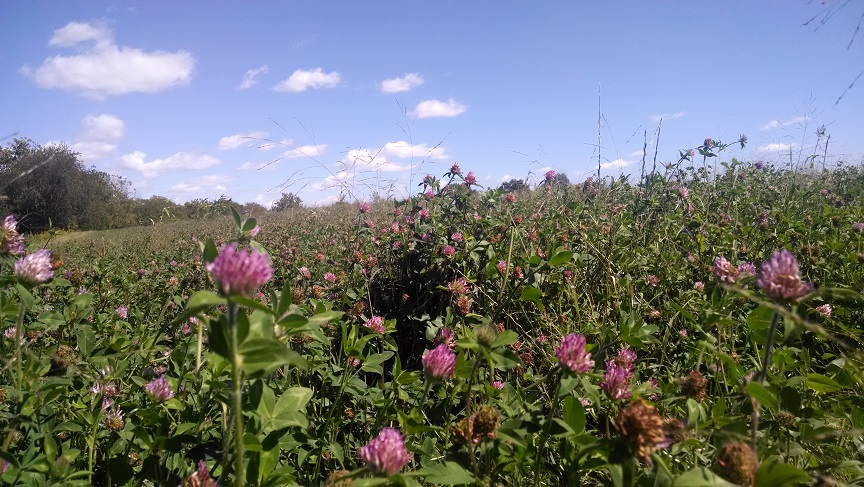
Hmmmm. Health. Vigor. Breedability. Hmmm. Seems like I know more than a few couples who are having fertility issues and football game commercials seem more concerned about the bedroom than my wife is. Better not go there. I’ll stick with my cows. Our soils are thin. Our fertility has been hauled off of the farm in beef and bones for…well…centuries. Hay? Gone. Grain? Gone. Calcium in milk? Well, I guess there has been some lime added to the farm. But looking at our cows, looking at our forages…not enough. My goodness! Fescue didn’t stand a chance where fertility was high. Clovers come in hard where we spread a little lime. It’s amazing. But we’re talking ongoing recovery. Ongoing. Still happening. It’s visible but soil health is not what it could be. So my cattle conception rates are not what they could be. My milk production is not what it could be. My animal health is not what it could be.

CloverField

Mable got sick this fall. In part because she is not well adapted to standing in freezing rain for three days straight. But in large part because I was not addressing her needs at a nutrition level. She is a HEAVY milk producer. Did you see I used all caps? HEAVY! She gives more so she needs more. And I failed her. In some way. But part of my failure was a failure to provide healthy soils. Things are getting better. There’s a great coating of manure on the pasture where the cattle have strip grazed. I have a plan to apply lime. We have a feedlot full of manure, at least a foot deep, from years of prior cattle. These are the blocks that will build future health.

Bromfield talks about how important barnyard manure is to boosting organic matter and soil fertility. In fact, you need the organic matter to make nutrients bioavailable…to harbor life forms that will concentrate and accumulate what you need for later. And it’s happening. But too slowly.

I need to feed health. To my family. To my cattle. To my soil. If I get the soil right, the rest is covered.

Take Home Messages:

I don’t know what else I need to say. I think that’s the take home message for the entire book. Make the soil healthy. Feed health. Done.


World War I: The Rest of the Story and How It Affects You Today by Richard Maybury

This is one of the Uncle Eric books. Never heard of them? Well, let me change your life. You can start reading these anywhere but do yourself a favor and read Whatever Happened to Penny Candy?. Our kids are reading through these books as part of our home school and I am reading with them. I strongly encourage you to read these books. Books should challenge and change the reader. These are no exception. Let me give you an example from chapter 17. These books are written with the voice of an uncle writing letters to his nephew.

Chris, sometimes Americans are told they must send their sons and daughters to war to protect our access to oil sold by other nations. This oil is regarded as a “vital interest” and is, therefore, thought to be worth American lives.

Rarely does anyone ask the question, how much blood are you willing to pay for a barrel of oil, and are you willing to pay with your own blood or only with the blood of others?

Besides, if a regime that hates the West captures an oil field, what are they going to do with the oil, drink it?

They can get little benefit from it unless they sell it.

They might somehow charge a higher price, but the question then becomes, are you willing to die to keep the price of gasoline down?

Did you get upset and stop reading that? Why are you upset? Isn’t that what books are supposed to do?

Maybe you’ll like this one better:

When historians examine wars, they rarely look at the people who found ways to stay out of them. To me this is strange. I think one of the most important lessons that history should teach is how to stay out of wars. What skill could be more valuable?

I know conflict resolution is high on our list of things to teach our children. They already know how to fight each other. They have to learn to live and work together. And that’s hard. Why is it any different at a national level?

Keeping this review short, this is a book you can read in an afternoon but you will revisit later. The information presented will need to percolate over time. And it comes with a sprinkling of H. L. Mencken quotes. I love H. L. Mencken quotes. For example:

Democracy is the theory that common people know what they want, and deserve to get it good and hard.

Or this one:

All government, in its essence, is a conspiracy against the superior man: its one permanent object is to oppress him and cripple him. If it be aristocratic in organization, then it seeks to protect the man who is superior only in law against the man who is superior in fact; if it be democratic, then it seeks to protect the man who is inferior in every way against both. One of its primary functions is to regiment men by force, to make them as much alike as possible and as dependent upon one another as possible, to search out and combat originality among them. All it can see in an original idea is potential change, and hence an invasion of its prerogatives. The most dangerous man to any government is the man who is able to think things out for himself, without regard to the prevailing superstitions and taboos. Almost inevitably he comes to the conclusion that the government he lives under is dishonest, insane and intolerable, and so, if he is romantic, he tries to change it. And even if he is not romantic personally he is very apt to spread discontent among those who are.

I encourage you to read Maybury. I also encourage you to read Mencken. Let me know how that turns out for you.


This Week in Media

This week’s The Beginning Farmer Show is pure gold. He presents an article that basically says there is no money in farming and you shouldn’t buy the lie. Ethan doesn’t respond to the article so much as just discuss it with the audience. Let me repeat the quotes he offers about how to make farming pay. First from You Can Farm by Joel Salatin:

Farming is not a “thing.” It is a life, and a business. Plenty of farmers are awaiting the magical “thing” to become profitable. We make all sorts of excuses to explain why the farm isn’t doing very well and why we need to drive in to town every day for that steady paycheck.

Well, that cuts to the bone. I find that I agree. Entirely. And I want to explain, I, Chris Jordan, in no way feel entitled to own a farm. I don’t deserve to be a farmer just because I want to be a farmer. I work my tookus off…seriously, there’s not much back there. I owe a quarter of a million dollars to a bank. My list of excuses for leaving the farm is one item long. The bank and the tax man need dollars…and lots of them.

But hang on a minute. I don’t feel entitled! Family farm or no, I’m here because Julie and I made some very serious sacrifices to make this happen…and continue to. And it may not work. You know that dream of living in the country and having a horse and a couple of chickens? A place of your own where you can get away from it all? Look more closely. Yours is the last house to have power restored when there is a power outage. The last road to get plowed during a snowstorm. Yours has the slowest internet imaginable and no cell coverage. You have to drive 30 minutes to buy toilet paper. It seems that there are a lot of new farmers who are quickly discouraged and cry out in a loud voice on the internet, “It’s not fair! I deserve to farm!”

No. It’s not fair. Businesses fail every day. Talented bakers flop because the whole town goes paleo. That’s life. At some point SQL Server database administrators will no longer be needed. I may script myself out of a job. Yup. Why would anyone think farming would be as easy as dreaming?

So the other quote Ethan shared was from The Contrary Farmer by Gene Logsdon.

…do not try to make your entire livelihood from the farm, at least not at first. Do like almost all our ancestors did, even in pioneer times: Pay for the land with a job not directly dependent on the farm’s income. Even a casual reading of rural history in the nineteenth and early twentieth century shows that almost every farmer financed his initial land purchases by earning money in a hundred different ways – from teaching to blacksmithing to carpentry to working as a hired hand.

A decade or more ago I read Fields Without Dreams by Victor Davis Hanson. He talked about the necessity of at least one family member working in town to keep the farm alive. Got that?

Salatin is an exceptional marketer. Exceptional. He gets out there and moves product. And he is also an exceptional worker. His hands are big and meaty and calloused.

Salatin

He gets it done and he gets it sold and keeps his nose to the grindstone. There are no vacations, no fancy cars and no off-farm work. BUT he didn’t have to acquire the initial land. His father acquired the land while working off-farm. That is no secret. But it is a key point that I think Logsdon makes clear. I have heard numerous ranchers say that cattle can either pay for the farm or cattle can pay you but cattle can’t do both. That may be a little different when cattle are $2.45 but what happens when cattle are $0.60?

So I continue to work in town.


Ethan also quoted from Gaining Ground by Forrest Pritchard, a book that has lingered on my bookshelf unread for at least 6 months. Maybe a year. That may be next week’s book.

I may also read Robinson Crusoe with the kids. I discuss marginal utility frequently and Crusoe economics is a great way to illustrate it…along with the notion that profit is measurable and savings are desirable even if you are alone in the world. If you haven’t heard of Crusoe economics previously, you’re welcome. Then again, it’s a little like taking the red pill…you can’t un-take it.


Well, you made it to the end. I appreciate that. I really do. Maybe I should break this into several Sunday posts rather than one lengthy marathon of a blog post. Let me know what you think.

Click here to see all entries in my reading journal.

Not Much Happenin’

We are hunkered down in the cold. In fact I am, perhaps, too hunkered…as in too hunkered in front of Minecraft. But that’s how it is. And I’m not the only one.

Dad put plastic around the chicken house. These old biddies shouldn’t even be alive at this point. There are 50 birds left laying maybe a dozen eggs each day and they all need to go to the stew pot. At this point we’ll probably just butcher them with the broilers in April. Anyway, they are toasty and warm sitting inside their shelter. They come out to eat, drink and to lay eggs. Otherwise, they are on their roosts.

SnowChicken

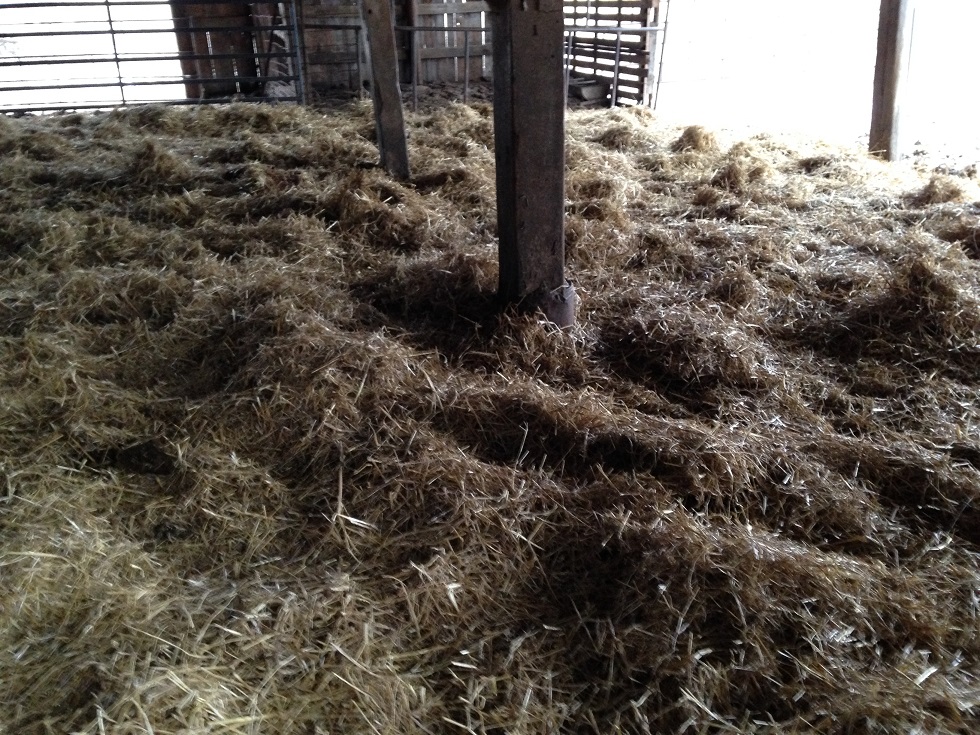
The cows are in a similar situation. We have been adding and adding to their bedding day by day. While they are out eating I stay busy adding bedding. I want them to be clean and warm. I also want to capture the nutrients as effectively as I can so I can apply them to my pastures in the summer. I think we paid $1.50 for the straw so each day they are in the barn costs me $4.50 in bedding. The fertilizer we are collecting is worth many times that amount. Plus the savings of labor and the health and comfort of my cows in the cold weather has value. The jerseys, specifically, are not as cold-hearty as one might like but the shorthorns don’t seem to mind the cold.

DeepBedding

Matron has wrote a nice post about deep bedding recently. I don’t have much to add except to say that we do the same thing in our greenhouse for the main layer flock. The bedding in the greenhouse is so deep we really just add water and feed at this point then collect the eggs. The living mass of bedding seems to be assimilating everything that falls on it and is releasing no odor. Pretty cool. No picture though.

Egg production is increasing rapidly now. It’s a little scary in the fall to see egg production drop and know customers are going to be disappointed. Now we have to gear back up, hoping those old customers will be interested again. Ugh. So hard.

So we carry hay. We shake out bedding. We fill water. We carry feed sacks. We gather, wash and pack eggs. This week we put chicks in the brooder so we spend a fair amount of energy making sure those babies are warm and well fed. But otherwise we just try to stay warm. It’s so cold the kids aren’t even sledding…much. Good times though. It’s going to get really busy soon. Rest while we can.

This weekend I’ll rest by parking my tookus on the couch with a small stack of books and I’ll tell you all about it on Sunday.

Hope you are staying warm.

Iowa and Back Again. A Chick Tale.

Iowa. Miles, Iowa.

11 hours. 520 miles. 5 degrees with strong winds. Nail in my tire.

It is cold. So cold we asked the hatchery not to ship our chicks to us. There is no way any of them would survive sitting outside on a post office dock in these temperatures. Not only did the hatchery agree, they ended up cancelling all of this week’s shipments.

So we drove. Miles, Iowa.

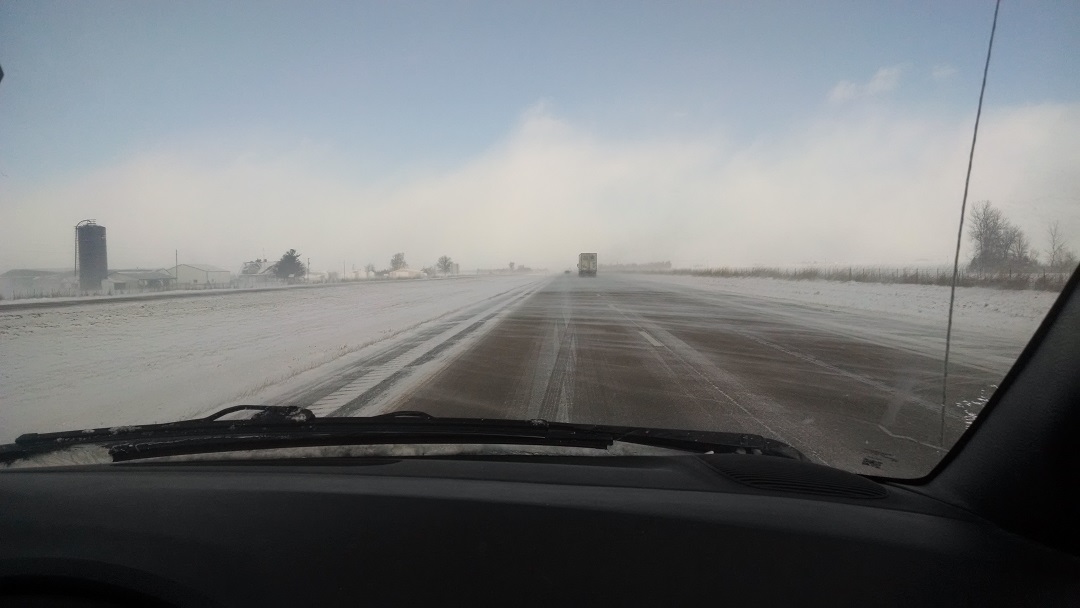
We left the house at 8:30 and dropped off three of the kids with Julie’s mom. Then we headed North. We had 6 inches of snow over the weekend and another inch overnight. The wind kicked up and made a mess of everything.

DrivingTo

On we drove. Semis were weaving in the road as gusts of wind pushed them to the side. I brought a stack of books to read but Julie asked me to drive the whole way.

Mile after endless mile of wind, snow, weaving trucks, limited visibility and a tire pressure warning light…losing 5 pounds of pressure each hour.

StillDrivingTo

Things got better as we continued North.

Four lanes turned to two. Two gravely lanes in rolling hills, unexpected stop signs. But the Iowa roads were well maintained and clear of snow. We meandered through. It felt like we drove to Kansas then to Nebraska then back across Iowa when, suddenly, we saw it. Schlecht Hatchery! The localest hatchery I can find.

Arrival

What a sight! Wow! A real building dedicated to hatching chicks, not just some crazy lady hatching birds in her living room! WHEW!

Our chicks were started on feed and water in a battery brooder. They were clean and warm and happy. In fact, that sentence describes the whole place. Schlecht hatchery was a clean and warm and happy place. She has capacity to hatch nearly 10,000 birds each week! And she nearly does!

I would have loved to spend more time visiting with Etta. We have spoken to her on the phone for years and never met. She is every bit as nice as she seems on the phone. But we have to get home and that tire isn’t going to air itself back up.

Speaking of air, the car was soon filled with that wonderful new chick smell. If you don’t know what that is, get some little chicks and you soon will.

Slightly different route on the way back, rather than take the interstate we just stuck with 67 the whole way…which turned out to be a 4-lane road most of the way, meandering through small towns. Some gas stations have free air available. Some charge $0.75. That’s better than walking home and $1.25 later we were in our driveway.

WesternIllinois

We were surprised to find one of the brooder tanks was still a little cold. I’m not entirely sure what was going on. Julie and I decided to put four lamps in one brooder and put half of the chicks in there. We took the other half of the chicks home with us in their shipping crates. This way we didn’t have all of our eggs in one basket. The chicks we delivered were doing well when we left them at 7:30. They were doing well when I checked them again at 9. We give them sugar water when they first arrive to get them off to a flying start and make sure feed is at floor level in several places.

Chicks

We will have to spread these chicks out in a week or two, adding a third and maybe a fourth tank to our brooder capacity. I really should just cover the floor with plywood and brood there but…well, this is where we are.

We will surely lose a few chicks. That’s just part of the deal. The long drive was awful but receiving a box of dead birds would be worse. We take a risk getting chicks this early in the year. But in normal years, they are well feathered out and ready to thrive on pasture just as things are greening up. Then they are in the freezer well before buffalo gnats emerge.

There is a little more I want to add in though. I could have stopped at an auto parts store and plugged my own tire. I had my coveralls and boots and tools with me just in case. But the wind chill was something like -30. So we tried option #2: Find a repair shop. Even armed with Google this proved impossible. On a Wednesday even. So we drove our slow leak home. I have concerns for a world that can’t maintain small, privately-owned garages in every town…or in any town.

At some point in our trip someone mistakenly said “Ohio” instead of “Iowa”. Well, I can’t let that go. We celebrated the error by listening to this song which was then stuck in my head all day. Kind of the theme song for the trip if you will. (Really just the chorus.)

One last addition. 6:52 the next morning, all chicks in the brooder are fine. By fine I mean alive, scattered about pecking and scratching, not barely hanging on, huddled under heat lamps. Now off to unpack the rest!