One Day of Pigs on Pasture

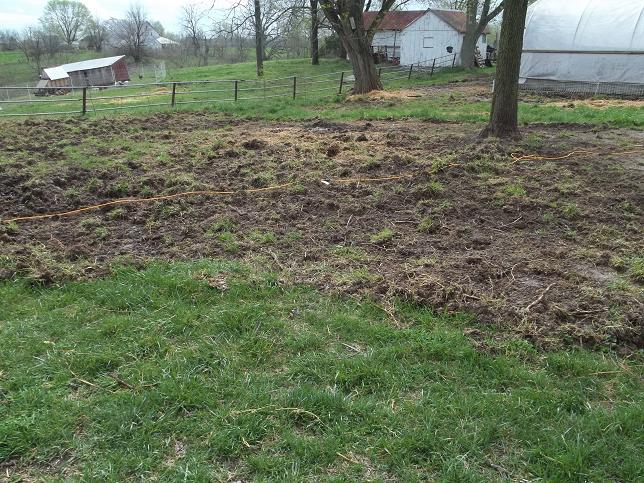
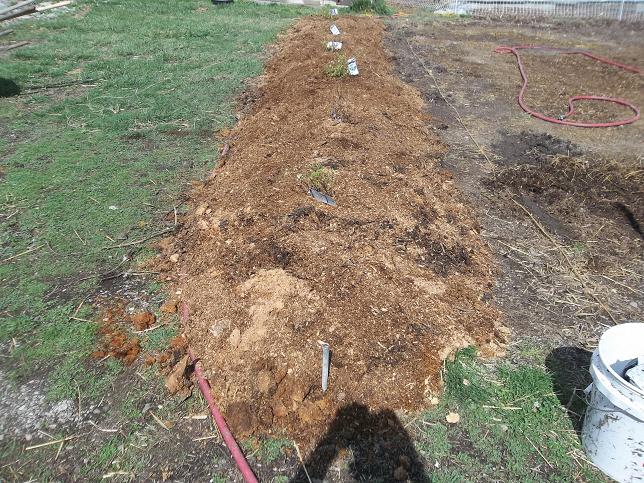
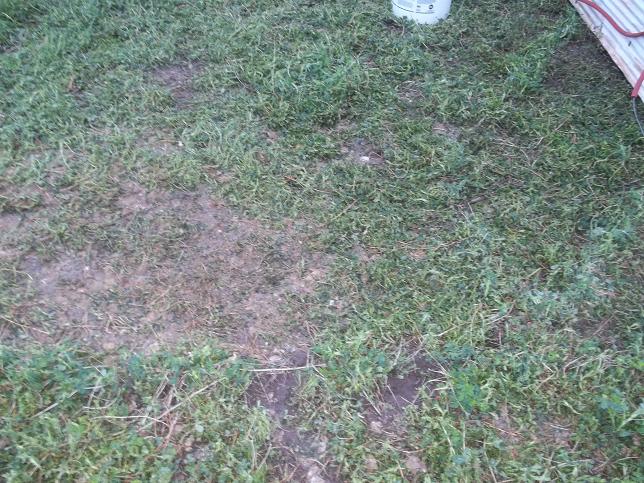
Yesterday this was carpeted in grass and splattered here and there with cow manure.  Today it’s another story.

The pictures don’t show it but it’s surprising how much grass the pigs eat when they first move.

They dug out a little nesting site and moved most of the straw to the side.  I added more straw.  Even if they don’t want it the pasture will benefit from it.

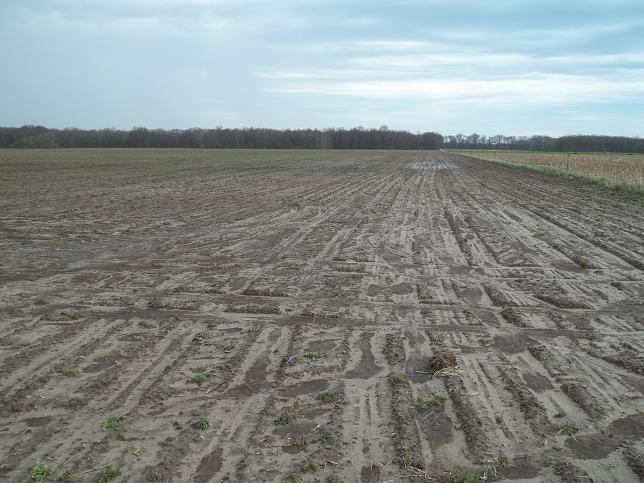
Here’s the pasture they came from.  They were here for three days.  It’s a wreck.  Looks like a war zone.  Don’t they do a good job?

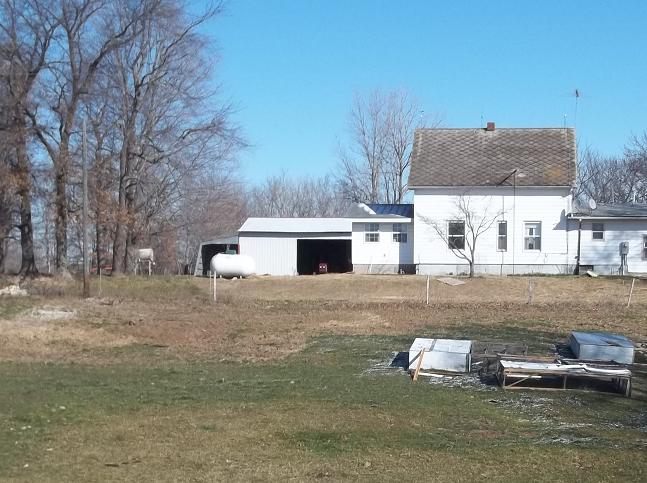
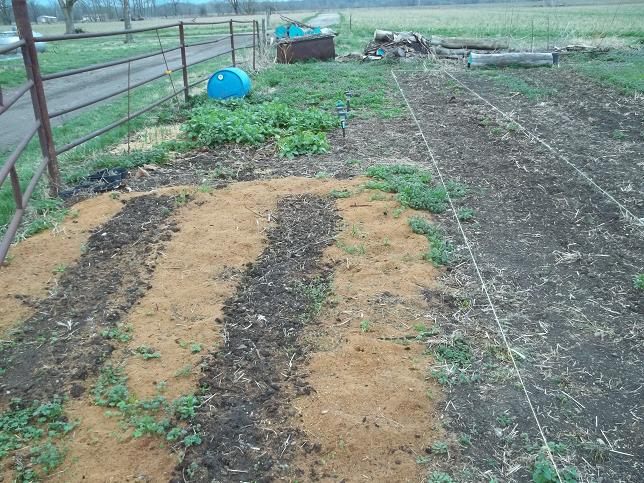
Like CrossFit, this is all about intensity and rest.  I may do a little raking and shoveling out there since it’s my yard but in a very short time the grass will come back thicker and healthier than ever before.  Here’s the pig pasture as of March 3rd.  It sat empty and bare all winter as the pigs were slaughtered in December and by December the hogs were creating some massive soil disturbance.  Obviously nothing would grow in the winter but things were in place for spring.

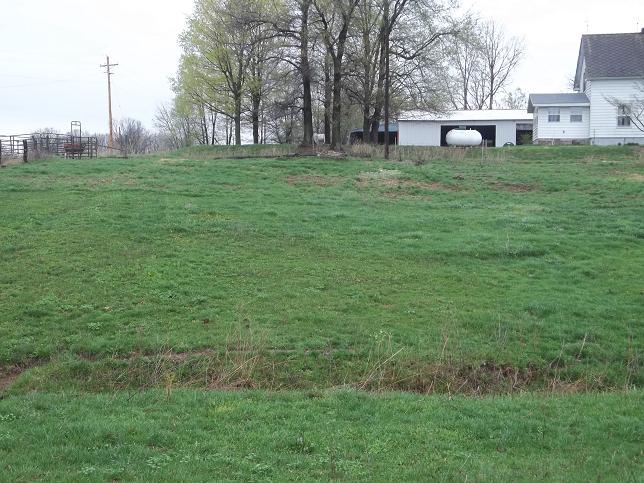
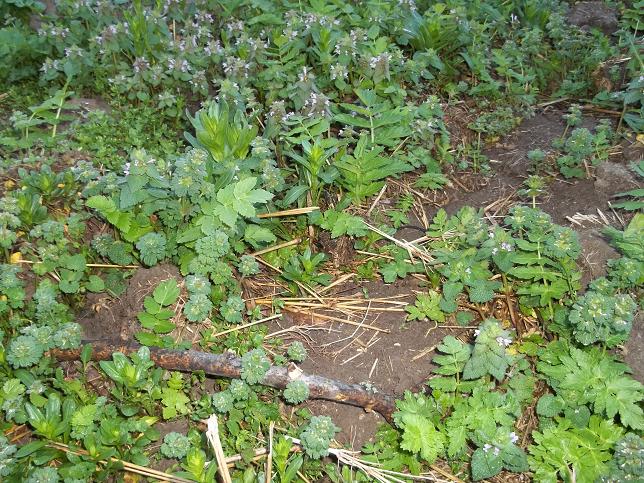
Here it is two weeks later.

It changed from barren to lush in short order.  Yes, there were things I could have done to cover the ground.  Maybe I should have put some straw out there.  But I didn’t.  I didn’t spread any seed.  I didn’t go over it with a harrow.  It just is what it is.  Recovery is rapid.  Nature hates a vacuum.  Things grow.  My only role is to coordinate the rest and disturbance cycles.  This area needs more rest.   Pigs aren’t allowed to return to the same square foot for at least a year.  But what a time they have while they are there!

Georgia’s Wall Part 2

I hauled 500 pounds of manure in eight feed sacks to put in the raised bed.  Initially, and before work, I just got four bags.  That didn’t go far enough but I was dodging raindrops and short on time.

Again, this is well-rotted horse manure.  Since the wife and oldest son are at the homeschooling expo in St. Louis, I took the three remaining kids with me over lunch to grab the rest of the manure.  Here they are on the trailer.

I dumped each bag then the oldest daughter spread them out in the bed while telling me how excited she is to get her flowers planted.  Yup.  It’s worth it.

After work we added a layer of composted leaves, chicken bedding and chicken offal.

Tomorrow we choreograph the pasture ballet and have a few appointments to keep so we won’t make much traction on this project.  Sunday when I clean out bedding under the rabbits I’ll add that to the top of the bed.  The plan is to have some full-sun annuals planted on Sunday.  Hopefully we’ll get a heavy rain in the next 24 hours to wash the nutrients all through the chips below and take some of the nitrogen out of the composted horse manure.  If not, I think we’ll be fine.  There should be a fair amount of residual warmth coming from the greenhouse and the composting action in the bed so we shouldn’t have problems if we get a light frost.  If winter comes for one last hurrah I’ll have to cover the plants.

Georgia’s Wall Part 1

Georgia was a friend of mine before I married her granddaughter.  I helped her build a water garden just outside her door and she kept the door open so she could hear the frogs.  Georgia passed recently.  She spent years collecting things…lots of things.  She had a nice pile of used cinder blocks she had collected from somewhere so I built a retaining wall out of them.

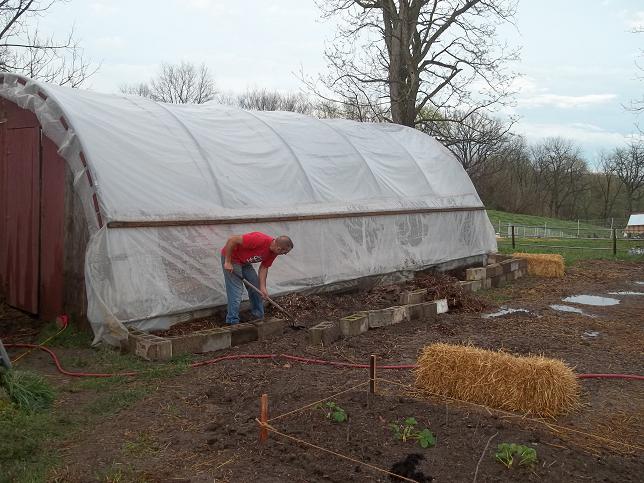
The South face of the greenhouse seems like a nice place for some added beauty and my oldest daughter wants a flower bed.  I started by trying to level out some of the ruts and wallows the pigs left behind.  Then I put down a row of blocks.

If I was making a taller wall I would need to do some foundation work but with just two blocks I’m not too worried.  If it falls over we’ll just stand it back up.  I’m not concerned about level since I’m using broken, partial, used blocks from all over the place.

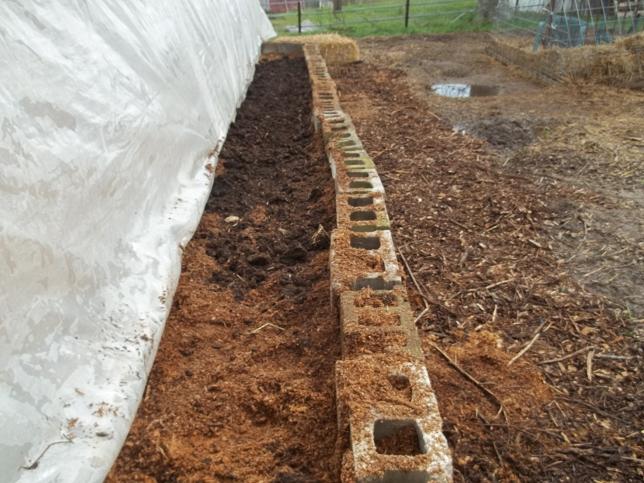
I put in a layer of course wood chips and sticks equal to the height of the first row of bricks.  There is also a layer of large chunks of bark and odd firewood scraps in the bottom of the pile.  Then I finished stacking the second course of blocks.  To be completely honest, my lovely bride of 15 years stacked many of the blocks.

With the wood chips nicely leveled out we added in 3 or so inches of sawdust.  This brought our level to the mid-point of the second block.  Both boys were busy keeping the wheelbarrow employed while the rest of us leveled, raked, shoveled and lifted.  This job took all 12 hands.

We were an hour into the project and it was time for dinner.  The wall is not straight, the blocks are not perfectly level, the raised bed barely qualifies as a hugelkultur bed but the flowers should be happy.  Tomorrow we’ll add a layer of compost, composted horse manure and who knows what else topped off with a layer of straw.  I also have to find a use for a number of half blocks that are still on the trailer.

Bringing Home the Bacon

I can’t imagine how we lived before pigs.  My sister, living in town, joked that she thinks she can get away with owning a pot-bellied pig.  I think it’s an excellent idea.  They root, they eat, they manure and they don’t ask much of their keeper.  They do ask for proper management; keep them safe, well-fed, move them away from their manure regularly and treat them well.  Let the pig do what pigs are built to do.

I have yet to see any living thing that will cause soil disturbance like a grown pig.  They will dig up moles, rhizomes, worms, grubs and who knows what else.  They dig just for the pleasure of digging.  That digging, left unchecked, can create an area that looks like the surface of the moon.  However, judicious use of pig noses can renovate pastures and make a positive ecological change to the landscape.

Everything we waste can be pre-composted through our pigs.  Garden wastes can go to pigs, feed spoiled in the chick brooder, cow manure, mice from our traps…they will eat it all.  In the winter that pre-composted material goes right to the compost pile where it helps maintain a high temperature for our thermophilic composting process.  Whatever we miss is churned with the soil and bedding into the garden.

Our most recent batch are ruptures from a production floor.   Just a quick note, a “rupture” is a pig with a hernia.  Often the hernia is expressed in the belly of a female or the scrotum of a male.  In both men and in hogs, the tendency toward a hernia is genetic.  It is generally believed there isn’t a way to manage the hernia short of surgery.  I don’t in any way wish to demean the farmers I bought the pigs from.  They are close friends who run a highly-efficient formula of inputs and outputs on a schedule.  Not all animals qualify for their program.  I picked up those that were genetically disqualified.

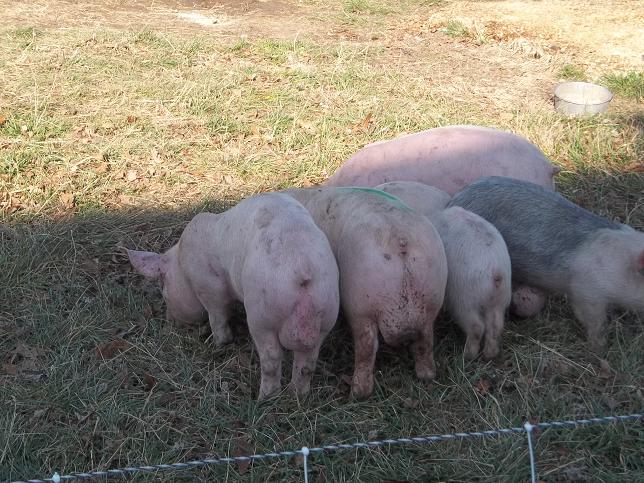
These pigs arrived in mid-December.  Please notice the three ruptured males.  Also notice they are packed in tightly together though they have room to run.  This shot was taken within 15 minutes of the first time their feet ever hit dirt.  Chew on that for a moment.  40-60# hogs that have never touched dirt and have never been more than a few inches apart.  Finally, there are two runts in there.  They never did grow for us but tasted great.

In the back is a ruptured female with a massive belly rupture.  We call her Thing1.  Here’s a better (but not great) shot of her:

Here’s another picture of the blue pig above.  I want you to be sure I’m showing you the same batch of pigs across this post.

Click on the image to see his large rupture.  I wish I had a better shot but I don’t. The rupture is within his …male anatomy.  It bulged in three distinct lobes and a portion was raw from where it rubbed the ground.  We thought we were going to have to put him down right away.  Here is the same pig at the end of February.

Where did it go?  In fact, where did any of the ruptures go?

These pigs were scheduled to be executed because of their ruptures.  They would not have survived on the floor in their condition.  I brought them home, switched them to Fertrell feed (high in pro-biotics) fed them twice daily plus a few scraps and gave them room to run in the sunshine and fresh air.  Their gut emptied between feedings.  They burned energy running, rooting, fighting and playing.  No antibiotics, medications or belt straps involved.  Just a change in management.

This winter we just parked them on the new garden and hauled manure away daily, using them to till the soil and work in organic material.  In the spring, summer, and fall we move 3-4 pigs to a fresh 25×25 area every third or fourth day using pig quick fence from Premiere 1 Supplies.  The fencing hugs the contours well, is visible to the livestock and everybody has a healthy respect for it.

Keeping a hog around the farm or house is a great way to boost fertility, create disturbance, pre-compost wastes and feed the family but proper management is the key to health.

One final note, if you smell the pigs you need to add carbon.  Pigs don’t smell, bad managers do.

Movement

In a perfect world I would move my animals every day.  I would prefer to let them just eat fresh salad every day and escape their manure.  Since I have a town job we just don’t have the time.  The broilers get fresh alfalfa every morning, the cows get fresh grass every morning, everything else moves Wednesday and Saturday.  Again, this is not ideal but we just have to do the best we can.

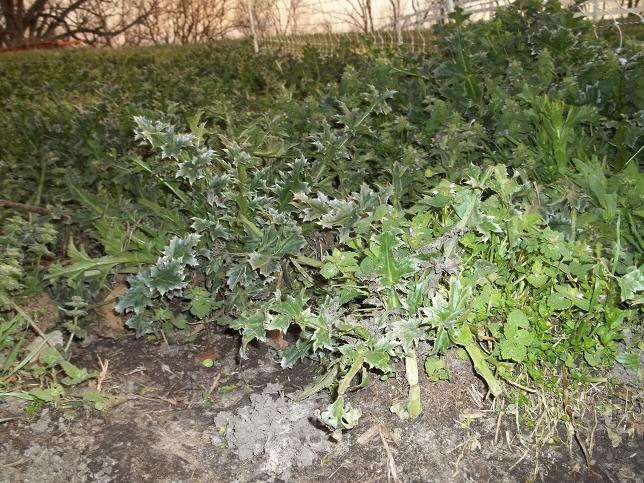
What am I accomplishing with all this rotation?  I’m knocking back the weeds in the pasture in an effort to give the grass a better start.  What weeds?  These weeds.

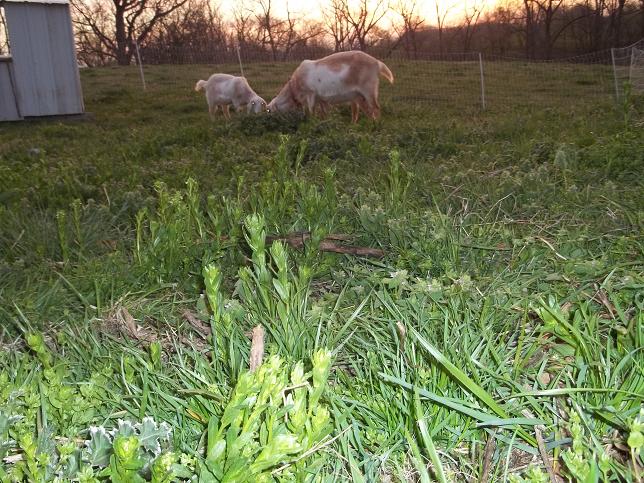
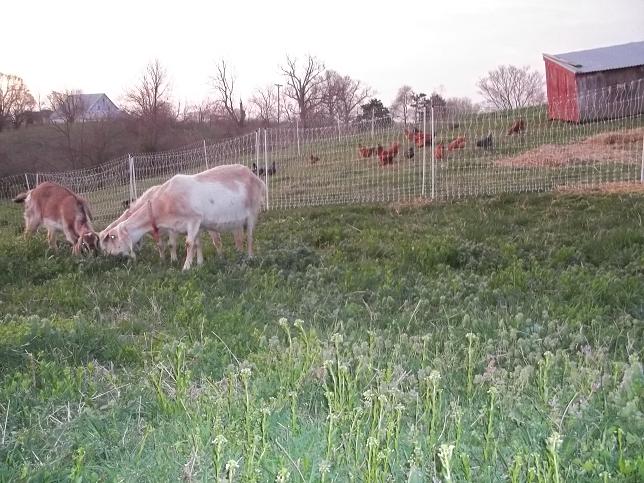
Here’s a shot across the pasture as the goats enjoy breakfast.

You can see it’s a weedy mess.  Have we got biodiversity or what?  My pictures don’t capture it but there are any number of elm, hedge, locust saplings as well as multiflora rose coming up in the pasture.  The goats put an end to them all.

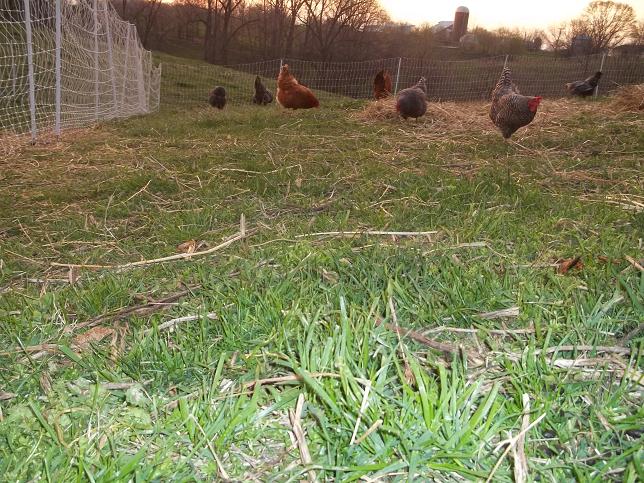
We follow the goats with chickens.  They do a good job cleaning things up, scratching through dropped hay, aerating the soil, eating bugs and adding more manure.  Here the chickens have been turned out where the goats were 5 minutes ago.

Let’s go in for a better look at the pasture I just turned chickens into.  You can see the goats were here.

The birds are working hard.

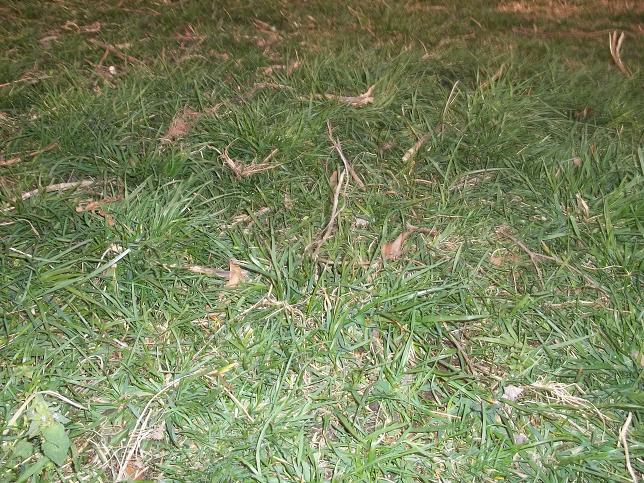
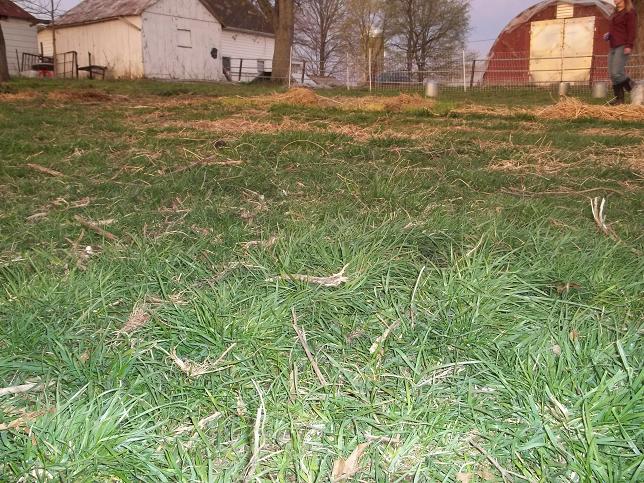
The goats worked their magic but you can see there are still some weeds they left behind.  The chickens will clean that up.  Let’s take a look at the pasture the chickens just moved out of.

Very few weeds left.

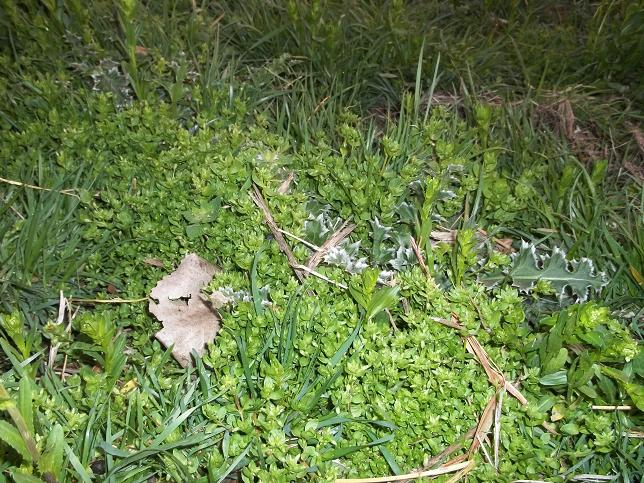
But, under the maple and walnut trees there is very little grass.  In fact, it’s mostly chickweed.  You can see a distinct line in the chickweed where the fence prevented the chickens from grazing.

Nobody wants to touch the thistle but the chickens will scratch around and under it.  I’m going to have to chop these manually.  Ugh…

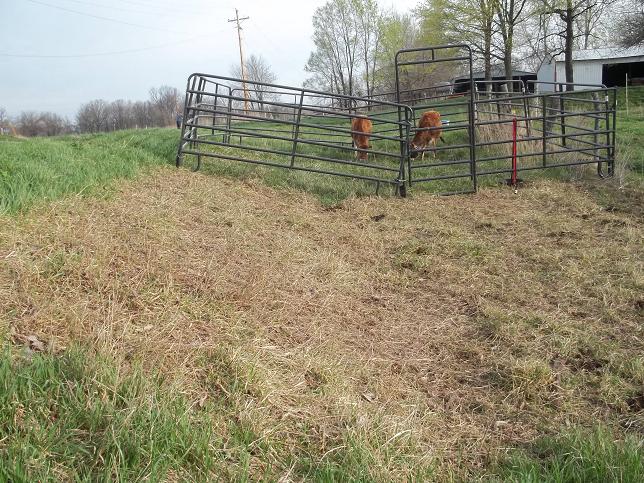
Finally, you should see what the cows do to a pasture in about 18 hours.  These are two 600# heifers grazing 10′ from the road in a place the highway department mowed late last summer.  They are contained in a 24×24 corral so we don’t chance them getting into the road.

Every inch is manure, hoof prints or trampled carbon.  I put a lot of pressure on this spot trying to beat back the brush and increase fertility, diversity and quality.  Once I can graze my cows with the goats we’ll really fix some carbon.

The pigs haven’t been moved yet today.  I’m a little undecided about what section of the pasture I want them to renovate.  Also, I have to get to work and it’s almost 8 already.

Mowing the grass

Ah, it’s that time of year again.  The birds are chirping, the toads are calling and you can’t hear any of it because the lawn mowers are running.

We opt out.  I’m not even sure where my lawn mower is.  I think it’s in the shed.  Maybe.  We used it on the 4th of July last year but not since.  I don’t mind people mowing, it’s just not for me.  It’s too noisy and I have better things to do.  Further, it all seems Rube Goldberg to me; pump oil from Ottawa, haul it to Texas, refine it, haul it to St. Louis, put it in a machine from China, cut the grass off and watch it grow back again.  No thanks.

Cows kinda like mowing grass.  Take this model here:

This model (a 2011) was originally made on a channel island called Jersey but this specific one was built just up the road.  There’s no patent protection preventing you from making your own, you just need seed stock.  Not only does it cut the grass, it fertilizes for you, tromps weeds down, aerates the soil, produces milk (unheard of in a lawn mower) and can reproduce itself.  That’s right, it’s a walking lawn mower factory!  Further it requires zero gas, just water.  Now, it doesn’t come with a manual but there are some things you should know.

1.  It MUST mow or it will die and death is an unrecoverable condition for this type of machine.  That said, death is not always an unwelcome condition for a mower.  This is a good time to note that this type of mower tastes better than others.

2.  It is better if you set things up so you only request that it mow as much grass as it can in a day and that you allow it to mow a new place every day, not returning to the first location for 90-100 days.  This not only keeps the machine busy but keeps it in good working order.  Further, you will have more and thicker grass than you have ever had before, far thicker than that of your neighbors.

3.  If managed correctly, you will lessen the need to store up grass for it to mow during the winter months.  In the picture above, the nearer model is eating fescue that has been standing since August.

4.  If you have a large amount of grass to mow each year you may need more than one mower.  This is a favorable condition.

5.  If you have a small amount of grass you may want to consider sharing mowers between neighbors.  It may also be a good idea to split the milk it will produce.  Alternatively, you may consider a smaller mower called a “sheep”.  These also reproduce, make milk and fertilize, though in far smaller quantities.

NOTE:  Please don’t confuse a goat with a lawn mower.  The goat is more like a weed eater.

Potato Time

You’ll hear conflicting opinions from old-timers concerning potato planting time.

“Plant potatoes on St. Patrick’s Day and they’ll all rot in the ground or have their tops frosted!”

“Always plant potatoes on St. Patrick’s Day!”

Well, if my cousin thinks it’s wise to plant corn on St. Patrick’s Day (at least a month early), I can’t hide behind my calendar.

It’s time to plant.  So, as mentioned in a previous post, I hammered in stakes and defined a 4′ wide bed with baler twine.  Here’s a shot of the bed:

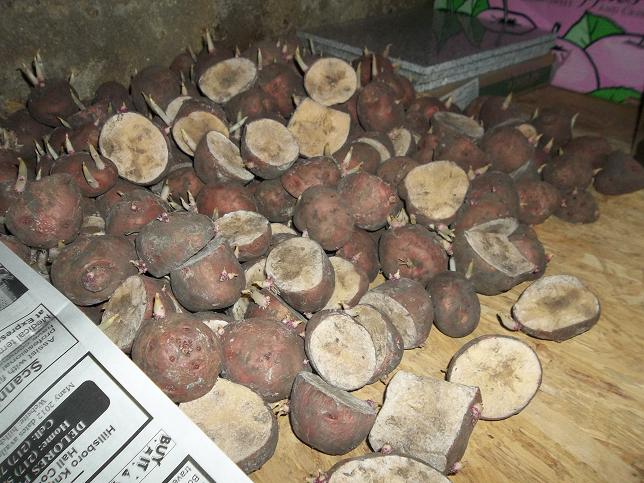
I also cut and cured my potatoes in the basement.  I did this two different ways.  I simply cut some and placed them in a cardboard box, others I spread on a shelf in the basement and covered them with newspaper.  Here are the pontiacs as I weighed and cut them.  Anything over 4 ounces was cut in half, over 7.5 ounces was cut twice.  Make sure there are still two eyes on anything you cut.

Here they are two weeks later, ready to plant:

The cut and cure concept is not necessary, it’s just something you can do.  Just like the planting time above, ask any two gardeners about cutting and they’ll tell you two different answers.  Curing is the same.  We cut but did not cure last year’s potatoes and they did fine.  My sister didn’t cut anything and her potatoes will be fine.  I piled some in a box and they sprouted perfectly.  I sprouted some on a shelf and they sprouted perfectly.  The potato is very forgiving.  Garden as desired.

We are big fans of “How to grow more vegetables than you ever thought possible on less land than you can imagine“.  It is a book on biointensive gardening that we have had a lot of success with and was a gift from my sister years ago.  I have never grown potatoes using their method so I’m kind of taking a chance.
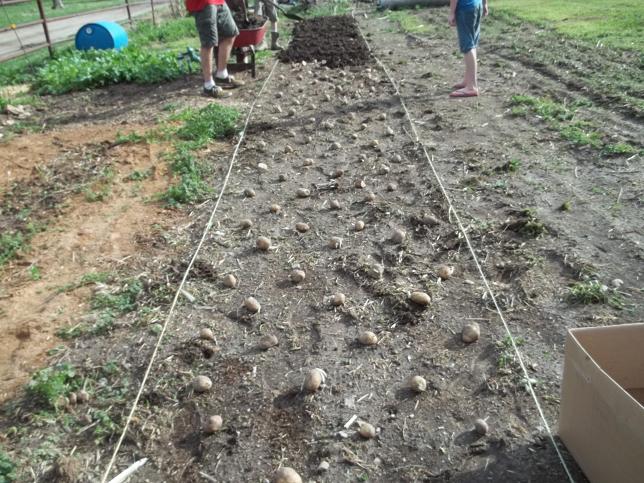
The basic idea is, you plant to the minimum spacing in hexagons making a pattern that shades out the weeds.  I have an easier time visualizing equilateral triangles but you get the idea.

Here is how it looks as we were planting using a 9″ spacing.  I have used various triangle templates when making holes to plant our garden but when making rows for my potatoes, good enough seemed good enough.  The rows aren’t as precise as they could be but the green stuff will grow anyway.

We have always planted straight rows of potatoes and hilled the rows.  This time we’ll just shovel on manure or pile on straw across the entire 4′ wide row, being careful not to knock down the tops.  I hope this works.

As you can see, we aren’t digging the potatoes in.  We are placing them on top of worked ground.  Then we cover them with a few inches of composted horse manure.  Most people with horses have horse manure to spare.

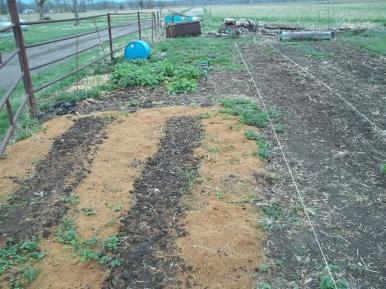
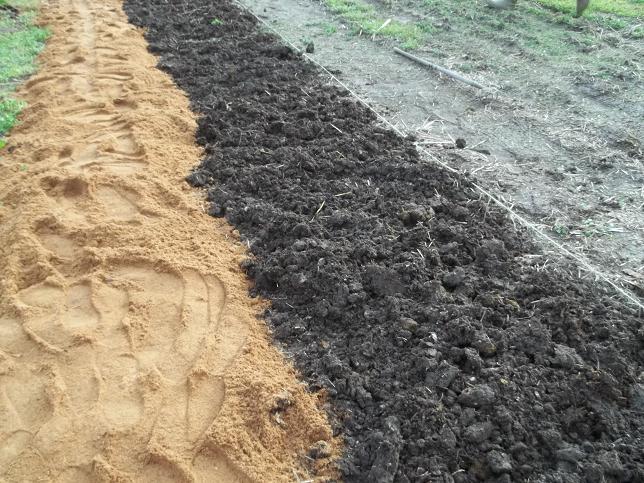
Here is the finished row.  We got tired of constantly shoveling manure so we broke up the monotony by shoveling sawdust for our path.  The sawdust makes a good weed barrier and rots quickly.

 As the potatoes come up we will continue to maintain the bed.  Look for updates as they grow.

 Sister added straw to the top of the row but I’m chosing not to.  The dark surface of the horse manure should warm the potatoes in case it chills.  I may regret the decision.  Garden as you go, take notes, do better next time.

Planting Blueberries

For years we have purchased blueberries from some friends, Mark and Kelly Smith.  This year we thought we should put in a row of our own and see how it goes.  With luck and in time we may be blueberry independent.  We had 2 inches of rain the night before so working on mulch was going to be the only work I could accomplish in the morning.

Now, I know blueberries in central Illinois may not qualify as sustainable as our soil is anything but acidic.  They are something of a guilty pleasure.  I’ll have to work to keep the acidity up.  But we like them, they will provide a little color in the fall, and a windbreak for our garden.  Also, the line we are planting is at the very edge of the parking lot/driveway and will give us a clear border.

I began by laying out some lines that were square with the buildings.  Please note the recycled bailer twine.  I also had a 6″ deep line of aged wood chips and sawdust in place for the last week or so in preparation for planting.

Then I began digging.  I knew my grandpa collected rocks but I had no idea.  I plan to put up a post in the near future about making sure your short-term goals (preventing your tractor from getting stuck) won’t be in the way of future generations…considering the consequences of your vision.


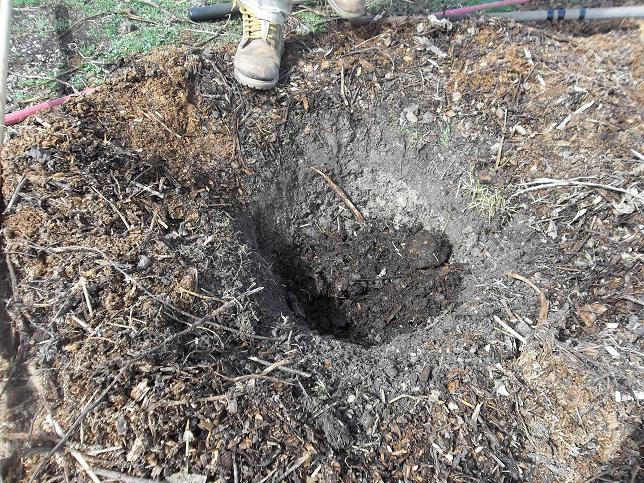
The goal is to dig a hole 1 foot deep and 2.5 feet in diameter.  I stopped mining rock before I got to my goal on the last hole..

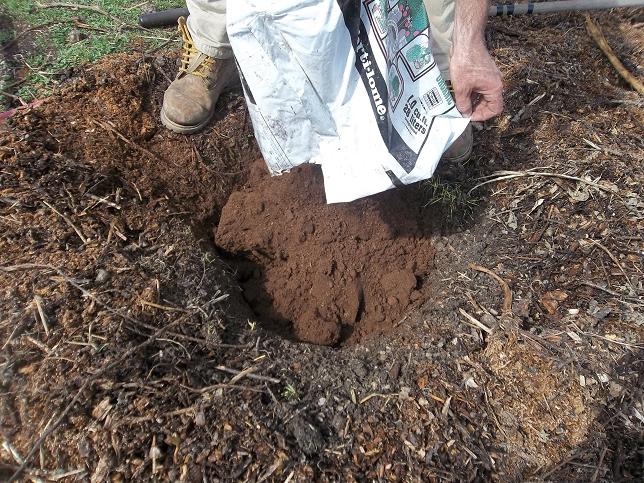
Because I took so much rock out I had very little soil to put back into the hole.  I put in a mix of several things to give my plants a good start.  First I put in a few shovels full of unsifted compost.

Then I added in about half a bag of peat to bring up the acidity.  Now, if given the choice between peat and coco coir I would choose the coco coir but this is a special situation.  I bought a greenhouse from a nursery that was going out of business.  He also had a pallet of peat.  Rather than send the peat to the landfill I brought it home.  This isn’t a choice I make every day but I think, in this scenario, you understand.

Next I add a few shovels of rabbit manure mixed with sawdust.  I realize not everybody has rabbit manure but you have to understand, I don’t have soil in this hole.  I’m using the rabbit manure to replace the missing soil mass.  Bear with me here.  I’m not presenting an ultimate solution, I’m just trying to make lemonade.

Then I mix the components and add some water.

Now I replace my string, measure my space between plants (with a 4′ tool handle) and place my plant in the hole.

I’m still short on soil so I continue surrounding the plant with rabbit manure and top it all off with a bit of horse manure.  Yeah, I know…not everybody has horse manure laying around either.  I’m trying to bring up the acidity after mining out a bushel basket of limestone.

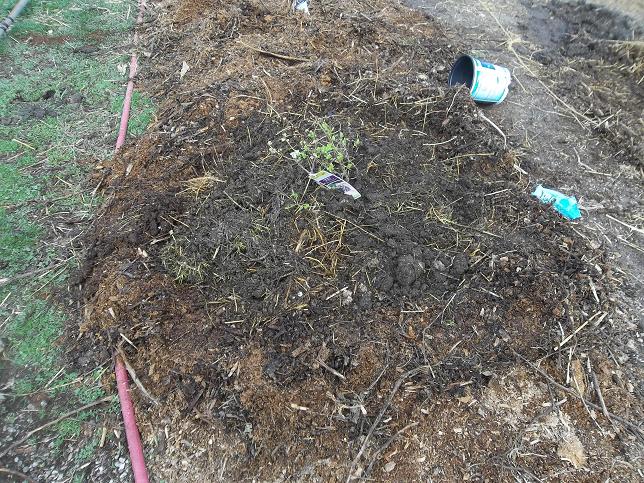
Finally, I cover the row with a fresh 4″ of composted sawdust.  As that sawdust breaks down it will provide a weed barrier and raise the acidity of my soil.  Also it will sponge up moisture and provide soil structure as blueberries want to be moist, not wet.

I have done a lot of work over a couple of hours to plant a measly six plants.  As they grow they’ll tell me what they need.  I may have to make some changes or at least a few tweaks before they really take off.  I don’t know.  It is the unknown unknowns (Thanks Talib) that make gardening exciting.

Special thanks to our friends Nathan and Aimee for lending a hand with the mulch.   They thought they were just coming for lunch

Dig the parsnips?

If I’m the country mouse, my sister is the city mouse.  She posted on her blog last week that Rodale says it’s time to dig out last year’s parsnips.  When would I do that?

What’s a parsnip?  It’s a white, carrot-looking thing with a green top.  I don’t have time to dig them so you’ll have to trust that the jagged leaves are the green top.  Please ignore the henbit and horseweeds.

Let’s continue the tour.  The parsnips are next to the turnips.  I’m working on feeding the turnips to the ducks and chicks every day but it seems like there is no end to the turnips.

We’re getting there.  Turnips are next to the peas that are just starting to come up.

Here’s the whole row.  You can see I am ready to plant potatoes tomorrow!

So, OK J.I.  I’ll try to dig the parsnips.  Soon.  Maybe.

Time to make the chickens happy

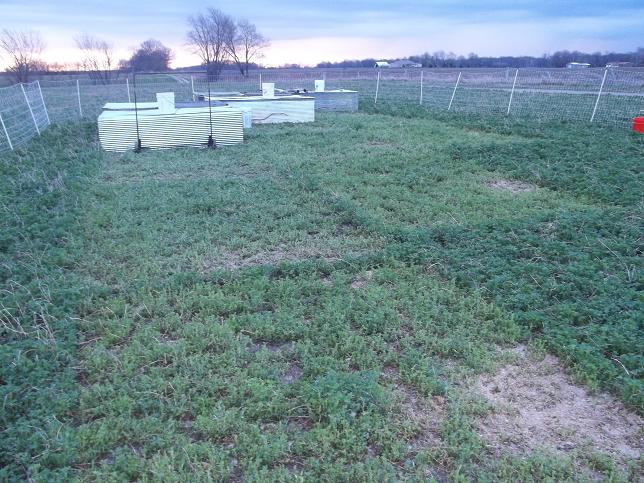
Like the guy who gets up early to make the doughnuts, I get up early to make the chickens happy.  Every morning they get clean sheets, fresh water and a nice breakfast of fresh greens and feed.  For reference, here is tomorrow’s alfalfa:

This is the alfalfa minutes after I moved the tractor.  See how much is stepped on and eaten?

This is the alfalfa they just left behind.  Can you see where the waterer was?  How about the edge of the tractor?

You can see where the tractor has been over the last few days.  You can also see where the chickens sleep.

Intense disturbance followed by rest should make a similarly visible positive difference when the plants fully recover.

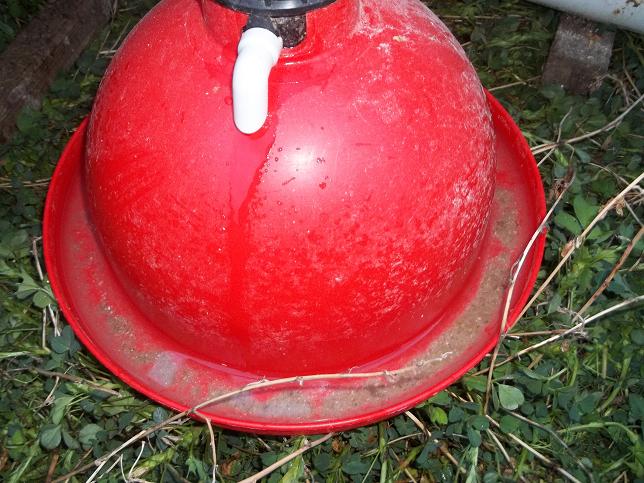
I should also point out that the waterers need nearly constant attention.  I keep a toilet brush with the tractors so I can scrub out the bell waterers several times/day.