So, How Hard Could it Be?

Welcome to 2013.  It’s time to order your chicks or make preparations for the feeder pigs you’ll buy in March and generally get ready for the growing season.  Soon the farm stores will offer chicks for sale and you’ll be tempted to finally take the leap.  This is the year.  We’re really going to do it!

Good for you!  But let’s approach this with a measure of sobriety.

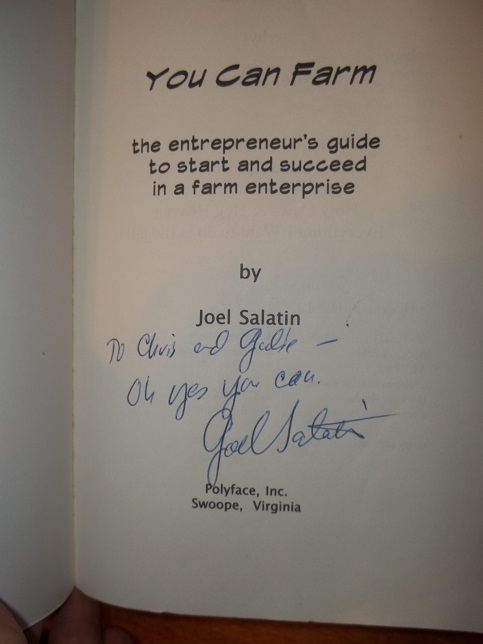
Joel Salatin signs copies of his book You Can Farm with “Oh, Yes you can!”
YouCanFarm

You can.

But you can also underestimate how hard it is going to be.  How hard it will always be.  You may become more efficient at keeping your little flock of birds and you may get faster at processing chickens…but that will just encourage you to raise more next time.  Your profit margin will always be low but you can increase your cash flow by moving more inventory.  So, you raise a few more.  You are better at the work and more efficient per unit of chicken but you are still DOING THE WORK!  It is never easy to roll out of bed at 2:00 in the morning, find your shoes, load your gun and run outside to kill whatever you can hear attacking your chickens this time…only to realize you forgot your pants…and it’s 20 degrees.  The next morning you will be tired.  This cycle can continue forever.  More production, more skill, more raccoons, more chickens, more customers, more packaging, more ice, more, more, more forever.  Forever.  Forever!

So, yes, you can.  You really can.  But it’s harder than you think.

When people ask me how to get started we try to sit them down for a serious conversation.  These same discussion is written in numerous farming books but I think it’s worth hitting the main points before moving on.  All of these are #1 but I have 5 number 1 rules.

1. Start small.  No, smaller than that.  If you want to raise chickens, raise as many as 50 for yourself.  Just see what all the fuss is about.  Ideally you’ll brood broilers late in summer about 7 weeks before your first frost.  Then you can butcher on a cool day when the flies aren’t flying and you’ll have all winter to consider your experience.  Or just skip the broilers and brood 6 layer chicks.  6 birds will give you far more eggs than you can eat.

2. Go slow.  Don’t start out with layers, broilers, pigs and a goat.  The learning curve is too steep.  If you feel you have a good handle on raising and selling broilers, maybe try your hand at a couple of pigs.  Once that is mastered, add the next thing.  Take your time.  Pay your dues.

3. Buy the least amount of equipment you can.  Try to get by with the knives you already have so long as they are sharp and not serrated.  Boil water on the stove to scald the birds.  If you want to be fancy, borrow a turkey fryer to heat your scald water.  Hand pluck the birds.  Don’t make a big investment in equipment until you absolutely, positively have to do it.  Even then, look for alternatives.  Any money you spend is money you can’t spend again.  Dad said to me this morning, “They don’t sell capital at Walmart.”

4. Don’t go it alone.  This should be listed first but I’m too lazy to re-sort them.  If you’re married you need your spouse on board.  If your spouse doesn’t want to use a bucket potty just give it up.  It’s not worth your marriage to go potty in a bucket.  It’s also not worth your marriage to bask in the glory of a compost pile full of blood and feathers.  If you’re not married, consider finding someone to help you.  Animals eat every day.  Even when you have the flu.

5. Read books.  Shoot your television, get on a first-name basis with the librarian (you’ll sell her chicken later), park your tookus in a comfy chair and start going through your book pile.  Goat Song gave a great example of this recently.

So what’s this all about?  A couple of things.  First, I was sad to read that our friends at Porter Pond Farm are hanging up their hats.  They worked hard, ate awesome food and fed their community.  But they worked hard.  They may have worked too hard.  Take a moment, follow the link and read their story.

There is a lot of temptation to mash the accelerator pedal of farm production.  “By golly, if 100 chickens and a cow are good then 2000 chickens and 10 cows will be great!  Heck, with 20,000 chickens and a 40-cow raw milk dairy we could ditch our day jobs…and we could do it in 3 years!”  Well, yes, you could…but I really don’t think you can.

The first thing you have to do is start.  You will never begin if you don’t begin.  You begin at the beginning.  But start slowly.  Don’t bite off more than you can chew.  Holy cow.  Let me give you a personal, non-farming analogy.  I tried my first Crossfit workout on 11-30-2005.  One heck of a workout.  I looked at the list of exercises (jump rope, jump to a platform, do a modified push-up and climb a rope) as many times as I can in 20 minutes.  No problem.  I’m young, strong and in shape.  I’ll probably knock out 8 or 10 rounds.  No problem.  I gave 100% for 20 minutes.  I was so wrong I even posted a comment on the site:

I honestly thought I was going to die.  Double unders are hard, but the burpees did me in.

First crossfit workout.  2 complete rounds, much tired.

I bit off more than I could chew.  Now, I was young, stupid and a total glutton for punishment so I came back for more.  And more.  But I backed way off on my intensity and my expectations and that paid off.  I was a bit of a fanatic for a few years there.  The intensity and discipline required to maintain that performance level ultimately proved more than I could maintain.  Because I realized my error early on and backed off for a while, sought coaching and took my time building skill I was able to achieve some real successes in CrossFit and make positive contributions to the community.

Back to farming, you have to start.  Read a book, raise a couple of pullets, whatever you do start doing and start having fun.  Playing Around was published in October.  It wasn’t my most popular post but, to me, it was one of the most important.  One of my key ideas in that post was the notion that I don’t want to do this alone.  I want my family on board with me.  Among other things, it triggered a response from a beginning farmer we met earlier in the year.  We spoke to him and his lovely bride over Skype one afternoon, making the suggestions listed above (including the reference to the humanure toilet).  In his eagerness to get rolling, he didn’t listen to me.  He raised something like 300 broilers right out of the gate, bought all new Featherman equipment and included pigs in his operation…and, by my reckoning, was amazingly successful.  But, after reading my post about making time to play he responded to me:

“I don’t want to farm alone.”  Chris, that is something I am starting to understand at the end of my first production season.  All my past farming experiences and internships had been a team effort.  This season it was primarily me, and something was lost.  There are other concerns, but recently I stopped having fun and I am ready to call this a learning experience and move on.  I have so much passion for natural, responsible, sustainable farming–I had to experience it.  The season was successful, all the animals turned out great without incident.  I am proud of that, but I have lost my vision to continue.  Maybe I went too fast and burnt out.  Maybe I am unwilling to make the family and financial sacrifices necessary to get through the rough curve of starting a small farm business.  Maybe I finally found a challenge too big for me to handle.  Maybe my joy is producing food for my family and friends, not producing food for the masses as a career.  My relationship with my wife has become closer than ever over this past season as we’ve struggled with this issue.  My wife’s strength and commitment to me is amazing.  I felt the need to share my recent thoughts with you after reading your blog this morning.  I have a deep respect for everything you are working towards.

I responded, as I often do, with too many words.  Just as I told him to slow down getting in, I now wanted him to slow down getting out.  Here are several replies edited into one:

…go back and read Salatin.  I can’t figure out which book but somewhere he says his first year they raised 450 broilers and gave half of them away.  The second year they raised 300 and didn’t have enough.  In PPP he says he raised 1,000 birds his fourth year.

This is hard stuff.  I completely understand what you wrote but don’t let a season of discouragement prevent you from pushing forward.  Sometimes it’s hard.  I have probably 60 dozen eggs I can’t sell right now.  Soon I’ll solve that problem [ed: I sold them].  Who knows what is next.  If it wasn’t farming something else would ruffle my feathers.  I’m grateful to be in a position where too much food is my worst problem.

If it isn’t for your wife, it isn’t for you.  But if you and she are willing but discouraged, stay the course.

He replied a few more times giving additional detail (again with a little editing):

 I have at least 100 beautiful chickens down in the freezer.  Thankfully they all fit, but I really overestimated my market.  I’m really disappointed actually.  People know about my birds, over 100 people alone on facebook, and I’ve given away over 20 just as samples.  Even most of our family won’t drive out to get some great chicken.  I just didn’t get enough positive feedback this season to feed my vision.  And after studying my numbers closer, and after 3 weekends of serious processing,  I can’t ever see reaching 10,000 birds or anywhere even close, not the processing of or the selling of.  I am disappointed that I may not be able to make it work, especially when I have neighbor kids who come over just to marvel at the pigs and chickens–and these are rural kids.  Sad that they’ve never seen a pig up close before.  But i can’t ask my wife to sacrifice what it would take for me to commit to this in a way where it could work.  It’s not her dream.  Well, you can see I’m really tore up about this, just need to get it out.  Thanks again for listening.

We responded saying 100 extra chickens was not a problem.  He could host some friends for Sunday afternoon football and go through 100 chickens in no time.  Also they start really selling closer to Christmas.  He replied:

You are right about 100 chickens not being a big deal.  We just processed our final 100 broilers last weekend, and I really didn’t think they would all fit.  Plus I need space for at least half a pig in a few weeks.  The stress of the whole situation is causing me to blow these little issues into big ones.  I’ve read and re-read Salatin.  I wish I would have taken his advice and your advice and started much smaller.  But I was way too excited.  That’s why I am disappointed.  I thought I would enjoy every second of this and spring out of bed every morning excited to be producing amazing food.  Over the season I lost something.

This is not uncommon.  Salatin talks about lending out his old plucker to farmers just getting started.  They quickly decide it’s too much work, return the plucker to Salatin and give him their customers…lol.  If you are about to take the leap please, please start small.  Ease your way into it.  Test the waters.  If possible, find customers first.  But whatever you do, dream big, don’t get discouraged and move slowly.  If there is someone else with you at the beginning, make sure they are with you at the end.

I spoke to and emailed him earlier today.  He responded with this:

Chris, it was good to hear from you today.  I did have an amazing summer, learned a ton, got in great shape, and ate some of the best food I’ve ever tasted.  I’m not exactly sure what’s next, but I hope to be processing a few chickens where ever we go.

Take your time.  Move slowly.  Seek frugality.  Relationships are more important than chickens.  Keep learning.  If you apply these ideas you’ll have fun and stick with it…for a while anyway.
Anything…not Everything

Oh, I could take this post a lot of directions.  A lot of directions.  I’ll start with generalizations then make this about farming at the end.  I pinkie swear.

We are very fortunate.  Very blessed.  I have always had at least one job.  In college I worked at McDonalds (everybody should work food service!), polished floors overnight at WalMart, mowed grass, worked in the labs and greenhouses on campus, did an independent research project, worked construction and did odd jobs anywhere I could including painting little toy soldiers for some hobby shop in Indiana.  Having hit the bottom of our checkbook several times and being too proud to ask our parents for cash, we learned quickly to spend less than we make.  We play strong defense with our cash.  We are a one-car, no cable or satellite or TV at all family who don’t send their kids to karate, ballet, gymnastics, swim team, baseball or even scouts.  We budget carefully making sure we distinguish between wants and needs.  It was only recently decided (after lengthy discussion) that a no-contract cell phone was a need.

And now, after years of sacrifice, I am at a place in life now where, thanks to the miracle of credit and a near-perfect credit score, I could buy anything I wanted.

Anything I want.  But not everything I want.  I can’t afford everything I want.  I have to be selective.

Now, I already understood that completely without really giving it any thought.  In fact, it wasn’t until I heard my parents discussing a similar topic that I realized what it meant…how simple yet profound it is.

Let’s make a list.  First, I need to buy another 40 acres…and soon.  I need cattle to help generate revenue and keep the grass mowed and the pasture fertilized.  I need a new perimeter fence to keep the cattle contained when a deer runs through the paddock fence.  A milking parlor would be nice.  OOH! and a bobcat!  Heck, an excavator and bulldozer would do wonders for the landscape and future water supply.  The barn needs some repair…well, quite a bit actually.  The yellow house needs…well, let’s just skip that.  My house needs to be skipped too.  The machine shed should be replaced.  A real garage would be nice.  Sure would be convenient to buy a few thousand trees instead of collecting and sprouting the nuts.  A walk-in freezer would be a life saver but would probably require a backup generator.  And once the farm starts shaping up wouldn’t it be nice to buy that piece of ground just across the fence?  Or a place to snow bird in Florida?  Or even just a second vehicle?

But we can’t do it all.  Even if we could, we shouldn’t do it all.  I have a limited amount of money and a very limited amount of time.  I have to get the most bang for my buck because I can’t have it all.  Each day I make decisions and live with the consequences.  There is no time for second guessing.  I just have to go.  When I make wrong choices I have to work extra hard to make those bad choices work out anyway.  There is no looking back.  I just have to do it…whatever it is.  If I could have everything…if I could do everything then I could do it right.  But I can’t.  I just do the best I can with what I have.

And that’s enough.

Who does the Heavy Lifting?

Who does the heavy lifting around here in the winter?

Not me I’m afraid.

Right now, a typical day for me is to get up at 5, read my Bible, check email, shower, shave, eat breakfast, get dressed and head off to work at 6:15.  I do my job sitting at a desk in a climate-controlled environment.  I’ll read the book du jour over my lunch, work a few more hours and arrive home again at around 6:15 PM.  Then I spend the evening reading to and playing with the kids and discussing what happened on the farm that day.  Once the kids are in bed, I may have to go outside in the dark and cold to get a new toilet bucket, tomorrow’s supply of firewood or some other chore but mostly I just park my tookus on the couch with a book in hand until bedtime.  I go days without seeing any animals.  Keep in mind, this is the winter routine, not the spring, summer or fall routine.  There is no tookus on the couch ten months of the year.

Who does the heavy lifting on the farm in the winter?

Not me.

My wife wakes up with me each day.  Today we each dared the other to get out of bed first.  She was the first up.  She made two attempts to light the fire in the stove before calling me in to try.  She walked the dog.  Twice.  She grabbed two frozen chickens out of the freezer and packed my cooler with the eggs and chickens for today’s orders.  Most of the time she cooks breakfast while I’m in the shower though today she didn’t.  We pray and kiss then she sends me into the cold, cruel world.  Off I go, to be the family breadwinner.  Making money in the city, working hard for my family.

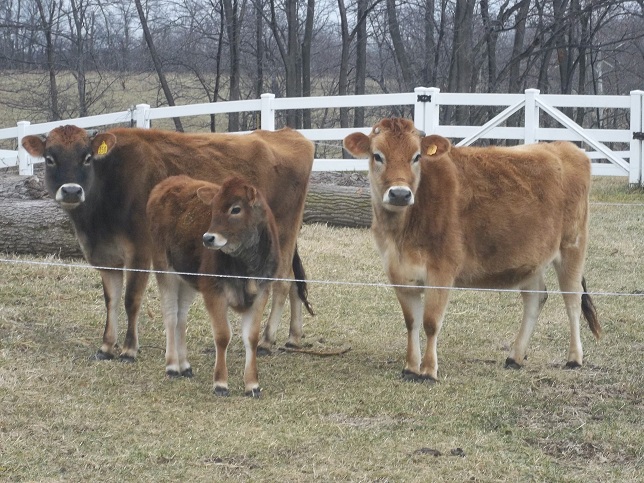
Cows

Somehow, while I’m gone the cows get milked, the pigs, chickens, ducks, goats and rabbits get fed and watered (not an easy feat when the high temperature is below freezing).  The kids are dressed, fed and educated.  Phones get answered, letters and packages get sent, dishes get washed, laundry gets folded, blog posts get written, eggs get collected and supper lands on the table just in time.

During growing season I’m normally outside for a couple of hours before work and a couple of hours after the kids go to bed.  There is just a lot of work to do.  This time of year, on weeknights I try to chill out making the most of my study time.

Who does the heavy lifting on the farm in the winter?

Not me.  Summer may be a different story but my wife shoulders the burden all winter.  This is no knock against my children who also help make things go around here but if not for my wife there would be no farm…just land and a house.

Moving the Pigskins

Not football.  Pig’s skins.  (Dad’s pun)

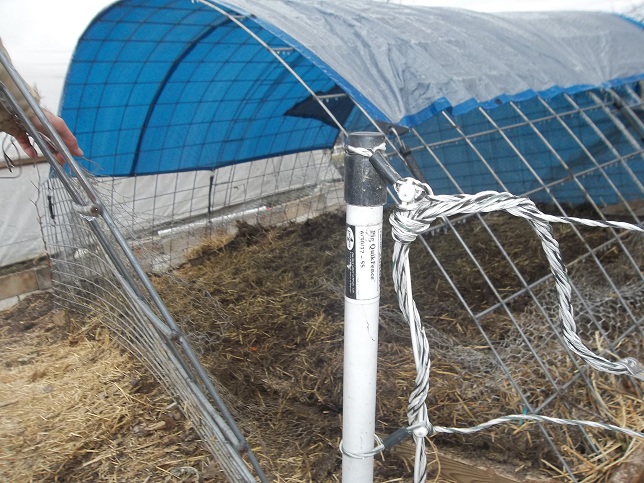
Before we left for Florida I recognized that the pigs were reaching a point where they needed to move out to pasture.  They are not cramped in their chicken tractor but it’s time for them to go.  Besides, they may just climb out of it.  I built a new temporary shelter with pallets surrounded by straw bales, surrounded by hog panels and covered with tarp then filled the living space with waste hay the cows had stepped on and refused.  I surrounded this with Premier One Pig QuikFence.  Since the pigs were only around 50 pounds I thought I would just carry them to the new pasture.  Unfortunately I ran out of time.

When I came home from Florida Sunday morning the pigs weighed at least 100 pounds.  Well, OK.  I’ll just do it anyway.  I picked up the first squealing, squirming monster and the other two came to its defense biting me on the leg.  You should see the bruise.

Once again, dad came to my rescue suggesting we just walk them back to the new pasture.  What a novel idea.  We stretched out the remaining three sections of pig quikfence as well as a length of garden fence and wired it to the 5 joule perimeter fence.  Then we opened the side of the tractor and …erm…negotiated the pigs into the fenced area.  We just strolled along as the pigs found their own way to the new pen.  Farmer 1:Pigs 0

MovingPigs1

MovingPigs2

MovingPigs3

MovingPigs4

Now, to get the cows in the barn for the evening I had to take the fence down so I had my son unplug the perimeter momentarily, closed up the pig pen and strung a new wire over to the fence.  We finished up chores and checked on the pigs again before heading inside for dinner and an early bedtime.

It could not have been easier to move the pigs.  Nothing went wrong at all.  Everything was perfect.

Then dad stopped by on his way back from the barn to tell me the pigs were out.  Worse, they were visiting the neighbor’s barn.  Ugh.  My fence wiring was at fault.  The wind blew and the ice-covered wiring lost the connection to the perimeter fence.  The pigs just walked over it and went on an adventure.  After some amount of coaxing with spoiled milk and old chicken soup, some work and serious praying the pigs are back in their pen in the garden.

Farmer 1: Pigs 1

We’ll try again on Tuesday.

Adding Value the Ferengi way.

In light of my recent post about different ways of raising hogs, dad suggested it would be worthwhile to explain why hogs are raised in confinement at all…and why this isn’t likely to change.  Since I have a sense of humor I thought I could explore this while having a bit of fun.  What follows is my understanding of why farmers raise hogs in confinement mixed with a dash of Star Trek.  Yup, Star Trek.

Now, I want to be clear.  I am neither apologizing for nor accusing the practice of hog confinement.  I am merely attempting to describe my understanding of why farmers do it…and showing my inner nerd.

So.  Why do farmers raise hogs in confinement?

Because farmers grow grain.

Need more detail?  OK.  Farmers grow lots of grain.  And interest rates were low and bankers were very, very much in favor of hog floors years ago.  That didn’t turn out too well in the ’80’s but interest rates are low again and…well, here we go.

Click on link for image source

Let’s say I was the kind of a farmer who grew acres and acres of corn.  Corn, corn, corn, corn.  Being from Illinois, I’m probably going to rotate soybeans through the same ground alternate years.  Every 10 years or so I’ll sow alfalfa, spread lime, etc. but for the most part, we’re talking corn.  Oh, and to get this corn to grow well we have to add fertilizer.  That costs money.  Boy does it ever.  And we’ll have to do something to make sure the weeds don’t out-compete the little corn plants.  Either we’ll cultivate or spray.

A bushel of corn weighs 56 pounds.  I should get 150 bushels of corn per acre on our kind of Illinois ground.  (Maybe 200 but we’ll stick with the 150).  That’s 8,400 pounds of grain that has to be hauled and stored somewhere for every acre and I may be farming 2,000 acres if I want to be a medium-sized farmer.  That’s almost 17 million pounds of corn.  I could maintain my own fleet of trucks to do the hauling or hire a trucking firm to haul for me.  How far do we haul?  The nearest elevator?  Next town over?  Each mile costs money and time.

Worse, what do I return to the land when I haul all of my crop away?  Really just the crop residue.  Remember, I have to buy fertilizer.

Well, what if there was a way to avoid hauling the corn, add value to that corn, increase my profit percentage and lower my hauling costs AND make fertilizer I can sell to the neighbors or return to the soil?  That’s why there is hog confinement.  It’s not simply a bunch of greedy, heartless, evil farmers throwing as many pigs as possible into the least space possible to squeeze profit.  It’s a way of taking something of surplus and low value and turning it into something of higher value.

To bring Star Trek into the picture, there are several Ferengi Rules of Acquisition that apply here.  Law of Acquisition #2 says:

The best deal is the one that brings the most profit.

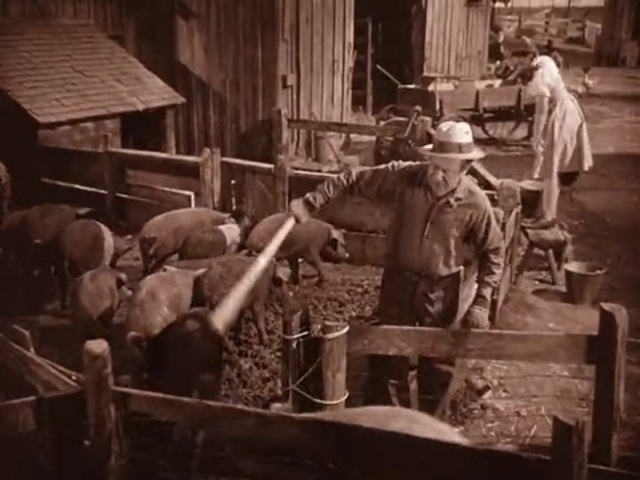
I think that’s pretty self-explainatory.  At one time, every house on the road had a few sows out on dirt.

Click on image for source

They are thrifty, independent and marketable animals.  When you look at the bottom line and begin to evaluate how Pareto’s Principle applies to your farm, pigs usually look pretty good.  If a few pigs look good, more pigs look better.  How many pigs can we raise before efficiency and the market snap us back to reality?  This brings us to Law of Acquisition #45:

Expand or die.

It didn’t take long.  Farmers went from a few pigs at every home to larger groups of pigs at fewer homes.  Then they started building Cargill floors and, ultimately, climate-controlled hog houses.  But, at each stage of the way, the farmer was looking for a way to bring home a little more income to the farm…and every farm needed more money, especially at the time when confinement houses were becoming popular.  You get from healthy, environment-enhancing pastured pork to unhealthy, destructive pastured pork to confinement pork in just a few easy steps and it is well summarized in Rule #98

Every man has his price.

Click on image for image source

But I have gotten ahead of myself.  Why did the farmers have pigs in the first place?  Partly because bacon tastes great but mostly because they already had the feed.  Should we move the mountain of grain to the pig or move the pig to the mountain of grain?  If nothing else, the pig can walk.  Transporting meat makes more financial sense than transporting feed.  I mean, with $6 corn it costs me $0.33 to make $0.61 worth of lean pork (at $0.86 lean pork futures).  So we sell the corn to ourselves and sell the pork on the market to nearly double our money.  Rule #12 tells us:

Anything worth selling is worth selling twice.

Then he can sell it one more time by “selling” the manure either to himself by replacing his fertilizer bill or actually sell it to his neighbors.  Those friends I mentioned in the previous article have entirely cut out their fertilizer bill and they make a bit of cash on the side selling the manure to neighbors.  Not only is that enough to make any Ferengi tug his ears in jealous rage but also means their farm won’t be spilling Anhydrous Ammonia into nearby ponds.

Obviously there are ups and downs in commodity production, weather you are producing commodity coal or commodity pork.  Massive expansion following Rule #45 meant there were a number of lean years for pork producers.  The late ’90’s were particularly awful.  But some survived even by the skin of their teeth.  This proves Rule #162:

Even in the worst of times, someone makes a profit.

So, confinement commodity pork production is a tool used to add value to commodity grain production.  In its original form, it saved on transportation.  That’s not really true anymore.  Rather than haul the grain from your own field to your own hog house, growers are usually contracted through a vertically integrated operation and the feed is trucked in from a contracted source.  Believe it or not, that’s more efficient…somehow.  All of commodity production depends on cheap fuel prices.  As fuel prices go up, it costs more to fertilize, cultivate, plant, spray and harvest the field, then haul the grain away.  It costs more to build and heat the hog house.  It costs more to haul and grind the feed.  It costs more to haul the hogs to the slaughter plant.  It costs more to haul the bacon to the store.  Unfortunately, when you are in the commodity food paradigm there really is no alternative.  Once you have that huge building, all that concrete, tons of rebar…all that stuff, you’re married to it.  Even I have a Cargill floor as a relic of previous generations on our farm.  What do I do with it?  Right now it stores lumber and odd bits of things but, for most people, as Rule 217 says:

You can’t free a fish from water.

Commodity production, it appears, is here to stay.  You, as an individual, can choose to participate or you can opt out by finding a good steward raising pastured livestock.  Not only are our pigs raised in the sunshine and allowed to express their “pig-ness”, they are leaner and more flavorful than confinement hogs, not to mention various health benefits from pastured meat sources.  Having butchered from both sources I can tell you the pastured meat lacks that distinct confinement smell.  But, these decisions are always difficult for us as consumers because of Rule #23:

Nothing is more important than your health, except for your money.

Pareto’s Farm

Have you ever reviewed Pareto’s Law?  The 80/20 rule?  The idea that 20% of the things I do around the farm make 80% of the impact is probably true but I find it offensive anyway.  I’m wasting 80% of my time and there’s no way to fix it.  In fact, 80% of that 20% is also a waste of time.  That means that 4% of my labor on the farm accounts for 96% of the impact.  For those of you troubled by percentages I offer the following clip:

For sake of example, let’s say I spend 80% of my farming time raising layers (egg birds), moving netting and houses, hauling water, grinding feed, gathering, washing, sorting and packing eggs and outsmarting the raccoons.  Then sell the eggs for 20% of my annual profit.  Actually, that’s a pretty accurate example so I’ll push forward.  Constrast that with the pigs.  I spend about 20% of my farming time with the pigs and make about 80% of the comparitave farm profit.  Now, I do more than two things with my time but among layers and pigs, 80/20 seems to hold water.

So what do we do with that thinking?  Is it a waste of time for me to keep a layer flock?  I don’t know.  I would guess that 80% of my sales are egg sales.  But 100% of my pig sales are to customers who already buy something else from me…typically eggs.  20% of my revenue gets my foot in the door for the rest.  If I sell off (or make soup with) the layer flock I would have a lot of extra time on my hands each day (80% of my farm time).  My farm revenue picture would immediately go down a bit but not more than 20% even though I would abandon 80% of my customer base.  What percent of future revenue would be negatively impacted?

I don’t know but let’s run with it.  Let’s pretend I have cleared house.  I got rid of the items that I have currently identified as accounting for 20% of the revenue and 80% of the time.  Now what happens?  That’s right, We get to drill into that profitable remainder and cut out the fat.  What else do I do with my time?  Well, I have this job off farm that uses more than 20% of my time but brings in more than 80% of the family revenue.  I guess that means the pigs get cut out too so I can focus more of my energy on my job.

Well, that took an unhappy turn.  Let’s not take Pareto to it’s logical conclusion.  There is joy, purpose and value in inefficiency.  Don’t sweat it, egg customers.  I won’t abandon you.  I do think there is value in evaluating how I spend my time as time is mine to steward as well as family, land and livestock.

Plans for 2013

Every year Julie and I write down our plans for the next year.  Plans change, priorities change, things come up but it gives us something to shoot for.  For example, we may say we want to put $X toward savings every paycheck, buy a milking machine, buy a shotgun and expand into a new market on the farm.  Every year the shotgun gets pushed off.  Like I’m supposed to be happy with the guns I’ve got or something.  We remain open to changes in our plans.

Many are the plans in a man’s heart, but it is the Lord’s purpose that prevails.
-Proverbs 19:21

Our 2013 list is not yet final but includes a shotgun (again), exercise our option on the remaining 40, fix the roof on the back addition, seed clover in the pasture, buy as many as 8 beef cows (shorthorns would be awesome!), set up a Facebook page for Chism Heritage Farm and a few other personal and financial goals.  I would also like to try raising quail this year, though they are not cheap and require a high-protein feed.  During our summer lull I would like to pick up 50-100 of them from our friends at Cackle Hatchery and see what it’s all about.  This will also be the year of planting trees.  I plan to plant many more trees than I cut down and I have to cut down a lot of thorny things out there.  But, though all of these things are good they may not be the best thing for me.  All of these are subject to the will of God.  I have no idea what tomorrow will bring.  He does.

In his heart a man plans his course, but the Lord determines his steps.
-Proverbs 16:9

Don’t resolve to lose weight this year or give up chocolate or promise yourself to write a post every stinking day to your family farm blog.  Avoid guilt-driven goals.  Consider things you can measure and actually complete.  Things you know you need to do but won’t if it is not written down somewhere staring you in the face every day.  Make plans that are their own reward.  Don’t congratulate yourself for losing 5 pounds by eating a cupcake.  Prevent yourself from mowing the pasture and lower your food bill by getting some cows.  Then lose weight by managing the cows.  Then eat the cupcake!

‘For I know the plans I have for you,’ declares the Lord, ‘plans to prosper you and not to harm you, plans to give you hope and a future’.
-Jeremiah 29:1

We list out our plans.  We pray that our plans are inspired by God and not by greed.  We work toward our plans.  Sometimes God redirects our work.  Sometimes things just come up.  Even if you don’t believe in God, it’s far better to take a moment to think about where you are trying to go rather than allow yourself to drift aimlessly.  So here’s a quote from Alice in Wonderland for those who don’t share my beliefs.

The Cat only grinned when it saw Alice. It looked good- natured, she thought: still it had VERY long claws and a great many teeth, so she felt that it ought to be treated with respect.

`Cheshire Puss,’ she began, rather timidly, as she did not at all know whether it would like the name: however, it only grinned a little wider. `Come, it’s pleased so far,’ thought Alice, and she went on. `Would you tell me, please, which way I ought to go from here?’
`That depends a good deal on where you want to get to,’ said the Cat.

`I don’t much care where–‘ said Alice.

`Then it doesn’t matter which way you go,’ said the Cat.

`–so long as I get SOMEWHERE,’ Alice added as an explanation.

`Oh, you’re sure to do that,’ said the Cat, `if you only walk long enough.’

We maintain our plan.  We have direction.  We reference, update and maintain our plan.  We take steps each day to achieve our goals.  Even a little at a time.

What’s on your list for 2013?

Walnut and Hackberry

This is not a recipe for food.  It’s an example of walnut and hackberry tree guilds.  They go together like peas and carrots.

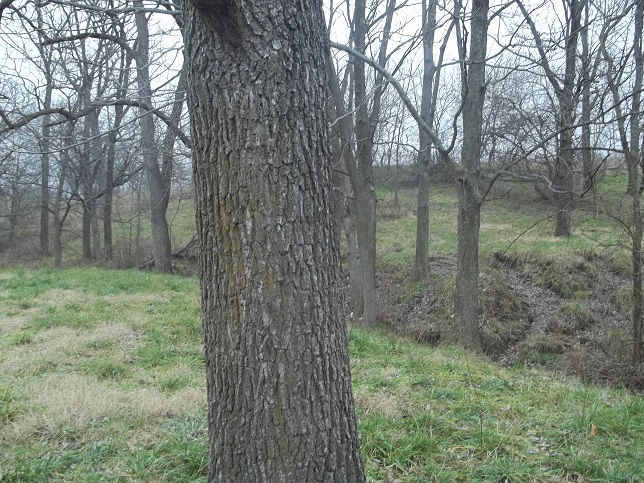
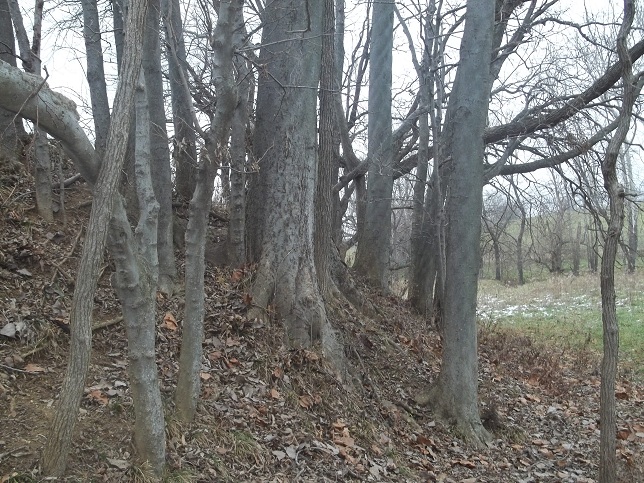
I didn’t realize this until I read Gaia’s Garden but I have hackberry trees next to my walnut trees.  Now, to be fair, I have hackberry trees everywhere.  But I also have oak trees everywhere…except where the walnut trees dominate.  So, here is a walnut tree.Walnut

And here is a hackberry next to it.

Hackberry

Walnut in the foreground, hackberry in the stream and more walnuts up the hill a bit.

WalnutsAndHackberry

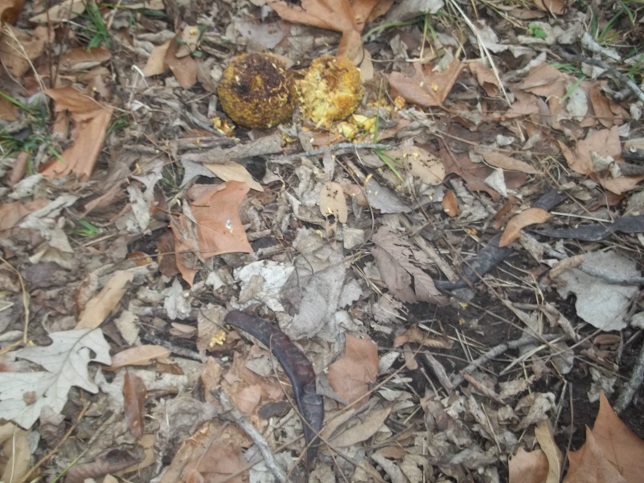
Now, these guilds would be much more complex if the cattle hadn’t been run through the woods non-stop for at least the last half-century.  Really, the only trees that have not been grazed immediately after sprouting are the ones with thorns.  Neither the hedge nor honey locust seem to be bothered by the juglone.

LocustHedgeWalnut

And they are making more thorny things for my pasture.  Look at those thorns!  I really have to replace my honey locust with black locust.  I’m all in favor of fixing Nitrogen but not at the expense of my foot.  I had one go all the way through my boot last year.  I can’t let these seeds germinate.

FutureThorns

Back on topic.  Need more?  How about this?  Hackberry, walnut and grapes with a side of Virginia Creeper.

WalnutsAndHackberry2

Or a whole grove of hackberry that the walnuts have infiltrated

HackberryAndWalnut

Both trees are alleopathic but, in a guild, can function to allow other plants to grow as well.  The book, which in this section is slanted toward the west, suggests currants and wolfberries.  I don’t even know what a wolfberry is but we do have currants.  We also have gooseberries.

With proper management, and a bit of luck, I should be able to get ahead of the thorny things and maintain the existing tree guilds while establishing new trees to increase plant diversity.  I just had to learn to see the forest for the trees.  What do you see out there?

Differences, Samerences and Changerences for the Future…erences

We have some old friends.  Close friends.  Dear friends.  Mentors even.  Friends we homeschool with.  Friends we play cards with.  Friends we laugh with.  Friends who took time to show us how to butcher a hog.  You with me here?  Friends who care about their livestock.  Who want their animals to be raised under the best of conditions, under the best of care, in the best of health.  They approach it with a different paradigm.

Click on image for source

They just built a new building to finish 2,500 hogs.  At once.  Each hog will eat around 700 pounds of feed.  The feed is mostly corn.  Corn weighs 56 pounds per bushel.  Soybeans and oats weigh 60 pounds per bushel.  You get an average of 50 bushes of beans per acre where I live, 100 bushels of corn, 100 bushels of oats.  I mix 2 parts corn, 1 part beans (roasted) and 1 part oats along with minerals in my hog feed.  So it takes approximately one acre of corn, one acre of beans and half an acre of oats to raise 16 pigs.

Did anybody follow that?

OK.  Now.

To raise 2,500 hogs (the amount in that one building for 4-5 months) requires the production from approximately 400 acres of land.   But that one batch of hogs won’t make enough manure to totally replace the fertilizer bill for that same 400 acres if you apply 3,000 gallons of liquid manure per acre, let alone fuel for the tractors, combines and trucks involved.  The trade-off is you can keep raising pigs comfortably year round.  (Comfortable for farmer and for pig too…being out of the cold.)

Without going into the intricacies of finance and large-scale construction I’ll just say that’s fine for commodity growers.   We have found a niche by raising pigs outdoors on a seasonal basis and retailing them directly.  I’m not interested in passing judgement or saying one is better than another but I am happy to say there is a market for pigs raised on pasture.  Please understand this makes me the odd duck.  As usual, I’m the weird guy in the room.  Also, my friends make a living raising hogs and I…well…don’t.  Maybe I could though.

If you ask our friends about animal health and happiness they will tell you emphatically that their pigs are as happy and healthy as a pig can be.   They rely on veterinary services to keep their animals healthy including weekly video conferences with the vet contracted by the vertically integrated growers.  They rightly point to the range of climate control options available to reinforce their point about animal welfare.  Their pigs don’t shiver.  Their pigs stay shaded, misted and reasonably cool on hot days.

Ask me about animal health and happiness and I will tell you emphatically that our pigs are as happy and healthy as a pig can be.  Our pigs get no shots, they have their noses in the mud but they do pant when it’s hot and they do bury themselves in straw when it’s cold.

Ask either of us if we are stewarding the environment and both will say yes.

PasturedPigs2

Our core asset is not our hog management facility.  It is not our pig happiness index.  It is not our eco-score.  Our core asset is our flexibility.  Ask our friends what else they could raise in their hog buildings.  Ask me what else I could do with that pasture.  Ask me how much debt I have on my pasture compared to the debt they have on their building.  Then again, ask them about the labor efficiency they gain by using a building.  Ask them about the performance gain by keeping the animals dry and warm all winter.  Ask them what they make a living doing.

We are very different in how we raise our hogs.  I specifically don’t want to say we are better.  I recognize I am the odd duck in the neighborhood.  I also don’t want to imply that I am in competition with them.  I’m not.  I satisfy a small niche in our community.  They help satisfy commodity demand across several states.  Totally different world.  Sometimes a man just wants a pound of bacon.  But sometimes you want pork that carries other flavors; pork that tastes like acorns, walnuts, mushrooms, alfalfa, hickory nuts, and fresh air.  I can’t provide that for the larger market.  I can only provide it for your house and mine.  Different focus.

PasturedPigs1

We do it differently.  That’s why our pork sells so well.  Am I going to take over the world?  Nope.  Do I want to?  Nope.  I want to deliver a product to your table that is unmatched in flavor and texture.  I feel that I succeed in that goal.  Do I want laws to make hog confinement illegal?  Nope.  Customers will make or break those guys just as customers will make or break me.  I’ll keep my head down doing my best…same thing they are doing.  I do think there is room for us to come together.  There is opportunity for both of us to change.  Maybe something like this:

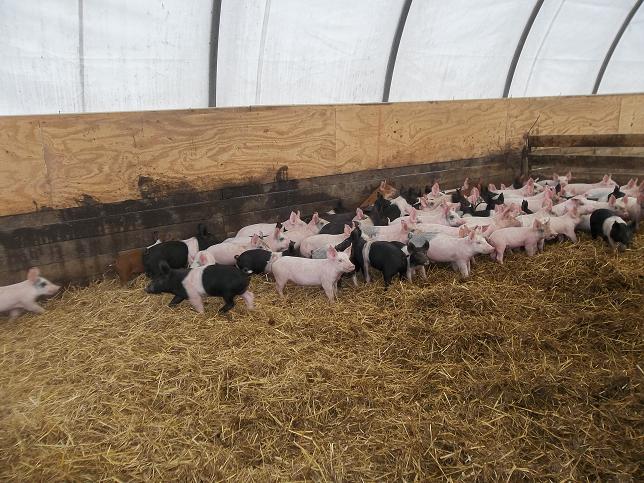
…or maybe something like this which is quite similar to Mike Butcher’s place up North.

LittlePigs

Is this the future of hog production?  Instead of millions of gallons of liquid manure, we could have tons and tons of finished compost.  Instead of single-purpose hog finishing buildings we could have multi-purpose hoop houses.  I could raise chickens, rabbits, pigs, and zucchini in the same space.  Add heat and I could raise orchids…with compost the pigs made.  Pigs can dig, flop, roll and rest in warm bedding.  They can find interesting things to eat and (probably) receive all the inoculation their immune systems need right from the bedding.

It’s an exciting time to be a farmer.  There are exciting problems to solve and a whole internet full of people sharing their solutions from around the world.  Do we need 2,500 head confinement operations?  Right now, customers say so.  Do we need 10 head pasture operations?  Customers say so.  Should we fiddle with what works?  Curious farmers say so.  Here’s to innovation.  Let me know what works on your farm.

Absolute Failure. Well Sort Of…

Total.  Complete.  Unequivocal.  Failure.  Well…failure-ish.  You’ll see what I mean.

Ugh.

So, Chris, how much money did you make this year?  You ready to buy some additional land and quit your job and farm full time?

No.  Not really.  Maybe more land since grandma passed and we need to exercise our option on the East 40.  But I’ll be sitting at a desk for a long time to come.  I don’t want to publish my whining for all the internet to see.  Many our readers share our dreams and I want to present a realistic picture of what goes on here.  We have a ball on the farm.  Not every day but overall it’s a hoot.  Part of the fun is laughing at ourselves and learning from our mistakes.  Learn with us.  Also, I want to make clear that if we do make it as farmers it will be because of my own incompetence.  Give me the chance to hand the reins to one of my children and I’ll run out of the way.  They are the future of the farm.  Thank God.

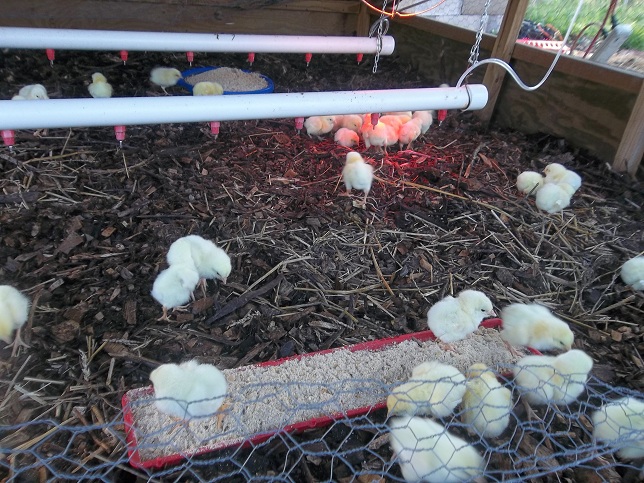
ChicksInBrooder

We sold around 950 broilers this year (600 were cut-ups).  Add to that 14 pigs, 3 goats, around 200 pullets, a dozen or so stewing hens, and, based on some back of the envelope math, 1,000 dozen eggs to date.  Pulling out our little envelope again I calculate that we sold roughly 7,500 pounds of meat from our little 20 acres.  This doesn’t count the 600 or so bales of alfalfa hay we put up, bushels of produce from the garden, duck eggs, a gallon or so of maple syrup or the fish we caught from the pond.  I am also not including the pigs we butchered for ourselves (3), chickens we ate (about 1/week), the three turkeys we raised for ourselves, the four goats we still have, the three cows we still have or the mountains of walnuts I have ignored in the pasture.

All from 20 acres.  Any money we made was poured back into fencing, livestock housing, repairs on equipment or new equipment.  Julie and I didn’t take a dime in pay.  There is just enough left to carry our pigs through the year and start up again in the spring.  We (quite literally!) worked our tails off.  It shows.  The barn is full.  the pasture looks 100% better.  Our freezers still have a little inventory.  Our larder is stocked.  But there’s no cash.  Business failure.

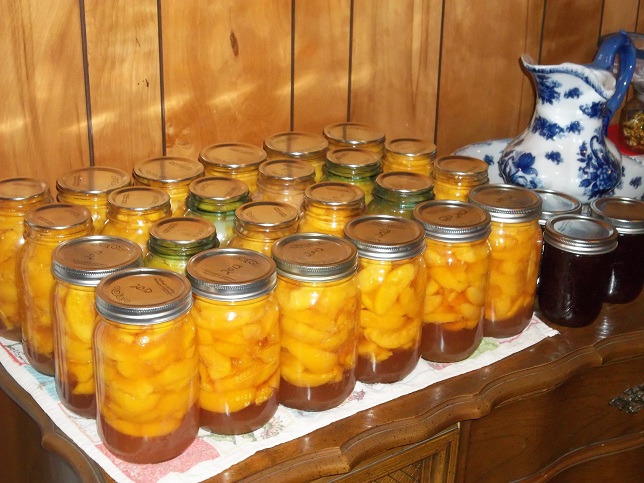
Canned Peaches

Each year we add to our infrastructure with whatever little money we make…and it just keeps sucking whatever money we can pour into it.  All so I, with my limited ability, can flirt with disaster hoping and praying someone somewhere will buy another dozen eggs.  Begging friends and family to take a free chicken, taste the difference and tell a friend, scrambling like a madman to hustle another half of pork.  Nearly every customer returns.  I couldn’t tell you what percentage but I can tell you their names.  They return telling me they can’t stand store-bought eggs anymore.  The pork is the best they have ever eaten.  They are grateful they can trust that our chickens are clean and safe to eat.  But there is only so much pork and chicken a customer will buy.  I need more customers.

More customers mean I have to produce more food and anticipate demand.  I have to attempt to anticipate the needs of the market when increasing my production.  Take my chickens for example.  Right now we are looking at sales figures from the past few years and looking for consumption patterns.  This is information we didn’t read in any books or blogs.  It looks like customers really want spring to arrive early because we have many requests for whole birds in February and March, the time when our freezers are empty.  Fried chicken is popular for Mother’s Day, Memorial Day, Father’s Day and the 4th of July.  Then there is a period in mid-summer when the heat sets in and nobody wants to cook anything.  I have to sell out before the drought starts (whenever that happens) and have empty freezers until I butcher again in the early fall.  I can’t order chicks when it’s 100° outside or they will die in the mail so I can’t order chicks until mid-August unless I drive to the hatchery.  Then I have to have them off of pasture before the second week of October so the pasture has time to recuperate before we get a hard freeze.  Besides, in October the sun goes down early and the chickens stop eating early and grow slowly.  I have to hit a small window with just the right amount of production to meet fall and holiday demand as well as carry enough inventory to last until I butcher again because, as I said, there is a late winter demand for chicken.

Helper

And don’t get me started on anticipating commodity prices.  Should I buy corn out of the field?  Is it better for me to buy bagged feed from the elevator or grind it myself?  What will prices do in 6 months?  Ugh.  Chick prices are already up.

I have to find a way to grow animals, grow my business, remodel and reshape the farm landscape in a positive way, continue learning sales, farming, accounting, tax laws and researching Illinois chicken regulations.  All this as a part-time job I can only squeeze in evenings and weekends.

Absolute failure financially but we are getting pretty good at the work.  Maybe next year as the kids grow they can find better ways to do this.  Or the year after…