Farmer’s Progress Chapter 5: Farming as a Craft

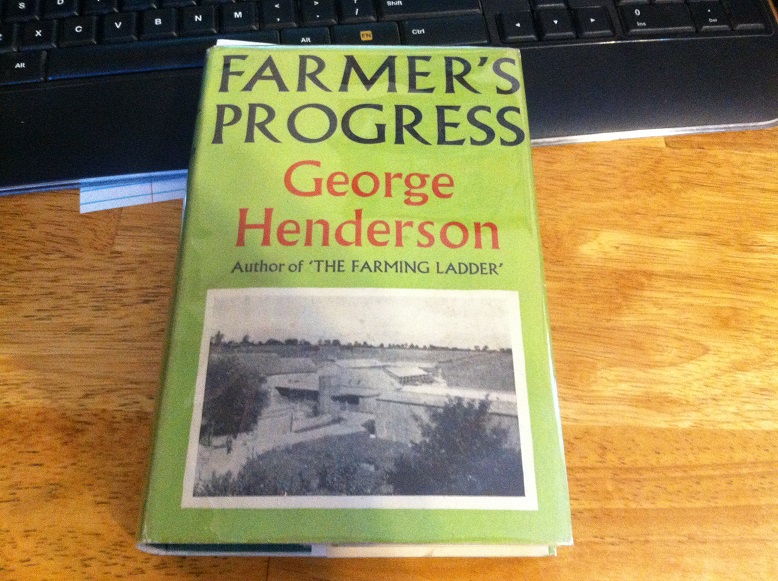
I continue reading and reflecting on George Henderson’s book Farmer’s Progress. This book is out of print but not out of copyright so I am trying to make the best use of a few selected quotes to share my thoughts on each chapter. I know the book is hard to find and a little pricey but compare the used purchase price to the price of any used college textbook. Just buy it.

It’s all about efficiency of movement and you’ll wear out your body trying to figure it out on your own. Years ago we took a couple of classes with local weightlifting coaches to learn to deadlift and clean efficiently and correctly. There are a lot of things we tend to do incorrectly out of ignorance that injure our bodies over time. The key things for me to remember when deadlifting are head up, chest out, butt back and the bar against my legs. But there is more. I need to set up with the right hand and foot positions and keep the weight on my heels. It all adds up to a long list of little things I wouldn’t know if Coach Kenney or Coach Rut hadn’t told me. He gave me a shortcut to efficiency. You might think deadlift and clean are useless in this discussion but think again next time you pick up a box and put it on a shelf. A little coaching goes a long way.

Mr. Henderson points out that you can’t learn to swim by reading a book so he jokes that he is writing a book that can’t teach you anything. Instead, he’s pointing out some ideas that you can keep in mind as you are learning from an experienced farmer. If you are going to put in long, hard days for decades on end you need to learn to work with your body without damaging it. Here is an early example from the chapter:

The secret of work is well-arranged time and the saving of unnecessary effort. Watch the amateur farmer fetching a barrow load of mangels from the camp. He loads it up and then turns it round loaded – extra effort for no purpose.

Know your body. Julie has a long torso and proportionally shorter legs compared to me. There are differences that we need to account for when buying a bicycle. Those differences also need to be accounted for in our farm chores.

Why does the experienced worker carry a sack of corn across his shoulders instead of down his back? He is using his bony framework instead of his muscles. A man is a triangle, broad shoulders, narrow hips with heels close together; quite different from a woman, whose wide hips make her egg-shaped; and for that reason she should not carry sacks in that manner; her limit is about half the 18 stone a nine-stone man can carry…

Certainly there are exceptions. I have known some VERY strong women. Leave out any perceived sexism in Mr. Henderson’s writing and think about two people with differently designed bodies. They each need to determine how best to leverage that design in accomplishing their task. If you do what you are not designed to do, things will begin to break down…as Julie would tell you.

My oldest son and I are designed very similarly…in fact, we are frequently mistaken for each other from a distance. He can’t split firewood to save his life (sorry, son). I can swing the maul with a rhythm for a long time before I am winded. There are a hundred things I know about splitting wood that I haven’t successfully taught him yet. Aim here, not there. Look for the checks. This kind of wood requires this kind of force. Watch for this or that. To him, it’s all just wood. You swing at it until it chips apart. For me, it’s a game. I swing only where I have to and the wood flies apart…most of the time. But I have a lot of years of splitting wood under my belt. A lot of years of watching my dad or my father in law split wood. (BTW, I try not to split wood unless I have to. I prefer to cut 6″ or smaller logs and just burn them whole.)

So much can be learned by watching others. Thank God for Youtube. We would never have learned to butcher chickens if David Schafer hadn’t posted this video.

But along with seeking mechanical efficiency you have to burn the right fuel. You won’t get very far putting the wrong fuel in your tractor. Your body is no different.

As in animals the basis of health in man is sound diet. The decline in physical energy has coincided with the introduction of white flour; if only all farming folk would eat wholemeal home-baked bread, from freshly ground, home-grown wheat, they could work like our ancestors…

Well. I don’t know about the wheat thing but I am sure he is right. No matter how mechanically sound my motions are, I can’t perform them for long if I’m all filled up on junk food. The point of the whole book is to inspire us to do 40 years of farming in 20 years…a feat we can’t accomplish without the right fuel.

But I also want to make mention of the home-baked and home-grown ideas. Certainly there is more work involved in making your own food from your own ingredients. But you are certain of what that food contains. Further, you haven’t paid tax on the income of farm products so you can pay tax on goods purchased off-farm. You just grow it and eat it. Currently there is no tax assessed on that. Currently…

Much of the rest of the chapter is example after example of the value of mastery and efficiency. There are a full two pages given to a description of how to efficiently milk a cow and that’s worth your time as well as a discussion of what he has learned from other farmers about grazing livestock. This quote seems to sum it up well enough:

…the knowledge of which is passed on from generation to generation, and remember that the oral wisdom of the countryside is of no less value than that which is found within the covers of a book, or told so glibly from the platform of the lecture hall. Wisdom will carry a man farther than knowledge; opinion may be formed without a grasp of the facts, while propaganda is the language of the devil, when it is applied to farming.

This next quote seems a little out of place in the chapter but I agree with it so completely I am going to quote it as well.

Apart from the knowledge which comes from experience, everyone should on a farm learn elementary first-aid, not only for the animals, but for human beings as well, for you are often far from professional aid…

I could show you my scars. Julie showed a scar off on a recent blog post. We cut ourselves when butchering animals. It happens. The kids have bicycle accidents. We had a goat that kept bleeding days after being dehorned. We have to know first aid. Have to. Have to. Have to. I recently got AED certification. We know CPR. My goodness. Why bother canning up a year’s worth of peaches if you’re going to allow yourself to bleed to death when a mason jar breaks in your hand.

He ends the chapter covering why I blog and read other farmer’s blogs. We are sharing what little we have learned and making a positive contribution to the pool of available knowledge.

In an age of self-interest, cynicism, and despair, remember there are others who will be glad to learn from you; you need not hide your knowledge…

I hope you are enjoying Mr. Henderson’s books as much as we are. Have you read this chapter? What did you get out of it?

Another Addition

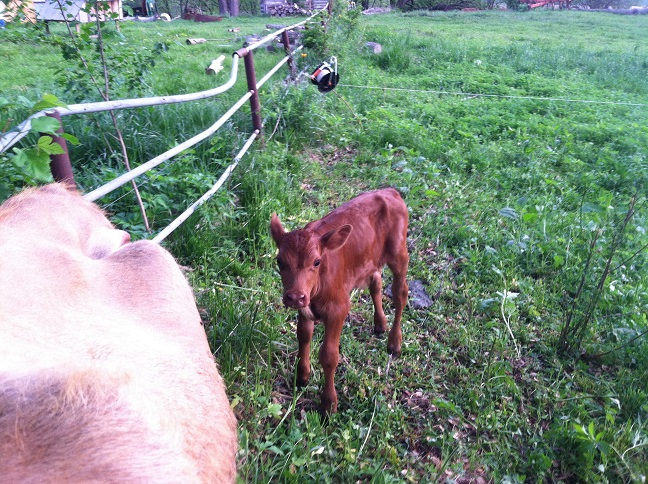
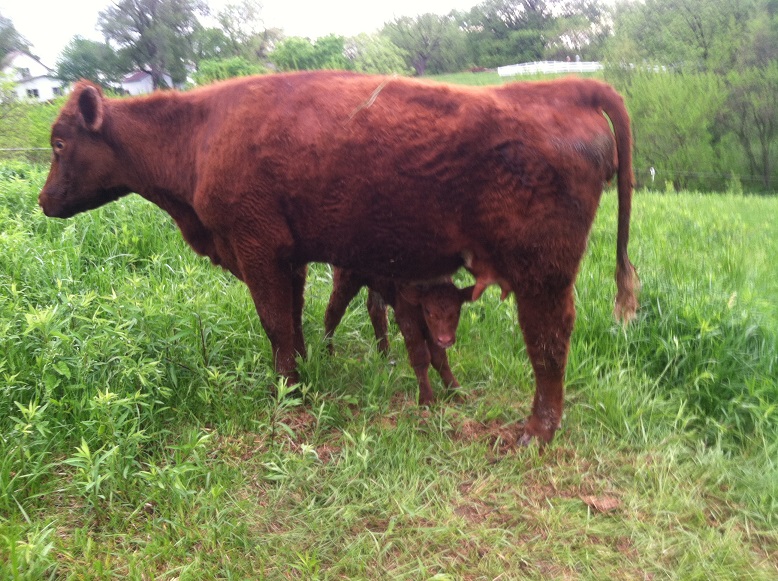
41 gave us a bull calf yesterday afternoon. Another surprise, unassisted calving. He’s a strong bull calf with a big head. Here he is hiding behind mom when we caught him nursing this morning.

BullCalf

The new calf was born yesterday afternoon. He had all kinds of energy last night but we hadn’t seen him latch on and nurse. I went to bed a little concerned but this morning we caught him in the act and we saw his meconium so that’s it. Red calf with a white belly doing everything he is supposed to do. Now we just have to get 41 ready to breed again in August.

We are still sprinting across the pastures trying to cream off the energy. Things are firming up if you know what I mean, but the white calf still hasn’t slicked out.

WhiteHeifer

I don’t think she’s going to make the team. To this point the white calf is the very definition of a poor do-er. I’m going to have to worm her and see if she comes along.

Just Mable (we usually say May-Belle), 111 and 76 remaining to calve. We’re overdue for some heifer calves here…but I would prefer that May give us a bull calf as she’s a Jersey bred to a Shorthorn bull.

The Awesome and the Not Awesome

We’re up! We’re down! This is great! I can’t go on.

Ready for the awesome?

Sunday morning I was washing dishes at the sink. I could see the cows out the kitchen window including Flora, our expecting-any-day-now milk cow. Every day the kids ask me, “How’s Flora?” and I reply, “Still pregnant.” Sunday morning I could see her clearly from the window. “How’s Flora?”

“Still pregnant.”

I finish up the dishes, dry my hands and head outside to open the nest boxes and check the animals. Within 10 minutes of washing the dishes I am walking through the cows and almost fall down in surprise. A fresh, wet brown bull calf is already standing next to flora and trying to nurse. Within 10 minutes!

Here he is at 24 hours old.

DryCalf

Good little guy. The kids are calling him “Steak” but I think we’ll choose something less…pointed. He is nursing well on all four quarters and running with the herd. Vigorous calf on an early May morning. What more could I want?

Had he been born 12 hours earlier the story would have been different. Saturday night we got an inch and a half of rain and quite a bit of wind with cooler temperatures. All that rain…all that wind would have been hard weather for this little guy. Thank God he was born in the morning after the storm.

But that brings us to the not awesome. We have month old pullets in our chicken tractors currently. 3 tractors, 50 pullets each. They are growing well and feathering out…doing everything a pullet is supposed to do on pasture. 46 of them piled and died in the rain Saturday night. There is no sense in it at all. Just a bucket full of dead birds…birds that didn’t have sense enough to get out of the rain.

I don’t have words for the level of frustration we are feeling. Cackle Hatchery sent us 156 pullets, 155 made it out of the brooder and lasted until last night. Weather is always a factor and there is only so much I can do to plan for it. But I would never have imagined I could lose a full third of my birds to rain.

We are up one calf. We are milking Flora again. But our future flock was just cut back dramatically. That’s the news…good and bad. This farming stuff is hard.

Farmer’s Progress Chapter 4: The Art of Farming

Today I continue reading George Henderson’s book, Farmer’s Progress. I am working to use only as many of Mr. Henderson’s words as I have to to relate the information I want to discuss and share, not to reprint an unfair portion of the book (however much I think it should be reprinted).


FarmersProgressAs I was beginning to form this post a friend sent me the following bit of humor:

Science and art need to mesh more – sure you can make a baby in a petri dish, but the other way is much more fun.

And with that in mind we will invite Mr. Henderson to tell us all about the art of farming. The overarching goal of a farmer must be to

leave the land for which they are responsible far better than they found it.

No problem. He points out that success in achieving this goal leads, necessarily, to finding prosperity as well as serving your fellow man. How about that? You live with purpose, you have meaningful work, you eat well and everybody is better for it…even if there will be bad days. Clearly Mr. Henderson is more poetic about this but you see what he’s saying. I have grass where there were only thorns and weeds before. What did it cost me? All of my mornings, evenings and weekends. A week of tube-feeding a baby goat only to have it die in my wife’s arms. (Poor Shivers.) Long nights sleeping in the field, waiting for that stinking skunk to return…praying I can find where he is getting in the fence before he eats yet another bird. Standing in the rain hoping to find the short in the fence so I can go back inside and thaw. Packing and labeling chickens until 2 in the morning and going to the office after 3 hours of sleep. I would be afraid to total the dollar investment we have made in our farm…but be sure that we have put in more than we have taken out. Someday that will change. Someday. For now, we are healthy. We have purpose. We are united by a common vision. We chip away each day, as a family, to help carve a rough lump of land into something beautiful.

There are bad days…just not all of them. There are good days too. And within the framework of good days and bad there is an opportunity for expression of self…of style. There is an art to doing this. Part of that expression is found in the method of implementation. To move this post along I am going to quote myself…because a man can only be so modest.

…you have to increase stocking density (animal units per grazing area) before you can increase stocking rate (animal units on the farm).

The statement above is not rocket science. I have read it so many places I couldn’t begin to know who to attribute it to. Maybe Greg Judy presented it to me first. Whatever the case, it leads us directly into Mr. Henderson’s book. As the chapter continues he is emphasizing the need to maintain a diversified farm…to avoid specialization…keep things balanced. Grow some crops in rotation. Raise a variety of livestock. Each will carry the other through low points. Then he delivers this on the subject of stocking rate and if this isn’t an example of graceful elevation in farming I don’t know what is.

A hundred-acre farm, with a proper proportion of arable as indicated, would carry and be nearly self-supporting for twenty-four cows and their followers. The same land could carry half the number of cattle, forty breeding ewes, a dozen sows, and three or four hundred head of poultry. This would yield a far greater financial return, spread over the peak of labour which pure dairy farming involves night and morning, and divide the risks inevitable in more specialized production. At the same time this would give far greater scope for expansion, for with the building up of fertility by pigs and poultry, which also within reasonable limits can increase, the time would come when the full stock of dairy cattle normal to the size of the farm would be carried. In other words, the farmer would have a pig, poultry and dairy farm on the same acreage.

So he is suggesting we increase diversity AND density before we increase the stocking rate. I would love to get a few hair sheep! I have no idea how we would manage them. How we would fence them! What a pain to have to fence them separately from the cows. How frustrating it would be to succeed in fencing them behind a couple of wires only to have them killed by coyotes in the night! But moving netting around the farm on a daily basis in August sounds like a bad idea for team morale…and a big dog to protect so few animals seems like a financial blunder. Chickens and pigs? No problem…except I have to increase my marketing reach. He is raising his pigs in total confinement though and mixing the liquid manure with peat before spreading it on his fields. I wouldn’t be entirely against raising pigs on deep bedding in a hoop shelter with outdoor access. In fact, I find that to be an entirely appropriate solution, especially in seasons when the pasture conditions and animal health will suffer by keeping the animals outdoors.

I tend to overlook his emphasis on crop production. I have considered it. Rip a little soil here, drill a few seeds there and before you know it I could be a real farmer! It would be no big deal to plant an acre or three of wheat in the fall. Might even be a good idea. But then what? In the next summer I would need to harvest it but it’s hardly worth anyone’s time to bring their combine out to harvest 3 acres. Wheat isn’t worth much but I could feed it to the chickens I guess. I would end up with a mountain of straw…especially if I plant an older-style wheat that grows a long stem. OK. That sounds like a plan.

What about corn? I could have my cows trample in a dense planting of corn for grazing this summer. Or I could follow behind my herd with a drill…except my herd of 11 animals hardly grazes enough in a day to make it worthwhile to drag a drill out. But I could do it and it might be worth it to have a trusted source of non-GMO grain. But corn isn’t enough. I would need something growing under the corn to feed the grazing animals after the crop comes out. Oh, and somebody would have to get the crop out. I guess I would put my corn in the bin but…would I really get enough to fill my bin? I’m not going to plant 50 acres…more like 5. If we got a little rain and I used tons and tons of manure I might end up with 1,000 bushels…that I would have to pick by hand. I can hear the children’s excitement now. It all sounds like work.

…what could be achieved if we were all prepared to work as our grandfathers did, if we put in the man-hours with the machinery now at our disposal!

Mr. Henderson is talking later about the difference between a device that saves labor (electric butter churn) and a device that makes a farm more efficient (chainsaw). It would be hard to justify owning a combine that only worked at the same pace as a man. But a combine works many, many times faster than a person could. The next hurdle to overcome is the purchase price and the cost of ownership. If I buy a combine it will be an old one. No matter how cheap it is to buy, how easy it is to maintain, how easily it fits into the existing buildings, it has to be paid for by increased efficiency. Could I cut an acre of wheat by hand? Yes…but it wouldn’t be any fun. Could I justify owning a combine I use for 15 minutes each year to cut 1 acre of wheat? Geez.

I am reluctant to quote the book so heavily but Mr. Henderson goes on the attack against government oversight and limitations…especially as exercised in a time of war. Much of this chapter is about exercising our freedom of expression…our freedom to do what we feel must be done on land that we own. Our ability to create something beautiful out here is constrained only by our freedom or lack thereof. I can’t pass this quote by without highlighting it:

Countries are well cultivated, not as they are fertile, but as they are free. Holland, Denmark and Switzerland are shining examples of this, and only in countries free from control can you eat well to-day…To have freedom is only to have that which is absolutely necessary to enable us to do what we ought to do, and to possess what we ought to possess, and among these things I include freedom to stock and crop a farm as it should be stocked and cropped, for here the national and the farmer’s interests are identical. The more we produce the better it will pay us, and if our farms are self-supporting we shall have less need to buy.

That last little bit there he is talking “we” as in “Britain”. Throughout the book he is concerned about the financial dominance his country has lost and the trade power they are losing because they are too inefficient to raise their own food. They buy it from elsewhere (probably Spain). Later he …

The farmer does nearly all the thinking for everyone on the farm, and a great deal for all humanity, for the greater part of it would have long since starved to death but for the foresight of those who plan a rotation, plant potatoes after a year in which their unwanted stocks would have rotted in the clamps had they not utilized them for stockfeeding; the stock to consume them only being available through defying the edicts of short-sighted politicians and technical advisers in their recommendations to scrap pigs and poultry at the outbreak of war.

Mr. Henderson said in The Farming Ladder that he needed his farm fully stocked, even in times of war, to maintain a high level of grain production. Grains are easy to transport and keep well so the Allies were using grains to feed their armies. But Henderson’s assertion was that the civilians needed sources of fat to maintain energy levels…that the Germans lost, in part, because they could not maintain production of bacon and cream. Grain was rationed but potatoes were not…so his pigs ate potatoes. And when the war ended he was well-stocked and ready to supply the needs of the market…either other producers seeking breeding stock or consumers who wanted bacon. It doesn’t do much good to win the war if you don’t have any food. Ask Sparta about the Peloponnesian war.

I think Mr. Henderson has made his position on personal liberty clear in this book so far. Also his opinion of government “experts”. He closes out the chapter by saluting the nobility of all who practice farming, hoping us the very best because, at least in his mind, the world is depending on us to solve problems on our own farms and, by so doing, solve the world’s problems. Sweep in front of our own door. Remove the log from our own eye first.

Everything the Pasture Needs

This post is the direct result of a conversation with my father. In a way, dad encouraged me to clarify my thinking on pasture fertility and my strategy for moving it forward. If this post is too long for you allow me to summarize. You could simply feed the plants nitrogen and they would be tall and green (though high in protein but low in soluble carbohydrates). But the better long-term investment is to feed the microbes that feed the plants. The idea is that healthy soil grows healthy plants, healthy cows and healthy people. Like teaching fishing rather than giving a fish…except dirt doesn’t go fishing. You know what I mean.

Remember the breakfast scene in The Matrix? The group are eating breakfast and complaining about it a little bit. Complaining…as in they don’t like it. The scene wraps up with an exchange between Dozer and Mouse:

Dozer: It’s a single cell protein combined with synthetic aminos, vitamins, and minerals. Everything the body needs.

Mouse: It doesn’t have everything the body needs.

Mouse is right. Nobody would fuss if it had everything they needed. From here, Mouse begins to promote his digital escort service but that is not the direction I want to go. All of the dialogue leading up to that comment has already proven Mouse’s point. Nobody wants to eat a bowl of runny snot. What does the pasture need? Depends on who you ask. The plants are commonly boiled down to N, P and K. Just add 10-10-10 to your lawn and it will be green. No problem. And don’t forget Brawndo. It has electrolytes. It’s what plants crave! If you are familiar with that movie you know the electrolytes were killing the plants and the solution was to take water (like…from the toilet) to the fields to flush the salts out of the soil. (Click with caution if the kids are around.)

What does a healthy plant look like? …taste like? Can you taste the difference between a tomato that was grown from artificial N, P and K and a tomato that was grown in compost? Does it have a weak flavor? Can a cow taste the difference between grass grown from NPK and grass grown from worm castings? N is N, right? When I look at the dark green stripe in my pasture where the chicken tractor has been, all I’m seeing is N, right? ChickenStripesWell, no. I’m seeing a whole slew of things. But let’s start with what I’m not seeing. I’m not seeing dark green in most of the pasture. Why is that? Because there isn’t enough N in the soil. <sarc>No kidding</sarc>. Cattle have been grazing here for years. Why isn’t there enough N in the soil? (Flip your screen to see the answer below.) Answer What’s a farmer to do? Clearly my pasture is suffering from a lack of Nitrogen. Should I order a tank of liquid nitrogen? Well, that would certainly make it green. But I think that’s like giving the pasture a bowl of runny snot for breakfast. It doesn’t have everything the body needs. What happens over the years if I just keep throwing fertilizer at a hay field and hauling the hay off? That is essentially what has happened with the cattle moving nutrients from the open area to the shade. I’m not just trying to grow a large volume of green grass this season, I’m trying to build deep root systems and healthy soil ecosystems so my grass grows earlier in the spring and later into the fall for years and years. I am trying to make my farm better for next year…for the next farmer.

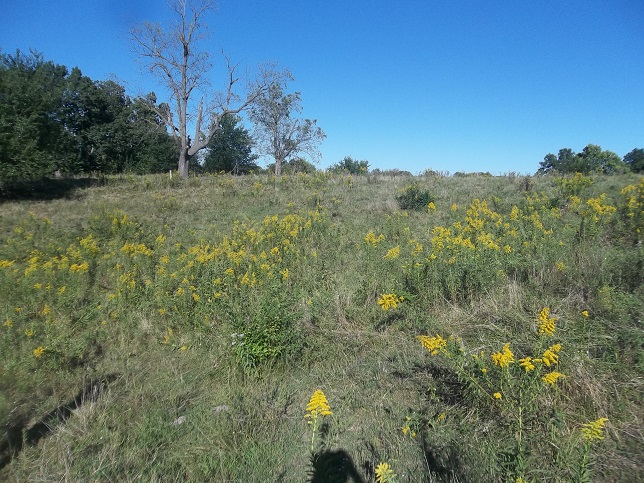
Nitrogen doesn’t have to come out of a sprayer. Nitrogen is fixed by living, breathing, dying organisms in the soil. What I need isn’t a sprayer unit. What I need is soil health…built over time. I have nothing to compare my farm with except my own farm. Fortunately, I have run livestock on the 20 acres around my house for several years. The cows, goats, pigs and chickens trampled and dunged on every square inch of it every few months for the past few years and have left enough plant residue behind to keep the soil warm, moist and well fed. The east 40 was all cows but had very little manure (the cows pooped in the shade) and zero plant residue (they ate it all because of continuous grazing). Let’s do this with pictures. I have done this for several years: Trample All that muck and manure and all of those hooves and all of those plant stems pressed into contact with the soil have, over time, built up a layer of organic material covering the soil like a blanket, holding things together during periods of heavy rain, limiting evaporation during periods of drought and keeping the soil life fat and happy. Everything from bacteria to grubs to earthworms have plenty to do and a safe, moist place to do it. Compare that to the condition my east pastures have been kept in: Every time the grass grows a little it is nipped off. Goldenrod is ignored by the cattle so it dominates the landscape…and shades out future grass growth. Since the cows are allowed to spread out over a large area they don’t trample in the weeds, stomp the saplings or cover the pasture evenly with manure. In fact, all of the manure gets concentrated in the shade…which is why there are so many dead trees…and the remaining trees are bushy, thorny monsters. The difference between the pastures is obvious but it does take a little time. That’s why you have to increase stocking density (animal units per grazing area) before you can increase stocking rate (animal units on the farm). You need to build pasture health before you can expect it to grow more forage. Bunch the cows up. Shorten grazing periods and extend rest periods. Things will start to change. CemeteryHill I think it is worth celebrating the little bit of life we have breathed into the pasture while also adding a little to the farm cash flow. The broilers, like the cattle, are tightly bunched up, grazing, trampling and manuring a small area. Sure, they put down N, P and K as they pass but they put down much, much more. And don’t overlook the value of the trampling action. It’s not just manure being fed to the soil, it’s grass stems. Not to mention the bugs, worms, etc that get eaten, adding value and nutrition to the pasture and not accounted for in the NCSU link above.

So, yeah N = N but N != Chicken Manure. The N certainly makes it obvious where the chicken manure went a few months ago. But in years to come we will still see the benefits to the soil biology. And that is worth crowing about…even if we work to blend the stripe in with pig bedding, cow manure and horse manure…a balanced, varied diet…everything the pasture needs.

Pigs Load Themselves

We are making plans to ship a couple of pigs next week. Plans include getting the animals loaded up as gently as possible. I suppose if I had a few thousand pigs to load in a single day I couldn’t do it the way I do. I would have to pay more attention to Temple Grandin. But I don’t have a few thousand pigs. I currently have four and they are working for me in the barn, cleaning up behind the cows and mixing old straw and hay into bedding that I will compost.

When it is time to move we take the feeder out of the pig pen, put a little fresh bedding in the trailer, back the trailer up to the pen and open the door. The pigs climb in and out, exploring the new space. It really is just that simple as they are naturally curious creatures.

We gave them access to the trailer for a few hours, feed them inside the trailer then close the door behind them. No sweat. We have done this with electric fencing on pasture too. If you’re not forcing the animals to do something they are unsure of they won’t push through the electric. Instead, they approach at their own time, sniff, put a foot or two up and go in. The pigs are on high alert when they first enter the trailer. By giving them a little time they settle down and the trailer becomes a comfortable and familiar space.

The trailer was a positive experience for the piggies. None so much as squealed. I didn’t cuss. Nobody carried a big stick. Nobody got bit. We just stood back, let them explore the space, offered a little feed and closed the door. No big whoop.

Sometimes it helps to build a little ramp behind the trailer so they can climb in more easily. We usually use a straw bale or just pile up some bedding.

At the other end we opened the gate again and stood back as the pigs unloaded themselves. There are no unhappy memories associated with the livestock trailer. Hop in, find food. Positive reinforcement. When their final date arrives they will be trained to hop in the trailer and will arrive at the locker without stress. I think that is important.

30 Days Into the Grazing Season

We are a month into our grazing plan. In some places I am disappointed by the pasture. In other places I’m amazed. I still haven’t covered the farm but that’s good news because the starting point still hasn’t recovered. I need to encourage and allow those grasses to tiller and develop root systems to grow taller, capture more nutrients and cover bare places. I talked about this in a recent post because of the difference in forage where my chicken tractors covered the ground.

SparseForage

I can’t return to this pasture yet. But the good news I don’t have to because I still have a large portion of the farm that I have not grazed, not to mention field edges that I prefer to graze before we cut hay. Remember the plan for the month of April? It worked out pretty much as planned but we haven’t grazed the pasture south or east of the house. We also grazed a little here and there in unmarked areas. Things work out differently in real life. Plans becomes guidelines.

SpringGrazingPlan

So now what? Well, now it’s time to plan for winter again. It is also calving time. I have to increase by grazing density and slow down the herd. So in the image, our house is on the left of the map next to Rockbridge Rd., not in the center of the map. There is a block by the cemetery marked with a 1 that needs to become a larger number. In fact, every marked number should be multiplied by at least 3…maybe as much as 5. We have covered the farm in 30 days. Now I need to cover the farm in 120 or more days. The cows should not return to the pasture around the cemetery until September.

Most important to me is to cover those four formerly 3-day fields far to the east before July 1. There is very little shade out there and about half of that area is south-facing. I like to have my cows near shade when summer turns hot and dry and I want to graze and stomp and manure all over that area before the rains stop. And if we multiply the grazing areas by 4 we have 48 days of grazing out there. That’s a tough row to hoe for a couple of reasons. There are places that remain ungrazed that I want to graze before I return to the start…in part because the ground needs to be managed, in part because my starting point hasn’t recovered yet. But 48 days before July 1 is May 15th.

BTW, In SQL Server that is SELECT DATEADD(d,-48,‘2014-JUL-01’). Isn’t it nice that SQL server streamlines code inside of built-in functions? You don’t want to know what it takes to calculate date in DOS.

OK. May 15th. 10 days from today.

Well, it sounds like a nice plan. I’m sure I have enough remaining pasture to delay for 10 days but will I get enough growth on my pasture in the next 10 days to allow the required density? I dunno. Maybe I can kill some time on field edges then go a little faster on that pasture. I was hoping to have the cows trample in a little warm season annual seed just to fix more biomass out there but I may not get the density to allow that. So. I don’t know.

But we have a plan. And we can afford to be flexible. I have 10 cows and 30 acres. It almost doesn’t matter what condition my pastures are in. What matters is that I work to increase stocking density now so I can increase stocking rate later.

Stay tuned. It ought to work.

Farmer’s Progress: Chapter 3 Ways and Means

This chapter is titled Ways and Means. The first chapter was all about getting yourself ready physically and mentally to become a farmer. The second chapter gave solid, practical steps for gaining your training and experience. In chapter 3, Mr. Henderson talks about the nuts and bolts…the finances, the land, the livestock. I might suggest he uses too many words to describe too few ideas – a crime I am guilty of myself – but 30 pages is a lot for me to cut through in a summary post. Worse, the chapter meanders across an evolving theme, covering many of the same points repeatedly but with changing emphasis. This may be a bit of a jumbled post but I am writing about a decidedly non-linear chapter. I’m going to attempt to break up his notes into a few distinct topics that I find particularly interesting but I’m really not able to do this chapter justice. You’ll just have to find a copy of Farmer’s Progress for yourself.

FarmersProgress

Remember as you read both of these books that Mr. Henderson’s goal is to maintain a heavily stocked diversified farm that will weather any storm. You will be frugal in good times, persistent in hard times, always looking for the opportunity and always increasing soil fertility to build a brighter tomorrow. This chapter is all about finding and buying a place to call your own.

Buying a Farm:

Mr. Henderson kicks things off by suggesting a monetary figure for establishing a farm including land and livestock acquisition, how to buy a farm and why a small farm is better than a large farm for you and for everybody. The number is not small and he takes another stab at me by saying:

No wonder the ex-bookmakers, butchers and bakers think they can buy their way into farming.

Contrast that to an established, successful farmer setting up his children for success:

I know one farmer who has never farmed more than 100 acres, yet his four sons, between them, have taken over 1,000 acres in recent years, and are all farming successfully.

The home farm was heavily stocked, so that when another farm was taken a whole generation of pigs, calves and lambs could be spared. The young farmer would live cheaply, possibly still at home; he would be helped by his brothers, so that there would be no heavy outgoings on labour. Implements would be shared, and in a comparatively short time the new farm would be well established, and yet another son could be started off.

This is not unlike the arrangement briefly described in the book Better Off. The writer spent a year living on a farm rented from an Amish farmer…a farm the farmer had purchased for one of his children. Gordon Hazard also wrote of something similar, buying each of his children a small farm and setting them up raising stockers early on in their adulthood. Henderson suggests that family farms are persistent farms. Continual reinvestment of labor and capital keep the wheels greased. Also, as Bill Bonner pointed out in Family Fortunes, a lifetime spent living and working in one place build an emotional bond with the place itself. More on this in a bit.

Government Experts and Office Workers:

Mr. Henderson rails repeatedly against his own country’s alphabet soup agencies and the representatives who work for them. In short, anybody who knows anything about farming wouldn’t be sitting at a desk making a small portion of the income he could earn from a farm (that may not be true anymore). Here is the most colorful version of that repeated sentiment:

The man in agriculture who tells you he does not want to farm is like the child who says he does not want to play; he is either sick or bitter against the others who do. It is easy to dismiss the officials with a shrug of the shoulders, as many farmers do; but I at least do care, and would rather see them happily and usefully employed in farming.

I think that pretty well covers the topic, though the author feels it necessary to poke at that wound several more times, just as he continues to poke at farmers who buy their way in late in life. Above all he extols the virtues of hard work as he disparages the desk job.

…knowing how much better [farm labor] has been than lounging in too great comfort, and utter boredom, in some city office.

Well, now. I have a few things to say about that. In no way do I wish to imply that I am too comfortable at my desk. Nor do I wish to imply that I am bored. Not at all. But there are any number of desk-bound jobs that I don’t think I would be willing to do at any price…jobs I have seen my lovely bride suffer through.

There are days it is absolute torture to endure parking my tookus in a chair knowing how much work still needs to be done at home but then there are the months of July, August and September. July temps in Oxford don’t get much above 70. July temps here don’t get much below 90. Maybe I’m just a wimp but I like me some comfort in the heat of the day.

Finding a Spouse:

He goes on to talk about the level of sacrifices necessary in farming. Look, anything you do comes at the expense of something else. You can’t do it all. If you are in the barn keeping watch over an expectant ewe, you can’t be meeting that special someone…unless they wander into your barn by accident. Those first few years are hard…working to establish the farm and get things rolling. But a wife, in Henderson’s estimation is an economic necessity. So how does one go about it?

My experience of life has taught me that if you dedicate yourself to some worth-while objective, however humble, the Almighty, in His infinite wisdom and in His own good time, provides all that is requisite and necessary for the fulfilment [sic] of that purpose. If a man has faith in the land and himself, he will appeal to some good woman, able to share his ideals and be the mother of his children; and there is probably no greater pleasure on a farm than in rearing fine, healthy children. And what better place could you find in which to rear them?

If you have read my blog for any length of time at all you have probably read some sappy declaration of love for Julie. I love her. A lot. My love for her has nothing to do with her economic contribution though she most certainly does contribute to the family economy. In fact, her contribution may be greater than my own…if you measure what it would cost for me to adopt 4 children, provide care and education for them, prepare meals, keep up with the housework AND keep the farm running while I am away. While I do value her economic contribution that’s not why I stay married to her. Marriage can be really, really hard. I have been chasing Julie in earnest since 1994 and married since 1997. I don’t know why I waited so long to marry her! And I don’t say that thinking, “Gosh, if we would have gotten married when we were 17 we could have saved a lot of money.” I love Julie for reasons I don’t fully understand. And I can’t begin to tell you what the key to a successful marriage is…short of these two rules:

  • Make a daily decision to love each other.
  • Don’t go to bed angry. Stay up and fight!

But I am certain I didn’t marry Julie because it made economic sense. Heck, the rock on her finger doesn’t even make economic sense. But it’s not about making sense is it? It’s about growing. And we have grown. Changed. I am a better human because of Julie. And, really, our finances are only useful in developing our intellectual and human capital…because, after a point, do you really need more stuff? Can you ever know enough? Are you ever fully developed as a person? Can that development be taxed? Julie, over the course of the last 17 years, has worked to turn a boy into a man as she also leaves childhood behind. The value of our marriage is not economic. The value of our relationship is simply the becoming.

Mr. Henderson makes light of this subject later on in the chapter. First he illustrates the difference between a boss and a landlord comparing the employee’s feeling of drudgery and hopelessness to the “sturdy independence” of the man in business for himself…though the situation is similar either way. Then he delivers this absolute gem:

If you want a woman to look after your house, in which are provided all the labour-saving devices, and arrange for short hours, light work, regular holidays and good pay – that is domestic service, and no one will do it. On the other hand, if you ask some woman to share your life, in an awkward and inconvenient old farmhouse, in which there will be no labour-saving devices, and you will also want her to look after the poultry, help milk the cows, do the farm books, breed and rear your children, and perhaps manage on very little money – then, by the alchemy of love, that which would be drudgery anywhere else becomes fulfilment.

Milking

I certainly agree that the man who can keep his head in the game and is willing to get up in the morning and to work hard all day to make the world a better place (even by a small amount) is an ideal I admire. I don’t understand Julie at all but it seems she appreciates that ideal as well. And I hope my daughters snag a fella who shows a measure of self-assurance and certainty that sowing leads to reaping and that my sons find wives who will encourage and enhance those attributes in them.

He sums up this portion of the chapter simply enough.

…when you find the right farm, take it. When you find the right girl, marry her.

I did and I did. Thank God.

The Value of Hard Work:

Mr. Henderson has much more to say about hard work.

Hard work – and liking it – is said to be an old fashioned recipe for happiness…

According to our family cookbook (being republished soon (contact mom (Caretaker) if you are interested in a copy)) Uncle Jack attributes a similar quote to grandpa Tom. This is important to me because I deal with depression and it can get pretty gritty. There are things I can do to manage the intensity of my funk varying from diet to light cycles to just plain old work. To put a fine point on it, if I want to really hate myself all I have to do is sit inside for a couple of days drinking soda and eating junk food (like when I do consulting in Florida). To counter that feeling I work and clean up my diet. I have always found great satisfaction in running a chainsaw for hours on end. As a pathetic, rejected and hurt teen, at the ridiculous bitter end of an immature dating relationship, I busied myself cutting firewood every spare moment. My grades were never better. Because of the noise I can truly be alone. Because of the danger I have to focus on the work…not my emotional state or the nonsense that results from it. It’s hard work. It’s outdoors. In the winter I can keep a little fire burning nearby for warmth. And I find the work and the fire do more than just warm my body. It warms my spirits. I come in from a day of work exhausted and dirty. I shower to get the grime off and find that the emotional weight is gone too. I did something useful with my day and have a pile of logs or firewood or some reclaimed ground to show for it. I sleep well. The work and rest make the whole world seem different when, really, it is only my perception of self that has changed. I often write that we were happy in the suburbs but living out here makes us more “us” and that’s what I’m talking about. Suburban neighbors quickly tire of hearing the chainsaw or table saw running for days on end…or of watching me jog past their house carrying a log on my shoulder (true story). I had a cop neighbor who mowed his grass almost every day to relieve work stress. I have had a couple of those actually. They might have been happier with a few cows to move.

Back to the book, he goes on to say that hard work, though good, is not a recipe for material success. Though he doesn’t say it plainly, there is also an element of risk and skill involved. There are any number of things you can spin your wheels doing on the farm showing the fallacy of Adam Smith’s Labor Theory of Value. It’s not the amount of work that goes into something that gives its value. Value is derived from the marginal utility of the good. Success comes not from keeping busy, it comes from fulfilling a need. And working on a farm is not the same as putting your fortune on the line to own a farm as any number of farm workers will tell you…some of whom are much better off, financially, than the farmers they work for. Mr. Henderson details a farmer who had made a success of himself in the face of disaster several times over…a description of an English Job in many ways including the loss of his young family. But the man continued working out of spite and without joy.

He was a highly skilled craftsman with a high output of work, who could turn his hand to anything on the land, yet had no illusions about farming, found little pleasure in it, and was determined that his children should not follow him. Life had been too hard; he could only take a grim satisfaction in beating it, and had not the confidence which begins with hope and is strengthened with experience, and which I believe to be the true farming philosophy.

I’ll end this topic by repeating a quote Mr. Henderson included in his book from an unknown source.

To-day only two kinds of people settle happily in the country – those that know no better and those that know best. Only the latter will remain.

Work is Good but it’s Not Enough:

It is that marriage of enjoying the work, taking calculated risks and working to increase skill that make material success possible. When I was a kid I watched my parents fret and pray as they considered buying their farm. They consulted any number of advisers, bankers and elders. It was a scary time. Nobody wanted farmland…so it was on sale at clearance prices. Mayer Rothschild said to “Buy when there is blood in the streets.” That’s sound advice (even if Rothschild never really said it) but it would be a shame to add your own blood to the gutter. Julie and I took on debt to buy our small farm. I could tell you all about stress but instead I’ll let Mr. Henderson put you slightly at ease.

There are farmers who say ‘Never buy bricks and mortar,’ but they never go far in farming. The most valuable land is that which a farmer occupies himself, but few farmers who have bought land over the last five or even fifty years could fail to sell out at a substantial profit to-day. A lot of sympathy was given farmers who had to buy their farms at the inflated prices after the first world war; if they held on, those farms became even more valuable in recent years. On the other hand, many tenant farmers have paid away far more than freehold value of their farms in rent, and are no nearer owning them, while they have never had the incentive of the owner-occupier to bring about improvements which increase the earning capacity of the farm.

From time to time you’ll have to regroup and lick your wounds and you should always make an effort to be attentive to those around you and learning from their mistakes as well. But that’s life. And you can’t let the bad things in life steal your joy or let the fear of them steal your future. Lots of people go broke farming. Folks go broke in any business. Henderson is suggesting that you’ll give better care for something you own than something you can pay to use and can be easily separated from. What are you going to plant on rented ground: corn or an apple orchard? To help with ownership he says by being willing to do that little something extra…working for another farmer to expand your knowledge, taking a little extra time to find a secure footing, hustling a little more in the evenings instead of going down to the pub…you are sowing more seeds than you would otherwise, leading to a bigger harvest in the future.

When to Buy:

Maybe Mr. Rothschild is wrong. Maybe we don’t need blood in the streets before we can buy. Mr. Henderson addresses this topic by discussing the right time to buy a farm. Should you wait until it is cheap to start but hard to make money or when the money is flowing but the price is high?

The answer is to start when the opportunity occurs and you are qualified to do so, both by experience and capital.

That answer suits me. I paid nearly 10x what my father paid for the land next door. Granted, my property came with a few improvements (that need to be improved) but still…I don’t earn 10x what my father earned! We moved to the farm to rent the farmhouse when grandma moved to assisted living. We didn’t unpack for at least a year thinking we would find something closer to civilization. But, like Bono, we still haven’t found what we were looking for. We rented and thought, heck, we have a big yard. Let’s get started. So we got a few layers. Then 150 broilers. Then a goat. Then we went ahead and bought 20 acres…then another 40. We had a special situation where we could buy segments of the farm but believe me, price was not negotiable…in large part because I was more concerned with family thinking I was trying to rip off my grandmother than I was with the possibility of defaulting on a loan. I still stand by that position. So, in a way, we unwittingly followed Henderson’s suggestion. We had an opportunity. We gained experience, we saved and were soon qualified to follow through. And now, continuing the theme,  we work to improve the land for the next farmer.

Is this farm perfect? No. It’s far from civilization and covered in thorny things, cow paths and erosion. It is in a tax-hungry state. But it has one shining attribute that more than makes up for any shortcomings. This farm is next to my parents’ farm. Remember earlier where he discusses farm families taking on more land by keeping their home place heavily stocked and sharing equipment? Well, dad and I share a lot of resources. He has horses, I have the stalls and the bedding. He has the tractor I have the shed space. He has the baler, I bring the labor. I hope nobody is getting a favor here, we can both hold our heads up. But even beyond the equipment, my parents are here for me. A couple of years ago when the plucker failed and the cows escaped and ran down the road and we were still packaging birds up at 2 in the morning dad was there with us the whole time. Just as I can’t place an economic value on Julie I also can’t place an economic value on the emotional support I receive from my parents. They don’t always understand why I do what I do but they have my back. And I support their computers…even if reluctantly.

But OK. Not everybody has parents anymore. Or has parents who live on a farm. Or has parents who would live on a farm. Mr. Henderson’s answers stands. Buy when you are ready. You will never find the perfect place at the perfect price at the perfect time. It’s up to you to make it work. He does, however, offer this bit of caution:

…you do want a farm on which you can visualize spending your whole life; for if as a young man or woman you are going to spend the best years of your strength on it, you will need to plan and organize it in such a way that it will provide for you, if necessary, when you are no longer physically able to achieve results in a way that was possible in earlier years.

I hate to admit how much Julie and I can relate to that. I can feel that capacity for work slipping away and Julie is slightly more delicate than she was a decade ago. Maybe it’s not the years. Maybe it’s the accumulation of damage…”the mileage” as Indiana Jones said. But it’s real. We need to be serious about establishing zones of productivity around the house…and probably not this house. “…no longer physically able to achieve results…” Oh, golly.

Small Farms Feed the World:

Remember that idea I have of owning a single herd of 5,000 cattle? That will have to happen sooner rather than later but before it can happen at all I have to comprehend what Mr. Henderson has to say about it. He goes to considerable length to disabuse the reader of the notion that large farms are more efficient. The main point he makes here is that large farms require more capital outlay to properly stock them. And large herds and flocks require more manpower. And, really, that manpower could be more efficiently applied on a smaller farm…one with a smaller initial capital outlay. In fact, smaller areas run independently by more farmers leads to increased productivity per acre. There is nothing groundbreaking in this idea. This kind of thinking is all the rage with the young permaculturists today. You don’t need more land per permaculturist, you need more permaculturists for the land. The way to scale up is to reproduce your system with another farmer on similar ground. Heck, I should just get out of Mr. Henderson’s way here.

It has always been deemed a worthy aim to grow two blades of grass and two ears of corn where only one grew before, and that will be achieved if two farmers flourish where only one lived before.

Nearly a third of the chapter is given to his argument that smaller farms are not only more productive but, also, more profitable. My dream herd of 5,000 cows spread across 15,000 acres in Arkansas or Oklahoma would be nice but how much more could I handle? Would I have time in my day to manage the cattle and a flock of chickens to follow them? A flock of 30,000 chickens? A flock of 30,000 chickens laying 24,000 eggs every day? Eggs that have to be washed, sorted, packed and sold? Layers that need to be aged out, replaced and turned into cat food or soup that has to be sold. What about pigs? I mean, we’re talking a diversified farm here. Pigs would have to be included. Maybe sheep. Maybe game animals and leased hunting ground. Maybe some crop land too. Should that 15,000 acres be divided between 150 employees to help manage it? Earlier in the chapter Mr. Henderson was talking about the difference in work ethic between an owner and an employee or the difference between a hired housekeeper and a wife. Same thing applies. Should that imaginary 15,000 acres be divided into 150 smaller plots and rented or leased or otherwise made available to 150 independent farmers instead of 150 employees?

What would 150 independent farmers envision for their own land? Look, man, all I have time to do is move cows. I can’t propagate, plant and prune trees and harvest fruit, nuts and berries…let alone process, can or otherwise prepare them for sale. I can’t grow an herb garden. I can’t buy logs from my neighbors to saw. I can’t turn that lumber into useful products. I can only move cows at this scale. No eggs. No pigs. No dairy. No goats. No sheep. No wheat. No art or poetry. No guiding hunters. Just me and a camper and a big ol’ herd of moo cows. I can only do so much in a day but I can stack many smaller enterprises on a smaller farm which will help to insulate me from a failure in any one other enterprise. That big cow herd I run alone could be a major liability if the cattle market turns down. It would be nice add in a pecan harvest on the same ground…but I can only do that if I’m on a small enough farm.

The same thinking applies to failed enterprises also applies to failed farms. Big farm failure is a big problem. Lots of assets need to be liquidated and it takes a lot of buying power to buy the whole shebang. Most of the big farms around us have reclaimed the home site for farmland. Houses just disappear…along with heirloom varieties of trees and flowers. How much better if these were smaller parcels of land, each with a house and their own flocks and herds and trees and iris. A farm worker, Henderson points out, has little chance of taking ownership of a large farm with his wages but, if the countryside is dominated by small farms his chances go up.

Clearly I didn’t have enough children. Fortunately I only have 60 acres. Mr. Henderson would applaud the reality I live in but would, I think, admonish me for my vision…unless I can expand it to include many, many other people.

I’m north of 4,000 words writing about chapter 3. If you made it this far, please come back soon and I’ll try to sum up chapter 4.

Where Chickens Dare

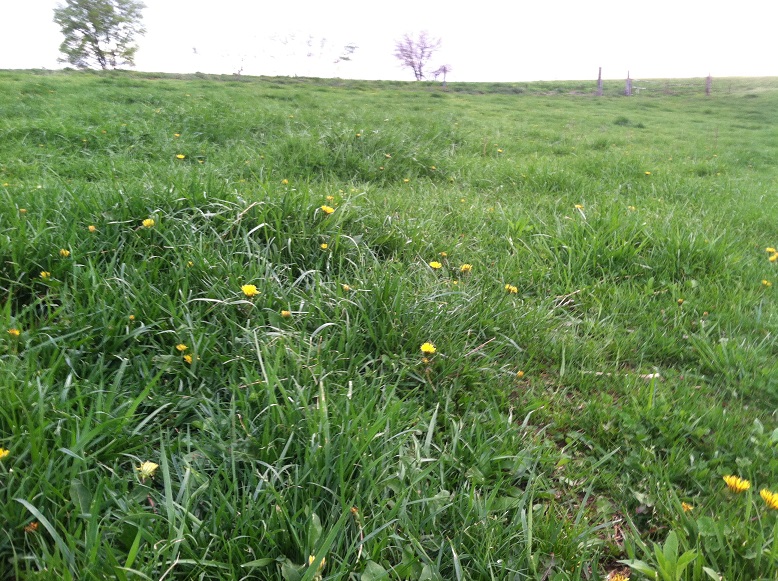
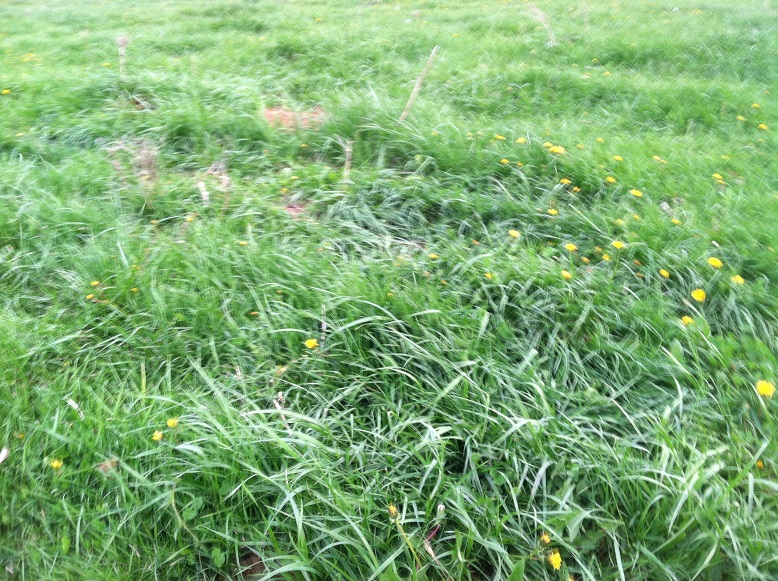
The pasture east of the yellow house should be some of our very best pasture. It’s up on the flat, it’s easy to access and it’s a good soil type. But it just doesn’t grow grass. What grows there is sparse and there is quite a bit of moss, especially on the north-facing slopes. I don’t mind a weedy mess but I do mind the bare spaces. And as I walk the field there are lots of bare spaces.

SparseForage

Seven days from now the cows are scheduled to return here for calving. That’s the plan. But the forage didn’t read the plan. Fortunately the chickens did. Where chicken tractors covered the ground there are distinct stripes of darker green and taller forage. And, yes, I spend a lot of time comparing shades of the color green.

ChickenStripesSo my theory is that the cows, over the years, have grazed this open ground in the cool of the morning then lounged and manured under the trees (mainly in the creek!) in the heat of the day…translocating the nutrients down hill (!!!) and leaving too little behind for the soil biology. One little pass with chicken manure woke the soil up in three narrow bands.

LeftOrRight

It’s a difference of 4-6 inches of forage and a massive increase in leaf area and density. But it’s not just chickens that are capable of this magic. On a whim I put a load of horse manure in the pasture shortly after the cows crossed this ground 3 weeks ago. If anything it was even more magical.

HorseManure

But if you need further evidence I don’t know what to say. The hills closer to our house have been grazed for the last few years by goats, chickens, pigs, turkeys and cows. I honestly can’t tell you that everything is better off for it because there are two places in particular that I didn’t manage the pigs well enough but I can tell you that you can see the difference in the variety, volume and density of forage grown over the entire season. Those grasses now wake up at least 10 days before the rest of the farm and grow fast. These grasses are a foot tall in spite of the fact they have been grazed by cattle and by the layer flock in the last 6 weeks…the layer flock that came out of the greenhouse and ate everything in sight. All this growth in spite of apparent abuse and it’s only April 30th!

CemeteryHill

So I have to get the pasture east of the yellow house on an even footing. After the cows cross that field again in a few weeks I plan to come back through with the manure spreader and a couple of loads of composted hog bedding, though I would rather apply compost in June when we begin our forage slump. I also have several loads of cow manure my tenant left in the barn…and thank God. Beyond that, I need to make my layer flock more portable so I can put them to work scratching, working and helping add fertility over a greater area. And I have to put more birds in chicken tractors. What a difference they make!

We could accomplish this feat with cattle alone but we can speed biological time by using multiple species while, also, building additional profit centers for our farm business. If there is a crash in the cattle market, pigs and chickens could carry us through. The book The Farming Ladder drives this home over and over. Mr. Henderson would add that we should raise wheat and corn(maize) to more fully diversify the farm. But, to stay on point with the post, he would seek to heavily stock the farm. The increase in sheep, pigs and chickens would allow the farm to carry more cattle. I think we have illustrated his point nicely.


Reading Condition in the Herd

Hoo boy. Matron, who knows her beans, put up a picture of Jane in a blog post Monday. Jane is a good-looking cow. She is, apparently, not an easy keeper but she looks great. That is a testament to Matron’s abilities and to the condition of her soils…after years decades of management. I highly encourage you to take a look.

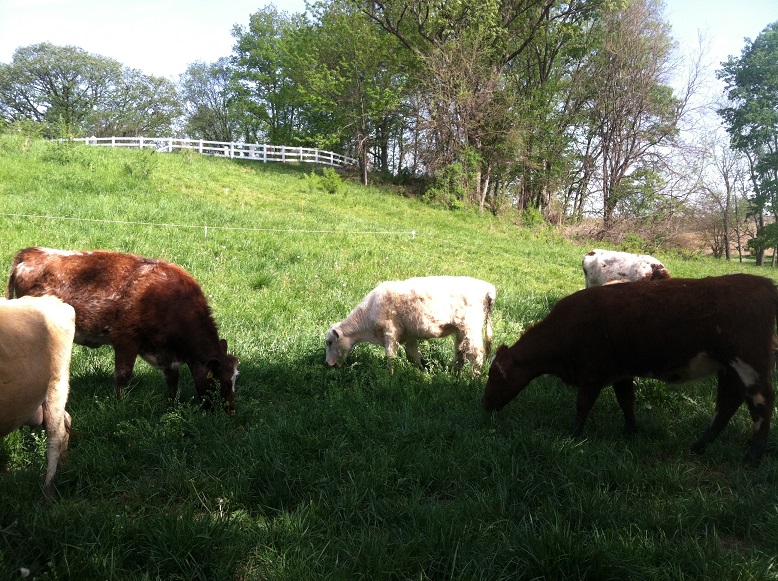
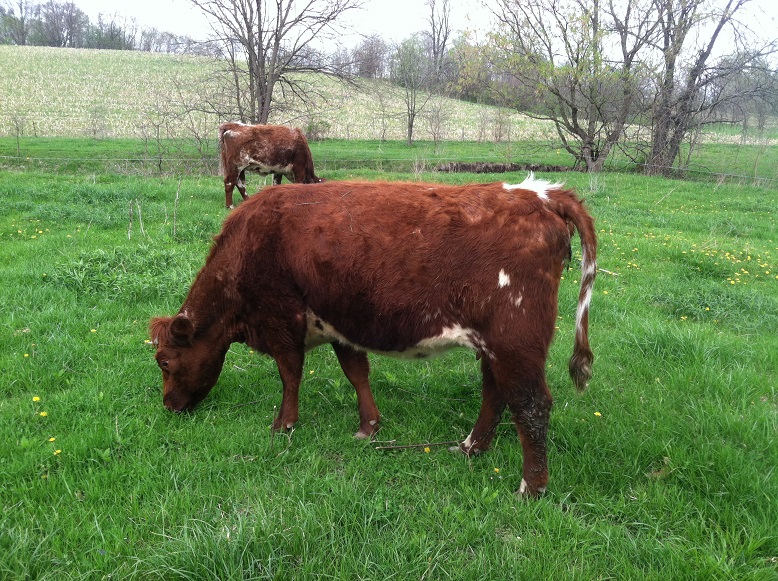
My pastures haven’t been well managed. I still have a lot to learn about grazing. My herd genetics are not what we hope they someday will be. And it is still early in the season so the cows haven’t slicked out the way I hope they will. But some cows just don’t shed their coat well. And those are the ones that didn’t breed last year. But 111 is a fertile, short, fat tank and she is losing her winter coat. But beyond that, Matron always points out that if the cows are properly mineralized they won’t look shaggy…scruffy. I have a couple of cows that are nothing short of scruffy. I think I’m on the right track with our mineral program but I have a lot to learn and a lot of work to do.

111

She really is the future of the herd. I try to look at every cow every day at least once. That’s easy since there are so few. But it’s not just a glance. I look for gut fill by standing at the cow’s left and looking at the gap between the last rib and the pelvis. If there’s a triangular depression there, the cow hasn’t had enough to eat. If it’s full (even slightly bulging) I have done my job. If it has expanded and looks inflated, we need to stop what we are doing and deal with bloat immediately. Short of suggesting you make sure the cows have access to something brown and dry when the pastures are growing fast I’m not going to spend any time on bloat today.

111_Rear

I also walk around behind every cow. Every cow. Every day. How do things look back here? Round? Plump? Are the cows gaining weight from day to day? Are their rumps and tails covered in loose, wet manure? Some of them are. That early spring grass is pretty rich so I’m making it a real point to have a little dry grass hay available to them…even if they ignore it.

Grazing

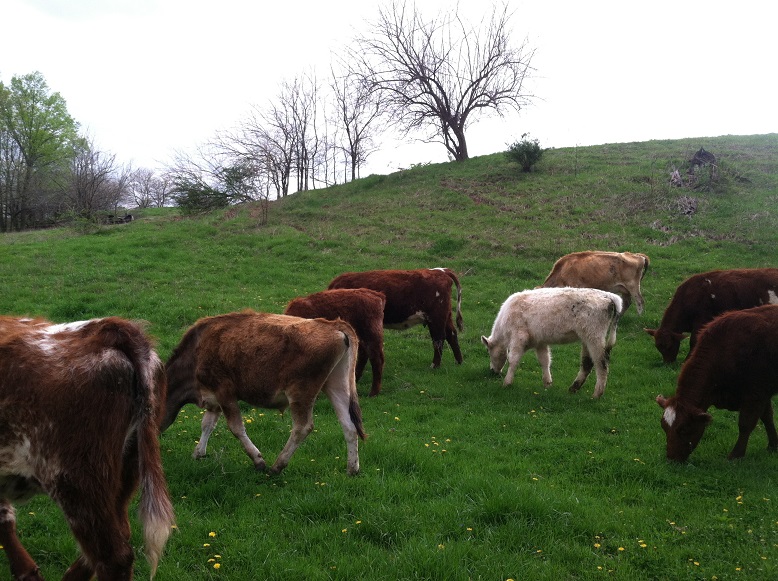
The dairy cows are a little thin for my liking. The beef cows are a little hairy. Some are a little loose. They all get looked over every 12 hours as we move them. That really is the best part of my day. Just listening to the frogs, looking for snakes. Listening to the quiet rhythm of the cows grazing; tongue, rip, breathe…tongue, rip, breathe.

In the video above 41 came into fresh pasture with a full rumen but she went right to work. Cows will always eat a little more…cause if they don’t, another cow will. The grass is fairly dense here, mixed with young plantain and lots of dandelion but not much clover. It wasn’t long before they were all laying comfortably on the fresh ground taking naps and chewing cud. You can see a clear line between the morning’s grazing area and this new, fresh ground. That’s why we keep moving…and keep moving fast. An acre a day…so fast I have a hard time keeping the mineral feeder fenced in with them. That rate would translate to 500 acres/day if I had 5,000 cows. I’ll have to figure something out before we get there…lol.

GrazingLine

I hope your grazing adventures are as fun as ours. Or if our grazing adventures are your grazing adventures, I hope I’m capturing it in a way that is helpful to your vicarious farming dream. It’s not all grass and manure. There is a lot of rolling up fence, pulling fence posts, pounding them back in and carrying heavy things around too. So if you are farming vicariously, go out in the rain and pick up something heavy. Be sure to splash a mud puddle in your boot so every other step sloshes.