Something New For Tomorrow

Our pastor was unable to preach this past weekend so an assistant minister took over at the last minute and knocked it out of the park. During the sermon he said,

If you want something you’ve never had you’ll have to do something you’ve never done.

That quote didn’t originate with Ward Cusic. It is also not from Thomas Jefferson. It may have originated with Nike…but who cares. I’m glad Ward shared it. And with that in mind,

Welcome to 2014. What are you going to do this year? It’s time to be serious about it. Where are you going? What are you doing? Why are you doing it?

We are big on vision. Huge. Julie and I have a number of lifetime goals…things so far out of reach they are hard to imagine (5,000 cows). But we chip away each day. We make plans. To get there we have to go here first. To do that we have to do this. You can see why the quote above resonated with me.

Vision is such a part of my life I talk about it with people constantly…often leading to awkward conversations as I have shared before. It goes something like this:

Easy Question: Where do you want to be when you are 80?
Typical Answer: Oh, I guess I’ll be retired. Maybe taking care of my grandchildren or playing golf.

Harder Question: What do you have to do in the next 10 years to make that future a reality?
Uncomfortable Answer: Oh, I guess I need to…I don’t know. Make a few investments? Keep my job? Maybe get a raise?

Seemingly Impossible Question: Great! What are you going to do in 2014 to make yourself a more valuable employee or begin saving for the future?
Squirming Answer: Um….

Last Question: What are you going to do today to make your retirement dream happen?
No Answer. Usually no audience.

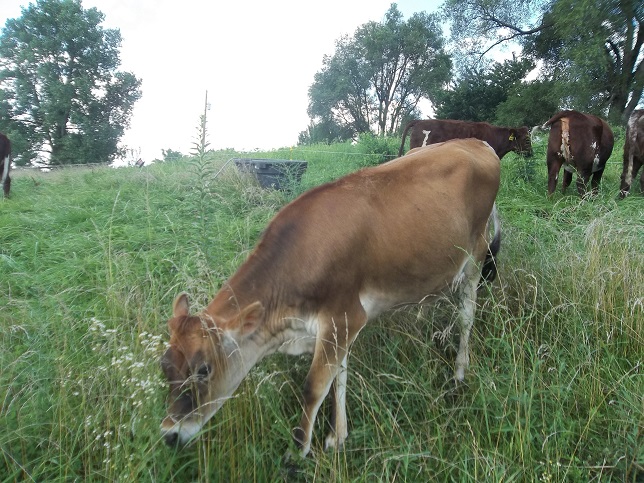
Today I moved my small herd of cattle. I made sure they had water. I checked their mineral. I decided to do with less sleep to bring tomorrow’s reality closer in line with my vision. I got up early to move cows then drove work. The farm is too small to begin to pay our bills so in 2014 we are making plans to add cows. And a few sheep. Start gearing toward farrowing pigs. We are taking over management of 40 additional acres of the farm we bought recently. A little at a time. We learn, we do, we evaluate the results…always adding to the accumulated knowledge, skill and wealth. If you want to manage 5,000 cows you should learn to manage 500 cows. If you want to learn to manage 500 cows you should learn to manage 50 cows….from 5 cows. Build slowly. Take your time. Learn, do and evaluate your results. Rinse and repeat. Keeping my day job along the way.

Many of you visit our blog because you dream of that magical someday when you’ll own a farm of your own. I think that’s awesome. I am excited for you. When is it going to happen? What are you doing today – right now – to make it real? Are you actually reading that stack of books from the library? Have you worked and re-worked your budget to eliminate waste? Do you even have a household budget? There are better resources out there for budgeting so let’s say you’ve already improved your financial defense and your are still behind. It’s time to step up the offense too. How can you earn more money? Art of Manliness has a great series on building a business on the side of your primary vocation (that’s what I’m doing with the farm). But that may not be enough. I mean, we’re talking about buying a farm here, not just buying a lawn mower. We need some serious cash. And fast.

I was reading Bruce King’s blog this morning and found this quote.

“What brought you here”, says I.  “Well, ” he says “I was working on a ranch in Wyoming.  it was a pretty big place; about 96,000 acres, and one day I was riding back to the bunkhouse with the owner, and I asked him how I could start farming, and he said something that really hit home for me.”

“what was that?”

“He said ‘you’ll never get here working for me’.  He told me that I needed to go get a job and earn some money and then come and ranch; that working on the ranch would never get me to owning one.   So that’s what I did.  I went back to school and got a degree, and I’m just about done with working here.  I’ve been here six years, and heading back to Wyoming with the money I’ve saved to buy a ranch. ”

“So you moved here with the goal of earning a nest egg to buy a ranch back there?”

“yep”

Now, you may think it’s odd for the guy who has very public disagreements with his mother about the return on investment of a college degree to quote a guy saying his key to success was getting a college degree but it’s not odd at all. I don’t disagree with college. I question the ROI. At some point we look for alternatives. How can you improve your earnings? Are there alternatives for education? Professional certification?

Are there alternative ways to achieve your farm dream? Could you farm an urban lot? I realize this sounds extreme but could you make a less but keep a higher percentage if you moved to another country? Could you buy land cheaper elsewhere? I mean, if your goal is to live off of your savings and produce much of your own food in your retirement, maybe Nicaragua fits your goals better than Illinois does. How’s that for something you’ve never done?

But how will you get there from here?

You see where you want to go. It’s way off in the distance. But you don’t have to cover the entire distance today. Today you just have to get to tomorrow…the tomorrow that inches you closer to your ultimate vision. What are you going to do today? What you did yesterday didn’t get you where you want to go. It got you here. Today you have to do something else…something more…something new for tomorrow. What are you going to do today that you haven’t done before?

The Return of Surplus

Being the huge fan of farm economics that I am, and being decidedly in favor of individual freedom and thinking the best of my fellow man and accepting, as I do, that the Earth is not just a place to put my stuff but is, instead, a treasure to be…erm…treasured, and because a friend recently emailed me about the questionable sanity of male bloggers with oddly disjointed posts, I offer you this bit of self-indulgence. I present to you…

The Return of Surplus (available in HD)

Surplus is coming back. Let’s return to the world of plenty. My favorite college class was taught by a long-braided hippie lady who seemingly always wore a green dress and was happy to let me be wrong about whatever as long as I could back up my position. She taught a class titled “Nature and the American Experience” or some such nonsense. (Have I ever mentioned that I have a generally negative view of college for unlicensed professions (or of gov’t licensing of professionals? (come on…at least I’m giving you something to think about.))) Anyway, this instructor, whose name has evaporated from memory (Dr.? Ms.? Jan …something?), could not have been nicer and left me with a positive impression of what a hippie person could, and in some ways should be. Julie and I aspire to be similarly accepting of others. And we don’t use shampoo. And we compost our wastes. And we have a big garden. And I have a beard…for now. And I’m generally against war…especially when the warring party considers the best defense to be a good offense. Or when “war” is practiced by hitting wedding parties with missiles. Our real-life hippie cred is way above average.

So anyway, I propose that surplus is coming back into style. It’s what the cool kids are doing. The hipsters. To be clear, I was planting trees before planting trees was cool. Not that it matters. A planted tree is a planted tree, cool or not. And my beard has nothing to do with being a hippie (I’m really a lousy hippie) and nothing to do with hunting (I’m a lousy hunter) and nothing to do with hipster culture (hipsters should laugh ironically at that) and everything to do with having been the hairiest kid in school…being called “Wolfman” at age 12 because I had the beginnings of a beard then.

How am I doing on the disjointed thing? Does this qualify as questionably sane?

There are three permaculture ethics and depending on the bent of the author writing about them you’ll see a different wording for each. The more libertarian writers (you know, leave people alone, let them do what they do as long as they don’t violate the rights of others) tend to write them this way:
1. Care for the Earth
2. Care for People
3. Return of Surplus

The more totalitarian authors (the kind who like to tell other people what is best for them…because it’s for the children) write it out this way:
1. Earth Care
2. People Care
3. Fair Share

Isn’t that nice? It rhymes and it makes us feel good! It’s fair!

Obviously I think there’s a big difference between the two. A big difference. And I’m going to pick on the kind of person who thinks the world would be better if he could just impose his will on others. If you are one of those people, I respect your opinions but I secretly think you’re a tool. If we interpret “Fair Share” as freely giving resources to others we have made Ethics 2 and 3 redundant. I believe the ethics are (or should be) distinct. Hence the “Return of Surplus” in the title.

Rather than focus on how we can feel good about giving apples away to people who don’t have apples (which may or may not be worth doing but is covered by Ethic #2, not a part of this post) we need to focus on returning surplus back into the system. Pretend it is a closed loop. A finite Earth. That when you throw plastic away it doesn’t magically go away. It just gets stored somewhere else. Forever. When you sit on your tookus doing nothing you are taking from the system without returning to it. Just converting oxygen into CO2 and food into…well, not …food…for humans. You are consuming resources and returning nothing of value.

So what do we do with our surplus plastic? I don’t know. Try not to buy stuff wrapped in plastic.

But let’s back off of the Captain Planet message and focus on the farm for a minute. The farm is a closed loop. Cows don’t produce plastic. Cows don’t eat plastic (in fact, those Arkansas tumbleweeds are quite dangerous for cows). We capture sunlight and rain while using plants and fungus to mine minerals out of the soil. Our management of the cows takes full advantage of the stored energy and nutrients while leaving a residual of plant material, manure and disturbance to enhance future forage growth. It’s all an ongoing cycle of transition from one state to the next. The only thing in true surplus is the sunlight and we try to make the most of it. There is no surplus manure. That’s food for worms and dung beetles and fly larvae. There are no surplus flies. Those are food for birds and frogs and ???. If I sell the manure, the hay, the maggots or the worms I have disrupted some portion of the cycle. Somewhat. When properly managed, the relentless onslaught of sunlight brings a level of abundance. We’ll sell surplus cattle to keep the system in balance.

We have removed – not returned – some surplus by selling cattle. So what is all this “return” nonsense?

I have a distinct lack of cash. No surplus cash is available (or ever will be…I promise!). I take surplus cattle and exchange them for needed cash. The cash is returned to the farm. Maybe in the form of fencing materials. Maybe in the form of Irish whiskey to help me cope with the lack of fencing materials. Some may think any Irish whiskey is surplus Irish whiskey. I disagree. There are things we enjoy just for the sake of enjoyment. Things that keep us on the farm. Things that make the back-breaking, heart-wrenching work more bearable. Not just booze (though that is nice) but books and comfy chairs and new boots. Things that weren’t sourced on the farm but grant us a measure of sustainability by keeping us fat and happy. Because if we weren’t fat and happy we wouldn’t be doing this. And sometimes the whiskey helps. Only sometimes. I promise. (But sometimes it really helps. A lot.)

And being fat and happy is the goal. Heck, Crevecoeur wrote about it nearly 250 years ago as he was defining an American in Letter III (A book I read in the aforementioned hippie college class at least 18 years ago):

Here individuals of all nations are melted into a new race of men, whose labours and posterity will one day cause great changes in the world. Americans are the western pilgrims, who are carrying along with them that great mass of arts, sciences, vigour, and industry which began long since in the east; they will finish the great circle. The Americans were once scattered all over Europe; here they are incorporated into one of the finest systems of population which has ever appeared, and which will hereafter become distinct by the power of the different climates they inhabit. The American ought therefore to love this country much better than that wherein either he or his forefathers were born. Here the rewards of his industry follow with equal steps the progress of his labour; his labour is founded on the basis of nature, self-interest; can it want a stronger allurement? Wives and children, who before in vain demanded of him a morsel of bread, now, fat and frolicsome, gladly help their father to clear those fields whence exuberant crops are to arise to feed and to clothe them all; without any part being claimed, either by a despotic prince, a rich abbot, or a mighty lord. I lord religion demands but little of him; a small voluntary salary to the minister, and gratitude to God; can he refuse these? The American is a new man, who acts upon new principles; he must therefore entertain new ideas, and form new opinions. From involuntary idleness, servile dependence, penury, and useless labour, he has passed to toils of a very different nature, rewarded by ample subsistence. –This is an American.

“…fat and Frolicsome, gladly help their father”. Sweet! Men – Americans – no longer suffer from a surplus of forced free time. They are rewarded for their labor! Well, that was the American envisioned by Crèvecœur. I’ll leave it to the reader to decide if that every really came to be. Or if it was and was lost. Or if America is a place or an idea. Or if it is required of an American to live in the United States. Or if the United States has become increasingly welcoming or increasingly hostile toward Americans.

So that brings us to surpluses the farm can absorb. The farm can absorb all the manure my cows can drop. No problem. The farm can absorb all the labor my wife, children and I can spare. Further, the farm can absorb all the labor I can hire.

So let’s really address surpluses. It is not outside of the scope of imagination that I could grow more apples than I could eat. More, even, than I could feed to pigs. A true surplus. I have several options available to me. First, I could press a portion of the apples to make hard cider…making the farming more bearable…and the winters warmer. Possibly leading to additional children. Bonus. But let’s imagine that I have so many apples that I can make so much hard cider I couldn’t possibly begin to drink it all. Now, like the surplus cattle, I need to move these surpluses off of the farm. Unlike cattle, surplus apples are available in small quantities. It would be entirely possible for me to trade my surplus hard cider and exchange it for something you have in small surplus. And if you own nothing I suppose you might have time in surplus. And it just so happens that my farm can absorb all the time we can throw at it. There is always more work to do!

This is radically different than charity (and we make major allowances for charity, see Ethic #2), it is radically different than “Fair Share”. It really is fair. “I have this. You have that. Would you like to trade?” That’s very different than saying, “Don’t you feel guilty that you have so much when so many have so little?” Nobody has to hang their head. Nobody is a loser. There are no greedy bastards. No guy with all the apples. No guy with all the free time. It is a mutually beneficial convergence of surpluses. My surplus apples are being returned to the farm…whatever the form! Return of surplus.

Dad was recently approached about buying hay for a woman who keeps horses. She was turned in (to the horse feeding police?) because her horses were reportedly malnourished. The vet who examined them found that one was fine but not fat (horses around here are all fat), the other was old. You know…old. As in, may be lacking teeth and having a hard time maintaining weight because it is…old. But they’re collecting hay for her anyway. Grass grows in surplus in our part of the world. Pond edges, field edges the front yard (yeah), alfalfa that couldn’t be cut because it got too cold to cure and the always present roadsides. How about this, horse lady? How about you cancel your Satellite TV, you put your horse on a lead rope and you go soak up your excess time soaking up excess forage? You, the horse and the grass will all be better off for it. I mean, if you have Satellite TV and horses you can’t possibly need a share of my production/labor/assets/whatever. That doesn’t seem fair as I have neither Satellite TV nor horse…nor desire for either. But you and your equine can achieve an equitable trade for your free time and solve your feeding issues. Or just shoot/sell the dang horses and give yourself more completely to the gods of television.

Now I have ticked off totalitarian warmongers (republican or democrat), hippies, hipsters, hunters, horse-owners, people who value sitting on their couch, people who still believe the myth of the college degree and 90% of permaculturists. How’s that for a self-indulgent, questionably sane, rambling post?

If you are interested, the books I remember from that class were:
Letters from an American Farmer and Sketches from Eighteenth-Century America
A Sand County Almanac
A Narrative of the Life of David Crockett of the State of Tennessee

Go ahead. Check those out from the library, discuss them with a group of peers and give yourself 4 imaginary credits toward a fancy piece of paper. It may help you make a lot of money someday and costs much less than similar imaginary credits from our competitors.

Budgeting Time

So, Chris. How much money do you make?

None of your business. But let me say this, we wouldn’t be here if I didn’t have a job in town. 10 cows, 8 pigs and 100 layers and 1,000 broilers amount to little more than a hobby. This blog earns me a negative $27 each year. Nobody pays me to write. I just need a creative outlet and appreciate your readership and feedback. That said, I’m uncertain of the value of the time I spend writing. Certainly something to consider.

With that in mind, it’s time to figure out what we’re going to do next year, why we are going to do it and how we are going to pay for it. No real answers in this post, just questions.

I need the farm to grow. I have this weird dream that someday I could derive the majority of our income from the farm itself. But it’s not going to happen with 10 cows. It may not happen with cows at all. But we’re going to drive that direction until we hit a roadblock. How much will that crash and burn cost me? A lot. But how much will it cost me next year? We have to figure that out.

And not just that. We have to budget pasture usage. What ground will rest? What will be stockpiled? Where will we plant trees? Where will we calve? When will we schedule a bull? What will that cost? Should we AI everyone and just use the bull for cleanup? Where will we cut hay? When? With what? Are we going to put up a few thousand square bales this year or should we buy a round-baler? What about next year? Will we have enough cows next year that we’ll utilize the whole pasture and just buy in whatever hay we need? How can I partner more closely with my father to build a multi-generational future now?

What about pigs? I am already receiving orders for July pigs. How many should I raise? Where will we raise them? They are awful hard on pastures. How will they fit into the rotation?

How about chickens? We obviously need more layers as we can’t begin to meet the demand for eggs. But that also indicates we need to raise prices. What is the next price target? How many customers will that scare away? Should I shoot for 250 layers June 1 and begin a 6-month replacement program, selling birds at their first molt? Should I keep birds until their second molt and make stewing hens? We haven’t seen a lot of success marketing stewing hens to this point. Maybe I should protect first year layers behind netting but just let second year birds roam behind the cows in egg-mobiles, knowing we will lose some. How can I lower our feed requirements? Can I eliminate soy?

And turkeys!? Just today I got orders for turkeys. Do they really fit into our operation?

If the overarching goal is for me to earn my full-time income from the farm and to build an empire that will include my children and their families, well…I have to get off of my tookus, sharpen my pencil and figure some of this stuff out.

There is a lot to think about with the coming year. A lot for me to figure out. Not just goals but how to pay for goals and how to determine which goals will pay for themselves. And this is just the farm…just a percentage of our total household budget. I have the rest of the household to figure out too.

This is a lot like work. I hope you are working on it too…both in your business and in your personal life. Money is hard to earn and easy to spend. A little purposeful reflection and restraint go a long way.

Next week may simply be next week. But next week is also next year. Next week or next year, head toward it with a plan…a destination in mind. Don’t be like Alice.

‘Cheshire Puss,’ she began, rather timidly, as she did not at all know whether it would like the name: however, it only grinned a little wider. ‘Come, it’s pleased so far,’ thought Alice, and she went on. ‘Would you tell me, please, which way I ought to go from here?’

‘That depends a good deal on where you want to get to,’ said the Cat.

‘I don’t much care where—’ said Alice.

‘Then it doesn’t matter which way you go,’ said the Cat.

‘—so long as I get SOMEWHERE,’ Alice added as an explanation.

‘Oh, you’re sure to do that,’ said the Cat, ‘if you only walk long enough.’

Where are you going?

Heavy Metal Clutter Cutter

Oh, the iron on the farm. Tons of it. Literally. There’s a pile of metal here, a pile of metal there. A ditch full of metal in this place, little piles of scrap behind sheds, enough to fill a shed over there. Why do we have all of this? How many freezers and refrigerators and washing machines have been owned by my family since the ’50’s?

IronPileThis is really a question of resource allocation. I have a fair amount of wealth in the form of steel but this thinking could also apply to wealth in the form of oil. It is already wealth. Just sitting there. The scrap has value and is valued. But is it what I need? Do I need savings in the form of rust in the pasture? Would I make a better return if I converted that metal to cash then deployed that cash to buy productive assets  like additional cattle? Or sheep? Or fencing? Or a new pond dam?

The wealth contained in the various iron piles doesn’t have to be spent off-farm. We can just turn it into a more valuable resource here at home. And that is important. We can’t simply mine the wealth out of the farm so we can buy a newer, larger TV or a luxury car. That money needs to go into productive assets…that wealth needs to exist tomorrow….needs to be multiplied tomorrow. Trees that make more trees. Cows that make more cows. Clover seed that makes more fat cows.

And I think this can be applied closer to home. In the home. Heck with the farm. How much sCrap do I have laying around the house I can just get rid of? How many bad farming books I won’t read a second time? How much rotten science fiction? Lame leadership books? Completed Bible study workbooks? Do I need seven different Latin textbooks? What about our collections of …well…collectibles? What if we realized the value of those objects (great or small) or the value of the space they consume and, instead, deployed those resources on more productive assets? What if I got rid of enough junk that we could live in a smaller house?

Returning to the farm (or the garage) we can go further! Do I really need that tractor? What would I do without it? In your suburban yard, do you really need that riding lawn mower AND that treadmill? What if you sold both and got a push mower? Just sayin’.

Mom and dad just went through an exercise of throwing away 10 things each. Well, they started doing it. It would be much easier to just go to your neighbor’s house and throw away 10 things. No emotional attachment. Not a good idea but it would work really well. It’s always easy to spot junk when it belongs to other people.

Here’s to streamlining our needs and cleaning up 8 generations worth of trash accumulated in the ditches. Wish me luck.

Rome Wasn’t Built in a Day

I used to carry my production schedule everywhere I went. It contained customer contact information, order dates, frost dates, birthdays, notes about President Cleveland…everything. Inside the front cover is a note to myself saying “There is no get rich quick in farming!”

RichFarming

I needed that reminder. Everything moves slowly. Things take time.

Our pastures are lacking in plant diversity, minerals, humus and just biological life. We have cow paths across all pastures with compacted soils beneath, from years of open pastures. The cow paths only turn where a thorny tree blocks their progress. Given the option, the cow will walk a half mile for a bite of sweet grass…always taking the same path. That sweet grass is slowly selected against because the root system never grows out, the grass is not allowed to go to seed, the plant fails to tiller properly…the cows just love it to death over time. Then the cows lounge under the same grove of trees each day compacting the soil under the tree (killing hardwoods) and concentrating nutrients gathered from the entire pasture in one spot. This happened over time. You can’t fix it immediately. It is a slow process.

Our cows are no longer genetically adapted for grazing only. They are built to eat grain so they can wean heavy calves…no matter the cost. This didn’t happen overnight. For years we (cattlemen) kept back the biggest heifers. Then we kept their biggest heifers. Then we fed a little grain to get those heifers fat enough to breed. Then a little more grain. The genetic makeup of the herd doesn’t make an immediate return to grass possible. It has to happen over time.

I dare you to go out and pay cash for a half-million dollar farm. You can do it…eventually. But if you are like me, it will require a lifetime of production and savings and frugality to pile up the cash a little at a time. Just like building fertility in my soil. Just like returning my herd to grass. Just like everything else. There are no real shortcuts. It takes time to heal…to grow.

I was thinking of this today when I decided to write my wife a letter. Like everything else, my relationship with my wife requires consistent investment spread over years. She doesn’t need a daily list of chores from me (well, she does) she needs reminders that we are partners in this, that the dream we are living is ours (not mine)…that I believe in her and that I will always love her. There is no get rich quick in farming. You can’t make up for years of neglect with one afternoon’s worth of work. This is even more true with loved-ones.

Julie,

I am very proud of you. It seems like I never find the time to say it though. You are a great friend to me, a wonderful mother and a fine cook. You are beautiful, strong, healthy and intelligent. None of these attributes came after a reading a how-to book or by changing your habits for a week. You have made small changes over time and have stuck with it making a big difference in many areas of our life. Let’s look at a few examples.

You have never had a problem with your weight but last year you started making a few changes…changes I resisted. You stopped baking bread and started drinking lemon water. Lemon water! You made many small adjustments to our diet…so many and so small I don’t even remember what they were. Over time I couldn’t help but notice that your shape changed…in a way that I liked. This isn’t because you started some fad diet or some intense workout regiment…except for the 21-day sugar detox. It is the result of small choices over time.

We home school our children. This started out simply, teach them to read and cipher and the rest will take care of itself. Over time that has changed. We have added complexity and, later, simplified again…over and over. But always with small changes. Nothing drastic. We just stick to it, working through the problems that come up, taking them on one at a time.

On the farm it is much the same. We started raising a few birds for ourselves and a few extra to sell. We initially bought 24 layers not knowing what we were doing but thinking that was starting small. Then we got Olive for milk. Later, we got 3 pigs…then 8 pigs. Then cows. Then the farm. Then more farm. Always moving toward a specific goal, always moving slowly, growing organically. No huge leaps, no big changes…just small tweaks. We try something, evaluate the results and make additional small changes. Together.

Now you are starting a new business selling (FDA says I can’t say the vendor’s name) oils. Again, this is a methodical process. Learn the products, attend classes, teach classes, attract interest…rinse and repeat. Over time your knowledge of product, of business, of clients increases. Over time your revenue builds until, at some point in the future, your income will replace mine.

None of these are 30-day cures. These are major shifts brought about by a series of small decisions over time. We both know I am resistant to change and, at times, have been less than supportive but I see where things are going and I believe in you. I know you will succeed. I am with you.

So tomorrow morning when you continue your newest practices (listing the 6 most important tasks for the day and yoga) know that I am proud that you are my wife. No matter how I react to the small change du jour, I am behind you 100%. I am with you and I am supporting you. I love you.

Business or Chore List?

I have nearly 3 hours in a car every week day. 3 hours. Sometimes I use that time to just think. Sometimes I need to decompress on my way home from a stressful day. Sometimes I sleep while my carpool buddy drives. A fair portion of the time I listen to podcasts.

I have mentioned the Agricultural Insights podcast previously. The host does a great job of finding informative and interesting guests and this week was no exception. Give a listen to “Ranch Management and Ranching For Profit with Dave Pratt.” Rather than steal Chris’ thunder and give it all away (like I probably did last time) I’ll share one idea that impacted me positively…giving me something to think about in the quiet times of the drive.

Do I have a business or do I have a collection of assets and a chore list?

At this time, probably just a collection and a list. How do I change that? I’ll let you know as I figure it out over the next few decades.

If you are interested in putting your hands in dirt I highly recommend listening to the podcast above and reading up on additional resources Dave Pratt makes available on his site. After listening, if you liked what you heard, go ahead and subscribe to the podcast via RSS or iTunes. Just having more subscribers, even free ones, helps Chris deliver a quality product and makes it available for free for the first two weeks after the release date. You might also consider a paid subscription, something I am weighing myself.

I have never met nor have I any affiliation with Chris Stolzer. I’m just making a recommendation for something I like.

Better Because it Costs More?

What is a car supposed to do?  Why do we need them?  From a utilitarian perspective, we simply need them to help us get from A to B.  Do leather seats help us get from A to B?  No, but somehow a car with leather seats is normally considered better than one without. In fact, the less utilitarian a car is the better it is, up to a certain point.  I mean, I would probably enjoy driving a Lamborghini but not when grocery shopping. So there are two things there, Price has little to do with function and every paradigm has its limits. This applies to cows, land and money equally.

The price of money is particularly interesting (pun intended).  Money today is worth more than money tomorrow.  That’s why we pay more for it.  In part, this is also true because our central bank is targeting inflation, destroying the value of currency over time but even with a stable currency, money today costs more than money tomorrow. We want it NOW! I have to INTEREST you in deferring consumption today so I can use your money now…so I offer to pay you back more than you loan me. Similarly, if I borrow your cow I can’t repay you in 5 years with the same or equal cow.  You have lost 5 years of calves from that cow and, potentially, additional calves from heifers those calves would have birthed. I would have to INTEREST you in loaning me a cow…or herd…or even just a bull for stud service. I recently borrowed a bull and I am expected to repay the same bull plus $20 for each cow covered. How is that different than interest on money? Everybody involved is participating voluntarily so everybody believes they are better off in some way at the end of the day. Well, that’s how it should work but we have this central bank thing that dictates what borrowed money should cost today which really gums up the works for everybody unless you’re borrowing in terms of cattle and they butt out). That’s a topic for somebody else’s blog though.

Bull2

Back to the point. Money today is more expensive than money tomorrow…but is it better? And, if it is better are there any limits to the “better-ness”?

Hoo boy. Well, I guess it can be…or can be perceived as such. I mean, I borrowed money to buy the farm because I thought I was better off with the farm today than I would be if I waited till I was 60 and had the cash. Plus, the farm I want is available today.  Would it be available in another 25 years? Further, farming is a young man’s game…especially the getting started part. If I don’t get started I’ll never get going. So we borrowed…but not without reservations. Reservations you’re probably tired of reading about.

Borrowing can be a really bad idea too. We don’t borrow for consumption.  We don’t use credit to buy hamburgers, t-shirts or even cars (which means we take care of our cars…they last a long, long time). We even buy our livestock with cash…forcing us to grow slowly and deliberately. I could see a time when I would want to grow the herd quickly, forcing me to borrow tomorrow’s calves today but I would hate to explain to my banker that the cow I bought with his money died. I would also hate to make payments on a dead cow. 

Further, because future money is available for buyers today, prices today tend to go up. If everyone had to pay cash for cars and houses we would have fewer dollars chasing after scarce goods…prices would have to fall (which is great if you are poor or have savings but horrible if you owe money on depreciating assets). But we live in the opposite world. In the current economy we can borrow money for houses, educations (lol), cars, farms, cows, hog buildings, tractors…you name it. Every loan puts more and more money in competition for the same number of goods…driving prices higher (which is horrible if you have savings or are poor but helps out borrowers). If our economy lacked available credit, the perceived currency value of my farm would have to fall (see 2008)…and my lender would get nervous. But that’s part of the deal. My banker is betting that my farm will retain value and that I will be able to repay…otherwise he wouldn’t voluntarily loan me money.

So because of easy credit, prices are higher. Does that higher price make my farm better than it was when my great, great, great….grandpa paid tens of dollars for it? No. The work that went into the farm over the generations makes it better. The lack of work that went into maintenance in the last 20 years makes it worse. Price has nothing to do with “better”. The “better” of the thing has to do with the work we accomplish with it. Farmers vary in skill level. A skilled farmer is going to do a better job with the land. I have to be more skilled than the farmers who came before me or I will have wasted the land, money and time.

Family

Maybe you disagree. Maybe you are happier when you pay more for the same thing. I dunno. I tend to look for sales or buy things second hand…or third hand.  But the cost of the thing has nothing to do with the “better” of the thing. If I need it, I need it. If I need it immediately I’m going to have to pay more for it. As we farm we try to limit our immediate needs. We try to plan years in advance. Years. Decades. Lifetimes. What will my great-grandchildren do with their inheritance? Can I influence that now? How much do I have to pay now to make things better for my grandchildren? Do I pay the future by not having a second vehicle? Do I pay the future by enslaving myself to the farm and to an off-farm job? Do I pay the future by avoiding eating meals out or by not going to see a movie? If the goal is to build better futures for my children’s children I have to pay a lot now. Does the future get better as I pay more for it? It might if I’m thoughtful about how I use my resources in the present. When does that paradigm run out? I doubt I’ll ever know.

So what if you don’t have kids? Does this matter to you? It most certainly does! The money part of the farm has nothing to do with the better part of the farm. You, as a steward (the dirt will outlast you), should be working and investing in future generations, even if they aren’t your kids. There are consequences to your actions. You don’t live in a bubble. Make choices that positively impact the community around you. Yes, it will cost you something; time, energy, cash. But that’s just part of the deal. You can’t simply consume your way through life. That is, I feel, immoral. Make a positive impact. Go out and “better” something. Do it cheaply if possible.

…and Then There Were 60

Why so many posts about the budget recently?  Because yesterday was the day.  We bought another 40 acres to complete the property purchase.  I literally bought the farm.  I have to tell you, it’s weighing on me.  It isn’t enough to simply pay the note on the loan, we have to build several businesses AND keep a job in town AND raise children AND remain somewhat socially involved all at the same time.  The first goal is to get to 30 cows.  30 cows and we’ll raise their calves, always keeping the best heifers.  60 acres.  That way we can de-stock the farm if the weather turns sour without impacting our core breeding herd.  Then, someday, we’ll rent more ground and increase the core breeding herd.  First things first.

30 cows.  I have 10 now.  I need 20 more.  This year we should have 4 heifer calves.  16 more $900 heifers.  $14,400.  Where is that going to come from?

And we need more eggs.  Many, many more eggs.  Customers are demanding more eggs.  More chickens.  More fencing.  More money.

And we need to raise more pigs.  Maybe start farrowing.  That will require additional infrastructure.

And the current farm infrastructure needs a LOT of repair.

I’m going to stop talking now.  How about a tour of the new land instead?  Let’s just see what’s out there with a little commentary.

Making the Transition to Full Time

This spring we attended the 2013 Family Economics Conference.  We feel this was a good use of a few hundred dollars and a couple of days off.  We bought, and recommend, the DVDs of the presentations.  Among other speakers, we saw Joel Salatin speak 5 times.  We limited ourselves to bothering him just 3 times after he spoke including a small gift of some essential oils.  One of Joel’s topics was titled, “Going Full Time with Your Part-Time Farm”.

Salatin

Again, I think the DVD or the MP3 are worth your time.  Rather than go point by point in detail I would like to focus on one point of his talk: becoming a low cost producer.  He also discusses value adding but I’ll leave it to the reader to obtain a copy of the speech for yourself.  I think the whole conference is worth buying and I might prefer the MP3 over the DVD as you get more for less money.  Also, one of the speakers tends to flap his arms quite a bit and that’s distracting.  You don’t notice that in the MP3.

Chism Heritage Farm sells premium products.  We sell things you can’t buy elsewhere and are in demand but our supply is limited because we are small.  Our marketing ability is also limited.  These ideas come together when we realize we can only ask so much for our eggs before we begin driving customers away.  The best way for us to widen our profit margins is not to raise prices.  The best way is to lower our production costs (which will enable us to lower our prices).

Utilization and Ownership

There are several things we can do to help keep costs low.  The first is to make sure that everything we buy is fully-utilized.  The most utilized equipment on our farm is a 5-gallon bucket.  We use them for everything.  We haul water and feed (rabbit feed, chicken feed, pig feed, cow minerals).  We have used them to carry 5 or 6 chicks at a time when moving from brooders to pasture.  We use them to hold chicken offal when butchering.  Apple drops, peach pits and skins and kitchen scraps for the pigs. They make handy containers for moving gravel, for protecting wheat for long-term mouse-proof storage. I use a bucket to carry matches, paper and tools when I trim brush and cut wood in the winter. If all else fails, we can use a bucket to catch water that drips in the leaky roof. Not every bucket is full every minute of the day but we spread the cost of the bucket across each additional function. Now, apply that thinking to a lawn mower. How many different operations can you spread your lawn mower across? The utility of the good has nothing to do with the initial price. Tractors are very useful and can power any number of implements…but those implements, like lawn mowers, tend to only perform one function.  Our wagons can be useful but this year the baler put up less than 500 bales.  Now it will sit for another year.  And we have a spare.  And a shed to keep it in.  Not to mention the mower/conditioner and the rake that were barely used this year.

HayRestack

So to keep costs low, we have very few farm implements and barter/borrow the use of the rest from my dad. That’s the closest I’ve come to asking my parents for help since I got married. Salatin says, “A profitable farm looks pretty threadbare.” Our feed grinder was purchased for scrap price and we have kept it together for four years so far. We initially bought it to grind chicken feed but we also use it to grind hog feed.  The initial cost was low and we spread that costs out between two operations. Now, truth be told, we really shouldn’t grind feed at all.  We should have it delivered and allow another operation to spread that machinery cost across a wider number of customers while also saving ourselves time and labor. As we grow, this situation will be changed. Along with this thinking, we should not own hay equipment.  We should allow someone else to have the joy of ownership and maintenance of that equipment.

As a final note on this thinking, remember Gordon Hazard?  The following quote is from this article.  As you read this, remember that Hazard raises 1,800 steers on 3,000 acres.

Hazard operates with a 1996 Dodge Dakota truck, a Polaris Ranger, a 14-foot stock trailer, one horse and saddle, a portable loading chute and $100 of fencing tools.

“I can get everything else I need done from custom workers or my neighbour. Why are you going to bother your neighbour? Cuz he’s got payments to make on that trailer.”

Stack Enterprises

Just like spreading equipment costs across multiple functions can lower the production costs associated with that equipment, spreading land use across multiple enterprises lowers the impact the cost of land use has on each enterprise.  Salatin gives the example of his hoop houses holding rabbits, pigs and chickens in the winter then vegetables in the summer.  What does that greenhouse cost?  What does the square footage within that greenhouse cost?  It’s nice to run cattle around your farm but cattle tend to be low-margin, even if low cost.  But if each acre covered by cows is also covered by sheep, pigs and chickens we’ll see higher resource utilization, higher nutrient cycling and lower land costs per enterprise as now we’re spreading the land cost over 4 businesses instead of just one.  Can this go further?  Sure.  We could add fruit and nut trees and shrubs.  We could harvest timber and firewood.  We could build bird nesting boxes and invite birdwatchers to our farm.  The possibilities are endless…the more we keep stacking enterprises per resource, the more the cost per unit of production continues to fall.  It’s this kind of thinking that allows McDonald’s to lose money on a hamburger and make it up on sales of soda.  Eggs may be a loss leader for us until you factor in the value of the manure and pest control.

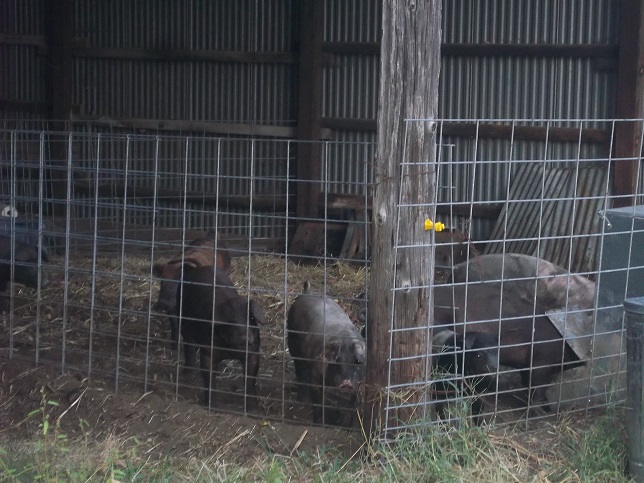
Piggies

Use Your Time Efficiently

Labor is expensive.  Everything you do takes time but the time spent with the cows is mostly accounted for in the travel to and from, not in moving the cows between pastures. It does not take significantly more time to move 500 cows than it takes to move 50 cows but the travel time is split between more animals. Salatin connects two eggmobiles so the resources used moving one chicken house moves two houses instead. Beyond simply economies of scale, Salatin delivers hog feed once per hog pasture. He delivers just enough for the entire time the hogs will be in that location.  No return trips with more feed, just move the pigs to the next prepared space.  Every feed delivery comes at a cost.  Minimize those expenses.

Rent or Lease Before Buying

Salatin points out how many acres have been abandoned…land that was in use for agriculture 15 years ago and is now entirely unused (reverting to forest). He sites a Cornell study that identified 3.1 million acres that have been abandoned in New York. There is more productive land out there than people to farm it. Often that land can be rented or used for much less than the cost of ownership. With your high-use, portable infrastructure it’s no big deal to just pack up and move to the next land lease. Salatin says “You don’t have to own any land to farm” and later, “Because the price of land no longer bears any resemblance to its productive capacity, we very well may be entering a time where people buy land for economic defense […] and people that don’t have money are going to become the farm managers.” In his book You Can Farm he suggests that renting is the way to build wealth in agriculture, land ownership preserves that wealth.

Practice Function over Form

Pretty does not equal profitable.  The pretty white-picket fence, well-manicured lawn and a new home tie up capital that could otherwise be employed toward productive endeavors.

“A profitable farm looks pretty threadbare.”  Borrow a tractor.  You don’t need much equipment.  In his video Pigs ‘n Glens (which I highly recommend) he says everything you need to fence in x pigs can fit in a 5-gallon bucket.  Sure, you need some way to deliver feed but you don’t need to handle the pigs.  He WALKS them to and from pasture.  That’s what we do too. ChangingPigPastures3

Use your infrastructure.  Just like the 5-gallon bucket example, if you have a tractor, use it as much as you can. If the equipment is single-use (like our chick brooders) build them as cheaply as possible and make them last. Our farm does not look like one you would see on a magazine cover but I’m not paid to produce magazine covers.  I am paid to produce chicken, pork and beef for your table.  Pretty, painted fences won’t make the steak taste better, just more expensive. A new machine shed would be nice but how will I pay for it?

We are working to provide you the most nutrient-dense, safe and flavorful products you can buy at the best price possible.  To accomplish this we don’t drive new cars.  We rarely buy clothes.  Everything on the farm could use a coat of paint.  We use it up, wear it out, make it work or do without.  It is even painful to us when we have to retire a 5-gallon bucket.

It is these thoughts I keep in mind as we continue to farm part-time.  There are a number of reasons why I have to keep my town job, not the least of which is I still have so much to learn.  Over time, application of ideas like those presented by Salatin above will enable us to make the switch.  Let me know if you have any other ideas to give us a boost.

Budgeting Your Day

Two recent posts (here and here) were entirely concerned with money.  If you live in town your budget may not be radically different than living in the country…except it is easier to save money on food out here.  You could build a business in town though…say…lawn care.  Either place, how do you fit building a business into your schedule?  Not just running a business (mowing the grass) but building the business (finding more lawns to mow).

Stephen Covey shared time management quadrants in 7 Habits of Highly Successful People.  Those quadrants help you to identify what is important and what is not important then what is urgent and what is not urgent.  If you don’t get important things done in a timely manner they become urgent.  If you have nothing important to do…well, maybe you should revisit your goals….like…establish some.  Ideally, the bulk of your time should be spent on tasks that are important but not urgent, like planning out your week, building relationships, etc.  Though sometimes there really are fires you have to put out, your farm or business will not continue if all of your important tasks have become urgent.  Plan ahead and complete tasks before they sneak up and bite you.  For example, last year we were butchering chickens and the cows needed to be moved.  Their need to be moved became so urgent they took matters into their own hands.  That delayed our chicken butchering by several hours giving us an urgent and immediate need to sleep.

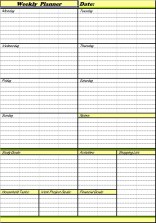
Julie and I sit down on Sundays (well, most Sundays) with our planners to line up our calendars.  We look at what is coming up this week and plan out larger events ahead of time.  This helps us avoid being double-booked.  It also helps us identify chores that are beginning to shift toward urgency…like butchering ducks.

Planner

So what is MOST important?  Moving cows is important.  Gathering eggs and feeding chickens is important.  But none of it matters if I don’t have any customers.  It is of the highest importance that I spend time building my business…building relationships…meeting my commitments.  In could write a whole series of posts about the importance of building your business and ways to go about it.  To keep it short, the business side makes the it possible for me to have cows because I would rather do nothing for nothing.  The most important thing to do is build my business in a myriad of ways, including this blog.

But it’s not always that simple.  There are only so many hours in a day.  With my work schedule (which I can’t modify) and with my commute (which is long) I get at most 3 hours to work on the farm on weekdays.  In the winter I work outside in the dark.  In the summer I work in the fog of mosquitos.  But the weekends are the real chance for me to catch up on chores.  On a typical summer day I get up early, check my live trap for kittens that trapped themselves then turn on the watering hose and go look at the cows.  Everybody still where they are supposed to be?  Good.  Then I mosey on over to the chickens.  Some mornings I go ahead and gather the 18 or so eggs that are already in boxes.  I move the chicken houses, check feed, fill water and head on home to shower and shave.  I usually remember to turn off the cow water when I’m in the shower.

Then a bunch of stuff happens at work and suddenly it’s late afternoon.  The paid work day has ended.  Once I get home it’s time to get moving.  I’m not heading off to play cards at the Moose and I’m not watching Wheel of Fortune.  I’m sharpening my chain saw, laying out the next day’s pasture or otherwise keeping myself busy.  Maybe broadcasting seed in the pasture, weeding or harvesting the garden.  Maybe just estimating pasture and checking recovery.  Maybe chopping the goldenrod the cows didn’t trample or picking up that pile of firewood I forgot about and the cows discovered.  I have to do my level best to knock out important tasks before they become urgent.  It’s getting late.  Better head in and see what the kids are doing.

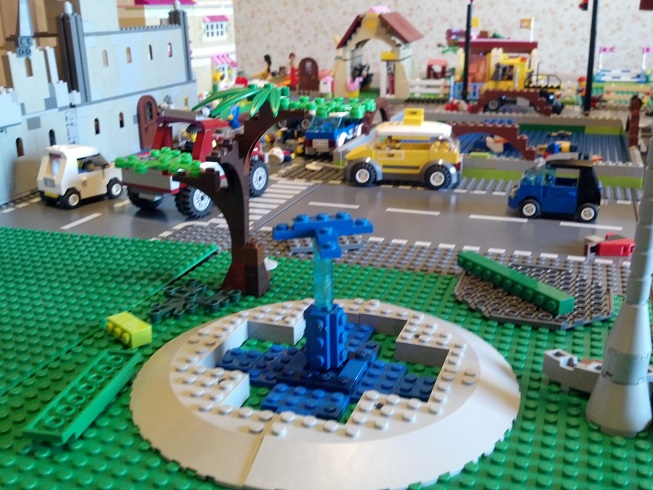
Did you know I have children?  Sometimes they are out working with me.  Sometimes they are sledding while I’m cutting wood.  Sometimes they are hiding from bugs, playing legos, reading books or otherwise waiting for me to come inside and crack a few jokes.  There’s a good chance the kids ate without me since they go to bed at 9.  I have a few minutes to work my Lego magic, show them who is still king at Mario Kart and have a few laughs together.  Then the kids go to bed and I read a book.  At some point, I’ll turn to my lovely bride and ask her the question she knows is coming…”Want to watch Star Trek?”  Then later one of us will ask the other, “Why did we stay up late watching that stupid show?”

LegoTown

That’s a fairly normal day.  The evening varies widely but that’s about the shape of it.  How much time did I spend building my business?  Well, I didn’t really build my business, I just worked an hour in the morning, maybe 2 hours in the evening.  That’s plenty of time to run cows but not enough time to build a business and it’s certainly not enough time to raise broilers.  What can I cut out?  Well, I could go to bed earlier but it’s dark after 9 anyway.  I could skip supper…oh I already did that.  How about the kids?  Do they really need me around?  Shoot.

And don’t even get started on Julie’s day.  I have 12 hours of showering, driving, sitting and writing code.  She has 12 hours of …well, I asked you not to get me started.

Weekends are, if anything, worse.  Basically the same chore list plus an opportunity to attack bigger projects like putting up hay, butchering chickens or hauling scrap to the scrapyard.  To be honest, in 12-15 hours on weekdays and another 20-25 hours on weekends we’re barely getting ahead of the work.  Buildings to repair, fence to rebuild, brush to cut, fallen limbs…the list never ends.  We only have so much money…but you can borrow money from the future.  You only have so much time and that’s it.  You can’t beg, borrow or steal time and my business needs more time.  My kids need more time.  My wife needs more time.  I want to watch Star Trek!

Dad suggested that my time on the farm is less valuable than my time at a desk…hence the desk job.  So maybe I should hire someone to run the farm while I’m gone.  Trouble with that is, while there is always more work to do, the work isn’t always worth paying for.  I haven’t built my business to the point where I could keep an employee busy and maybe I never will.  Maybe I should stop retailing products.  I could ship all of my beef to the commodity market.  I could shrink my layer flock to just what we need for the house and only raise enough broilers to fill our own freezer.  I would certainly have more time and the commodity market would absorb anything I could produce, I just may not always get a price I’m happy with.  More on this when we talk about beef a few in a few days.

Molly

In my discussion about budgeting for the farm I focused on money.  Money is kind of a big deal.  Money is a big deal even if you live in the suburbs but that longer commute to the sticks means you will have even less time at home…less time to build/repair fence…less time to eat…less time to build relationships with customers.  Greg Judy talked about building fence in the dark with a headlamp but his entire business is grazing, not retailing product.  Well, maybe consulting and speaking.  The point is, he, a grazier, was building his business by building fence.

Watch how you spend your time as time is more important than money.  Are you building a business or just running it?  Are you busy doing important things or are you stuck in a rut lacking direction?  Soon we’ll get specific about things to spend time on and the realistic return on investment starting with laying hens.