Weaning Revisited

I recently shared that we decided to wean our calves. I have mixed feelings about this even now but it’s where we are. In short, May was having trouble maintaining condition with a calf at her side. So we separated the calf and all her siblings.

I outlined this recently by sharing that we were attempting to use weaning clips and now it’s time for the rest of the story. Six days have passed since we put the clips on the calf noses.

It worked. Wonderfully. The end.

Henry

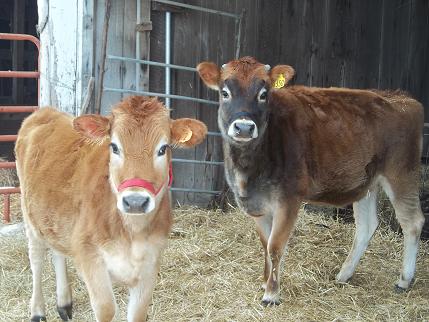
The clip was clearly a source of frustration to the calves but they stuck by mama’s side and dealt with it. Now the small amount of bawling we hear is just that they miss mom.

We did notice one limitation to using the weaning clips. The calves couldn’t lick their noses. Snot. Lots of snot. I had Julie remove the clips.

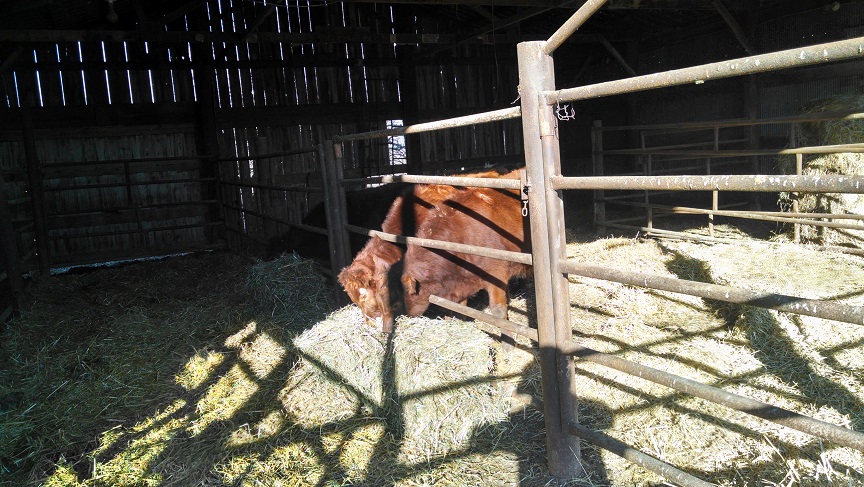
So now the calves are in jail. They are under shelter on warm, dry bedding with plenty of fresh water, kelp, salt, hay and a southern exposure. They seem to be doing well. Once in a while one of them (I haven’t paid much attention which) will call out to mom. More frequently moms will call out to calves. I suspect they want to be indoors with all they can eat hay too.

HorrayForHay

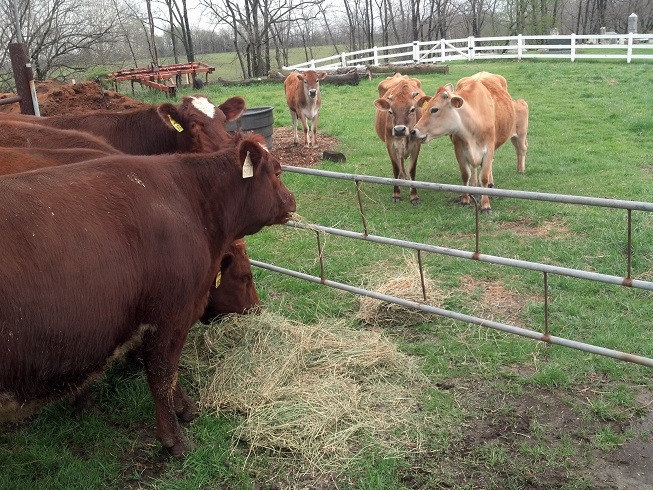
So that’s the sorting barn. It needs a little maintenance but I think it is older than me and works great. Here is a relevant quote from the Bob Kleberg book I am currently reading. (BTW, Yes, I know. I shouldn’t feed through a gate. I’ll get a feeder panel in there tomorrow.)

The fences, gates, the watering places, the sets of pens he had built were all the best, the most durable – sometimes overbuilt – to cut repair costs and maintenance time.

That certainly applies here. What an asset that building is. More than half of the panels are gates. The chute below leads to a loading chute or gives access to two different lots…or, of course, the head gate. There is even a hydrant behind a wooden panel at the end of the chute.

ChuteI would prefer, as others have suggested, to wean across a fence but in December with rain and cold weather in the forecast I feel better with the calves under a roof. There is enough stress as it is.

Strolling Through the Pasture Dec. 2014

Fescue. Cool season grass. Puts on massive growth in the spring and again in the fall. In the heat of summer it gets infected with fungus and is not a good thing for the cows to eat…at least not in isolation. It can make tips of tails fall off and cows can lose their hooves. Bad mojo. As part of a balanced breakfast though, it’s OK. We try to keep a good mix of clovers and warm season plants growing to dilute the worst of it. There is some thinking that cattle genetics play a part in fescue tolerance. Dunno.

But in the winter things really heat up. Fescue comes into its own. The last thing the cows would eat during the summer becomes the last thing available to eat in the winter but the first thing they graze out. And the protein goes up as the temperature goes down, though, obviously, the feed quality deteriorates over time. The cows are currently grazing orchard grass and the remaining alfalfa in the alfalfa field. We are strip grazing our way across 17 acres we started grazing in October. At that time the alfalfa was still fresh and proved to be difficult for me to manage so we took a few weeks off and grazed…you guessed it…fescue while we waited for a hard freeze to take the edge off of the alfalfa. Now we are trying to wrap up the alfalfa grazing by the end of the month…hopefully before it gets smashed to the ground by a heavy, wet snow. The orchardgrass isn’t faring poorly but it just doesn’t seem to stand up to the cold the way fescue does. (BTW, the fescue the cattle grazed in October has recovered sufficiently for another grazing. I may have gained a week or two of pasture.)

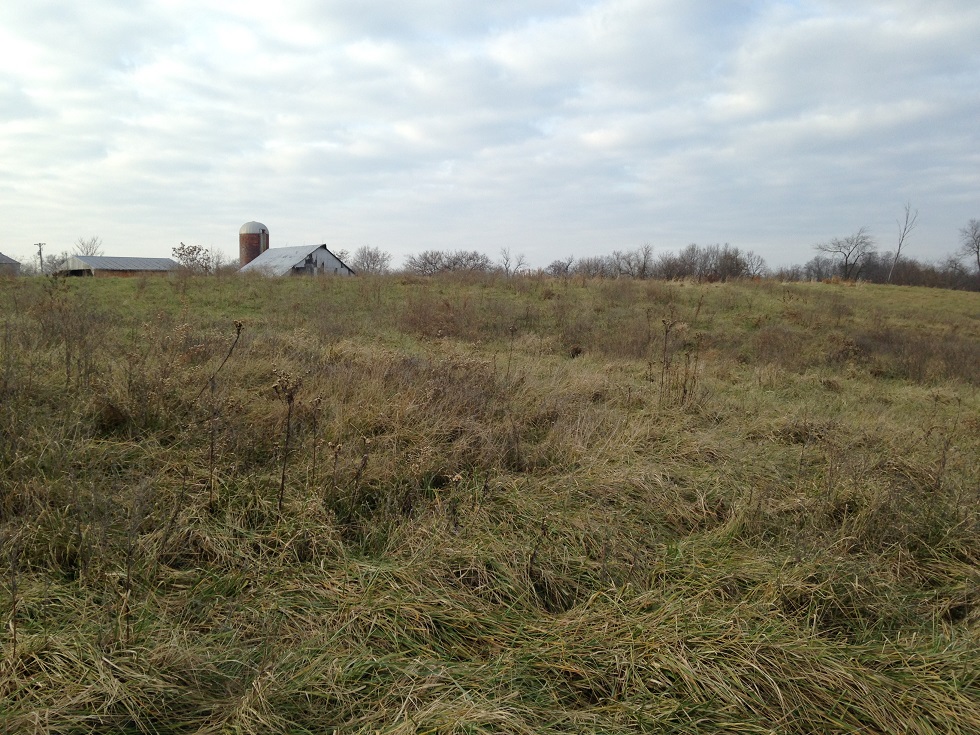
When the alfalfa field ends the fun begins. You already know the players involved, let’s take a look at the game board. Starting things off this year is the hill just east of the yellow house. This hill has been resting since summer and is ready to play. Well, maybe I let it sit a little too long.

Fescue1

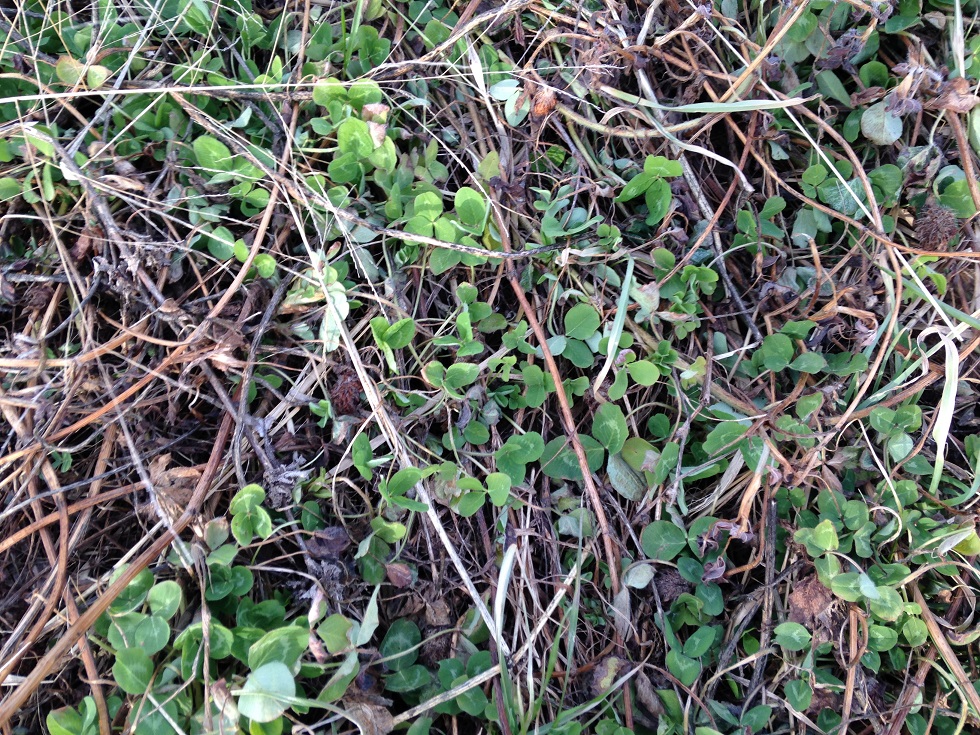
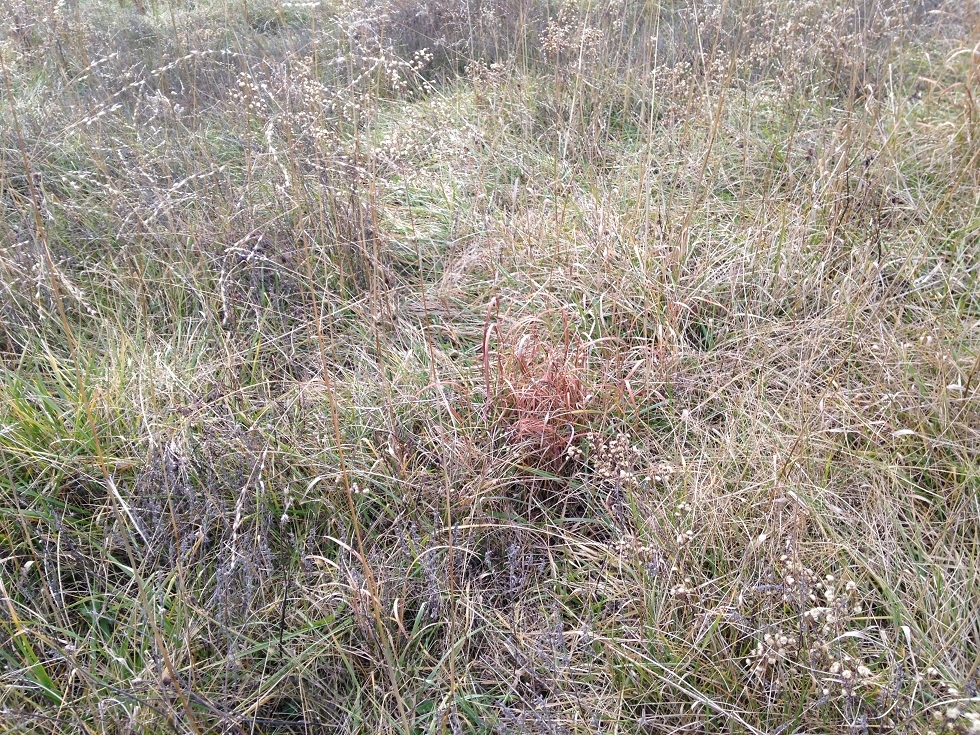
Let’s look at it a little more closely. The green is good. The cows will eat all of the green and because fescue is waxy, it will stay green for most of the winter. A fair portion of the brown will be eaten too. In fact, if I would supplement their diet with protein (and I may) they will eat the majority of the brown too. Otherwise it will be shoved into the dirt in mass. How much mass? Here’s a bundled up, heavily layered, rubber booted Julie to show you.
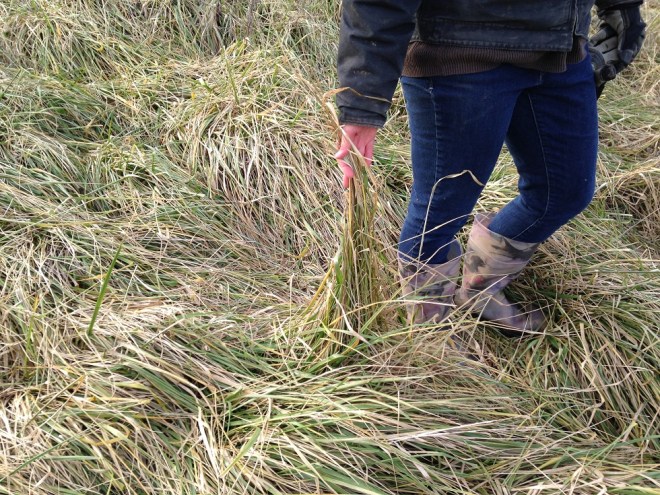
Fescue2

Not our best fescue but not bad either. We have to get from here (at the edge of the alfalfa field where the cows are)…

Fescue3

all the way over to here (the clover field we grazed until October). We will do this by grazing from south to north in narrow strips from west to east. Hopefully we’ll have two months worth of grazing here supplemented by a bit of hay cut from the clover field I am standing in.
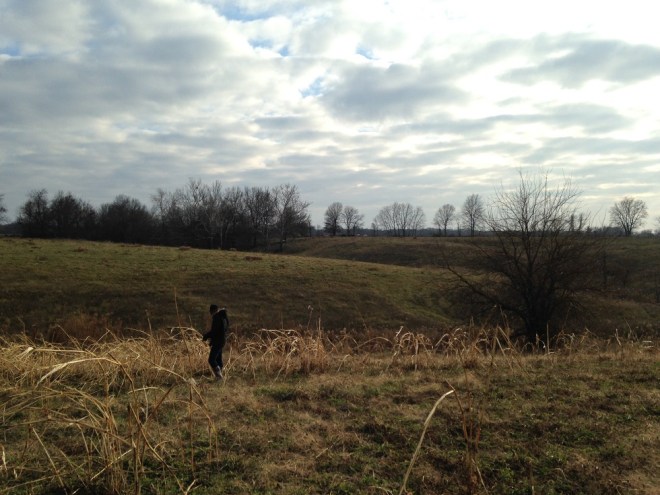
Fescue4

I want to pause briefly to talk about the clover field. This time last year it was corn stubble being grazed by my cousin’s cattle. I use “cousin” somewhat loosely on the blog. My cousin lives around the corner. I have other first cousins all over the place. Can’t swing a dead cat… This guy is mom’s cousin’s son. Or something. Nice guy. Anyway…clover field. Dad worked it lightly in the spring. Really, he just dragged a disc across it to knock down the high points and make a shallow seed bed. Then, with 15 mph winds blowing, he used the antique seed spreader to broadcast a mix of 60% legumes on the field. Turned out great. We got one cutting of hay from it (pretty good stuff considering how wet the season was) and grazed it once. After the grazing it looked a little like this:
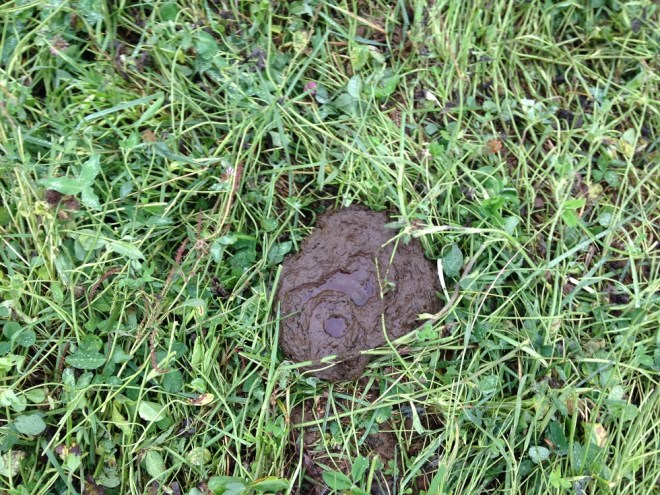
CloverRemains

Today it looks a little like this:

CloverField2

Good soil coverage. Good contact between litter and soil. Some amount of recovery. Some amount of residual feed.
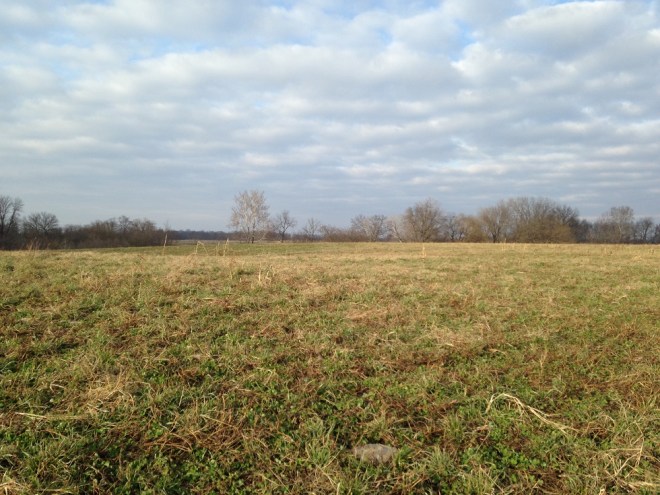
CloverField

If I get in a bind I could graze these 9 acres again but I would have to move the cattle quickly. It’s just nice to have insurance. Lots of rabbit trails in this post. Why stop now? You wouldn’t believe the deer in this field. Geez. They bent posts and knocked down fence every morning.

Deer

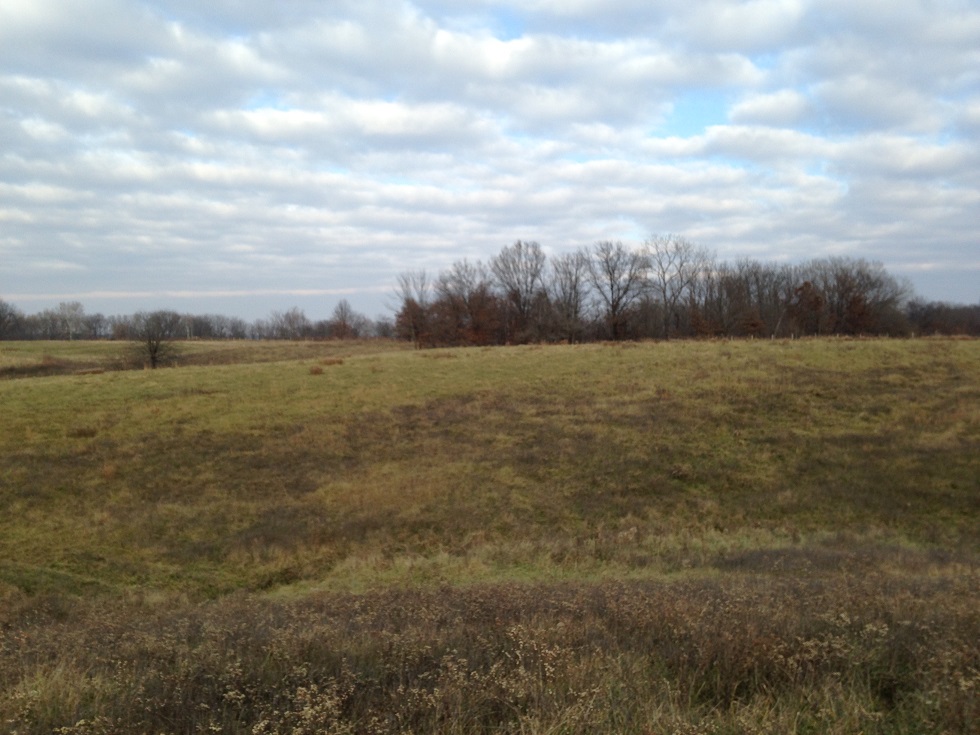
The hill to the east…um…this is getting confusing. See Julie standing in the shattercane several pictures up? (Look, I know I shouldn’t have shattercane, OK?) OK. She is south of me (Chris Jordan, photographer, farmer, gentleman, scholar). The cows are further to the south in the alfalfa field. On the left side of that picture, up on the flat, the cows grazed in the spring then dad and I cut some of the best hay we put up last year. Just wonderful stuff. It was hard to get there as the hills are steep and the valleys are deep but we cut the flat top. Oldest boy and I had to cut and drag brush ahead of dad when he was mowing. Not only was the hay wonderful stuff, I came back with I don’t know how many loads of manure and lime and covered the field. It recovered nicely and is now free of brush…like the thorny sapling pictured further up. You can see a line on the field where the mower ran. I think this is a practice we will continue. By taking a single cutting of hay and applying amendments from each field every few years I can mix up the level of disturbance in my fields…also it gives me a chance to manage things even more closely while also supplying me with the feed we need. Looks good on paper anyway.

Fescue5OK. So. Now. How long can I keep talking about fescue and running rabbit trails in a blog post? Do you really want to know? It’s not just fescue out there. There are perennial warm season grasses growing out there too. Unless I am mistaken, that’s big bluestem growing in the center. I didn’t plant it. It just showed up here and there in this field. The cattle were probably never in this field when the bluestem was growing. How many years has it been since these grasses were allowed to grow?
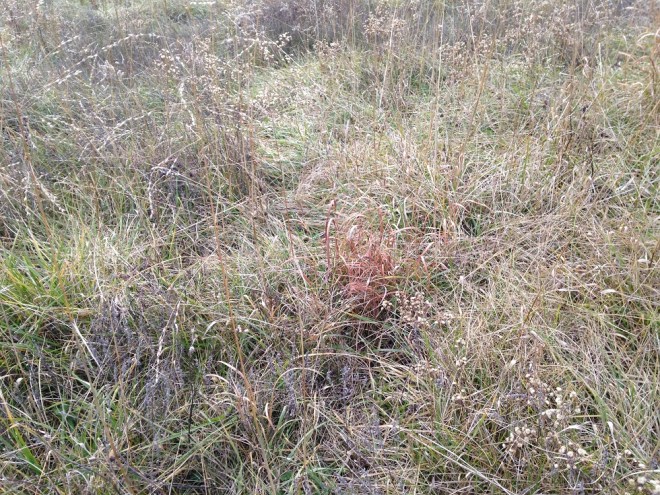
BluestemWe covered about 15 acres in pictures today. Some of our fescue looks a little raunchy so I’m worried I’ll have to feed more hay than we expected. There are places where the chickens manured that the fescue looks better. In coming years I need to leverage my chickens more completely but it’s hard to get them to some of the remote hills. Building a pond out there will really help with field access. (Someday…) It is encouraging to see the increasing diversity of plant material. Last spring this field was defined by bare places between plants. Almost no clover anywhere. No residue on the soil. No manure to be found. Just short grass and bare soil as it looked last April.

EastPasture

But that recovered to a thick carpet of fescue. Almost nothing but fescue. Yuk.

WideViewWe grazed it lightly. Then again. Look how fat they are!

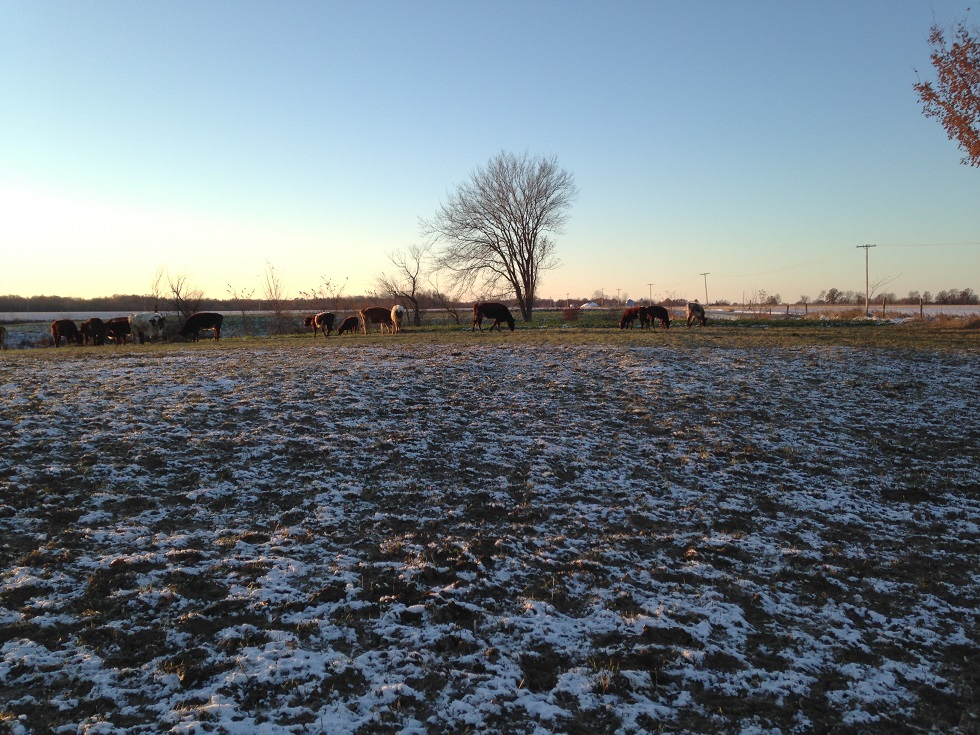
RainCows

Then we went away for the summer and fall. Now I am relying on my savings. Will I be totally hayless? Nope. But the urine and manure will be delivered all over the farm without mechanical intervention. The cows will be harvesting the majority of their calories without mechanical intervention. They will have fresh greens to eat all through the year and the soil will remain covered. If things work out, I should have greater diversity, increased fertility and increased drought resistance in the upcoming growing season. And fat cows.

It looks good on paper anyway. We’ll talk again in April.

I had a hard time naming this post. Here were some candidates:

Fescue to the Rescue

Fescue on the Menue

Fescu on the Menu

Those are weak titles but the best Julie and I could come up with. Dive straight into the comments if you have a better idea. I think the “Strolling…” series should make a comeback in 2015.

So. We’re Weaning.

My plan was to wean in the spring so the calves could have a little bit of milk as they grazed stockpiled grass through the winter but I’m cornered and have to change my plan. My cows really aren’t adapted to grass and I question their condition as we head into winter. So here goes. As usual I’m trying something I have never seen anybody do in real life. Cause that’s how I roll.

Will it work? Dunno. Seems like a good idea. I have heard me say that before…

It ought to work. If you didn’t watch the videos, I want to point out there are no spikes on these. They are just flat plates that you put in the calve’s nose. One calf responded negatively to having something yellow on his face he couldn’t escape from but didn’t appear to suffer any other discomfort. On Christmas day the calves will be separated from the cows. More chores. Yeah!

Dad and I were checking things around noon yesterday and it looked like Henry was nursing in spite of his jewelry. Upon closer inspection though, he was just standing there looking frustrated.

FrustratedHenry


This is not a product endorsement. It’s not a recommendation. It’s a note in a journal. “Dear diary, here goes.”


Moving the Mob

I recently played with the logistics of an attempt to mob graze the entire state of Illinois and threw out big, meaningless numbers along the way. Let’s add a little meaning. These first two show some pretty big mobs. Watch the animals move. They just keep coming.

This one though…this one is ridiculous. I imagined grazing cattle through the state of Illinois. How about driving cattle from North Australia to South? Illinois is only 600 km long. These cattle went 1500 km.

And if you want more detail on moving 18,000 cows through Australia…well, here it is.
Someday…

OK, November. How Much Grass Do You Need?

Well. It happened. November.

Shoot. Now what?

Oh, how I yearn for those warm summer days. Not the hot summer days. Not the dry summer days. The warm ones…topping out around 85 degrees. Those are nice but they are gone. Gone. They won’t return for another six months.

Six months.

Warm season grasses are gone. The clover has been killed back by frost. The soil is frozen an inch deep making it hard to move fence posts. Cool season grasses are still growing a little on warm days but the pasture won’t be ALIVE again for until May.

What am I going to do?

Well, here’s the plan. We want to continue grazing cattle for the duration. We want to keep the ground covered for the duration. That’s about it.

So here we are on November 20th. What is left to graze? Take a look at the map. I have shaded in areas that have been grazed since Oct. 1. Red shaded areas are where I grazed the alfalfa field down to the nubbins. The blue area was grazed lightly and may be grazed again. Everything else averages 18″ tall. The yellow border wraps the farm.

TheFarm

It looks like so much more area when you are on ground level. The cows are currently growing that red block at the south west corner and will finish up all of the alfalfa west of the pond by the first of December. If not sooner. I am also supplementing them with a round bale. I just unwrap and carry a layer each morning and give them a new strip of alfalfa to graze. Then we give a second strip of alfalfa around noon. Seems to do the trick.

AlfalfaGrazing

Strip grazing the alfalfa field is a little tricky. First I have to be concerned with my cattle for a number of reasons. Alfalfa can cause bloat…even if I am careful, there is very little shelter out there from weather so I have to be attentive to their needs and they are a long way from the water spigot making it hard on the farmers caring for the animals. There is nothing quite like a basement full of frozen hoses! Beyond the cattle I have to be concerned about the alfalfa stand itself. I don’t particularly want a pure alfalfa stand (cause it causes bloat) but I also don’t want to kill it with hooves on mud. I do want to remove the stems to limit next year’s alfalfa weevil population and I do want to add manure. And I need to utilize the foot or so of alfalfa that grew back since the last hay cutting. This forage would otherwise be wasted. Grazing it now saves more durable forages for later. So here we are. And right by the hard road too…where people can watch me screw up my alfalfa field.

Anywho. I have to race across the alfalfa because it just isn’t built to last. Snow will push it down to the dirt, knocking off the leaves and leaving behind the stems or the freeze thaw will …knock off the leaves and leave just the stems. The cows aren’t big fans of stems. But I’m a big fan of the cows spreading manure across my alfalfa field. It doesn’t make up for the four cuttings of hay we remove but it’s that much less manure I have to scrape up from somewhere else. So we’re trying to rock right on through the 17 acres of alfalfa before January 1.

SO. How much grass does November need? No more grass. But the alfalfa west of the pond and the rest of a round bale should do it. I hope.

Now, November. Tell me how much firewood you need.

Grazing in the Late Fall

Cool autumn days and cold nights make this just about as easy as it gets grazing cattle here. The new heifers have settled in. The milk cows are only being milked by their calves. Everybody is in one big happy herd. Well, one big herd. Most of the pushing wars have ended though Julie and I watched a calf get pushed under the wire today. I said “most”.

So we have them bunched tight. Tight enough you can’t step in the pasture without hitting a land mine. Tight enough that they are eating everything down to a common height. We move them when they need to move giving them something that looks like this (well, they don’t all look like this)…

NewSpot

…leaving this behind…

OldSpot

I moved the cows to the spot above around 7:30 this morning. I moved them off again at noon. Moved them again at sunset. Tight bunches. Massive impact. Quick moves. Fat cows.

Flora

Well, fat most of the time. If I do my job. And we are trying to leave enough grass standing that it has a chance to recover slightly before it goes dormant. Further, we leave enough grass we can graze it again if we have to. Well, a man can have his ideals, can’t he? This fescue was grazed two weeks ago and I think it looks pretty good for November. You can clearly see old, grazed growth and fresh, green growth. You can also see how much other stuff is blanketing the soil. See how shiny fescue is?

Fescue

I plan my grazing out in my head well ahead of time complete with contingency plans and emergency backup plans and, of course, hay. If a bad storm kicks up we can take them to the barn. If feed runs low we can haul out some bales. But I prefer it if my cows have a nice, clean place to lie down each night, if they spread their own manure and if they at least get a bite of something green every day. But I have a lot to learn too.

Where Did All These Cows Come From?

I am not an investment professional. I tried trading stocks some years ago. I’ll summarize by saying hasty speculation has a way of bringing poverty.

But steady plodding leads to prosperity. We have a plan that includes cows, time and work. Lots of cows. Lots of time. Lots and lots of work. There are two paths from zero cows to lots of cows. The first, and most obvious, is to put together a pile of money and go buy lots of cows. Done. Problem solved. The second, and more understandable to someone of limited means (me) is to buy a couple of cows and find out what you don’t know before you get too deep. We started by upgrading from milk goats to milk cows…by buying open heifers.

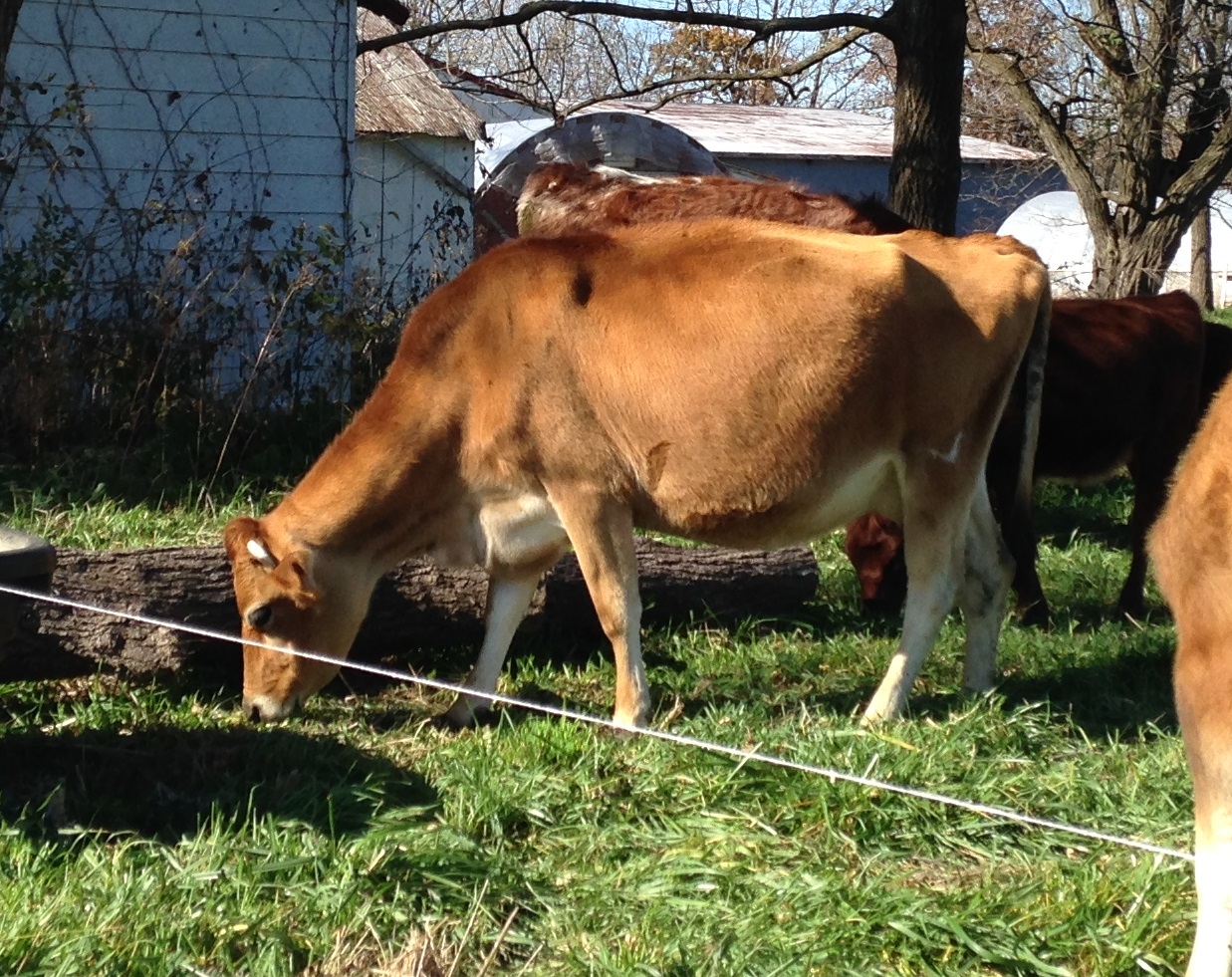
WinterJerseys

Then, each year, we allocate a little money to buy a few more heifers to speed up the natural increase from calving.

Shorthorns1

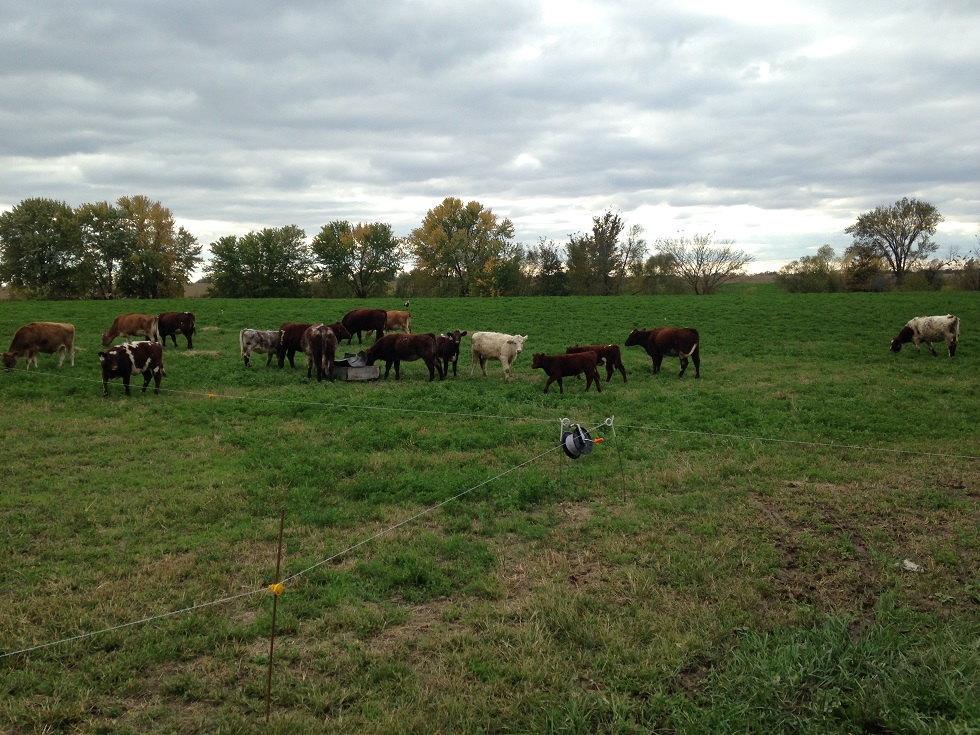
If cow prices are high you buy fewer animals. Low prices, more heifers. Before you know it, the herd has grown to the point you have to zoom out to catch them all in one picture.

WholeHerd

Each year the number increases. Each year we add to our accumulated knowledge. We lost a calf for the first time this year. It hurt. It didn’t hurt in the pocketbook as much as it hurt in the heart. Still does. But we learned that lesson by losing one bull calf instead of losing 50.

So that’s where it is. Every year we grow. Soon we will begin to cull the non-performers in earnest. Soon we will have beef to sell to customers. Soon we will have surplus heifers of our own. We have to get rid of cattle that are late to reach sexual maturity (tall ones), get rid of cattle that produce too much milk (won’t breed back), get rid of cattle that stay shaggy all summer, get rid of cattle that won’t produce on grass alone. Cull, cull, cull. Not everybody can make the team. So we add heifers as often as we can. Heifers are an unknown quantity but cost half as much as cows. For the same money we double our genetic dice roll.

Happy57

What is 57 going to become? What about 59? What about 81? What about the three other heifers that were born here this year? Dunno. They will tell us in a couple of years.

As time passes our herd will become increasingly adapted to our farm and to our management. A little at a time. The end result of years spent planning, thinking and being patient. Thinking. Planning. Looking at the cows. Monitoring the fertility. Making slight adjustments to genetics, slight adjustments to management, making slight adjustments to fertility programs. But mostly just watching.

How does that compare to any other investment? Is it an investment? Our farm provides a lot of our entertainment but did we buy an amusement park? Did we buy a trust fund? Or are we building a business through steady plodding? I hope it is the latter option.

Grazing Where You Shouldn’t Graze

The cows were recently on the alfalfa field. I know it’s kind of edgy to graze green alfalfa this time of year but that’s where we are. I’m trying to save my fescue for later. The alfalfa will be useless in 30 days so the goal was to sprint across the field now. The key appears to be to keep the cows full and to keep the cows full of dry fiber. Hay. But Sunday I didn’t stick to my plan. I offered the cows hay but didn’t ask them to clean it up because the day before I gave them a grazing area that was too small. The cows were hungry. I was in a hurry. So I let them eat some hay then moved them onto fresh, young, dew-covered alfalfa early in the morning.

If you don’t know, that’s a recipe for death. Bloat. The rumen fills up with methane and the cows have a hard time expelling it, front or back. If it continues expanding the cow can suffocate. Obviously, bad mojo.

EarlyBloat

Sure enough, 41 started to look pretty uncomfortable as the morning progressed. Fortunately dad pointed her out to me as we were working on something else. There are any number of real, medical solutions to bloat if you catch it in time but we didn’t have any of those on hand…you can either call me risk-tolerant or just stupid. Take your pick. Since she was still acting normal, on her feet with her ears up, we just needed to work through the gas. Dad started to walk the herd a little bit. Just a gentle walk. This is the time you want to be upwind of your herd, not downwind. Wow. She was looking a little more comfortable so we came to a stop. The cows were all full and just wanted to take a nap in the sunshine. 41 tried to lay down with the herd. She grunted, burped, grunted and burped again. Then she stood up. Then back down. I went to the barn to get the nicest bale of grass hay I could find and began to spread it out, flake by flake, in the alfalfa field. By spreading it out the cows are less likely to try to make a bed of it and more can eat the bale at one time.

A little more walking and a little more waiting and suddenly we could see a slight depression on her left side. Whew! When I came back to check again later the hay was all gone.

What did I learn? The cows need their fiber. They need to eat fibrous growth, not this young, all-protein alfalfa. It breaks down too quickly and leads to trouble…not to mention the splatter behind the cattle. I knew this already but I guess the lesson was reinforced. Maybe I learned a little bit about my own level of risk-tolerance. I am, it appears, more willing than most to make mistakes then hop on the ol’ internets and tell the world about those errors.

That’s nice and all but I also learned that not all cows are created equal.

NoProblem

The next day we kept the cows full and put them on fresh alfalfa in the warm afternoon sun. Guess what? Happened again.

So I moved the cows onto a field they haven’t grazed since July. In most places the grass (fescue) is 18″ tall and has yet to form a seed head. Good stuff. Beyond that, there are a good selection of weeds and tree leaves available in their new location. Thick stems break down slowly compared to thin, green alfalfa. Tree leaves have tannins that help balance things out. They went right to work when they got in the new area shortly after sunset.

Two days later the pullets were moved to that exact spot to clean up after the cows. Busy schedules are preventing us from harvesting the older birds. That flock are still out on the alfalfa field cleaning up the mess the cows made there. Yolks from both flocks are bright orange right now.

PulletsOnPastureThe picture is fuzzy in the early morning light but I think you can see the cows didn’t strip the grass down to bare earth. There are a few places uphill where we are asking them to help with the remodeling but here we are leaving residue. Uphill from here we have a solid stand of thistle and goldenrod with just a pinch of spiny amaranth. The cows helped us out there as you can see by the fence line.

CowRemodeling

They are a little loose on the fresh green grass but are not needing the intensity of care required when they were on the alfalfa field. Have I learned my lesson? Well, sorta. I plan to return to the alfalfa field after we get a good killing freeze so the cows can rid me of stems (alfalfa weevil live in stems) and add a layer of fertility. But I have to attend to their fiber needs.

How Many Reels of Fence Do I Need?

We have a dozen rolls of polywire fencing but how many do we need? I mean really need?

Ignore the fact that we keep our cows in two herds, beef and dairy. Let’s just talk about the beef herd. How much fence do we use?

We could get by with five. Easily.

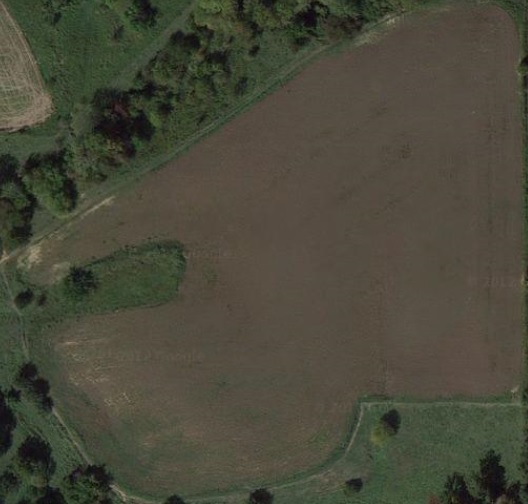
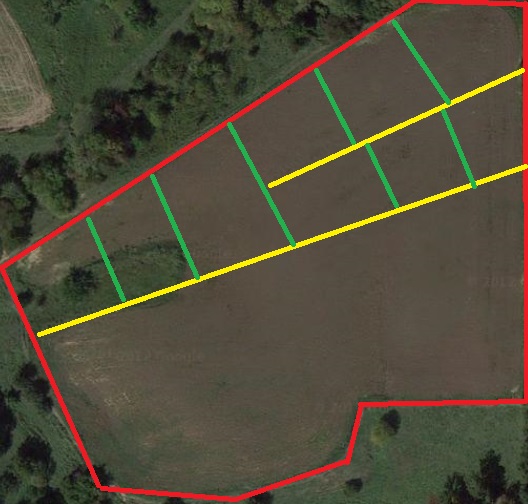
Let me explain. We need two reels running in parallel the length of the pasture (let’s call those lines). Then we use one reel for a back fence, one for a front fence and the third defines the length of tomorrow’s grazing area (let’s call those cross fences). Those three cross fences rotate forward the length of the two parallel lines. Clear as mud? Let’s use pictures. This is an overhead view of the field north of the hog building. For decades it was where the sows and boars were kept. I remember it being a moonscape as a kid, now the fences have all been pulled down into the earth by grasses and trampled by cattle.

PigPasture_Bare

The satellite image has not been updated recently so the picture shows a lot of damage done by the cattle in the past. See those well worn paths across the field? That’s from the cattle lounging in the bottom or in the wheat field further north and trekking across the field every morning to eat silage and hay at the barn. The whole herd walked in a line right there several times each day, every day for years. There is good fence to the south and west of the field. I just need to build temporary fence to the north then subdivide the grazing to concentrate their activity as they pulse across the landscape. Because my cattle walk in a place only once every three or more months the old cow paths are healing. Instead there are deep roots and tall forages. Unfortunately, there are also tall weeds but that’s part of the healing process.

On the picture below I show the permanent fence in red, the north line in yellow and the cross fences in green. Those daily subdivisions are quite large. In September we were just trying to skim out the annual forbs (chicory, dandelion, clover and ragweed) while maintaining and fertilizing the standing fescue. Fescue is at its best when everything else has frozen out. The little extra dose of nitrogen left by grazing animals will make it even better…for longer. Better still where the layer flock passes.

PigPasture_Fenced

Every day we moved the cows. Every day we moved the water. Every day the cows got fresh salad and clean sheets. Every day a new section of the pasture got a workout. The strategy is only a little different in the clover field. Not much in that field will survive a frost. Hopefully I can finish grazing it before the forage is killed back by frost. In recent years this has been a lot of corn and beans.

Clover_Bare

Dad lightly disced the field in the spring and spread a pasture mix heavy in legumes (60%). We took a cutting of hay in late July and it has since recovered. The ground is a little lumpy, there are a few weedy patches (shattercane and cocklebur) but for the most part it’s a very nice field. Hopefully the cows can flatten it out a bit so the hay wagon won’t be such a bumpy ride. Because of the grazing strategy here we are grazing smaller areas. We want fair utilization, a lot of trampling and good manure distribution. We try to leave a blanket covering the soil but still give the cows what they need as measured by gut fill and manure consistency.

CloverRemains

We also have to move things along quickly enough to cover the field before frost. Really I should have until early November before snow pushes it all down but I need to be in the alfalfa field after it frosts and dries. So here’s what we planned:

Clover_Planned

Try to imagine yourself as a 13 year old boy trying to walk a straight line to the opposite corner of a field…when the corner is hidden by two hills.

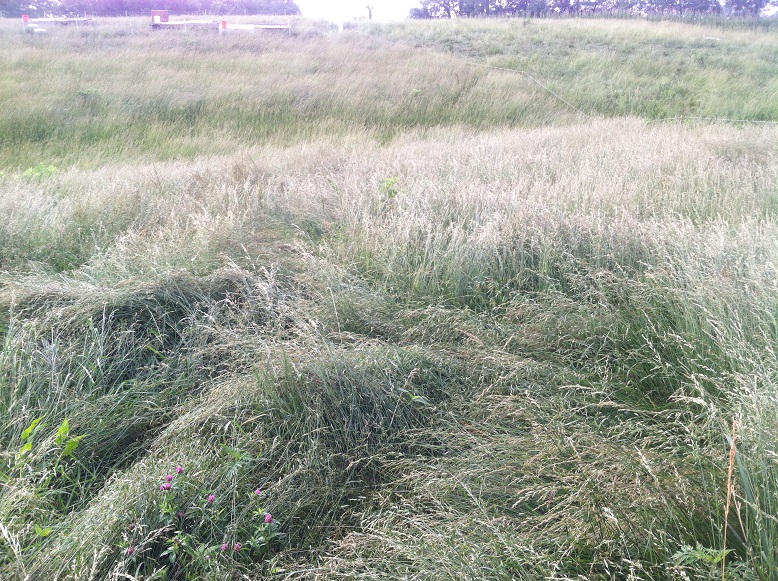
RedClover

What really happened is he went wide on the initial fence. We cut a portion of the area in half with another roll of fence then applied our subdivisions. It worked. The pasture sizes vary wildly but it’s cool. We were counting on cool weather in these open areas but it got to nearly 90 degrees. When it got hot we removed the back fence and allowed the cattle to lounge in the shade of the few trees in the first subdivision. That’s not ideal but it also wasn’t a big deal. The cattle tended to concentrate their manure in the shade and caused additional disruption near the trees but they appeared to do their grazing in new areas, not in old ones.

Clover_Actual

From here we’ll attempt to define a mostly parallel fencing line to the south and keep movin’ on. I think we are currently using 7 reels of fence but only because we are lazy. We could easily get by with five. You just have to think through each movement and how to get the most out of your available resources. Pasture size is dictated by available forage, livestock needs and your management goal du jour. This winter we will really bunch them up in smaller pastures to utilize the stockpiled forage and distribute manure evenly. When it is warm and rainy we give them larger areas. Seasons change. Cattle needs vary. You’ll just have to figure some of this out on your own farm.

Let me give you another example of variation. We have gotten nearly a foot of rain in the last two weeks. We had seven inches of rain in 24 hours last week. This field is so new that there isn’t a dense net of roots protecting the soil. Hooves can sink in. To prevent lasting damage we just move the herd faster. Maybe we offer smaller grazing areas and move them twice daily but they don’t get a chance to make a mud pit. You must be flexible to change with both livestock and pasture needs.

With a mere 5 reels of fence you should have everything you need to put your cows in motion. A drink of water, a pinch of salt and a little shade on hot days and you’re on your way…these could all be delivered to a small herd with a single portable structure.

Additional thoughts:

  • An important thing to consider is placement of your reels. If you are planning to make any adjustments to your fence, put your reel on the end you will adjust. Sometimes we have to roll up a little bit to let the cows into a new stretch. No big deal if the reel is in the right place. For example, try to place the reel of your cross fence so the cattle will show you their left side to you as they walk into the new pasture…and you should make the cattle walk past you to go to new pasture every day. This gives you a chance to look at the gut fill of a portion of the herd as well as a chance to look at other details. Are their coats shiny? Are their rumps and tails clean?
  • I have a few 1400′ reels of fence and I find they are difficult to roll up. I think the best reels are the ones that are only half filled as they are less likely to fall off of the spool. If I need more than 700′ of fence on my little farm I should reconsider my fencing plan.
  • We use a mix of pigtail posts and rebar posts. Rebar posts will take abuse, pigtails won’t. But we have had our share of fence shorts because the insulator on a rebar post twists and grounds out the wire. I prefer pigtails for ends, corners and cross fences then use rebar for lines. Pigtails also hold the wire more securely when deer run through the fence. If I had to make a choice I would choose pigtails.
  • 5 reels would cost around $250 for string and reels, another $50-100 for posts and insulators. That’s all the fence you would need for your first few hundred head of cattle. You might want to offer more space or move them less frequently in the spring but by the time you have 100 head of cattle you can probably afford another reel or two.
  • Don’t skimp on the energizer. And get one with a remote!
  • I would like to try polyrope but it ain’t cheap.
  • I don’t seem to know if I’m writing this blog for me or for you. Or for you. Or you. Or maybe just my kids. Maybe this is the manual for our farm…what I’ve learned so far. Whoever this is aimed at, thanks for reading. I hope it is clear.