To My Children

Kids, The Survival Podcast has quoted something twice recently, both times it resonated with me.  Both times it is referenced as an old indian proverb but I’m not concerned with the source of the quote.  I’m concerned with the substance.

We do not inherit the earth from our ancestors; we borrow it from our children.

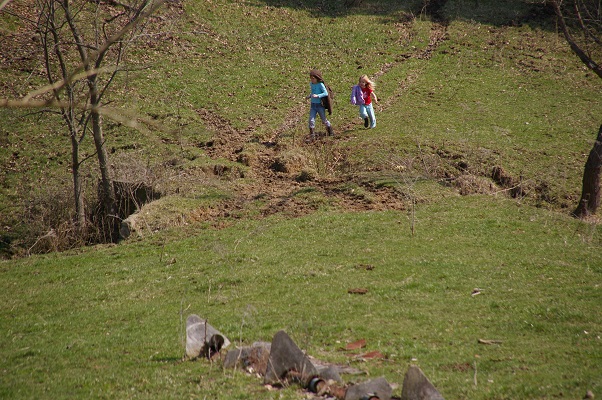
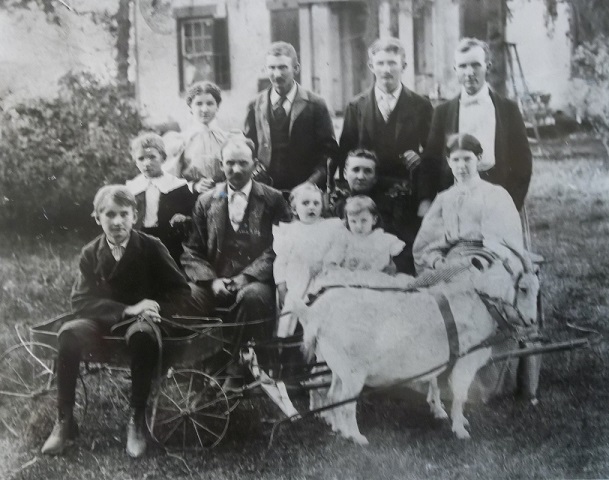
As you know, I am the 7th or 8th generation on the farm. (I lose track because there were several men named William Chism and my eyes glaze over when my sister tries to explain the family history to me. If you want, you can read some family history here.) Unlike my grandfather, however, I didn’t inherit the farm. I bought it. But what I paid for wasn’t just land…I could pay less and get more elsewhere. Beyond living near my parents (which I think is important), I paid for the privilege of giving you, my children, the same memories I have. I played under grandpa tree. I have always wondered how long the chain has been growing into the limb of the big walnut and who put it there. I swam in the creek, played in the mud and looked at the animal tracks. When cleaning the yellow house we found drawings under the wall covering…drawings my sister made when we were small. You get the same memories and experiences but on a 25-30 year delay. We even make the same cookies Grandma used to make in her own kitchen. I know, roughly, who built what fence. What role my father, my cousin, Barney Gillespie (ask me about Barney sometime) and others played in laying out the current infrastructure of the farm. What sheds were built and by who (whom?)…and when. I know the last time there were pigs on the hog floor and who they belonged to (cause I was paid to keep the floor clean). Your great, great, great uncle Dick built our house. Your great-grandparents lived here and your grandmother was raised here…your grandma and grandpa had their wedding reception in the family room when it was nearly new. Great-Grandpa Tom’s cousin Chick Chism built the kitchen, bathroom and family room onto the house in the ’60s. Your grandpa built another addition in the last 10 years. The bottom is full of walnut trees. Those trees have regrown since your great-grandparents were married at Christmas in ’46 when great-grandpa Tom had them logged and sawn as a wedding present. There is walnut lumber in projects all over the farm, including furniture my grandma built. You with me here?  We have roots in this place! This is home.

Our family has been here for a while.  I see and honor the contributions our ancestors made and, though I have to deal with the consequences of their actions, I am not enslaved by their work nor by the memories of their contribution.  William Chism did not work for his father.  The first Chism off the boat didn’t leave Scotland for his father.  They did it for their children. As the current steward of this farm, my obligation is not to my grandfather.  He had his own ideas of how things should be done…his own dreams. When the time came, grandpa embraced change.  I’m going to suggest that the shape of the farm changed more under my grandpa’s stewardship than ever before that, largely because he had modern machinery.  He didn’t embrace or avoid change for the sake of his father or grandfather.  He sold the horses and did what he did seeking immediate and long-term impact on the land, in his wallet and for the sake of his children…as in my mom.  As in me.  As in you.  He was working for us.

A good man leaves an inheritance for their children’s children… Proverbs 13:22

So now it’s my turn. It’s my job. I don’t want to simply restore the farm to its former glory. The fences need to be replaced, the buildings need to be repaired, there are 3 rotten posts in the big barn, the timber needs to be managed, the pastures are weedy, thorny and brushy and the ponds have gotten shallow. I’ll do the work but the goal is not to restore the farm to 1965 condition (though that would be an improvement).  I feel that my real calling is to put the farm into 2050 condition. What is the farm of the future? Kit Pharo advertises solar bulls. I agree with that thinking. We need a solar-powered herd. We also need rich, living, drought-tolerant and erosion-proof soils growing a wide variety of native forages. I need perennial tree crops. I need to store large amounts of water in case there aren’t any rainy days. I need to assemble a war chest to get us through lean times. I need to do a lot of work…some of it building on my grandfather’s vision, some of it leaning on my father’s advice, some of it remembering what Barney would say, most of it going my own direction. It’s not that the choices grandpa made were wrong, it’s that many of those choices are not valid in the current economy. If I hand the next generation a farm worthy of 1965 I will have failed in my calling as steward. I have to anticipate what the farm of the future will look like and build it now. Not only do I have to do the work, I have to pay for it all.

Kids, I love you. Each of you. I hope I can shape you as you each decide how best to steward the resources God blesses you with…how best to fulfill your own calling. Everything I have will be yours someday. Not only do I have to train you to be ready to accept it, I have to prepare it to accept you. The farm is just one of many things I am using that I hope will be yours someday. Please note the uncertainty in that sentence. I hold my blessings with an open hand and I am teaching you to do the same. The farm is ours to steward until it isn’t anymore. It is first for God then for you, not for my parents, not for my grandparents, not for great, great Uncle Dick that your mother and I are working. When you assume stewardship, continue moving forward with your own vision. Don’t be limited by my goals. You are not slave labor on the farm. Your mother and I are. We work for you. I love you.

Better Because it Costs More?

What is a car supposed to do?  Why do we need them?  From a utilitarian perspective, we simply need them to help us get from A to B.  Do leather seats help us get from A to B?  No, but somehow a car with leather seats is normally considered better than one without. In fact, the less utilitarian a car is the better it is, up to a certain point.  I mean, I would probably enjoy driving a Lamborghini but not when grocery shopping. So there are two things there, Price has little to do with function and every paradigm has its limits. This applies to cows, land and money equally.

The price of money is particularly interesting (pun intended).  Money today is worth more than money tomorrow.  That’s why we pay more for it.  In part, this is also true because our central bank is targeting inflation, destroying the value of currency over time but even with a stable currency, money today costs more than money tomorrow. We want it NOW! I have to INTEREST you in deferring consumption today so I can use your money now…so I offer to pay you back more than you loan me. Similarly, if I borrow your cow I can’t repay you in 5 years with the same or equal cow.  You have lost 5 years of calves from that cow and, potentially, additional calves from heifers those calves would have birthed. I would have to INTEREST you in loaning me a cow…or herd…or even just a bull for stud service. I recently borrowed a bull and I am expected to repay the same bull plus $20 for each cow covered. How is that different than interest on money? Everybody involved is participating voluntarily so everybody believes they are better off in some way at the end of the day. Well, that’s how it should work but we have this central bank thing that dictates what borrowed money should cost today which really gums up the works for everybody unless you’re borrowing in terms of cattle and they butt out). That’s a topic for somebody else’s blog though.

Bull2

Back to the point. Money today is more expensive than money tomorrow…but is it better? And, if it is better are there any limits to the “better-ness”?

Hoo boy. Well, I guess it can be…or can be perceived as such. I mean, I borrowed money to buy the farm because I thought I was better off with the farm today than I would be if I waited till I was 60 and had the cash. Plus, the farm I want is available today.  Would it be available in another 25 years? Further, farming is a young man’s game…especially the getting started part. If I don’t get started I’ll never get going. So we borrowed…but not without reservations. Reservations you’re probably tired of reading about.

Borrowing can be a really bad idea too. We don’t borrow for consumption.  We don’t use credit to buy hamburgers, t-shirts or even cars (which means we take care of our cars…they last a long, long time). We even buy our livestock with cash…forcing us to grow slowly and deliberately. I could see a time when I would want to grow the herd quickly, forcing me to borrow tomorrow’s calves today but I would hate to explain to my banker that the cow I bought with his money died. I would also hate to make payments on a dead cow. 

Further, because future money is available for buyers today, prices today tend to go up. If everyone had to pay cash for cars and houses we would have fewer dollars chasing after scarce goods…prices would have to fall (which is great if you are poor or have savings but horrible if you owe money on depreciating assets). But we live in the opposite world. In the current economy we can borrow money for houses, educations (lol), cars, farms, cows, hog buildings, tractors…you name it. Every loan puts more and more money in competition for the same number of goods…driving prices higher (which is horrible if you have savings or are poor but helps out borrowers). If our economy lacked available credit, the perceived currency value of my farm would have to fall (see 2008)…and my lender would get nervous. But that’s part of the deal. My banker is betting that my farm will retain value and that I will be able to repay…otherwise he wouldn’t voluntarily loan me money.

So because of easy credit, prices are higher. Does that higher price make my farm better than it was when my great, great, great….grandpa paid tens of dollars for it? No. The work that went into the farm over the generations makes it better. The lack of work that went into maintenance in the last 20 years makes it worse. Price has nothing to do with “better”. The “better” of the thing has to do with the work we accomplish with it. Farmers vary in skill level. A skilled farmer is going to do a better job with the land. I have to be more skilled than the farmers who came before me or I will have wasted the land, money and time.

Family

Maybe you disagree. Maybe you are happier when you pay more for the same thing. I dunno. I tend to look for sales or buy things second hand…or third hand.  But the cost of the thing has nothing to do with the “better” of the thing. If I need it, I need it. If I need it immediately I’m going to have to pay more for it. As we farm we try to limit our immediate needs. We try to plan years in advance. Years. Decades. Lifetimes. What will my great-grandchildren do with their inheritance? Can I influence that now? How much do I have to pay now to make things better for my grandchildren? Do I pay the future by not having a second vehicle? Do I pay the future by enslaving myself to the farm and to an off-farm job? Do I pay the future by avoiding eating meals out or by not going to see a movie? If the goal is to build better futures for my children’s children I have to pay a lot now. Does the future get better as I pay more for it? It might if I’m thoughtful about how I use my resources in the present. When does that paradigm run out? I doubt I’ll ever know.

So what if you don’t have kids? Does this matter to you? It most certainly does! The money part of the farm has nothing to do with the better part of the farm. You, as a steward (the dirt will outlast you), should be working and investing in future generations, even if they aren’t your kids. There are consequences to your actions. You don’t live in a bubble. Make choices that positively impact the community around you. Yes, it will cost you something; time, energy, cash. But that’s just part of the deal. You can’t simply consume your way through life. That is, I feel, immoral. Make a positive impact. Go out and “better” something. Do it cheaply if possible.

Eggs: Cheaper By the Dozen (Updated)

So, how do we make money on the farm? Well, we really don’t make much but opportunities abound. Today I’m going to talk about eggs and my answer is decidedly nonlinear. Further, the numbers I use may not apply to you at all but the process involved will at least provide you with the base questions to ask to determine profitability. Remember, price is determined by customers. It’s harder to find customers for $10 eggs than for $1 eggs. It’s hard to find chickens that lay eggs you can sell for $1/dozen. We currently sell $4 eggs. The money we make helps us move the farm forward, even if slowly. I’m happy to offer this transparency to our customers and readers. You should know what you are buying…what you are supporting…and what you are getting into. I have to make money to continue farming. If you think I’m making too much money (lol!) you can pursue other options.

I always enjoy talking to new customers after they have tried their first dozen eggs. Quite often they go on and on about taste, texture and color. Based on customer feedback and my own experience, we make the best egg in the world. However, no matter how good our eggs are, I won’t stay in business if I don’t count the cost. We have to figure out what it costs to sell eggs. Again, I won’t work for free. I need to make good use of my time. If eggs aren’t worth doing, we’ll make soup. This was originally posted on The Survival Podcast Forum but I have revised the numbers slightly.

Here’s what my numbers look like with additional detail below. Keep in mind we’re small potatoes so economy of scale works against us. Also realize I have been known to make errors in my math.
Costs (per day):
Chicks – $0.005
Feed – $6.72
Fencing: $0.27
Housing – $0.34
Egg handling – $1.89
Those costs total $9.265/day or $0.154/sellable egg (60 eggs/day annual average)…$1.85 per dozen before labor. I usually just say $2.

We retail eggs for $4/dozen and seasonally wholesale a portion of our eggs so we’re really looking at a gross of $19.50 and a net of $10.25/day, again, before labor. Labor includes moving chicken houses, feeding, watering, collecting the eggs then cleaning and sorting the eggs. This is unskilled labor and is valued on the market at less than $8/hour. (Probably much less than $8/hour.) That means I have to make darned I wrap up my work quickly or the farm is losing money.
__________

Now the boring details. My feed is not organic. It is not non-GMO (Sorry for the double negative). I use the Fertrell poultry rations and grind my own.

Last year’s pullets cost me an average of $1.80 each. I bought 350 then sold 225 of them for $5 each at 8 weeks…basically covering the costs of all birds up to 8 weeks. This covers electricity, water, brooders, shipping and feed. So I’m starting at 2 months from zero. 3 months to go before the first egg.

I raised my pullets on the alfalfa field. The cost per day of using the alfalfa field is a wash against the benefit of the manure they put down and the minerals from their feed. I feed them broiler mash until 2 weeks before onset of lay. Last year broiler mash cost me $26.92/hundred to grind myself. 125 birds ate an average of 15# of feed per day for that period of time so we’re looking at $4/day to feed 125 birds until their first egg. Again, the bird was free for the first two months. I have 75 days of feeding at $4/day spread across 125 birds in the flock. Let’s say 120 birds in the flock because at some point last spring a raccoon ate 5 of them. (Dad and I took turns sitting out all night every night for a week and never saw him.) So, at point of lay, each bird cost me $2.46. That has to be recuperated over the remaining 18 months of productive chicken life…or an additional half cent per day.

As adults, the birds get a slightly different ration that costs $27.14/hundred for me to grind. During the winter they tend to eat more than summer but the flock averages 20 pounds of mash and 5-7 pounds of oats each day. Oats cost me $20/hundred so let’s say $1.20 worth of oats each day and $5.42 of layer mash totaling $6.62/day for chicken feed plus $0.10 per day for the range feeder (assuming it lasts 10 years). We get 80-90 eggs/day from those same now 110 birds (predation is an issue) and to make the math easier, I’ll suggest to you we get a yearly average 60 eggs/day that are grade AA Large. The balance are cracked, stained, misshapen or small. 5 dozen eggs are salable. With me so far?

The birds spend their lives (2 years) surrounded by four lengths of PermaNet. That’s a $660 investment plus a solar energizer that cost $350. The fencing and charger, spread over 10 years, divided out to a per-day cost takes us to $0.27 cents/day.

The birds live in two simple hoop structures that also should last 10 years. Each hoop costs $200 to build plus two nest boxes for $180 each, again spread over 10 years adds another $0.21 per day. If we winter in a high tunnel the cost of the tunnel is spread between the livestock we keep there and the produce we grow the rest of the year. Since we bought the tunnel used the cost per day is pretty low. If we apply the entire cost directly to the chickens we need to add $0.13 to the cost every day.

I pay $0.31 for unprinted paper egg cartons. I sell 5 dozen eggs/day so that’s $1.86/day. We collect our eggs in baskets or plastic egg trays daily. For sake of completion I’ll add those in at $0.03 per day.

Now, labor. For months we moved our pullets every day, never getting a dime (beyond manure value which we washed against alfalfa field usage). Now, every day we move the layer houses (1 minute each), feed, water and gather eggs (15 minute round trip from the house). Then we wash, grade, sort and pack eggs (1 minute/dozen). 23 minutes of time against $10.25. Really the margin isn’t very good but that’s why it is not a primary enterprise. Salatin says a layer should make you $12 over the course of her life. I’d say that’s about right. But having eggs to sell puts our label in a family’s kitchen every day of the week. Once we get our eggs in the kitchen we go ahead and sell a chicken. Then half a hog. Each of these operations is increasingly profitable.

You can see from that, once you calculate the value of your time, eggs are a hard way to make a living. Without paying a dime for labor we are in the neighborhood of $3,000 from egg sales this year and we only worked for 23 minutes each day…not counting time spent sourcing and grinding feed, checking water extra times on hot days, sleeping in the pasture to deal with whatever has been hunting my birds or just marketing product. My true labor average may be more like an hour per day. Also, the layers don’t lay steadily year round. At some point production will drop below 3 doz/day but costs will remain relatively the same. Finally, as my friend Matron of Husbandry would point out, those chickens are eating bugs and dropping manure…that’s worth something. I also left off a charge for land use which varies between $50 and $200 per acre (though that is likely an expense shared by additional enterprises). All of that is the nonlinear part of this equation. Too many things vary. I didn’t even account for the possibility of a tornado blowing the birds away or a mink killing them all in one night. Adjusting vaguely for those missed values, we can begin to see Salatin’s argument more clearly. Once we pay our labor, each layer may only be making us $12 over the course of her life (and I suspect that includes selling her as a stewing hen).

Obviously economies of scale apply but I really don’t believe moving to 3,000 hens would boost annual farm income (before labor costs) to $72,000. I would have a heck of a time retailing 144 dozen eggs each day. Wholesale numbers would have to go up so margins would drop but, sticking with the $12/bird notion, spread over two years, after labor your 3,000 laying hen operation could bring in $14,000-$18,000 each year to the farm keeping someone very, very busy for 4-6 hours each day.

We prefer to keep the laying flock between 100 and 150 birds as a sideline business. Though marginally profitable, we don’t see it as a mainline enterprise. Just a part of the whole.  Remember what a cow costs? Individually, these enterprises won’t sustain us. Taken together, we have a chance.

UPDATE:
I had some offline correspondence with Matron of Husbandry who sent me a couple of links. I particularly appreciated the breakdown listed in this post. I came to $1.85 before labor because I didn’t count brooder costs, having supported that phase by selling pullets. That author comes to something on the order of $2.61 before labor, though the post lists something on the order of $5/dozen including labor and includes chick and brooder costs each year of production. Do the math any way you like as my math may be wrong and your numbers will be different. Selling eggs is a hard way to make a living.

Should I raise my prices? Probably. Should I just stop keeping layers? Maybe. But how boring would that be?

In Appreciation of Pigs

We went 6 long months without pigs. With our current poor boy setup, I don’t feel we can do a good job of managing the heat in July and August. Rather than stress both pigs and farmers we held off on raising pigs until September, in spite of a waiting list for our pastured pork. BTW, if you don’t already have your order for pork in, you better act fast!

Why did I describe those as 6 long months? Because I love pigs. I just do. I love having them. I love watching them romp, explore and play. I love watching them grow. I love the noises they make. I love their greedy but appreciative grunts as I bring them a handful of hickory nuts. I also love it when they are ground and stuffed into a casing and served with sauerkraut. I love them cured with salt and smoke or roasted and smothered with apple pie filling! You getting the picture here?

Pigs

For 6 long months we composted our garden and kitchen scrap. There is nothing wrong with composting our scrap but I would rather turn it into bacon.  We’re talking everything from cantaloupe rinds, starchy green beans and carrot peelings to stewed, softened chicken bones. Pigs get it all. The weeds we pull from the garden? Pigs. They especially like lambsquarters but will greedily enjoy any of the grasses and weeds I can provide them. I pulled out the biggest crabgrass plant I have ever seen from the compost pile. Each stem must have been 3/8 of an inch in diameter. The pigs loved it. What they don’t eat becomes future compost.

Right now 8 pigs are in a 20×20 pen on top of last winter’s cow bedding pack. They aren’t digging into the bedding as much as I would like but I didn’t put down the whole grains that Salatin suggests.  I just piled wood chips and straw on manure and waste hay. They are happy here and could live happily all the way to their shipping date. They COULD but that would mean more work for me to keep them happy.

NapTime

Pigs tend to manure in one specific area of their enclosure. Each day I just cover their manure with some fresh bedding and we’re done. The rest of the pen gives room for the pigs to romp, play, dig or sleep. But as I said earlier, pigs like to eat their greens. By keeping them on bedding, not only do I have to refresh the bedding on a regular basis, I have to cut and haul greens for them as well as picking up a few tree nuts or apple drops. As long as we keep that routine up, we’ll have happy, healthy pigs. But we can do better. I can have happy, healthy pigs AND lighten my workload. We need to get the pigs out on pasture so they can harvest their own greens and spread their own manure.

When the pigs gain a few pounds we’ll move them under the shelter of the hickory and oak grove surrounding the cemetery. Salatin says not to put pigs behind single-wire electric until they are 150 pounds. Until then we’ll have them either penned up as they are now or behind electric netting. Keeping them penned up works well for now.

Like everything else we do, our pig operation is going to have to grow. It’s really just a matter of repeating the motions enough that each action becomes efficient and natural. Practice. I know we need to expand but the pigs still have a lot to teach us.

Abnormal. Not Weird.

We farm. That’s what we do. It’s not who we are. It’s not what we’re about. It’s what we do. I try to use this blog to write about what we do…not who we are. I could start a Family Blog-O-Rama if you want to read about me but I think that sounds boring. However, sometimes, in order to add meaning to what I do, I have to tell you about myself.

My name is Chris. I am abnormal. Abnormality is necessary for doing what we do. Based on peer interaction and lack of dates as an adolescent I must look abnormal but that’s not what I’m talking about here. I’m talking about being. Not looking. Not acting. Being.

To be absolutely clear, I’m not weird.  “Weird” describes somebody’s uncle or that really, really hairy neighbor who mows the lawn wearing only a speedo. (I grew up near a man who mowed his grass in a red paisley speedo. Yeah.)  Not only do I actively avoid wearing a speedo under any circumstances, I don’t mow my grass. (And isn’t it weird that someone with a riding lawn mower would also own a treadmill?)

If we were normal we would be average.  Average Americans have $15,000 in credit card debt, owes $25,000 on college debt, owns 2.28 cars, a home in the suburbs and are divorced.  The average American man is 5’8″ and weighs 195 with a nearly 40″ waist.  I don’t fit that description at all. I don’t want to be average. I am not average…not normal. Abnormal. I didn’t watch football Sunday afternoon, I told cows where they could eat.

I feel safe suggesting that if you’re going to take on this whole farming thing then you’re abnormal too. “Normal” meat comes pre-cut, wrapped in plastic and is magically created moments before the grocer places it in the cooler for sale. It is absolutely abnormal (in the current era) to brine a wood surface before cutting(!) a chicken with a sharp DANGEROUS knife, let alone kill a pig in your back yard.  I know, right? It borders on weird to, like, ruin your lawn so you can, like, grow, like, broccoli or whatever.  Like, sometimes, there are, like, little green worms crawling on the broccoli!  Gross! But that’s what you do when you are abnormal.

Now, you ready for the hard part?  Even among farmers I’m abnormal.  Normal farmers don’t grow broccoli or butcher chickens. In fact, normal farmers don’t grow food – they raise commodities. They certainly don’t tell the cows where they can eat! Normal farmers play cards at the coffee shop.  Normal farmers collect big, expensive hunks of metal. Normal farmers shake their heads when they drive past my house. It is obvious that we are abnormal.

Sometimes life on the frontier can be lonely. Do it anyway. In some ways, the more abnormal (maybe even weird) your idea is, the more likely you are to succeed. However, as you are chasing down your own specific abnormality (even if it is not farming), don’t overlook the need for community.  Maybe that’s why I blog. I suspect there were some seriously crazy people out on the American frontier.  We’re not shooting for crazy.  We’re just stepping away from the herd to do things as they should be done.

So that’s what it takes. Step away from the herd. I may talk more about our own lengthy transition to farming sometime but it starts by doing something abnormal. Not weird. Maybe not even smart. Just abnormal.

So now for a hard question: What do you do when your own specific abnormality is no longer abnormal?

Broilers and Layers

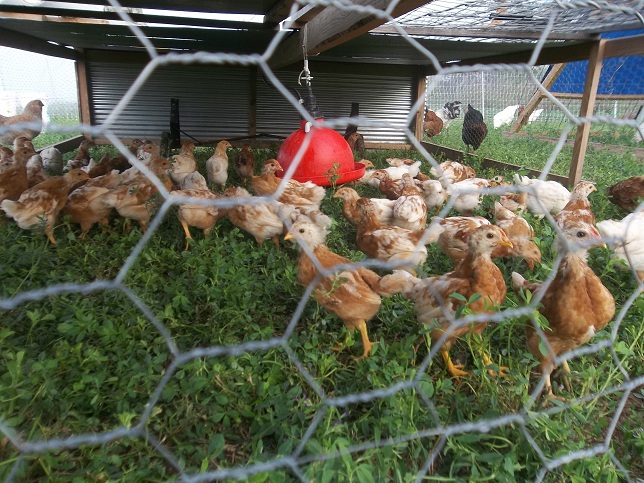
In recent years I have been running my layer flock in the same fencing with our broiler chicken tractors.  This presents certain problems but solves some others.  In short, the layers always seem to find a way to get where they don’t belong but the layers clean up the feed the broilers leave behind. They also knock down the forage ahead of the tractors as they hunt for insects.  That kind of helps when moving the tractors but it slightly soils the clean sheets we give the broilers each day.

Layers

Anyway, we have run this way for several years and I always swear I won’t do it anymore.  But it’s kind of nice to only have one set of fence to move.

Failing to Plan for Fall Egg Demand

I get this all the time.

“So, Chris, my 14 year-old daughter just watched Food Inc.  Now she’s not eating.  How much are your eggs?”

“Chris, we just started this new diet (Paleo, Zone, Sally Fallon…you name it) and need a source of clean food.  Do you sell eggs?”

“Chris, my sisters are coming in town this weekend and we are hoping to do a bunch of baking.  Can you get me 3 dozen extra?”

Well, shoot.  Our eggs are $4 (that’s $0.50 less than an inferior egg costs at Walmart!) but I’m afraid I can’t take new customers until Spring.  I would love to publish more on the topic of working to lower food costs and prices but for now, see what Salatin had to say about it in his speech about going full-time.

I sell a better egg than you can buy anywhere at a better price than you can find in a store. Consequently I don’t have enough eggs. Any chicken owner will tell you that egg availability changes through the year.  In the spring we are swimming in eggs.  In the heat of the summer the girls slow down (understandably) and heading into fall they molt. We’re in the lean times and it will get worse before it gets better. To account for this, most chicken owners start pullets in the spring so they begin laying in the fall. That way when the older hens molt they can be retired (either to the freezer or to Craig’s List) and the new hens will pick up the slack through the winter. I realize I’m not using specifics here but I’m just relating a general trend.

I failed. Our spring was so busy I just couldn’t raise pullets.  My travel schedule, my work schedule, the endless amount of work the farm requires of us…I couldn’t get it all done in the spring. Something had to give.  Since I didn’t sow, I don’t get to reap.  No pullets? No eggs. Not only can’t I accept new customers, I’m struggling to satisfy the demands of my existing customers.  I should have ordered pullets in the spring…like we always have.

Pullets On Pasture

Chalk this one up as a mistake we will work to avoid going forward.  If you focus on making a quality product, customers will find you.  You need to anticipate and accommodate that demand. I could have put down a book one evening late last winter and gotten everything ready for a few hundred chicks.  I just didn’t. As a consequence, I’m missing an opportunity to feed more people. Lesson learned.

…and Then There Were 60

Why so many posts about the budget recently?  Because yesterday was the day.  We bought another 40 acres to complete the property purchase.  I literally bought the farm.  I have to tell you, it’s weighing on me.  It isn’t enough to simply pay the note on the loan, we have to build several businesses AND keep a job in town AND raise children AND remain somewhat socially involved all at the same time.  The first goal is to get to 30 cows.  30 cows and we’ll raise their calves, always keeping the best heifers.  60 acres.  That way we can de-stock the farm if the weather turns sour without impacting our core breeding herd.  Then, someday, we’ll rent more ground and increase the core breeding herd.  First things first.

30 cows.  I have 10 now.  I need 20 more.  This year we should have 4 heifer calves.  16 more $900 heifers.  $14,400.  Where is that going to come from?

And we need more eggs.  Many, many more eggs.  Customers are demanding more eggs.  More chickens.  More fencing.  More money.

And we need to raise more pigs.  Maybe start farrowing.  That will require additional infrastructure.

And the current farm infrastructure needs a LOT of repair.

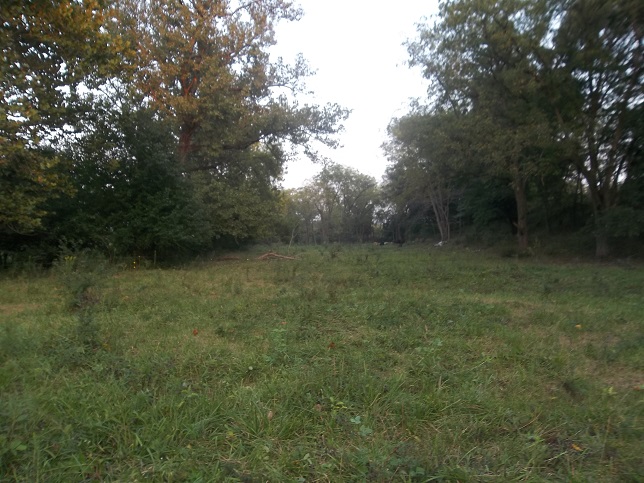
I’m going to stop talking now.  How about a tour of the new land instead?  Let’s just see what’s out there with a little commentary.

Am I Doing This Right?

My farm didn’t come with a manual.  No formula.  Nothing set in stone.  No function you plug values into.    “You take X cows, you take Y acres and you allow Z time and voila, wealth, drought-resistance and ecological diversity.”  No 8-minute YouTube video that will teach you the simple secrets of livestock management on this farm.  Just soundbites here and there.  Things you glean from years of reading books, listening to presentations and, ultimately, doing it all wrong.  I just have to do the best I can and make mistakes along the way.  As an added bonus, I brag about my mistakes on the internet for all to read!

Allow me to describe the farm as I bought it then we’ll take a look at where I hope it’s going…eventually.

House

We moved to the farm house because we had to.  We had a beautiful home in suburbia with really nice neighbors.  We felt safe.  We were obviously weird owning one car, mowing the grass with a reel mower, home schooling our kids and cooking our own food but still, we were able to find meaningful relationships and fun.  I installed hardwood floors, updated the wiring, built bookshelves galore, cabinets and a window seat.  We made the house a home.  But somehow it wasn’t our home…just a place we were visiting.  We began looking for a few acres.  We thought we would go ahead and list our house and by the time it sold we’d find a new place to live.  Well, word of mouth travels fast and before we got the house listed we sold for our asking price.  We had a month to get out and no place to go.

“Well, Grandma’s house is empty.”

So we rented Grandma’s house, not intending to stay.  It was just a place to put our stuff until we could move closer to town again.  Just a couple of acres.  That’s all we needed.  We couldn’t find a couple of acres.  Our business began to grow.  We could no longer sustain our meat, egg and goat milk business on an acre (the yard).  We had to grow.  So we made arrangements with my grandma and my uncle to buy 60 acres of the farm…20 acres now, 40 later.  Hoo boy.  20 acres.  20 acres of thorns.  20 acres that had been grazed almost continuously my entire life and, apparently, had pigs on it constantly before I was born.  20 eroded, weedy, nasty, thorny acres of hills and eroded creek bed far from our primary customer base with the promise of another 40 of the same.  (Did I mention the buildings were (are) in worse condition than the pastures?  How about the fences?)

OldPasture1

OK.  What’s the plan?  On top of a decade spent reading, studying and getting some hands-on experience we spent the first few years on the farm allowing a tenant to graze the land while we cut brush.  Dad mowed the pasture so we could sled.  Then dad got his tractor tires repaired from thorn damage.  We added chickens and goats in rotation around the tenant’s cattle.  Where the goats and chickens had been the grass grew best.  The tenant’s cows spent most of their time on my 20 acres (not the other 40 acres they had access to) eating, tromping and manuring, though unmanaged.  It was obvious that the pasture was improving, the grass density was increasing and the thorny things were being pushed back (though never defeated) by the goat grazing and the goat and chicken manure.  There were fewer thorns in the sled trails every year.

OldPasture

That takes us to now.  The tenant’s cows are mostly fenced out of our 20 (hungry calves still break in from time to time because we have standing grass in the winter and they don’t).  Summer is coming to a close and we are 4 weeks from frost (though it’s over 100 degrees out today).  Our cows are grazing tall pasture in tight, managed, planned rotation.  The girls get fresh forage each day and tromp and manure the ground as they pass.  We overseed where the cows and pigs have already been hoping to increase the diversity of grasses and forbs available in coming rotations…hoping to stretch grazing further into the year with increased plant diversity.  6-12 weeks later we graze the ground again meaning that I have at least 6-12 weeks of standing forage at all times.  Over the winter we’ll graze in strips working to stretch our limited hay supply.  Greg Judy says every inch of grass you can grow is a day you don’t have to feed hay.  If the fall is mild grass could continue growing into December…even if slowly.  Next year we’ll manage all 60 acres.  The plan will stay the same.

NewPasture

Will this work?  The books say it should.  But am I doing it right?  I hope so.  Heavy animal impact for short periods of time with long recovery periods in between grazings.  The picture above was grazed this week.  Am I setting my grass back long-term?  Am I initializing a cycle of pasture improvement or continuing (or accelerating) pasture decline?  I think I’m improving the pasture.  There is definitely more grass out there than in years past and the cow paths are covered in grass.  I’m not using a tractor, a plow, a disk, a harrow, a drill…just hooves, seed and a little hay.  How many years will it be before I won’t need the hay anymore?  All the books say I’ll start stretching later and later into the year without hay and then I won’t need any.  Is that a function of land improvement or of increased management skill?  Dunno.

I enjoy writing this, in part, to give our customers a window into our business.  I also believe I’m making a contribution to a community that has inspired me…contributing to an open-source farming movement.  Am I doing this right?  I hope you can stick around for a few years to find out with me.  I’m writing the manual for my farm.  Hopefully my kids will be able to refer to it.  Your farm manual will be very different.  Are you writing a manual for your land or just playing it by ear?

Time for Change

Every day I sweat through my clothes before work then I sweat through another set of clothes after work.  You can imagine my wife’s appreciation for the amount of laundry I am generating.

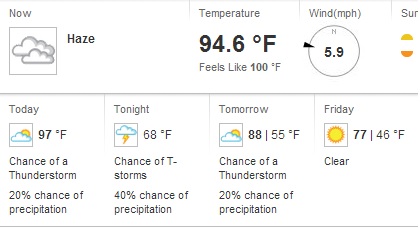
Looks like today is the last hot, hot day for a while.  In fact, it looks like we’ll get a chance to light our wood stove two nights from now!  Compare “Feels Like” to Friday’s low below.

Weather

Picture captured from Weather Underground

That’s a pretty wild change.  I can’t wait.  Maybe we’ll cook on our wood stove Saturday morning!  That may be the last time until mid-October but I’ll take what I can get.