Could I Farm the Whole State?

No. I could not farm the whole state. It isn’t going to happen. It would cost something like $176 billion to buy the farmland. Besides, we are better off with a half million small farms than with one giant farm as more farmers can do more work, cast more vision and solve more problems. Break the herds and flocks listed below out to an appropriate number of farmers if you want but keep the big total listed below. That’s realistic. Let’s have some fun with one big herd today though.

We use cattle to cycle nutrients and fix carbon. To build healthy soil. They also heal riparian areas. This is accomplished by timing exposure, measuring mob density and allowing adequate plant recovery. The problem I have is I don’t have a mob. I have 60 hooves, not 60,000,000 hooves. Not yet anyway…

What would happen if we used the whole state of Illinois as a pasture? Pretend I could rent it or buy it. Work with me here.

First, let’s make room for people. We need people. People are good. More people allow us to achieve a more complete utilization of the land and resources because I can’t do it all. I need help harvesting the nuts and berries. I need help making the calculations for the jump to light speed. I need guitarists and poets and artists and carpenters. I need bakers and brewers and electricians and computer programmers. I need inventors and dreamers and deadbeats. Biographers, journalists, morticians, pastors, truckers, used car salesmen and bankers. I need overweight doctors, professors without truth and people with Facebook accounts who think they have all the answers. I need people who can manage resources efficiently and people who will gamble it all away in one roll of the dice. I need people cheering for the red team and people cheering for the blue team and people who think they are above the game. I need opportunities to serve in a community and a community to help me when I’m in trouble. So let’s leave room for the people. The cows are a tool. The dirt is the place. The people are the purpose.

Illinois has a population of 12 million. 8 million of those live in or around Chicago. People are often shocked to learn you can drive 5 hours out of Chicago and still be in Illinois. In fact, There are 37 million acres in Illinois. So let’s give everybody an acre. They don’t have to live on that acre, but we’ll reserve that land for retail, roads, recreation, housing, gardening…whatever. Everybody gets an acre. In fact, let’s reserve another 3 million acres for the unborn. Normally we, as a nation, allocate equal space for lawn and for recreational horse pasture. I may not be leaving that much cushion. You may have to buy your horse hay from Missouri.

That leaves us with 22 million acres. Awesome possum. Cool beans. We currently farm 26 million acres in Illinois so we are ahead of the game already.

In Illinois we basically need a little less than two acres per cow and her follower. That would mean we need to come up with 11 million cows (and 110,000 bulls!). But there are only a million cows in the state currently. Heck, Texas doesn’t even have 11 million cows. But we have the appropriate soil and sufficient rainfall and we would harvest something like 10 million calves each year. Basically one beef for every non-vegetarian resident. The USDA says we ate 195 pounds of meat per person in 2000 so you probably won’t be able to/shouldn’t eat the whole beef. We’ll have to sell a portion of our production outside of the state.

And 11 million is just the starting point. We have some of the best soil in the world. Right here. If we can grow 400 bu/acre corn we can surely build grasslands to support one cow per acre…or maybe just one per 1.5 acres. But let’s stick with one cow per two acres and add in sheep instead.

We can comfortably run 4 ewes per cow…so 44 million ewes. So 88 million lambs each year. 88 million. Not only do I need to gobble up a whole beef each year , I need to eat 7 lambs each year. That’s too much meat. Lamb may become the new chicken. The cheap meat. We’ll have to export some of it to Indiana and Missouri…or other states if our neighbors catch on and appropriately stock their land.

GrazingIllinois

But we aren’t finished. Imagine the mess behind the herd. We need a big-ole flock of layers to follow behind them and clean up the mess. We currently run 10 layers per cow and I think that ratio is about right. So we need to run something like 110,000,000 layers free-ranging behind the cattle. The flock may force us to rotate some grazing land into grain production seasonally but that really shouldn’t hurt our grazing total. We’ll also need some help hatching those eggs, let alone collecting and packing and selling 6 million dozen eggs every day. BTW, that’s half of the current egg production of our entire nation so maybe we should cut back our egg production…if for no other reason to lessen our grain needs. We will be grazing around 400 square miles each day with our herds and flocks so the more we distribute the materials handling the better. We should have egg-packing and distribution facilities all over the place. We could probably butcher the flocks and make canned soup and canned cat food and…whatever else while we are in Chicago each fall and they can compost the remains for sale to the millions of Chicago gardeners. We’ll pick up the new flock of 110,000,000 pullets when we pass University of Illinois. Maybe the pullet logistics could become an ongoing research program.

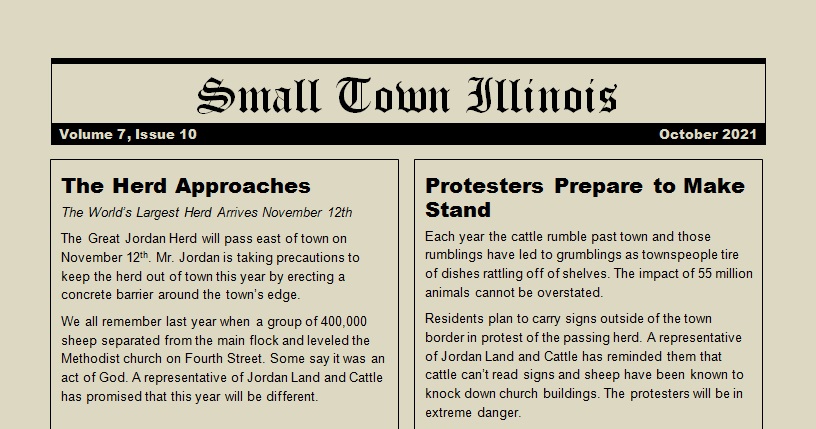
The flocks and herds will pass by quickly going from Jerseyville to Jacksonville in two days. One day the grass is waist-high, the next there is a carpet of grass and manure. Like sweat after a workout it only lasts a little bit then the recovery continues until the next workout. Every three to five months the herd will pass between Effingham and Olney then on past Harrisburg so we can wave at Metropolis then up again between Pinkneyville and Chester, across the flat stretching from St. Louis to Peoria to Rockford, skirting the freightened masses of Chicago who have never seen cattle before as we wind down to Champaign and back around again. Every three to five months we’ll graze, trample and manure the entire state, building inch after inch of soil on a dense fabric of roots and trampled grass blades…a blanket that cushions and protects the soil from ice, wind, sun and rain. Schools will let the children out for the day to see The Jordan herd pass by…a sight their grandparents never imagined. Letters will be written to editors complaining about the flocks of wild birds that accompany the herd migration and late pizza delivery caused by cattle crossing the road for hours. Chickens will follow behind…all 110 million of them, scratching out bugs and leaving additional manure. (How would that even be possible? Thousands of school buses converted to chicken houses driving from place to place? Maybe train cars full of chickens? Train cars full of chicken feed? Honestly, I can’t imagine the daily distribution needs.) A few days later there will be clouds of dung beetles. Deer and wild turkey and quail will graze with and behind the herd, not to mention the swallows swooping in above the herd as it grazes quietly along.
 

Newspaper

But surely we can do more with that ground. Cows appreciate shade on hot days. What if we planted rows of trees on contour? Miles and miles of diverse tree stands. Canopy layers of oak, hickory, chestnut or walnut. Lower layers of apple and cherry and filberts all on neat rows slowing the downhill flow of rainwater. Even lower layers of gooseberry and raspberry and strawberry. Black locust mixed in for nitrogen and wood products. All 12 million people in Illinois could have 50 pounds of cracked walnuts, 100 pounds of chestnuts, boxes and boxes of apples and cherries and strawberries. Of course, nobody wants all that food so we’ll have to hire people to harvest the abundance and build huge processing facilities to make brownies and High Fructose Chestnut Syrup and hard cider and applesauce and apple pie and caramel apples. Not to mention the massive squirrel and rabbit harvest…also enjoyed by the numerous birds of prey.

We would need something like one hired hand per thousand head of livestock so we’ll have at least 55,000 employees (probably on horseback) helping to manage the herd, culling old, open or injured animals, castrating young bulls and rams, keeping the mob grouped and moving. This does not count the teams that move ahead of the herds to build fence. (Not the kind of fence that subdivides the pasture for daily moves, the kind of fence that keeps the cows out of town…the houses from being smashed…and the cars from being trampled (we hope) by FIFTY-FIVE MILLION ANIMALS.) Probably another employee per thousand layers. Nor does this count their families that will accompany them on the migration amounting to a population larger than the city of Springfield. We’ll need many, many more people to help us transport, slaughter and distribute the meat. Thousands more to handle the abundance of nuts, fruit…just the raw materials. More to take those raw materials and produce finished products ranging from rawhide bones for pets to dining room tables to gooseberry pies. Think of the regulators required to keep us all safe! Think of the lawyers we’ll hire to keep us safe from the regulators!

And this is just the beginning. Remember, we set aside 15 million acres for humans. That leaves room for zucchini and tomatoes and flocks of chickens at home. Different strains of chickens…regional breeds. Maybe goats. Certainly pigs…everybody loves bacon. Pork may become that treasured annual delicacy bringing family together for harvest and celebration. Maybe one farmer in 20 farrows, allowing many others to keep a pig or two at home to make good use of uncollected tree nuts and garden waste. Maybe even home dairy. Heck, maybe small raw milk dairies to supply milk and cheese for neighbors…nevermind. Illinois doesn’t like raw milk. Sigh. Woodworking shops, welding and repair, bakeries, septic tank clean out… Heck, we’ll keep everybody so busy managing our abundance they won’t have time to write silly legislation to “fix” the world’s problems…let alone write starry-eyed, idealistic blog posts.

Do you know the difference between “riches” and “wealth”? What if I suggested rich people have an abundance of money and wealthy people have an abundance of time? How’s that sitting with you? (I’m thinking about this as I read P.G. Wodehouse.) Anyway, look man. When the herd is in your neighborhood, help us out. I’ll cut out a few head for your butchers and we’ll be back in a few months. When the herd is away, harvest the abundance of the forest. Bake a pecan pie sweetened with honey and pour a few mugs of hard cider. Sell the surplus production from your land then go fishing. No big whoop. Either you can lease me your grazing rights or you can lease space from me to plant your trees. Nobody is giving anybody anything. We all work hard. We all hold our heads up. We all become more wealthy (free time) and the money and resources we generate stay right here. You can buy that cool new techno-gadget if you want. I’m going to park my tookus under a tree near the herd and do some reading. Lamb for dinner. Again.

And what if we expanded the herd further? What if we worked with neighboring states to put together a larger migratory herd (probably herds)? Cottage industries springing up to help meet the needs of the families that stay with the herd year-round. There were somewhere north of 60 million bison ranging the plains 400 years ago….so…why not? Tens of thousands of people staying with the herd or working regionally with the herd as it passes through their area. Why not?

I’ll tell you why not. The EPA would shut it down.

Click image for source.

My goodness! How did the waterways survive before we shot all those horrible buffalo? What we need are more tractors! We need to rip the soil so the rain will wash it away. Put that stuff in the Gulf of Mexico where it belongs! By golly, God gave us a crater to fill and we’re gonna fill it! While we are at it, let’s poison the drinking water with weed sprays and bug sprays and anti-fungal sprays. Apparently cow poop in a stream and voluntary consumption of raw dairy will bring about the end of the world and don’t even mention the dead buffalo Lewis and Clark found in the Missouri River. Let’s sterilize the whole state right down to the bedrock. And it’s important that we tile the state to drain the rain away as quickly as possible too…in large part because atrazine in the ground water has become a bit of a problem. By golly, we have to feed the world and corn is the only way to do it.

So we’ll just continue on our current course. Eating corn flakes and puffed corn curls covered in corn starch cheese and drinking fizzy corn drinks and feeding corn to diarrhea-covered cattle in EPA-approved feedlots. Wasting our unhappy lives in cubicle-filled bureaucracies, out of touch with the natural world, never facing the reality of death…believing pharmacies and money can cure a lifetime of poor health choices…never accepting that the hamburger came from a beautiful living animal…and that it is OK to have mixed feelings about eating animals…that this is a discussion we can have. It’s OK to revere life…and take it carefully. Respectfully. To ensure our animals live each day with purpose. To ensure our people live each day with purpose. To save our soil for future generations. Nope. We can’t have that.

5 Things I Won’t Farm Without

The last couple of years we have worked to change and streamline our operation, limiting the amount of time we spend on daily chores while also focusing on increasing the quality of our products. There are several things that have really made a difference. I’ll link to a couple of places that sell each but I am in no way endorsing a supplier. I don’t care where you buy it. I just want to be clear what I’m pointing you to.

Poultry Range Feeder

Feeder
This is, in my opinion, the greatest thing ever. Ever. 100 birds don’t quite eat 50 pounds of feed in a day but it’s near enough when you have to lug the bag. Instead, we just drive the truck out to the birds, dump in enough feed to last until the next move and drive off on our merry way. The feed stays dry in the rain and we have had no trouble with bridging. The unit has proven durable. My only complaint is the ring in the feeder keeps falling out. Maybe I didn’t make it tight enough. Maybe I made it too tight.

Strombergs
FarmTek

Field Drinker

FieldDrinker
This is, in my opinion, the greatest thing ever. Ever. We ran a nipple on a garden hose hanging from a t-post for years and it worked great. I stand by that recipe. Put the t-post through a pallet to help prevent the pigs from making a wallow. But if the hose breaks when you run over it with a mower (blush) the pigs are out of water. There is no reserve. Also, the water is not cool when it gets to the nipple on a warm, sunny day. You could put a nipple on a hose connected to a tank but the better solution, I think, is to have a large, heavy tank of water the pigs can drink directly out of. Because they can’t force it to leak like a nipple they have a hard time making a wallow. There are rubber plugs in the tank and in each side of the drinker you can remove to drain and/or clean the unit and that’s important because the pigs always make a mess of things. The only problem I have had with the drinker is when the pigs get above 200 pounds they are strong enough to tip it over. The solution appears to keep the unit full. You could put a float valve in the unit with a hose sticking through the top. There are also two places for heaters if you need to keep it thawed in the winter.

FarmTek
Gemplers
Amazon

Pig Feeder

PigFeeder
This is, in my opinion, the greatest thing ever. Ever. OK. That joke is getting tired. Really, the pig feeder isn’t that big of a deal but it is nice to be able to walk away from the pigs for a couple of days. Besides, pigs eventually grow to a point where you no longer want to climb into their pen twice/day. Problem solved. We don’t have to go in at all anymore. We just flip the lid and fill it up. It holds enough feed to last eight 50# pigs two weeks or eight 300# pigs one day. However, this specific model doesn’t hold up well to the kind of abuse a 300 pound pig can dish out. I prefer to use this unit to grow out as many as four pigs. More than that and, really, I would want a larger unit…capacity, durability and weight.

enasco.com
QCSupply

Chickens on Wheels

ChickenHouseYou can’t buy these in stores but I just love our new chicken house design. It is, in my opinion, the greatest thing ever. Ever. If I were to change anything I would make it longer to measure 8×16 and build 20 of them. That’s narrow enough to fit our gates but the added length would accommodate another 50 birds. We insulated the roof and the structure stayed cool. There is more than enough ventilation. The ceiling is high enough to make clean-out a breeze. We could close up the vents and plug in some heat lamps to make this into a portable brooder. In fact, future generations of broilers may live out their entire lives in and out of this structure. One feature we really like is having the nest boxes mounted outside so we can gather eggs easily but I think we’ll relocate them to the high side of the roof next time.

Nest Boxes

Nest Box
We used homemade wooden nest boxes for years and I felt a bit foolish when I splurged on metal ones. Forget the wood. I strongly suggest you go ahead and splurge on a good array of metal nest boxes….greatest…thing…ever. I prefer plastic bottoms over galvanized. I’m surprised to admit that I prefer the plastic roost bars over the wood but we have broken several wooden roosts…as evidenced in the patch my kids used for the picture above. The plastic ones are a bit wider and just droop a little.

Well, there you go. Four product reviews and one thing I just bragged about. I hope that helps. Please comment if you have any questions or if you want to share what you believe is the greatest thing ever. Ever.

How Are We Going to Pay For This?

Oh, the joy! The fulfillment of a lifelong dream!

how are we going to pay for this 3

I liked my grandma’s house so much I bought it.

But now that I have it, how do I pay for it? Land isn’t exactly cheap right now…nor was it when I bought the farm a few years ago.

Let’s leave the dollars out of this. Let’s talk in terms of production. What do I have to produce each year just to service the debt I hold on my 60 acres? Ready? I have to produce all of the following:

  • 2,000 dozen eggs
  • 5-7 calves
  • 20 pigs
  • 1,200 broilers

All that just to make the farm payment. Now, maybe that’s not such a high hurdle…especially since the math involved has already accounted for income tax. But it is a hurdle. 1,200 broilers at our scale chews up the whole spring and fall. 3 batches of 6-8 pigs are no big deal but forces us to keep pigs all year. Eggs are a year-round deal too but 100 layers really aren’t hard to manage. That said, the income from that small flock only accounts for about 12% of the farm revenue as presented above. Layers are more about fertility and bug control than revenue but maybe we should increase the flock to account for a full 25% of revenue. Yikes! Mr. Henderson would say yes but…Yikes!

How are we going to pay for this?

So that’s what it takes. Sure I could pay the payment with 20 calves but I don’t have 20 calves. And I’m not sure I want to ONLY have cattle anyway. I have exposure to a number of markets this way. Many customers buy eggs. Fewer buy chicken. Fewer still buy pork. The marketing pyramid works very well. So we produce a variety of classes of livestock. The good news is we already have everything we need to produce these numbers. The bad news is all of that production ONLY SERVICES THE DEBT.

What about the fencing we need to build? What about the trees we want to plant? What about the buildings that need to be repaired? How can I afford to buy a tractor?

I don’t know. I guess I need a couple more pigs. And another 300 broilers. And another calf or three. And another 100 layers.

But Julie is already tired (as I frequently write). How can I double my livestock numbers without negatively impacting my job or our family life? I don’t know. Maybe I should quit my job.

But if I quit my job we’ll still need some form of income. Remember, to date we are only servicing the debt and producing enough to make small infrastructure investments. Now we’re talking income. You know, money. The kind you need to slap braces on the kids and pay for books and plan for college and…you know…what happens when I’m 70? Will I be able to relax on the farm I have served my entire life, harvesting the abundance of my decades of labor or will I have to sell my beloved land and move to town?

how are we going to pay for this edited 2

Happens all the time.

Well, that’s no hill for a climber. Maybe if we got to 300 layers. That would give us 15 dozen eggs/day to sell. And maybe we could raise 15 pigs at a time. And sell 25 calves every fall. And heck, the kids are growing. Maybe we can handle 2,400 broilers. Maybe even 3,000! Would that be enough?

Enough?

What does enough mean? How much is enough?

How much is too much?

I don’t know. Dirty Harry warned that “A man’s got to know his limitations.”

Do I know my limitations?

Do I believe I am immortal?

Did I pay too much for my farm?

What is this dream costing me?

Don’t read regret into this post. Please don’t think I’m being pessimistic. Quite the opposite. After spending a few years learning how I’m finally making this thing pay.

how are we going to pay for this edited 1

So. Be sure to sit yourself down with a couple of sharp pencils and do the math before you buy land. Try to sell something. Just try. Your boss may enjoy eating pork chops but does he have freezer space for half of a hog? Will your co-workers continue buying from you if you change jobs? Can you sell a dozen eggs at a profit? Start small. Learn as you go. Grow when you have to. Move slowly. Always do the math.

Always do the math.

Leavin’ It To The Kids

We were gone. Both of us. Gone. Away from the farm. Kids were with grandparents.

Weird. 3 weird days. Lonely. I strangely missed doing chores as I studied in my hotel room.

It took a bit of planning, a bit of negotiation, a little fiddling with things to make it a success but it was a success. A complete success. Our older kids, aged 14 (almost) and 12, with help from grandpa (age withheld), ran the farm for three days while I was working and Julie was goofing off in Florida.

leaving 6

So what has to happen when we are gone?

leaving 5

Well? Everything.

Chickens need to be opened in the morning and closed in the evening. Ideally, eggs are gathered at 11 and again at 3 and the drinker is filled at those times too.

Pigs don’t need much, just top off the feeder and make sure the water is available. Bedding is always in style but they will be fine for 3 days.

Cows need to be moved. Every. Day. The forecast was calling for cooler days so I set up a long strip on the clover field, segmented it with cross fences like a long ladder and left instructions to move the cows in the afternoon when the clover was warm and dry. Unfortunately it got hot so we had to open up some back fence to allow the cows access to shade. Water is automatic, just have to check it. The water trough is much more likely to overflow than to go dry so it is important to check to see if the cows have churned the area around the water into a muddy mess. If so, move the water. That proved to be more work than can be handled at age 13. Otherwise, no big deal.

leaving it 3

Dairy is a different thing altogether. We were only gone for three days. Three days. You with me? Three days. Tuesday Julie left the calves with the cows. All you can eat. Wednesday the kids didn’t milk. This has its drawbacks and limitations, not the least of which is the concern that the calves will overeat. But one day shouldn’t be cause for concern…especially since the calves are big enough to wean. Wednesday afternoon it was back to normal schedule. At 3, when you get the eggs and water the chickens and move the shorthorns, find the dairy calves (they ignore the fence) and lock them up at the barn. Good luck. Thursday morning they had a bit of a rodeo milking the cows but they got the job done. First they forgot the water to wash the udder. Then they forgot the rubber ring for the milker. But all went well and they got the normal amount of milk. They didn’t milk again on Friday but separated the calves so we could milk Saturday morning. No ill-effects. No big whoop.

leaving it 4

But what if the pigs get out? Or a cow? Or the bull?!?!? What then?

I don’t know. Call the pigs and put new temporary lanes up to return the cows to their pastures. But it didn’t happen.

Not only are we proud of our kids for doing such a great job, we got some feedback from dad on how to make things better. Everything from managing the water for the birds to concentrate ration changes for the milk cows. We are pretty intentional about not feeding for increased milk production as we value the longevity of the cows and calves over the volume of (otherwise worthless) milk produced but dad wants to see a little more fat on the cows. I do too. Dad also pointed out that my new layer flock is a little heavy on roosters. Strange because I bought all pullets.

With a little planning, a little training and a couple of crossed fingers, everything worked well. The kids were tired but it was nice that Julie and I got away for a little bit together.

I should also add that it was Julie who lined most of this up. I left directly after the funeral to begin school on Sunday morning. Julie was home washing eggs and preparing the kids and grandpa for the chores until she flew out Wednesday morning. This was a total team effort. I am both proud and thankful.

Where Are The Cows Now?

Cows are on the move. We have cooled off significantly and can now graze places we skipped in the hot part of summer. But we are moving fast to leave as much plant material behind as possible so plants will recover quickly. Think of it this way, the leaf is a solar cell. The more leaf area we retain the more energy we cna catch and store…the more roots we can put down…the more nutrients I can mine and cycle through the soil. The more sunlight we can capture, the more biomass we can generate. The more biomass we can generate, the more food I have for my cattle (well, unless it’s snakeroot).

SO

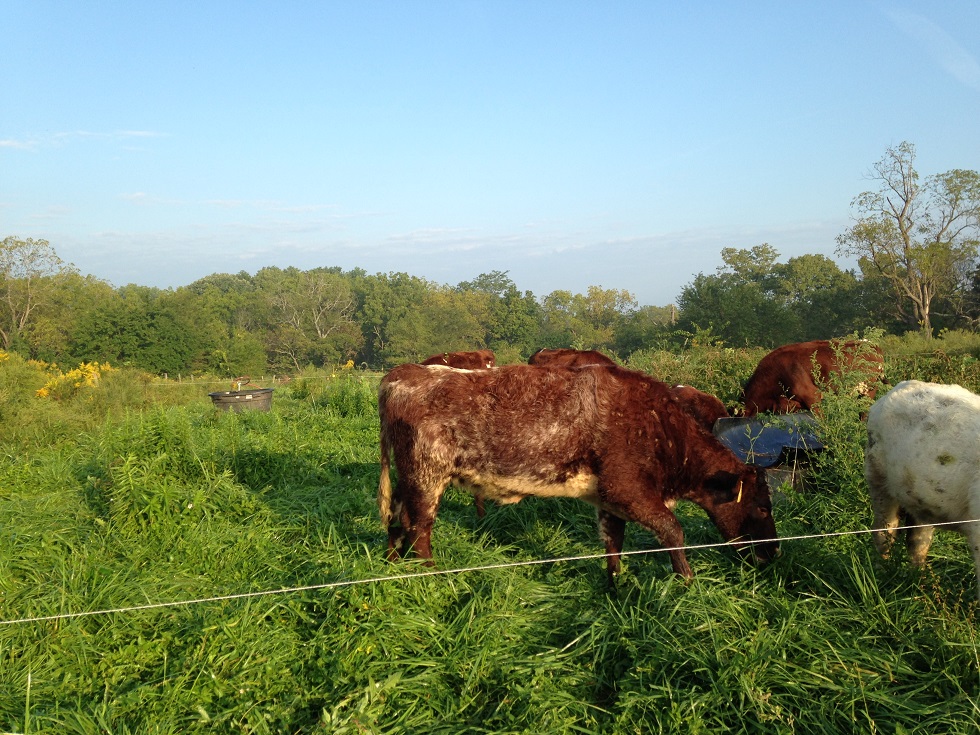
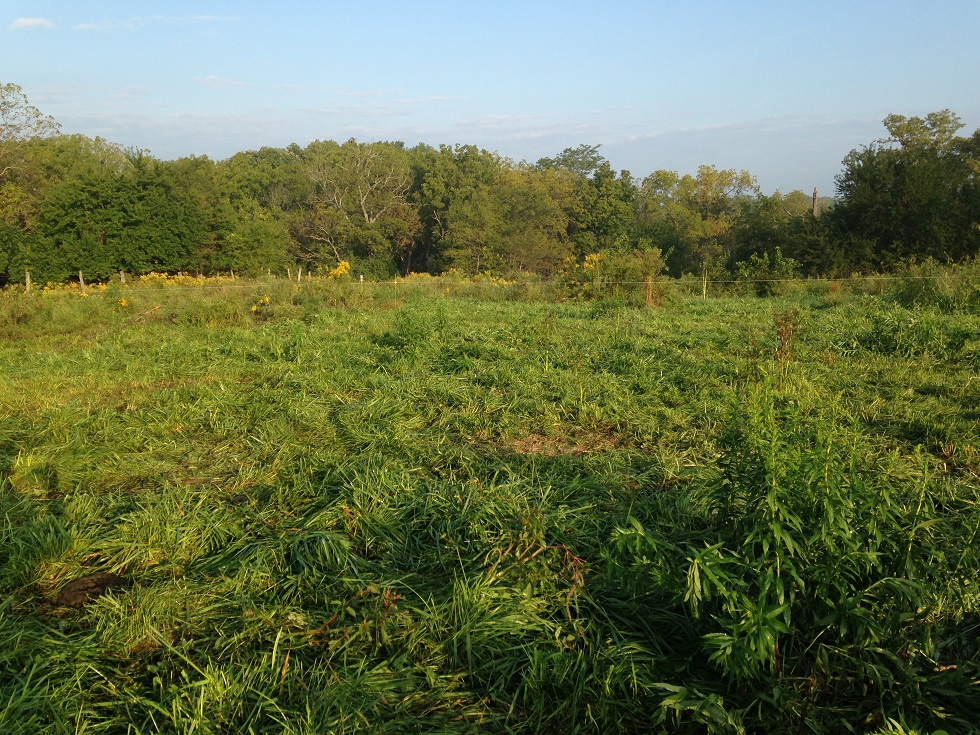
The cows are on the move. We’re trying to get them to gobble up as much of the clover and chicory and dandelion as possible before frosts arrive…and we only have about a month remaining. We are trying to convince them to skip right on past the fescue in favor of other, more fleeting morsels because the fescue will stand up to the frost. The clover will just wilt and die. We need to move fast to continue fattening our cattle before the cold weather hits. Here is a shot of a pasture they just moved into up on the flat by the hog house:

Before

And a picture of the previous pasture they have left behind. Where they slept the ground is carpeted with manure, otherwise it is scattered fairly evenly. Still plenty to eat in the paddock. At least another day’s worth of grazing. We’ll save that for another day. The broadleaf weeds will die back shortly and the fescue will really start to come on.

After


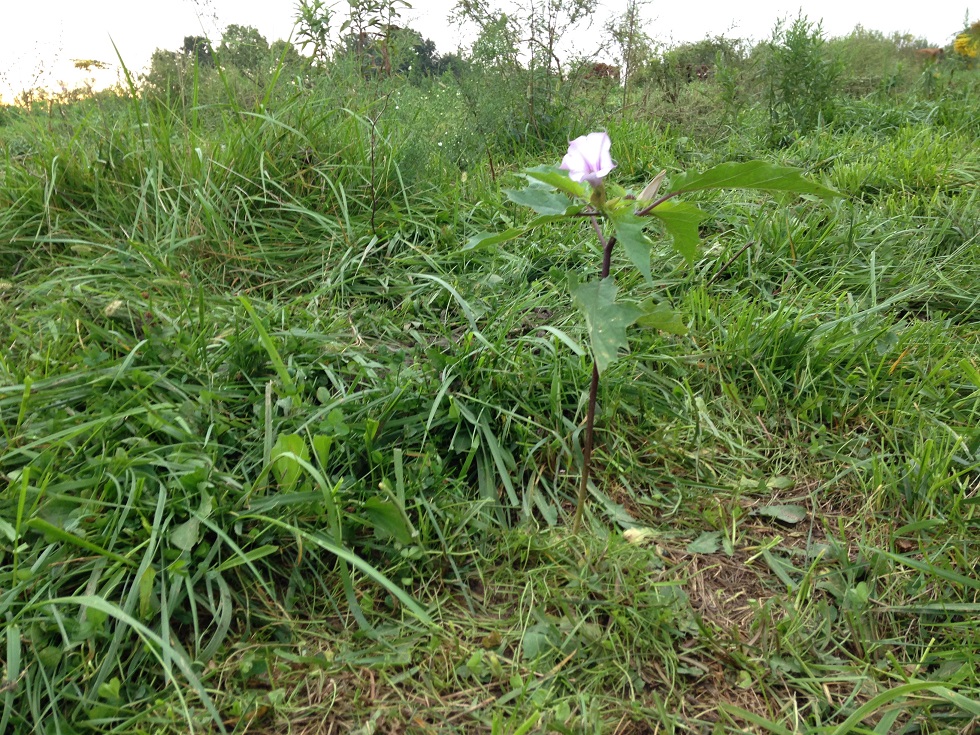
Speaking of broadleaf weeds, there are some things the cattle just won’t eat…unless they are forced to. I can’t seem to get ahead of the cocklebur or jimsonweed but the cows just eat around them, pointing them out to me.

Untouched

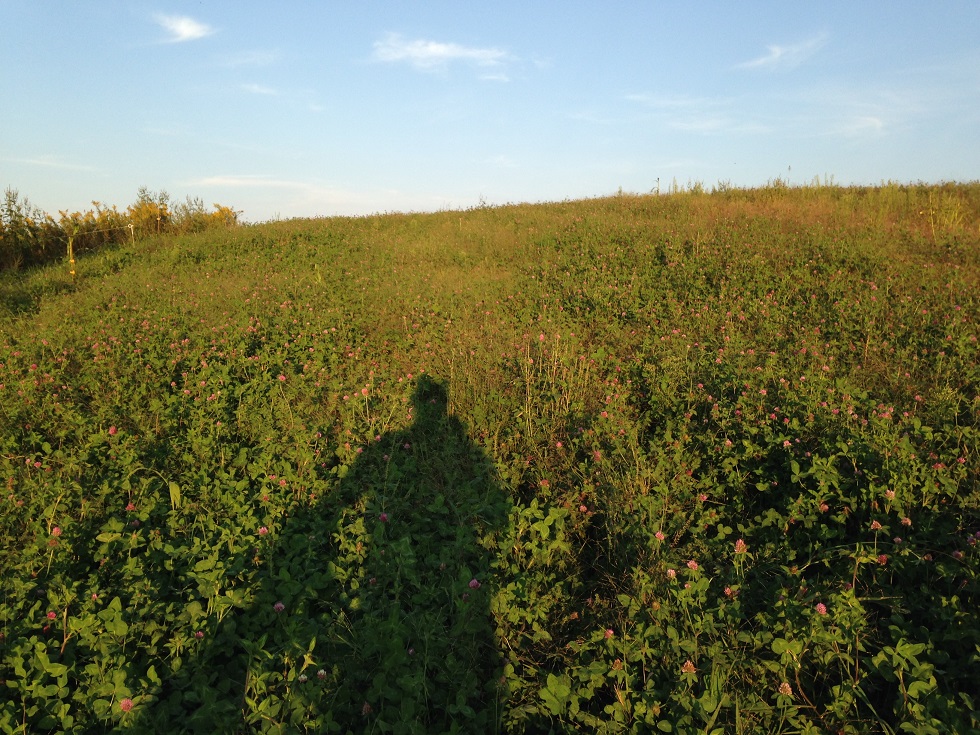
This week the cattle are on the 9 acre field dad seeded to about 60% clover last spring. He just did a light discing of the corn stubble and broadcast the seeds from the tractor. Seems like it worked well.

RedClover


Julie captured the butterfly migration in this field a few days ago.

I have 11 head of cattle, 9 acres of clover to cover and only a month to do it in. But the speed of movement is not my biggest concern. That’s just a matter of building fence and providing water. My biggest concern is the density of clover in that stand. We try to keep our cattle full and only move in the afternoon, when the fresh pasture will be dry. The first thing the cattle eat is the clover. But since the previous day’s allotment was larger than required, the cattle are entering with a full belly. If they were grazing clover covered in morning dew and with empty stomachs we would probably lose some cattle to bloat.

So we move over large areas, we move quickly, we check their gut fill (the triangular void between the last rib and the pelvis on the cow’s left (not the cow’s right!)), we move in the afternoon and we are always checking the quality of their manure. I know, right? Manure. Between the gut fill and the manure consistency I pretty much see what needs to be seen. Obviously we are always looking for somebody lagging behind or with a drippy nose, droopy ears or head down but with a mere 11 head we know each one personally any change stands out to us.

After this clover field we will have a mere 32 acres of pasture remaining for our few cows and calves. It will have to last until April. Maybe even May. Shouldn’t be a problem. With the clover field carrying the cattle this month, the rest of the farm has an opportunity to rest and recover. Hope it works out. Looks good on paper anyway. In fact, the paper says I don’t have enough cattle. Sigh.

This post was largely conceptual. I’ll go a bit into the mechanics and logistics of laying out the fence, providing water and just moving the animals in an upcoming post.

Aunt Marian

Oh, the things I don’t know about my great aunt. I was looking at magazines on her table recently and asked her how her parents spelled her name…her mail was addressed to Marian and to Marion and I have written both on the blog. I don’t think she gave me an answer, just a laugh. It must not have mattered to her.

We asked her about her uncle French…was “French” a common name 100 years ago? “No” she said, “I only knew one other person named French. That was French Fry.” We all started laughing. It took her a minute then she realized why we were laughing and we realized she wasn’t making a joke. She said, “I never thought about that before” and laughed with us. I still think that’s funny.

AuntMarianGoat

Aunt Marian recently celebrated her 95th birthday.

Party

She passed away on Wednesday.

When I was a kid Aunt Marian was just some lady who lived near Grandma and Grandpa’s and made me itchy clothes. I love pumpkin pie but she didn’t make pumpkin pie. She made squash pie. Squash pie? SQUASH PIE? Mom makes pumpkin pie from real pumpkins out of a can. Now that’s pumpkin pie!

But as I grew I learned more about her and gained a tremendous amount of respect for her. In the last few years I noticed she only slept when she was driving. Otherwise she was working. She made dresses for all of the girls at Christmas and Easter. I think I broke her of making boy clothes. She always gave me blue dress socks at Christmas. I don’t wear blue dress socks. I think she had a sense of humor. She somehow managed to keep her flowers growing, her garden in, her lawn mowed and her apples canned. I can’t do even one of those things. She volunteered at the local food pantry. She made grape pies for the fish fry. She helped at church functions. She kept her thistles chopped. She loved us.

Grandpa and Aunt Marian had an older brother named Billy. Billy was mentally handicapped (hydrocephalus). From what I have put together, Aunt Marian kept Billy with her when she was out picking berries and she had to pick 100 quarts of raspberries every summer. Imagine that. Beating through the brush to pick 25 gallons of raspberries, stabbed by the vines, tromping through the poison ivy, brother in tow and probably horses cropping grass nearby. And not only that she had to milk the cows.
She was in our kitchen about a year ago and saw our milking machine. She said, “What do you need that for? You only have two cows.” What response can you give to such a question? She continued, “I milked 14 by hand.” But it’s worst than that. She milked 14 twice each day by hand. We only milk in the morning. Same barn. Same stanchions. Jersey cows grazing the same places where her Jersey and Guernsey cows grazed. We don’t even churn the butter. We just skim off the cream for our coffee. How lazy are we?

She made time in her schedule to tell us a little about milking. She said her father offered to pay her a nickel if she could milk out one cow before he finished the rest. It took her 5 years to earn that nickel. She also told me that she would milk while grandpa was still in bed. That sounds like something you would hear a sibling say.

But I I have no doubt that she milked 14 cows and tromped through the brush picking berries with her older brother in tow. And maintained the orchard. And made clothes. And rode her horse to school. And worked in a doctors’ office for years. And what else? What else don’t we know about her?

Did you know she made my sister’s wedding dress? She made Julie’s wedding dress too. And several others. Not just the dresses for all of her great-great nieces each year, she made stuff out of the blue. I hate to think of the time she spent asleep at the wheel on her way to Springfield to buy fabric but dresses were made somehow. Maybe elves helped her at night.

This year somebody else will have to make the corned beef and cabbage. Somebody else will have to bake the pumpkin roll for the church potluck. I doubt if anybody will pick up the baton and make 30+ dresses for Christmas. Apparently I’m not up to the task of making applesauce out of 40 bushels of apples. Who will work at the food pantry? Who will make grape pies? Who will buy me blue dress socks?

I miss her already. She was a fine example of love and sacrifice and she was never intimidated by hard work. We are less one hero. If you would like to share a story about Aunt Marian please post it in comments below. I would love to hear it.

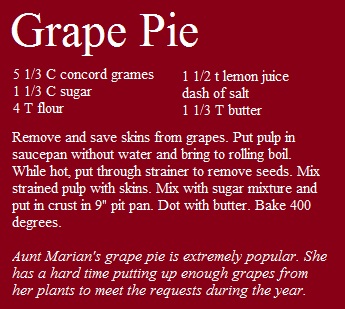
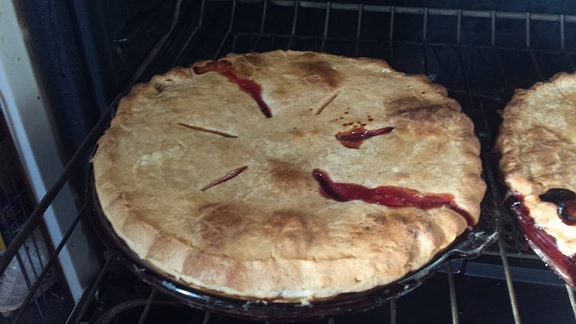
Aunt Marian’s Grape Pie (From the Chism Family Heirloom Cookbook (comment if you are interested in a copy.)

GrapePieRecipe

GrapePie

Trying my Patience

I love the Marx brothers. From Duck Soup:

Sir, you try my patience!

I don’t mind if I do. You must come over and try mine sometime.

Today the chickens were out. The milk cows were out too. Did I mention the pigs? Oh, you can bet the pigs were out. Yes-sirree!

You know what doesn’t work when you are trying to contain animals? Let’s make a list of things that don’t work.

  • Throwing whatever is handy
  • Yelling at the animals
  • Beating the animals
  • Yelling at your wife
  • Slamming the truck door
  • Yelling at the kids
  • Running and yelling
  • Standing and yelling
  • Crying and yelling

I think you get the idea. So, deep breath. Flora is in season. She didn’t settle last cycle. Sigh. So she found her way to the bull and took her friend and their calves with her. The bull.

DaBull

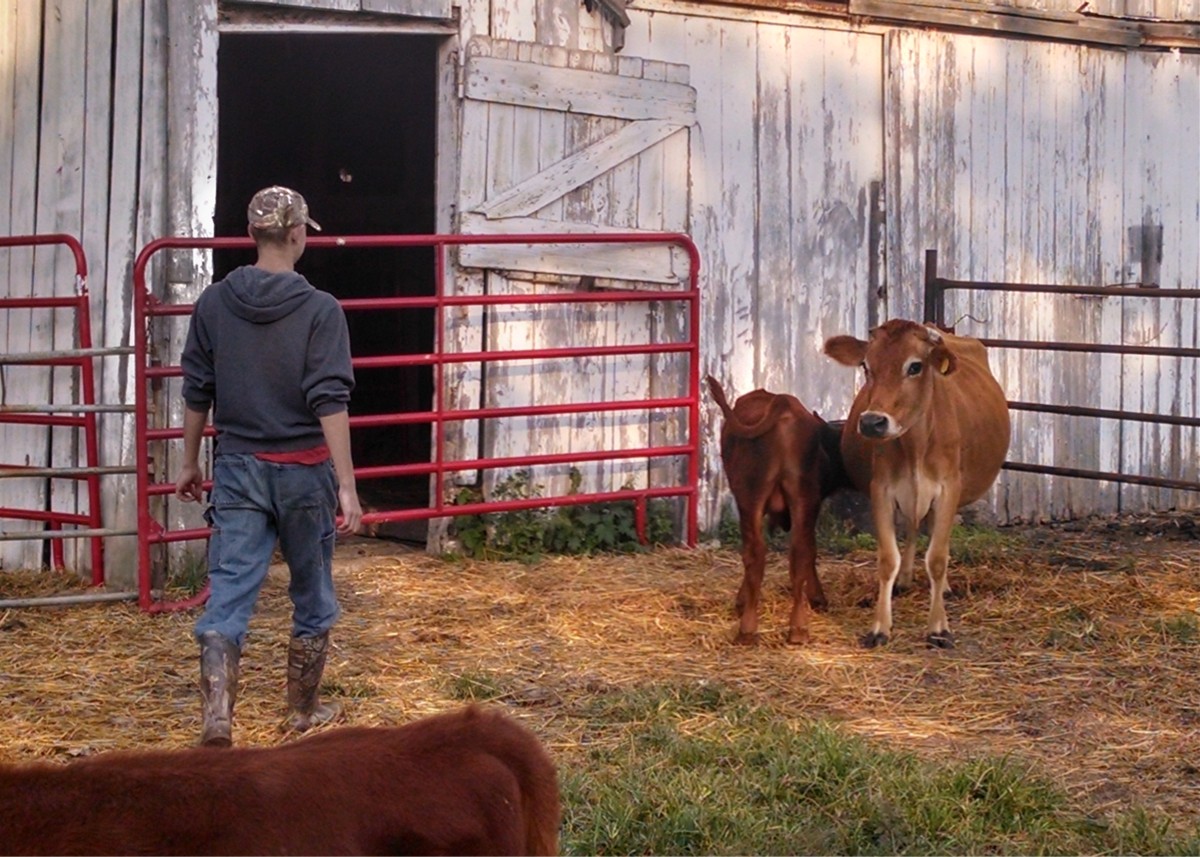
We grabbed a reel and calmly surrounded the cows then Julie led the way back to the barn building fence as she went. I followed behind. Before we could go we had to sort out which calves belonged with which group but that wasn’t a big deal. Everybody loves mom.

Just when we thought we had our problems all squared away we noticed three pigs in with the horses. Huh. Pigs. In with the horses. Three of them. Huh. “What do you think, Boo? Did the fourth stay in his pen?” Nope.

The pigs came running to see us. And why not? We bring them treats. They love to see us. But one pig couldn’t negotiate the gate to the horse pasture so I had to help him out. Then they just followed me to their pen. I thought it was kinda funny so I caught it on video. Sorry for the poor quality.

Again, no yelling. No running. No bad words or thrown objects. Listen to the noises they are making. Can you hear the happy in the noises they are making? The optimism? If they only knew…

Chickens were a little more difficult. I moved them to a new location this morning and about 20 of them moved themselves back. It took several sessions and some creative use of extra fence but we eventually walked the chickens back into their enclosure. They were glad to find food again.

I had hoped to catch a couple of roosters for dinner tonight but…well, no such luck. No lost tempers. No bad words. Just Julie and I…me…I…erm…Just the two of us and a flock of Silver Laced Wyandottes. Hmmm. (That could be a geriatric Flock of Seagulls country cover band.)

Since we already had fence in place, and since the cow was obviously open, we then walked the milk cows back to the pasture to hang with the bull tonight. Hopfully that’s all we need because the bull leaves in 13 days.

I find that patience is gained slowly. But I’m getting there. Days like today help.

Reflections at 5:45 am

545am

I have been awake since 5. The alarm clock roused me from a sound sleep. I always sleep better on cold nights. Maybe it’s the feeling of security I get from a pile of blankets pressing down on me.

By 5:45 I have finally gotten myself dressed, got the coffee brewing and have prodded myself to go outside. I beat the sun today. Point for me.

The moon provides the majority of the illumination as I begin my work. I have a busy morning so I moved the chicken house last night. This morning I just need to stand up their fence and fill their drinker.

The white fence posts are barely visible in the dim light. As I pick up each one I am increasingly covered in cold dew. My long sleeved t-shirt and hoodie are not quite enough. But it has to be done. A little after 6 Julie joins me and we finish up just before the sun rises.

We had a rough week on the farm. It seems so much of what we do is just a struggle to keep things alive. I often write about my struggle to express my love to Julie instead of just nagging her to death. When your crying wife says to you, “Nothing is ever good enough for you!”….well, those are the moments you should just shut your mouth and become a little more introspective.

When things go wrong I spend a lot of time reviewing what happened. What went wrong? How can I avoid it going forward? I really want to explore it from all angles, find a solution and bring it to fruition. You might say I dwell on things.

I kicked myself for days when a goat named Shivers died. our nanny goat gave birth to quadruplets including Shivers. We were new at goats and livestock and were just glad to have 16 hooves on the ground, not knowing we needed to wait to see if all 4 could latch on. Not even imaging that we might be better off raising them on a bottle. Never suspecting a massive storm was going to kick up in the night. In the morning there were two baby goats latched on, one laying dead at the edge of the shelter and poor Shivers…shivering…cold, wet and alone. From that moment we were bottle-feeding goats. It wasn’t easy. At all. But with some help from some experienced friends (who must have thought we were idiots (we were (are))) we got them drinking from bottles. But Shivers never ate much. I made her a little sweater from the sleeve of a sweatshirt and we fought with her for a week trying to keep her alive. We even tried tube feeding her. But we failed. She missed the colostrum, got off to a bad start and that was that. Wasted effort.

Oh, the things I would do differently today! Geez. But I didn’t know.

There is an endless supply of things I don’t know. Things I can’t know…but maybe should. Do you know what this is?

WhiteSnakeroot

It is White Snakeroot. It is death incarnate and this week it killed a bull calf. I had no idea it was even out there. Acres and acres of it. Anywhere the canopy covers and mowers can’t mow. Steep hill sides and creek banks are covered with it. And I had no idea. The kids and Julie and I now spend our evenings pulling it up by the root and making piles for burning. Bushels and bushels of this stuff. You just would not believe. But it gets worse.

The cows rarely eat it. If they do it’s just a nibble here or there. How do I know? Because I went through the paddocks they have grazed over the last 10 days or so. The grazing pattern is clear. Except for one day. One paddock. One place I left the herd a little too long.

This morning, instead of dwelling on my many failings as a husband and father I was thinking about my calf Curly. I didn’t know I had snakeroot. I didn’t mean to leave them so long, I just gauged the forage incorrectly. And I found Curly laying on his side in a ravine. My mistake. My fault. My responsibility. My loss.

We do everything we can to protect out livestock but it doesn’t always work out. And it isn’t always our fault. But it is always our loss.

This farming stuff can be hard. But I can’t dwell on the bad things.

This morning my fourth child will be baptized at our church and I get to baptize her. She need no longer to fear death. No rainstorm, no random weed, no enemy has a hold on her eternal life. She is free. Born twice to die once. It’s not just another day of working to hold death at bay for a little while longer. This is a day of celebration.

We live in a fallen world, besieged by an enemy who seeks to kill, steal and destroy. It is unfortunate that we lost a calf this week but we will work through it. I can’t dwell on that small loss…letting the enemy steal my joy. I live a blessed life. I get to live on a farm with hills and trees and grass and ponds and streams and chickens and pigs and cows and milk and honey. My children are strong and happy and we have planted the Word of God in their hearts. I have every reason to rejoice!

So I stand. Watching the light grow in the sky and wrestling with my thoughts. Why am I in such a funk? David must have felt this way when he wrote “Bless the Lord, O my soul!” That’s a strange way to talk to oneself. He must have been in a funk too…giving himself a pep talk. “All that is within me bless His holy name!” He has to be rooting for himself.

This morning I spent time reflecting on where I spend my reflection time. My hands were busy and my mind was active. But neither were always productive.

645am

What are you dwelling on? It is easy to focus on your faults…to blame and berate yourself endlessly. Isn’t it better to remember that the sun is rising? That today is a new day? That THIS is the day the Lord has made and we will rejoice and be glad in it. Even if we’re just trying to talk ourselves into it, isn’t it better to talk yourself into life? The sun is rising. My daughter is being baptized today. Death has no hold on her. I will rejoice.

But I will also stay busy pulling white snakeroot in the evenings.

The First Fire

This is two years in a row we have lit our first fire before Sep. 15th. If you would have asked last year I would have said it was unusually cold but now? Turns out I would have been mistaken.

FirstFire

I tend to think of September as a hot month. A week ago it was. On the 9th I came in from morning chores soaked with sweat and still sweating after I got out of the shower and dressed for work. This morning I wore a hoodie to do chores and it was only just warm enough. But September will warm up again. No doubt.

We had planned to light our first fire a week ago when the forecast called for this:

Forecast

But when that weather arrived the house still had so much residual warmth we just couldn’t excuse it. Now, however, the A/C units are out of the windows and the house is a little chilly. And for those of you keeping score, when the 13th arrived 8 days later (today) we hit 41, not 46.

We all slept with a few extra blankets on our beds last night. My oldest daughter stood behind the stove to warm up when she woke up this morning. (The other kids will too but she is the only one up this early.) I think this transition into fall is the best time of the year.

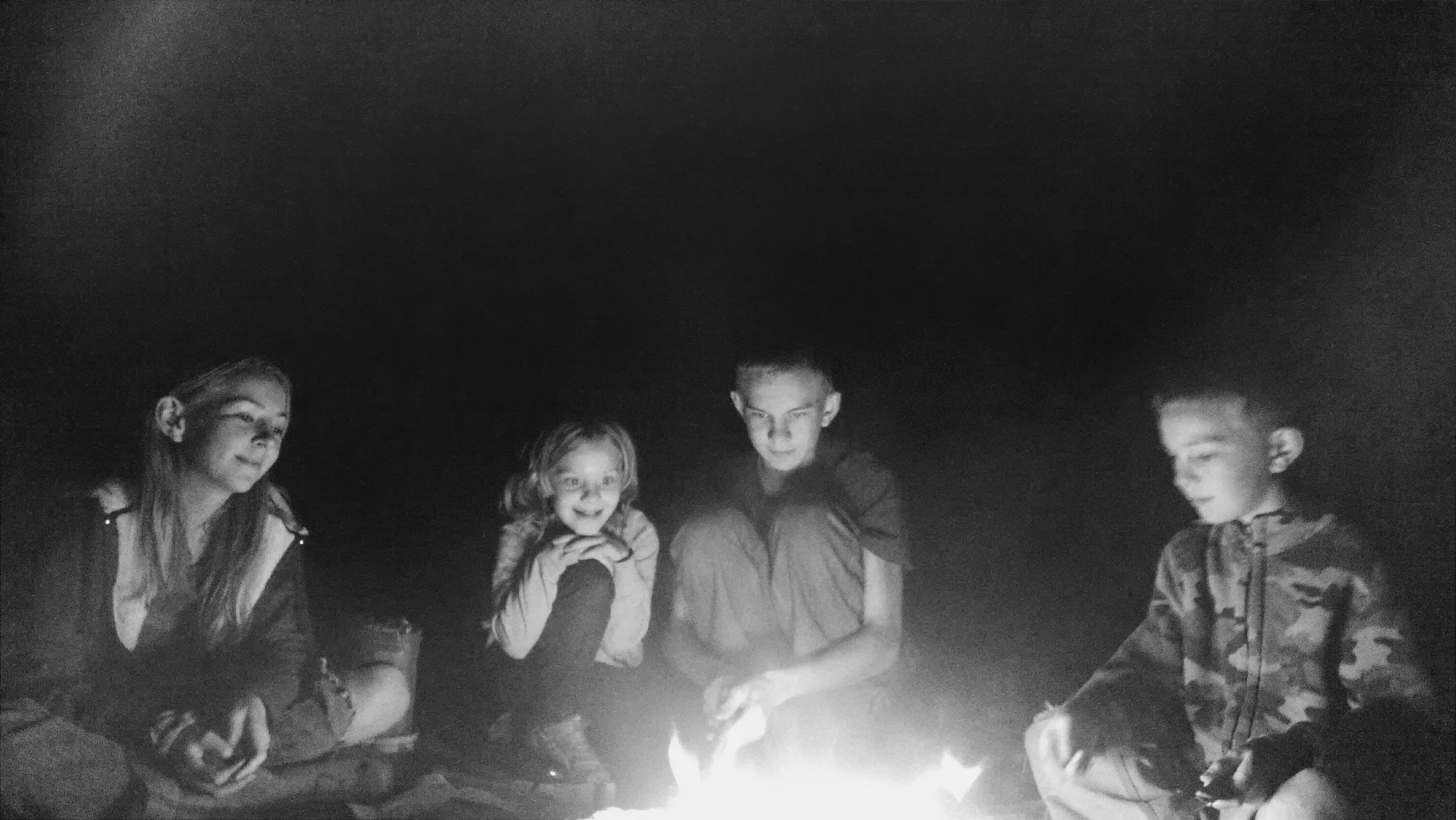
It didn’t take much wood to warm up the back room. It wasn’t much of a fire. Just something to warm the kettle. But it was nice.

Apple Drops Galore

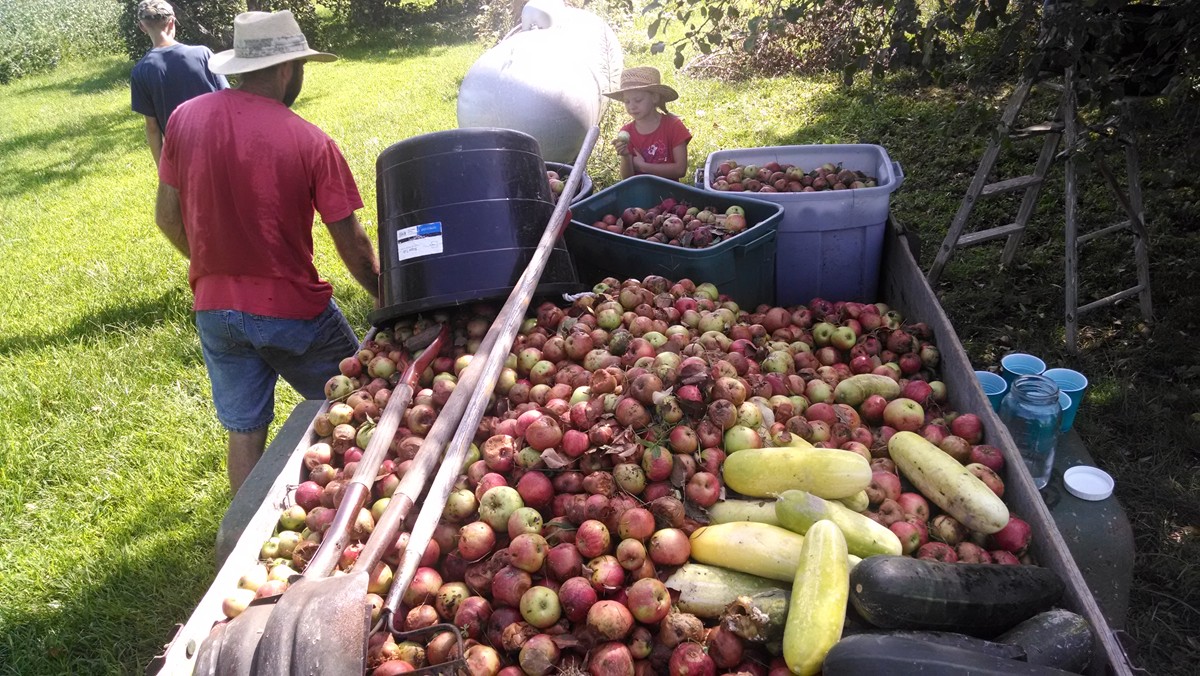
Each year we pick up a few bags of apple drops at aunt Marian’s house to help her keep her yard clean. Apparently we have just taken a small portion of the available apples. This year we filled a full pickup truck from one tree. And that was just the start of the drop. So when you wonder to yourself, “How many apple trees do I need?” remember she has three mature apple trees in her yard and it makes this point well: You don’t need a big orchard.

Her Mutsu tree is her prized possession. This is the tree I prune when she isn’t looking. I can usually prune about a quarter of the tree before she gets her slippers on and tells me I have cut too much wood off of the tree. Mainly I try to keep the chimney empty, remove lower and crossing branches and cut out anything dead. The tree is also reaching over to her grape vines so I have been working to shorten its reach over time. She just wants me to remove anything that is touching. So I play this little game. I express my love by pruning her trees. She expresses her love by not staying angry with me.

Mutsu

The Mutsu ripens later in the season. This summer has been cool and the apples are already sweet if you can stumble through the drops to pick one from the tree.

MutsuDrop

The tree by the house is an unknown. She ordered a number of trees through the mail some decades ago and didn’t get what she ordered. I think this is one of the wrong trees but it makes a HUGE quantity of sweet red apples every year and seems to be resistant to fire blight.

HouseTree

When she had her roof replaced the roofers took certain liberties with the limbs overhanging the roof. Since I always start with the Mutsu tree, aunt Marian was out there with me and prevented me from doing anything other than cutting out a specific broken limb. The long limb on the left offers additional shade in her dog pen. You should see all the apples in there! Since the limb points down it focuses on apple production. Go read up on training vs. pruning trees.

Finally there is a Johnny Appleseed tree in the corner of her yard. This tree grew out of a compost pile. It makes a mild transparent-type apple but she rarely uses the apples. It has never been pruned short of when she asked me to cut out dead wood last winter. She was surprised and disappointed how much dead wood was in the tree. I think the tree is just about finished. I may gather a cutting or two. Most of the drops from this tree feed the wildlife that venture into the corner of the yard far away from the dog.

CompostTree

I don’t think I’m exaggerating to suggest that I could fill five or six pickup trucks with this year’s apple crop from these three trees…even just the drops.

that's alot of apples

The four pigs and layer flock, it turns out, are only so interested in eating apples. They can have enough. I don’t know what aunt Marian did with them all. We have considered unloading them in rows in the pasture allowing trees to sprout where we think we would like to have them…but who knows. It is important to pick up the drops to keep the apple pest populations lower. We just haven’t really solved the problem yet. And there are more apples rotting on the ground as I type. Ugh. And buckets of apples in my kitchen waiting to become applesauce.

You might consider planting four smaller trees together in a cluster and work to keep them small. This would give you a manageable amount of apples from a variety of flavors spread across a longer harvest. Dad found a roadside apple tree between here and aunt Marian’s house. Just a volunteer tree but loaded with red, knotty, wormy apples. No sign of fire blight though and a good flavor, though they are not quite sweet yet and it is growing and producing in spite of the fact that it has never been cared for in any way. I should get some cuttings of that too…