Reading Journal 2015 Week 2

This was a busy week. Hopefully we saw our low temperatures for the year. It’s hard to keep bedding under the cows, feed in the cows and water available to the cows. Much easier when they are on pasture. To make things harder I was introduced to Minecraft this week. That is, quite possibly, the greatest PG-rated time waster ever! I had to scramble to get any reading done. More in a minute.

I wanted to make a quick note about ebooks. I tend to read on my phone about half the time. When I have a paper book in my hand I also keep a pencil in hand (or mouth) to underline passages that impact me. I also scribble notes in the margins. I can highlight in an ebook and it’s easy to look through sections of a book I have highlighted but somehow…I…don’t. When I review an ebook I have read I tend to have many fewer notes than when I read a physical book. Sometimes, though, I think that is appropriate. Sometimes a book is a meal. Sometimes it’s just a cup of coffee.

Ten Acres Enough

What is the book about?
A change from city businessman to man in the business of farming. He wrote about stacking products and staggering harvest windows 100 years before permaculture was a word…cause he read about it from even older books. He even calls himself a book farmer.

TenAcresEnough

Is it a classic?
Anything people still read and discuss 150 years later is, necessarily, a classic. However, this could have been written last week. You can’t swing a dead cat without hitting somebody who yearns for life in the country…making an honest living growing and selling small fruits and this book bore fruit all those years ago.

Will you read it again?
Quite probably. And soon. In fact, I think it’s worthy of a chapter-by-chapter reflection. Or maybe a topic by topic reflection.

Does it belong on your bookshelf?
This was one of those books that I knew about, had heard a thing or two about but never made the slightest attempt to read. One of Julie’s uncles gave it to me for Christmas…a very thoughtful gift. It will remain on my shelf both because I enjoyed it and plan to study it further and because I wish to honor Julie’s uncle Tim.

Can you relate a favorite passage?
Just one?

In chapter 2 he makes a long series of arguments to persuade the reader that land ownership is desirable. As you read here, remember he is violently opposed to debt. His argument includes this quotable quote:

Wheat grows and corn ripens though all the banks in the world may break, for seed-time and harvest is one of the divine promises to man, never to be broken, because of its divine origin. They grew and ripened before banks were invented, and will continue to do so when banks and railroad bonds shall have become obsolete.

He finishes his argument with this: It’s hard for the kids to sell it.

When all other guards give way, early memories of parental attachment to these ancestral acres, or tender reminiscences of childhood, will come in to stay the spoliation of the homestead, and make even the prodigal pause before giving up this portion of his inheritance.

Chapter 3 has one worthy of mention also. The world is full of prognostications even today. In the Old Testament, prophets who got it wrong got killed. Today the world is flooded with news of impending doom from all directions and there are no consequences for the Chicken Little prophets. I assume there were no consequences for fear-driven business advisers in the 1840’s either.

Twenty years ago nurserymen were advised to close up their sales and abandon their businesses, as they could soon have no customers for trees – everybody was supplied. But trees have continued to be planted from that day to this, and where hundreds were sold twenty years ago, thousands are disposed of now. Old-established nurseries have been planted. The nursery business has grown to a magnitude truly gigantic, because the market for fruit has been annually growing larger, and no business enlarges itself unless it is proved to be profitable.

Well, I might argue that last point. In an era of free money there is a lot of capital misallocation. But that’s a different book for a different day. Some of that free money gets thrown at projects that would, otherwise, not be funded then the money evaporates. Pets.com comes to mind.

At any rate, the future is unknown, business is risky and that’s why owners typically take home a higher percentage than employees. It’s their neck on the line. Everybody says there is no need for more trees but you, the risk taker, go ahead and pot up another batch. Will they sell? Will you sleep until they do?

Chapter 21 has a great quote about a man who started small, the need to start small and the strength that gives for growth. Of course, the gentleman in question, as many of the author’s mentors did, used manures to the greatest advantage. Put that poop to work!

His great success removed all doubt and disarmed all opposition. But even his was not achieved without unremitting industry and intelligent application of the mind. Neither his hands nor the manure did every thing. But manure lay at the foundation of the edifice: without it he would have toiled in vain to build up an ample fortune from the humblest of beginnings.

The final chapter is concerned with where to buy land; East vs. West. He is, obviously, in favor of buying in the east where the major population centers were. Land is more expensive but you can sell product for a higher price. Let’s just let him say it.

If my example be worth imitating, land should be obtained within cheap and daily access to any one of the great cities. If within reach of two, as mine is, all the better, as the location thus secures the choice of two markets.

…and later…

But choose as he may, locate as he will, he must not, as he hopes to succeed in growing the smaller fruits to profit, locate himself out of reach of a daily cash market. New York and Philadelphia may be likened to two huge bags of gold, always filled…

Who should read this book?
I think you should. You. Yes, you. If nothing else, this book will expand your vocabulary.

Take home messages:
Several themes stand out to me:

  • Avoid debt…banks are evil. Old Testament stuff. Forty years of darkness. Earthquakes, volcanoes…dogs and cats living together. Mass hysteria!
  • Rely on your spouse as your teammate
  • Stagger production windows into high income produce
  • Plant the whole farm off the bat
  • Stack multiple crops in the same area (like Stefan Sobkowiak(you should buy that!))
  • Make an investment in fertility. He bought the farm for $1,000. Over the next two years he spent $200 each year to buy manure…40% of the farm value in manure. And you wonder why I spend so much time writing about manure…

And now for something completely different.

Minecraft

What is this book game about?
It’s an open world sandbox. Completely open. You can build, destroy, hunt, explore…just a sandbox. No missions. No quests. Just go. Do. If you want you can just build huge glass castles and breed rabbits. Whatever. I’m a 38 year old child. This game is a dream. It requires a certain level of genius to make a calculator out of Minecraft blocks though.

Is it a classic?
At 60 million copies sold? Yes. And for good reason. This game will inspire and direct gaming for years to come. It comes in at third place for game sales across all platforms following Tetris and Wii Sports. (Wii Sports? Seriously? I, like, literally can’t even.)

Will you read play it again?
Again and again. For a while anyway. I’m sure it will get old but it’s right up there with my favorite game of all time, X-Com UFO Defense. Oh, gosh! Imagine an alien invasion Minecraft world! Instead of zombies you could fight aliens! Instead of abandoned mines you could discover alien bases! If only I was a better programmer.

Does it belong on your bookshelf computer?
Obviously I think so. It’s PG. It’s appropriate for all ages. It’s a hoot. Why did I wait so long? Why was I born in 1976 instead of 2010? Why don’t I go out and buy 4 more computers so the kids and I can all play together? I mean, seriously! I could hook that up for about the price of a cow!

Can you relate a favorite passage or experience?
Favorite passage?

/kill @e[type=Creeper]

The best experience is easily repeatable. I mined out a bunch of materials, suited up in armor, grabbed a couple of swords and a few stacks of torches and ladders and explored the abandoned mine I found. I should clarify, if your character dies in game it’s not a huge deal. Your stuff stays where you died until you either return to pick it up or the garbage collector routine sweeps it up for you. But you don’t want to die. So my kids are gathered around as we light up the darkness. We hear zombies moaning somewhere around us. A giant spider hisses. Then…suddenly from deep in the darkness a skeleton starts firing arrows at me. I don’t know where I can step because the ground is uneven. I don’t know where the enemies are. My kids are screaming, the younger two run out of the room acting scared and being goofy, I fall in a hole, zombies fall on me while I hack and slash and….we all have a blast. Seriously. Most fun I have had gaming in years.

Who should read this book play this game?
Anybody who wants to have fun. I think this game opens a world of possibilities for my kids. Really. If there is one skill I would have my kids learn right now it would be OO programming. I don’t know what is coming next but I do know that right now, if they want a job that is in demand, something they can do that pays well with pleasant working conditions, something they could do right here at home to supplement farm income, I would encourage them to become software developers. That requires a solid foundation in math. I can say that over and over. I can tell my kids they need to know math. But if I show them something like this…if I show them the formulas involved in creating a landscape out of blocks and persisting that data…maybe then they will begin to pay attention. Or at least start asking me questions. There is a pretty high-energy video that asks “Is Minecraft is the ultimate educational tool?

Take home messages:
This really might be a paradigm shift in gaming. The Legend of Zelda was absolutely revolutionary in 1986. This is SO MUCH COOLER. I’m not supposed to be doing anything and I want to do everything. But I can’t. There isn’t time. But we (kids and I) can have a lot of fun, can learn about PC specs, networking, programming and how to kill creepers before they explode. When the kids who are playing this now learn to create their own games, look out!

A Year With Minecraft: Behind the Scenes at Mojang

What is this book about?
It’s history and biography of the staff at a small indie game studio.

Is it a classic?
I really don’t think so.

Will you read it again?
I really don’t think so. My kids might though there was one bad word in a narration about trying to meet public expectations.

Does it belong on your bookshelf?
No.

Can you relate a favorite passage?
Long story. I have known about Minecraft for a few years now and it is something I have avoided because I though it was just some kid thing. But it’s not. It’s built for the community. The developers are very responsive to the demands of the player community. The game was originally released in a very, very pre-release form. This allowed the developer (mainly Markus) to focus on features the community wanted the most. There are several passages that discuss this, comparing Minecraft to another game, Scrolls, that the company was developing at the time the book was being written. In fact, the book may be not-so-subtle advertising for that other game. Anyway…

Rather than bludgeon you with direct quotes spanning the entire book and repeating what I said above I want to talk about how it relates to me. I am really tuba-playing band nerd turned computer guy and father who pretends to be a farmer pretending to write about farming. I have pretended so well that I’m 40-50% of the way finished with a book on raising and selling a few pigs. Just a few pigs…done the way(s) we do it. But I seem to be stuck. Not exactly writer’s block but something like that. I don’t know what level of detail to include at certain points. I suppose I could follow the model used for Minecraft and release a discounted pre-release version of the book and rely on reader feedback to form the final version complete with free updates.

So I guess that makes my book review a not-so-subtle advertisement for a book I’m pretending to write.

Also, the book follows the company. The team. The people. That’s the focus. Markus Persson created an incredible game and did so at just the right time. But behind the scenes, Markus Persson also found an incredible group of people and was incredibly generous with them, building employee loyalty, making work fun and making it financially rewarding. That’s not luck…but it’s not to say that luck didn’t come into play.

One other thing struck me. I have had to sign contracts that say the company owns my creative works for the duration of my employment. I have also benefited greatly from my network of colleagues and my professional reputation. The following quotes tie those two ideas together.

We [Online photo service company] had a problem that needed solving and someone who knew Markus from a forum was aware that he had worked with that type of programming before.

…but actually hiring him was not easy…

It took almost a year to lure Markus from King.com to Jalbum, and the main reason he eventually accepted was that he wanted to work more on Minecraft. That’s was why a programming job was preferable to game developing at King, who also had rules against employees making games outside of work – especially if you charged for the game.

King lost a talented employee because they believe a lie. They believe ideas are scarce and valuable. Ideas are not scarce. Ideas are worthless. Everybody has ideas. But very few lock themselves in their home every evening for years to create something of their own. Ideas for projects are common. Finished projects are rare. Talented employees who can finish projects are gold. King screwed up. It looks like Mojang handles this differently but I only have one quote to back it up.

In the new premises, Mojang would come to have more workstations than employees, the thought being that other indie developers could use those empty seats.

I can’t even imagine. Data security? Code security? Network security? But they seem to believe making resources available to talented people is beneficial to all…so…they do it. Maybe they cultivate talent that way. What does it cost them? What does it benefit them?

How can I implement a similar sense of openness and support in our home? On our farm?

Finally, each person at Mojang carries a lot of responsibility. There aren’t big teams of people working together toward a common goal, there are individuals with individual assignments. I’m sure they bounce ideas off of each other and support each other but…

This way of working not only means that each person at Mojang have a lot of work on his or her hands; it’s also up to them to get it done. There is no one to hide behind. …People are working quietly and are persistently studying their computer screens. Diligence was the word coming to mind.

I can certainly rely on my kids to complete specific tasks. But this is, I think, more. These people are all passionate about their job. If Markus wrote Minecraft in the right place at the right time, these people are also in the right place at the right time…at the right company. I need to ensure that my kids feel similarly. I need my kids to feel rewarded and inspired. I need my kids to feel the impact of their work financially, ecologically and in our community. How do I do that? Mojang uses twitter to get feedback from millions of gamers. I don’t have that marketing reach…but still I have to make them believe. Why else would they pour their heart and soul into the work?

…creates positive peer pressure. If you stand up in front of a group and tell them what you are going to do, then you also have an obligation to the group to deliver. I think that’s the best form of organization you can create as a manager, to get the team to organize themselves and set their own goals.

That’s why I announce publicly that I’m going to finish a book each week and report on it here. So how can I cast vision into my children? How can I help them see the tremendous amount of work there is to do here, prevent them from feeling overwhelmed by breaking it down into smaller parts and encourage them to stand in front of the family and take ownership of it?

Ask me again in a few years.

Who should read this book?
I guess people like me. I have always played video games and it’s pretty cool to see through a foggy window into that world. It’s so different than the simple financial or health utility programs I have been involved with. Gamers are harder to please than the SEC and are extremely fickle. These people handle it well.

Take home messages:
I enjoyed reading this book though I really only gave it about 4 hours. It’s light reading…details on the people behind a game I am having fun playing. I found the most value in their unwavering openness, honesty and hard work. They appear to have a lot of fun working together but they do work together. They are inspired. They share a common vision. They reap the rewards. As I mentioned, I seek application of that here at home.

Favorite Blog Post of the Week

You have to know I read a TON of blog posts throughout the week. I’ll leave out the blogs about the SQL Server OPENROWSET() function to retrieve data from XML files. That’s pretty cool but doesn’t compare to cow manure.

The most personally challenging post I read this week was by my friend at SailorsSmallFarm. I didn’t comment on her blog post which is somewhat unusual, especially since she was kind enough to mention me in her post (What does “skookum” mean? Apparently it’s Chinook for “neato”). I wanted to reply to her closing question but I couldn’t find the right words.

So now, I just need to make it happen, and then…how am I going to get the pig’s paddock to be multi-functional?

I tend to be a problem solver but I think sometimes I just need to be supportive. That’s what Julie says anyway. Maybe what she needs is what she has…plus a few nut and berry plants…plus some reassurance from a friend 2200 miles away. Cause that would be cool. So…”Right on SSF. Things are looking great! You have been working hard and it shows. I can’t wait to see what you do next!”

I have started reading Cottage Economy and a couple of others I’ll report on next week. Until then, please give me some feedback on this post. I read a lot. Like, a lot, lot. Especially in the winter. I like to share with my readers when I find a book that helps a farmer out. But I also like to be entertained so I include links to movies and music and, apparently, video games. Fun books too. Please let me know if there are questions I can answer for you or if you have any suggestions to help make this format more meaningful. Would pictures of the books help?
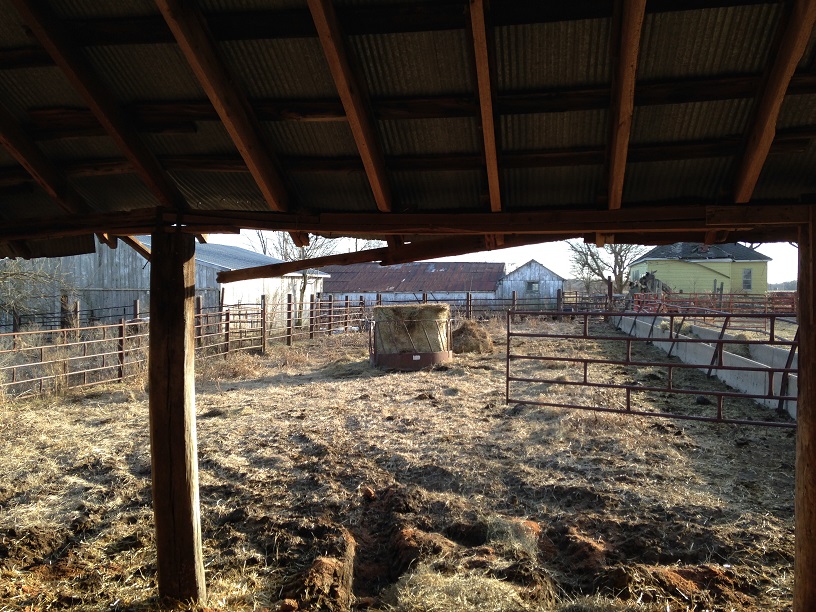
While My Bovine Gently Eats

Try singing the title. Try singing the title to the tune of a Beatles song. Too much of a stretch? Oh well.

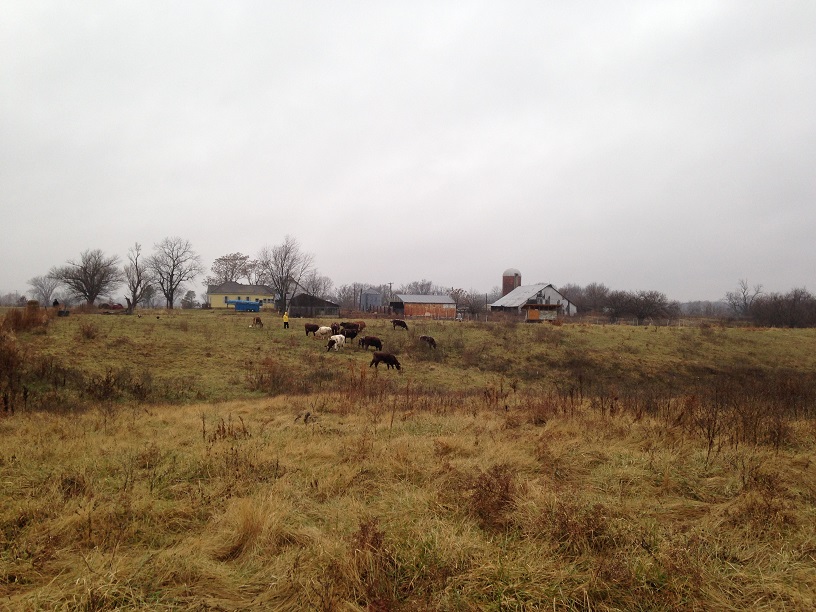
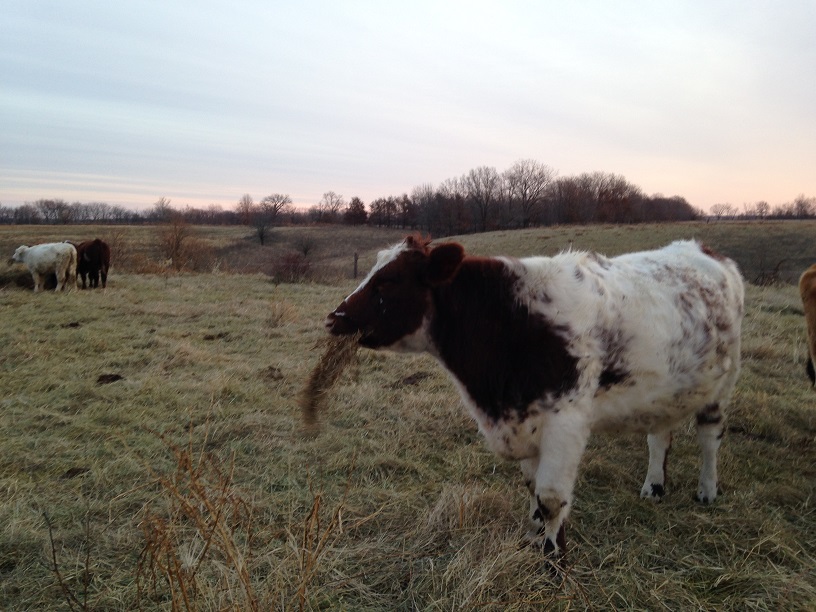
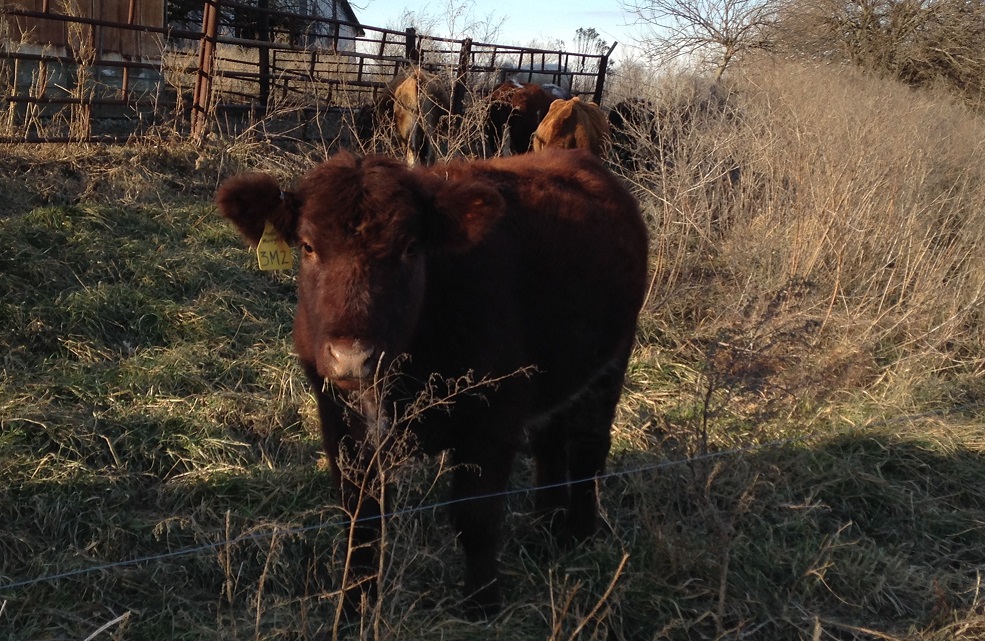
Cows are still locked in the barn as we are expecting freezing rain/ice starting around noon on Sunday. They have backed way off on the severity of the forecast but I prefer to err on the side of caution. The cows, however, are ready to be back on pasture. They have been getting all the alfalfa hay they want as well as some salted grass/clover mix they seem to like. I put them out on grass in a small corner of fence near the barn today and they were happy cows! I don’t really know if the grass is fresh or tasty or what but the cows went bananas for it. Twoey decided to look up for a second just in case I was up to something. (3M2…2…Twoey. You understand if you have a few animals around.)

Twoey

While my cows were busy gently eating grass I closed them out of the feedlot. That gave me a chance to break the ice out of the water tubs and refill them, move the hay ring around a fresh bale of hay, leaving the remainder of the bale for the cows to munch on, lay on or whatever. Mostly what is left of the old bale is hay they rejected so it should be pulled aside and composted but they later seemed to enjoy rubbing their polls on it and munching a little bit here and there so…whatever.

RoundBale

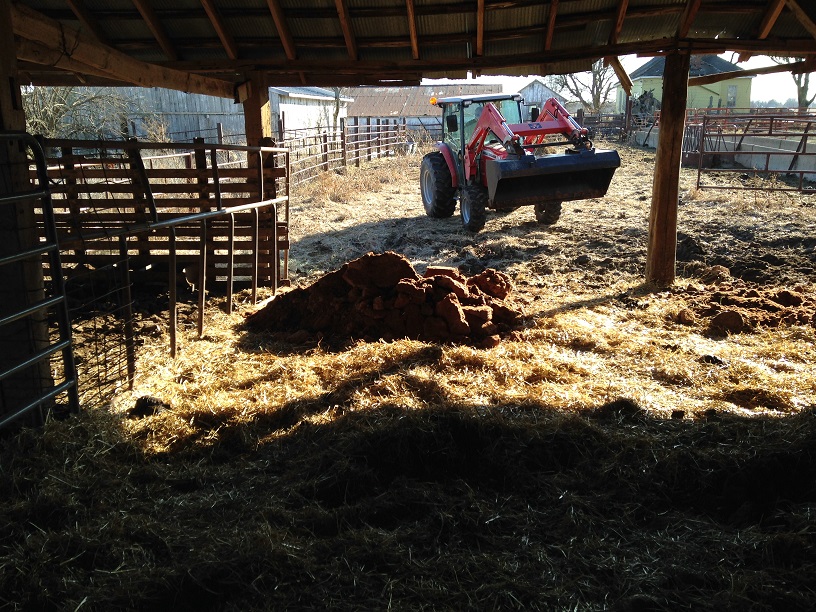
I also decided bed the dickens out of the barn. We started, again, with six loads of sawdust. When I say “we” I mean dad and I. He ran the tractor for me. With the loader tractor we did as much work in about 4 hours as we would have done with a wheelbarrow in about four Saturdays.

Sawdust

The jack barn is full of round bales of straw that are at least 20 years old. They have been burrowed into by all sorts of critters and aren’t bales anymore, just piles in roundish shapes. I even saw a coyote bedding down in there last winter. Dad and I started hauling out load after load of straw from there.

Straw

At some point is appropriate for the reader to ask, “Chris, isn’t that an awful lot of bedding?”

Yeah, I guess it is. But let’s talk about bedding here for a minute. Each year I buy two truckloads of sawdust (totaling $270 tops) and 100 bales of straw (totaling $150). So for less than $500 I get all the bedding I need for cows, pigs, brooders, greenhouses, horses, composting toilets…you get the idea.

“So, Chris, haven’t you put an awful lot of money into bedding this barn down?”:

Proportionally speaking? Yes. So let’s talk about that a little bit. Why am I bedding the cows so deeply? (Horses too for that matter…) I’m doing it because I want dry, clean, warm livestock what don’t have to smell the ammonia they produce. I’m also doing it because I want to add value to my straw and sawdust.

That’s right. I said it. And I’ll say it again. Poopy sawdust is worth more than clean sawdust. Just ask my pastures next summer! Leaving the straw sitting unused in the barn shows that I misallocated capital in acquiring that material. Actually using that material for its intended purpose is…well…what you’re supposed to do…and the faster I turn that inventory the better! Why buy the straw if you’re not going to use it?

But wait! There’s more! The more manure I can pack into this bedding the better. So why am I building it up so much? Why am I stacking it so deep? I mean, if I’m not careful the cows will be rubbing their backs on the beams. So please don’t be concerned that I’m being wasteful with my bedding. I’m not. The cows have a thick, fluffy bed/toilet but there is more.

The reason I’m putting so much down is because I’m building additional capacity into our bedding so I can keep my pigs here in a few months. By mixing pig manure into my cow bedding I’ll broaden the nutrient spectrum of my future compost while also aerating it by way of pig noses…adding even more value to the straw and sawdust. And by the time we are finished with the pigs in the barn we will also be finished brooding chicks in the spring so I’ll have that spectrum of fertility to add to the mix. Top that off with a little dose of lime and we have a winner.

So…to sum it up…my cows like eating grass and I like to shovel manure. And today would have been awful if dad hadn’t shown up to help. The end.

Keeping Cows on Hoth

“Your cow will freeze before you reach the first marker!”

“I thought they smelled bad on the outside.”

I like to make a note of weather extremes. Right now we should be facing our coldest weather of the year and sure enough we have a wind chill of -21 today (-29C for the rest of the world). That’s pretty cold. All schools are cancelled and the cows are in the barn and we aren’t going anywhere. Feel free to make the conversion from Fahrenheit to Celsius in the image below.

Weather

Click image for source.

Full moon right now. Mornings are clear, bright and cold. Did I mention it’s cold? It’s cold.
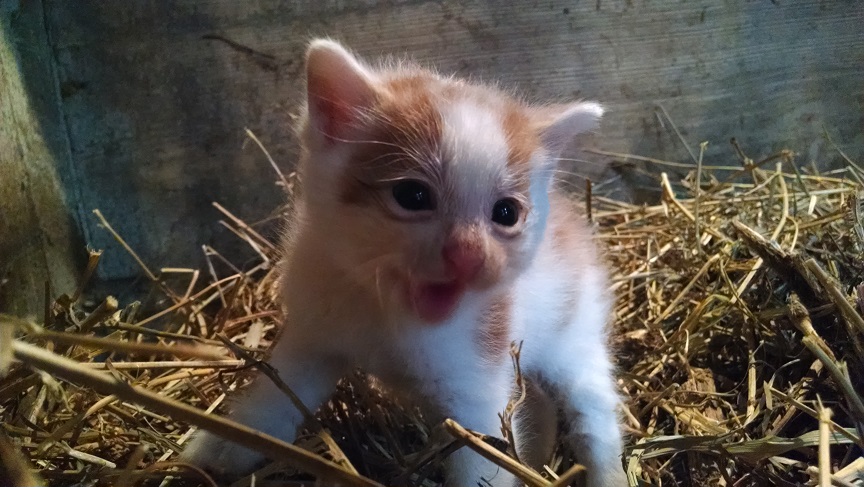
Moon

The main layer flock are in an unheated hoop house. That’s really not a bad place to spend the day. Usually we see a cat or two hanging in a nest box. The cows are in the barn. There are no pigs on the farm. We have a roaring fire going in the stove. The only things left out in the cold are the few remaining elderly layers. We will give them some extra fluffy bedding for the eggmobile and that’s that. They tend to stay close to the house and out of the wind. They need to go into a nice, warm soup pot.

ChickenHouse2

It’s cold. Cold! The wind pinches your nose like an annoying uncle and won’t let go. I don’t like it. I hope that’s clear. I always wish for winter when I’m putting up hay in August. It seems so much easier to stay warm than to stay cool. But now I’m dreaming of a hot summer. The kind of heat you can’t even escape from in the pond.

The biggest problem we have is keeping water in front of the cows. I broke a hose a couple of nights ago. Since then I actually bought a new short hose! and we are keeping it with us at the house, carrying it back and forth. In our coats. It’s every bit as awesome as it sounds.

Julie cried this morning. She couldn’t get the chicken house door open. She thought she broke the spigot getting water for the chickens (she didn’t). She hurt her back carrying a bale of straw she shouldn’t have been carrying (ongoing injury). We think she’s coming down with something…she has been achy and slugginsh for a day or so. And tired. She cried. I hate it when she cries. I hate it when she cries and I’m late for work. Things are OK now though. Should be above freezing on Sunday bringing 1-3″ of ice pellets. Can’t wait. I hope she spends today on the couch by the wood stove.

Just a quick note, Aunt Marian said if we see -10 after Christmas we won’t have a peach crop. Actually, Aunt Marian said that her mother said…

Thoughts on Deep Bedding

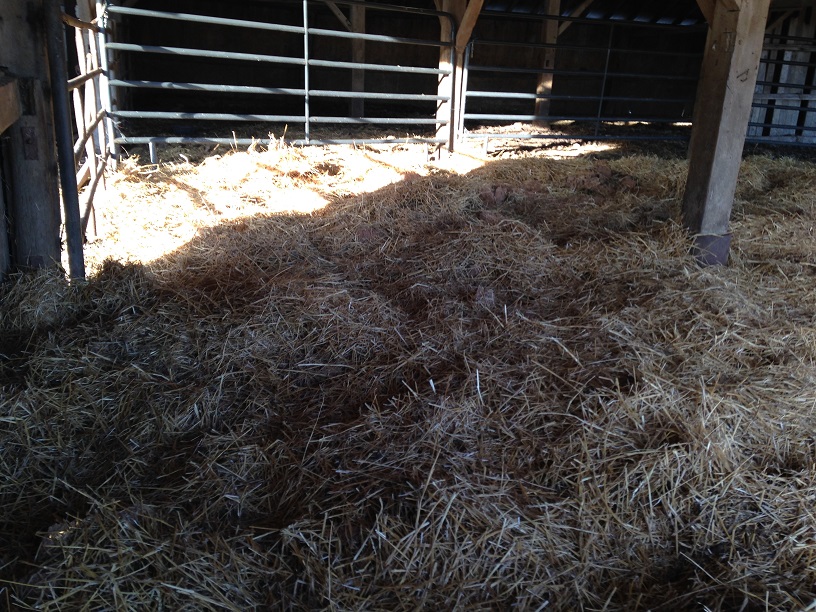
Our cows must think we are room service. They didn’t even get up yesterday when Julie added a bale of straw. Things are pretty comfy in the barn. Air can blow through as the building is not tight but the wind is slowed considerably. That’s a good thing for getting rid of ammonia but the better way to deal with ammonia is to capture it in carbon. Further, the deep bedding, once it builds mass, becomes a living, composting entity of its own. We started with the sawdust. 6 buckets of oak sawdust.

Sawdust

I spread that evenly over about half of the barn. Why only half? Because the barn is huge and the herd is small. We used corral panels later to cut the cows off from the rest of the building. I could either bed the whole thing or have my bedding twice as deep. We topped off the sawdust with four square bales of straw. Each day we add a bale of straw, more if needed.

It is interesting how quickly that first layer of bedding gets soiled or otherwise worked into the barn floor. We add bedding every day for several days until, finally, we seem to reach some critical mass and the bedding needs taper off considerably. The calves are at that point now except in front of their feeder. That sees such heavy traffic there is no hope for it. If the cows stay here for long the bedding will build up to a nice, thick layer. I think they will only be here for the week though.

ChewingCud

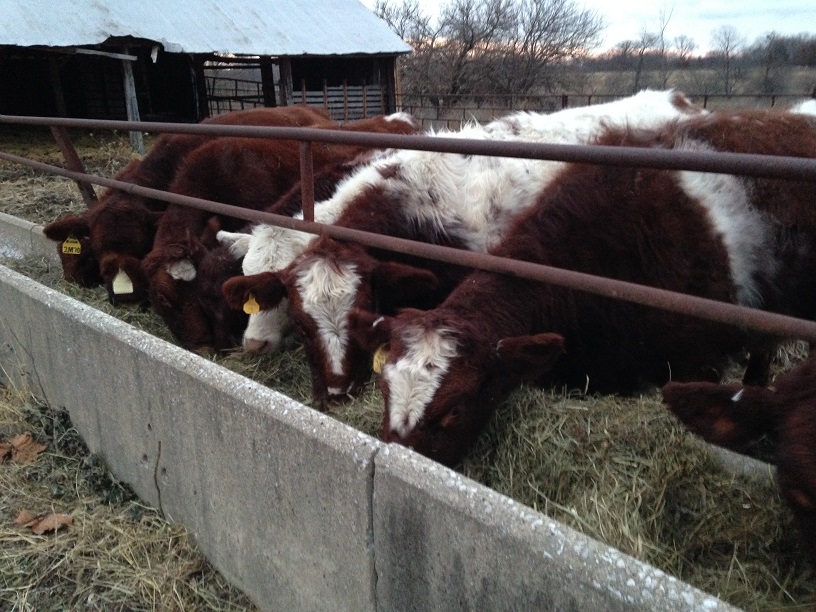
There really isn’t much for the cows to do these days. They get up and eat. They lay down and chew their cud. They walk to the water tanks. They lay down and chew their cud. I put a little kelp and a little salt in the feed bunk but otherwise, that’s the life of the cow hotel.

FeedBunk

There is a round bale of alfalfa available at all times and we offer grass/clover square bales twice each day. They really seem to want the grass. We feed them outdoors because that’s the current setup. I have the bunks. The cows are there. No big whoop.

I have to say, this isn’t really any easier or necessarily harder than having the cows on pasture. I have a little less walking and water is easier to manage but I’m have to bring the feed to them stored feed and bedding. The cows are, I think, better off. We’re in for a few days of cold weather and it’s far below what we want to subject our pet milk cows to. The shorthorns don’t seem to care either way but I don’t want to split the herd so here we are.

No pictures of manure today. You can bet I looked at it though. It looked nice…as far as manure goes anyway.

10 Cows, 6 Heifers, 2 Steers, 60 Acres

So you read the title, right? OK. So. That’s my little herd. We are growing. We are adding to our numbers each year and things are moving along. Someone recently asked me to clarify that I really only have 13 animals out on pasture for my remaining 30 acres of stockpile. But let’s remove the numbers for just a second.

I have enough pasture remaining to enable my cows to make it to April if I supplement their grazing with hay.

Do the numbers matter?

1. It’s all about me.
What if I just went out and bought 40 cows? I have 60 acres, I live in Illinois. Shouldn’t be a big deal, right? Well, it is a big deal. Remember, I’m a transplant from the city. Yes, I own my family farm but the generation before me packed up and left. My dad worked at a coal mine, took me fishing and played catch with me in our ranch-style suburban home. I had a model train and a pile of legos. How many of those 40 cows would I kill? I would just be scrambling to keep up out there. So I started with two. (Actually I started with chickens but…) Each year I add to the numbers. Each year Julie and I increase our knowledge, our ability, our understanding, our eye and we move forward. Hopefully we will graduate from cow college in 20 years but right now we still have everything to learn.

Also, don’t overlook the costs involved in 40 cows, hay for 40 cows (cause our grass won’t cut it…more in a bit), and time for 40 cows. I have a job. I have a good job. But I don’t have that kind of cash just laying around.

2. It’s all about the grass.
My pastures are pretty poor, really. I have forests of goldenrod, forests of thorny things and pure stands of fescue. Not enough shade. Not enough water. Not what you want for 40 cows. 40 cows, supplemented with hay on pasture year round, would do a tremendous amount of work trampling my goldenrod and moving my pastures forward but that’s not leveraging our strengths. That’s ignoring…or foolishly running roughshod over our weaknesses. It was interesting to watch our pastures recover this year. I have a bare, compacted, south-facing slope by the house that was almost a pure stand of clover this year. What will it do next year? The east 40 was almost entirely devoid of clover except where dad planted it. What happens this coming year? Forages are changing on the farm, some of them intentionally so but it takes time. I could fill the farm with cows and may still be able to manage it with time but the base forage just isn’t here. The temptation would be to simplify feeding hay to my 40 cows by bringing them to the lot each day. Then I would be back where I started. Sigh.

Jan2015

3. Wrong cow, right job.
My genetics are not in place yet. I have a few prospects that we have high hopes for but we aren’t there. I need a small cow (nope) that does well on grass alone (nope). Ideally she would give milk for 90 days then dry up on her own. She would re-breed quickly and easily, fatten on nothing at all and would last 14-20 years leaving 12-18 calves in her wake. One of her sons would be retained as a sire for the next herd of the future. But that’s not what I have. I have cows that will probably come up open in a year or two and that will be that. Then what? Buy in more of the same? Breed to a devon bull?

Happy

As I learn more, as my soil health improves and pasture diversity increases and as my herd changes more toward our grazing ideal I won’t need 30 acres for 13 cows. But right now I do and mostly because of item #1. Grass grows. Cows eat. I’m the weak link. But I’m working on it. Let’s revisit that King Ranch quote from a few days ago because I think it’s appropriate here. Keep in mind, the numbers they list are for an organization that knows what they are doing, ranching on cheap land in a tropical paradise.

Unlike most manufacturing, the ranching business is a slow start-up. It takes years to bring raw land to a good grass yield and to breed up a herd to the point of turning off quality and quantity beef. Though the company operated seven years, it was only in the last six months that it generated its first net profit, $600.

I think this fits under the thinking that one should simply start…and start small. You don’t know what you don’t know and it takes years to find out. And I didn’t even touch on marketing. What would I do with 40 calves? At this point, my marketing reach is insufficient. So…grow as you go. But go. Don’t say no. I mean it, there so! Marvin K. Mooney.

BTW, this post is entirely academic. The cows are on deep bedding this week as it is particularly cold out. I have had to learn we can’t outwinter the jerseys and it really is easier to keep the team together than to split the jerseys off from the shorthorns and…ugh. Water. Freezes.

Reading Journal 2015 Week 1

This week started early. Not much early but last year early.

Anyway, the big goal is to log what I read, not just read. I tend to read and read and read but I don’t know how much of what I ingest I actually assimilate. This is both to help me assimilate more and to keep a record of when I read what. Books will be assimilated.

Click image for source. Come on. You know I like Star Trek.

But here’s the thing. I find it is difficult to cut through meaty books at this pace. I prefer to read things slowly…er…procrastinate. Maybe I read 6 or 7 books at once, finishing them all over the course of 4-6 weeks. Isolating one book each week doesn’t seem like it’s going to allow things to percolate through. But maybe that’s not all bad. I’m changing some reading habits here too, not just focusing on a single book and speed. I’m making notes in my books so I can re-focus on certain passages when I read the book again.

But this week was awful. I got distracted reading two other books just trying to run away from reading about the King Ranch. Not that I didn’t want to read about the King Ranch, I wanted to do other stuff too.

So that takes me to my review system. I just don’t have the time to share my chapter by chapter notes of each book in a series of blog posts. I have a job, man. So I’m going to attempt to answer a few simple questions about each book to help you determine if it’s the book for you. Let’s just dive in.

Bob Kleberg and the King Ranch

What’s it about?
This book seems to be two things at once. It’s kind of a biography of Bob Kleberg as well as a history of the King ranch. But it is also kind of an autobiography of Bob’s right hand man, John Cypher. Kind of. It details their decades of working together to grow the ranch into a global enterprise. Really, pretty fascinating stuff if you can wrap your head around the numbers involved. For example, they projected a property in Venezuela would finish 4,000 steers each year but they actually finished 19,000. Wow. There are numerous anecdotes that are instructional to the aspiring rancher as well as crazy stories of life with Bob.

Is it a classic?
On the initial reading I would say no. Good but not great.

Will you read it again?
Yes. I plan to read it again, skimming through and seeking out the portions of the book I highlighted.

Does it belong on your bookshelf?
Maybe for a little while. I do plan to flip through it once or twice more.

Can you relate a favorite passage or two?
Here the author is relating the experiences of establishing business in Cuba right up through when Castro seized power and stole the ranch. It’s hard to risk an investment if you don’t have secure property rights. Ultimately the ranch and investors lost $6 million. That’s a lot of money in 1959. Plus the cattle…many of which ended up in Russia. How about that? Anyway, I feel that this is personally applicable right now…and for the next 6 or 7 years.

Unlike most manufacturing, the ranching business is a slow start-up. It takes years to bring raw land to a good grass yield and to breed up a herd to the point of turning off quality and quantity beef. Though the company operated seven years, it was only in the last six months that it generated its first net profit, $600.

Next they were working in Brazil with one of the most successful businessman in the country at the time, Dr. Augusto T. A. Antunes. The following was asked of Dr. Antunes:

Doctor, how do you define social justice?

Without hesitation, Antunes replied, “Social justice is the process of giving everyone an equal opportunity to become unequal.”

Who should read this book?
This is a historical, biographical collection of tales mixed with details of efficient cattle operations, hunting and drinking. I don’t think they are tall tales and the author doesn’t seem to shy away from pointing out Bob’s weaknesses. There are also interesting global political notes as the world stood 50 or 60 years ago. So if you’re into that…

The Martian: A Novel

What’s the book about?
Group of astronauts go to Mars. Emergency situation comes up. One gets left behind. He wants to go home.

Is it a classic?
No. Well, maybe. There may be more here than I picked up on the initial reading. I don’t think so though.

Will you read it again?
Oh, maybe. It’s a fast read on a rainy day and it made me laugh.

Does it belong on your bookshelf?
Nope. It’s an ebook and should stay there. See if you can catch it on sale.

Can you relate a favorite passage or two?
Several. At one point the main character, who has been alone for more than a year, is focused on driving a vehicle to a rescue location. He can’t keep his mind on his work though. He interrupts himself in the middle of a narration and it made me giggle.

[Driving and going through a list of wants…]

It has been a long time since I’ve seen a woman. Just sayin’

Anyway, to ensure I don’t crash again I’ll – Seriously…no women in like, years. I don’t ask for much. Believe me, even back on earth a botanist/mechanical engineer doesn’t exactly have ladies lined up at the door. But still, c’mon.

Who should read this book?
First let me say to my Sunday School teachers out there: Skip this book. Potty. Mouth. Lots of worty dirds. Guy gets wounded and left for dead on Mars…of course he has some choice words. But he tends to have a sense of humor about things. Here’s a mild quote. Our hero is trying to build a vehicle to travel from A to B on Mars. He needs a place to sleep so he puts a tent on through an airlock on the vehicle to act as a bedroom.

The rover and trailer regulate their own temperatures just fine, but things weren’t hot enough in the bedroom.

Story of my life.

If you found any humor at all in those quotes, get the book. If you read that and thought, “I can’t believe Christopher would quote such a thing”, this isn’t the book for you. I laughed all the way through…though I did skim here and there. Narrations of driving across the surface of a frozen desert planet were…well…skimable.

Next week I plan to read Ten Acres Enough. I received that as a Christmas gift. It looks like a fast read so I may also tack on Cottage Economy.

Please give me some feedback on this post. I haven’t written a book report for 25 years and I find the results to be less than satisfactory. I read a lot. Like, a lot, lot. I like to share with my readers when I find a book that helps a farmer out. But I also like to be entertained so I include links to movies and music. Fun books too. Please let me know if there are questions I can answer for you. The current post format is just the Beta version. I’m not even sure this kind of thing belongs on this blog. Especially books about lovesick astronauts stranded on Mars.

Philosophy of Grass, Hay and Making Cows Happy

I love those big, flashy titles.

After my previous post on winter grazing I had a thought-provoking comment from a reader. In short, she pointed out that I’m not just grazing and I’m not just feeding hay. I’m doing both. Yup. And let’s talk about that. It’s philosophically different than other resources I pointed to in that post. Jim Gerrish wrote a book called “Kicking the Hay Habit” and Jim Elizondo has a DVD about Hayless winter grazing…and somehow, in spite of the fact that I’m feeding hay to my cattle, I pointed to those resources to support my routine.

Well. I stand by it. Here is another resource to further stack the cards against me. I ain’t skeered.

Mr. Elizondo avoids hay by offering flaxseed meal mixed with salt, allowing the cows to digest highly lignified forages. Mr. Gerrish, as I understand, just grazes like the fellas in the video. Let’s keep piling on counter-examples. Greg Judy, as I understand, only feeds hay if there’s a bad ice storm. Gabe Brown? Dunno. Somebody look it up and comment for me, will you?

So where do I get off stockpiling grass AND still feeding hay AND bragging about it on the internets? Just who do I think I am?

I’m me. I have my pastures. I deal with my problems. I listen to my cows. They tell me (by way of manure) they would not perform without hay. Some of this is because I have the wrong cows. Some of this is because I have the wrong pastures. But I’m honest and observant enough to assess livestock health and caring enough to address their needs. They need a little extra protein. But they certainly benefit from the standing forage. So I run a hybrid. Then the cows eat fresh plantain in the winter.

Plantain

The idea, as spelled out to me by David Hall some time ago, is to feed one month’s worth of hay over 5 months and ask the animals to deliver the fertility across the farm over time. He further said he could normally buy a round bale of good quality hay for $20-$25 (little different here in the midwest, eh?) and gain $18 worth of fertilizer value…so he buys hay. Doesn’t make hay, different discussion for a different day.

So that’s the plan. We stockpiled basically the whole farm. We still have 30 acres to graze. To keep the cows healthy we need to give a little extra protein and I feed that in the form of hay. So here I am. Standing right in the middle. We may move toward the world of no hay but I’m not there yet. Some of that is my skill level. Some is my level of faith. Some is the genetics I currently own. Some because of the condition of my soil. But whatever the reason, that’s what I do. And it seems to be working out OK.

Some of this thinking would apply if I was feeding hay during a summer drought. Keep the cows on the move, add feed to help them over the hump, measure protein needs as they are grazing highly lignified summer stockpile. However, if we can recognize the drought early we can liquidate our least valuable stock early on and maintain a much smaller herd throughout. But that’s for another day too.

One last thing. I do need to improve my pastures. The density of animal impact and …erm…cow…erm…residue will build soil health. Plus we are working to spread compost, lime and run chickens over the farm, only helping things further. But wait there’s more. 5-6 pounds of red clover per acre to be applied in the next month. Should I apply that seed ahead of the cows so they can mash it into the soil with their hooves or should I follow behind the cows, letting freeze/thaw cycles plant the seeds for me? Dunno. Maybe a little of both? Cause that’s, apparently, how I roll.

Thoughts on Writing

I have tried – really tried – to publish every day. I just have too much going on (poor me). I often have nothing to write about but it just seems like I should. I do write almost every day but publishing is another thing entirely. You should see the backlog of unpublished drafts. Sometimes I don’t publish because forced writing comes across as bitter or venomous and I just keep those to myself.

Today I want to write about writing. I was speaking with someone recently and I said, “You know how you sit and write about 5,000 words then look back over it a couple of times and still miss mistakes? Drives me bananas.”

She looked at me like I was bananas. I guess writing 5,000 words is a big deal from her perspective. I try to break up lengthy essays into multiple posts on my blog because I think it’s impolite to ask you to spend all day reading my nonsense as you flip through the pretty pictures.

I have a couple of thoughts on this and since it’s my blog I’m going to write them down…even if you don’t read this. Our pastor often uses points that start with the same letter to make it seem catchy. I failed miserably at this but tried anyway. Especially since my points are Pot, Passion, Pants, Paint and Publish. Yikes. I don’t think I’ll be preaching any time soon.

A Watched Pot Never Boils
5,000 words is not a goal. It is not a destination. It’s just a part of the going there. No big whoop. I don’t know why professors and teachers in my past demanded X pages or X,000 word essays. I always found myself looking at the word count to see when I could finish typing.

You know that thing you can talk about for hours but you don’t because it’s rude? You know that thing you read every chance you get? That thing you love so much you feel like you’ll bust if you don’t let a little of it out from time to time? That thing you absolutely geek out about? If you were writing about that thing…well 5,000 would just get you started. Don’t look at the total number of words. That’s nothing. Get the ideas out of your head.

DoorGuard

Passion is Required
You ask me a simple question about any of several topics and I’ll give you both barrels. Don’t get me started. I could corner you for hours to talk about cow poop or any of a number of topics. BTW, I expect you to be just as passionate as I am if we disagree because if I’m wrong I don’t want to remain wrong. Don’t give up on me. Convince me. Sway me with your words. You can’t succeed if you don’t care. It’s just not worth it.

But if you do care…if you love what you are writing about…there is no limit. There is no end. You’ll be upset that you have to cut out whole paragraphs to get you back to that ridiculous and arbitrary 5,000 word limit.

Put on your grown-up Pants
You know you want to do it. But something is stopping you. Why are you making excuses? You want to write? Write. Get yourself a blog and throw it out there for the world to see. Will you be rejected by some? Yes. Will some people say you’re an idiot? Yup. Will your opinions be challenged and will your best arguments be exposed as somewhat shakey? Yes. And that’s good. You will also help some of your readers to evolve their own opinions. I don’t want to continue living in ignorance. Please, enlighten and persuade me. Almost every blog post results in a conversation with dad. Sometimes it’s clarification, sometimes it’s correction, sometimes it’s just an exploration. How cool is that?

Paint (maybe Picture)
Show me the world. Use words. Use pictures if you want. Publishing costs are effectively zero so…go to town. I keep my phone with me at all times. If I see something interesting that creates a spark I snap a picture of it. Julie does the same. In fact, lots of times the pictures are the story. I just put words between pictures to chain them along. But you don’t need a phone. You have words. Write it up. Call me Ishmael. Make it happen on the page. Show me the world you see…or the world you want to see. I can’t see it if you don’t show it to me. And if a picture is worth 1,000 words…well, it’s easy.

BarnKitty

Publish It
What aren’t you writing about? I know there is a lot of garbage out there that’s not worth reading. That should be encouragement enough to convince you that you need to start. The worst you can do is add to the pile like I do. But there is a chance, however small, that you will say something that will impact the world or even just one reader in a positive way…that you will infect someone with your passion. But if you sit and wring your hands and live in constant fear of rejection, refusing to publish what few scribbles you have made we will never hear your voice. And we may all continue to live on in ignorance because you are afraid…afraid of rejection. Afraid of the work. Afraid of 5,000 words.

My goodness! it has never been easier to get your words out there. Just start up a free blog (like this one), take some cat pictures (to build traffic from Facebook), write a few words and hit publish. That’s it. No big whoop. Just hit publish. Just do it. If it stinks (and I think most of my stuff does) try to do better tomorrow. And the next day. If you manage to publish every day or even every other day, before long you’ll have enough practice that you can sit down with a simple idea and build 5,000 words of passion and persuasion before you finish that first cup of coffee (or in this case, about 1000 words). It’s no big deal. You are writing about your favorite topic…even if it’s not cow poop.

What are you passionate about? I’ll never know if you don’t tell me.

Julie wrote a response already.

Straight Poop about Winter Grazing

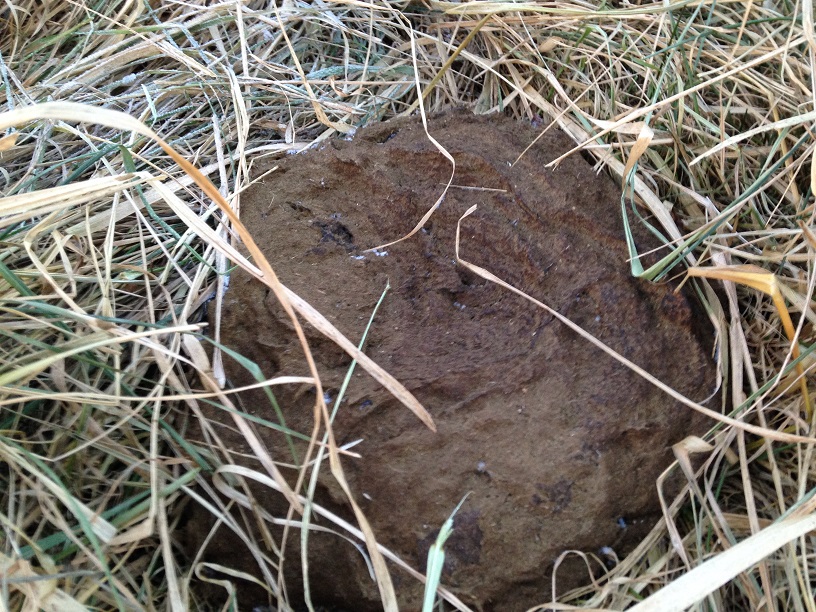
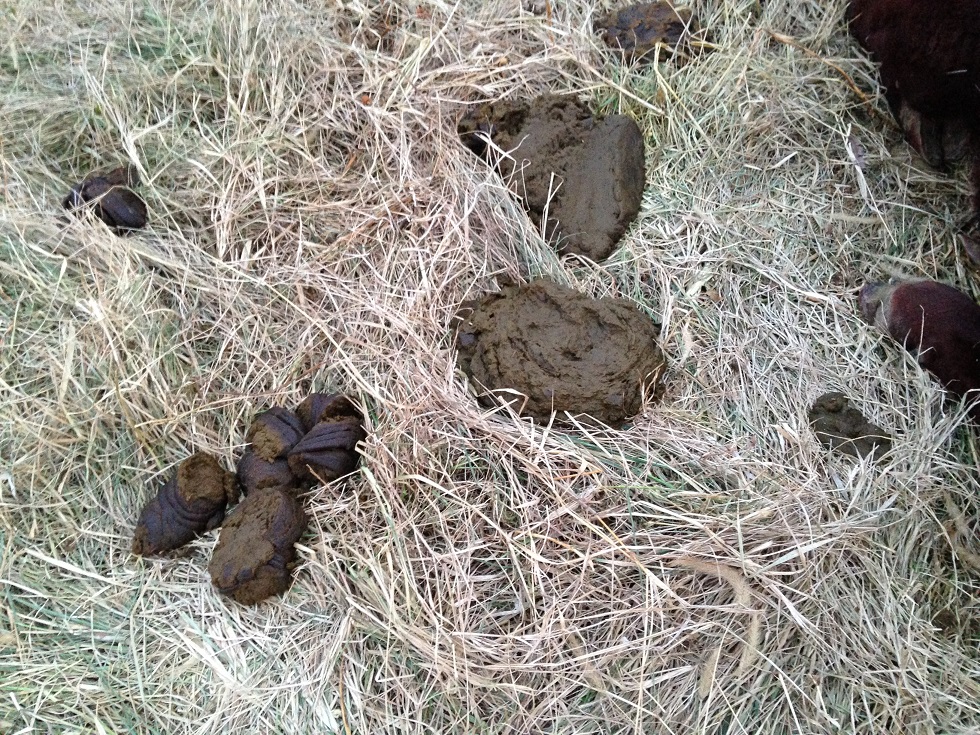
I am using a highly sophisticated, scientific method for grazing our cattle this winter. This process will be hard for the average farmer to duplicate so I release this information with a measure of reluctance. I’m not sure how useful it really is. This post relies heavily on two expensive and precise scientific tools to measure feed quality and quantity…a pitchfork and size 11.5 feet. I should also alert the reader, based on recent conversations, that this post will show pictures of cow manure. Lots of cow manure. Further, it will have explicit descriptions of cow manure. In fact, I may even discuss the philosophy of cow manure. The Zen of cow manure. Don’t misunderstand, this is a post about what my cows eat…but you have to pay close attention to the other end of the cow too. Let’s look at a sample. Here we have a rare sight indeed! Cow manure covered in coyote poop. You have to walk through a lot of pasture before you see one like this…complete with persimmon seeds in the coyote poop.

Click for source

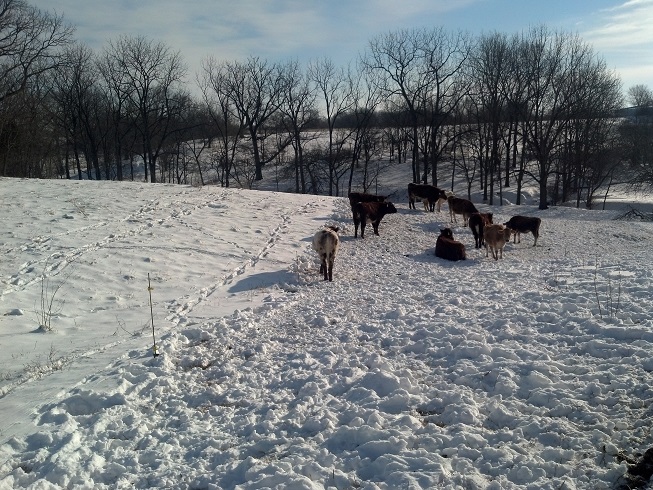
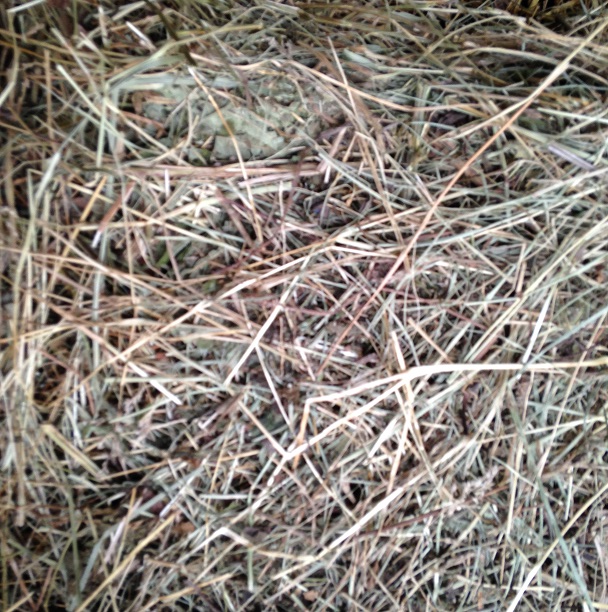
If you are really interested in seeing coyote poop on cow poop, complete with persimmon seeds you can click here. If you clicked on that you’re weird. I know because I’m an authority on weird. I took the picture. Here’s a bonus. Coyote tracks in cow manure. Believe me, you have to look at a lot of cow pies to find one of those. So…I look at a lot of cow manure. I take pictures of cow manure. I think cow manure is important. You down? Anyway, I have cows. Hooray for cows! I have cows because I need something to eat my grass. Hooray for grass! RemainingGrass So I ask my cows to eat my grass. Have you read Coleman’s Winter Harvest Handbook? That’s what we are talking about here…except on acres and acres of farmland. The cows aren’t eating fresh forage that is actively growing…cause nothing is growing. They are eating forage we grew in August, September and October and stored in the field for later consumption. Winter harvest. And it’s mostly grass because the poor legumes just can’t take the cold…and other reasons I’ll get into in a minute. However, if my cows only eat grass this time of year they will get a bit constipated. There just isn’t a lot of protein in the grass that is out there. Fescue, apparently, does well in the cold but I have not done a formal forage analysis. I just turn the cows into a new area, make sure they are full, in condition and I look at their poop. Science! (Cue Thomas Dolby.) As I said above, if I expect the cows to ONLY eat the standing forage their stool tends to get a little dry. Their manure looks like a stack of cookies that fell over. There is some good forage out there that they seem to like but it’s not, I think, everything they need. Here’s some dry manure from last winter as an example. GrazingJanuary3 What we really want is pictured below. A nice, clean pile with a depression in the middle. A cow pie that looks like a pie. Perfect poop. I get this by supplementing the protein in their diet with high-protein hay. Others use a protein lick. Still others use grains. But the idea is the same. By offering a little supplementation you can not only fit more animals in the same area, you can utilize resources that would otherwise go wasted and you can concentrate fertility where it is needed most. PerfectPie So. Quiz time. What’s what here? GoodBadUgly OK, so that’s why I give them a little alfalfa hay. How much alfalfa? Oh, I don’t know. Some. (Science again.) I put out maybe 50 pounds of hay in the morning and another 50 pounds in the evening giving each cow around 7 pounds of alfalfa. I don’t carry a scale, man. Assuming the cows average about 1,000 pounds they are probably consuming another 13-15 pounds of dry matter by grazing. That’s about where we want it. I don’t want to provide more than about 30% of their dry matter from alfalfa…both because I have a limited supply and because it’s not good for them. We will measure “not good” in a minute. Before I go on I need to point out something. My pastures are brand new. Not new like freshly seeded to yummy things to eat. New like we aren’t even on a full year of managed grazing yet. The forages are just whatever came up. Whatever was left over after the tenant’s cows ate it down to the nubbins. So what is there is what is there. And what is there isn’t quite the balanced meal a cow needs. It just isn’t out there…not yet anyway. Not in terms of varieties, not in terms of soil health, not in terms of plant health, not in terms of cow health. So at this point I HAVE TO provide a little extra. We graze a strip that is measured in similarly scientific manner. Here’s the plan, I need to cover enough ground each day to keep my cows in top condition but only as much ground as I absolutely have to so my forage lasts until April or May. This recipe will change as my herd grows and as forage density varies but, for now, where we are grazing, I begin by laying out two parallel fences roughly 40 steps apart by aiming for points in the distance that I think are roughly 40 steps apart. So we’re 40-ish paces wide, right? Now I step off 20-ish paces for each day’s allotment and call it good. That packs the cows in tight enough that they are utilizing a high percentage of the available forage, they are full when I come back to see them in the morning and, just as important, their manure is distributed evenly – and heavily – throughout the pasture. Healthy cows like to lay in clean places. By growing into a new 20 steps each day the cows lounge in a new spot each day. What is the first thing a cow does when it stands up? Coverage But wait! There’s more. I need to see if the cows are full or not. Any cow will do but the shorthorns are super-shaggy. The Jerseys are not. I have one Jersey I can rely on as my fuel gauge. I can see when she is full. If she is full, everybody is full. And I want full cows. Full means that triangle on her left side is not sunken in…or not sunken in by much. And it shouldn’t be sunken in when you go to move the herd. Here is a pic of Mrs. White last winter when she ran empty due to poor management (me). EmptyRumen She looks better this year. I feel like I’m doing a better job. MrsWhite2014 As an aside, how do you keep a cow warm on a cold night? You keep her full. Keep that biology burning inside her. How do you keep a cow warm on a cold, wet night? Put her indoors. Saves your pasture too. By metering out my pasture like this I can make it last into spring. Further, I am not only budgeting my land, I’m leaving something in the account at each location. If needed, I could graze here again. I can also benefit from the even covering of manure all over my pasture. It’s like a war zone out there. First, it will boost fertility in the coming growing season, second I don’t have to haul it. Less work is more better. But the best thing of all is this: The cows eat everything. A little of this, a little of that, trample and manure on what’s left. They eat everything green. (Cows have not grazed on the right.) BeforeAfter Now, our friend Kari asked if the cows would return to eating grass once they were given hay. I really don’t know how to answer that question…other than, “Yes?” But really I’m thinking, “What? Of course? I’m Ron Burgundy?” I don’t even know what that means. Our cows don’t go back and forth, they get both…unless I have to take them to the barn during a weather event. Then they seem to look forward to eating fresh greens again. So my answer is, “Yes?” Maybe I have magic pasture. Maybe I have magic cows. Maybe both? I’m telling you, Fescue is an unfair advantage in the winter. They dig through the snow to get to it. This helps offset the MAJOR disadvantages of fescue in the summer. But I think this is the real answer. Consistency. Cows like routines. My neighbor’s cows know silage is coming in the morning. They hear the tractor and they start to drool. My cows know I’m coming to open a fence in the morning. If you keep switching things up in their diet not only does their rumen have to adjust, the animal has to feel stressed to some degree. Like I do when Julie moves the furniture around…I’m a creature of habit. SnowGrazing Forage slowly degrades over the season. By last March they were eating anything and everything. Brown grass? Brown leaves? Green tips of trees? You name it. We increased the amount of hay we offered each day as we got closer to grass growing again…as we got closer to running out of pasture…as we increased our confidence that our hay supply would last. As we continue grazing, as we continue building soil, as we continue building health and life we should see our supply of green stuff stretch. We may even reach a point where we don’t need hay anymore. But I’m not holding my breath. March2014_7 And even if the cows ignore the majority of the organic material out there (and they don’t), they still benefit from the little bit of fresh green and deliver the manure for me. So what if I take them a little hay? You know what the difference is between taking hay to a feed bunk and taking hay to the field is? Mud. And the good news is we have some excellent quality grass hay. Grass stems are thinner and easier to put up than alfalfa. The weaned calves seem to want a percentage of this in their diet…even though their stool is a little dry. GrassHay I don’t keep my cows outside all the time. I could. Some do. But I don’t. When it’s raining and turning colder I think the cows are better off covered and warm. When it’s cold and muddy my pasture is better off without cattle. Sometimes it’s just easier to be a farmer if the cows are in the feedlot eating hay. My friend Matron prefers to keep them up close for all reasons above. But the same rules apply there. Keep the cows full. Look at the poop. If they sneeze and squirt their neighbor you might back off on the protein. You might also be concerned for their well-being. How do you feel when you get loose? Provided they aren’t sick (always give clean water), give just enough protein supplement to help them digest the rest of their feed. I use alfalfa hay to supplement protein. Jim Elizondo offers flaxseed meal. Guess what he says?

Then watch manure, gut fill and body condition to determine if they need protein…

Ta da! Then, check this out Kari:

I haven’t had success with moving cows to a high protein forage and then back to low-protein old forage on a daily basis, so I prefer to finish the higher quality forage first as it will lose quality the fastest.

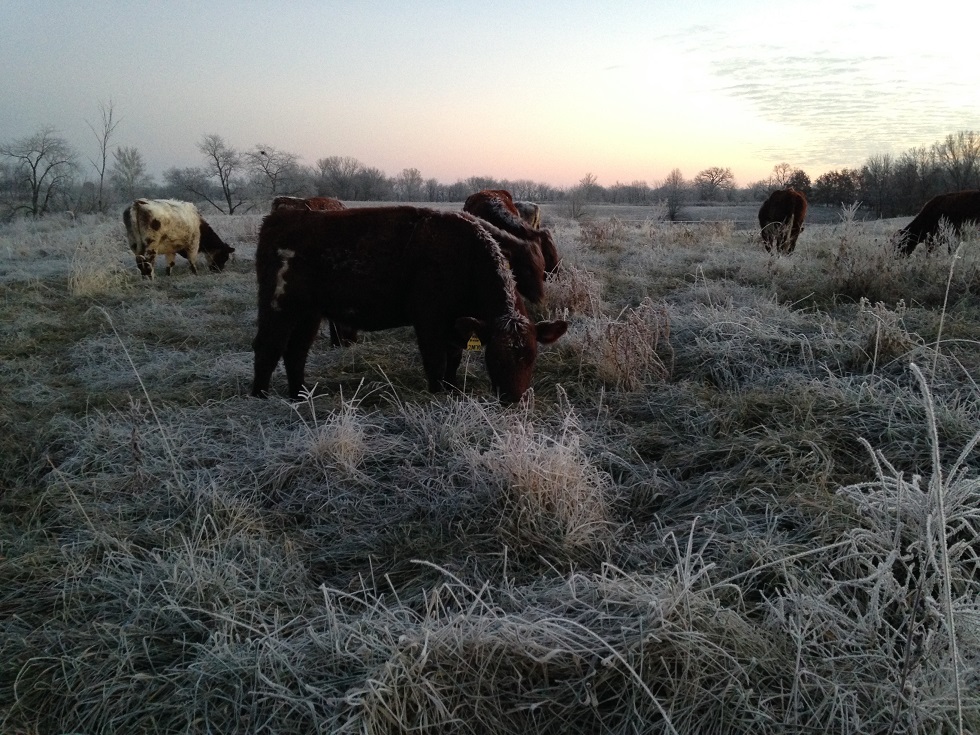
In that quote Jim is explaining why we hit the alfalfa field early on. We got the high-quality forage out of the way because it would be the first and the fastest to lose quality. Now we work through the rest of the pasture. The remaining pasture needs a little help so we get proper rumen function. He supplements with flaxseed meal, I give high-legume hay grown right here in River City. And maybe that’s why your neighbors aren’t seeing success. Maybe they are trying to go back and forth on forage quality. I’m not going back and forth. I’m supplementing consistently. Heads are down in the pasture. FrostyCowsI don’t know if this will work at your farm, with your forages, with your cattle, in your climate. I don’t know. Apparently the PNW isn’t the best place to try…which makes me want to try. It seems to work here but I have had neighbors tell me I’m wrong…that my cows may as well be eating straw. “If you think it will work or it won’t you’re probably right.” AMIRIGHT? If you want to know more, feel free to ask questions. I don’t know either but it’s fun to learn together. I think it’s also worth your time to check out Jim Elizondo’s DVD and Jim Gerrish’s books. Even if you can’t directly apply their work you can probably find inspiration and direction.

I want to add one more thing to this post. The cows have a wide variety of minerals available to them right now. They are hitting the phosphorus particularly hard right now. Because they have the minerals they need, they tend to utilize their forage better and they tend to eat less. But if you read the Jim Elizondo link above you know that already.

The 2014 Review…Awards

And now the CHF 2014 awards presented by Chris Jordan.

Best Dressed

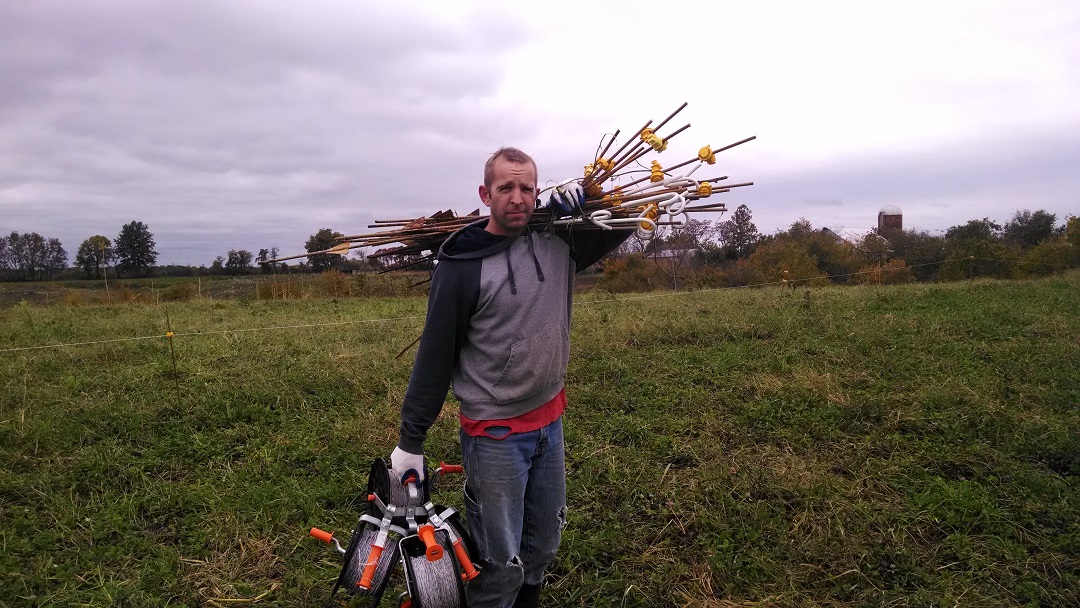
This year I nominate myself and humbly accept the award for best dressed. The holes in the clothes, the hair that says, “I’m already married.”, the too much stuff being carried to show off for my wife. Oh yeah. Winner.

BestDressedMe

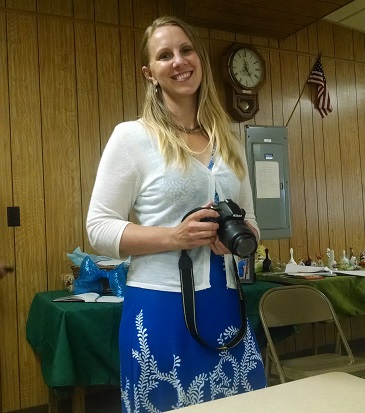
Of course I’m kidding. Julie wins any beauty pageant. Even if she doesn’t try. Here she is not trying at Aunt Marian’s birthday party. Isn’t she pretty?

JulieBoo

Top post

What do pigs do on a farm? This one wins every year. Talk about SEO. Sheesh.

I’ll tell you what pigs do. They escape and come looking for me…the guy who brings the food.

EscapedPigs

My favorite post…and the top post we published this year…

The Way I See you, The Way I Love You. Read it for yourself.

Christmas

Most Valuable Player

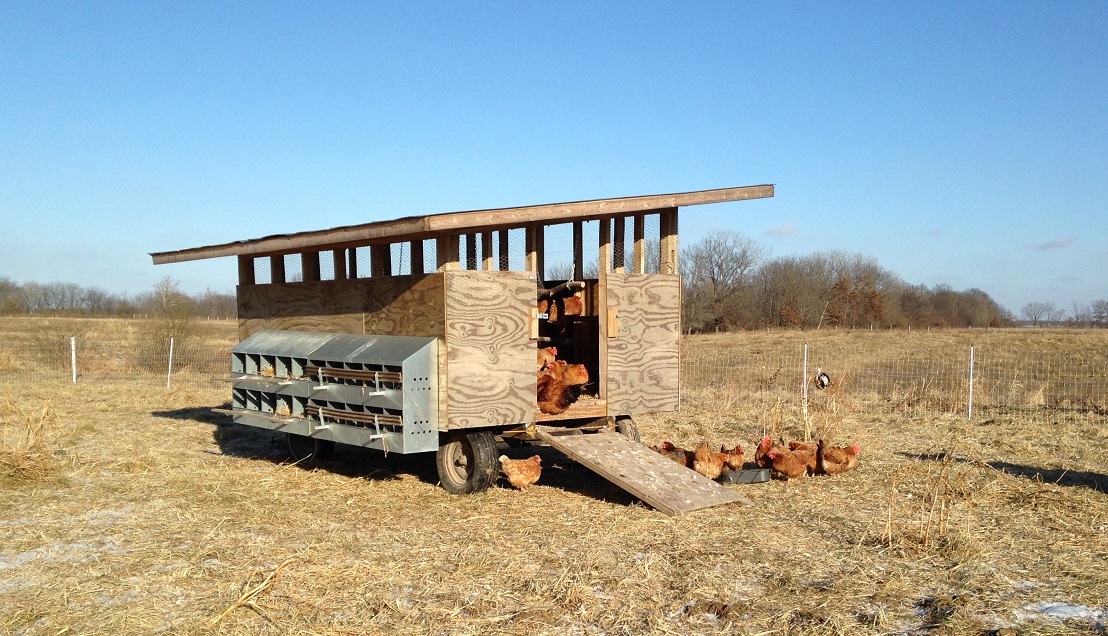
We love our new chicken house. I can’t say enough about it. We have lost ZERO chickens to predation, it kept the birds cool and comfy in the summer. Egg production stayed high all summer. We captured manure in the bedding on the floor we could redirect to specific locations on the farm. It’s easy to move on down the road. Just great. I would make two changes to it though. The next one will be a little taller and four feet longer. And the nest boxes will be on the other side so we don’t get dripped on. Other than that…great.

ChickenHouse

Most improved

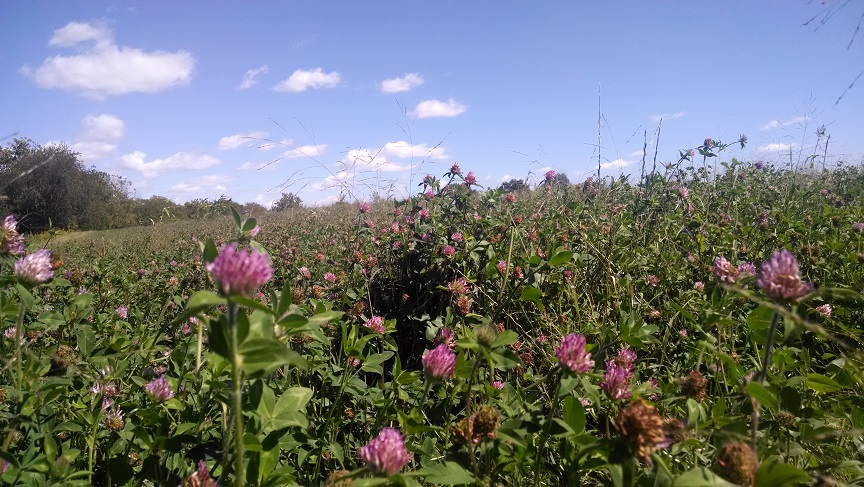
With a minimum of effort and expense and against my wishes, dad single-handedly and somewhat magically converted a field of corn stubble into a magical land of clover (and weeds). We cut it for hay then, later, we grazed our way through.

CloverField

Favorite Book

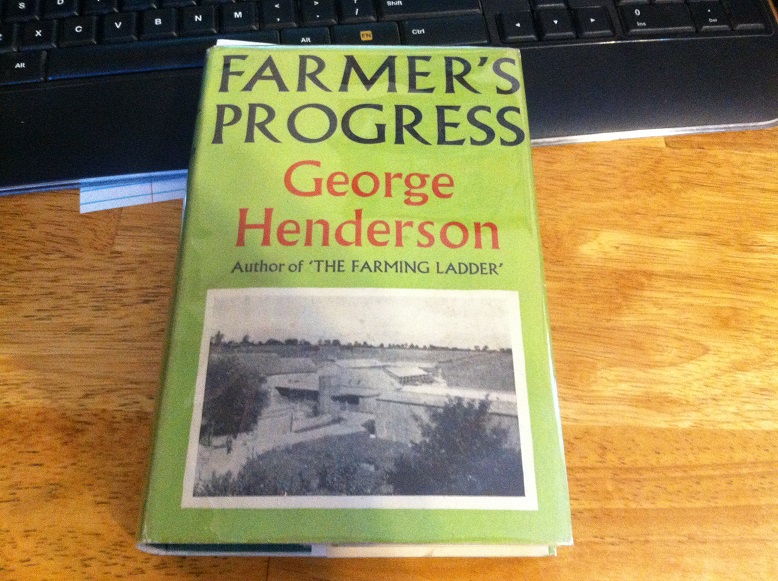
I must have read The Farming Ladder 10 times this year but, in spite of that, I think I liked Farmer’s Progress better. What a great book. Well, that and Carry On, Jeeves. But please, let’s don’t think I’m an anglophile.

FarmersProgress

Best Money Spent

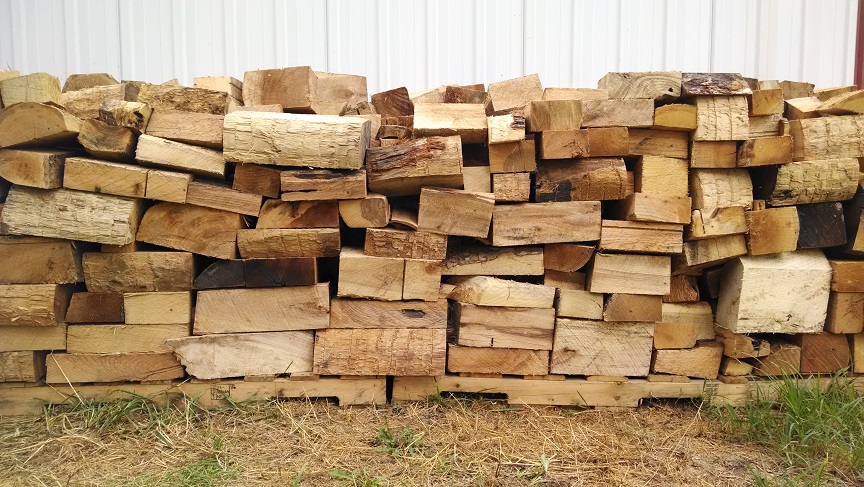
We bought a truckload of oak odds and ends from the local sawmill really just for the price of the hauling. This isn’t all of it. This is a nice picture Julie snapped for ..like..art..stuff.

Firewood

Livestock and Farm Animals

What a great year. We had a hen go broody and hatched chicks we weren’t expecting. 5 calves were born with no problems at all. We raised pigs, we raised chickens, we had fun.

BroodyHen

But you know, sometimes things just don’t make it on the farm. It’s a hard place. We lost a calf this year. That was pretty hard. A mink killed 12 ducks one evening. My youngest’s favorite cat got hit by a car. That was rough. There were also whole litters of kittens that didn’t survive. We really thought Horatio was going to pull through but another, older kitten took his mama’s milk. My oldest daughter took it pretty hard. But that’s just how it is. Animals have a hard time. Especially the semi-feral barn cats. Most especially the semi-feral barn cats we name.

Horatio

Lesson Learned Repeatedly

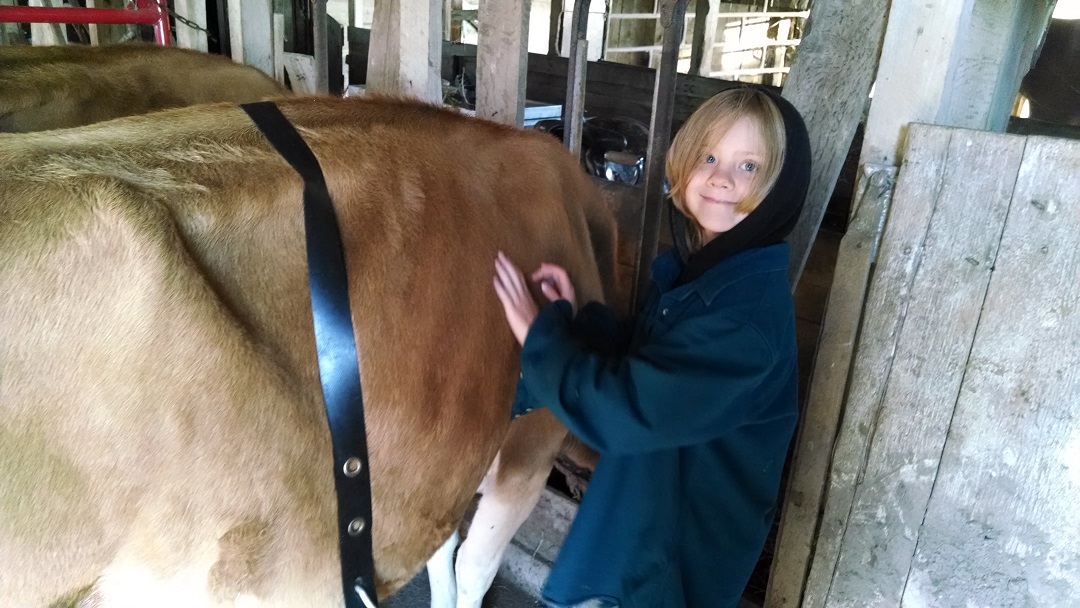
Julie doesn’t want to milk. Every. Stinking. Day.

MilkingTime

Aunt Marian

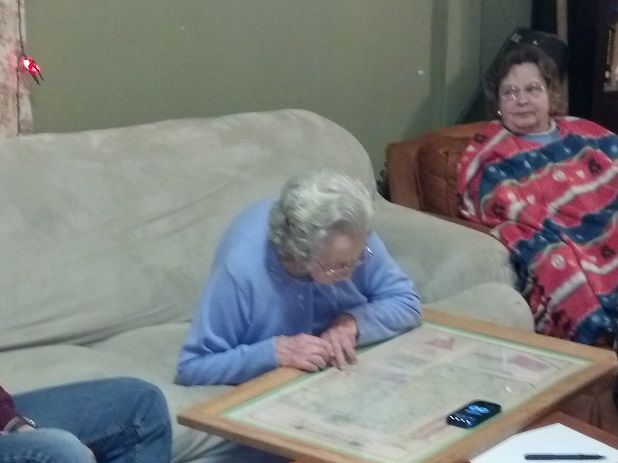
Aunt Marian was suddenly gone. One day she was peeling grapes at her sink. The next day she was in the hospital. Within a month we were remembering her life. At a birthday party this year she looked at a plat map with me. The map was from 1893 but farms don’t change hands frequently. She told us what she remembered about each farm, where the house was, how folks were related. She knew everything. We miss her every day.

AuntMarianSo that’s the year in review…awards for 2014. Some of that was pretty rough but we’re ready for more. Aunt Marian won’t fall asleep in a chair at the next birthday party but we move on. There are eggs to collect, cows to milk and calves to tag. There are children to raise. So here’s to 2015. We pray that God will enlarge our borders and keep us from harm.

One additional note, most of the pictures in this post were taken with Julie’s MotoX and are untouched. The old MotoX not the new one. That may be something we wonder about some day. I doubt a reader cares though. Indoor shots seem to suffer with that phone. The bearded Christmas selfie and the picture of Farmer’s Progress were both taken with my iPhone 5C…my employer’s iPhone 5C.