Where do You See Yourself in 5 Years

“Where do you see yourself in 5 years?”

I hate that question.  I work in tech.  I have a hard time telling management, most of whom don’t work in tech, that I have no idea what changes are in store for my career.  I don’t really see myself moving to management and if you try to explain current tech trends to HR their eyes glaze over and they just wait for you to finish talking.  I like what I do and would like to continue doing it.  Tech changes constantly and if I were to guess, 5 years from now I’ll still be diligently working to stay abreast of new trends, add value, etc.  Looking back 5 years I couldn’t foresee the iPad.  I couldn’t foresee (and still don’t really understand) Facebook.  I have no idea what Microsoft will dream up next.  I don’t think we’ll use keyboards much longer though.

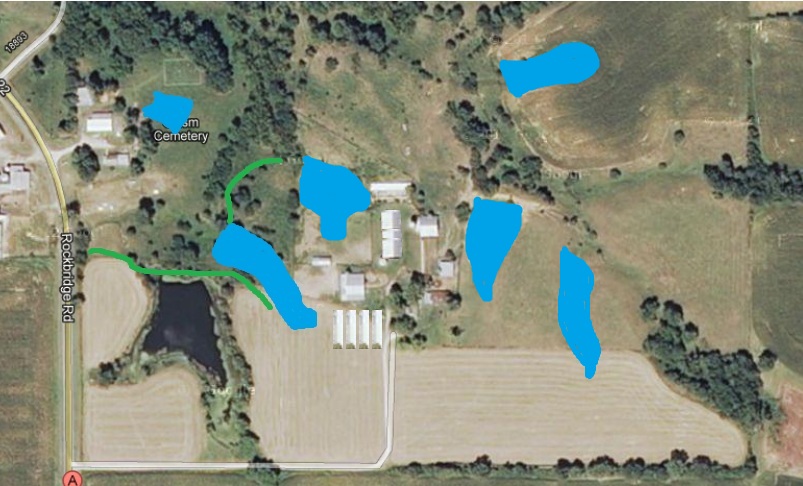
Looking at my farm in 5 years is a little easier.  I’m a little restrained by the economy and have no idea how to pay for this but I have a vision of how I would like to reshape the farm over the next 5-40 years.  I have plans to add greenhouses and ponds, I have a plan for pasture grazing and improvement, woodlot improvement, establishment of new tree stands, orchards, swales and general beautification of the farm.  On the topic of beautification I need to replace a number of buildings but that’s further down on the list.  More water on the farm = more life.  I need to build 6 or 7 ponds over the next few decades.
I plan to transition our primary revenue generation away from chickens to cattle.  We haven’t begun to build our beef herd yet.  I hope to divorce myself from the feed grinder as it is both dangerous and expensive to operate.  Further, it’s one more thing I have to store in a shed…a shed I need to replace.  Instead we’ll use dense swards of grass to harvest sunlight, earthworks to harvest rainfall and cows to cycle nutrients.  It’s a terribly complicated machine with no moving parts but entirely dependent on free and continued sunlight.  I plan to use a solar-powered fence charger to keep the cows where I want them.

To prevent wind and evaporation we have plans for tree plantings.  These will be primarily fruit and nut trees but I would like a larger stand of sugar maples to tap in my old age.  I better get started now!  The fruit trees will give guests another reason to come visit the farm…another over-arching goal of ours.

Everything we do should boost biodiversity, restore the local ecology, and help nurture our community.  I hope to raise big, fat cows and have room for big, fat groundhogs.  We plan to leave meadows ungrazed until the ground-nesting birds have hatched in July.  I hope friends and customers continue to come here seeking rest and inspiration…or at least entertainment.

We have given strong consideration to picking up a Fertrell dealership.  It could happen in the next 5 years though I have a lot to learn and, again, need a shed.  And a scale.  And a truck.  But it’s possible…

I anticipate my oldest son will begin to step up his involvement in the farm and will either relieve me of one or more enterprises or will start some of his own.  At 17 he should be ready to test his wings and I plan to enable him to do so.  He has always been our guinea pig so he’ll set the pattern for his siblings.  Whatever they are interested in, we are interested in.

I didn’t list revenue in my planning.  I can’t set financial goals outside of paying for the land and the improvements.  I am not a corporation.  This isn’t a machine.  This is a biological process.  Financial goals fit with biology like socks on a rooster.

These are, of course, moving targets.  These plans will likely shift as the wife and I dive deeper into our studies of permaculture.  So I guess, like tech, my farming goals aren’t entirely knowable.  It’s a best guess either way.  But it’s easier to keep my audience interested when I’m not explaining database index optimization strategies.  Yeah.

So, there you go.  The top-down view of the next X years.  That question is so much easier than career planning.  What about you?  Where do you see yourself in 5 years?  Will you finally achieve your “someday“?
Time to Stop Dancing

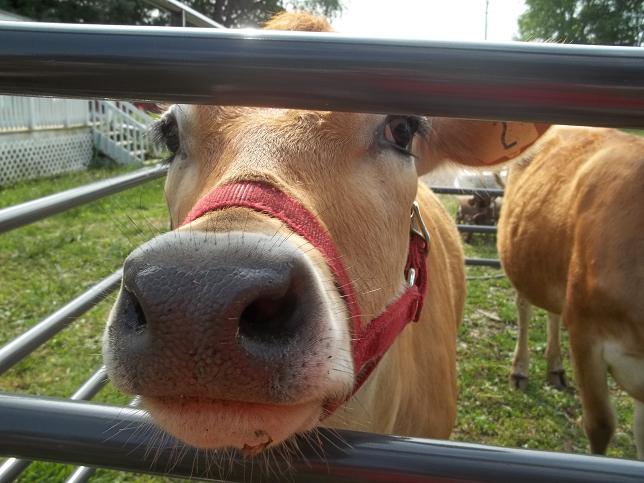
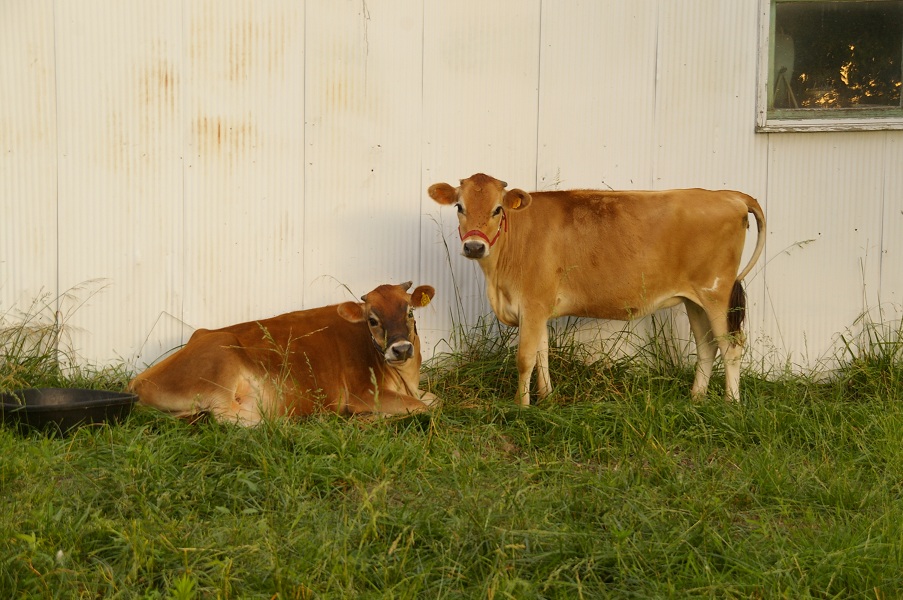
May (black halter) is expecting in September thanks to a straw.  We held off on breeding Flora (red halter) because she was a bit younger.  It struck us as a good idea to send Flora to the bull rather than bring the bull home, especially since the dairyman we bought Flora and May from didn’t mind.  Further, there was a chance that the dairyman was going to get some pretty high-priced straws in time to use on Flora.  She met the bull instead.  Anyway, off they went just in time for us to get through kidding our goats.  The cows came home again yesterday.  It’s time to stop dancing.

It was nice having a month off from moving the cows.  They came back fat and slick, maybe a bit spoiled.  My pastures (yard) don’t compare to Steve’s pastures.  Not at all.  But we’re improving year after year.

Strolling Through the Pasture June 2012 Edition

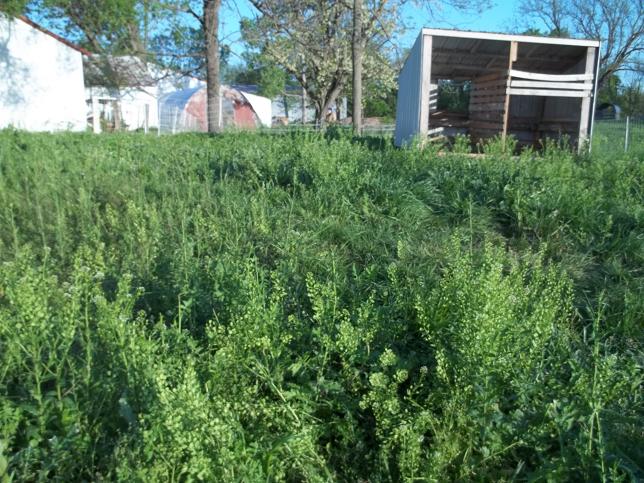
It is interesting how the plants have changed in the last month.  The pennycress is just about all gone.  Henbit has disappeared.  The goats are doing a good job of eating back the brush.

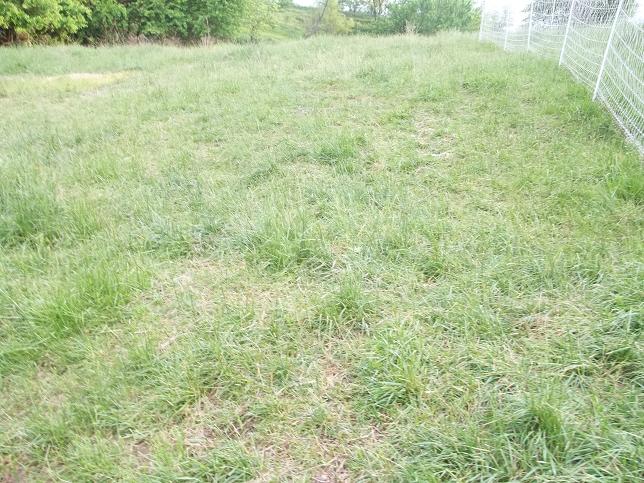
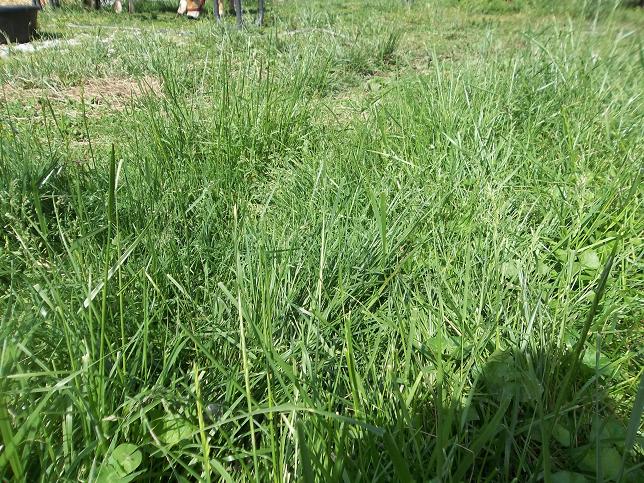
Fescue is clearly the dominant species with pockets of wildflowers here and there.

There are a number of other grasses out there including wild oat and orchardgrass, both of which I would like to encourage.

I was also surprised to find a little cheat.

Once I fence out my neighbor’s cows I’ll be able to run my own on the pasture with a planned, high-density impact instead of the cows just running wild eating what they choose.  For now, I’m happy to have a diversity of grasses and weeds…but less fescue would be great.

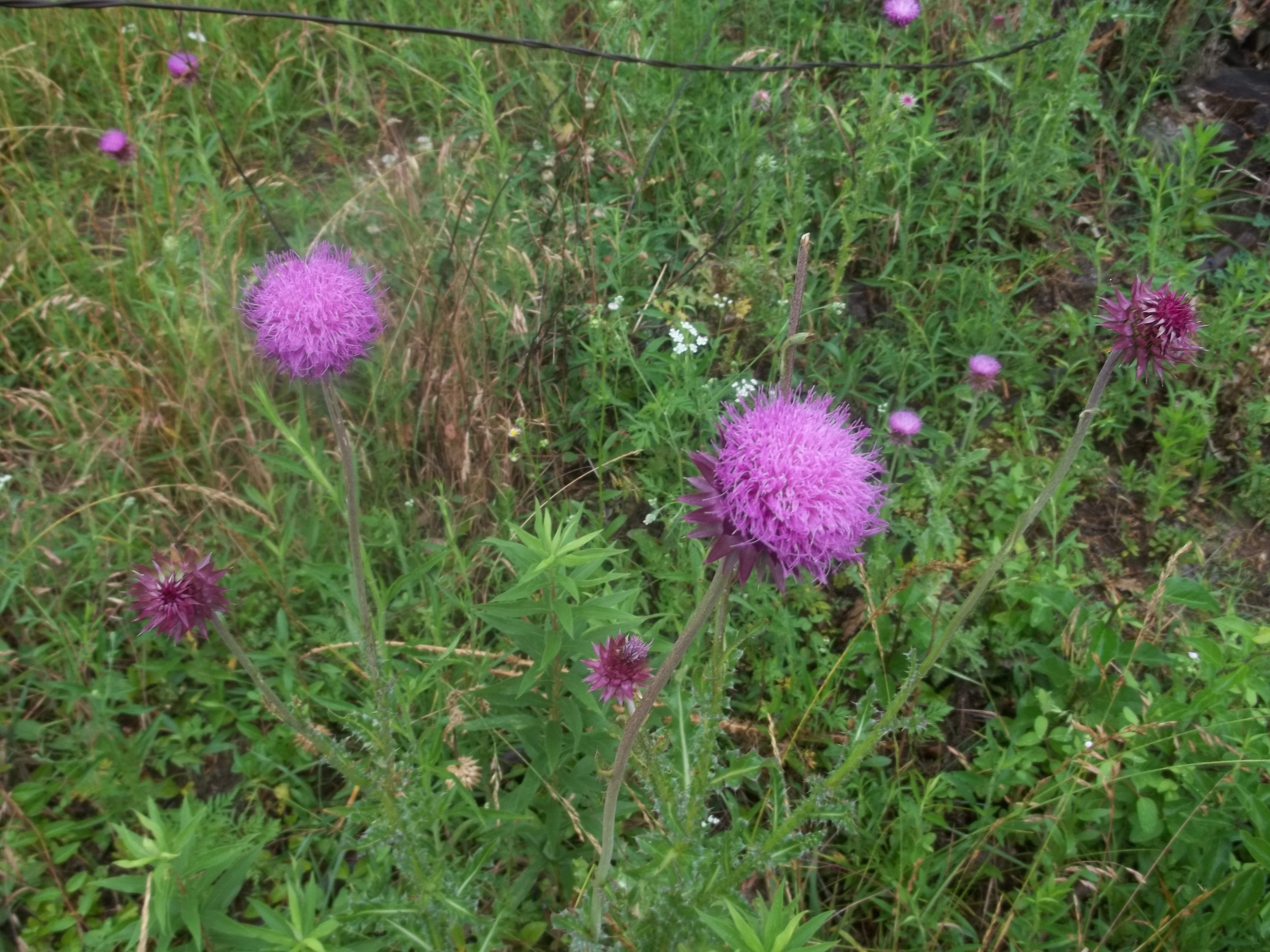
I have had to mow the Canadian thistles.  It was just taking too much of our time to chop them by hand.  A farm guest recently suggested we chop the thistles close to the ground and put a few grains of Morton salt on them.  Sounds like a plan.  There are still plenty out there.  Kinda pretty though.

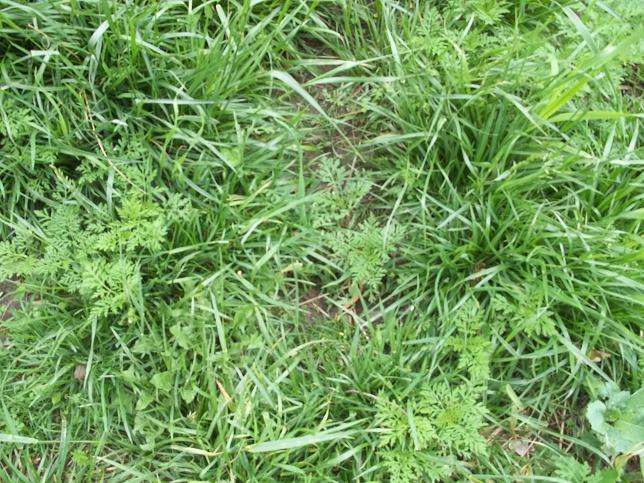
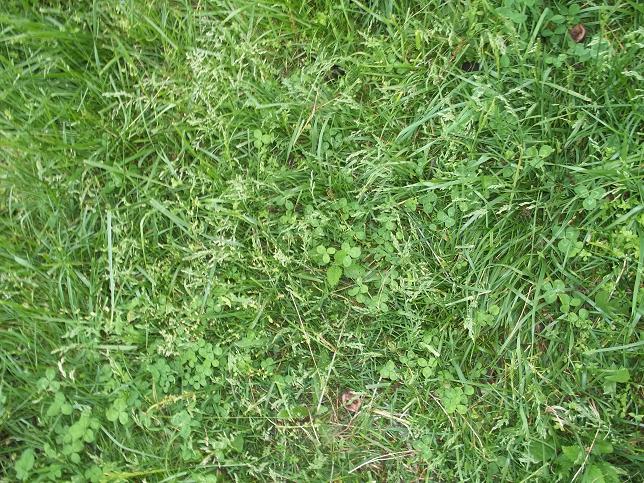
Clovers are fairly thick now.  A wide variety of weeds are growing well, some are in bloom.  All that variety helps my nutrient cycling and ensures my livestock have access to the things they need.  Everything from wild carrot

to horsenettle.

Ragweed isn’t threatening to take over this year…for once.  It’s just in a little pocket by the house.  Achoo!

I could continue listing plants and pictures but you get the idea.  There is a wide variety out there.  I think that’s a good thing.  It’s not a lawn.  I would like to see things change a bit and suspect they will over time.  Especially now that we got a rain!

How is your pasture doing?

Mulberries, Hay and other Delicacies

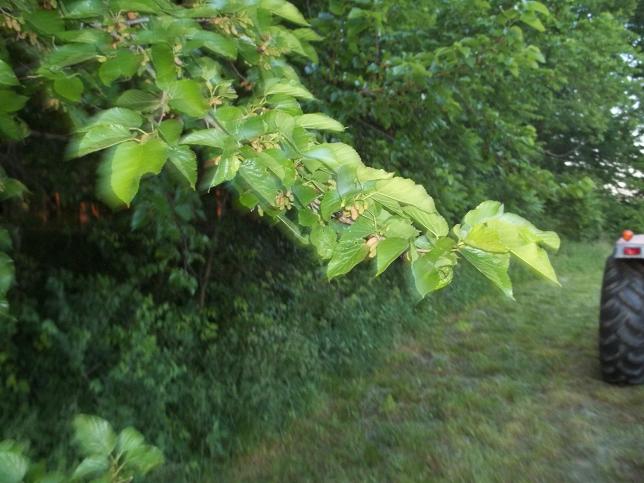
Do you have mulberries where you live?  Do you even notice them?  We have them here.  When I was a kid in New Minden we had one in our back yard next to the gate that led to the alley and Mrs. Ruth’s yard.  There was a crotch in the tree just right for a 7 year old to park in and make himself sick eating berries.  I did.

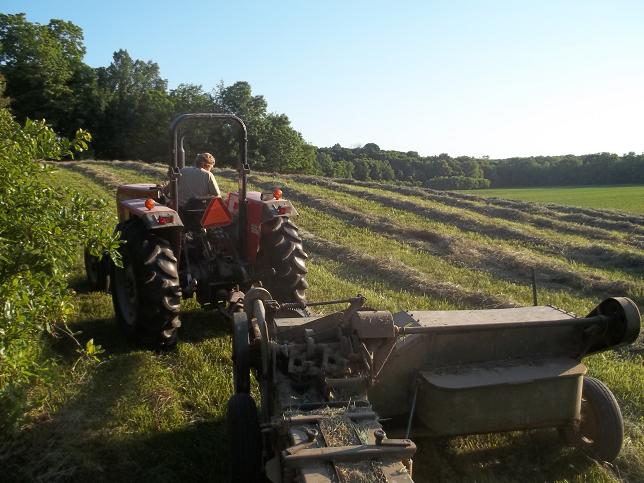
Today we baled hay in the bottom where mulberry trees abound.  I picked a handful while I was walking out to where dad was ready to bale.

I picked another handful when the baler went under a mulberry tree.

I picked yet another handful for good measure.  Don’t mind the hay hook.

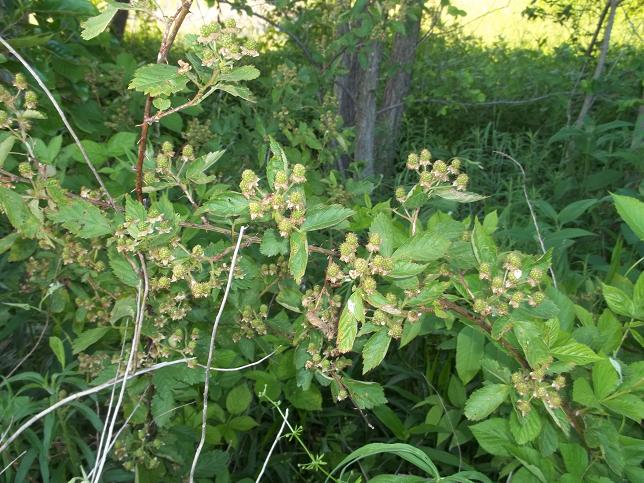
I also took inventory of the dewberries crop.  Not as many as I would like to see…

…and the blackberries.

We pick and freeze as many as we can get my hands on but we really don’t go past the edge of the woods because there’s a bumper crop of poison ivy out there every year.  This year is no exception.

Each spring we clean out our freezer and find forgotten gallon bags of berries and make a big batch of mulberry, dewberry, blackberry, strawberry mixed jam.  Yeah.  It’s pretty good…better on ice cream.

So anyway, we were out there to make hay.  I’m a little allergic to hay.  On the third pass I started sneezing.  By the fourth pass my hankie was soaked.  Dad runs the baler clockwise around the hayfield.  Both of dad’s main fields are on a slope so it’s an interesting ride.

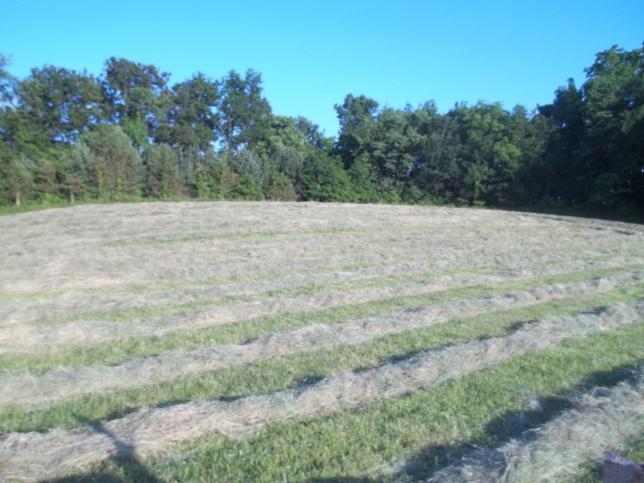
Between the two fields in the bottom and the barn lot we put up another three wagons of hay.  We have had an unusually dry spell so this is far and away the best first-cutting hay we have put up in years.  Isn’t it pretty laying in windrows?  That hill made about 65 bales.

Hang on…ACHOOO!!!!

What’s going on?

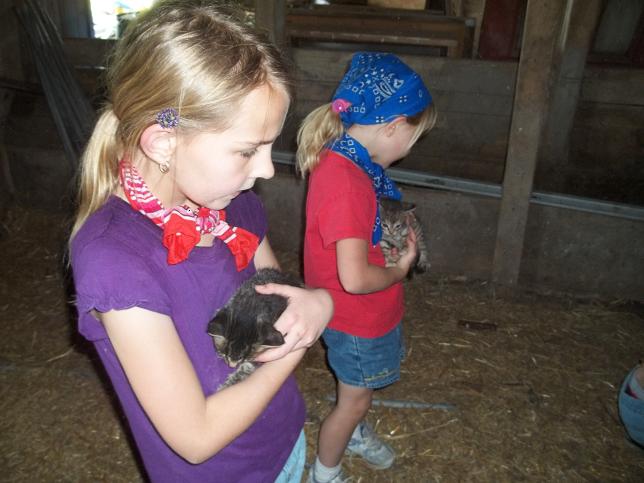
One of our rabbits kindled yesterday.  We finally found the kittens in the barn…and my oldest son found out how protective mama cats can be.

The goats still haven’t kidded.  You have to be kidding!  We thought Sweet Pea was in labor on the 6th.  Nothing.  Nothing.  Just uncomfortable girls chewing cud.

Broilers are coming along nicely.  They are scheduled for freezer camp on the 26th but we plan to send some early.  Early birds shouldn’t be above 5 pounds and that would be good.  They’re pretty hard on the alfalfa that we just cut for hay.  If we could just get some rain…

The pigs are settling in well.  They still don’t like us but they know we bring food.  It’s a step.

That’s about it.  What’s going on at your place?

What Makes Your Eggs So Special

I have read a couple of articles recently on the differences between pasture-raised eggs and confinement eggs.  Both point out the advantages of eggs from pasture, one somewhat subjectively, one scientifically.  The Mother Earth News article goes pretty far in depth. The Pantry Paratus article is lighter and has a nice video of a small egg handling machine.

I have an egg handling machine.  Two of them, in fact.   Both are 1976 models.  They work to collect, carry, wash, weigh, candle and pack the eggs.  Every day.  They are a little older.  They show signs of wear, they are a bit scratched up, scarred and thickened…but they are clean.

Actually, they don’t look too bad in that picture.  They will by the end of the week when we finish putting up hay.  Oh, well.  They are multi-purpose machines.  In fact, the greater the variety of work I put them to, the longer they last.  I don’t spend 8 hours every day packing eggs with them.  I don’t spend 8 hours/day every day processing chicken either.  We keep our enterprises small enough that each of them is just a portion of our day, minimizing repetitive stress, minimizing drudgery.  It’s work but it’s pleasant work.

I’m a small, diversified farmer.  I can do that.

Back to eggs.  My chickens get enough pasture to last them 3 days.  They sanitize the pasture and eat any weeds the goats leave behind and devour bugs.  They scratch, dig and poop.  They eat worms and leave behind things for worms to eat.  Then we move everybody again.  The pasture is better where the chickens have been.  The eggs are better because of fresh pasture.  The periodic, intense disturbance cycle makes everything better.

Best of all, it makes an egg that is out of this world and, according to the research in the Mother Earth article, is healthier than most.  Does your farmer move his chickens to fresh pasture regularly?

Strolling through the pasture: May 2012 Edition

All the grazing books emphasize the need to walk your pastures regularly.  See what’s going on out there, take notes and really pay attention.  Today I noticed something I hadn’t seen before.  Pigs are hard on clover.  Let me show you.

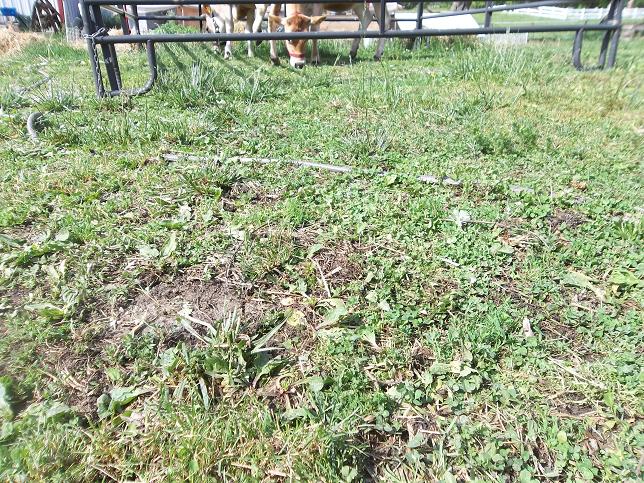
We had pigs on this spot in March.  The grass is recovering well and has been grazed once but the clover is almost non-existent.  A good mix of grasses and weeds but no clover.  I’m not too surprised as it had little clover to begin with but there is none now.  None.

Continue with me to the cemetery gate.  Here the grass is mowed regularly and the clover grows thick.

Now, look to the South with me.  The pigs were on this slope starting in July of last year and worked their way around the hill over time.  One section at a time the hillside became a wasteland as the pigs worked their way through.  The grasses more than recovered from the disturbance, and did so quickly.

But while the grasses benefited from the disturbance, the clover is absent.

If I look around a little bit I can see new clover establishing itself out of the soil bank but not much in the way of old growth.

Now, wait a minute.” you say, “Mr. Head Farm Steward, didn’t you just have goats and chickens here?  Aren’t your cousin’s cows still roaming and grazing in the pasture?  Maybe they are eating the clover faster than it can grow.”  Well, I don’t think that’s the case.  Here’s where the goats and chickens just left.  Sure enough, not a clover leaf to be found.

But, if we look back at pasture that has had at least a week to recover we can see strong clover growth.  In fact, on the left in this picture you can see a line in the grass where the clover ends.  I believe that’s where the pig quick fence stood last summer.

So it appears my grass is strengthened by the presence of pigs but I sacrifice my clover stand.  Ah, tradeoffs.  Why can’t it be more simple?

Takeaways:
-Walk your pastures regularly
-Take notes
-Take pictures
-Reflect on changes you observe.
-Evaluate these changes to determine if it is really a problem and, if so, if your management has caused it.

It is possible that I just need to move the hogs more frequently to help retain some portion of the clover.  I’ll keep fiddling with it.

Talking to Your Cows

How do cows talk?  With their mouths….and with their manure.  Their manure says it has been raining a lot recently so let’s stick to the front end for today.

Talk to your cows.  They don’t mind.  But to hear them you have to listen with your eyes.  For example, here the cows told me they don’t care for fescue:

They couldn’t wait to leave the fescue behind.  They were placed on this patch at around 9:30 this morning while the day was still cool and the sun was hidden.  Just before the monsoon du jour hit we put them back in the barn and moved them to the next spot in the early afternoon:

This spot is right next to the spot they ignored, it’s just colonized by different plants, it’s a different time of day and the monsoon passed…for now.  If you look closely you’ll see white clover, dandelion, plantain, chickweed, pineapple weed, violets and a variety of grasses I’m not so good with…but little fescue.  They ate it right down to the ground.

Now, I’m not as good at speaking cow as I am with chicken or pig but I think this means they liked this spot better.  Or it may mean that early morning, pre-rainstorm fescue isn’t very tasty.  Or that they were really hungry when I let them out of the barn.  I don’t know.

Pssssst!

If any of you speak cow…specifically the Jersey dialect, please comment and let me know.

Full disclosure: I broke down and mowed behind the cows the other day.  There were tall clumps of fescue that I just couldn’t ignore.  I can only tolerate so much as I look out my window.  Bear with me.  I’m not there yet.

What Pigeonhole do you fit in?

Is your farm organic?  Is your farm free-range?  Are you just conventional farmers?

We hear these questions frequently from prospective customers.  Let me answer the question.  No.

I don’t look down on my friends who produce organic products.  I also don’t look down my nose at my conventional farming neighbors, though I do hope they don’t go broke.  I really try not to look down at anyone.  I just do my very best to bring a quality product to market that will enhance the health of my land and the local ecosystem and nourish your family.

Our animals are healthy, happy and normal.  Our pigs and chickens are allowed to be omnivores and given regular doses of fresh grass and forbs.  They are expected to contribute positively to our pasture management to earn their keep.  We don’t have chickens for the sake of having chickens, they are a tool that we use carefully.  Similarly, our goats and cows are expected to be herbivores.  They have to eat a wide variety of plants.  Each of our herbivores perform a different function, either mowing and crushing or trimming.  Both add manure.  The milk we receive is a wonderful but secondary goal.  The primary goal is enhanced microbial activity in our soil leading to increase fertility, dense swards, healthy trees and non-eroding waterways.  Again, we accomplish this by keeping the right animals in the right places for just the right amounts of time and allowing them the opportunity to fully express their unique talents.

So, what do you call that?  How about orchestrated, choreographed, local, respectful, ethical agriculture?

How do you, the customer, verify that we actually do what we say we do?  You come see for yourself.

There is no man behind the curtain.  There is no curtain.

We don’t desire third-party verification at this time mainly because we want relationships with our customers.  We want customers who will come and see how things work here, customers who will ask questions and make suggestions and challenge us to continue improving.  We want customers who will partner with us.

What about GMO-free or organic grains?

We’re just not there yet.  I have been in contact with a vendor who can provide me a complete non-GMO feed solution for my stock.  He’s in Ohio.  At this point, we think it’s better for us to buy corn straight from the field that may be GMO and certainly is not organic but is grown within 100 yards away from our house than to buy grain from hundreds of miles away and uses unknown quantities of petroleum to get here.  We buy local.  I am working to influence the local farmers I buy from to take the next step in environmental and ecological stewardship.  They aren’t there yet.  But, together we’ll get there.

I’m buying local, working with what is available here, now.  I’m doing the very best I can to bring a locally produced, quality product to market that was not only humanely raised but humanely processed.  Not only humanely processed but locally processed.  I don’t ship my birds 200 miles for processing just to bring them back again.  We do the work here.  We use local sawdust, local straw, buy local corn, and buy locally produced animals whenever possible.  Sure, there are things I buy that are not local but I try to buy them from local vendors.  For example, I buy coco coir from a vendor close to where I work, though it probably comes from Sri Lanka.

I’m working to be as local as I can.  I’m also working to make it better.

To be honest we aren’t where we want to be on many of these issues.  Please partner with us, join us on our farm, encourage us to continue working and participate in the local economy.

What about antibiotics?

When a cow or horse gets sick we’ll take steps to heal it using whatever technology is appropriate.  We don’t use subtheraputic levels of antibiotics or medicated feed to help the chickens survive until slaughter date.  Our management style makes that unnecessary and we feel that is an inappropriate use of medication.  Though we have never used antibiotics on our animals, even our willingness to use an antibiotic to heal a sick animal would prevent us from achieving organic certification.  I want to care for my stock.  I’m willing to use whatever means are appropriate.  While I’m unwilling to allow my animals to suffer to strive for an ideal, I take precautions to maximize our animal’s immune system function by providing a varied diet, allowing the animals to select the most palatable and nourishing food and providing minerals free-choice.  We minimize their need for immune response with multi-species grazing and long periods of pasture rest and recovery.

Again the best thing you, the consumer, can do is to come see what’s going on here.  I hesitate to quote Regan but I’m asking you to trust, but verify your farmer.

Where are the goats?

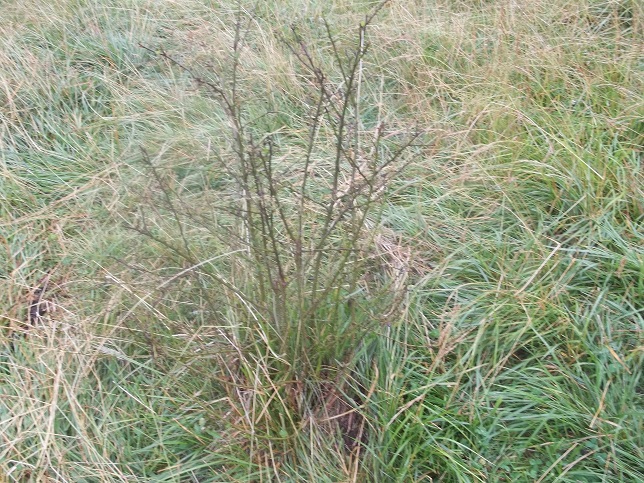
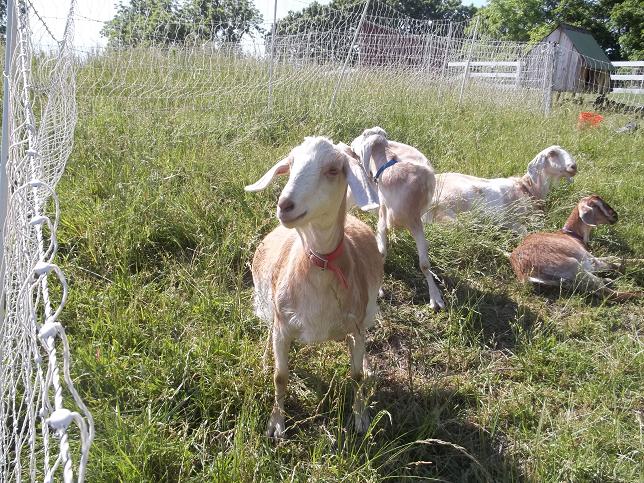
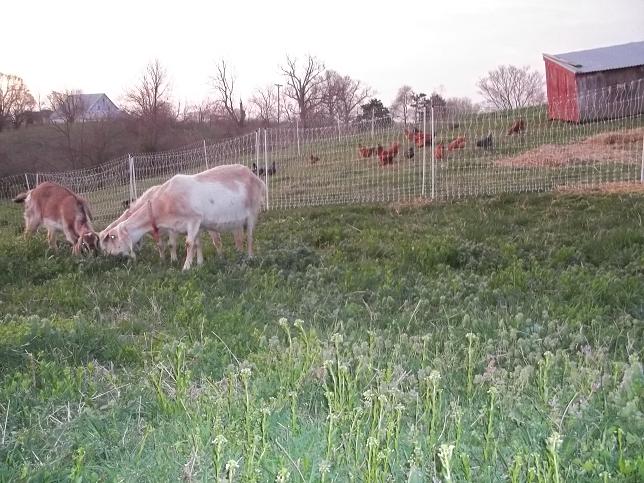
The goats finished cleaning up their pasture and since I have a vacation day today I thought we should go ahead and move them a day early.  They moved to an extra-large area loaded with field pennycress, thistle and Osage orange and honey locust saplings.

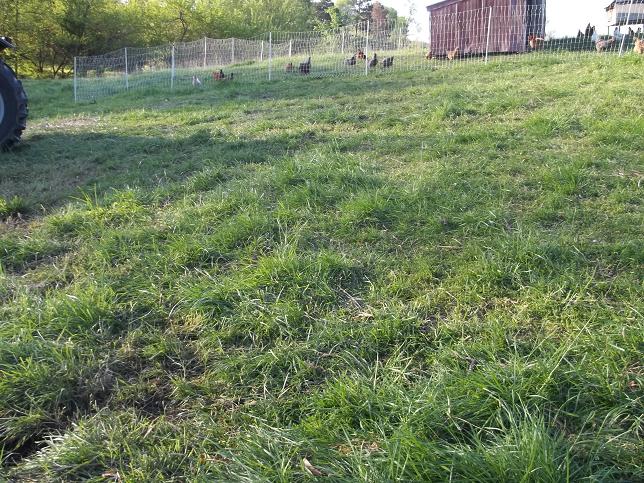
This opened a new place for the layers to run and play.  The pasture below looked like the picture above three days ago.

Finally, here’s a shot of the pasture the chickens left behind.  Fewer bugs, even fewer weeds, lots of additional nitrogen and plenty of disturbance.  Now it’s time for rest.

Disturbance and rest.  Disturbance and rest.  The greater the intensity, the longer the recovery period.  Disturbance and rest.  This applies to your own body, not just to grass and dirt.  Did you experience intense physical disturbance today or just rest?