All About the Execution

In the comments section of our recent post on 5,000 cows a reader (Eumaeus) drew a response out of me that really should have been part of that post. 5,000 cows sounds like a huge number of animals but it’s just a drop in the bucket compared to the annual beef consumption of our local metropolitan area. You can do the math to estimate how many drops are needed to fill the bucket but I don’t feel like doing story problems today.

But that makes me want to explore an idea. An idea about ideas. Here’s the idea: you don’t need a great idea. You need a great amount of work.

The goal is to produce something. An idea is not a something. It’s an idea. Let’s face it, most ideas are no good. (I particularly like the patent for a device to help deliver babies by centrifugal force. Notice the baby-catching basked between the expectant mother’s legs. Where is the barf bag?)

I hate to quote myself quoting someone else but I’m feeling lazy today. So here I am talking about what someone else was talking about. (This very action kind of proves the point of this post anyway).

Bonner talks about the need to follow a well-worn path in business…doing something that others have already succeeded at.  We read and follow the examples of leaders in alternative ag.  He talks about how important it is that I not try to go it alone, that I work hard and take one bite at a time until I “find something that works before you run out of time, money and confidence” (p. 126).

There are many other works available on this same topic (Edison said genius is 1% inspiration and 99% perspiration) and yet, here I am adding to the pile. In fact, I doubt if I have written anything on my blog that hasn’t been written elsewhere and said better. But here I am. Writing similar thoughts about old ideas with my own personal style and here you are reading it. Not that I’m terribly clever or novel. Just that I’m willing and able.

So if success is found in work, not in ideas, does it matter what you work on? Only a little. That’s good news! That means you can do what others have already done successfully. Are there already cleaning services in the world? Yes. Is that an old idea? Yes. Is there still demand for cleaning services? Yes? Good. Go find some houses to clean.

It’s the intersection of quality and price that matters in that market, not the web site you build. Not the clever name you come up with. It matters that you are able to meet a need. Results matter…especially when you are trailing far behind the pioneers (many of whom had great ideas and never found success).

Look, I know all about the path less traveled. It sounds nice. But it can be a lonely, dangerous place. Farmers are not gamblers…at least, not successful, multi-generational farmers. I’m looking to provide something of value to positively impact the world with minimal risk. Others have raised and retailed cattle before me. I stand on the shoulders of giants. I don’t have a precise formula for success but enough ground has been mapped that I’m not lost in the wilderness. Before Frost could take the path less traveled he had to learn to walk. And don’t overlook the fact that Frost is walking on a path, not cutting a new path!

So now, rather than hope some crazy idea will work I can just grab on to something that we know has worked and work for effective execution. Instead of wondering if a project will work I can focus on making it work. It’s the difference between trying to make a bicycle out of rubber, steel and aluminum and deciding to make a bicycle out of bicycle parts. You dig? I’m much more likely to succeed if I take advantage of work already done by others.

There are still new frontiers to explore in alternative agriculture. No doubt. But there are already well-worn (even if lightly grassy) paths that will help you meet  immediate needs. People like maple syrup. People like to cook with farm-fresh eggs. Land still benefits from the application or composted manures. Nothing earth shattering in that. Then, once you establish a beachhead, you can begin to dabble with the unknown. Or encourage the next generation (those bullet-proof, immortal youngsters) to take a calculated risk. But somebody has to pay the dues. And that falls to you. That falls to me.

Like any other business, successful farming has little to do with dreaming up some unique new idea you can call your own. It has everything to do with putting in the work every stinking day even when you don’t feel like it. Not paying yourself for years as you build the business. Going to bed late, getting up early. Showing up late for dinner so you can get that one project behind you. Keeping your day job while your business gets established. Using vacation time to work for yourself! It’s easy to find things to do with your time. It’s the execution that will kill you.

Don’t worry about the idea. Worry about the work.
Why Did You Get Out of Bed This Morning?

“Why did you get out of bed this morning?”

I love that question. I love to ask that question to children. We had dinner with some friends a few years ago. One of their daughters was seated to my right. I started right in.

Now, most of you don’t really know me. You have never met me. Allow me to describe myself in two words.

1. Obnoxious.
2. Loud.

Oh! the stupid things I say to people. Why can’t I just shut up?

So I asked this child, “Why did you get out of bed today?”

“Um…because…my…parents…told me to?”

“Ooh! That’s the wrong answer. Try again.”

(several lame attempts later…)

“Well, Mr. Jordan…what is it you want me to say?”

I’m glad you asked.

Julie and I went through a rough spot (understatement) 9 years ago. Obviously we worked it out but along the way we saw a marriage counselor. She complained to the nice man one session, “It’s like there’s a spring in my husband that winds up while he sleeps. When the alarm clock goes off in the morning it’s like ‘BOING’ and he pops out of bed at a run. That’s not normal!”

Oh, yes it is. I only sleep because I have to. Sleep is necessary but interrupts me from fulfilling my purpose. And I know what my purpose is…and I’m excited about it. This morning I built a fire in the wood stove, put away laundry, walked to the cows in the dark (1/4 mile across the pasture), built fence, carried and fed hay, walked home, split and loaded wood to take to a friend, got dressed, packed up today’s deliveries and was out the door by 6:45. No dishes to wash this morning!

Then when I got home I raced to the cows again to fill water, open new pasture and prepare fencing for tomorrow. Home again, home again I fed the pigs. I scramble to fit the farm into my day because I see the farm as a part of our future….a part that increases as the future arrives. In order to prepare for the future’s arrival I have to work now. So most mornings (not every morning) I jump up and get started.

I know what I need to do. I’m happy to do it.

How did I find my purpose? There was a lot of wasted time but it helped when I started paying attention in church.

“For I know the plans I have for you,” declares the Lord, “plans to prosper you and not to harm you, plans to give you hope and a future.
Jeremiah 29:11

That’s not the only reference but it is the one I carry with me. I was made by God. I was made by God to do something. I have something to do that is worth doing…so much so that God made me so it would get done. And He’s going to help me get it done. There’s no way I can stay in bed in the morning!

Maybe some people are born knowing their purpose. I wasn’t. There were some years attempting to find and discover my purpose. Time spent reading broadly, thinking, talking with Julie. Initially racing from one subject to the next finding things that stuck. Slowly discovering things I could do and could do well. Things that just felt natural…felt right. Look, I know emotions are poor counselors but work with me here. Julie and I looked at and pursued a whole lot of different things. A whole lot. Investing, remodeling houses, opening a Crossfit gym, woodworking, auto mechanics, learning ancient Greek, cooking…but somehow, everything we did came back to the land. We discovered our purpose right in our own back yard.

And don’t misunderstand me. I am still being made. My purpose does not come naturally to me. It is not easy. I spend the majority of my otherwise free time reading, thinking and studying how to do it better…and have for more than 10 years now. Huge amounts of time are wasted wondering if I screwed something up…if my cows are skinny, if my chickens are healthy. I found my purpose…but the making of me will continue for another 60 years or so.

And as the making continues, the purpose may change.

Once we found our purpose we could work to bring the future into focus. Once we could see it, we could start heading that direction. Now, Columbus didn’t get where he wanted to go on the first trip. We may not either. But most of his trip was just the getting there, not the arrival.

I jump out of bed in the morning because I know where I am going and I know what needs to be done to get there. Will I ever “arrive”?

Do you know where you are going? Do you know what it will take to get there?

Why did you get out of bed this morning?

If you are happy with that answer you will still feel warm when you are out building fence on a cold, windy night. And there are a lot of cold, windy nights in farming.

Envisioning 5,000 Cows

My recent post about our vision has sparked some interesting discussions with friends and family. Among them is just the pure logistics involved in managing a herd of that size. It has been a fun discussion but we have come up with few answers. Just guesses. Estimations. You should play the exciting copy of our home game! All the fun of farming in the comfort of your dining room…no manure required!

Let’s say we have 5,000 cows. Wouldn’t that be nice? We would need between 250 and 400 bulls to keep things moving but we would only need those bulls for 2 months. I guess the rest of the year they are being pastured off-site. Or maybe we keep the bulls in with the cows over the winter and separate them at spring greenup, selling pregnant cows that don’t calve by a certain date. Maybe we AI a selected group of cows and heifers but the bulls are still out there for cleanup.

HerdInNovember

5,000 cows would require 5,000-ish acres where we live. Nearly 1,700 acres would be stockpiled in rotation each year. Each day I would open up a 20-50 acre pasture for grazing, even if a little at a time to increase herd pressure and movement. There would be no housing. No shelter. If the soil gets wet we’ll just have to move them faster and deal with the pugging.

Each summer we would cull 10% of our cows because they were open or bred late in the season. That would leave us with 4,500 calves. Now we have 2,250 steers to fatten over two years and 2,250 heifers to raise for two years. Let’s go back to the steers. We would have 2,250 bull calves to castrate. That sounds like a long day of working cattle. And it’s a mere 24 semi-loads of calves if we sell the calves or raise them on another farm.

And we might want to raise the heifers on another farm. Or raise them on another farm with the steers. Good heavens! Another farm! Maybe we should back off on our cow numbers and raise everything together in one mob. But for sake of discussion, stick with me on the idea of 5,000 cows.

All of that indicates I need to reserve a portion of my 5,000 acre cow/calf land for handling facilities.

Back to the heifers. I need to reserve 500 heifers as replacements each year as well as…what? 50? bull calves? So that lowers my sale numbers…except those are replacements. I’ll have 50 bulls to sell, most of which would still be viable bulls, just not as good as the replacements I raised. Oh, sure, some will be lame, injured or sterile but over time I should be selecting increasingly hardy animals. So. 5,000 cows. 5,000 calves. 500 heifers. 50 bull calves. That’s a lot of beef.

I know a lot of operations work at this scale but the numbers involved are far beyond my own comprehension. When we talk I can see the wheels turning in dad’s mind. 5,000 cows. What would it look like? It’s fun to talk about but I want to see it. I mean, if this is a mere 1,000 cows…

Now, let’s really have some fun with this. Jim Elizondo says you should have equal weights of sheep and cows…meaning 4-6 sheep per cow. So that would back us off to 2,500 cows and include 10,000+ hair sheep (cause we ain’t shearing!). Good golly the fencing we would need for that! And the dogs!

Then we want to clean up after the cows with a flock of birds. A flock of birds that can cover 20-50 acres. What is that? 10,000 chickens? 20,000 chickens? How much feed would I go through each day? How would I deliver it? How would I sell that many eggs? Could I even get a license to keep that many birds? Who is going to collect all those eggs?!?!?

gathering eggs

I have no idea.

I also can’t tell you what I would do with 20,000 -40,000 lambs each year. And I can’t tell you how I would sell that many cows.

Those are problems we would have to grow into. Thank goodness I can’t just go out and buy the land and livestock tomorrow. It is too big of a problem for me to solve at once. This is a problem for generations of us to solve together over the span of several decades.

Cattle Mineralization, Nutrition and Human Weight Loss

Yes. Human weight loss. I’m going to write a post about feeding cattle and how I feel that is analogous to human weight loss. How’s that for ambition? I think there is enough here to chew on for a bit without going too deep on the topic.

Here goes.

We recently bought the Hayless Wintering in Florida DVD set by Jim Elizondo. You may think $119 is a bit high for a movie but if you feed 25 fewer small square bales of grass hay the first year you have broken even. You may also think that since he’s in Florida and you’re not he has nothing to offer you. You would be wrong. Anyway, in that DVD Jim says cattle can overeat by 40% trying to get enough of a specific mineral they are lacking. I want to spend some time on that idea.

Cattle know what they need. It is not uncommon for cattle to select a specific mineral they want from an array and just pick the ones they need and in the quantity required. That’s the whole concept behind the Free Choice Minerals programs and you can see it at work in one of our favorite youtube videos about milking cows (skip to 7:45):

But let’s say minerals are in short supply. What’s a cow to do? Well, this grass over here has a small amount of X in it so I’ll just eat more of it. As much as 40% more than the cow needs to maintain condition. Jim says he has seen cattle with scars on their sides from overfilling the rumen and tearing the skin. Those cows were seeking better mineralization.

If the cow had sufficient nutrition it wouldn’t be eating that extra feed. Another cow would. You with me on this? If this is true, you could have 40% more animals on the same forage and land if the cattle were getting proper minerals. In fact, FCE says the cow can overeat by 50%!

Read that again! That’s money in your pocket!

Jim goes into detail on working with the existing pasture to improve nutrition and mineralization over time. He says he offers a source of protein supplement when feeding lignified pasture (dead, brown, old grass) to cattle…usually flax seed meal as bean meal is almost all GMO. That may go against the grazing ideal we all have in our minds but when seeking to improve pasture health (the real goal) you have to enable the cattle to thrive. The added protein helps the rumen to digest low-protein, dried grasses. Play with the cards you are dealt. Supplement carefully where needed to maintain nutrition levels over time, making the best use of what is available. This applies to our meal planning at home…working with what we have in terms of ingredients and in terms of budget.

So what does this have to do with human weight loss? Well, maybe nothing. But maybe everything.

Click image for source.

If cattle can overeat to make up for a lack of nutrients can we do the same? Do we do the same…even without realizing it? Would you suggest the average American is thin and eats food that in nutritionally dense in small quantities or would you say we, as Americans are overweight, eating nutritionally poor food in large quantities? Is it possible that we are consuming some portion of those calories, not simply because we crave fat, salt and sweet, but because our body is telling us we need something that we aren’t getting elsewhere. So we eat more. And the extras that come packaged with that whatever we are looking for don’t simply pass through as unnecessary excesses. Some of them deposit themselves in, around and under us.

This came to mind in a conversation with my lovely bride who, without any real effort, is losing weight. Now, maybe our data is off and she has a tapeworm or a tumor causing weight loss but assume with me that she is as healthy or more than the average 30-something woman with four children. What has changed?

For the last year Julie has been taking a very high-quality vitamin supplement (the FDA says I can’t tell you the name cause speech isn’t free). I noticed her jeans were getting baggy and we started paying more attention to what was going on. She says she needs to eat less at a meal to feel satisfied. Otherwise, she is limiting (not eliminating) wheat. We cook with bacon grease. There are still cookies or brownies in the house from time to time. We still drink wine and hard cider and the occasional soda. But mostly she eats high-quality foods we grow or purchase, drinks water or coffee and takes her vitamins. For exercise she walks to the cows and chickens and picks up at least one feed bag every day of the week. All of that has been essentially the same for the last 4 years. The switch from a multi-vitamin to (no free speech) was the only real change.

Maybe I’m mistaken but it appears to me that paying attention to nutrition and mineralization can not only increase our livestock health and carrying capacity, it also puts my already thin wife into even smaller jeans and makes better use of our food budget.

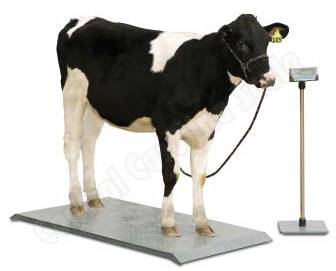
For the sake of disclosure, I am switching to FCE’s mineral program right now but I stand to make nothing by mentioning their product nor by linking to a scale manufacturer. My wife does sell the vitamins she takes and would be happy to sell them to you. But I wrote this post out of a sense of amazement, not seeking sales.

The Hardest Part is Thinking

Riding a bicycle is easy once you overcome the learning stage. Same with writing a blog. There is nothing to it. It’s not even hard to find something to write about. After a little practice you can put pen to paper with the best of them. Now, I do make a distinction between writing documentation and exposing vulnerability and creativity but, for the purposes of this discussion, the simple act of putting words on a page is a matter of determination and practice. To make it better, do a little reading and increase your vocabulary. Then, not only can you write, you can write big, impressive words. Put enough big, impressive words together in a string and you might be invited to teach at a university or write a speech for a politician!

That stuff is easy. The hard part is thinking. It appears to me that political speech writers don’t do much thinking. Heck, anybody can write without thinking. Just look at my blog! But it is the thinking that gets us where we want to go.

Click image for source

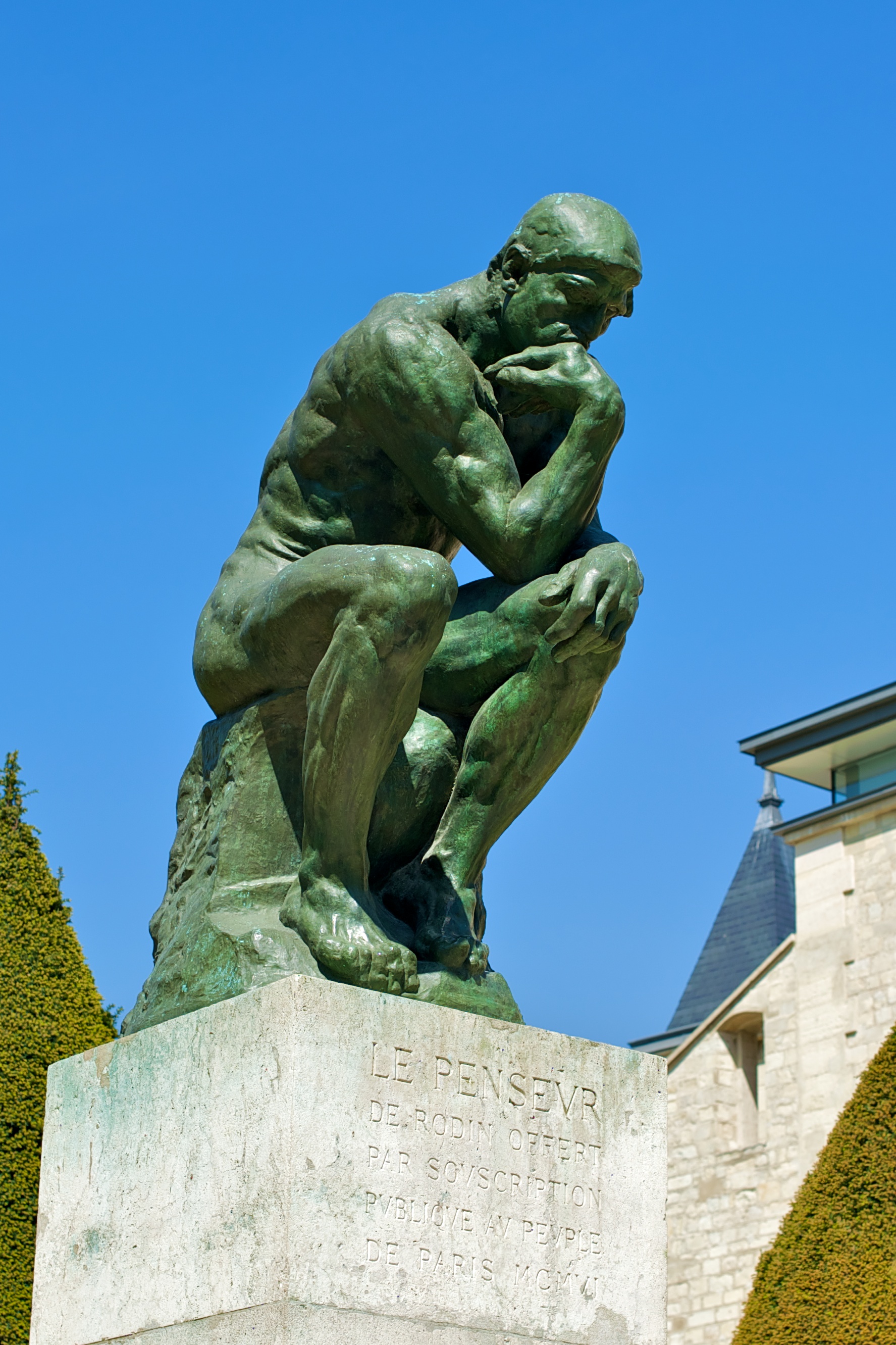
Today I’m working to wrap up my little series on our home school philosophy. As with everything on the blog, this is more “how-we” than “how-to”. I could be totally wrong about what I’m doing….and so what if I am? My children will be negatively impacted…as will my own future as my children are my future. If you read this baloney and take it as gospel, well…you’re on your own. I offer no warranty. Does anything work? Does anything have meaning? Is there a RIGHT way to do anything? Yes. Certainly. But where the rubber meets the road the only thing I have is Faith. And faith, according to the Bible, is itself evidence of the existence of God. Outside of that? We build on success and learn from the mistakes of the past. That requires thinking. Really, you’re on your own here.

With that in mind, the ultimate lesson for my home schooled children is this: nobody has all the answers. In fact, it is quite possible that nobody knows anything, least of all me. If you want to really know something you have to do more than read about it, write about it and listen to stories about it. As focused as we are on experiencing things, experience isn’t enough. You have to think. You can’t outsource thinking. It is something you have to do on your own. You can leverage your reading and experience to help you think more fully on a subject but you are unlikely to find any real answers from books. Just more possibilities……more opinions…more problems. There is no 10-step program for all the answers the the problems the world can present you with. You just have to think (and pray) your way through each obstacle.

This is certainly true on the farm. How much fence should I build today? I dunno. Build enough fence that the cows get plenty to eat and they put enough pressure to push nutrients and seeds into the soil….but not too much…and not too little. And it changes by season. And by year. And by weather pattern. And by solar aspect. And by slope. And by forage species. And by fertility. The saying goes, “They eye of the master fattens the calf” but, obviously, it’s the master’s ability to think more than his ability to see that makes the difference. How many chickens will we sell this coming year? How many layers? How many hogs? What breed of hogs? On and on…questions with no right answers. We just think our way through and do the best we can.

To help along the way, we study from others who have asked these questions before us. “The Classics” are classics because they are still relevant. We read them, in part, because people still read them. The unending flood of published books shows that writing is easier than thinking but books that endure through time are those that encourage the reader to think…to consider…to change…to grow. Why does Homer beg the muse to sing of the wrath of Peleus’ son Achilles? Because he brought COUNTLESS ills upon the Achaeans! And for what? Because he couldn’t keep a girl he stole while fighting a war he didn’t want to fight. There are still elements of that story we can relate to and learn from…things we can think about today…things that may impact us tomorrow. That said, if history tells us anything it is that nobody learns from history…because we just read for entertainment. We don’t think. Go ahead. Ask the muse to sing of the desire of Victoria’s grandson Freddy to support his empire by building a navy and brought countless ills upon the Europeans. I know that’s not quite right…but it’s as close to a real reason for WWI as I have ever seen.

Click image for source

As with other subjects, I spend a lot of time reading the classics of agriculture (from John Taylor of Caroline and Miss Coulton to Allan Savory and Joel Salatin) and study what others have done. I try ideas out. I think on the results. I make a revised plan and try it again. Each year I work to improve, never finding THE ANSWER. There is no one answer to farming but I know your answers will be better than mine. Your kids will build on the knowledge you share and will do better still. We build on the work of the past…never really arriving, always moving along. There is no farming destination…just a forked path. The journey is the destination…and a thoughtless journey is a miserable place to be.

Keep this in mind as you raise your own children. Give them time to think…to question…to wonder. So many kids are so busy with school and homework that they aren’t allowed to think. Go back and read that again. Then they spend the evening with scouts or karate or just in front of the TV. Just let your kids get bored. Boredom is a problem kids can solve on their own…sometimes with disastrous consequences. But, like I said earlier, I offer no guarantees. Maybe the best thing for kids is just to keep them busy and out of trouble. But I fear for a society that discovers the convenience of this as they will soon apply the same philosophy to the adult population.

Whatever path you choose, I can’t tell you which way to go. I strongly suggest you read, study and discuss things with others. Rely on young minds for crazy new ideas. Rely on experienced minds for stability. But at the end of the day, the most important work you can do is to think. And it is hard work. That is why so few attempt it.

Getting Out Of The Way

I wrote about our home schooling philosophy a bit last week here, here and here. I want to wrap it up today. Well, mostly. I have a few other thoughts for extra-credit that I may publish soon.

The most important thing is the most important thing. Right? So what is it? What is the most important thing we can do in preparing the next generation?

Get out of the way.

driving the tractor

Look how easy it is.

But it’s not that easy. Getting out of the way means releasing control. Shutting your mouth. Allowing mistakes to happen. Being supportive but not controlling. Drying a lot of tears when mistakes happen. And mistakes will happen along the way to success.

Let’s look at two possible futures together. The base assumptions are that I have a herd of cattle generating a positive cash flow for the farm and a child who is interested in taking over.

kids planting

Child (boy or girl): “Dad, I’m anxious to find my place on the farm. The part that interests me most are the cattle. In fact, I have a few ideas in mind that could really push the ecology, the genetics and the profit margins forward. Is there room for me to explore these ideas?”

There are two paths before me. I could get out of the way or I could be an obstruction to my child’s progress. Let’s be an obstruction:

Me: “You know, I’m glad you want to find a place on the farm. Your mother and I have prayed for a long time that we would be able to make room for you here BUT…I have spent X years building that herd! We are finally to a point where I can say our shorthorns are relatively uniform and well-adapted to our environment. My gosh! those cows cost us a fortune! And you want to just step in after all the work I’ve done and expect me to start some new business to support myself? Further, you are going to change what I have worked all these years for in favor of your crazy new ideas?”

chickens are cool

Obviously we want our kids to make their home near to us…here on the farm if possible. That’s going to require some planning between all of us and a measure of sacrifice. I’m going to have to release control, reserve judgement and allow things to go new directions. If I won’t do that…well, why would my kids stick around? And why would they want to buy me out and argue with me about control of the farm when it would be simpler and less emotional to just go buy a farm of their own?

So I have to get out of the way. I have to plan for this and plant the seeds now. At some point, sooner than I would like, my children and I will have this conversation. They will be ready to manage the farm, turning to me for advice but making decisions on their own. I’ll be the janitor.

To wrap up the home school theme of this series, the same thing has to happen with our children’s education. At some point, sooner than I would like, the kids will direct their own learning. We work through several phases of learning with our children. At first we work to show them love and give them a frame of reference for the world they are discovering. Simple concepts, lots of time: You are loved. There is right and wrong. There is truth. You were created and were created for a purpose. Work is valued as is your contribution. The world is an interesting place. While teaching these things we spend large quantities of time playing games, reading aloud and exploring the world together. This progresses through learning a broad array of information and skills largely at the student’s pace…everything from algebra to housework to positive interactions with others until they are fully-trained young adults. Around ages 13-15 we let go of the reins and allow each student to sort of major in a topic. Note the part about letting go of the reins. Our 13 or 14 year old child has a strong foundation of education and necessary life skills and is able to pursue their educational passions. We let go early so college, if attended, won’t be an overwhelming experience…away from home, away from loving guidance. They learn to do it on their own…to discover their own passions. Then, if they choose to go to college, they will have both direction and independence…purpose.

picking berries

Like the cow thing, the time is coming when I will have to stand aside on education. I’m still around, I’m still able to advise but the direction is chosen by the student. I just have to get out of the way…standing back to watch them stretch their wings…however hard it is for me to do that.

Now Presenting…The Future!

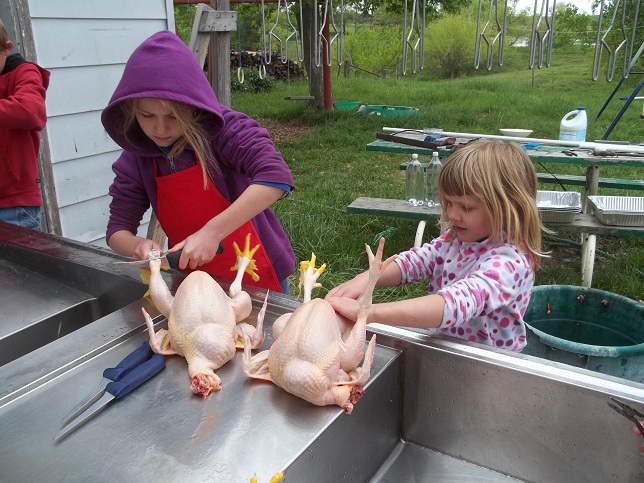
Some of this post is just snippets of discussions that happen around the dinner table…or around the chicken evisceration table. Some of this post is stuff we have formally written out. Most of it hasn’t been spoken of outside of our immediate family. All of it has been prayed over…and hard. Just as I focused on budgeting a few months ago as we prepared to buy the rest of the farm, I am focusing on multi-generational farming now as I’m realizing how big my kids have gotten. If this isn’t your bag I hope you enjoy the pictures. You’ll probably get more posts like this now that Fields of Farmers has arrived in the mail.

Our 11 year old daughter asked me, “Dad, in 50 years when I have lots and lots of children…will you still come out here to help us process chickens?”

Well, I hope I will still be useful when I’m 87…and you are still helping with chickens when you are 61…but I suspect you will hand it to the next generation before then. But, yes, I would like to be out there with my great-grandchildren telling the same stupid jokes.

That’s not what she meant to say. She meant to ask if I would still be out there when I was 50. Bear with her, she was cutting feet and oil glands off of chickens at a rapid pace.

Girls

Oh. Well. 13 years from now is much more visible than 50 years from now. Still uncertain but much closer. Yeah. I expect I’ll still be butchering chickens when I’m 50. Will she still be here when she’s 24? What will she be doing? Will she be married? Kids? Will she choose to make her home here? Will she work here?

How can I express my vision of a preferred future without imposing my will on her life? It’s tricky. If you’ll allow, I’ll tell you what we see through the fog and try to do so in a way that doesn’t enslave our children. I have no idea what is really ahead of us but I do have direction. Let’s look that direction together.

5,000 cows.

I know, right? That number has been with me for a long time. I read Julius Ruechel’s book years ago and he suggested that cattle don’t really act like a “mob” until you have 500 head in one group. Then I read about Ian Mitchel-Innes having 6,000 cows in one group, introducing 400 bulls each summer!

How do I get there? It starts where I am. Then it grows. Ultimately I would need to lease around 5,000 acres of good ground. I also need to breed a nativized or adapted herd of cattle that are fertile, can produce with few inputs and, really, don’t ask for much from me. But you know from my posts about budgeting that cattle alone won’t pay the bills. They are a great way to cycle nutrients through the farm but I’ll need an employee (or child or grandchild) for each 1,000 head of cattle. We’ll eat well but will we be profitable? Selling 10 steers/year is doable. Selling 2,500 steers/year as direct retail freezer beef? At some point (I’ll suggest around 150 cows) we transition to commodity production or depend on selling wholesale. It may require a dedicated salesperson. (Do I have enough children?)

But that’s just the beginning. We’re taking the long-term view here. 5,000 cows requires 5,000 acres in Illinois…more elsewhere. That’s a big area on a map. Not as big as some of the ranches in Texas and Oklahoma but big in Illinois terms. I am necessarily counting on a fall in land prices and lease prices (brought on by an increase in interest rates, crushing and cleansing the economy) to make land available for low-cost producers (like me). Can you imagine converting corn ground that sits tilled, empty and idle for 7 months each year into a year-round carbon-sequestering, sunlight-catching, cow-fattening meadow filled with songbirds, bugs and spiders? Rather than produce a mere 200 bushels of corn we could produce 30 tons of hay…but we won’t cut hay. We’ll just let the cow do the work. Grass with roots 15′ deep. Rows of trees planted on contour. Ponds snuggled into every valley…every hollow hydrating the landscape, preventing flooding downstream, Trees, grass and swales working to prevent agricultural runoff…can you imagine enough farmers getting this idea for the the muddy Mississippi to run clear? I can.

Grazing

But we haven’t started yet! I mean, if we’re talking about 5,000 acres and if each of my 4 kids has 4 kids of their own…we’re going to need more than just beef cattle to keep us all busy and fed. What about dairy? A grass-based dairy herd has to have time to eat each day. You really can’t grow a dairy above 200 head because every step the cow takes to the milking parlor is time the cow is not grazing forage or laying on the hill chewing its cud. Could you grow bigger by building a milking parlor every 200-300 acres so we can milk larger numbers of animals at each milking…rotating through the larger farm over time? Could the farm’s beef cattle prepare better pastures over time for a dairy herd? Could the dairy herd lead the way through the pastures allowing the beef herd to follow and clean up what is left over? Or should I build a herd of thrifty dual-purpose cows? Maybe move South and buy a herd of criollo cows and select for milk production.

But what about pigs? What about chickens? What about lumber? What about a machine shop? What about a hotel? What about an interstellar launch pad? What about ideas my children will generate that I can’t even imagine yet! I don’t know. Each of the things we currently do are small-scale. I can see that any of them will grow beyond what I can handle alone. As these things grow I’ll need my kids to step up and take on a larger portion of it…to continue to grow the operation. The 5,000 cow herd example above is a good illustration of that. Starting with 10 cows today I would be (according to my spreadsheet) 63 before we hit 5,000 cows (bringing in a gross income of something close to $1 million at today’s prices). Moving cows between pastures is not full time work, sorting and working 5,000 cows is more than one man can handle alone. Anyone involved in the farm is going to have to wear multiple hats to be busy full-time. There just have to be enough hats.

But that’s all micro. Let’s go macro.

Does Illinois even want me to be here? Is it in my best interest to ONLY have cattle in one place where one tornado can wipe it all out? …or one new state tax policy (in a state where the pension is only 49% funded (if you are really optimistic about future returns))!

So what do we do? I work in Florida a lot. Can I lease ground in Florida? Yup. That plants our flag in another state. But should we diversify internationally? Wow. I could see a real argument for that. Can I still learn Spanish?

Julie has a long, written story of waking up early one morning with her granddaughter patting her on the face. Three of our children and their families are at home in Chesterfield helping us to wrap up our seasonal work at this farm as we leave it in the farm manager’s hands and the rest of us join the fourth child at the ranch in Chile. Our parents, our kids, their kids all go with us. She wrote this as part of a business class the is taking through a coach. In short, the exercise was to imagine where you hope to be in the near future. Believe it or not, that 60 acre farm with 50 or so cows is attainable even if you are of modest means (as we are). The exercise forced her to imagine, not the trip from A to B, but the trip from A to C. If you’re going to C, you’ll pass B along the way…and keep going. Our immediate goal is to grow our farm to the point that it provides our family’s primary income with my parents in partnership. To stretch that, we hope our kids can earn their income here. To stretch that we may look for multiple locations. To stretch that, we may say goodbye to winters by living in the Southern Hemisphere half of the year. But it all starts here. Feet on the ground…covered in manure…building fence at night…wearing a head lamp in the cold rain.

Tomorrow may be out of reach today…but I’m reaching for it anyway. What are you reaching for?

If it helps, Julie and I sit down together at the first of each year and write down specific and measurable goals. We keep that list in front of us every day to help us stay focused. A new year starts in just under two months. You might start working on your list.

Grazing the Whole Hill

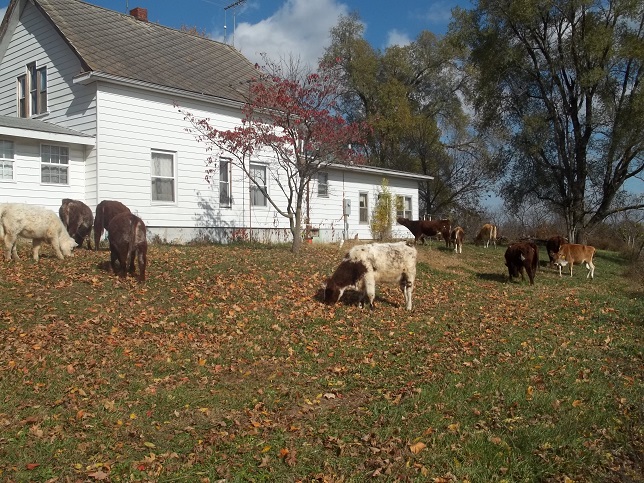
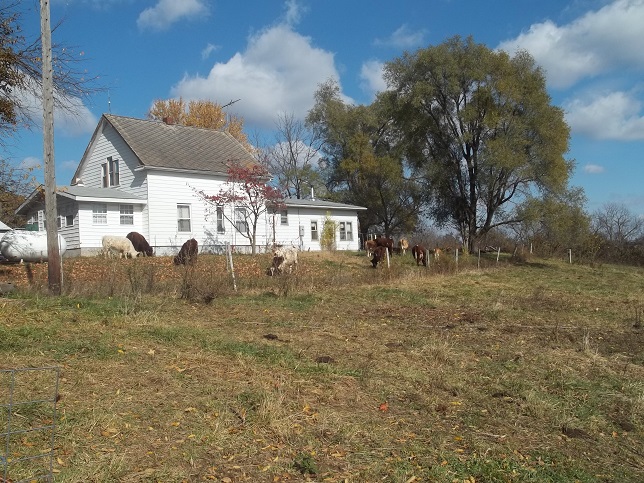
It is important to us that we do things that cause our neighbors to crane their necks as they drive slowly past. Yes, the cows are in the yard. As the world works today, If people don’t think we are weird then we are doing something wrong. I don’t want to be normal in a world of chemical agriculture and chemical lawn maintenance.

MowingInNovemberI had to give a very large area to the cows because the grass was short. The girls are also doing a good job of smoothing out some rough places left over from some trenching that we had done in the spring.

TheWholeHillWe have grazed the slope in three sections from bottom to top. I prefer to start at the bottom so rain doesn’t wash manure onto upcoming forage. We just follow the keylines around the farm as much as possible. The fence pictured above does not follow the keyline so we just have to work with what we’ve got.

The fun part was when I lit the fire this morning in the back room. I heard a weird noise…like a burp or something…and looked to my right. Ms. White was looking in the window at me. Kinda funny. Ever have a cow looking in your window? Maybe you had to be there.

Today’s Wood Pile

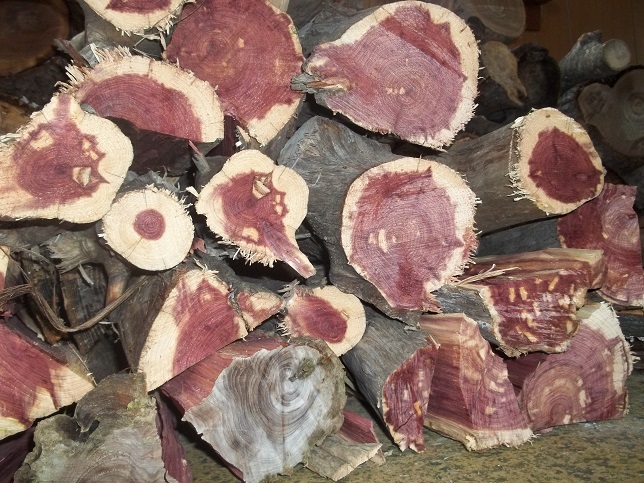
I emptied the cemetery hill of dead standing trees and snags this year bringing down an elm, a couple of oaks, a walnut or two and a juniper tree. Ah, juniper. I limbed out the juniper and carried the pole home on my shoulder…didn’t cut it until today. Oh the smell!

JuniperIt splits well, burns quick and clean but doesn’t really get hot. Perfect for a mild fall day…when I’m feeling lazy…and just want to take a nap by the fire. There is not a lot of juniper on the farm. One tree is big enough to saw, the others are small and are routinely shredded by deer and cattle. This one is a treat. Isn’t it pretty?


Fall Plans, Winter Problems

Fall came a little late but it’s here in force now. We just had four nights in a row of below-freezing temperatures. Now we have to be in the habit of disconnecting our hoses at night and laying them on a slope to drain. An extra chore. Rain is just about to set in so we’ll be up to our knees in mud before long.

This fall cold snap probably won’t last. We have seen 90 degree days in November before. But it’s a reminder of what is coming…and soon. The next few nights will kill the alfalfa and clover as well as the summer grasses. The leaves will begin to fall in earnest.

fallgrazing2

We have already slowed the cows down, asking them to crop the grass very close on the South-facing slopes. I expect these slopes will have time to put on another 8 inches of grass before the fescue really goes dormant in December but, for now, I want to put down a lot of hooves, mouths and manure in tight pastures…even if we move several times/day. That late fall regrowth will be just what the doctor ordered in April when we are looking for a little pasture to graze. The fescue should come through winter in good shape.

fallgrazing

I plan to feed a little hay while we are on this North-facing slope. Roots are shallow here and the plants have a hard time in the blazing sun of July and August. They have fully recovered since the last grazing but the plant population is lower than we would like and, again, root systems are shallow. We are relying on hooves to push waste hay and manure into the soil surface, disturbing the soil and making a nice bed for seed germination as weather allows…possibly in the spring. The hay idea comes from my talks with David Hall. He said he fed 30 days worth of hay across 5 months to make the hay and pasture stretch. We are sort of starting that now…at least, right here where the pasture is poor. Grazing in tight areas, moving daily, feeding a little hay in the morning…about 1/10th of the dry matter a cow would otherwise need.

That all sounds nice. We have a plan. But it is not without its problems. Shorter days, colder weather, hose management, extra bedding for pigs…nothing life-altering but many small extra chores with fewer hours of daylight causing problems.