The Pastures to the East

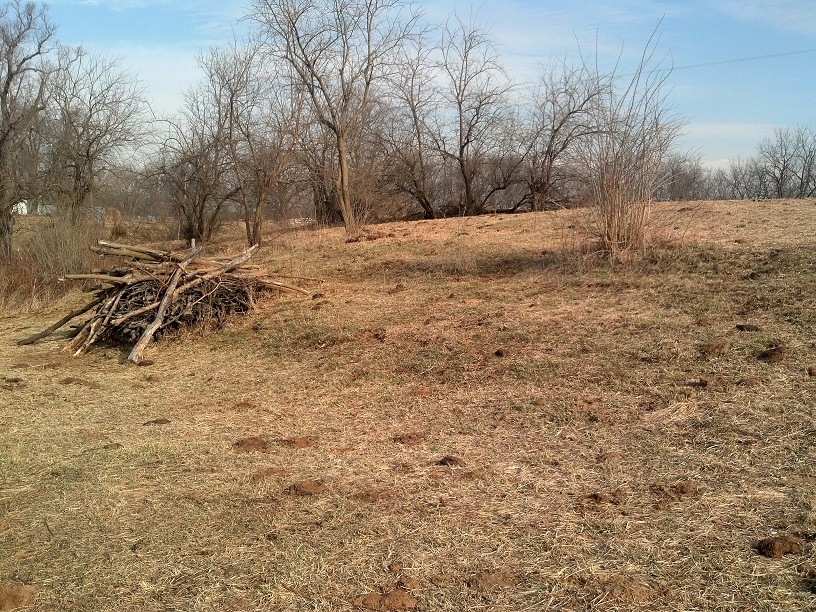
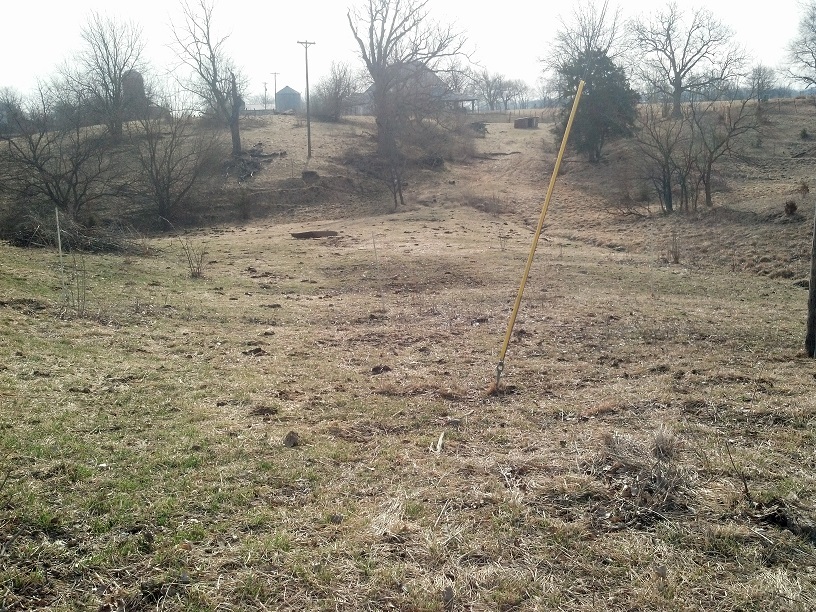
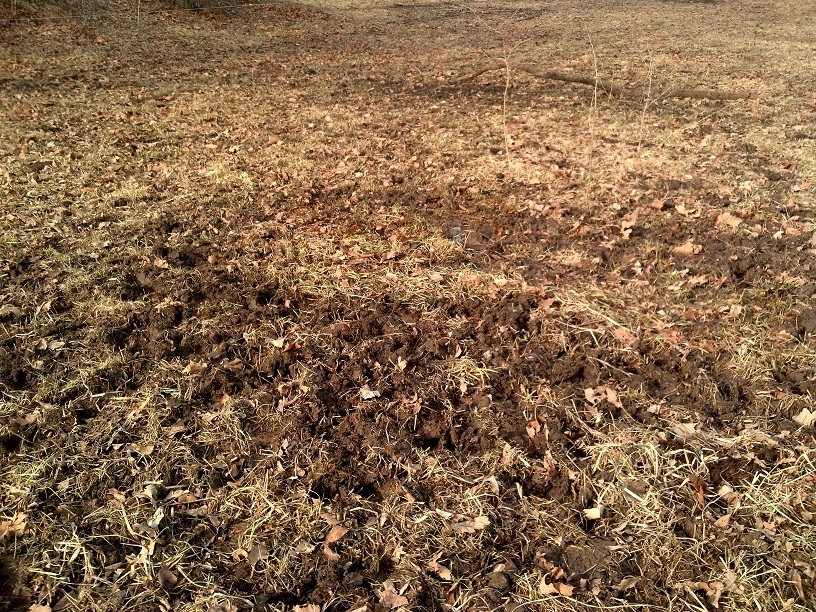
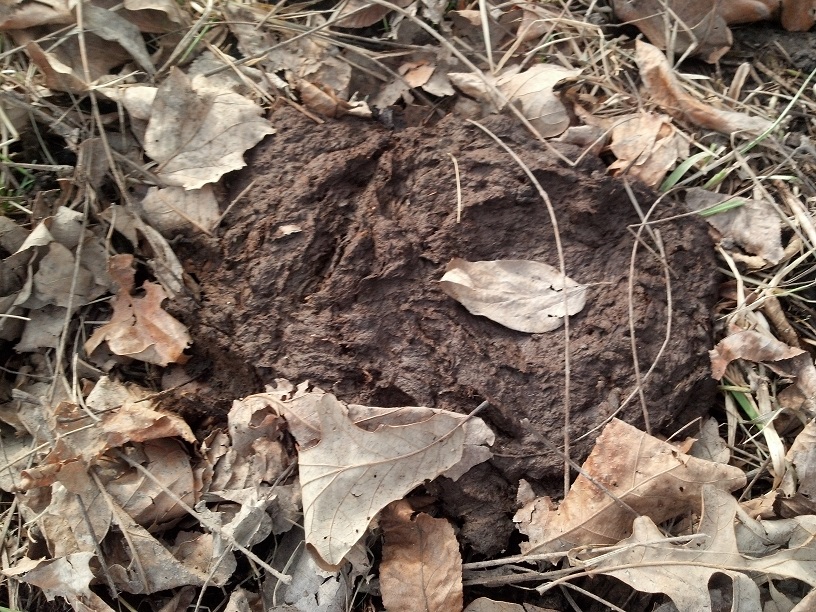
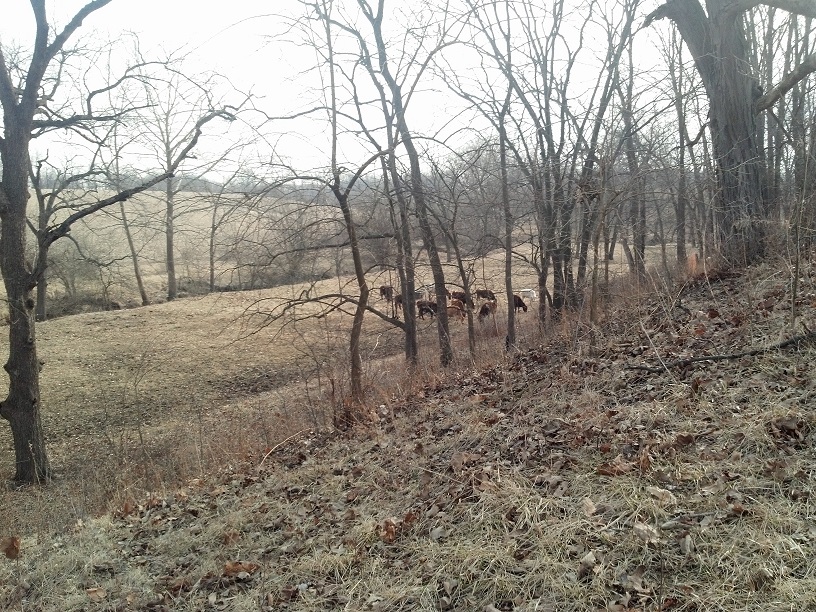
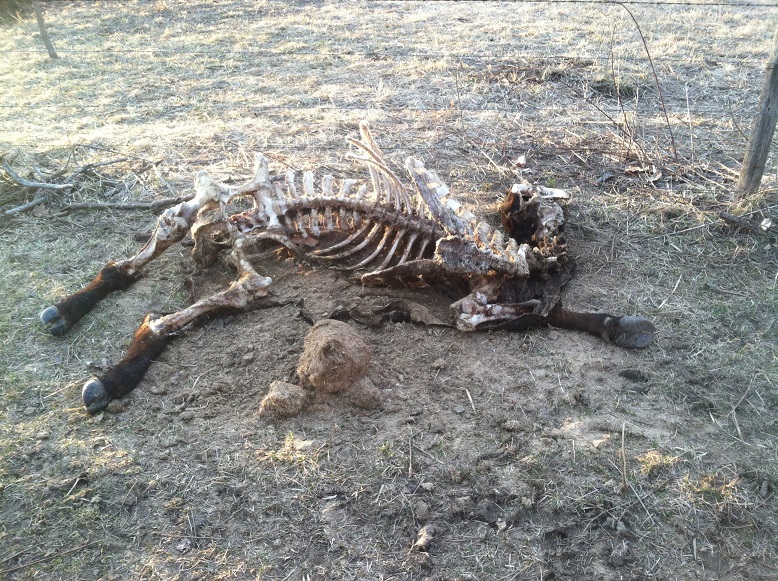
Until recently I haven’t spent much time on the Eastern portion of my property. A distant cousin rented it and that was that. Well, in 5 days his cows will exit the property so my son and I took a walk, mainly to inventory the mature honey locust trees and check the condition of the fences. Some portions of the farm are pretty remote. Steep creek banks prevent access with a tractor. If something dies out there, there really is no way to retrieve it. Obviously this is unfortunate but it’s reality. The coyotes ate well for a few days. Apart from the smell, the kids were fascinated.

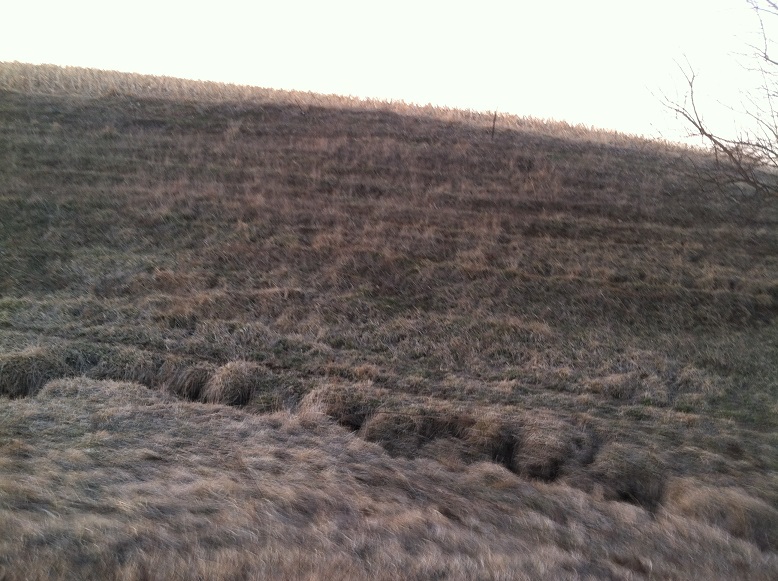
CalfThe lack of intensity on our farm over a number of decades has caused those steep creek banks as well as encouraging the thorny pioneer tree species. Further up hill we are seeing damage in the pastures. I can repair this quickly with hooves and rest. Hopefully fixing this will help heal the land further down hill…closing up the wound like closing a zipper.

StreamWashI would have to cross two washes like this to get back to a 9 acre corn field…which means we can’t get there. But we would like to get there to at least shred the corn stubble but it would be nice if we could run a drill across that field to plant it to pasture. I may just have to do it with cows, broadcast seed and hay. That’s probably the right way to go but the mechanical solution sounds cooler.

CornField

That corn field is surrounded by electric fence, mostly on contour. That fence is on my list of fences that will be removed. More on infrastructure another time.

All in all the pastures and field to the east don’t look too bad. The North-facing slopes are a patchwork of weeds, sparse grass and moss. The moss has to go but hooves, chicken claws and manure will take care of that. The chicken tractors are out there now. The creek is pretty badly eroded further down. I don’t have a picture to share as it was getting too dark but it isn’t pretty. Just know I can’t climb down, I have to fall and I can stand in the bottom and can’t see out. And I’m not short. I have a lot of work to do with my chainsaw but the cows should do the majority of the real work. I just need more cows. And more time. A bulldozer would be nice too. Sigh.


Three out of Six

Last spring we bought 6 heifers off of a feedlot. When they arrived they had been on hot feed…a high protein, high energy ration plus a little hay. This was evidenced by the whole kernel corn that passed straight through them and stuck to their manure-covered tails.

Shorthorns2

But they were short, their mothers grazed-ish on fescue-ish (with a little corn) and I gave them a shot. I mean, heck. Nobody around me does grass-only beef so what difference does it make? I bought local. I rolled the dice. They were good heifers in every respect, just not raised on grass.

Fast forward 10 months. Turns out half of my heifers didn’t breed. Half.

There’s the tall, thin, tall and (did I mention) really tall Miss White (19). She is always on high alert with her head in the air. She is also the boss. Here she was the day I looked at the heifers. See that head up high? Should have walked away from that:

MissWhite

Here she is again. Always on high alert. She needs to go. Beyond that, she has a hollow leg. When everybody else is laying down with eyes closed chewing cud she’s still up eating. Always eating. She’s just too big for grazing.

MorningCows

There is the tall, tall, tall 27. Her attitude is good and you could park a truck on her wide back but she just kept growing after she came home. Up, up and away. Cows need fat to cycle. She and 19 were too busy growing up and couldn’t grow out so they didn’t cycle. Further, neither of them shed completely out last summer…and they were hot. They may simply have been off duty when the bull was on duty. Or, if they did cycle, maybe they didn’t stand. Whatever. Both are just over 2 years old now. I could understanding giving 27 another chance with the scarcity of heifers right now. We’ll see.

Then there is 70. I don’t know what 70’s deal is. She is short and looks thin but not bad…but no dice. Maybe she didn’t like the heat of August. But there really are no second chances. I don’t need lawn mowers. I need reproductive lawn mowers. And I’m not sure I have ever noticed her calling or riding or anything. Maybe she is sterile. Dunno. Will she get a second chance? Heifers are in short supply now. I’m dithering.

Mantis

These really should all be fattened on spring grasses and shipped before the bull arrives again in July. I am sure we can find customers for these cows (could be you!) and turn a modest profit for our effort but that wasn’t the goal. We need calves! Fertility is the real key. I want cows that fatten quickly, sure. I want cows with a positive attitude. Sure. I want cows that bring a live calf to weaning. Sure. But before we can concern ourselves with any of that, they have to at least breed successfully! So we select for cattle that achieve fertility at an early age and breed back every year. These three cows don’t fit the bill.

But I can’t neglect that I need cows that can succeed with our native forages. Cows that succeed without supplementation…beef without the petroleum. 111 and 41 are enormous tanks and 76 isn’t bad at all. I need an army of their offspring. If they don’t get fat they won’t breed. They need to fatten quickly after calving or they won’t breed back again. Some of that is on me. Some of that is the genetic potential of the animal. There is nothing I can do about genetic potential except to select for it over time.

It stinks that I have to cull half of my herd this year but by biting the bullet now I avoid this pain in the future.

This is precisely why all of the advice from veteran grazers is to buy genetics with a proven track record on grass. It’s going to be expensive to breed away from teacup cattle. These girls have history going against them. I’m facing an uphill battle making these work on grass alone. I think the next generation should be good as the bull was developed on grass alone. Also, the next generation will be pre-disposed to my home pastures due to phenotypic plasticity. (Bring that up at your next dinner party. “Oh, yes. Suzy is doing very well in school. Probably a result of phenotypic plasticity.”)

Maybe the cows aren’t to blame. Maybe it’s me. I’ll get better cows and I’ll get better at managing cows. It will just take time. I bought two more newly weaned heifers at the end of summer last year. We’ll see what happens with them but I suspect it will be the same percentage. I’m going to have to get better…but selecting foundational stock now ensures that my cows are all easy keepers.

A Saturday in the Life of…

A reader asked for a walkthrough of a day on the farm. So I tried to keep track. This is fairly typical of a weekend. The livestock don’t take much time. On weekdays Julie has a schedule for housework, home school, business building and writing. On weekends we tackle bigger jobs.

Today was an odd day. We were up late Friday night as Julie wanted to go on a date. I don’t know why she wants to date again. We have been happily married for 17 years. Maybe there is something wrong. Something I can fix. Something I can do. She says it’s not that simple. Oh well. A night off work.

We had dinner out then came home to watch a movie. If you haven’t seen Ender’s Game, don’t. Just don’t. So that put us to bed around 11:30. I never stay up until 11:30

Today Julie’s phone woke us up at 4:30 alerting us that we were a mere 30 minutes away from the official start time of the day. What a stupid thing for a phone to do. I adjusted the phone’s attitude and slept for another hour to spite it.

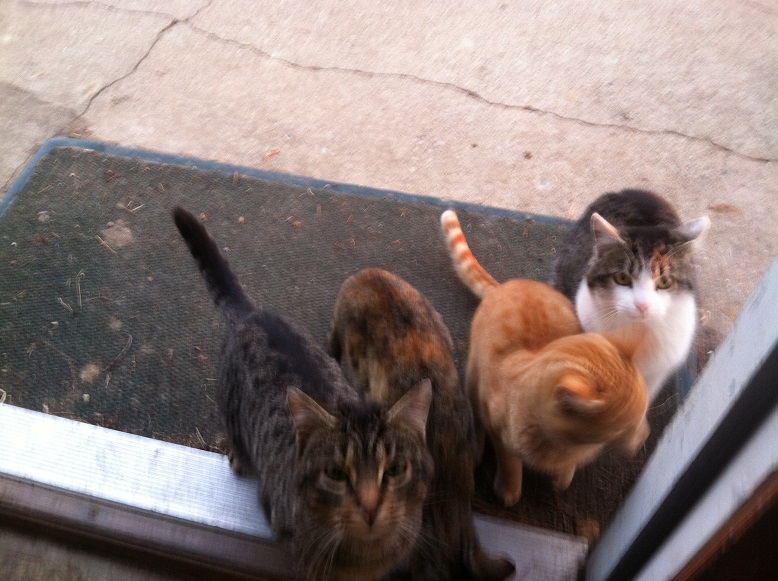
At 5:30 I decide I can no longer excuse laying in bed all day so I pop up, brush my teeth and begin planning my day. The sun won’t come up for another hour at least and there is a pile of laundry and a small pile of dishes that need my attention. I responded to a few comments on the blog then got out the door…which is always guarded by cats.

Cats

On work days I can check the pigs, feed the cows, check and water the chickens and open the nest boxes then walk to the yellow house to check and feed the broilers and return home in 15 minutes. On Saturdays I tend to stand around and enjoy the scenery a little more. It took me 45 minutes today. I dropped the bale and stood in place surrounded by cows.

CowBreakfast

That’s kind of fun but it also gives me a good chance to look them over. Good thing too. Remember that date? I get home between 6 and 6:30. By that time we only just have time to drive 30 or 40 minutes to the nearest restaurant for dinner out and still get home at a decent hour. So Julie planned out the day’s pasture and elected not to bring the cows a bale of hay. The day’s pasture is not an issue of square feet. It is an eyeballing of available forage in a given space. She didn’t give them enough to eat as evidenced by Mrs. White.

EmptyRumen

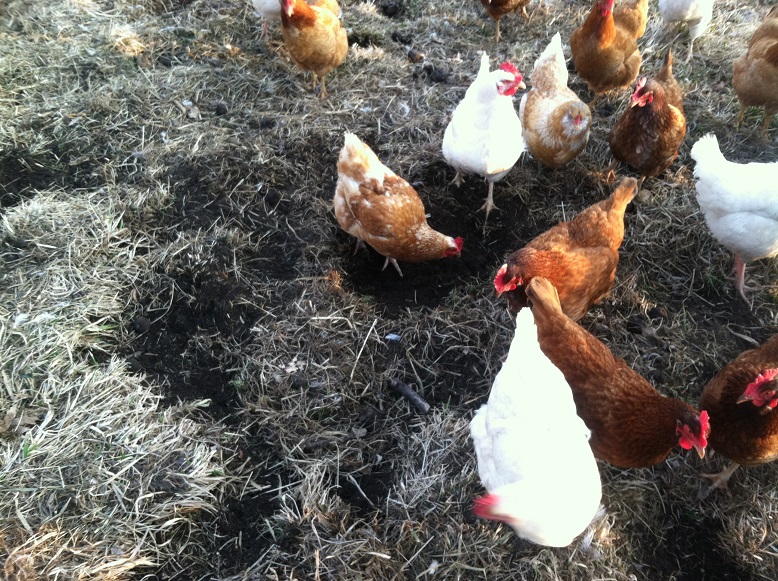
I had a chicken out of the fence and spent 5 minutes stalking her then clipped her wing. Otherwise the birds were doing their thing. Feed? Check. Water? Check. Nest boxes open? Check.

HenScratch

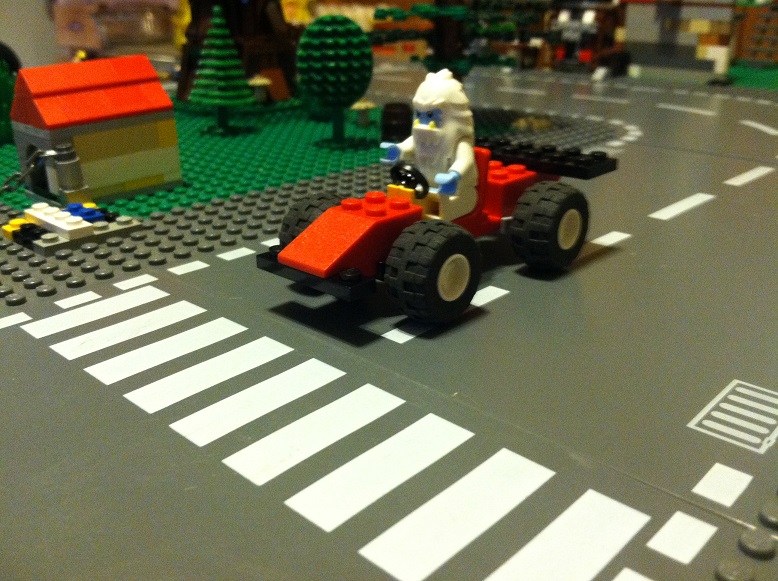
Then I sharpened a couple of chain saw chains, loaded up my equipment, hooked the trailer to the truck, straightened things up a little bit in the shop and headed in for breakfast at 8:00 on the dot. One slice of bacon, two eggs and half a cup of coffee later and I’m killing time waiting on her to go to the broilers with me. So I decide to build a race car for a Yeti.

AbominableBy 8:40 the broilers were moved, fed and watered (there are currently 3 tractors in the field, just snapped a picture before moving it)…

Broilers

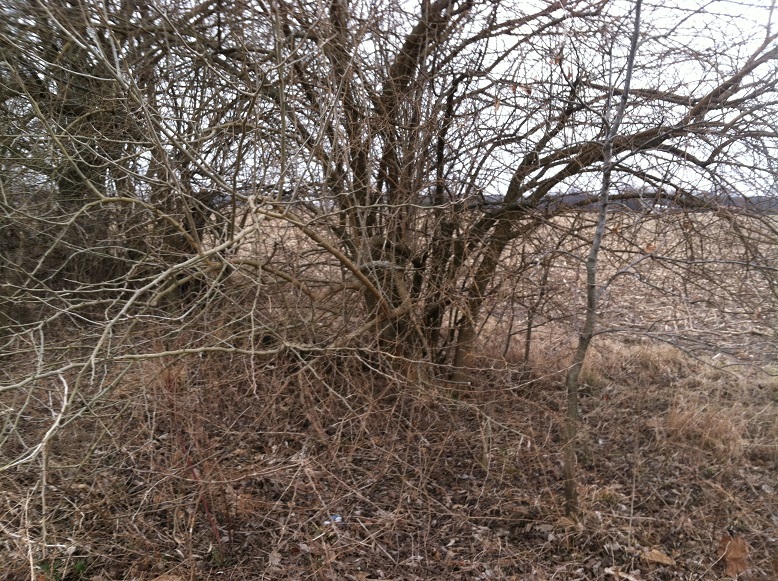
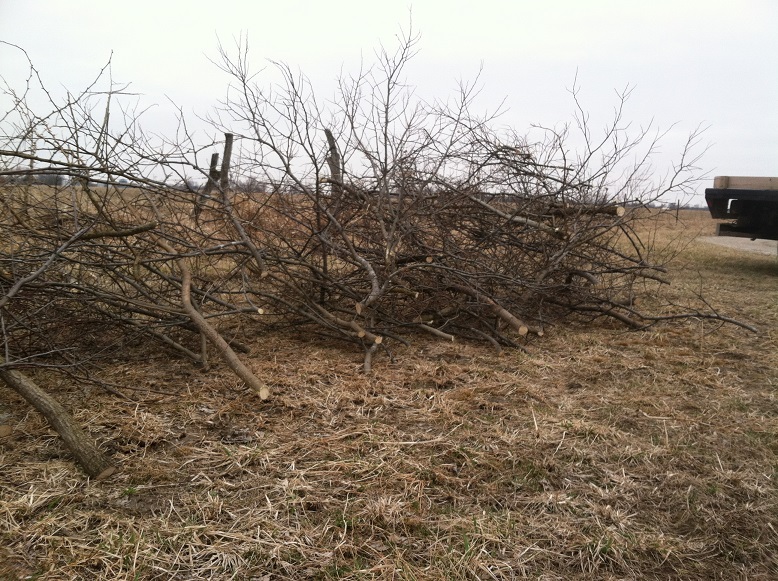
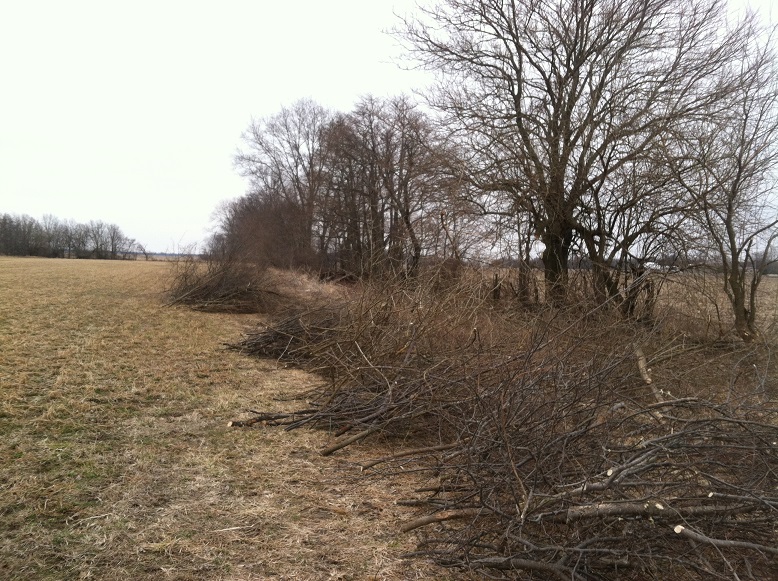
…and I kissed Julie goodbye. She was going to town to pick up the kids at her mom’s. She didn’t return until 11:00. In the meantime I dropped the trailer off at the brooder so we can haul bedding to the garden later and drove to the day’s main project, cleaning a fence row. The fence has been mostly smashed and buried by falling limbs and time but I need to at least find it. Further, I want to drop the lower tree limbs where I can, stop the trees from reaching into my field and cut out saplings that are inching into my field year by year. Again, I’m all in favor of trees, just not where I have fences. But I really can’t manage the neighbor’s side of the fence…only so much I can do. Finally, there is only so much I’m willing to do today. This is a first effort. Let’s establish a beach head. Lower limbs, nuisance species and encroaching saplings. Next year we’ll do a little more. Maybe.FenceRow1There were really only three tree species in the stand: hedge, elm and hackberry. I’m happy to burn all three but I hate cutting hedge. It is the hottest-burning of our hardwoods but what a pain. Literally. Hedge is covered in thorns. The thorns on the branches cause it to stick together like velcro. When it comes loose the limbs go on the attack. There appears to be something in or on the thorns that causes additional soreness for the next few days…especially joint pain. But there’s nothing else to do. You just have to sort of carve your way into the tree then start pulling it apart. Great fire wood though. And it’s good for bow making. And it’s a cut and come again tree so if I coppice it down to a stool I’ll have a new group of thorny sprouts the next year. That must have happened to this tree some years ago.

HedgeOctopus

As I cut my way through I lay firewood-sized limbs aside for later and stack the rest for chipping. It is important to lay all the butts facing the same direction to make it easier on chipper day. I’ll just set up in front of the brush piles and tie into it. I should point out I rent a 6″ chipper but it can not chew through hedge larger than 1″. Hedge is tough stuff. When I say hedge you should read Osage Orange.

LimbButtsBeyond the trees there were a number of unwanted and unpleasant things growing in there. Bush honeysuckle is an invasive monster that’s hard to get rid of but poison ivy is the worst. Especially when it grows in a shrub form. Every time I cut one sawdust flies up into my face. Poison. Ivy. Sawdust.

PoisonIvySo Julie and the kids showed up to help after 11. Julie stopped to gather eggs and check water. The oldest boy fed and checked the broilers. Then everybody helped move limbs into a neat row. We are maybe a fourth of the way down the row after three hours of work. That may be too generous. It’s obviously faster with 6 of us on the job. Well 4 of us. The youngest two mostly sat in the truck out of the cold wind.

BrushWe had lunch at Aunt Marian’s house. Every year for St. Patrick’s day she serves corned beef and cabbage. For some reason we are celebrating late. Delicious anyway. I asked her about the things in her house…who they came from. I was sitting in a chair that uncle French bought 120 years ago and eating from plates that belonged to my great-grandmother and the glasses were jelly jars that uncle Pete gave her.. I think that’s pretty cool.

Dishes

After lunch the oldest boy and I worked on pruning Aunt Marian’s fruit trees. Aunt Marian and I have radically differing philosophies on pruning trees. In short, she is in her 90’s. She sells her heifers and buys cows because she needs calves now, not later. Similarly, she wants me to prune for apples this season, heck with next season. Same conversations every year. I remove suckers, shoots and dead limbs. Then I start carving out interfering branches and limbs and work to open up the tree. She corrects me saying she has never removed shoots and just wants the dead and interfering branches out. But she defines interfering as just the limbs that have actually grown together. I don’t wish to disobey her. I just want to do a good job. No pictures of the fruit trees. When I removed my poison ivy-covered clothes at lunch I left my phone on the dresser and Julie was inside.

Home again around 3:30 and it’s time for some chores. 6 more layers are out of the fence so I ask the boys to grab the scissors. Then it’s off to build cow pasture, feed a bale of grass hay, do a final egg collection. The oldest boy feeds and waters one last time, we all change and it’s off to church at 4:30. At church I run the video production system. Julie and our oldest run cameras. Pretty cool stuff.

VideoBoard

Then a little grocery shopping, head home and chill while watching an episode of Tudor Monastery Farm then it’s off to bed.

That’s pretty much how a Saturday works around here. Normal livestock chores take a few minutes here and there and we try to make progress on some major projects inside or outside. We try to find a few minutes to goof off and look for opportunities to serve. Sundays work at a different pace with a different set of specific tasks and traditions. We clean the horse stalls and clean our toilet buckets. We also have our weekly family meeting and watch star trek. Weekdays we just try to keep up…and apparently go on dates. Who knew?

More Land than I Deserve?

I am continuing to read and reflect on The Farming Ladder.

…convered a couple of acres, with old rotten straw, dumps of thatch, old implements, thistles and other rubbish. This is still far too common on many farms indicating that the farmers have more land than they deserve; they ought to be able to put it to better use than as a site for the rotting down of good straw, which should have been long since returned to the land…

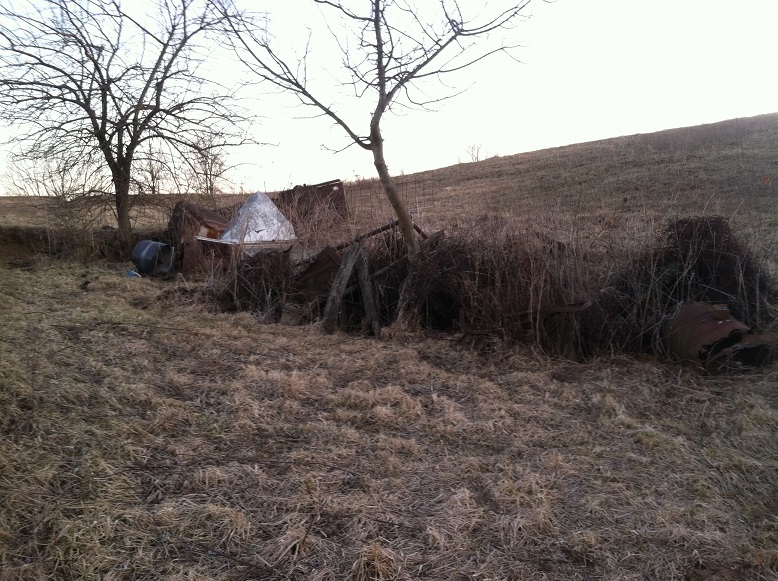
SO. Yeah. I have a several places that are covered with rotting refrigerators and discarded equipment. Apparently, in George Henderson’s estimation, I have more land than I deserve.

JunkPile

Way to put the spurs to me, George.

Boom and Bust Final Thoughts

This is the last in a series of thoughts I had concerning our farm’s history and future as I read a paper released by the Kansas City Fed. You can read part 1 here and part 2 here.

Our friends at the K.C. Fed wind up their paper saying we’re in good shape as long as interest rates stay low, China keeps importing grain and we keep producing ethanol. Well, that’s reassuring. The Fed paper admits that, as before, interest rates are low so land prices are on the rise and cash rents are not keeping pace. So borrowing costs are low and returns are diminishing. Rising interest rates could be a real issue. From their paper:

Higher interest rates could have two distinct impacts on U.S. agriculture (Henderson and Briggeman). Rising interest rates may place upward pressure on the dollar, which could indirectly trim U.S. agricultural exports, farm profits, and farmland prices. In addition, higher interest rates also boost the capitalization rate, which weighs further on farmland prices. The impacts are compounded in highly leveraged environments when higher interest rates raise debt service burdens, as the 1920s and 1980s demonstrated.

However, they believe farmers are borrowing more responsibly now than they did in the ’70’s.

Unlike the 1970s, farmers today have been more restrained in their capital investments. To be sure, capital expenditures have risen sharply, but they have increased at roughly the same rate as farm profits.

But that level of profitability may have something to do with the fact that land rents aren’t keeping pace, not to mention all-time high prices for crops. When rents catch up or prices fall…who knows.

A little later in the fed paper (emphasis mine):

For more than a century, farm prosperity has shifted with U.S. agricultural exports. Surging exports spurred rising farm incomes, while plummeting export activity weighed heavily on farm incomes. In addition, leverage shaped fluctuations in agricultural land values. Low interest rates contributed to booming farmland prices and the accumulation of debt as farmers expanded investments in land, machinery, and equipment. Rising leverage, however, contributed to the farm busts of the 1920s and 1980s as farmers were unable to service their mounting debt. In short, if exports remain strong and leverage remains low, this cycle could be different.

Oh. It could be. This could be the cycle that never ends. Glory be! But what if this cycle is different…in that it is worse? From Corn and Bean Digest:

The current great super cycle is a triple whammy, impacting oil, metals and agriculture. It has now lasted for a decade, which is 2.5 times longer than any previous super cycle. Technology, innovation, large farms and agricultural audiences are the matters of the day. Land values have skyrocketed, particularly since 2007 and 2008, and while 260 million Americans in suburban and urban households have seen a decline of their income from $54,000 to $47,000, 60 million people in rural America have experienced profits and wealth accumulation.

And to counter the Fed’s notion that farmers have learned from the lessons of the 1970’s I offer this counterpoint from Deltafarmpress.com. Though the author thinks farmers will be bailed out by the government, hard times are going to come…sooner or later and he dares to include a timeline (emphasis mine).

Farming, whether we want to accept it or not, moves in cycles. Big periods of high income are almost always followed by some big periods of low incomes or losses. I think that’s where we’re headed. Incomewise, I think we should all buckle our seatbelts for some rough times financially over the next three to five years. Grain prices are deflating – not inflating. High prices choke off world demand and it takes years to build it back.

My prediction is that more than half of the farms in the U.S. will have negative income in 2014 and 2015. Farmland prices will soften – but not drop sharply. A 10 percent to 15 percent correction could easily occur as farmers quit buying and outside investor money steps in to help support the market. The majority of farmers have upgraded all of their equipment lines in the last five years. Many have enough equipment to farm two to three times what they are already farming.

Click Image for source.

I work in the world of software development. One philosophical issue developers face (yes, philosophical) is not just how to solve the problem but determining if the problem should be solved at all. We often simply write applications that make it easy for people to do things they shouldn’t be doing in the first place. Imagine a developer or project manager stepping into the SDLC to laugh and say, “Sure, boss. We could do that. Buy it’s a stupid thing to do.” (The developer would be asked to leave. The company would continue spinning its wheels.)

Clink image for source

The problem, for example, is not the lack of software to schedule meetings. The problem is the meeting itself! It wastes an hour or two of everyone’s time when no decisions are made and a memo would have done the job. Farmers do the same thing. We buy bigger and bigger equipment so we can more efficiently do whatever we are doing without stopping to ask why we are doing it! The time will come when the man behind the curtain has a heart attack and the illusion fades. Cows can just eat grass. Corn is not an efficient source of ethanol. Chicken is the most expensive meat source. What happens to John Deere when farmers realize their equipment needs are more than covered and realized profits are better than write-offs?

Farm Credit Services of America weighs into this issue by saying farmers should know their land costs per acre. And that’s an important point. A farmer who bought land in 1988 for $500/acre is sitting on a lot of equity right now compared to a farmer who bought in 2005 for $4,000/acre. The deck is stacked against new farmers carrying a lot of debt and a high per-acre land cost. I am particularly amused by the Farm Credit Services of America article because it seems so optomistic.

Here is a northern Iowa example to illustrate how the caps are derived:

  • Assume a 200-bushel-per-acre corn yield and a $4.50 per-bushel price. That’s $900 per acre in gross revenue.
  • Estimate operating costs based on the benchmark Iowa State University variable and fixed-cost budgets.
  • Assume a 3.5% capitalization rate, or return on investment in land.

With these assumptions, we see a return to real estate of $320-$350 per acre. Applying the 3.5% capitalization rate, the sustainable market value of the land would be $9,000 per acre. We would lend up to 65% of that, or $5,900 per acre.

Go ahead and question that $4.50 per-bushel price and see what happens to the numbers above. BTW, the annual average price for corn has only gone above $3.83 four times…all in the last 6 years. Also as you read the above remember what Hughes said earlier about land in trusts not being well cared for. No user owns it. Nobody cares. That government agency (Farm Credit Services) is not loaning out its own money. It is loaning out your money. What do they stand to lose if farmers go broke? Farmers have gone broke over at least two cycles since they were created and it hasn’t mattered a bit to the agency. There are no consequences for advising financial ruin. They are in business to loan money without worrying about the human costs. Here’s a quote on the creation of that agency:

The Federal Farm Loan Act enacted on July 17, 1916, answered agricultural producers’ demand for credit to finance land and farm machinery purchases which had increased in the late 19th and early 20th centuries as America’s agriculture became more commercialized to meet growing domestic and foreign food demand. Private lenders at the turn of the century proved increasingly inadequate to meet these needs for financing. Slowly, a consensus emerged in Congress that the Federal Government should develop facilities for providing farm mortgage credit to assist farmers and ranchers in purchasing land on affordable terms.

Private lenders were afraid to risk their money so farmers asked the government to do something about it. Again, this was still at the peak of agricultural prosperity in our nation – the lauded Golden Age of Agriculture – and somehow farmers still needed more credit! So they asked the government to give them affordable terms and they got affordable terms…and got them good and hard (apologies to Mencken). You know, the kind of terms that displaced farmers in the depression. And again in the 1980’s. But it’s not that simple, it also led to copious amounts of additional legislation and the ridiculous notion of price parity!

But I digress.

I don’t think we have reached a point of permanent agricultural prosperity. Interest rates are low. They have been low before. China is buying a lot of beans…but Russia used to buy a lot of wheat. Farmland prices are at an all-time high. Grain profits are near an all-time high. But we have seen highs before. We export a lot of soybeans but Brazil, in a normal year, exports more soy than we do. And what happens if John Deere equipment sales fall by 70%? Are farms at the 1999 price point of NASDAQ? I don’t know. I am looking to minimize my own farm’s debt load and am working to minimize the debt required by the next generation. Whatever price the government sets on money, I have to repay it. However attractive I think the land across the fence looks, I am liable. It’s on me.

Not only do I need to keep my day job, I need to focus on lowering production costs and maximizing the utility of my farm as we work off our loans. At the very least I want to hold on to the farm for the next generation. Better yet, I should store up a war chest should I have the opportunity to accumulate resources at a discount. As should my neighbors. As should you! Sometimes things happen. Isn’t it better to survive the hard times (or even expand) than to be crushed? And hard times always come.

A longtime reader, SailorsSmallFarm, has often suggested that I read “The Farming Ladder” and I am finally getting around to it today. I am sorry it took me so long. Early in the book Henderson was discussing the deplorable condition of the farm he was preparing to purchase,

…in view of the unparalleled prosperity agriculture had enjoyed during the Great War and two years after it, which left the farms and farmers poor in everything except money. It was very certain that on this farm far more had been taken out than had been put in.

Chew on that for a minute before I finish up. We are at a point where prices for everything involved are higher than they have ever been. Farmers face a strong incentive to capitalize on the current opportunity by exporting everything from nutrients to livestock to scrap iron. I think it’s a good idea to build up a war chest of cash for later deployment. Also a war chest of soil organic matter. And a war chest of soil fertility. And a war chest of high-quality genetics. Plow those profits back into farm assets, not cool, new tractors! Cash for cash’s sake is not worth having. If you don’t have a plan for your resources you won’t hold on to them. And believe me, if you become comfortable with a high income ($4 corn) you will find a lower income to be incredibly uncomfortable ($2 corn).

I think the Fed paper is far too optimistic. The government will certainly provide assistance to farmers but if profits have been at record highs for the last decade why should they need my money? Will they squander that prosperity buying new trucks, 4WD tractors or land at ridiculous prices? I don’t know. But maybe we should anticipate their coming failure. Maybe we should start planning auctions and to put those assets in the hands of capable entrepreneurs at reasonable prices. Pick up the broken pieces and move on. That sounds better than taking taxpayer money to pay for the mistakes of the once high-income few who didn’t plan for a rainy day.

Maybe this advice is more for me than it is for you. But maybe you will appreciate it too. Don’t worry about land prices and don’t worry what the other guy is or isn’t doing. Get your own house in order. Be productive. Focus on keeping costs low and improving fertility. Minimize debt. Realize profits and take that money off the table cause hard times are coming. You’ll regret it if you don’t have a plan. Maybe not today. Maybe not tomorrow. But soon and for the rest of your life.

Scratching the Pasture Again

I was thinking of Gene Autry as I titled this post. The problem is, chickens don’t get in the saddle…usually.

We work pretty hard to keep the greenhouse pleasant smelling and warm and to provide the chickens with the things they need to thrive in the winter. This comes in the form of scraps of meat from butchered hogs, fresh greens and anything else we can come up with to help our chickens thrive in semi-confinement (“semi” because they have complete access to the outdoors during the day).

Today was the first day out on pasture and the chickens were clearly glad to be there. Obviously I don’t meet the chickens’ needs as well as the pasture does.

ChickensOnPasture1The photo above was taken within 5 minutes of the chickens being allowed out. Late in the afternoon I took the rest of the pictures in this post. The exposure on the photos leaves something to be desired but they illustrate what was happening well.

ChickensOnPasture2

There is a Ralph Moody book The Fields of Home Ralph writes about an uncle who comes to visit his grandfather’s farm where Ralph is staying. He has a trick to show Ralph which chickens are laying eggs and which ones aren’t. He grabs a broomstick, throws down a handful of chicken scratch, waits a few seconds and swings the stick. Chickens with their head up get whacked. If their head isn’t in the game, they aren’t worth keeping. There is only one chicken with her head up in the picture above. She was disturbed by my presence. Everybody was working hard all day long. (If you are not familiar with Ralph Moody pick up the book Little Britches and find some children to read it to. Then discuss what you all learned.)

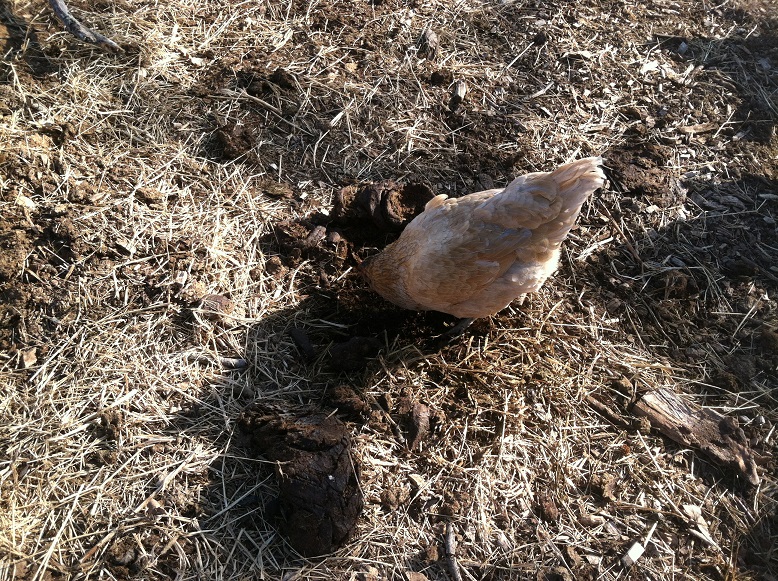
ChickensOnPasture3Hard at work. The pasture was torn up. Some of the cow pies were too dry to scratch through but most of the cow pies were destroyed.

ChickensOnPasture4Everywhere I looked I saw chickens happy to be out working in the sunshine.

ChickensOnPasture5The ducks too, though they tend to be cynical. They always laugh when they hear my voice.

ChickensOnPasture6In about a week the egg yolks will become a vibrant orange color. We had a few pale yolks in January but have worked to keep enough nutritional variety in front of the chickens to give them some color. Now it will really start to happen. I’m excited!

Chickens will be laying better eggs, they are adding fertility to my pastures and cutting down on the bug population already. I love March. I hope it’s going as well for you as it is for my birds.

Rolling the Grazing Forward

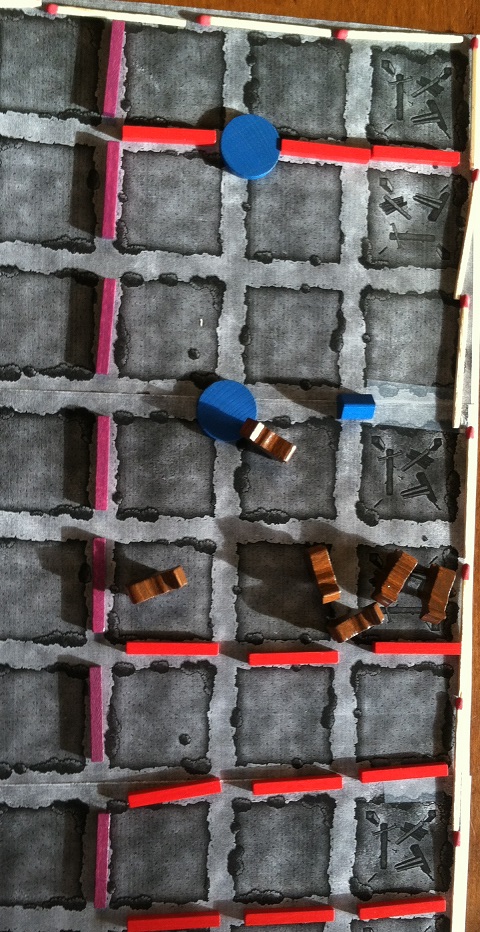
A reader asked what I meant yesterday when I said, “We are currently moving the cows daily and rolling about four days worth of grazing with them.” Those words were, apparently, not as clear as they should have been. With the help of our trusty Agricola game pieces (and a few matches) I will demonstrate what I meant. We’ll start on day 4 and roll through day 7 with the help of some toy cows. First, a quick look at what the blocks mean.

MapLegendAnd we’re ready to begin. The cows are in the corner of the perimeter fence in this illustration. They have been here for four days. For illustration purposes, each day they get a new row of three blocks. There are two watering troughs that move with the cows and a free choice mineral feeder. The lagging watering trough is allowed to go empty so we can simply carry it forward. The mineral feeder has to be dragged so we move it less frequently.

Day4

I want to point out that the cows spend most of their time on the freshest strip of ground. They get up to eat then lay down to chew their cud. What happens when a cow stands up? It manures. Cows like to lay down on fresh ground. They don’t like to lay in manure. So the cows are always moving to the fresh ground, leaving a path of muddy, manure-covered, hoof-printed destruction in their wake. The fresh ground is like couch, cupboard and toilet all in one. So they always need more.

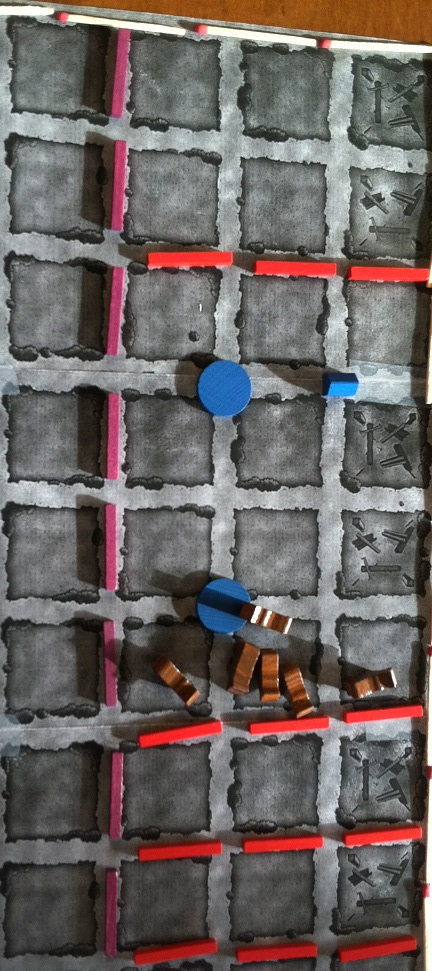
Day5

So we move the cows. By day 5 we are beginning to fence out the first waterer. We want to let that go empty. There are times when it is entirely appropriate to dump 100 gallons of water on the pasture but not at the height of mud season.

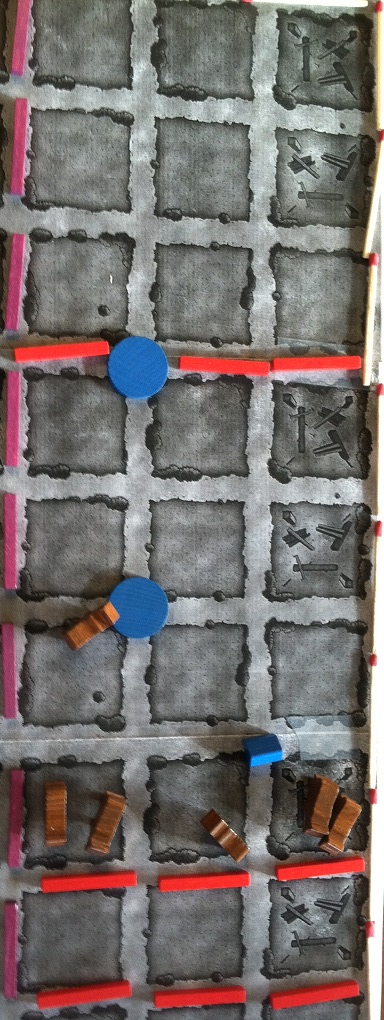
Day6

The next day we move the cows again. They are always where the action is. The action is right up by the new fence. The back fence creeps forward one day at a time…rolling four days worth of ground forward. By day 4 new blades of grass are starting to peek their heads up. It would be detrimental to this year’s grass crop to allow the cattle to take a bite now. So we move them on.

Day7

It’s day 7 and you’re getting the idea. We have had to move the mineral feeder forward. Sometimes we fence them out of the mineral feeder for a day just to make it easier for us. The cows are always eating, stomping, lounging and manuring on fresh ground. They really only go back to get to the water. But right now I think it is important to give them the extra room, even if they don’t use it. They may face a choice. They could stand in the wet mud on a rainy day or they could stand under a tree on a bit of high ground. I would like to give them the option.

It is important for me to add that this is not our year-round strategy. It would work…ish. But it’s not what we do. This is this month’s grazing strategy. All winter there has been no back fence. We just allow the cows to move forward. Now that grass is growing again we are bringing the back fence along to protect tender young plants. When the grass starts to grow really fast we’ll start to move the cows really fast. Right now they may gain 1/16th of an acre/day. In April I anticipate giving our 11 cows 1/2 acre/day. The cows will just nibble the tips and select the choice morsels as they gear up for calving in May. When the grass growth slows the cows slow too. But that’s a subject for another blog post…or book.

Just a couple of other notes on the ground we are currently grazing. This ground was planned to be this year’s sacrifice area. The whole farm is a muddy mess, except the few South-facing slopes. To protect the rest of the farm we stockpiled fescue everywhere we could and planned to be on the flat bottom during the thaw. Next year we’ll find a different flat spot to graze in March. If it’s too wet we’ll just take the cows to the barn and feed them there but that creates an awful lot of work for us feeding, bedding and later composting and hauling the manure.

Finally, because of the amount of disturbance the cows are creating right now (which really isn’t too bad) we will allow this ground to have an extended recovery period. We will finish grazing this by April 1 and we may not return until June. Maybe even July. 60 days is a long time in the spring, keeping in mind what I said about offering the cattle 1/2 acre grazing areas while the grass is growing quickly.

Strolling Through the Pasture March 2014

The pastures are finally greening up and we still have a little stockpiled grass for the cows. Whew! Let’s follow the cows through the pasture over the winter and see what they did.

The cows started on the stockpiled pasture in January. This had been grazed in July and rested since August. The fescue was thick and tall and there was a good amount of sorgum, sudan grass, turnips and radishes in the stand. I was disappointed at how little clover came out but maybe next year. For reference, this is what it looked like when the cows grazed it in July

EarlyMorningMove

We bunched the cows up densely all winter and supplemented them with 6-12 pounds of hay each day from November first. Basically, we offered a single square bale of alfalfa in the morning and a single bale of grass hay in the evening most days, but just the grass hay when the weather was nicer. Otherwise, the cows were expected to push the snow aside and eat what they could find. It worked out great. The cows came through winter in great condition. This was suggested to me by David Hall who said he tries to feed 30 days worth of hay to his cattle, spread over 6 months. I didn’t do quite as well as that but my pastures are getting better and it won’t be long.

But this isn’t a post about cows. This is a post about pasture. You have to know the story so you will understand what we did. We put down a lot of manure. Like a lot.

March2014_1

Those manure pats have been frozen for 3 months but you can see the density. By taking the hay to the cows and offering the cows fresh ground at regular intervals we have an even manure distribution. I moved the hay so I don’t have to move the manure. You down?

Turn to the right and go up the hill and we get to the remains of a big patch of turnips.

March2014_2The manure coverage is not as dense here. We had a spot of wet, cold, windy weather so the cows tended to shelter and concentrate their manure under the trees. But still, it isn’t bad. Notice the little bits of green grass coming up here and there. More on that as we go.

March2014_3Further up the hill and a bit to the west the manure coverage is better. Here the forage was stronger. Still a few turnips (which make the cows loose) but plenty to eat and a good great amount of litter covering the soil. In fact, that’s kind of a uniform thing across all of our pastures. We have a thick layer of litter over all of our pastures. Here it is particularly thick. Much of it is stems from the goldenrod stand that dominated the landscape until July but the thick grass that grew here is still protecting our soil. A few pictures from now the real value of the litter shows itself.

March2014_4In the picture above, I have crossed the creek and I’m looking back toward where I stood in the previous picture. I was standing up to the left of that power pole on top of the hill. Notice how green the South-facing slope is already. Also notice the manure density and the soil litter. Pay no attention to the scrubby trees, the brush pile or the small pile of metal I haven’t finished hauling out.

March2014_5This is the cemetery hill and this is what I’m talking about when I say “litter”. The cows weren’t allowed to (or interested in) eating down to the dirt. We just kept them moving along as they dug through the snow for food. As a result…

March2014_6

the cemetery hill is several weeks ahead of the surrounding farms in terms of grass growth. That’s all well and good but what are the cows actually eating? I mean grass hasn’t grown here for nearly 6 months.

March2014_7They are eating whatever grew 6 months ago. They trample dried stalks of tall weeds, crop close to thorny trees and even nibble at tree limbs. Fescue is the main portion of their diet but they eat leaves and whatever else they can find.

March2014_8

With the recent freeze/thaw cycles we have about 2″ of mud on top of several inches of frozen ground so the cows are making a bit of a mess of things. The picture above is what things look like around the watering troughs. That’s some pretty serious cow impact and will require an extended recovery time. But that’s part of the plan. I have saved this bottom ground as a sacrifice area to preserve the rest of the pasture for later grazing. This will recover and, I believe, be better than ever. We just have to give it time.

March2014_9

If you are concerned that I’m pushing the cows too hard I want to say that my cows are clean, in excellent condition and their manure is perfect. My concern is with the land. Maybe I’m pushing that too hard. I don’t think I am but I don’t want to find out I’m wrong. We are currently moving the cows daily and rolling about four days worth of grazing with them. These are currently larger grazing areas than they would have in the late summer or even than they got in December and January but the forage quality is decreased and it’s pretty muddy out there. We also try to give them room to stretch their legs. Rolling four days worth of grazing forward seems to work well for us.

March2014_10This picture should give the reader an idea of how much space we give 11 cows. There is a line below the cows showing yesterday’s grazing line…that’s where the fence was. The white cow at the top right is almost up against today’s fence. I haven’t moved the water troughs in the picture above but generally, one 100 gallon watering trough stays at the new front fence line, a second trough lags behind. As the second is emptied I move it ahead of the first. We put a cup of apple cider vinegar in each as we fill them and the cows seem to appreciate it. We also drag their mineral box along every few days.

We have enough standing grass in the bottom to get us to April 1. At that point we plan to graze along the Eastern edge of the South pond. Then we’ll move to the draw East of the big alfalfa field. Dad doesn’t think that has been grazed in years. Decades possibly. That gives us time to establish our grasses before starting to graze in earnest. I suspect we’ll spend most of April grazing 1/2 acre per day with our 11 cows. A portion of our farm will remain ungrazed all year. A portion will be set aside for late summer and a portion will be used in the spring then rested later in the year. More detail to come. For now it is enough to celebrate that it is March and we have more grass than we can eat and hay left in the barn. It worked!

Farming Through the Low Points (Boom and Bust Part 2)

This is a continuation of a look into our farm’s history and my reflections after reading the K.C. Fed’s paper on cyclical agricultural prosperity. I admit. It’s a little nerdy. I’m trying to keep it fun though.

Look back at part 1 to see at some of the cool stories of our family history. I know just as many stories of hard times. In the ’80’s the debt on the hog floor (built in the ’70’s boom) dragged the farm down. The story is more complicated than that, as locals know, but let’s just say Grandpa made the best of a bad situation. I know it caused a pinch in the farm’s finances but money was always tight…because grandpa would always and immediately reinvest earnings back into the farm. He would improve his herd genetics, upgrade equipment, build fencing, build ponds…you with me here? He reinvested earnings…sometimes to the frustration of my grandmother. They were mostly on the same page…except a few times when she wanted a new oven, a couch or some carpeting. She built her own kitchen cabinets. I assume that was more budget than hobby but we still use them.

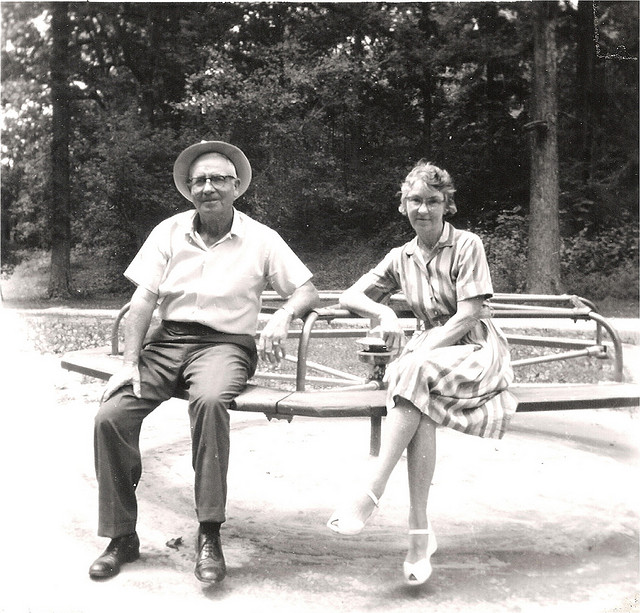
Sidebar – I have to pause here to explain the relationship between my grandparents as an uncle once explained it to me. My grandma was, in my grandfather’s mind, his trophy wife. The arrangement, made by her, was simple. She would keep the house, he would be a farmer. She was not a farmer. She certainly did not milk cows. She was beautiful. That was that. Apparently grandpa found that to be a favorable arrangement though he did have a sense of humor. Grandma never knew how many people to cook lunch for. Grandpa would feed the men working on the farm, certainly, but who knows who else would be dragged to the table with him. Also, grandpa considered gardening to be a part of the household. Every year he plowed up a big patch of garden for her. Or he would bring home a truckload of peaches to be canned. Grandma had a sense of humor too, though hers was more subtle.

Things are different in our house as I wash dishes and Julie milks the cow. However, as I learn more about my grandfather I marvel at his strength. He bought a tractor before anybody else had one and borrowed money to do it. Grandpa ran a number of businesses, all to support a central theme. He did row cropping, kept pigs and cattle (and brought in Limousin genetics early on), ran a feed and fertilizer business on the farm, sold Badger equipment and always worked to improve his own land, herd genetics and equipment. Along the way he positively impacted an awful lot of people (and ticked off a few). I feel like I’m weird because I ask cattle to eat grass. I can’t imagine how he felt…his entire life. Just know that grandpa feared the debt he held…and for good reason. He had seen downturns in agriculture and was always planting his earnings back into the farm. I think he would be astounded at current land valuations and heading for cover. He probably wouldn’t be selling land but he would be taking full advantage of the cattle price.

To continue, exports are necessary to pay for imports. You can only pay for products with production. If exports dry up, we are in trouble. More so if debt is involved as in the hog floor above. Grandpa stayed out of trouble by selling feed, fertilizer, equipment and livestock and working to minimize debt. But the ’80’s were hard all the way around. Again from the Fed paper:

During the 1970s, surging exports underpinned a new plateau in agricultural commodity prices, and farm revenues reached a record high. From 1971 to 1973, agricultural commodity prices jumped 75 percent and remained elevated throughout the decade.

But then…

A weak global economy, world debt problems, a strong exchange value of the dollar and trade barriers—including a Russian grain embargo—cut U.S. agricultural exports (Drabenstott). In 1986, agricultural exports bottomed at $47 billion, half the levels posted five years earlier.

Our farm bears few scars of the bad times as evidenced by the fact that there is an unbroken chain of family ownership going back to the 1840’s but neighboring farms didn’t fare as well. The father of one neighbor saved during the prosperity of the 1910’s and bought land heavily during the Great Depression. His risk and prudence set his family up for lasting, generational wealth that benefits them to this day. But there were necessarily folks who either didn’t save in the good times, had it worse than others (losses to illness or war, bad business bets, etc.), sought other opportunities with their capital or otherwise gave up on farming. But, apparently, the largest problem was debt. Once again referencing the K.C. Fed:

During the 1920s and 1930s, the collapse in farm incomes and land prices led to a wave of farm bankruptcies. Facing higher interest rates and lower incomes, many farmers struggled to service the debt they accumulated during the 1910s farm boom. The result was a surge in farm foreclosures during the 1920s and 1930s (Stam and Dixon). According to the U.S. Census Bureau, at its worst, almost 6 percent of U.S. farms were sold in 1933, with 70 percent of the sales due to foreclosure.

The ’80’s saw another wave of farm transfer. If you look at the local plat book there are fields that are owned by the local banks and have been since the ’80’s. What happened? More of the same.

The debt accumulation of the 1970s contributed to the economic calamity of the 1980s. By 1982, when interest rates spiked as the Federal Reserve tightened monetary policy, farmers had more debt than they had capacity to service with their existing cash flows. The result was a farm financial crisis, a rise in farm bankruptcies, and the 1980s farm bust.

With shrinking profits and higher real interest rates, farm asset values and capital expenditures plummeted. After peaking in 1981, the average price of farmland dropped more than 40 percent by 1987, returning to 1960s levels. The farm bankruptcy rate spiked, topping levels experienced during the Great Depression. Capital expenditures on machinery, equipment and land improvements dropped 70 percent below the 1970s highs.

This was exasperated by increased productivity on farms.

Agricultural production expanded as farmers planted “fence row to fence row” and productivity gains emerging from the 1970s “Green Revolution” boosted yields. Weak demand and bin-busting supplies placed downward pressure on agricultural commodity prices, and gross farm revenues fell to 1960 levels. With elevated production costs, farm profits declined. By 1983, returns to operators were roughly 10 percent of the 1970s high.

I would like to point out that this is nothing new. It also happened before the turn of the 20th century (emphasis mine):

The most serious problem by far was low prices.  One can approach this problem in a number of ways, but, simply put, low prices resulted from the fact that the supply of farm goods was growing much more rapidly than the demand for farm goods, which meant that farmers had to accept lower prices for their products over time.  Now it is true that the general price level in the United States was falling through much of the late nineteenth century, but, even in this period of general deflation, farm prices fell more than prices in other sectors of the economy, which hurt farmers in a relative sense.

Low prices hurt farmers particularly hard because many were debtors.  In a deflationary economy, it is especially difficult to repay debts because the real cost of a debt rises as money becomes harder to come by.  During the late nineteenth century, as more and more farmers commercialized their operations, specialized and mechanized, they often took on significant levels of debt, which became harder and harder to repay.  As a result, many lost part or all of their farms, leading to a great rise in the number of tenants and sharecroppers, on the one hand, and the movement of many farmers out of agriculture altogether, on the other.

Back to the story. Things got pretty tight on the farm several times but I never heard Grandpa Tom complain. I mean that. I never heard my grandpa complain. Plastic knees, prostate cancer or blown engine in a tractor…he just took it all in stride. Grandpa said they weren’t aware of the Great Depression, they had plenty to eat. Because of his father’s illness and a mentally handicapped older brother, grandpa was head of household and couldn’t go to war for WW2. The only problem I ever heard of was in the ’80’s but grandpa was able to cover the loan for the hog equipment – though I don’t know how – and I never heard him talk about it. At the same time I watched an uncle refinance his land repeatedly until finally selling his best ground to get out from under it. Farmers were so discouraged through the ’80’s they stopped buying. Either they were convinced that the downward trend would never end or they were buried under a mountain of debt. That’s how my coal miner father became a land owner. Farmers weren’t showing up to buy so, on grandpa’s suggestion, after a whole lot of prayer, thought and worry, mom and dad did.

Obviously my grandpa is a hero to me but he wasn’t the only area farmer to survive the ’80’s. In fact, a number of farmers were able to expand. Just like in other downturns. To contrast that, Julie’s great-grandma Alice married a Fillager late in life. The Fillager family owned 1,000 or so acres 1893. Much more land later.
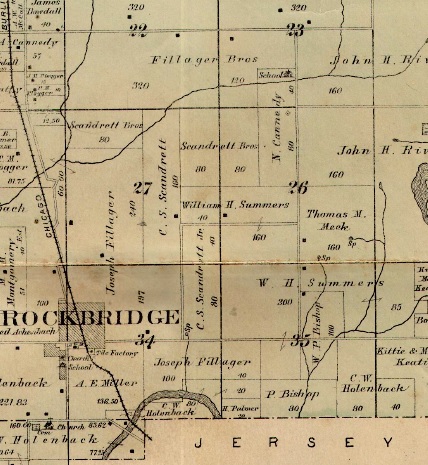
Fillager

The Fillager siblings didn’t have children of their own so the estate was auctioned off little by little following funerals. Some of that wealth was donated (war bonds), hence the Fillager clinic in Greenfield. I have friends who own Fillager ground (and everyone was convinced there was gold buried on the property so they kept after him for years, “Did you find the gold yet?” He denies finding any. Of course.) Some of that Joseph Fillager land was owned by Julie’s grandparents until the ’80’s. Julie’s parents had several acres until around 2002 but they sold and moved to town. Julie has a great-aunt who still owns a large portion of the farm. Otherwise, it’s all gone. Over 100 years of unbroken family legacy…no family to give it to.

There were financial mistakes made along the way. There was also a genetic dead-end as no Fillagers had kids! Same thing happened on the other side of Julie’s family. Julie’s grandpa grew up poor. His stepmother did not. My understanding is she was part of a prosperous farming family. Her brothers stayed home and farmed and expected her to do the same. Nobody had time for family. Later in life Ruth found a family in need of a mother. Julie’s great-grandma Ruth left the prosperous farm behind and, in the process, lost her claim on the estate (please correct me in comments if I am mistaken here). I guess her siblings held the farm together while they lived but the family legacy ended. There was no next generation to own and work the ground. I’m not even sure where their farm was now. Or Julie’s grandpa’s farm. I don’t think there are even houses at those locations now.

Clarence and Ruth (Mitchell) Ashby

All good things come to an end. It happens. I have the next generation thing covered but how can I keep our heritage in place through the downturn that is eventually coming? And what can I do to positively impact my neighbors so the whole community can weather the storm? Nobody wins if the banks own all the land, not even the banks. They are in the business of loan origination (money creation) not land management. And short-term tenants are hard on the land. In the book Family Wealth the author is discussing drawbacks of perpetual trusts (and I don’t think it’s a stretch to suggest that this thinking holds true to land owned by banks).

…[lands held in perpetual trust] were often poorly administered, because they had no owner who cared about their improvement, since he or she would never own them outright. Many life tenants sought to receive the maximum annual return possible without regard to such a policy’s long-term effect on land’s productivity.

Low prices could crush us…could crush me indirectly. Our friends at the Fed are freightened of deflation. They are working to do everything they can to keep the money flowing through the economy, not just in terms of currency supply but also in terms of velocity. But if it’s not enough…well…then what? What if the dollar strengthens and American agricultural products are more expensive (because of currency valuations) than those of other countries? I’m no mercantilist but I can see the effects on our current way of life. Even the supposedly favorable ratio of debt to equity carried by current farmers could turn sour in a hurry. I have to work to minimize my exposure to those risks by focusing on providing value to customers, lowering my production costs, minimizing my exposure to debt and putting away some cash for a rainy day.

But I’m getting ahead of myself. Farming has seen some rough times. Debt has drowned many farming families. I’ll do what I can to lay out our plan in my next post.

When to Harvest Money (Historical Highs and Lows of Farming Part 1)

I found a 2011 paper by the Kansas City Federal Reserve titled, Agriculture’s Boom-Bust Cycles: Is This Time Different? What a thought-provoking read. Let’s skip to the end. No. This time is not different unless you mean worse. Now, let’s look through their paper together and talk about a few interesting things. (So interesting I had to break this up into several parts.)

The Fed’s paper looks at agricultural boom and bust cycles over the last 100+ years. Not only can I see evidence of those cycles on my own farm, I can see evidence of them in my plat book. In fact, if we leave the paper behind for a moment you can see a timeline that illustrates the changes over time here (link). Notice the entry from 1889-1919 is called simply “Farm Prosperity”. Some of this was, apparently, the result of increased farm productivity. Farmers were able to grow and sell surpluses rather than just work for subsistance as noted in the transcript of a speech by Peter A. Coclanis:

During the period between the Civil War and World War I, we find other changes in the agricultural sector as well. American farmers became much more commercialized in this period, offering more and more of their annual output for sale on local, regional, national, and international markets. Put another way, there were fewer and fewer subsistence farmers and fewer and fewer farmers striving for, let alone achieving self- sufficiency.

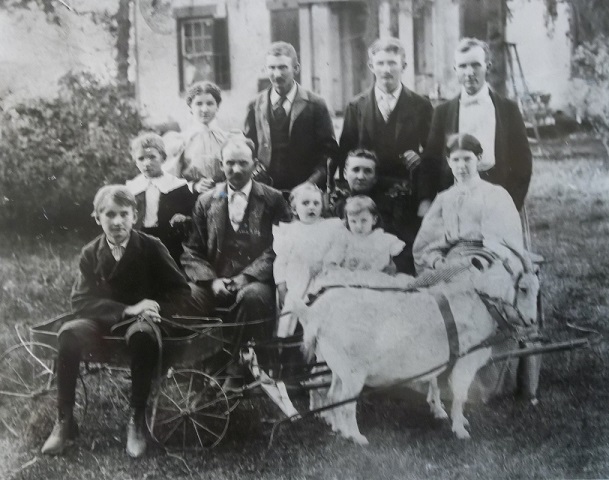
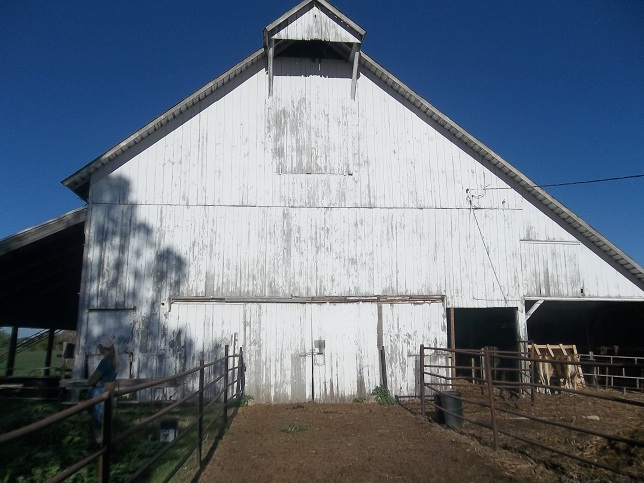
This period of prosperity is obvious on our farm. The main part of our house was built in 1911 by Dick Chism (my great, great uncle). Our big barn was built in 1914 by men hired by uncle French and my great-grandfather Charlie (all brothers).

FamilyAmerican farmers were productive at that time and the world (which was at war) needed our agricultural products…anything from wheat to mules.

The British Army also purchased a large number of mules from the USA. The mule has amazing stamina and endured the terrible conditions in the front-line better than the horse. At the end of the war the army owned 213,300 mules.

But the Great War ended. Cars became cool. Europe could focus on feeding themselves again. Not only did a large portion of our agricultural exports cease, our need for livestock feed fell off because we had fewer animals in harness (and thank God). So more of the ground used to grow livestock feed could be used to grow grains for human consumption. This led to huge surpluses in crops and a crash in agriculture. From the K.C. Fed Report:

Farm prosperity, however, was short-lived as global food production rebounded, export demand collapsed, and farm incomes fell. With the conclusion of the war, export demand faded. By 1922, U.S. agricultural exports returned to pre-war levels, slashing agricultural commodity prices by 40 percent from 1919 to 1921. Returns to operators plummeted.

Moreover, the industrialization of U.S. agriculture through the adoption of the tractor and other mechanized equipment reduced the need for feed grains for draft animals. The combination of weak exports and increased food grain production led to another collapse in agricultural commodity prices and profits during the early years of the Great Depression.

But nothing brings high prices like low prices (the inverse is true too) and nothing generates demand for food like hungry people. And when the world went to war again we were busy feeding the world. Farming became valuable again. Again from the Fed notes:

Similar to the 1910s, World War II sparked another farm export and income boom. A surge in wartime food demand boosted U.S. exports through the 1940s. After bottoming at $4.3 billion in 1941, real agricultural exports quickly rose to $25 billion by 1944. Similar to World War I, a wave of livestock exports fueled U.S. export growth during the war, while crop exports increased moderately.

The paper goes on to note that exports remained high following the war and into the ’60’s. In what must have been around 1937 (at age 16) my grandpa borrowed money directly from Oliver to buy a new Oliver 70…the first tractor in the neighborhood.

Sidebar – This story is a part of my own life because around 1984 my grandma wanted to buy a dress. Grandpa said they didn’t have the money for a new dress (we’ll discuss the ’80’s next time). In spite of the cash flow issue grandpa went to a farm auction and came home with a rusty old Oliver 66. Grandma, at least slightly angry, said, “Tom, what is that?” Grandpa, knowing he was caught, said, “um…that’s for Christopher. It’s…ummm…like the tractor I started with.” Some time later we went to the farm for a visit. Before I got out of the car grandma was on the porch yelling for me. “Christopher, go to the machine shop and see the tractor your grandfather bought for you!” You can imagine my shock! Apparently grandpa was shocked too. He stood, defeated and staring at his feet as I ran off to the shed. I have had that tractor for nearly 30 years now. Dad restored it when I was a kid. Truth be told, it’s more of dad’s tractor than mine…or it’s a memory we share. He has something apart on it even now.
Shortly after grandpa bought that first tractor, my great-grandfather and all of his sons sold their horses. The story goes that my great-grandpa got sick (had a stroke?) and grandpa Tom had to take over the farm. He got the tractor and earned $1/acre plowing the neighbor’s fields. Everybody saw the productivity gains available with the tractor and grandpa’s business only lasted one season. My great-grandfather wasn’t having any of it. By reputation, he was a little hard-headed and demanded that men work hard because men should work hard. (That notion may be countered by the story that my great grandpa bought a car but couldn’t drive it. So he told my pre-teen grandfather learn to drive.) I guess my great-grandpa Charlie recovered enough that the two of them decided to go out and plow in the spring, grandpa Tom with the tractor, his father with the horses. By the time lunch came around my great-grandpa decided it was time to unhitch the horses forever. Grandpa Tom claimed to have little use for horses, just as his sister is shocked that we milk cows (lol). Guess they were done doing things the hard way.

pond

Grandpa went bananas building ponds and bulldozing the world around 1955. At one point he even moved a creek bed! I have heard that neighbor teens (who are all grandparents now) would gather and swim at the beach on the pond. Water lines were trenched all over the farm (and are now overdue for replacement). In the ’60’s my grandpa’s cousin built an addition on to the house. We have some nice pictures of my parents wedding reception in that room as well as family reunions and Christmas dinners every year. That’s the room our wood stove is in now. All that stuff and all of those memories were built by a time of agricultural prosperity.

Reception

When dad first came to the farm grandpa was still farrowing pigs on pasture. There is a story of a big rain flooding the pastures surrounding my house and washing away pigs. So in the late 70’s grandpa and his hired man built a concrete hog floor and a pig nursery at the home place. This was top of the line stuff at the time. The floor and slurry pond are still there, though overgrown, and we use the pig nursery as a chick brooder (and it’s awesome!).

Look at all the wealth that has been accumulated on our farm over the last 100 years. The infrastructure changes line up perfectly with the boom periods outlined by the K.C. Fed. But I have left out the busts.

Every boom is followed by a bust. The views are great on top of the mountain but the fruit is grown in the valley. At least if you are optimistic about low points. At certain points, my ancestors took money off of the table. Rather than spend that money they made infrastructure improvements and parked that wealth in the farm itself. This is like planting a tree knowing you will never rest in its shade. This is planning for abundance in future generations.

Barn

Come back next time and I’ll tell you about the low points in our own farm’s history, how grandpa held things together and I’ll share some of the neighborhood history. I can point out 20 barns nearby that are roughly the same age as ours. Not very many are still owned by the builder’s family. The Fed paper says there is a reason for that. Debt.