Everything the Pasture Needs

This post is the direct result of a conversation with my father. In a way, dad encouraged me to clarify my thinking on pasture fertility and my strategy for moving it forward. If this post is too long for you allow me to summarize. You could simply feed the plants nitrogen and they would be tall and green (though high in protein but low in soluble carbohydrates). But the better long-term investment is to feed the microbes that feed the plants. The idea is that healthy soil grows healthy plants, healthy cows and healthy people. Like teaching fishing rather than giving a fish…except dirt doesn’t go fishing. You know what I mean.

Remember the breakfast scene in The Matrix? The group are eating breakfast and complaining about it a little bit. Complaining…as in they don’t like it. The scene wraps up with an exchange between Dozer and Mouse:

Dozer: It’s a single cell protein combined with synthetic aminos, vitamins, and minerals. Everything the body needs.

Mouse: It doesn’t have everything the body needs.

Mouse is right. Nobody would fuss if it had everything they needed. From here, Mouse begins to promote his digital escort service but that is not the direction I want to go. All of the dialogue leading up to that comment has already proven Mouse’s point. Nobody wants to eat a bowl of runny snot. What does the pasture need? Depends on who you ask. The plants are commonly boiled down to N, P and K. Just add 10-10-10 to your lawn and it will be green. No problem. And don’t forget Brawndo. It has electrolytes. It’s what plants crave! If you are familiar with that movie you know the electrolytes were killing the plants and the solution was to take water (like…from the toilet) to the fields to flush the salts out of the soil. (Click with caution if the kids are around.)

What does a healthy plant look like? …taste like? Can you taste the difference between a tomato that was grown from artificial N, P and K and a tomato that was grown in compost? Does it have a weak flavor? Can a cow taste the difference between grass grown from NPK and grass grown from worm castings? N is N, right? When I look at the dark green stripe in my pasture where the chicken tractor has been, all I’m seeing is N, right? ChickenStripesWell, no. I’m seeing a whole slew of things. But let’s start with what I’m not seeing. I’m not seeing dark green in most of the pasture. Why is that? Because there isn’t enough N in the soil. <sarc>No kidding</sarc>. Cattle have been grazing here for years. Why isn’t there enough N in the soil? (Flip your screen to see the answer below.) Answer What’s a farmer to do? Clearly my pasture is suffering from a lack of Nitrogen. Should I order a tank of liquid nitrogen? Well, that would certainly make it green. But I think that’s like giving the pasture a bowl of runny snot for breakfast. It doesn’t have everything the body needs. What happens over the years if I just keep throwing fertilizer at a hay field and hauling the hay off? That is essentially what has happened with the cattle moving nutrients from the open area to the shade. I’m not just trying to grow a large volume of green grass this season, I’m trying to build deep root systems and healthy soil ecosystems so my grass grows earlier in the spring and later into the fall for years and years. I am trying to make my farm better for next year…for the next farmer.

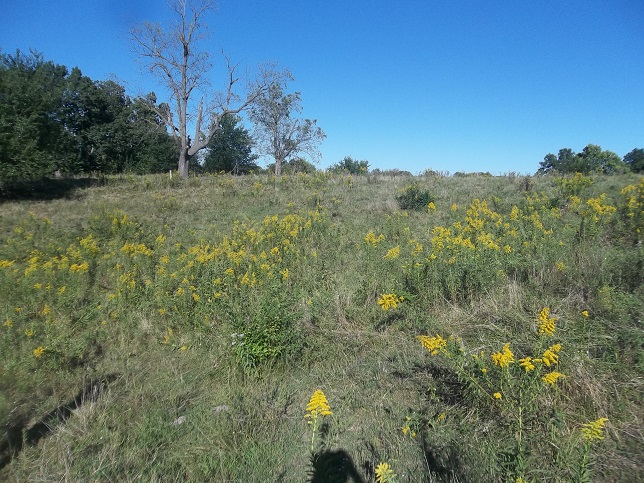
Nitrogen doesn’t have to come out of a sprayer. Nitrogen is fixed by living, breathing, dying organisms in the soil. What I need isn’t a sprayer unit. What I need is soil health…built over time. I have nothing to compare my farm with except my own farm. Fortunately, I have run livestock on the 20 acres around my house for several years. The cows, goats, pigs and chickens trampled and dunged on every square inch of it every few months for the past few years and have left enough plant residue behind to keep the soil warm, moist and well fed. The east 40 was all cows but had very little manure (the cows pooped in the shade) and zero plant residue (they ate it all because of continuous grazing). Let’s do this with pictures. I have done this for several years: Trample All that muck and manure and all of those hooves and all of those plant stems pressed into contact with the soil have, over time, built up a layer of organic material covering the soil like a blanket, holding things together during periods of heavy rain, limiting evaporation during periods of drought and keeping the soil life fat and happy. Everything from bacteria to grubs to earthworms have plenty to do and a safe, moist place to do it. Compare that to the condition my east pastures have been kept in: Every time the grass grows a little it is nipped off. Goldenrod is ignored by the cattle so it dominates the landscape…and shades out future grass growth. Since the cows are allowed to spread out over a large area they don’t trample in the weeds, stomp the saplings or cover the pasture evenly with manure. In fact, all of the manure gets concentrated in the shade…which is why there are so many dead trees…and the remaining trees are bushy, thorny monsters. The difference between the pastures is obvious but it does take a little time. That’s why you have to increase stocking density (animal units per grazing area) before you can increase stocking rate (animal units on the farm). You need to build pasture health before you can expect it to grow more forage. Bunch the cows up. Shorten grazing periods and extend rest periods. Things will start to change. CemeteryHill I think it is worth celebrating the little bit of life we have breathed into the pasture while also adding a little to the farm cash flow. The broilers, like the cattle, are tightly bunched up, grazing, trampling and manuring a small area. Sure, they put down N, P and K as they pass but they put down much, much more. And don’t overlook the value of the trampling action. It’s not just manure being fed to the soil, it’s grass stems. Not to mention the bugs, worms, etc that get eaten, adding value and nutrition to the pasture and not accounted for in the NCSU link above.

So, yeah N = N but N != Chicken Manure. The N certainly makes it obvious where the chicken manure went a few months ago. But in years to come we will still see the benefits to the soil biology. And that is worth crowing about…even if we work to blend the stripe in with pig bedding, cow manure and horse manure…a balanced, varied diet…everything the pasture needs.

Pigs Load Themselves

We are making plans to ship a couple of pigs next week. Plans include getting the animals loaded up as gently as possible. I suppose if I had a few thousand pigs to load in a single day I couldn’t do it the way I do. I would have to pay more attention to Temple Grandin. But I don’t have a few thousand pigs. I currently have four and they are working for me in the barn, cleaning up behind the cows and mixing old straw and hay into bedding that I will compost.

When it is time to move we take the feeder out of the pig pen, put a little fresh bedding in the trailer, back the trailer up to the pen and open the door. The pigs climb in and out, exploring the new space. It really is just that simple as they are naturally curious creatures.

We gave them access to the trailer for a few hours, feed them inside the trailer then close the door behind them. No sweat. We have done this with electric fencing on pasture too. If you’re not forcing the animals to do something they are unsure of they won’t push through the electric. Instead, they approach at their own time, sniff, put a foot or two up and go in. The pigs are on high alert when they first enter the trailer. By giving them a little time they settle down and the trailer becomes a comfortable and familiar space.

The trailer was a positive experience for the piggies. None so much as squealed. I didn’t cuss. Nobody carried a big stick. Nobody got bit. We just stood back, let them explore the space, offered a little feed and closed the door. No big whoop.

Sometimes it helps to build a little ramp behind the trailer so they can climb in more easily. We usually use a straw bale or just pile up some bedding.

At the other end we opened the gate again and stood back as the pigs unloaded themselves. There are no unhappy memories associated with the livestock trailer. Hop in, find food. Positive reinforcement. When their final date arrives they will be trained to hop in the trailer and will arrive at the locker without stress. I think that is important.

30 Days Into the Grazing Season

We are a month into our grazing plan. In some places I am disappointed by the pasture. In other places I’m amazed. I still haven’t covered the farm but that’s good news because the starting point still hasn’t recovered. I need to encourage and allow those grasses to tiller and develop root systems to grow taller, capture more nutrients and cover bare places. I talked about this in a recent post because of the difference in forage where my chicken tractors covered the ground.

SparseForage

I can’t return to this pasture yet. But the good news I don’t have to because I still have a large portion of the farm that I have not grazed, not to mention field edges that I prefer to graze before we cut hay. Remember the plan for the month of April? It worked out pretty much as planned but we haven’t grazed the pasture south or east of the house. We also grazed a little here and there in unmarked areas. Things work out differently in real life. Plans becomes guidelines.

SpringGrazingPlan

So now what? Well, now it’s time to plan for winter again. It is also calving time. I have to increase by grazing density and slow down the herd. So in the image, our house is on the left of the map next to Rockbridge Rd., not in the center of the map. There is a block by the cemetery marked with a 1 that needs to become a larger number. In fact, every marked number should be multiplied by at least 3…maybe as much as 5. We have covered the farm in 30 days. Now I need to cover the farm in 120 or more days. The cows should not return to the pasture around the cemetery until September.

Most important to me is to cover those four formerly 3-day fields far to the east before July 1. There is very little shade out there and about half of that area is south-facing. I like to have my cows near shade when summer turns hot and dry and I want to graze and stomp and manure all over that area before the rains stop. And if we multiply the grazing areas by 4 we have 48 days of grazing out there. That’s a tough row to hoe for a couple of reasons. There are places that remain ungrazed that I want to graze before I return to the start…in part because the ground needs to be managed, in part because my starting point hasn’t recovered yet. But 48 days before July 1 is May 15th.

BTW, In SQL Server that is SELECT DATEADD(d,-48,‘2014-JUL-01’). Isn’t it nice that SQL server streamlines code inside of built-in functions? You don’t want to know what it takes to calculate date in DOS.

OK. May 15th. 10 days from today.

Well, it sounds like a nice plan. I’m sure I have enough remaining pasture to delay for 10 days but will I get enough growth on my pasture in the next 10 days to allow the required density? I dunno. Maybe I can kill some time on field edges then go a little faster on that pasture. I was hoping to have the cows trample in a little warm season annual seed just to fix more biomass out there but I may not get the density to allow that. So. I don’t know.

But we have a plan. And we can afford to be flexible. I have 10 cows and 30 acres. It almost doesn’t matter what condition my pastures are in. What matters is that I work to increase stocking density now so I can increase stocking rate later.

Stay tuned. It ought to work.

Farmer’s Progress: Chapter 3 Ways and Means

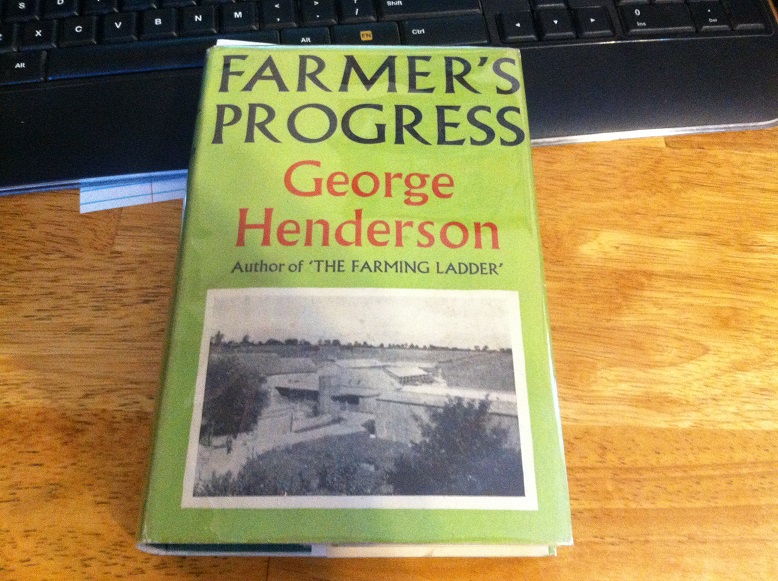
This chapter is titled Ways and Means. The first chapter was all about getting yourself ready physically and mentally to become a farmer. The second chapter gave solid, practical steps for gaining your training and experience. In chapter 3, Mr. Henderson talks about the nuts and bolts…the finances, the land, the livestock. I might suggest he uses too many words to describe too few ideas – a crime I am guilty of myself – but 30 pages is a lot for me to cut through in a summary post. Worse, the chapter meanders across an evolving theme, covering many of the same points repeatedly but with changing emphasis. This may be a bit of a jumbled post but I am writing about a decidedly non-linear chapter. I’m going to attempt to break up his notes into a few distinct topics that I find particularly interesting but I’m really not able to do this chapter justice. You’ll just have to find a copy of Farmer’s Progress for yourself.

FarmersProgress

Remember as you read both of these books that Mr. Henderson’s goal is to maintain a heavily stocked diversified farm that will weather any storm. You will be frugal in good times, persistent in hard times, always looking for the opportunity and always increasing soil fertility to build a brighter tomorrow. This chapter is all about finding and buying a place to call your own.

Buying a Farm:

Mr. Henderson kicks things off by suggesting a monetary figure for establishing a farm including land and livestock acquisition, how to buy a farm and why a small farm is better than a large farm for you and for everybody. The number is not small and he takes another stab at me by saying:

No wonder the ex-bookmakers, butchers and bakers think they can buy their way into farming.

Contrast that to an established, successful farmer setting up his children for success:

I know one farmer who has never farmed more than 100 acres, yet his four sons, between them, have taken over 1,000 acres in recent years, and are all farming successfully.

The home farm was heavily stocked, so that when another farm was taken a whole generation of pigs, calves and lambs could be spared. The young farmer would live cheaply, possibly still at home; he would be helped by his brothers, so that there would be no heavy outgoings on labour. Implements would be shared, and in a comparatively short time the new farm would be well established, and yet another son could be started off.

This is not unlike the arrangement briefly described in the book Better Off. The writer spent a year living on a farm rented from an Amish farmer…a farm the farmer had purchased for one of his children. Gordon Hazard also wrote of something similar, buying each of his children a small farm and setting them up raising stockers early on in their adulthood. Henderson suggests that family farms are persistent farms. Continual reinvestment of labor and capital keep the wheels greased. Also, as Bill Bonner pointed out in Family Fortunes, a lifetime spent living and working in one place build an emotional bond with the place itself. More on this in a bit.

Government Experts and Office Workers:

Mr. Henderson rails repeatedly against his own country’s alphabet soup agencies and the representatives who work for them. In short, anybody who knows anything about farming wouldn’t be sitting at a desk making a small portion of the income he could earn from a farm (that may not be true anymore). Here is the most colorful version of that repeated sentiment:

The man in agriculture who tells you he does not want to farm is like the child who says he does not want to play; he is either sick or bitter against the others who do. It is easy to dismiss the officials with a shrug of the shoulders, as many farmers do; but I at least do care, and would rather see them happily and usefully employed in farming.

I think that pretty well covers the topic, though the author feels it necessary to poke at that wound several more times, just as he continues to poke at farmers who buy their way in late in life. Above all he extols the virtues of hard work as he disparages the desk job.

…knowing how much better [farm labor] has been than lounging in too great comfort, and utter boredom, in some city office.

Well, now. I have a few things to say about that. In no way do I wish to imply that I am too comfortable at my desk. Nor do I wish to imply that I am bored. Not at all. But there are any number of desk-bound jobs that I don’t think I would be willing to do at any price…jobs I have seen my lovely bride suffer through.

There are days it is absolute torture to endure parking my tookus in a chair knowing how much work still needs to be done at home but then there are the months of July, August and September. July temps in Oxford don’t get much above 70. July temps here don’t get much below 90. Maybe I’m just a wimp but I like me some comfort in the heat of the day.

Finding a Spouse:

He goes on to talk about the level of sacrifices necessary in farming. Look, anything you do comes at the expense of something else. You can’t do it all. If you are in the barn keeping watch over an expectant ewe, you can’t be meeting that special someone…unless they wander into your barn by accident. Those first few years are hard…working to establish the farm and get things rolling. But a wife, in Henderson’s estimation is an economic necessity. So how does one go about it?

My experience of life has taught me that if you dedicate yourself to some worth-while objective, however humble, the Almighty, in His infinite wisdom and in His own good time, provides all that is requisite and necessary for the fulfilment [sic] of that purpose. If a man has faith in the land and himself, he will appeal to some good woman, able to share his ideals and be the mother of his children; and there is probably no greater pleasure on a farm than in rearing fine, healthy children. And what better place could you find in which to rear them?

If you have read my blog for any length of time at all you have probably read some sappy declaration of love for Julie. I love her. A lot. My love for her has nothing to do with her economic contribution though she most certainly does contribute to the family economy. In fact, her contribution may be greater than my own…if you measure what it would cost for me to adopt 4 children, provide care and education for them, prepare meals, keep up with the housework AND keep the farm running while I am away. While I do value her economic contribution that’s not why I stay married to her. Marriage can be really, really hard. I have been chasing Julie in earnest since 1994 and married since 1997. I don’t know why I waited so long to marry her! And I don’t say that thinking, “Gosh, if we would have gotten married when we were 17 we could have saved a lot of money.” I love Julie for reasons I don’t fully understand. And I can’t begin to tell you what the key to a successful marriage is…short of these two rules:

  • Make a daily decision to love each other.
  • Don’t go to bed angry. Stay up and fight!

But I am certain I didn’t marry Julie because it made economic sense. Heck, the rock on her finger doesn’t even make economic sense. But it’s not about making sense is it? It’s about growing. And we have grown. Changed. I am a better human because of Julie. And, really, our finances are only useful in developing our intellectual and human capital…because, after a point, do you really need more stuff? Can you ever know enough? Are you ever fully developed as a person? Can that development be taxed? Julie, over the course of the last 17 years, has worked to turn a boy into a man as she also leaves childhood behind. The value of our marriage is not economic. The value of our relationship is simply the becoming.

Mr. Henderson makes light of this subject later on in the chapter. First he illustrates the difference between a boss and a landlord comparing the employee’s feeling of drudgery and hopelessness to the “sturdy independence” of the man in business for himself…though the situation is similar either way. Then he delivers this absolute gem:

If you want a woman to look after your house, in which are provided all the labour-saving devices, and arrange for short hours, light work, regular holidays and good pay – that is domestic service, and no one will do it. On the other hand, if you ask some woman to share your life, in an awkward and inconvenient old farmhouse, in which there will be no labour-saving devices, and you will also want her to look after the poultry, help milk the cows, do the farm books, breed and rear your children, and perhaps manage on very little money – then, by the alchemy of love, that which would be drudgery anywhere else becomes fulfilment.

Milking

I certainly agree that the man who can keep his head in the game and is willing to get up in the morning and to work hard all day to make the world a better place (even by a small amount) is an ideal I admire. I don’t understand Julie at all but it seems she appreciates that ideal as well. And I hope my daughters snag a fella who shows a measure of self-assurance and certainty that sowing leads to reaping and that my sons find wives who will encourage and enhance those attributes in them.

He sums up this portion of the chapter simply enough.

…when you find the right farm, take it. When you find the right girl, marry her.

I did and I did. Thank God.

The Value of Hard Work:

Mr. Henderson has much more to say about hard work.

Hard work – and liking it – is said to be an old fashioned recipe for happiness…

According to our family cookbook (being republished soon (contact mom (Caretaker) if you are interested in a copy)) Uncle Jack attributes a similar quote to grandpa Tom. This is important to me because I deal with depression and it can get pretty gritty. There are things I can do to manage the intensity of my funk varying from diet to light cycles to just plain old work. To put a fine point on it, if I want to really hate myself all I have to do is sit inside for a couple of days drinking soda and eating junk food (like when I do consulting in Florida). To counter that feeling I work and clean up my diet. I have always found great satisfaction in running a chainsaw for hours on end. As a pathetic, rejected and hurt teen, at the ridiculous bitter end of an immature dating relationship, I busied myself cutting firewood every spare moment. My grades were never better. Because of the noise I can truly be alone. Because of the danger I have to focus on the work…not my emotional state or the nonsense that results from it. It’s hard work. It’s outdoors. In the winter I can keep a little fire burning nearby for warmth. And I find the work and the fire do more than just warm my body. It warms my spirits. I come in from a day of work exhausted and dirty. I shower to get the grime off and find that the emotional weight is gone too. I did something useful with my day and have a pile of logs or firewood or some reclaimed ground to show for it. I sleep well. The work and rest make the whole world seem different when, really, it is only my perception of self that has changed. I often write that we were happy in the suburbs but living out here makes us more “us” and that’s what I’m talking about. Suburban neighbors quickly tire of hearing the chainsaw or table saw running for days on end…or of watching me jog past their house carrying a log on my shoulder (true story). I had a cop neighbor who mowed his grass almost every day to relieve work stress. I have had a couple of those actually. They might have been happier with a few cows to move.

Back to the book, he goes on to say that hard work, though good, is not a recipe for material success. Though he doesn’t say it plainly, there is also an element of risk and skill involved. There are any number of things you can spin your wheels doing on the farm showing the fallacy of Adam Smith’s Labor Theory of Value. It’s not the amount of work that goes into something that gives its value. Value is derived from the marginal utility of the good. Success comes not from keeping busy, it comes from fulfilling a need. And working on a farm is not the same as putting your fortune on the line to own a farm as any number of farm workers will tell you…some of whom are much better off, financially, than the farmers they work for. Mr. Henderson details a farmer who had made a success of himself in the face of disaster several times over…a description of an English Job in many ways including the loss of his young family. But the man continued working out of spite and without joy.

He was a highly skilled craftsman with a high output of work, who could turn his hand to anything on the land, yet had no illusions about farming, found little pleasure in it, and was determined that his children should not follow him. Life had been too hard; he could only take a grim satisfaction in beating it, and had not the confidence which begins with hope and is strengthened with experience, and which I believe to be the true farming philosophy.

I’ll end this topic by repeating a quote Mr. Henderson included in his book from an unknown source.

To-day only two kinds of people settle happily in the country – those that know no better and those that know best. Only the latter will remain.

Work is Good but it’s Not Enough:

It is that marriage of enjoying the work, taking calculated risks and working to increase skill that make material success possible. When I was a kid I watched my parents fret and pray as they considered buying their farm. They consulted any number of advisers, bankers and elders. It was a scary time. Nobody wanted farmland…so it was on sale at clearance prices. Mayer Rothschild said to “Buy when there is blood in the streets.” That’s sound advice (even if Rothschild never really said it) but it would be a shame to add your own blood to the gutter. Julie and I took on debt to buy our small farm. I could tell you all about stress but instead I’ll let Mr. Henderson put you slightly at ease.

There are farmers who say ‘Never buy bricks and mortar,’ but they never go far in farming. The most valuable land is that which a farmer occupies himself, but few farmers who have bought land over the last five or even fifty years could fail to sell out at a substantial profit to-day. A lot of sympathy was given farmers who had to buy their farms at the inflated prices after the first world war; if they held on, those farms became even more valuable in recent years. On the other hand, many tenant farmers have paid away far more than freehold value of their farms in rent, and are no nearer owning them, while they have never had the incentive of the owner-occupier to bring about improvements which increase the earning capacity of the farm.

From time to time you’ll have to regroup and lick your wounds and you should always make an effort to be attentive to those around you and learning from their mistakes as well. But that’s life. And you can’t let the bad things in life steal your joy or let the fear of them steal your future. Lots of people go broke farming. Folks go broke in any business. Henderson is suggesting that you’ll give better care for something you own than something you can pay to use and can be easily separated from. What are you going to plant on rented ground: corn or an apple orchard? To help with ownership he says by being willing to do that little something extra…working for another farmer to expand your knowledge, taking a little extra time to find a secure footing, hustling a little more in the evenings instead of going down to the pub…you are sowing more seeds than you would otherwise, leading to a bigger harvest in the future.

When to Buy:

Maybe Mr. Rothschild is wrong. Maybe we don’t need blood in the streets before we can buy. Mr. Henderson addresses this topic by discussing the right time to buy a farm. Should you wait until it is cheap to start but hard to make money or when the money is flowing but the price is high?

The answer is to start when the opportunity occurs and you are qualified to do so, both by experience and capital.

That answer suits me. I paid nearly 10x what my father paid for the land next door. Granted, my property came with a few improvements (that need to be improved) but still…I don’t earn 10x what my father earned! We moved to the farm to rent the farmhouse when grandma moved to assisted living. We didn’t unpack for at least a year thinking we would find something closer to civilization. But, like Bono, we still haven’t found what we were looking for. We rented and thought, heck, we have a big yard. Let’s get started. So we got a few layers. Then 150 broilers. Then a goat. Then we went ahead and bought 20 acres…then another 40. We had a special situation where we could buy segments of the farm but believe me, price was not negotiable…in large part because I was more concerned with family thinking I was trying to rip off my grandmother than I was with the possibility of defaulting on a loan. I still stand by that position. So, in a way, we unwittingly followed Henderson’s suggestion. We had an opportunity. We gained experience, we saved and were soon qualified to follow through. And now, continuing the theme,  we work to improve the land for the next farmer.

Is this farm perfect? No. It’s far from civilization and covered in thorny things, cow paths and erosion. It is in a tax-hungry state. But it has one shining attribute that more than makes up for any shortcomings. This farm is next to my parents’ farm. Remember earlier where he discusses farm families taking on more land by keeping their home place heavily stocked and sharing equipment? Well, dad and I share a lot of resources. He has horses, I have the stalls and the bedding. He has the tractor I have the shed space. He has the baler, I bring the labor. I hope nobody is getting a favor here, we can both hold our heads up. But even beyond the equipment, my parents are here for me. A couple of years ago when the plucker failed and the cows escaped and ran down the road and we were still packaging birds up at 2 in the morning dad was there with us the whole time. Just as I can’t place an economic value on Julie I also can’t place an economic value on the emotional support I receive from my parents. They don’t always understand why I do what I do but they have my back. And I support their computers…even if reluctantly.

But OK. Not everybody has parents anymore. Or has parents who live on a farm. Or has parents who would live on a farm. Mr. Henderson’s answers stands. Buy when you are ready. You will never find the perfect place at the perfect price at the perfect time. It’s up to you to make it work. He does, however, offer this bit of caution:

…you do want a farm on which you can visualize spending your whole life; for if as a young man or woman you are going to spend the best years of your strength on it, you will need to plan and organize it in such a way that it will provide for you, if necessary, when you are no longer physically able to achieve results in a way that was possible in earlier years.

I hate to admit how much Julie and I can relate to that. I can feel that capacity for work slipping away and Julie is slightly more delicate than she was a decade ago. Maybe it’s not the years. Maybe it’s the accumulation of damage…”the mileage” as Indiana Jones said. But it’s real. We need to be serious about establishing zones of productivity around the house…and probably not this house. “…no longer physically able to achieve results…” Oh, golly.

Small Farms Feed the World:

Remember that idea I have of owning a single herd of 5,000 cattle? That will have to happen sooner rather than later but before it can happen at all I have to comprehend what Mr. Henderson has to say about it. He goes to considerable length to disabuse the reader of the notion that large farms are more efficient. The main point he makes here is that large farms require more capital outlay to properly stock them. And large herds and flocks require more manpower. And, really, that manpower could be more efficiently applied on a smaller farm…one with a smaller initial capital outlay. In fact, smaller areas run independently by more farmers leads to increased productivity per acre. There is nothing groundbreaking in this idea. This kind of thinking is all the rage with the young permaculturists today. You don’t need more land per permaculturist, you need more permaculturists for the land. The way to scale up is to reproduce your system with another farmer on similar ground. Heck, I should just get out of Mr. Henderson’s way here.

It has always been deemed a worthy aim to grow two blades of grass and two ears of corn where only one grew before, and that will be achieved if two farmers flourish where only one lived before.

Nearly a third of the chapter is given to his argument that smaller farms are not only more productive but, also, more profitable. My dream herd of 5,000 cows spread across 15,000 acres in Arkansas or Oklahoma would be nice but how much more could I handle? Would I have time in my day to manage the cattle and a flock of chickens to follow them? A flock of 30,000 chickens? A flock of 30,000 chickens laying 24,000 eggs every day? Eggs that have to be washed, sorted, packed and sold? Layers that need to be aged out, replaced and turned into cat food or soup that has to be sold. What about pigs? I mean, we’re talking a diversified farm here. Pigs would have to be included. Maybe sheep. Maybe game animals and leased hunting ground. Maybe some crop land too. Should that 15,000 acres be divided between 150 employees to help manage it? Earlier in the chapter Mr. Henderson was talking about the difference in work ethic between an owner and an employee or the difference between a hired housekeeper and a wife. Same thing applies. Should that imaginary 15,000 acres be divided into 150 smaller plots and rented or leased or otherwise made available to 150 independent farmers instead of 150 employees?

What would 150 independent farmers envision for their own land? Look, man, all I have time to do is move cows. I can’t propagate, plant and prune trees and harvest fruit, nuts and berries…let alone process, can or otherwise prepare them for sale. I can’t grow an herb garden. I can’t buy logs from my neighbors to saw. I can’t turn that lumber into useful products. I can only move cows at this scale. No eggs. No pigs. No dairy. No goats. No sheep. No wheat. No art or poetry. No guiding hunters. Just me and a camper and a big ol’ herd of moo cows. I can only do so much in a day but I can stack many smaller enterprises on a smaller farm which will help to insulate me from a failure in any one other enterprise. That big cow herd I run alone could be a major liability if the cattle market turns down. It would be nice add in a pecan harvest on the same ground…but I can only do that if I’m on a small enough farm.

The same thinking applies to failed enterprises also applies to failed farms. Big farm failure is a big problem. Lots of assets need to be liquidated and it takes a lot of buying power to buy the whole shebang. Most of the big farms around us have reclaimed the home site for farmland. Houses just disappear…along with heirloom varieties of trees and flowers. How much better if these were smaller parcels of land, each with a house and their own flocks and herds and trees and iris. A farm worker, Henderson points out, has little chance of taking ownership of a large farm with his wages but, if the countryside is dominated by small farms his chances go up.

Clearly I didn’t have enough children. Fortunately I only have 60 acres. Mr. Henderson would applaud the reality I live in but would, I think, admonish me for my vision…unless I can expand it to include many, many other people.

I’m north of 4,000 words writing about chapter 3. If you made it this far, please come back soon and I’ll try to sum up chapter 4.

Where Chickens Dare

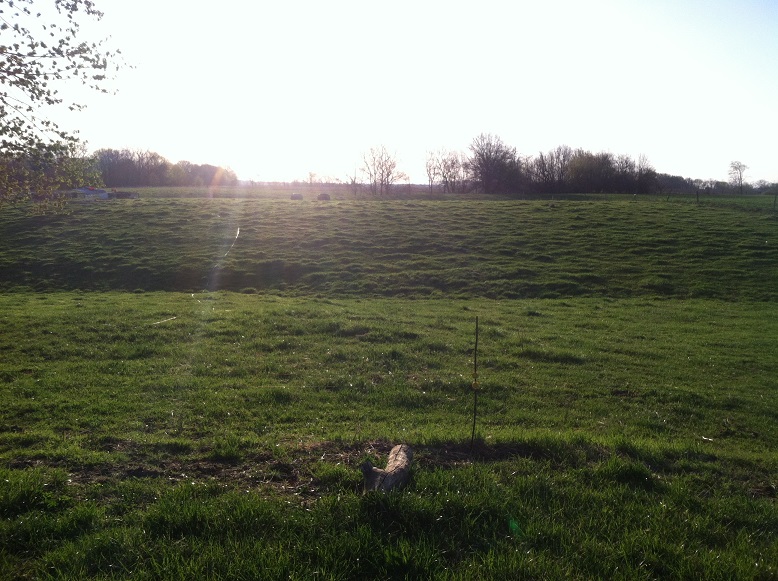
The pasture east of the yellow house should be some of our very best pasture. It’s up on the flat, it’s easy to access and it’s a good soil type. But it just doesn’t grow grass. What grows there is sparse and there is quite a bit of moss, especially on the north-facing slopes. I don’t mind a weedy mess but I do mind the bare spaces. And as I walk the field there are lots of bare spaces.

SparseForage

Seven days from now the cows are scheduled to return here for calving. That’s the plan. But the forage didn’t read the plan. Fortunately the chickens did. Where chicken tractors covered the ground there are distinct stripes of darker green and taller forage. And, yes, I spend a lot of time comparing shades of the color green.

ChickenStripesSo my theory is that the cows, over the years, have grazed this open ground in the cool of the morning then lounged and manured under the trees (mainly in the creek!) in the heat of the day…translocating the nutrients down hill (!!!) and leaving too little behind for the soil biology. One little pass with chicken manure woke the soil up in three narrow bands.

LeftOrRight

It’s a difference of 4-6 inches of forage and a massive increase in leaf area and density. But it’s not just chickens that are capable of this magic. On a whim I put a load of horse manure in the pasture shortly after the cows crossed this ground 3 weeks ago. If anything it was even more magical.

HorseManure

But if you need further evidence I don’t know what to say. The hills closer to our house have been grazed for the last few years by goats, chickens, pigs, turkeys and cows. I honestly can’t tell you that everything is better off for it because there are two places in particular that I didn’t manage the pigs well enough but I can tell you that you can see the difference in the variety, volume and density of forage grown over the entire season. Those grasses now wake up at least 10 days before the rest of the farm and grow fast. These grasses are a foot tall in spite of the fact they have been grazed by cattle and by the layer flock in the last 6 weeks…the layer flock that came out of the greenhouse and ate everything in sight. All this growth in spite of apparent abuse and it’s only April 30th!

CemeteryHill

So I have to get the pasture east of the yellow house on an even footing. After the cows cross that field again in a few weeks I plan to come back through with the manure spreader and a couple of loads of composted hog bedding, though I would rather apply compost in June when we begin our forage slump. I also have several loads of cow manure my tenant left in the barn…and thank God. Beyond that, I need to make my layer flock more portable so I can put them to work scratching, working and helping add fertility over a greater area. And I have to put more birds in chicken tractors. What a difference they make!

We could accomplish this feat with cattle alone but we can speed biological time by using multiple species while, also, building additional profit centers for our farm business. If there is a crash in the cattle market, pigs and chickens could carry us through. The book The Farming Ladder drives this home over and over. Mr. Henderson would add that we should raise wheat and corn(maize) to more fully diversify the farm. But, to stay on point with the post, he would seek to heavily stock the farm. The increase in sheep, pigs and chickens would allow the farm to carry more cattle. I think we have illustrated his point nicely.


Reading Condition in the Herd

Hoo boy. Matron, who knows her beans, put up a picture of Jane in a blog post Monday. Jane is a good-looking cow. She is, apparently, not an easy keeper but she looks great. That is a testament to Matron’s abilities and to the condition of her soils…after years decades of management. I highly encourage you to take a look.

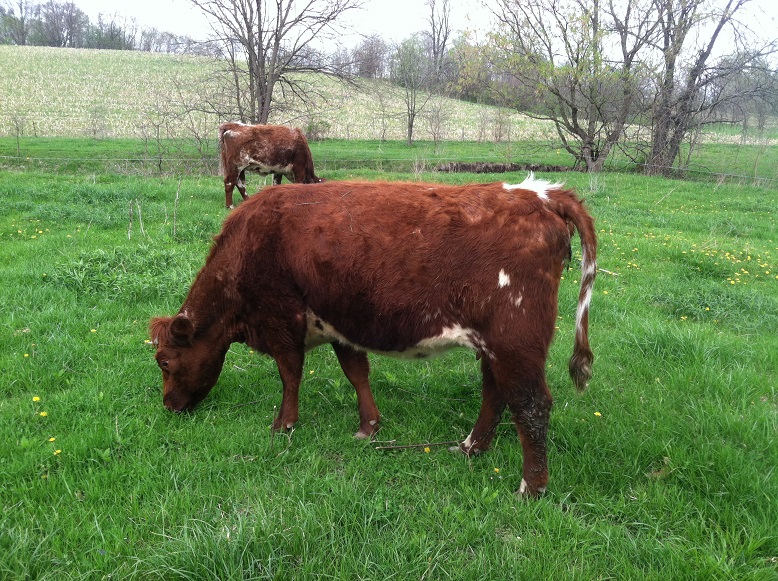
My pastures haven’t been well managed. I still have a lot to learn about grazing. My herd genetics are not what we hope they someday will be. And it is still early in the season so the cows haven’t slicked out the way I hope they will. But some cows just don’t shed their coat well. And those are the ones that didn’t breed last year. But 111 is a fertile, short, fat tank and she is losing her winter coat. But beyond that, Matron always points out that if the cows are properly mineralized they won’t look shaggy…scruffy. I have a couple of cows that are nothing short of scruffy. I think I’m on the right track with our mineral program but I have a lot to learn and a lot of work to do.

111

She really is the future of the herd. I try to look at every cow every day at least once. That’s easy since there are so few. But it’s not just a glance. I look for gut fill by standing at the cow’s left and looking at the gap between the last rib and the pelvis. If there’s a triangular depression there, the cow hasn’t had enough to eat. If it’s full (even slightly bulging) I have done my job. If it has expanded and looks inflated, we need to stop what we are doing and deal with bloat immediately. Short of suggesting you make sure the cows have access to something brown and dry when the pastures are growing fast I’m not going to spend any time on bloat today.

111_Rear

I also walk around behind every cow. Every cow. Every day. How do things look back here? Round? Plump? Are the cows gaining weight from day to day? Are their rumps and tails covered in loose, wet manure? Some of them are. That early spring grass is pretty rich so I’m making it a real point to have a little dry grass hay available to them…even if they ignore it.

Grazing

The dairy cows are a little thin for my liking. The beef cows are a little hairy. Some are a little loose. They all get looked over every 12 hours as we move them. That really is the best part of my day. Just listening to the frogs, looking for snakes. Listening to the quiet rhythm of the cows grazing; tongue, rip, breathe…tongue, rip, breathe.

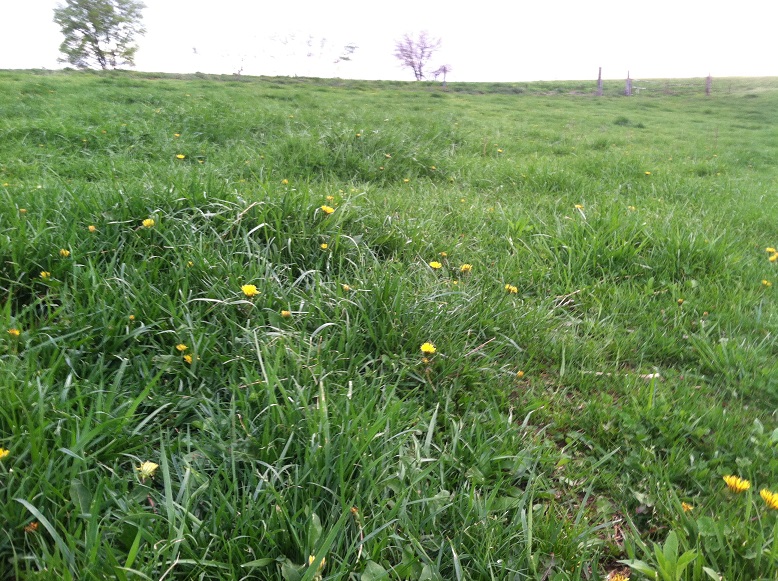
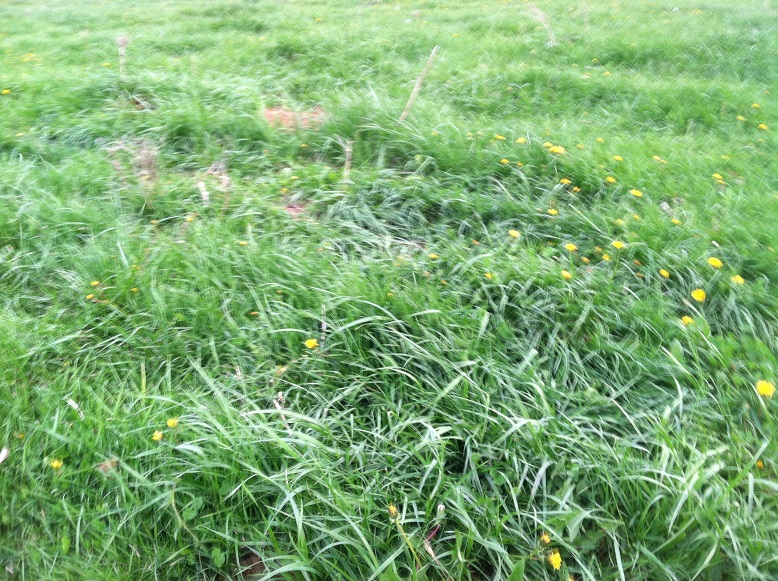
In the video above 41 came into fresh pasture with a full rumen but she went right to work. Cows will always eat a little more…cause if they don’t, another cow will. The grass is fairly dense here, mixed with young plantain and lots of dandelion but not much clover. It wasn’t long before they were all laying comfortably on the fresh ground taking naps and chewing cud. You can see a clear line between the morning’s grazing area and this new, fresh ground. That’s why we keep moving…and keep moving fast. An acre a day…so fast I have a hard time keeping the mineral feeder fenced in with them. That rate would translate to 500 acres/day if I had 5,000 cows. I’ll have to figure something out before we get there…lol.

GrazingLine

I hope your grazing adventures are as fun as ours. Or if our grazing adventures are your grazing adventures, I hope I’m capturing it in a way that is helpful to your vicarious farming dream. It’s not all grass and manure. There is a lot of rolling up fence, pulling fence posts, pounding them back in and carrying heavy things around too. So if you are farming vicariously, go out in the rain and pick up something heavy. Be sure to splash a mud puddle in your boot so every other step sloshes.


Playing Farmer With the Old Man

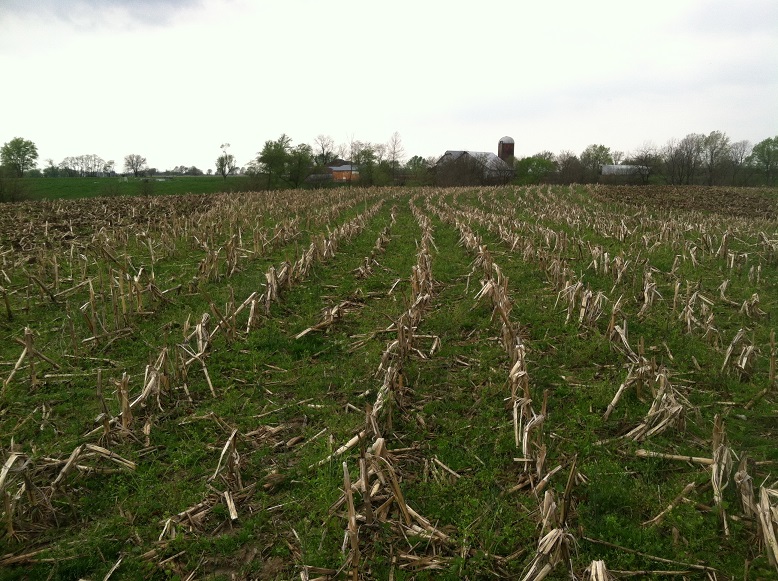
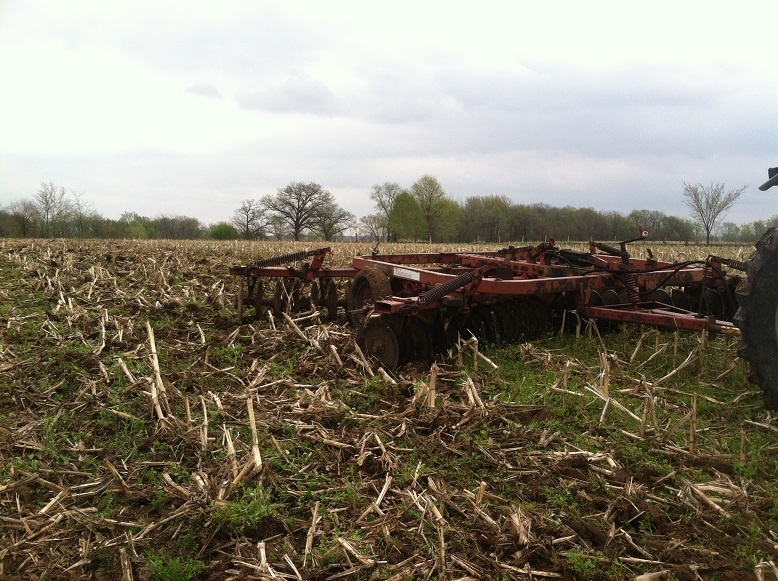
Dad and I got to play farmer Sunday. We aired up the tires on the old disc and pulled it out to the corn field to do some real farm work while dodging raindrops. We are in for a week of hard rains so it was important that we got this done…though it wasn’t on my list of chores for Sunday. I was focused on cutting firewood and cleaning up around the farm. We are also plugging away at removing fences that have been stomped into the soil. Not easy work. So dad rode the tractor all day to plant 9 acres of pasture while the kids and I kept busy elsewhere. I may have also taken a nap at some point.

Discing

Now, I feel that I have to justify ripping soil since I’m normally against it. First, this wasn’t my idea…it was all dad. But he’s not wrong. I have cows to cycle nutrients, shape the soil and spread seeds (speeding biological time). I have chickens to clean up behind the cows and speed up biological time. I have pigs to speed up biological time. We used the disc yesterday to speed up biological time. There is plenty of green growing out there but these are pioneer species…not dense, high-quality forages. In a few years, with a little help from the cows, we would have a nice, diverse stand of forages covering this field but by doing this work now we’ll have a diverse stand this year. And time is important to poor, hungry cows.

CornStubble

We just skimmed the surface of the soil with the disk, in most cases going only an inch into the soil. This allowed us to cut up the corn residue and expose additional soil, bringing seeds to the surface for quick germination. This also made a good bed for seeds of our own choosing.

Disc

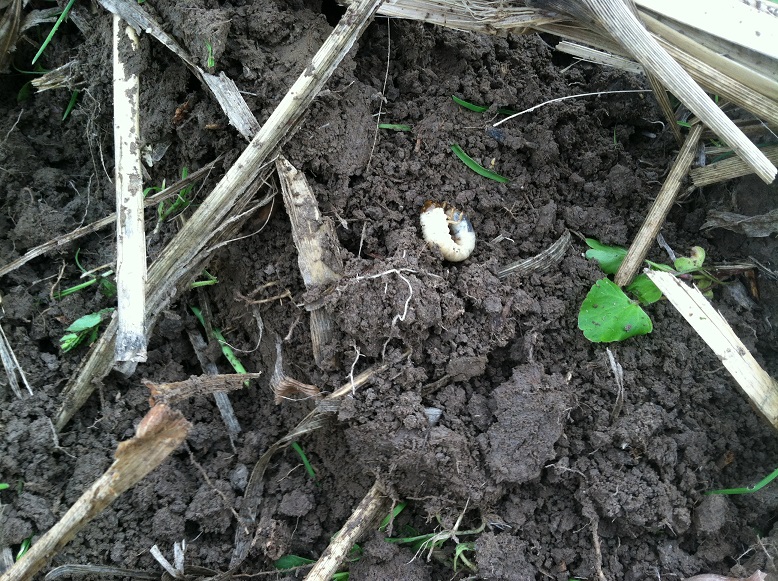
This was enough of a cut to expose a few worms and grubs but as I looked around I was pleasantly surprised by the good condition of the worms I was finding…what few worms there were. But there weren’t enough worms. At all. That will be another way we can measure our success at increasing soil health over time. Healthy soil has lots of worms. This soil has very few. Few grubs too.

Grub

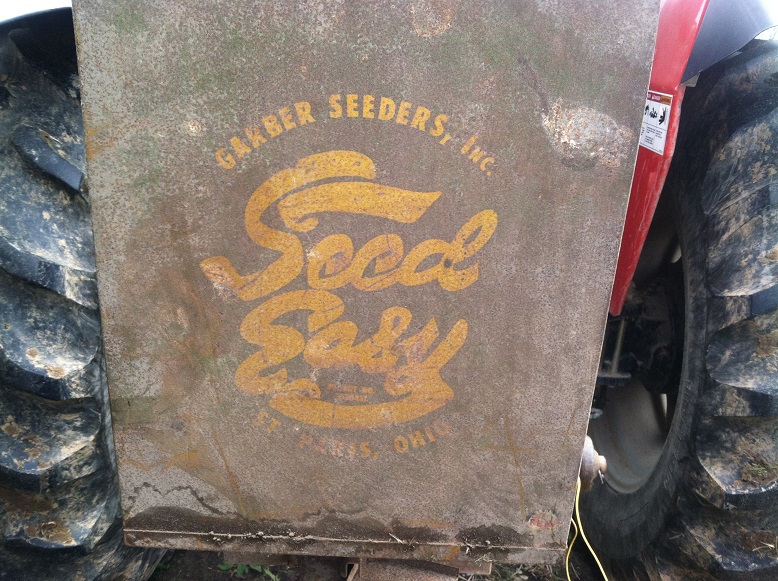
We broadcast a pasture mix of clovers, vernal alfalfa and a few grasses…but mostly clovers with the old seed spreader. The wind was blowing pretty hard so seeds scattered about a bit but the important work was done. The stalks are chopped, the soil is exposed to the coming rain and seeds are in place. It would have been nice if we could have used a drill but we didn’t happen to have a drill handy. We had an antique box with an electric motor to broadcast seeds.

SeederSo, yes. I ripped soil on 9 acres. It would have been better, I think, to have planned ahead and asked my neighbor to do this for us while he was tilling his field next door for a small fee. But we didn’t do that. Better yet would have been to feed seedy hay to the cows over the whole field little by little over the winter but his cows were on the corn stubble all winter. So we didn’t do that. So now, on April 27, hours in advance of a week of monsoon season, we gently ripped and seeded the field. Maybe for the last time.

The kids were along. I treasure moments like this, knowing it won’t last much longer. The kids working and playing nearby, helping when they can, wanting to be close.

Pals

While we were helping grandpa keep the seeder filled the younger boy found a baby snapping turtle in the stream. It was about the size of a half-dollar. It’s not all work on the farm but it is full-time learning.

TurtleNow to remove those pesky, unwanted interior fence lines.

Racing the Forage

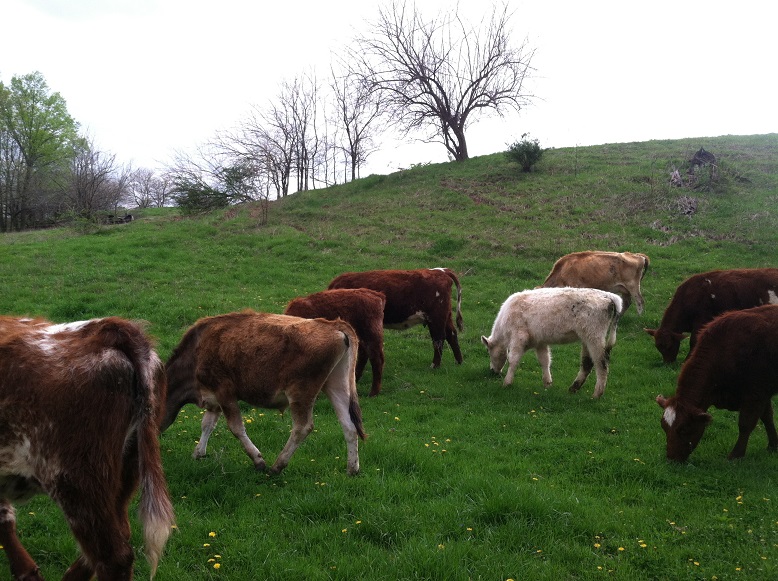
It’s really happening. Finally. The cows are on the move. We are covering ground at an almost unheard of pace…11 animals covering an acre each day divided into two sections. At first they grazed everything away from the repugnancy zones. Soon the grass got ahead of us and the cows could begin to graze very selectively. They go into each paddock fat and come out even more fat. And fat is what we are after.

This is the time we have all been waiting for. The world is green again. The grass is growing fast. As much as I want to put some pressure on certain portions of the pasture this is not the time. It’s just time to run. Right now we are concerned about cow condition. I want the cows to have a big area, a big variety and a big volume of feed. But we are also concerned about future pasture. We don’t want the cows to eat the grass down to the dirt. There is not enough grass out there to knock it over and leave a covering on the soil so we just try to graze the tops off of the plants and move on immediately. The pasture in the picture below was grazed over the course of a week about a week ago.

Grazing1

The idea here is that we sprint across as much of the farm as we can. Realistically, I’ll only cover 2/3 of the farm before it begins to go to seed…at which point we’ll return to the first pasture. The ungrazed area will be left in reserve either for drought or for winter stockpile…or both. The starting point changes each year, the drought reserve changes each year, the pasture changes each year. It’s fun to plan and manage and as the forage quantity and quality increases I’ll have to increase the size of my herd. For instance, on the half of the farm we have managed for several years we have grazed once with cattle and once with chickens and the forage is at least 2 weeks ahead of the new 40. The goal is that the soil health will continue to improve and we’ll gain a month of grazing at each end of the season…then 6 weeks…then…well, then we will solve other problems.

Keep in mind we just took possession of the 40 east of our house. We are building fence on pasture we have never walked before. Certainly we have seen the ground but fencing and grazing gives us more intimacy with the land than does a casual stroll. We have lots of places on the farm that are remote and rough…beyond zone 5. There is no reason to go there so we don’t. But with the cattle on rotation we are covering the whole farm. It’s amazing what we are finding. Everything from evil, thorny trees to the neighbor’s trash from decades ago.

We do better some days than others. It’s hard to read the forage through the remaining weed stalks from last year. Sometimes the cows seem to fatten on nothing. Sometimes they look empty but there is standing forage all over behind them. I can only assume they are ignoring forage for a reason and it’s better to try to learn from their selectivity rather than to force the issue. Maybe I need to amend the soil there. Maybe the chickens need to sanitize the area. Maybe it just needs to rest.

Grazing2

Sometimes we just open a fence and let the cows through. Sometimes we take the cows on a bit of a walk. Sunday morning we took a rather long walk. When the cows got there they went bananas running, rubbing on trees and playing around. We didn’t realize until afternoon that they were probably looking for the missing steer…that we didn’t realize was missing. We walked them through a draw and he stayed behind to get a drink and a bite to eat. He was looking pretty lonely (but fat) when we found him later in the day. He flat refused to go over or under that horrible electric fence so we had to walk him all the way to the end of the line to rejoin the herd. I’m feeling pretty good about the new fence charger.

One thing I am constantly aware of is the poor condition of my south-facing slopes. Our pastures have been set-stocked for decades. By grazing the hot south-facingn slopes in the middle of summer the grasses have been set back. The soil organic matter is low. I’ll have to hustle to correct this…and it will probably take several years. Matron talked about the same problem in a recent post. The main corrective action will be to use care when grazing the farm over the summer, preserving tall forage on these slopes to heal the grass. Tall grass catches more dew and puts down deep roots.

CowPaths

The other problem we face over here are the cow paths. There are deep ruts cut into the hillsides by the cows over time. I need these to heal over. In short, we are seeking to prevent travel along these paths and increase the rest periods so forages can begin to establish here. Also, we are trying to slow the flow of water along these ditches. One thing at a time. The cows are looking pretty good. The pastures are thickening up and we are allowing rest. That’s what we need. Our half of the farm has no visible cow paths remaining outside of the creek crossings. A couple more years for those…

How to Fix a Cat

Well, the answer to the flash title is…you pay the vet $80.

But the better question is, “Why do I have cats to fix anyway?”

Ah. That’s the right question. I will accept several answers.

  1. Some [Content Edited] got tired of the litterbox, couldn’t bear to have it euthanized and dumped their kitty out in the stix and it wandered here. (Happens all the time.)
  2. Some irresponsible idiot didn’t get their cat fixed…then dumped it in the stix when it showed up pregnant. (awesome.)
  3. Feral cats found out there was food here and started showing up, we made it a point to tame their kittens. Now we need to take the proper steps with those grown kittens. (Feral cats really don’t last long against the food chain. Tame cats run to us when they are in trouble.)

We do what we can to keep the cat herd numbers down in a humane manner. Unfortunately, lots of cats just disappear during the winter. Coyotes, owls, cars…who knows. Sometimes they bed down in the straw under the horses or cows and are stepped on or suffocated. If cat numbers get high enough disease spreads through them and knocks the population back a bit. It saddens us to just find a dead cat laying by the pond or something…no obvious injuries, no sign of starvation. Just a dead cat laying in a field. None of these are desirable outcomes. Especially for Bubba.

Kitty

When they were smaller, Bubba and her siblings used to ride on our shoulders as we did chores around the yard. I guess it felt nice to have their paws somewhere warm on a cold winter day. Obviously I fee some level of affection for Bubba but I don’t want baby Bubbas. At all. Ever. So we sent Bubba to the vet for $80. (That is the same amount of money he charged me to preg-check my heifers.)

So what happens when Bubba gets hit by a car on the road or killed by a raccoon? Was that a waste of $80? Well? I don’t know. But I have solved the kitten problem…just in case she lives a long, healthy life with us. And that’s the outcome we desire the most.

I’m not complaining about the $80. I am describing what is. Cats show up. Cats are handy to have on a farm. We take responsibility for them. I hate finding dead cats…even feral cats. Kittens are fun but I have had enough kitten fun to last me a lifetime. Cats multiply like rabbits…then they eat all of the rabbits. And wild birds.

Have you taken responsibility for your animals?

If you even think about taking them to the farm to run and live their life…well, you will be on my bad side. And it’s really not about the $80. It’s about you being a cruel, irresponsible person. You can find a home for an unwanted cat. If not, you can put your grown-up pants on and make a grown-up decision about your animal’s life. Dumping them is worse than euthanizing them…except you don’t have to see it happen. Coyote jaws are less than humane. Ever sleep with your windows open in the fall and hear a coyote catch a rabbit?

Do the right thing. Get your pets fixed.

If you want your kids to learn about the miracle of life get rabbits. Then teach them about the miracle of baked rabbit and bacon.

Farmer’s Progress Chapter 2: The Practical Approach

I continue reading Henderson’s Farmer’s Progress in this post. I’ll quote him only as often as I need to. There is so much to this chapter I can only hit the high points and I have to stay within the vague bounds of fair use. Again, if you like what you see here, pull out all the stops. Go find yourself a copy of this book.

FarmersProgress

In this chapter Mr. Henderson is giving practical advice on how to gain a foundation of knowledge and experience before taking on a farm of your own. The chapter starts with advice on making a good impression when applying to learn under an established farmer and detail on what to look for when evaluating the farmer for yourself…interviews go both ways. Does the farmer smoke? Is the farm in good repair? Will you be staying with the farmer or with the workers? You need to be in the middle of it to learn the business of farming, not staying with the workers and just learning the work. And you need to be both serious and respectful. In short, shut yer yapper other than to ask questions to clarify your role on the farm. You are here to learn both the business of farming and the practical work.

A farm is very different from a school… A schoolmaster tends to become childish through constantly associating with children – every schoolboy is familiar with the feeble jokes at which he is expected to laugh, for example; but a farmer’s life is too hard for childishness, and he expects a sense of responsibility to be rapidly developed, as indeed it must, when you will soon be working with valuable animals and machinery.

From here he devolves a little into a “back in my day” anecdote but I think he is right. School teachers will give you the same information over and over but a farmer expects you to remember after one telling. On the farm, lives and livelihoods depend on your memory. And you never know when you will need to recall that odd detail you were shown or told some time ago.

…no matter what goes wrong the farm has to go on. If the farmer dies, if war is declared, or the buildings burned down, the cows still have to be milked, the poultry shut up to protect them from foxes, and the hundred and one routine jobs to go on day in and day out.

We don’t get the luxury of sick days. We are constantly working to cross-train each other and the children to do every task on the farm…working to make sure everyone understands the cattle rotation, the pig chores, the chicken work. Handing off responsibility as the kids become old enough to handle it. Replacing our infrastructure with new equipment that more is easily portable so any age can move it. We are not often sick and when we are it is usually the kind of thing we can work through but I do get called away from the farm from time to time. The work continues with or without me.

We spend a lot of time with our children reviewing our personal callings and our family vision. One child wants to be a baker. One wants to be an engineer. One wants to be a church pastor. One hopes to stay home and help us run the farm (we’ll help her run the farm instead). But the overall vision is that the farm is the center. It is home. When all else fails, when the villagers are marching with torches and pitchforks, when the chips are down the farm is a safe haven. If my children (even generations from now) are struggling with addiction, need a fresh start or even just a place to sit quietly and read or write a book…this is the place. Everything else we do from leading the lost to the Lord to building an award-winning, fantastic new geegaw to baking the best cake ever centers here. We produce. We make a positive contribution to our economy, our ecology, our community…we invest in human and intellectual capital, we raise up successive generations of inspired visionaries to carry on the tradition. And this is the place it all starts from. This is home. Even the cemetery is out back. That’s the vision.

How often I have noticed that the best-tempered men are the best workers, that the busy people are the happy ones, because they are going somewhere. A man who is able to employ himself innocently and usefully is never miserable.

It is an undoubted truth that the less one has to do the less time one has to do it in, and the less joy one finds in doing it. Those who have a great deal to do must buckle to, and usually make time in which to do it. People who have seen a lot of life will tell you that success is due less to ability, talent and opportunity than to zeal, concentration and perseverance. Those who achieve happiness through work do at least deserve it.

Have you met me? I’m a very average person. Average height. Average build. Average (or below) looks. I got average grades. My folks are pretty normal folks…well, abnormal in that they stayed married and their children shared a common father. But otherwise, there is nothing special about us. Whatever I have I have because I worked for it. And worked my tail off.

And it has been a lot of fun. I wrote recently about how tired we were after a day of processing chickens. Tired to the bone. I could list for you on one hand the number of places on my body that were not sore. The kids were tired and fussy. But during the actual work we were joking and playing around. Everybody was having fun. The weather was beautiful and the youngest kept asking “how many birds are left?” not so she could be done working but because we always do the chicken dance when the last chicken is in the kill cone.

But it is work and it does require perseverance. We have had to find ways to inspire our children and each other. “Julie, we just have to do this. After today we’ll be done. We can do it. You can do it. Our customers will be happy, we’ll replenish our depleted farm account and we’ll keep things moving forward. And I’ll make dinner. OK?”

For a couple of years we were trying to swim or skate on the pond every month of the year. That has since tapered off but there have been some cold days of swimming. We stand at the edge of the pond with our shoes off daring each other to go first. Punching each other in the arm. “Go ahead! Prove you are tough!” Somebody will finally just take the plunge off of the dock, come up screaming, run for a towel and the rest of us are shamed into at least going knee-deep. Then we all come home shivering with blue lips to stand around the fire and drink hot cocoa. This may not make sense to the uninitiated but sometimes the whole farm works that way. Sometimes we have to goad each other into it. “OK Julie. The hail has stopped and the lightening seems to have abated. Put on your raincoat and let’s go check the chickens. We also need to see if the creek is coming out. You go first. No, seriously. I’m right behind you. I mean it this time. Really. No, really.” or “Julie, it’s 4:30. We have to get the eggs packed for today’s orders but the sink is full of dishes. Before I go to work we need to move the cows, move the chicken tractors, open the nest boxes, water everything, put bedding down for the pigs and I’ll need to shower while you pack my lunch. But the house feels cold. You go light the fire while I lay here a moment longer. Come on. I did it last week. It’s your turn again…again. Come on Julie. Those cows are counting on you.”

Swimming

Swimming 4/21/14

We have so much to do each morning before I can go to work. This morning my oldest and I knocked out all the chores in a record 13 minutes while Julie finished packing the egg orders for today. Are we happy? Well, it’s certainly hard work. And we somehow have time to get it all done. My worst days are always the days with little work to do. I very quickly go stir crazy. I don’t like to sit around. Somehow it is easier for me to do my reading while walking to and from a chore on the farm. It is easier for me to digest what I have read while trying to make a dead tree fall a certain direction or stack the hay wagon so it is all tied in and won’t fall off on a slope. Years ago dad ran a bulldozer with a broken foot. At the same time I ran a chainsaw with a broken wrist. It’s hard for us to just sit around. And no amount of sneezing or coughing can keep me in from the field. Funakoshi wrote that he worked through illness and fever by practicing karate forms until he sweated it out. I guess we do the same. I can sustain a high heart rate doing my farm chores. It doesn’t take long to break a sweat and cough out whatever needs to be coughed out. Seems better to me than shivering under a blanket watching old episodes of Newhart on TV (but I do enjoy watching Newhart).

Back to the book, Mr. Henderson goes on to extol the virtues of sound nutrition and regular habits. We grow an ever-increasing portion of our food…food of a higher quality than we could find elsewhere.

If you ever feel overtired it is probably due to error in diet rather than to hard work or long hours.

We probably should not have had the banana bread muffins on Thursday. We also ate a lot of junk on Easter Sunday leaving me feeling lazy. Mr. Henderson includes this little poem that sums the idea up nicely:

Better to hunt in fields, for health unbought,
Than fee the doctor for a nouseous draught.
The wise, for cure, on exercise depend,
God never made his work, for man to mend.

Remember what I wrote about checking livestock when a raging storm weakens? That, as Mr. Henderson points out, is one of the times you should remember that little poem. Or when checking the cows in an ice storm. He then goes on to talk about the importance of working efficiently. If you allot an hour of time to cleaning a stall but finish early, apply your extra time toward another, smaller task. The ultimate goal is to free up your schedule so you can spend more time observing your stock and the weather.

The rest of the chapter is focused on making yourself the best farm hand you can be as you turn yourself, slowly, into the best farmer you can be. I’m going to share a couple of quotes that affect me personally.

Hundreds of workers have become farmers, but getting a little land, keeping a few pigs or poultry, and reinvesting the profits in more stock, while continuing to work for another. It may require a special effort to do this before and after a full day’s work elsewhere, but the knowledge and experience thus gained will better equip a man to be a farmer than a degree in agriculture, however well merited.

That pretty much sums it up for me, though my day job does not reinforce my ongoing farming education. He goes on to share a story of a young man who worked and saved and bought a small farm. Then he worked and saved again, bought larger and, ultimately owned a large farm free and clear at the age of 30. He was young, worked hard, saved every penny and put in his time learning on a successful farm. He was able to capitalize on that education in combination with hard work to make a success of himself. Contrast that to this:

…many who wish to enter the farming industry later in life….Their way is difficult indeed. If they bring capital, they often spend a lot in bitter experience, for lack of knowledge. Without capital they often find the way too hard, with their preconceived notions of farming and high standards of living. They often think they cannot afford to spend the time to learn the trade; for them there comes a rude awakening when it is too late.

Well, every bit of that hurts. Difficult indeed. Bitter experience indeed. Lack of knowledge indeed. High standards of living…well, not so much. We are pretty content. Well, I say that but the money all gets spent somehow. I am, however, spending the time to learn the trade. I observe. I read. I discuss. I question. I share. Hopefully, the education I am paying for now is being absorbed by my children and will launch them into their own successes.

Mr. Henderson ends the chapter with this word of encouragement:

But for all who would enter farming, and I know of no easy way, it is necessary to be sure in their own minds what they want to achieve, to be prepared to pay the price in time, labour and study to achieve it, and to be satisfied with it as their ultimate aim and goal.

I have only brushed the high points of this chapter. I know this book is hard to find but I really think it is worth the effort involved. I left so much out of this chapter it is almost shameful. But that last sentence sums things up nicely. It ain’t easy. Work hard, study and find your satisfaction in the work. I used to work for a man named Norm who owned and ran a manufacturing plant in a nearby town. I asked Norm, in a personal conversation, what he liked to do for fun. He, being of few words, said, “I own a bass boat but have never used it.” I chewed on that statement for 10 years before I really understood what he said. Norm can do anything he wants to do with his time. He even has a bass boat. He chooses to make stuff out of metal for fun.

After seeking success in life as a husband and a father, I want to look at my cows. I am willing to do whatever I have to do to make that happen. I don’t even need to own an unused bass boat.