Spring Grazing…Ugh.

…not yet. …not yet.  Just a little longer…..

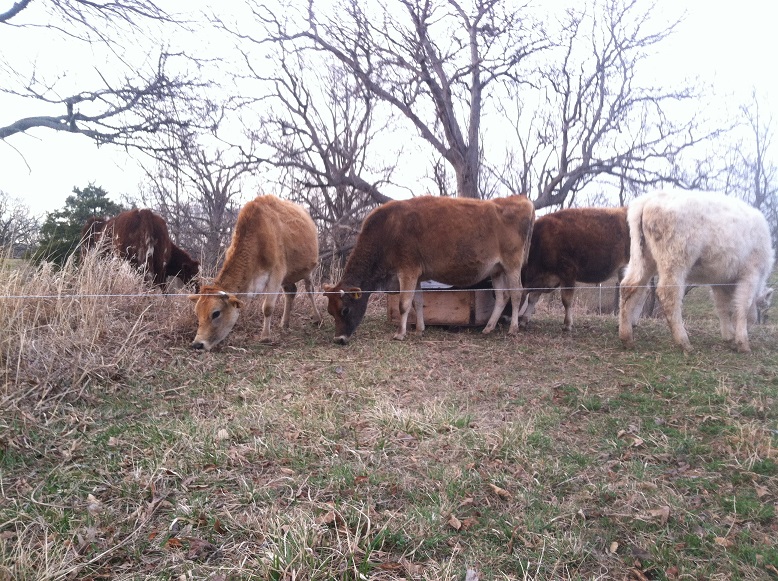
Ugh. I can’t wait a little longer. I’m out of stockpile! There is still hay in the barn but we don’t want to feed it all. And the cows clearly prefer grazing over waiting for me to bring them feed. So here we are. Grazing field edges that haven’t been grazed in …possibly decades. The cows eat grass, alfalfa and thistle. Why is there thistle? Because they sprayed the groudn with roundup for years to keep the fence clear. The earth doesn’t want to be naked…something has to grow. So thistle grows. The cows stomp and manure ground that hasn’t been directly manured and they only get a couple of hours to do it. We bunch them tightly and move them quickly. This kind of treatment will knock back the thistle better than anything else I can do. (BTW, see Mrs. White with her head up looking at the camera? Her head is not in the game.)

AlfalfaEdge1The field edge lasted two days. The first day we fed hay in the morning, gave them a grassy area to graze then sped them along the field edge. Toward the end of the day we asked them to camp out at the other end of the field where mature, stale grass rules.

AlfalfaEdge2

They munch through the brown grass to find green grass beneath. They trample it all in, knock down brambles and manure everywhere. They even found a really nice antler in the tall grass I would never have found. Then, the next day, we let them have the other half of the field edge they missed the day before. Again, they went onto it full, we kept them bunched tightly and we moved quickly. Alfalfa in the spring can be risky…actually, the transition to green forage is a little tricky but bloat is the biggest concern.

But now what? I have enough of this wooded patch to last until Wednesday evening. Then I have to do something else with my moos. The pasture isn’t ready to be grazed. Well, some portions are but in general, not so much.
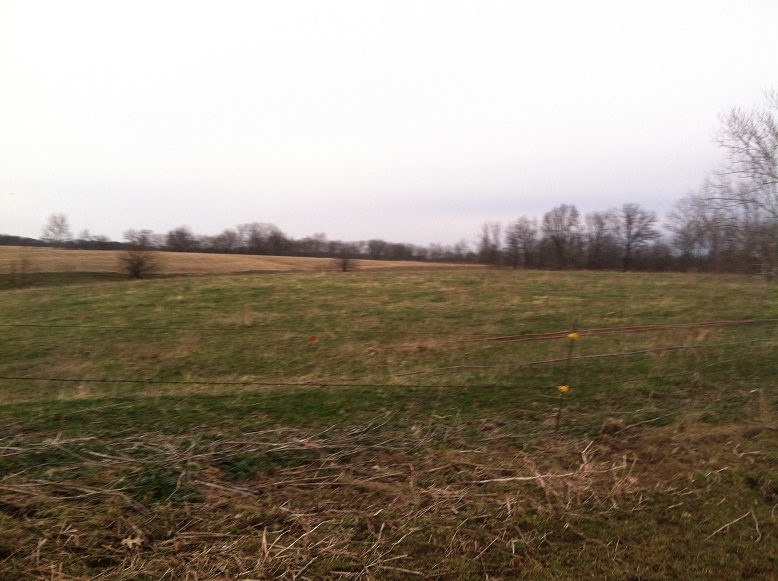
EastPastureMost of the grass is just inches tall. We are in a warm rainy cycle. It shouldn’t take long for the grass to really come on and right now a week really makes a big difference. I just need to delay grazing for a little while and when we go to pasture we will be offering big grazing areas and moving the cows quickly. I mean, we’ll offer the 10 cows an acre/day (and probably break that into 4 sections) so they can pick and choose the best grazing and I’ll probably continue to offer them a little hay while we continue the transition and wait for the grass to catch up. We are planning to race across the farm in about a month as shown below (numbers of days per segment, segments will be subdivided), after that we’ll slow down and use smaller and smaller grazing areas, dropping some out for stockpiling. Matron talks about this in a post on her blog.

SpringGrazingPlan

There are, apparently, several important things for me to do right now. First, I don’t want to eat tomorrow’s grass today. If I remove too much of the leafy area I weaken the emerging grass right now when it is fragile. That can potentially set the plant back, limiting its growth for the entire season.

Second, I need to get my cows fat. They are coming out of winter a little on the thin side. They aren’t skinny but they aren’t in the condition I want for calving. I have 30 days before calving starts. Again, I really don’t know anything about cows (sorry if that’s a shock) but as I read in any number of grazing books (Walt Davis comes to mind first), the most important thing I can do to help my cows breed back is to make sure they have a good layer of fat (stored energy) on them at calving time. The good news is their metabolism is set for winter maintenance, not spring gain…so we’ll get compensatory gain from them if we give them access to enough forage and variety until their bodies adjust. Same thing happens when you diet, btw. You go “off feed” for a while, your body adjusts, then you “reward” yourself at a family gathering and suddenly your skinny jeans just don’t fit anymore. You taught your body to become more efficient at storing energy. Well, that’s what we’re doing with the cows. They have been on a diet all winter and they have worked hard and behaved themselves. Soon they get a treat. All the grass they can eat!

I just need to delay a little while longer. There are areas on the map above that are not accounted for. I need to take advantage of those areas. I can get a day in the yard at the yellow house with the help of a little hay. I can get a day in the barnlot. That gets me to Friday night…two extra days of 60 degree plus weather. Will it work? I dunno. I do my best. I read everything I can. I make a plan. I go out and try. I tell you all about it…good or bad. Wish me luck!

(In this post I linked heavily to Matron of Husbandry’s blog. Whatever books and blogs I have read or seminars I have attended, Matron has done the most to remove the fog (for instance, this post). A few postings, a few illustrations and everything became clear. She’s a great teacher…and I bet she’s rolling her eyes right now.)

Sometimes the Bar Eats You

One of those days. Those. Days.

Something died today. Those are the hardest days. I can work straight through lunch and long after dark…no problem. Come inside, grab a bite to eat and a shower and fall asleep within seconds then bounce up to do it all again the next day.

But when something dies…well…then I don’t sleep.

I lay awake and wonder about it. Will it happen again tomorrow? Or tonight even? What can I teach the children from this?

Am I to blame? Certainly.

I should have been more attentive. But I was busy doing 10 other things, all of which were important and one thing slipped.

One chore got missed.

One routine got skipped. One job that I never do…but should ensure gets done. My oldest has his own little enterprise. Well, not anymore.

And it really is my fault. It’s not like a raccoon broke through the perimeter and went on a frenzied murderous rampage. No. This is worse.

And it really hurts.

Today I got eaten by the bar. And I’m feeling pretty low.

I have to help my son learn from this experience without letting it defeat him. He made a mistake. I made a mistake. It was a costly mistake but …well, it can happen. It does happen.

You can’t lose them if you don’t have them. We do our best. Sometimes we make mistakes. Sometimes, well, sometimes the bar eats you.

Learnin’ in the Mornin’…

…learnin’ in the evening, learnin’ at supper time.

Julie is only so strong. Incredibly hot, hard-working, brilliant but not a weight lifter. Remember that line in Rocky, “Sports make you grunt and smell. Be a thinker, not a stinker.” She took that to heart.

The chicken tractors are fairly heavy and you have to use slow, controlled movements to keep from hurting a bird. I move the chicken tractors every morning before I go to work then she feeds and waters the birds and keeps them fed throughout the day. She used to try to move the tractors herself but she just isn’t strong enough. We had to learn that lesson.

BroilersThe lead tractor pasture pen is slightly downhill from the others. Any rainwater that runs downhill and into/under a chicken tractor will be clean water, not carrying a river of chicken poop. That’s a big deal if you are a chicken, sitting on the ground. We work hard to make sure our chicken tractors run on contour with the hill…that means as we pull them along they move neither up or down hill. This paints a stripe of fertility across the top of the slope all in a line – a keyline, depositing fertility to benefit the entire slope and easing our burden pulling the tractors around. We had to learn this lesson.

In years past we have been up on the flat in places that don’t drain well. April showers bring April big puddles of water. There is nothing worse than checking the birds in the morning only to find them all standing and shivering in a shallow pond…a poopy water pond. It’s bad for the birds and the mud pie they create smothers all of the forage. The chickens are here to boost the forage, not to kill it and our job is to keep both livestock and forage healthy. As of this morning we had in excess of 4″ of rain in 48 hours. It has all soaked into the pasture or run off gently. It is not standing here. That’s why we chose this spot for this time. But we had to learn this lesson.

These are things I learned by doing. Because you have read this, you won’t have to stub your toe like I did. All the doing in the world is important but so is reading. And it all has to be in balance. I wrote a post some time ago making fun of myself for thinking I had the world on a string after reading a couple of farming books. There is more to farming than you can learn in a book. At some point you will be kneeling in a manure pile in the middle of a thunderstorm trying desperately to protect your livestock from something unknown, unplanned and unexpected that nobody has ever written about. That’s when school really starts. I have some acquaintances who consider themselves to be “intellectuals”. They read “important” books. Some of them wear fake glasses so they look smarter. But when it comes down to it many of them haven’t done anything…and aren’t doing anything. But work alone doesn’t fill the void either. I have read many of the “classics” too. There has to be a balance. You can lean on the experiences of others as you grow, but you will never be a farmer until you become a farmer. I hope that makes sense.

There are good ways of doing things and there are better ways of doing things. George Henderson wrote about better ways of doing things 80 years ago in England. Even though I live 4,000 miles away in a different climate in a different century I can still glean information from his lessons. So I write to share what I have learned. I read your blogs to see what you have learned. I hope I am doing a good job. I hope my sharing enables you to do a better job. If things go as planned, my kids will take our accumulated knowledge and launch further that we even aimed. But there has to be time in your day to learn. To read. To grow. And to experience.

Not all of my reading time bears fruit. Not all of my work bears fruit. But, by keeping it in balance, I feel I am giving myself the best advantage. By sharing it with you I feel I am repaying a small portion of the debt I owe to the many who stopped to give me a little information.

What have you done today? What have you read today? Have you written about it?

Cats, Chickens, Cows and Rain. Welcome to April.

I didn’t think it would ever thaw. Winter started early in November and lasted well into March. Now the permafrost has thawed and the grass is just starting to grow again. In spite of the snowfall, we have been pretty dry for a long time so the rain is welcome…but forces us to intensify our management. The chickens have been on pasture for a few weeks and their eggs yolks show it. Just the other day a customer asked me what I had done. From one week to the next her egg yolks had changed from yellow to orange and she was pleased. It takes planning and management to bring that kind of happiness into the world.

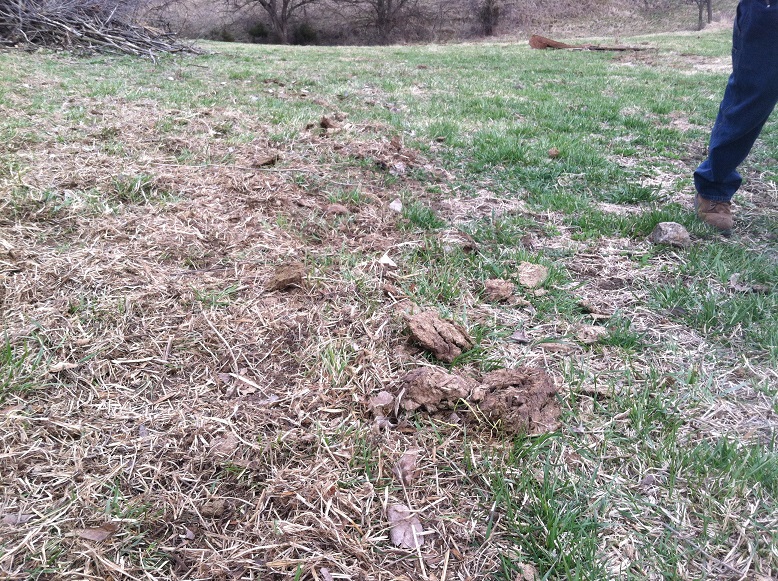
The chickens make a big impact on the pasture in a short time. We are moving the flock every 2-3 days. Our current infrastructure makes that difficult on the hills surrounding our home but it has to be done. We are seeking to enhance the landscape with chickens, not create a moonscape. “Enhance” means they spread the cow pies, fluff the ground litter, eat bugs and add manure. A lot of manure. The picture below shows previous chicken pasture on the left and ground the chickens haven’t had access to on the right.

BeforeAfter

You can see that the chickens have eaten a fair portion of the green forage (hence the orange yolks) and they have fluffed up the litter and scratched out the cow manure. I need to be attentive to the pasture health and time their moves based on condition. I can’t simply park the chickens in one place and make an appointment for my phone to remind me to move them in a couple of days. I have to pay attention. They did this in two days here. In other places it takes three days.

The pasture move was timely as we also needed to get the chickens uphill. We are expecting several inches of rain over the next two days. The bottom here can become a temporary creek bed. Apparently a number of piglets were washed away from this very spot in a storm 50 or more years ago. Beyond saving the chickens I needed to get my fencing above the potential water line to prevent it from being tangled or damaged. Also the cows needed to be up high somewhere. They are near the highest point on the farm by the pond munching (and mostly trampling) the remaining forage stand from last summer and a little bit of the edge of the alfalfa field. The cows can eat, tromp and manure the places we can’t reach with the hay mower and exposing junk left laying (I found an ancient roll of barbed wire fencing) and weed trees I need to cut out. They also give me an excuse to manage the trees we plan to keep by cutting the lower limbs to open up grazing beneath the trees.

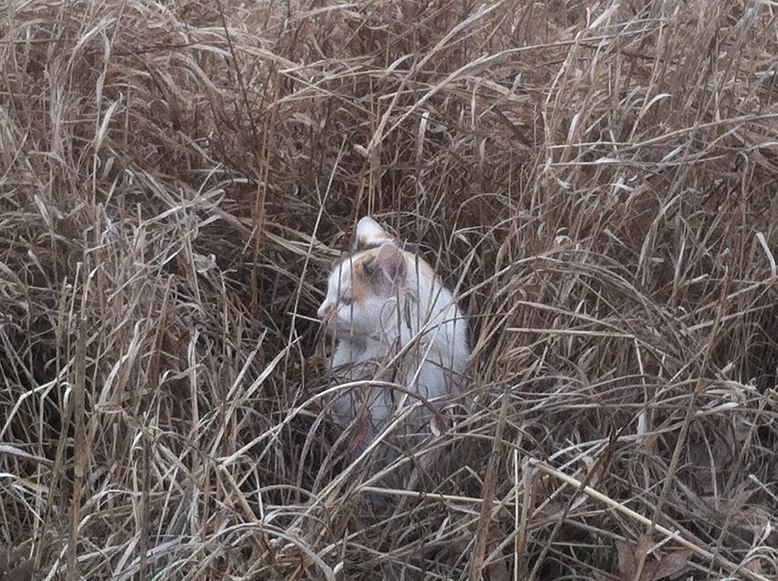
PondEdgeI can’t do anything without feline companionship. If I get anywhere near the white barn Zippy shows up. She can multi-task both seeking attention and looking for a tasty mouse morsel. The cows won’t really eat this grass but they will knock it down and feed it to the soil. We are still feeding a little hay out here because the forage quality is so low.

Zippy

The cows and chickens are safe on high ground and this time of year I am glad to have my pigs under a roof. The weather wouldn’t affect their health negatively but the impact of pigs on the pasture would limit forage growth this year. I have to be sensitive to pasture health right now. Pigs, cows, chickens…all can set back forage growth for the year.

The pastures around my house have been rotationally grazed by goats, chickens, pigs and cattle for the last two years. The rest of my farm has been continually grazed by cattle for…well, for decades outside of the short time dad kept a few cattle here. It appears to me that the forages we have been managing are at least two weeks ahead of the rest of the farm. Is it the presence of litter on the ground? The mix of manures? The energy stored in the root systems? The higher organic material in the soil? Is it just warmer on the 20 acres near the house? Yes…in short, is it the result of a different paradigm. Manage for forage. Looking back 11 months I should have some serious grass soon. Then we will hit the grazing accelerator. I’ll be sure to give you the play-by-play as we watch the grass grow. I just realized how lame I am. Sigh.