Hill Potato Blues

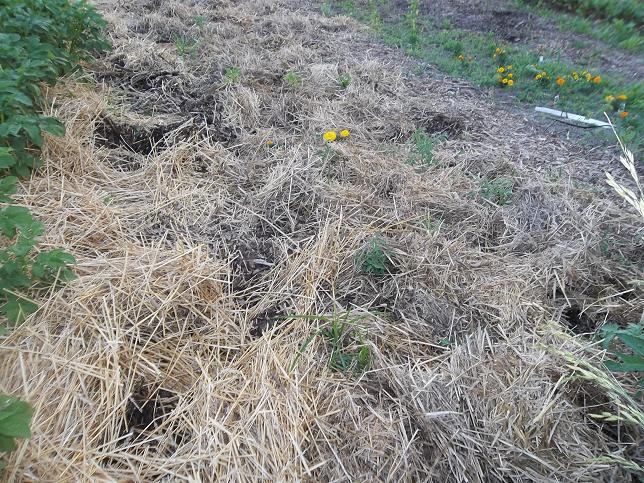
What seems like a lifetime ago, but was just this past St. Patrick’s Day, we planted potatoes.  We have hilled them.  And hilled them.

Today, with the greenhouse nearly empty of livestock (just the rabbits and ducks left), I started hauling out bedding.  Well, more than started, I worked on it for a couple of hours and went a foot deep in a 10×15 area but didn’t really make much of a dent.  While the wife and kids weeded the garden I hauled wheelbarrow after wheelbarrow out to the garden beds to surround the peppers.  Finally, I just had to do it.  I had to hill the potatoes again.

The bedding I am hauling out is mostly from under the rabbit cages.  It’s months worth of wood chips mixed with rabbit manure, chicken manure, old hay and who knows what else.  It’s moist, warm and full of worms.  It’s also heavy.

This really isn’t a huge deal but by planting the way Jeavons says to, and since potatoes don’t always come straight up where they should, there’s a dense pack of plant matter and it’s kind of hard to deliver the compost where it is needed.  But I did it.  And kept going back for more.  And I’ll do some more tomorrow.  Why, oh why did I plant 100 pounds of potatoes?
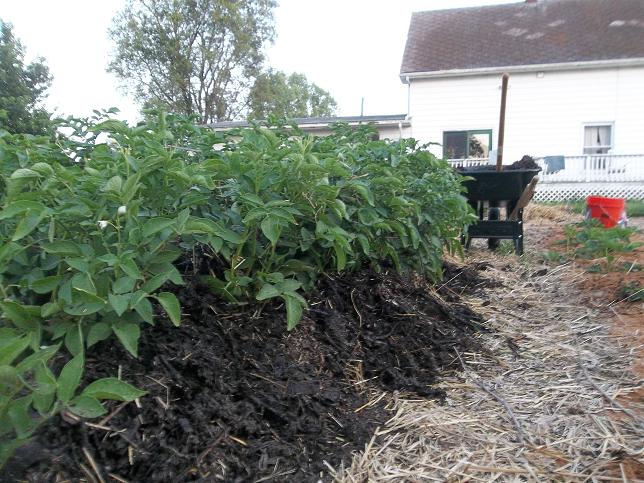
Yes, the plants really do tower over my wheelbarrow.  It’s not just a perspective thing.  I can’t seem to get enough material in there to hill them the way I would like.
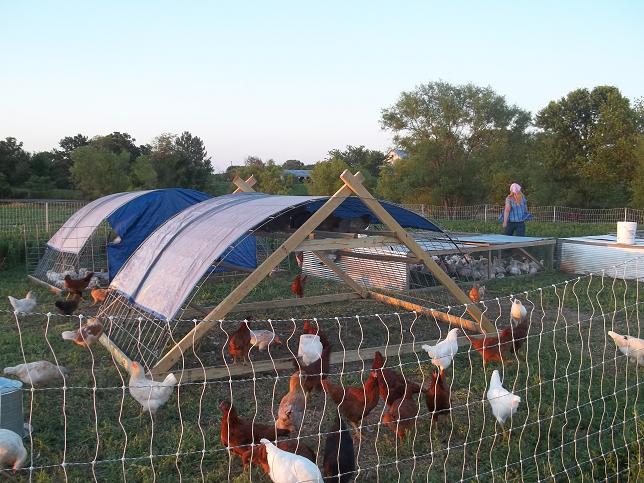
New Layer House Prototype

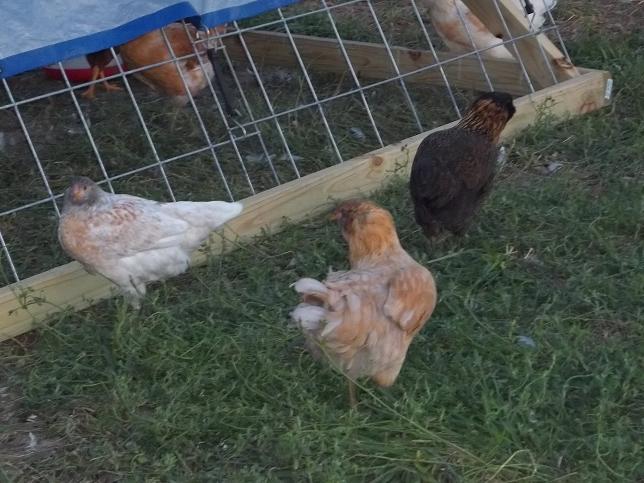
I like the cow panel hoop chicken tractors so much I thought I would try my hand at making a layer house out of them.  This will solve several problems for me.  Primarily, I don’t want to clean out bedding in a layer house on pasture.  Also, I don’t want to use a tractor to move my layers.  This design has several drawbacks though.  First, it’s open on both sides.  An owl could fly right in and ruin my day.  Second, I have some concerns about the weather.  We’ll certainly keep them in a greenhouse over the winter.  Anyway, here it is.

The crossed 2x4s support the hoop and prevent it from swaying.  Then there are roost bars across the span.  I may need to put in two more 2x4s to prevent the roost bars from drooping.  I also may need to lower the roost bars a bit as the pullets grow.

Overall though, I really like it.  I plan to hang nest boxes off of one side or both.  For now these birds follow immediately after the chicken tractors and I move their house daily.

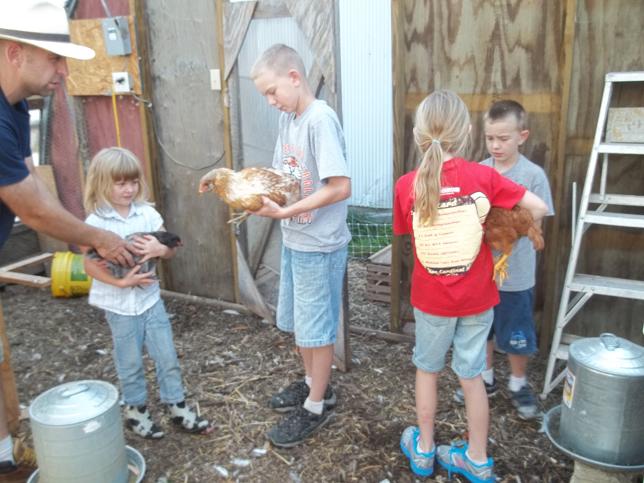
We had a bit of a circus rounding up the pullets in the greenhouse to move them out to pasture.  Everybody helped and after a little while, all birds were caught, their wing feathers were clipped and they were packed into crates for the big move to the alfalfa field.  Once there, we had a good time convincing these birds they needed to roost in the structure.  Oh well.  Keeps things interesting.

Now, it just so happens that I have a few Americauna pullets to spare.  If you know anyone interested in them, please let us know.

I’ll keep you posted on how the house works out.  We’re two days in.  So far…so good.

Day 4: Spring Chicken French Salad


Spring Chicken French Salad

  • 1 1/2 TBS butter
  • 3/4 C baby carrots
  • 1 C baby zucchini (or sliced regular zucchini)
  • 1 C baby yellow squash (or sliced regular squash)
  • 1/2 C peas
  • 1/2 C green beans
  • 1 C water
  • 1 C cubed chicken
  • 1 TBS fresh chives minced

Melt butter in pan.  Add carrots and toss to coat.  Add the water, season to taste with salt and pepper.  Simmer for 4 minutes

Add the remaining vegetables and chicken and continue to cook and stir until water is evaporated.  If they are not soft then add a little more water and continue to cook.

Stir in creme fraiche and chive and serve with sour dough baguette.

Stay tuned for….

Day 5: Spring Orzo Soup

Jacquelyne Aubuchon is a guest contributor to this blog and a loving sister and aunt to the residents of Chism Heritage Farm.  You can contact her at Jacquelyne@sew4cons.com or keep up with what she is doing at City Roots and Fruits.

Watering the Hogs on the Cheap

One of the questions we get regularly is how we deliver water to the hogs on pasture.  We don’t have hydrants in pasture so how do we do it?

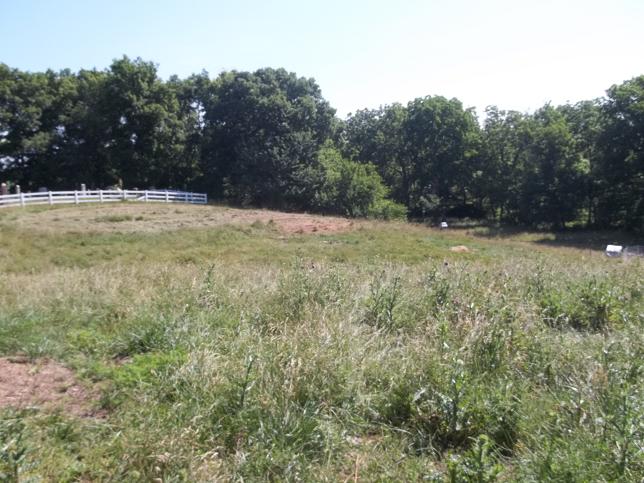
In the winter we carry a bucket to a couple of rubber pans.  The pigs only need water a couple of times/day and we make sure they get all they want.  When the danger of freezing a hose is replaced with the danger of overheating a pig we use a hose.  Our hose runs from under my feet to the center right of the picture…where that second hill breaks over.  You will read that there is some concern about giving pigs hot water to drink (and the water in the hose is certainly hot) but we think any water is better than no water, the pigs seem to do fine on it and if we had to install hydrants throughout the farm we would not keep pigs.  Maybe we’re getting away with something here but the pigs are happy, they grow well and we don’t have any problems so we continue with our poor-boy solution.

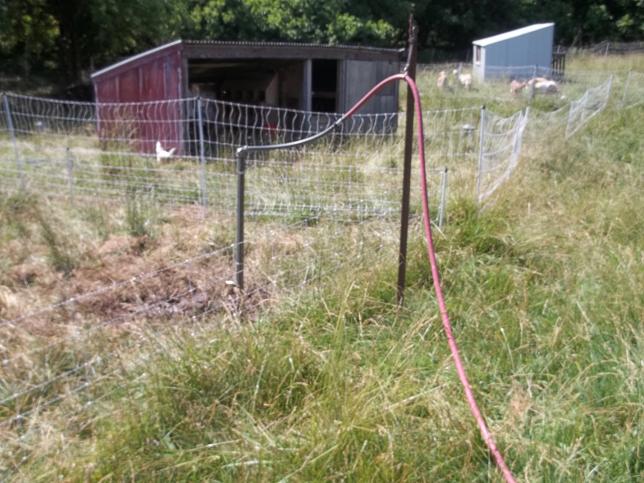
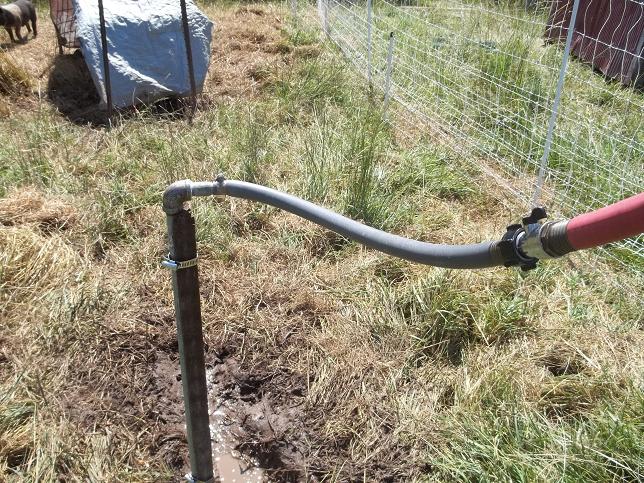
Then we bridge across the fence.  I have a short length of old, broken hose suspended by a tarp strap from an old, broken t-post.  You with me on the old broken stuff?  I’m going for mileage here.  Everything has to keep working for us.  The posts pull up easily and the whole assembly breaks down for easy setup at the next pasture.

There is a shut-off valve as we cross the fence.  With that valve in place we have easy access to water for goats and chickens (further up the rotation).  This helps add a multi-purpose dimension to our infrastructure, a constant goal.  A short length of hose screws on to the shut-off valve and is clamped on to an adaptor in the pipe elbow.

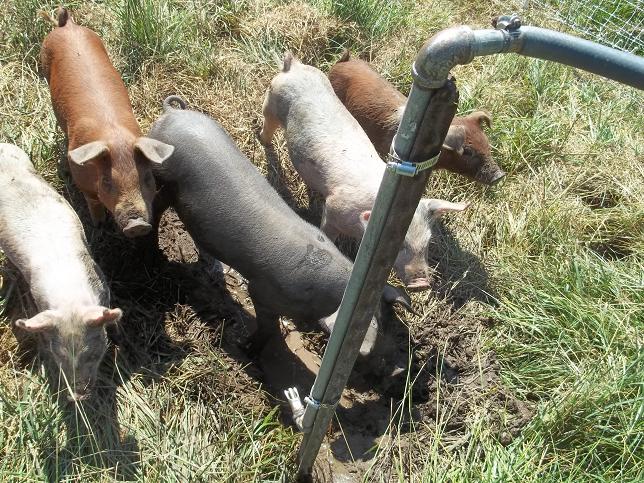
Then it is a short trip down to the nipple through pipe held to an old, broken t-post by hose clamps.  The hogs get all the water they need, which translates to enough to make a wallow.  This wallow is about 24 hours old.  It will get bigger.  Pigs like and probably need to wallow in mud.  Lots of farmers don’t like their hogs to do this but we think it makes a good opportunity to add in pockets of organic material.  Plus, we think it’s a small price to pay for the amount of work the hogs do on pasture.
What kind of “work” do the pigs do for us on pasture?  What do pigs DO on a farm?  I’ll answer that in an upcoming post.

Day 3: Chicken and Dumplings

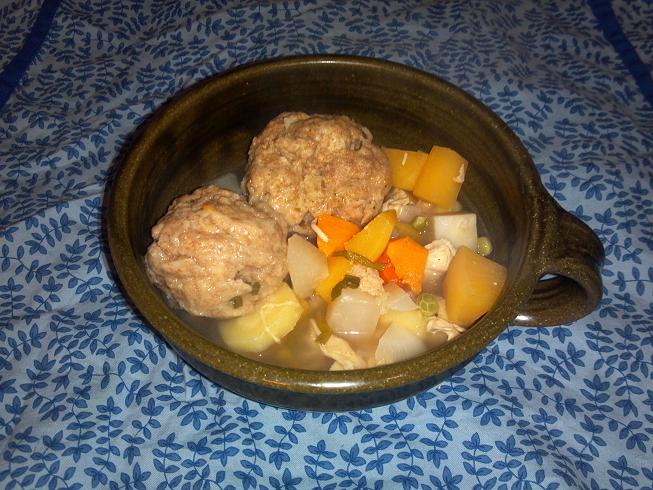
Here’s a vegetable heavy twist on an old favorite.  I love root vegetables and springtime usually offers the opportunity to clean up the stores.

Chicken and Dumplings

  • 2 TBS olive oil
  • 1 red onion, minced
  • 2 cloves garlic
  • 2 C hard apple cider (Woodchuck, green apple)
  • 3 rutabaga, cut in 1 inch pieces
  • 2 turnip, cut in 1 inch pieces
  • 2 carrots, sliced
  • 2 parsnips, sliced
  • 1 sweet potato, cut in 1 inch pieces
  • 4 sage leaves, minced
  • pinch Herbs de Provence
  • 5 C broth
  • 2 C peas
  • 1 C chicken

In dutch oven in 2 TBS oil, saute onions and garlic until golden brown.  Add 2 C apple cider and deglaze pan.  Cook for a couple of minutes.  Add remaining ingredients holding peas and chicken for later.  Bring to a boil, reduce heat and simmer for 15 minutes.  Add peas and chicken.

  • 1 1/4 C whole wheat flour
  • 1/2 C white flour
  • 3 sage leaves, chopped
  • 1 tsp rosemary, minced
  • pinch Herbs de Provence
  • 1 T baking powder
  • 1/2 T salt
  • 1 egg, beaten
  • 3/4 C milk

Mix all dry ingredients together.  Add egg and milk and stir until forms a stiff dough.  After stew has cooked for 15 minutes, drop dough on top in spoonfuls.  Cover and cook 10-15 minutes more or until dumplings are light and spongy.

Basic Herbs de Provence

5 tablespoons dried thyme
3 tablespoons dried savory
2 tablespoon dried marjoram
5 tablespoons dried rosemary
1 ½ tablespoons dried lavender flowers

Mix and store in air tight container.

For tomorrow, make Creme Fraiche:

Creme Fraiche

  • 1 C heavy whipping cream
  • 1 T buttermilk

Heat cream to 105 degrees F.  Remove from heat and stir in buttermilk.  Pour into small jar and cover loosely with plastic wrap, until thick but still pourable.  Stir and taste every 6-8 hours.  In 24 to 36 hours the creme fraiche should develop a slightly nutty sour taste.  Once it does, refrigerate.  May be stored up to 10 days.

Stay Tuned For….

Day 4: Spring Chicken French Salad

Jacquelyne Aubuchon is a guest contributor to this blog and a loving sister and aunt to the residents of Chism Heritage Farm.  You can contact her at Jacquelyne@sew4cons.com or keep up with what she is doing at City Roots and Fruits.

Day 2: Lemon Chicken Pasta

My husband once told me that he had never met anyone who at as many carbs as I do.  So, no meal planning would be complete without pasta in my mind.

Lemon Chicken Pasta

  • 1 lb pasta
  • 3 slices bacon
  • 2/3 cup olive oil
  • 2/3 cup Parmesan cheese
  • 3 lemons, juiced with 1 TBS zest reserved
  • 1/3 C chopped fresh basil
  • 1 C cubed chicken
  • 1 tsp lemon pepper

Fry bacon until crispy and set aside to drain.  In leftover bacon grease, fry chicken to reheat.  Drain and put in bowl.   Boil pasta according to directions.

In a separate bowl, whisk together oil, Parmesan and lemon juice.

Drain pasta and reserve one cup of cooking liquid.  Put pasta in bowl and stir in dressing.  Slowly add cooking liquid until moistened.  You may not need all the liquid.

Chop bacon and add to pasta.  Stir in remaining ingredients and serve.

Serve with french bread and honey butter.

Honey Butter

  • 3/4 C butter, room temperature
  • 1/4 C honey

Cream honey and butter together.  Store in refrigerator until ready to use.

Day 3: Chicken and Dumplings

Jacquelyne Aubuchon is a guest contributor to this blog and a loving sister and aunt to the residents of Chism Heritage Farm.  You can contact her at Jacquelyne@sew4cons.com or keep up with what she is doing at City Roots and Fruits.

Coming soon…?

We are playing with the idea of a regular video blog entry.  We can use this to answer direct questions from readers or just to address questions we are regularly asked…or just to have fun.

So.  Here we are having fun.  It’s a little weird for us too.

Let us know if there is anything you would like to see.  Nothing is off-limits, even for remote viewers.  So do us a favor.  Ask us something in the comment section.

Day 1: Chicken Salad, great hot weather fare

We spend a great deal of time outdoors and our kitchen is not particularly air conditioned.  With spring planting and all the springtime chaos, we like things we can have on had to fix a quick meal.  The first thing we will do with the chicken is make some chicken salad for sandwiches.

Chicken Salad

  • 3/4 C mayonnaise
  • 2 TBS dry white wine
  • 2 TBS fruit chutney
  • 1 1/2 T curry powder
  • 1 C cubed chicken
  • 1 stalks celery diced
  • 1 green onions, sliced
  • 2 TBS raisins
  • 1/2 C roasted nuts of your choice (cashews are good)

Mix the dressing ingredients:  mayo, wine, chutney, and curry in blender until smooth.  Add chicken, celery, onions, and raisins mixing well.  Chill.  Stir in nuts just before serving.

My brother isn’t a mayo fan, so, in this recipe you can’t really taste the mayo.  (I don’t like jar mayo)  You may need to tone down the spices for your taste, but I think it’s just right.

Where do you get chutney, you might ask?  Well make it with your leftover fruits in the fall.  We love chutney in the cupboards for putting on meats.  If you don’t like having those stores on hand, you can find chutney in the ethnic section of your local grocery store.  Major Grey’s Mango Chutney is pretty common.  Any chutney will do though, I used a dried fruit chutney.

Also, try your hand at making mayonnaise.  It’s so delicious fresh and your salad will be even more good for you.  So many more nutrients.  If you use farm fresh eggs it will be even tastier.  This is a great tutorial here:  Homemade mayonnaise without tears

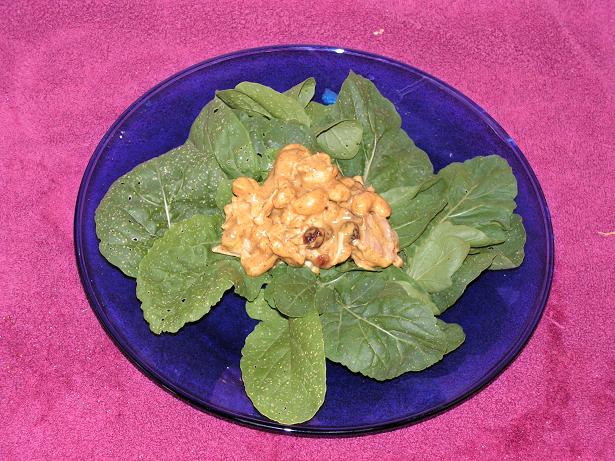
Serve salad on baguettes with a lettuce salad and dressing for a complete meal.  Another option is to put it on a bed of mache.  Mache’s nutty flavor makes a great companion to this salad.

(Usually it doesn’t have tiny holes in it like mine does, but I have a terrible infestation of potato bugs in my garden and hate chemicals more than them.)

Stay tuned for…

Day 2:  Lemon Chicken Pasta

Jacquelyne Aubuchon is a guest contributor to this blog and a loving sister and aunt to the residents of Chism Heritage Farm.  You can contact her at Jacquelyne@sew4cons.com or keep up with what she is doing at City Roots and Fruits.

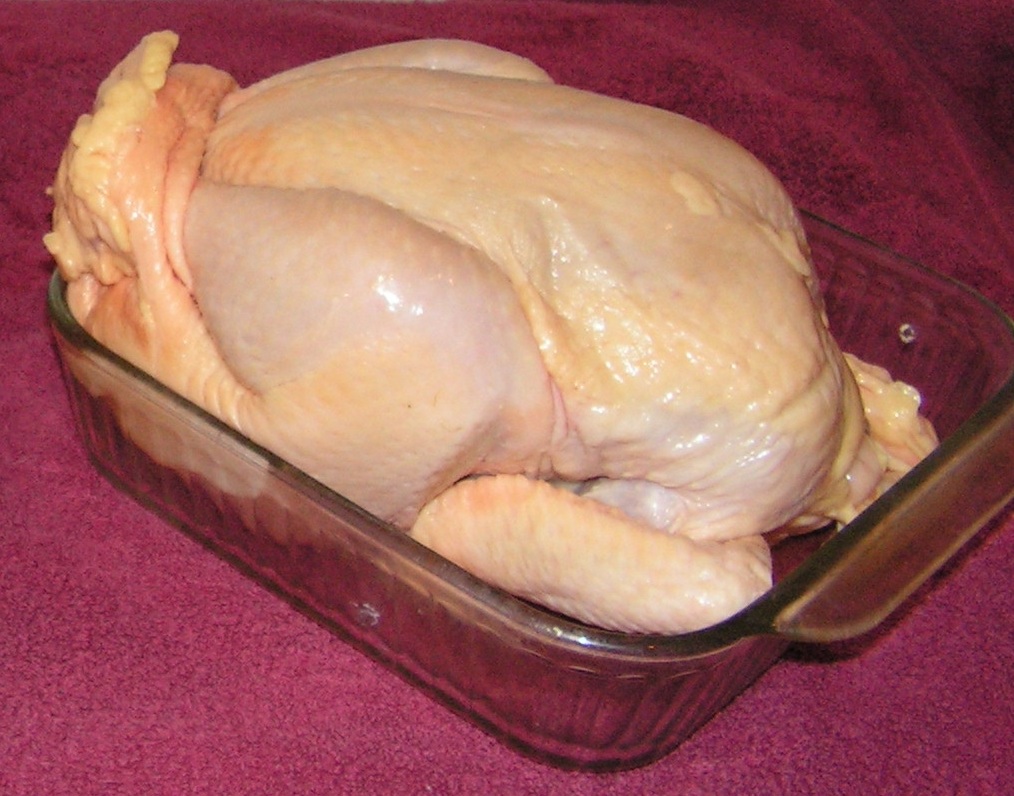
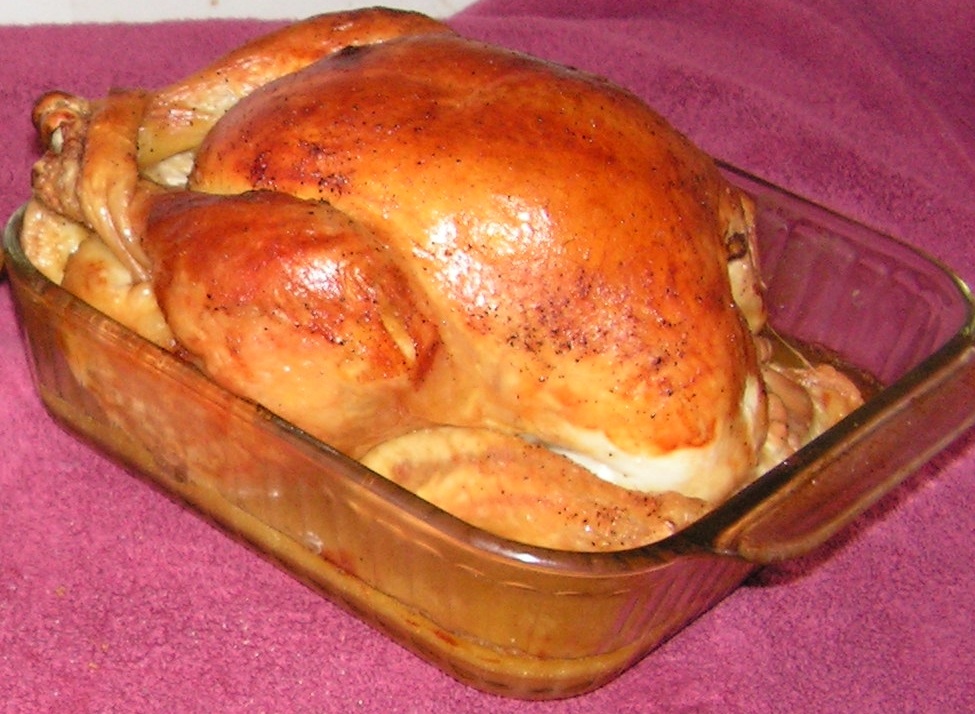
How to Roast a Chicken to Feed a Family for a Week

This weekend, while I was at the family farm, we got to discussing the size of the chickens being slaughtered.  I personally am all about a 6-7 pound bird.  At the store I can only get 3-4 pounds birds.  I don’t find this to be enough for what I expect to do.  Christopher (Head Farm Steward) finds that many of his customers want the smaller birds and don’t know what to do with the bigger one.  My family of four can decimate a 3-4 pound bird in one sitting.  I almost never make a meal that doesn’t have left overs.  We eat them for lunch the next day, so a 3-4 pound bird leaves me without my lunch.  While Christopher and I were packing up the birds and working on a million other projects, we decided to provide his readers with a meal plan to help them learn what to do over a week with a large bird.

This weeks menu:

Grocery List:

salad Small bag whole wheat flour
baby carrots flour
1 C baby zuchinni cake flour
1 C baby squash baking powder
2 C spinach cornstarch
½ C green beans instant yeast
5 lemons salad dressing
fresh basil red pepper flakes
red onion salt
2 onion lemon pepper
sage leaves pepper
1 bag carrots herbs de provence
3 rutabaga curry powder
2 turnip 1 lb pasta
2 parsnip orzo
1 sweet potato slivered almonds
chives roasted nuts
1 bunch thyme ½ C cider vinegar
1 head garlic olive oil
celery mayonnaise
peas dry white wine
green onions  honey
raisins
fruit chutney
hard apple cider
Parmesan cheese
1 Chism Heritage Farm Chicken
bacon
milk
buttermilk
heavy whipping cream
3 eggs
2 TBS butter

To begin with, we have to bake the chicken.  This is such a nice fix it and forget it thing to do.  The only problem I ever run into is getting the chicken thawed out and remembering it’s ready to bake.  The flavoring on this is simply the chicken.  These have such a nice flavor, nothing else is needed.  On this prep day, you will need to cook the chicken, make broth and start the bread.  Starter for the bread can be prepared ahead of this even.  An excellent tutorial can be found at A Bread A Day.  Ingredients on the grocery list reflect this recipe.

Easy Baked Chicken

  • 1 Chism Heritage Farm Chicken
  • 2-3 TBS melted butter
  • salt and pepper

Preheat the oven to 400 degrees.  (Why 400? It’s a good temperature for this.  If you go 350 you will still cook the chicken, it will just take longer.)  Salt the chicken all over.  Melt butter and brush on breast and legs.  Cook until 170-175 degrees on a meat thermometer.  Brush with drippings every 15 minutes or so for a really nice skin, or forget about it and wonder why your timer is going off and find a perfectly good chicken when you pull it out.  Cook one hour for the first four pounds and add 8 minutes for each additional pound.

  • 3 lb – 1 hour
  • 4 lb – 1 hour
  • 5 lb – 1 hour 8 minutes
  • 6 lb – 1 hour 16 minutes
  • 7 lb – 1 hour 24 minutes


Mostly I just wander off and once in a while smell something and go test it for temperature.  Often I put it in at 3:30 when I leave to pick my son up from school and it’s mostly done when I get home.

After roasting the bird, let it cool for 15 minutes on the counter.  If you want to trim it for immediate eating it’s ready.  For this meal plan, we will take all the meat off the bones and cube it.  By combining it with other ingredients we can make it stretch further.  Once cubed, put in a large zip lock bag and refrigerate it until ready to use.

Chicken Broth

  • leftover chicken bones from cubing chicken
  • 1/2 C cider vinegar
  • 2 carrots, chopped
  • 2 celery stalks, chopped
  • 1 onion, quartered
  • 2 sprigs thyme
  • 3 cloves garlic
  • salt
  • pepper

Place all ingredients in a pot and cover with cold water.  Let sit for one hour.  Turn on heat and bring to a boil.  Reduce heat and simmer for several hours or until you can’t stand cooking it anymore.  Let cool and put in fridge overnight.  In morning skim off fat.  Broth with be gel like consistency.

Stay tuned for….

Day 1:  Chicken Salad, great hot weather fare!

Jacquelyne Aubuchon is a guest contributor to this blog and a loving sister and aunt to the residents of Chism Heritage Farm.  You can contact her at Jacquelyne@sew4cons.com or keep up with what she is doing at City Roots and Fruits.

Dirty, Stinking, Filthy, Chicken Feed Eating Skunk

I love my rifle.  I never imagined myself saying something so…redneck.  But I do.  Last winter a mink had a chicken by the neck…total hostage situation.  One shot took out the mink and saved the bird.  Raccoons molesting my turkeys?  Problem solved.  Rabbits escape their pens?  Got it handled.  Recently I have had an issue with a something tearing open bags of feed in my shed.  Early this morning the wife called out while walking the dog, “It’s a skunk”.

My poor rifle has never been used this early in the morning and was still asleep but it didn’t complain.  It fired two shots at the skunk.  The first shot scared it enough that it stopped running.  The second shot was clean…instant.  He didn’t know anything happened.  One second there was a skunk.  The next second there was dinner for a vulture.  In fact, the vultures really seem to like him.

That little stinker didn’t just stop at feed bags.  He’s been digging in my garden and generally stinking up the place.  I don’t mind a skunk if it just scavenges away from the house.  When they try to move in I have to take action.  I think he was digging up worms.  I need those worms…

I’ll say it again, I love my rifle.  It’s just what I wanted.  A stainless steel Ruger 10/22 with a few minor modifications.  It’s the cat’s meow.  Take some time to understand the gun laws where you homestead.  Learn to use the tool properly.  It’s a real help at times when homesteading.