Always? Usually? Sometimes? Never?

My wife asked a friend (who has 7 children of her own) how she gets it all done.  The friend replied, “I don’t”.  How great is that?

People ask me all the time how I get it all done around the farm.  I don’t.

As I write, it is 10 at night.  I stopped in Jerseyville on my way home from work to pick up a few hundred pounds of ingredients we use to grind chicken feed.  As soon as I got home I unloaded the van and we all piled in to head to church.  Once home, I closed up the layers, checked on the chicks and poults in the brooder, moved a fence to surround the outdoor brooder (first use this season) and ground 500 pounds of feed.  I’m eating supper as I write this.  There are dishes to wash, laundry to put away, books I have put off and a blog I have neglected.

“Gosh, it must be nice to be so young and energetic.  BTW, how old are you?”  35…a bicentennial baby.  Not as young as I used to be but stronger than I have ever been.  It’s just that everything hurts now…where nothing hurt before.  Not always…just sometimes.

And if you think I work hard, you should see my wife!  I sit for 12 hours every day either driving or chained to my keyboard.  She makes more than 1000 animals happy every morning before breakfast, babysits the cows all day, home schools the kids, cooks excellent meals, gathers the eggs and makes this all possible.

So is the work around here usually, sometimes or never finished?  It’s never finished.  Our top priority is keeping our family functional.  Next, we have a lot of animals to entertain.  Somewhere after that come dishes, laundry and hot spots (flat surfaces that seem to attract clutter).

I need to make sure I never walk in the door after my long day of pushing buttons and show my disappointment that the dishes aren’t washed.  I need to love, encourage and even sacrifice myself for her.  Usually I do a fair job of it.  Sometimes I screw up.

It isn’t always like this.  It’s not even usually like this.  It’s just sometimes like this.  We run a seasonal farm.  Right now everything has to be done at once.  Soon the chickens will be gone and we will begin canning our garden produce.  We’ll put up hay through the summer.  In the fall we’ll pick some apples, can pie filling, press cider and can applesauce…maybe can some pears too.  In the winter we catch up on our reading and cut wood.  But throughout the year we make time to swim…like today.  We make time to play catch.  We make time to go see the Avengers (can’t wait!)  We make time to watch Dr. Who.  We remember to enjoy our lives, not just our work.

We always have plenty to do.  The work is usually there waiting for us.  We sometimes get to do nothing.  A double-negative is never not funny.

The Day After

I must process chickens.
Chicken processing is the mind killer.
Chicken processing is the little chore that lasts all day.
I will face chicken processing.
I will stand here and do this all night if I have to.
And when it is gone I will close my eyes and go to sleep.
When the chicken is gone there will be nothing.
Only I will remain.  (Sorry Mr. Herbert)

The chickens will be gone and I will remain.  My faith will remain.  My marriage will remain.  My children will remain.  The dirty dishes in the sink will remain.  I have to do something about the dishes.

We spent Saturday morning processing chickens.  We spent Saturday afternoon processing chickens.  We spent Saturday evening processing chickens.  We spent Sunday afternoon processing chickens.  We spent Sunday evening/night packaging up chickens.  That took entirely too long.  Along the way the goats got out of their fence and the cows escaped and ran up and down the road in spite of our pleadings…you know…the normal things that happen when you’re too busy to watch your livestock closely.  Cows and goats have needs.  They don’t have words.  You have to watch them…especially when your heifer is in season.  We were so busy working we forgot to watch.

So.

That takes us to Monday.  Monday.  Glorious Monday.  The laundry room is filled to the gills with some pretty gross laundry.  No dishes were washed over the entire weekend.  In fact, the whole house looks like we have four children under 12 running amok.  Well, we do have four children under 12…and they did run amok.  At least a little.

We do everything we can with our kids.  I want my kids with me.  They are an asset, not a liability.  We don’t force them to do much (even to learn) but we encourage them to at least be outside while we are working.  When I put up hay, they pick raspberries and mulberries nearby.  When we walk 1/4 mile out to the chickens to feed, they walk 1/4 of a mile to feed (or they bicycle).  When we process chicken, they are right there with us…even if around the corner in the sand box.  If nothing else my kids know more about vertebrate anatomy than you do.

We were tired Monday.  The kids were tired Monday.  The house was a mess.  Every muscle in my body was (still is) sore but the work has to be done anyway.  “Honey, wake up.  It’s time to make the chickens happy.”

It takes just minutes to make the laying hens happy.  Dump some corn and oats out in trays, refill their feeder, check the water and open the door.  Then we make the goats happy with a few flakes of hay and a bit of water.  When the cows got out we corraled them in pens next to the horses at the other place (my grandpa called it the home place because he was born there.  I was born there.  Why don’t I call it the home place?  (How many parenthetical phrases can you put in a paragraph?  (You don’t have to answer that.))).  Anyway, the cows had to come home.  It took 45 minutes to walk the cows home along the road.  It makes the cows happy if you let them grab a few bites to eat along the way.  Then we made the compost pile happy by tossing in a few hundred pounds of chicken offal and loads and loads of sawdust, wood chips, mulch and straw.

In total, it normally takes about an hour to make the animals happy.  How do I make my wife happy?  How long does that take?  15 years and still working on that.  It takes hours to hand wash seemingly every stinking dish in the house.  I have to be at work at 8.  Nothing to do but roll up the sleeves.  Oh, and I better get some laundry started while the wife works on breakfast.

How do I make the children happy?  At breakfast, while the kids are dirtying some more dishes, I pay the kids for the help they gave over the weekend.  I pay them generously.  I want them to know there is reward for hard work…and they all worked hard.  Again, I didn’t force them to do it.  They didn’t do it for the money.  They don’t even know we live in a world of scarcity and working is the means to fight scarcity.  They did it because they wanted to.  Sound strange?  Why do you think I do it?  (Hint: I’m a grown-up.  I don’t do many things I don’t want to do.)

Also at breakfast I gave them their choice of one item out of the prize box.  The kids earn points (monopoly money) throughout the week for doing their assigned tasks.  Tasks rotate.  Training them to function as a part a working household is a big part of home-schooling…and is a skill public schools seem to overlook.  It takes time to teach a 6-year old to fold towels.  Many towels have to be secretly folded again but it lays a foundation of necessary life skill early on so we can do more focused learning later.

Everybody was tired.  There was still work to do.  Throughout the day we tried to encourage the kids to sit and read, to play, to nap or just to relax.  Though we can’t be lazy this time of year we have to have downtime.

After work Monday we tried to relax with the kids some more.  We played some video games and let the kids pick a movie.  They wanted a Star Wars marathon.  Sounds good to me.  We grilled chicken leg quarters and wings, baked potatoes, made some green beans and added hot sauce…all washed down with lemonaide.  The only complaint came from the youngest who didn’t want to eat her potatoes.  I was so tired I fell asleep watching the imperial troops enter the base on Hoth.  But I was sleeping while snuggling my little girl…and our dog.  Important stuff.

After the kids went to bed we closed up the chicken coop, fed the goats again, gathered eggs, moved the cows one last time, closed up the greenhouse, fed the rabbits…another 30 minutes worth of work.

We were tired.  We are tired.  There is work that just has to be done.  Dishes have to be washed.  The fridge has to be cleaned out.  Laundry has to be washed, hung on the line, folded and put away.  Pets and livestock have to be cared for.  We just have to do that stuff.  But the work is not the goal.  The work is not an end.  I need to make time to be real with God.  I need to invest in friendship with my wife.  I have to make time to relax and play with the kids.  Our work is not burdensome, it’s part of life.  Our kids are not a problem they are a solution.  They are not the target, they are the arrow.  We have to teach them to enjoy work, but not to be workaholics.  To respect and revere creation but not worship creation.  To honor God, to make family come first and to make the chickens happy.  That is the stewardship that counts.  This requires balance.  Yes, work has to be done but life has to be lived.

If my children run away from the land when they are grown, my operation is not sustainable.  We seek to inspire, not require, them to continue our work.  We have to demonstrate to them the value of work, the necessity of work and the importance of just relaxing with the family.  I have to show them that I still love mommy even when we are tired and make mistakes.  I have to show them that people have value outside of their capacity for work…that we value live and individuality in addition to honesty and liberty.  I am working to develop my children’t core values.  I am working to build a foundation of business that my children can expand.  I have to make sure they have a clear understanding of what is most important before I hand them the reins.  Their mommy is the most important person in my life.  Everything else can go, but mommy and I are a team.  The chicken processing is gone and our marriage remains.

That was hard.  It will get better.

By the way, my dad is awesome.  He wasn’t there the whole time but he was there when I needed him.  He’s always there when I need him.  Dad has a way of stopping by at just the right time, seeing what needs to be done and bringing new life to the work and entertaining the kids along the way or just to help catch the cows.  Thanks dad.

Featherman Product Review

I initially published this review in April of 2012.  By the end of June 2012 I had a more informed opinion of my gear.  Much of what I said below is still helpful but the updated review should be considered.

My thoughts on my Featherman equipment shifted several times today.  We were so successful working slowly on Thursday night I really wanted to turn up the juice.  I was anxious to test David’s claim that this could handle 200 birds/hour.

It can’t.  I did get to 80 birds and I believe that’s pretty sustainable.  The scalder is the limiting factor.

Here are some notes on each item then I’ll go into the process that I found works best.

Kill cones:
Kill 4 at a time.  This equipment is best-suited for batches of four 4-pound birds.  My only real complaint about the kill cones is the difficulty cleaning the base when finished.  We scooped out 10 gallons of congealed blood with a cottage-cheese container before washing it.  The base is heavy and difficult to pour into another container.  This is a small complaint.

Scalder:
The  scalder nearly convinced me to write a strongly-worded letter to Featherman.  I do not believe it is capable of more than 60 birds/hour on a 45 degree day (this morning), though 80 birds is manageable if the weather cooperates.  It just doesn’t generate enough heat.  60 birds/hour sounds like a lot unless you’re processing 300 at a time and have other things to do with 5 hours of your day.  I bought this equipment under the impression that it could manage 200 birds/hour, 150 anyway.  I do not believe the scalder can go beyond 80/hour.  Be sure to keep it filled with water.

Roto-Dunker:
Another strongly-worded letter opportunity.  Thursday we were plucking four birds at a time each dressing out at 5 or 6 pounds.  That’s more weight than this little rotisserie motor can swing.  Birds that will dress out at around 4 pounds are perfect.  You have to keep the load balanced and the scalder full (more on that later) for this to work but it can work for you.  Also, we found the birds inch along head-first as they turn in the dunker and their heads will stop the rotation.  We also found that putting the heads toward the center wasn’t a solution because the feet would drag the rotation down.  The solution appears to be pulling the heads off of the birds before you put them in the dunker.  This way they will work across the cylinder and drag their necks against the sidewall without their big head being in the way of the rotation.  2 headless birds, facing the same direction, appears to be the way to go.  I also found it was best to flip the birds over halfway through their scald.  The roto-dunker doesn’t totally submerge all birds so you can end up with a feathery patch that will need to be hand-plucked.  Finally, there are a number of sharp edges on the roto-dunker and my fingers are pretty shredded. Gloves maybe?

Gamebird Plucker:
The plucker is terrible at plucking a single bird.  My whizbang did a far better job.  However, if you put in three or four birds at a time it does a great job.

Shackles:
My wife gives these 5 stars.  She says, “You just line them up and cut, cut, cut then gut, gut, gut.  It’s much faster than laying them on the table and better on my back.”  I agree.  They are easy to load and handy to use.  Highly recommended.

Chill Tank:
This little beauty doesn’t hold 200 5# birds.  It just doesn’t.  It is nice though.  Very nice.

There is a pattern I found in the afternoon that kept the scald water hot, kept my wife busy eviscerating and cut through the birds at a reasonable pace.  First, the scalder has to be full.  Full.  The roto-dunker doesn’t work if the bird isn’t totally wet.

I’ll start at the end.  Take the birds, one at a time, out of the roto-dunker and place them in the plucker.  Turn the water on, start the plucker and step away.  Grab the hose and refill the scalder to about half an inch from the overflow.  This little bit of water makes a big, big difference.  Keeping the scalder full makes or breaks the plucker.

I’m assuming you have a helper monitoring the plucker.  If not, put the hose down and go empty the plucker.  This gives time for the scald water to warm up again.  Now, go kill 4 birds.  While they finish up, grab the 4 birds that were already dead in the cones one at a time.  As you grab them, remove their heads.  You’ll need two full rotations to load four birds in the roto-dunker.  Both birds go in facing the same direction.

Once the scald is complete (8 rotations or so), unload them one at a time into the plucker.  Just like loading, you’ll need two full rotations to unload the roto-dunker.

You may feel like you’re standing around quite a bit in this process but believe me, it’s the right pace for this equipment.  I may find ways to go faster.  I may develop more comfort with the gear but at this speed the burner never shuts off.

David won’t be getting a strongly-worded letter from me.  I had to adjust my expectations.  Initially I was disappointed.  My scald was pretty awful.  But once I settled into the pattern above I found we could manage quite well.  I don’t think 60-80 birds/hour is a bad pace for 3 people.  And, for the price I could run two roto-dunkers and still save money over the Ashley or Poultryman scalder.  If one broke I would still be in business.

We have 50 birds left to process.  I have little doubt that we can finish them up in an hour plus cleanup time.

Also, everything fits in the scalder when cleaning.  That’s pretty handy.

These are my thoughts after one solid day with my new equipment.  My thoughts may change as I settle in more with the gear.  I’ll keep this post up to date.

Getting Started with Broilers

If I were just starting, if I knew absolutely nothing, and if I lived in town and wanted to raise broilers, how would I get started?

Let’s make sure you know what you’re getting into.  You’re going to raise a broiler.  These are typically a hybrid chicken selected and bred to gain muscle mass in the minimum amount of time.  The cornish cross hybrid will eat nearly 18 pounds of feed over the course of it’s life.  That’s nearly $6 worth of feed per bird if you buy at the major farm supply stores.  Each chick will cost you at least a dollar, purchased mail-order from a reputable hatchery.  Because these are high-octane birds and you are inexperienced, there’s a fair chance several chicks will die.  In spite of my experience, there’s still a chance my chicks will die.  The animal and the feed will cost you more than a similar-looking finished product costs in the store.  No, your chicken will not compare to that $7 factory bird but there really is no comparison on quality.  With me so far?

Good.  Let’s start at the end.  These are birds for eating…as in they will die..and you will eat them.  These aren’t pets, they are radishes.  You harvest and eat them.  Don’t think you can do the work personally?  No problem.  You can drive (possibly for hours) to a processing plant.  Go into this with the right attitude.  These are food.  You are growing them for food.  If you’re still with me you need to see the work being done right so you can make sure you handle your birds in a humane and safe manner or you can make sure your processor does the same.  Several of these videos that were filmed by David Schafer of Featherman Equipment feature Joel Salatin.  Those two men have done more than anyone else to pioneer efficient, humane small-scale poultry production.  I’ll post links because they aren’t for the squeamish.  We got the most out of the Polyface Processing Overview video.  The Other Featherman Videos are the very best we have found online for every stage of poultry processing at various levels of scale.  If you want to see true, large-scale processing there are videos you can watch but I don’t have any I can recommend.  I can’t imagine standing in one place all day making the same cut over and over and over.  I can’t imagine wanting to watch a video of a worker standing in one place all day making the same cut over and over.  That’s tipping toward a rant so I’ll just stop there.

You also might try to find a local pastured poultry producer who processes his own birds for a more personal demonstration.  You’re welcome to stop by our farm anytime.

Now, assuming you’re still in for the long haul, how many are you going to raise?  Let’s say you’re just going to put your toe in the water and raise 25 birds in your suburban backyard for your own consumption.  Yes, it’s probably illegal but that’s the hypothetical situation.  You can deal with issues of morality vs. legality vs. nobody will care, they are only on pasture for 5 weeks and the healthy meat is worth the fine besides your lawn will look great.  Begin by reading this book.  You can read while you are waiting for the post office to deliver your chicks.

Image from Polyface Farm website. Click image for detail.

So, 25 birds.  Those 25 baby chicks will need a brooder.  Almost any brooder will do.  Use plenty of wood chips or course sawdust from a sawmill to build up deep bedding underneath.  Make sure there are no right angle corners where the birds could pile up and crush each other.  Watch the birds under the lamp to see if they are huddling, panting or whatever.  There are a million resources online for brooding chicks so I’m wasting your time here.  Don’t forget to add creek sand.

While your brooder is keeping the birds warm you need to build a chicken tractor.  I’m going to suggest you build an inexpensive hoop structure as in this link.  It’s going to cost you $200 and a couple of hours to put together but you can cover it with plastic and use it as a greenhouse to extend your garden season spring and fall.  That will help you recoup some portion of your infrastructure costs.

At 3 weeks (at the latest) you’ll move the birds to their new home on pasture.  Get ready for growth.  The chickens will flourish on grass and clover.  Every day that structure needs to move to fresh grass.  If the structure is 8×12 (as mine are) and you have it stocked with a mere 25 birds you can get away with moving it every other day, though every day is better for the birds.  That means you need at most 35 8×12 spaces for that tractor…about 1/8th of an acre…half of a suburban yard.

Still on board?  Good.

99% of Christopher Columbus’ trip was just going there. Once the chickens are in the tractor it’s just a daily grind of move, feed, water, feed, water, feed, water and move again.  They don’t need much from you, just fresh pasture, feed, clean water and security.  Security.  Everything likes to eat chicken.  There are a lot of raccoons in suburban areas.  Good luck.

Early one morning in the 8th week after the chickens hatched you’re either going to sharpen your knives and get to work in some way displayed in the videos above or a variation thereof or you’re going to truck the birds off to slaughter elsewhere.  The end result is the same: nearly $350 worth of meat.

Let’s review.  You paid $25 for chicks.  You paid $150 for chicken feed.  You may have paid $2 per bird to have them processed or you bought some good knives, heated water on your stove, hand plucked, eviscerated, chilled and bagged the chickens yourself…maybe totalling $50 anyway.    That money is spent and gone.  You paid $200 to build a chicken tractor and another $20 for the brooder and supplies for it.  Thest two could be sold to recoup costs.  At this scale, you’re paying an absolute premium for your chicken.

Obviously, I think it’s worth it.  Beyond the meat you have also gotten a broad education that covers how to raise poultry from start to finish, ecological and environmental stewardship and a new depth of understanding of what real food costs.  You also either learned that this is something you could do or you learned that it’s better for you, personally, to outsource your chicken raising to a gifted farmer nearby (like me).

I hope you find out it’s for you.  I can’t raise anywhere near enough chicken to meet customer demand.  Not only do I need help and assistance with bulk purchasing, I need competitors.  I need someone to push my efforts toward ethical efficiency.  You, as a consumer, need pastured producers with open door policies to become more numerous and more efficient so prices can fall.  We can only achieve this goal with more consumers.  I can’t handle more consumers alone.  I need additional growers…who will become competitors.  With luck I’ll be pushed out of the poultry business and can focus more on dairy, hogs, forestry, gardening or whatever is next.  I’m ready.  I need you to get started.  Now.

Market Day or The Great Pig Rodeo

So there I was.  Backed up to the chute at the locker.  There was a gap between the chute and the trailer but not so much that I was worried.  Then Eyeliner broke through.  He didn’t walk down the hallway, he made a break for it.  7 adults with a rope and a few muttered curses corralled, chased and herded the pig.  Nobody lost their temper but nobody was amused.

…20 minutes later we unloaded Blue.  More carefully this time.

Ah, the joys of keeping a 300 pound intelligent animal that doesn’t have a handle.

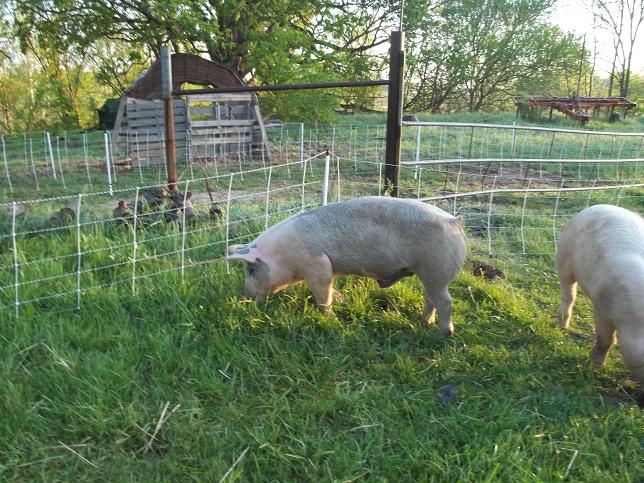
It didn’t start this way.  It started pretty well in fact.  I made a long, thin corral of pig quick fence leading from their pasture to the trailer.

You can see in the second picture I have narrowed the corral so the pigs can’t wander away to explore.  Any exploring they do will be around the trailer.  We put a straw bale at the rear of the trailer so the pigs could step up easier and put a little food inside to coax them in.  It didn’t take long and Eyeliner’s curiosity got the best of him.  Once Eyeliner was in, Blue decided breakfast sounded pretty good but he wasn’t willing to put his back legs in the trailer.  I jumped the gun, grabbed him by the back legs and tried to wheelbarrow him in.  Well…it was a good plan.

Eyeliner stayed put.  In fact, I closed Eyeliner in the front half of the trailer.  Blue wasn’t having any more.  Ultimately, we used sorting boards and pizza to get him back to the trailer.  Then I just picked him up and helped him in.  Lifting 220 pounds of weight is well within my range.  Lifting 220 pounds of wriggling mass when there is nothing to hang on to is something else.

I love keeping pigs.  I just like having them around.  I like the noises they make.  I like the disturbance they bring to the pasture.  I like that they are always so happy to see me…I mean, I bring them food and scratch their ears for 5 months.  They think I’m the greatest person in the world.  I make them lie down in green pastures, they tear it up and I give them another green pasture.  Don’t worry, the clods will be rolled flat with cow hooves, the grass will grow back stronger than ever before and the thorny trees will die.  Die!  DIE!!!!!  Sorry…

Anyway, are you with me here?  I like these animals.  Today could have gone much worse but it could have gone better.  Again, nobody lost their temper, no animals were abused and the bacon will be great but I know I can make this better for my pigs.  To this point, our pig operation has been an experiment.  I have been reluctant to make any investments in permanent handling equipment.  I even house the pigs under pallets and tarp for crying out loud.  I think it is time to reopen our copy of Humane Livestock Handling and get cracking on a real loading chute.  As convenient as the pig quick fence is, a real loading chute would be better for all parties involved.

Joel Salatin says his animals have a “wonderful life and one bad day.”  I want to cut that down to a few bad seconds.  My loading and unloading has to get better.

One more thing, this is Blue.

When we first got Blue he had a rupture (hernia) in his penis.  It was swollen, had three distinct bulges, was dragging the ground and had a red, raw, bloody patch where it hit the ground.  This weakness would have killed him in confinement.  We gave him no antibiotics and no medications.  We did rub a Neosporin-like salve on the wound the first day but beyond that he has been on his own.  We were afraid we would have to butcher him at about 60 pounds but he came out of it.  It was just a matter of changing his conditions, his feed and his feeding schedule.

Good old Blue.

It has been 2 hours.  I already miss the pigs.  I need to make a phone call to make arrangements for the next group.

Ghosts of Processing Equipment Past

We have used a variety of homemade equipment for several years.  Today we remembered why we were upgrading away from it.

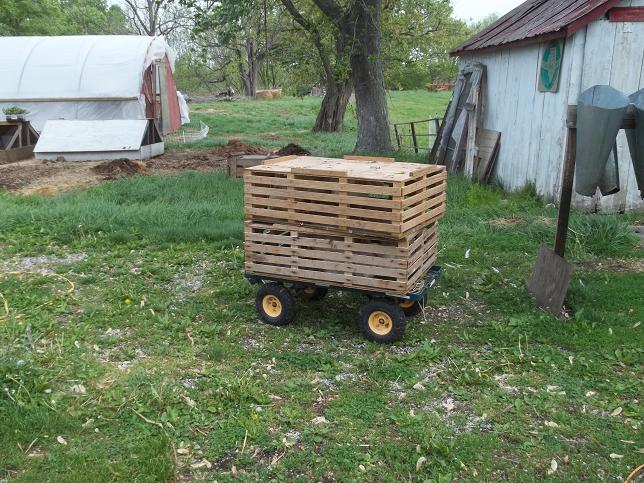
We use transport boxes and kill cones we got from this APPPA article.  The transport boxes are great.  I cut them out and my then 10 year old son assembled them.  I probably need more than 10 but where do you store empty boxes when they are not in use?  When we were much smaller we used a wagon to tote the boxes around.

The cones listed in the link above could be better.  I won’t say they were awful but they aren’t great.  They served their purpose for two years but needed a lot of attention along the way.  $35 seemed like a lot of money for a cone but I now believe it is worth the it.

We have been using a turkey fryer or the side burner on our old hand-me-down grill to keep our scald water hot.  This could be better.  Normally we also keep several pots of boiling water on the stove so we can replenish the water when it cools down.  Cool water leads to an incomplete scald and and unhappy Steward pulling wing and tail feathers with a pliers.

Then we move to the Whizbang plucker.  Really, this isn’t a bad little unit and can be used to amaze your friends but it’s not good for more than 20 birds at a time.  After about 20 birds you need to move it away from the pile of feathers or the mass of feathers will knock the belt off the drive pulley.  This gets old when you are trying to process 150 birds.  A belt tensioner would be a good addition.

We got a stainless steel table from some friends.  It is awesome and will continue to be a part of our process.  However, Mrs. Steward’s back gets sore eviscerating chickens at this table all morning.  She wants to move to hanging shackles.  Hanging shackles it is.

We needed to find an upgrade solution that was a good value and met our current and near-term production needs.  I am not processing 400 chickens/hour. I just need equipment appropriate to keep three adults and a child or two busy for a couple of hours in the morning.  Something that will get about 80% of our capacity so we don’t kill ourselves.  We are going with a package from Featherman Equipment.  After today’s fiasco I can’t wait for it to get here.  It should arrive Tuesday.  We don’t plan to process until Saturday…if we can wait that long.

I would like to add that we weren’t even considering Featherman Equipment until we met with David (the owner) at a recent conference.  His price, quality and proximity all favored his product.  Plus, the videos he put on Youtube years ago showed us everything that the books couldn’t quite describe.  The videos alone make him a hero in our book.  His prices put him over the top.

Doing it All Wrong!

I’m doing it wrong.  All of it.  It’s wrong, wrong, wrong.  Grandpa didn’t do it this way.  Dad doesn’t do it this way.  None of the neighbors do it this way.  It’s wrong.  Wrong, wrong, wrong.  I’m going to either go broke or wear myself out doing this.  Oh, the things people say to me…

“You’re going to kill that beautiful alfalfa stand running chickens over it like that.”

“You can’t sell enough chickens to make a living.  Even if you could, the workload would kill you.”

“Nobody is going to pay $X for eggs.”

“You’re a smart guy with a good job.  Why do you want to be a farmer?”

“You’re not a farmer.  You don’t till soil.”

“We can’t feed the world farming the way you do it.”

“Who has the time to move the cows several times each day?  That’s a lot of work.”

“What do you mean you’re only feeding your cows grass?”

“Who in their right mind would want to milk a goat?”

“Raw milk will kill you.  Look at our ancestors…they’re all dead!”  (OK, that was a joke.)

“Did you see [Popular Reality Show] last night?  No?  What do you do out there?  I would DIE without my TV!”

“How can you just kill a chicken?  I mean, it’s alive.  I couldn’t eat anything that used to be alive.”

“Oh.  You home school your kids.  You’re one of those people.”

“Even if it pollutes drinking water and helps to destroy the Earth, a flushing toilet is a basic human right!”

“I just can’t imagine why you would want to live out here.”  (Nevermind that they live here voluntarily…)

“Well, you’ll learn.  No, just go on ahead and do that.  I tried it once.  You’ll learn.”

“Your kids will hate you for this.”

“I used to think like that.”

Yup.  Again, feel free to move out to the stix, buy a little scrap of land and try to make it productive.  Be sure to have thick skin, write down your vision and be in total unity with your spouse/business partner/whatever.  Well-intentioned friends, family and neighbors will fearlessly tell you how wrong you are, how quickly you will go broke and what a mess you will make of things if you do it your way.  Find a way to filter their input while maintaining relationships.  You need those people, even if they tend to be negative.

Not everything you do will work.  Not every idea is great.  Once in a while your detractors will be right.  Don’t be defeated.  There will be awful days when you feel like a total failure, when you have wasted significant sums of money, when your dreams become nightmares or when that little goat you spent a week feeding, loving and worrying over dies in your arms…poor Shivers.  A friend recently filled a 5-gallon bucket with dead baby chicks.  He analyzed the problem, made some adjustments and worked to do better.  Don’t be defeated.

Finally, never tell the next generation, “I used to think like that” or “I tried that once”.  Tell them to keep improving.  Expect them to keep looking for new ways to solve old problems.  Button your lip as you help them back to their feet.

A United Front or How We Got From There to Here.

This post is much more autobiographical than I like to write.  Please accept my apologies.  I think this is an important subject.

My wife and I are in this together.  The things we do are things WE decided to do, not things one of us forces on the other.  We live to fulfill our purpose.  We aren’t simply busy, our work is intentional.  This wasn’t always so.

I met my wife when we were 16 and 15.  I, like most public school children, suffered a total lack of vision.

Anonymous – “What are you going to do after high school?”

Me – “I don’t know.  Join the Marines or go to college or something.”

Even when we went to college I didn’t know what I was there for.  I enjoyed playing tuba so I was a music major for a while.  I enjoyed studying frogs so I became a biology major.  I even did a research project on tadpole development and published a poster at a meeting of the American Society of Ichthyologists and Herpetologists in Seattle, WA in 1997.  After college I needed a job.  Any job would do.  My wife was a year behind me in school so I needed something local.  I went to work for a software company in town.  It was Y2K and software companies were hiring.

You with me there?  Music -> Biology -> Y2K Software.  Movement for the sake of movement.  By all appearances I was succeeding.  I don’t know what I was succeeding at but I was “educated”, employed, married to an intelligent, beautiful woman and owned a home.  It all just sort of happened.

“Would you tell me, please, which way I ought to go from here?”
“That depends a good deal on where you want to get to,” said the Cat.
“I don’t much care where–” said Alice.
“Then it doesn’t matter which way you go,” said the Cat.
“–so long as I get SOMEWHERE,” Alice added as an explanation.
“Oh, you’re sure to do that,” said the Cat, “if you only walk long enough.”
(Alice’s Adventures in Wonderland, Chapter 6)

Though I put too much emphasis on pretty and not enough emphasis on strong, I married remarkably well.  Everything else in life up to that point just sort of happened, but our marriage was intentional.

We realized we were just letting life happen to us not long after we had our first child.

We read a few books including Rich Dad/Poor Dad which, for all its flaws, gave me a push in the right direction.

Much later I found Crossfit and started making different dietary choices.  You have to make better dietary choices so you can recover between Crossfit workouts.  Shopping the perimeter of the grocery store shows you how limited your options are.  It’s easy to exceed your grocery budget eating only fresh foods.  We decided the quick solution was to be more serious about gardening and keep a few hens for eggs.

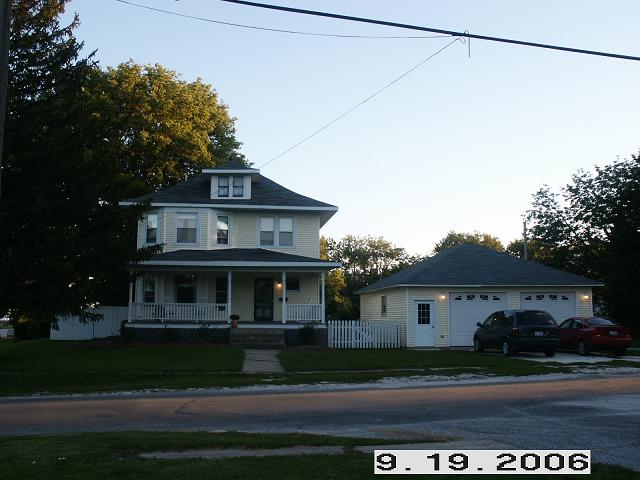
But this is real life.  Real life is hard.  We hit a rough spot in our marriage.  We bought an old fixer-upper house and spent several years making it livable.  As you can imagine, a house without a kitchen adds stress to a marriage.
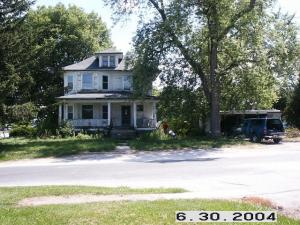
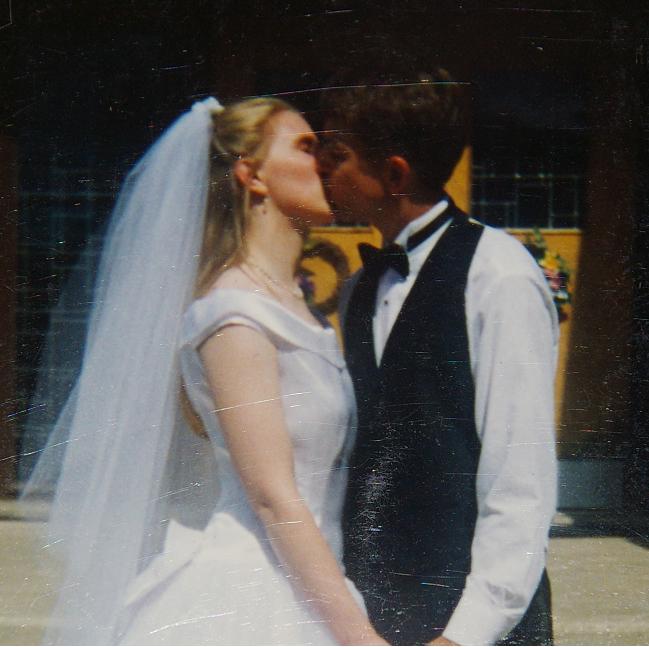
It got pretty gritty and reached a point where we had to make a decision about continuing our partnership.  This was a hard time in our lives.  We were working so hard with small children, work, a major remodel, and home schooling we forgot to make time for emotional intimacy.  It was difficult for us to learn to open up to each other again.  Though I wouldn’t wish it on anyone, I feel this time prepared us for later struggles.  We renewed our vows on our 10th wedding anniversary.  This time we were less formal.

While we rebuilt our relationship we read.  Over time we started shifting our reading away from gardening and more toward agriculture; The Contrary FarmerMaking Your Small Farm More ProfitableBackyard Market GardeningYou Can Farm and Self-Sufficient Life and How to Live it.  I started beekeeping.  We read books about homeschooling.  We studied Shakespeare, history, math, economics and chess.  We switched off our television and studied as broadly as we could, often reading aloud as a family for hours on end.  We adopted the philosophy that we can’t teach our kids but we can model education by teaching ourselves (See Thomas Jefferson Education).  It works.

As time passed we realized it was time to move.  We needed more than just a yard.  We prayed, we continued studying, we continued working, and we prayed some more.  Though the market had just crashed and we knew it would be tough we listed our house.  We had a vision of a preferred future, we were working to gain both experience and knowledge but there were no serious buyers.  Our bags were packed.  We were ready to go.  We couldn’t leave.

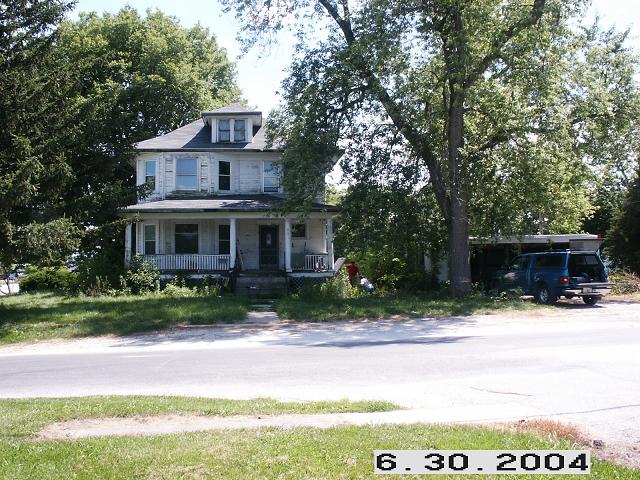
It took two years to sell our house.  Then suddenly it was gone.  Where were we going to go?  We looked and looked for small acreage farms but found nothing.  Oh, we found some but we were  not willing to gut and rehab another home and we weren’t looking for a mansion.  It seemed there was nothing in between.  We did, however, find a very nice home on a large lot in a quiet suburb.  The location was excellent, the price was right, the yard was huge and we thought it might be just the place to ride out the storm.  Maybe even build some equity…even if we couldn’t have chickens.

The suburbs proved to be too much for us.  We took on some major remodeling projects in the house, continued to read, continued to work, to garden, to keep bees and to fit in.  It didn’t work.  We just didn’t fit in.  Follow the link for the gory details.

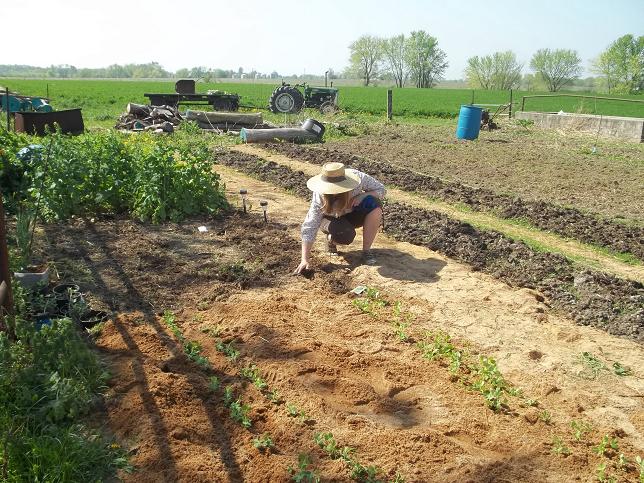
So here we are, several years later, living on the family farm.  The road here was full of twists but there were a few things that were constant throughout.  My wife and I remained faithful; first to the Lord, also to our marriage.  We were diligent about seeking out experience and education.  Though we were stuck in town we were constantly working toward our goals, learning to compost, learning to dress chickens and rabbits, squeezing more food into our garden space.  All of this was accomplished together.  Years of working side by side, supporting each other, questioning our decisions together, moving forward hand in hand…often with great uncertainty.  Even today she weeds the peas….
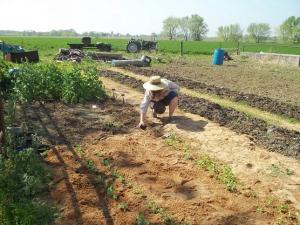
…and I weed the peas.

I get into the near-freezing pond on New Year’s Eve

…and she gets into the near-freezing pond on New Year’s Eve.

I can’t be home working with her every day but all of our planning, all of our decisions, all of our dreaming is done together.  I don’t simply tell her we’re raising X chickens each year and go off to my job leaving her to care for it all.  We develop a plan together that we believe we can manage.  Yes, she works hard.  Yes, I work hard.  But the biggest job is staying close and open to each other…to continue dreaming together.

If you are going to sell your beautiful suburban home, move out to the lonely middle of nowhere, survive the scoffing and questioning of friends and family, milk goats and/or cows, raise chickens, kill/scald/pluck chickens, practice rotational grazing when all your neighbors think you’re nuts and devote yourself to gardening and canning instead of driving to a grocery store you’ll need your spouse on your side.  This is a wonderful place to raise kids, we eat the best food in the world and we have a lot of fun but homesteading stresses marriages.  The work is hard.  It’s easy to take on too much and start blaming each other when the money comes up short.  As a man it is easy to dig in my heels and try to force something to happen.  Because she is with me, I’m forced to stop and consider the consequences.  At times her hesitation is difficult to appreciate as I’m sure she finds it difficult to appreciate my lack of hesitation.

If I have to choose between the family farm and my marriage I choose marriage.  Stewarding my relationship with her is far above my obligation to steward the land.  My dream of remaining married to her for the rest of our lives supersedes my dream of home-cured bacon.  It is easy to lose sight of your goals when searching out a new dream.  Sometimes you find you traded in your Mercedes for a Yugo.  Emotions are poor counselors.  Don’t be afraid to embrace your dreams slowly.  Put your toes in the cold water together.

Bringing Up the Average

“Let’s raise a few hundred meat birds and try to sell them.  What’s the worst that could happen?”

That’s a pretty naive question.  I asked it once.  Lots of things go wrong but I’ll share the one I fear the most.  Chicken death.

Chicks just die.  They may die from being abused or neglected by postal workers.  They may be eaten by snakes or bitten by rats.  They can get any number of ailments; curly toe, pasty butt, coccidiosis.  Some of these can be prevented with diet and hygiene but sometimes they just die for no reason.  Chicks can get too hot.  Chicks get cold and pile on top of each other, killing the ones at the bottom.  Worse, the smothered chicks don’t die and you waste a few days nursing a dying chick along.  Then it dies.

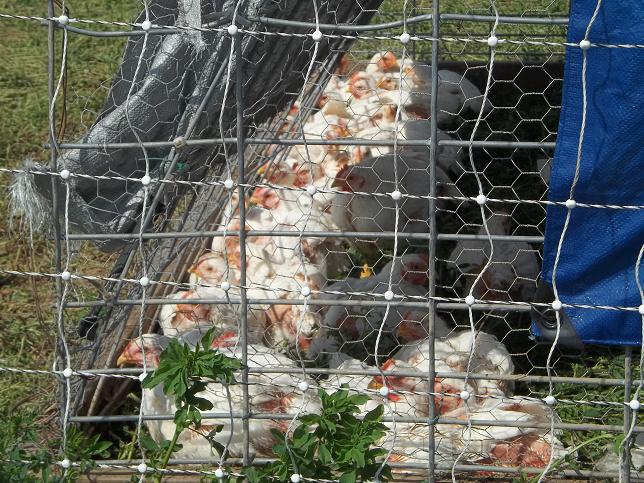
Let’s say you got them through the critical first 5 days and they survived the two or three weeks before you put them on grass.  You kept things clean and kept them healthy and they are ready to go to pasture.  Once there they can die from heat, cold, raccoons, skunks, opossums, minks, cats or dogs.  Everything thinks a chicken is tasty.  I take precautions to keep the birds safe from predators with electric netting but nothing is perfect.  Even if the netting works buffalo gnats can suffocate them.  Hot weather or cold weather will kill them.  Heavy rain can drown them and wind can crush them under their houses.  A waterer can clog on a hot day and they’ll all die.  They can get run over by the wheels on the chicken tractor dolly.  They frequently die of heart attack, especially as they get older, though this is manageable.  Honestly I pray for safety every night my chickens are on pasture, pray every morning when I get up and pray every time I peek in the tractor.

I want to emphasize that these are fragile little creatures that taste good to predators.  Even with good management bad things can happen.  I lost nearly 30 layers to one mink in one night.  I can’t tell you how sad I felt when I opened the door to the chicken house and found all those chickens piled up on the floor.  Then, the next night, I saved the remaining 40 layers when I shot the mink in the hen house.  I’m not out in my field hunting down everything that shares my farm but I have an obligation to take steps to protect the animals in my care.  That mink found a way into my Ft. Knox chicken house two nights in a row.  That’s enough.

This is a part of why pastured products cost more.  Not only do my animals live normal chicken lives in the sun and grass, not only do they eat real, whole grains instead of leftovers from manufacturing processes, I expend a tremendous amount of time per animal watching over them.  A mass-produced, confinement bird can live or die.  A chicken that costs less than $1/pound was never cared for, let alone allowed to embrace it’s inner chicken.

To recap, it’s really, really hard to keep the meat birds alive for 7 or 8 weeks.  We are better at it than most but still have room for improvement.  It saddens me to find a dead bird, not because of the financial loss but because it means I failed in my part of the agreement.  I provide health and safety for a short time.  They pay me back with a meal.

Chickens like sunlight.  They like to scratch in the dirt, eat bugs and really enjoy eating greens.  These are things denied to all but a few chickens in this country.  Find yourself a farmer who is willing to make the chickens happy.  His chicken will cost more.  His chicken is worth more.

Ghosts of brooders past and present

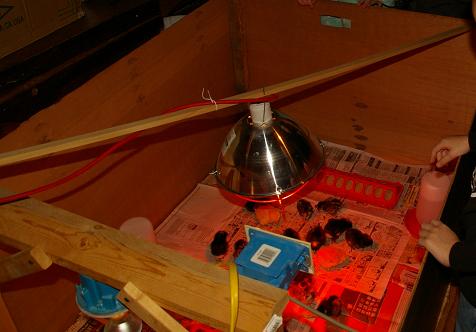
Chickens are a good place to start.  They are small, require a small investment and a quick turnaround.  We started with layers we ordered from a hatchery and, boy, were those city postal workers surprised when the package came through.  I built a brooder out of a 4×8 sheet of plywood saved after a home remodel job sitting on another sheet of plywood I got from my neighbor’s trash.  Yeah, we didn’t fit in the suburbs.  Please notice the heat lamp hanging from a scrap strip of pine board.  Not the best idea but chickens seem to manage in spite of owner inexperience/foolishness/incompetence.

We also used this brooder for the first few batches of broilers but a 3’x5′ brooder is cramped quarters for 50 broilers.  We tried raising 100.  Out of desperation we rapidly graduated them to a portion of the greenhouse…the old, tiny, PVC, ultimately-destroyed-by-a-strong-wind greenhouse.

The following year we used a cracked 300 gallon watering trough for a brooder.  Talk about an improvement!  Here it is brooding our turkey poults with broilers.  (They bunched up for the picture…)

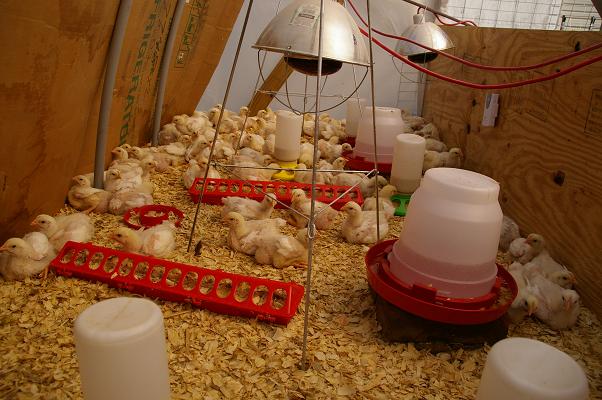
Then things got out of control.  We were running 150 chicks in a batch, slaughtering every other Saturday so we built two of these outside:

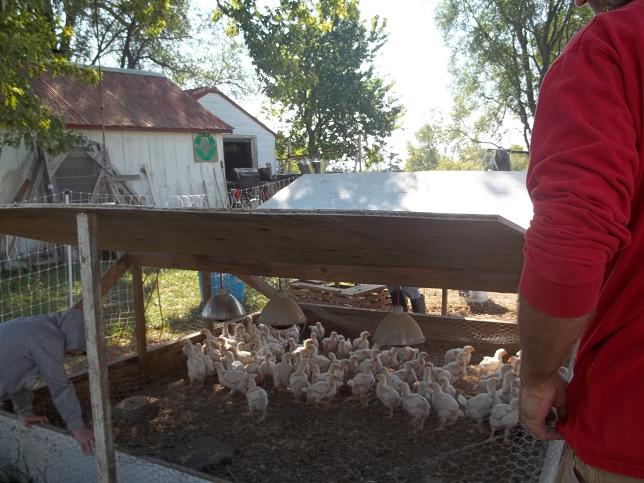
This is an 8×8 brooder with four heat lamps.  The lids on each side are full 4×8 sheets.  We use a Plasson bell waterer gravity fed by a bucket once the birds graduated up from the quart drinkers.  Here’s a shot of the birds as we pack them off to pasture:

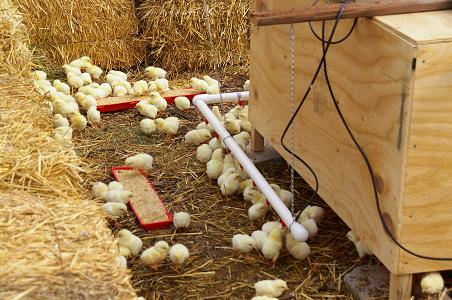
I really feel the 8×8 brooder pictured above was excellent for our purposes.  The birds had room, fresh air, they were easy to access and safe from predators.  But what do you do when you move to 300 chickens per batch?  You move to the new greenhouse.  I built a 2′ tall 4×4 brooder that the chicks can enter and exit under each side.  There are four lamps inside on two switches so temperature regulation is easy.

Now, I want to point out some major advantages of the current brooder and changes to this year’s management.
1. We moved away from quart or gallon drinkers and picked up some watering nipples.  These are screwed into a PVC pipe, gravity fed from a bucket.  The pipe wraps around all four sides of the brooder.  The birds can’t scratch manure into the bowl since there is no bowl.  This is a huge plus to animal health.
2. We are now using course hardwood sawdust for bedding.  I had 4 tons delivered for $130 as opposed to the pine chips used in previous years that were $5/bag or something like $1500 for 4 tons.  Plus the hardwood chips have been outside for months and are full of interesting things to peck and scratch.
3. Space available to the chicks is only limited by how many straw bales I want to surround them with.  They have room to run and run they do.
4. The top of the brooder is a large, warm, dry area perfect for starting my bedding plants.
5. With everything out in the open, it is a simple matter to add bedding, fill feeders or do whatever needs done.
6. This was cheap to build.   It’s one and half 3/8″ pine sheets and an 8′ 2×4 with four ceiling light boxes, four bases, 8-10 feet of wire, two switches and a plug.  I think it took about 40 minutes to put together and wire up.
7. It is easy to just sit and play with the chicks.  We or our guests can just sit on a straw bale and enjoy the commotion.  That hasn’t really been possible before.

Everything changes.  Everything has to change if I am going to create the best possible environment for my animals.  I have to try something, observe, record, reflect and try again.  Thank God we do this work seasonally so I have time for reflection.