Budgeting Your Day

Two recent posts (here and here) were entirely concerned with money.  If you live in town your budget may not be radically different than living in the country…except it is easier to save money on food out here.  You could build a business in town though…say…lawn care.  Either place, how do you fit building a business into your schedule?  Not just running a business (mowing the grass) but building the business (finding more lawns to mow).

Stephen Covey shared time management quadrants in 7 Habits of Highly Successful People.  Those quadrants help you to identify what is important and what is not important then what is urgent and what is not urgent.  If you don’t get important things done in a timely manner they become urgent.  If you have nothing important to do…well, maybe you should revisit your goals….like…establish some.  Ideally, the bulk of your time should be spent on tasks that are important but not urgent, like planning out your week, building relationships, etc.  Though sometimes there really are fires you have to put out, your farm or business will not continue if all of your important tasks have become urgent.  Plan ahead and complete tasks before they sneak up and bite you.  For example, last year we were butchering chickens and the cows needed to be moved.  Their need to be moved became so urgent they took matters into their own hands.  That delayed our chicken butchering by several hours giving us an urgent and immediate need to sleep.

Julie and I sit down on Sundays (well, most Sundays) with our planners to line up our calendars.  We look at what is coming up this week and plan out larger events ahead of time.  This helps us avoid being double-booked.  It also helps us identify chores that are beginning to shift toward urgency…like butchering ducks.
Planner

So what is MOST important?  Moving cows is important.  Gathering eggs and feeding chickens is important.  But none of it matters if I don’t have any customers.  It is of the highest importance that I spend time building my business…building relationships…meeting my commitments.  In could write a whole series of posts about the importance of building your business and ways to go about it.  To keep it short, the business side makes the it possible for me to have cows because I would rather do nothing for nothing.  The most important thing to do is build my business in a myriad of ways, including this blog.

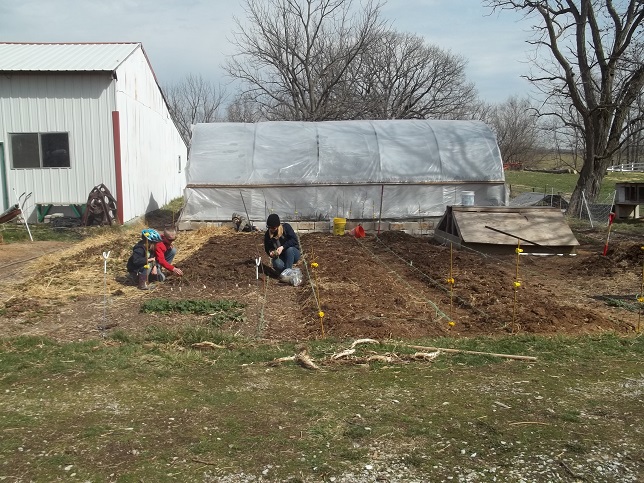
But it’s not always that simple.  There are only so many hours in a day.  With my work schedule (which I can’t modify) and with my commute (which is long) I get at most 3 hours to work on the farm on weekdays.  In the winter I work outside in the dark.  In the summer I work in the fog of mosquitos.  But the weekends are the real chance for me to catch up on chores.  On a typical summer day I get up early, check my live trap for kittens that trapped themselves then turn on the watering hose and go look at the cows.  Everybody still where they are supposed to be?  Good.  Then I mosey on over to the chickens.  Some mornings I go ahead and gather the 18 or so eggs that are already in boxes.  I move the chicken houses, check feed, fill water and head on home to shower and shave.  I usually remember to turn off the cow water when I’m in the shower.

Then a bunch of stuff happens at work and suddenly it’s late afternoon.  The paid work day has ended.  Once I get home it’s time to get moving.  I’m not heading off to play cards at the Moose and I’m not watching Wheel of Fortune.  I’m sharpening my chain saw, laying out the next day’s pasture or otherwise keeping myself busy.  Maybe broadcasting seed in the pasture, weeding or harvesting the garden.  Maybe just estimating pasture and checking recovery.  Maybe chopping the goldenrod the cows didn’t trample or picking up that pile of firewood I forgot about and the cows discovered.  I have to do my level best to knock out important tasks before they become urgent.  It’s getting late.  Better head in and see what the kids are doing.

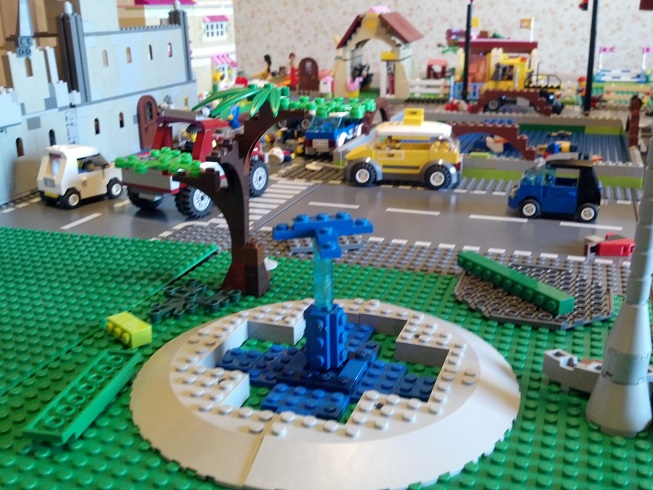
Did you know I have children?  Sometimes they are out working with me.  Sometimes they are sledding while I’m cutting wood.  Sometimes they are hiding from bugs, playing legos, reading books or otherwise waiting for me to come inside and crack a few jokes.  There’s a good chance the kids ate without me since they go to bed at 9.  I have a few minutes to work my Lego magic, show them who is still king at Mario Kart and have a few laughs together.  Then the kids go to bed and I read a book.  At some point, I’ll turn to my lovely bride and ask her the question she knows is coming…”Want to watch Star Trek?”  Then later one of us will ask the other, “Why did we stay up late watching that stupid show?”
LegoTown

That’s a fairly normal day.  The evening varies widely but that’s about the shape of it.  How much time did I spend building my business?  Well, I didn’t really build my business, I just worked an hour in the morning, maybe 2 hours in the evening.  That’s plenty of time to run cows but not enough time to build a business and it’s certainly not enough time to raise broilers.  What can I cut out?  Well, I could go to bed earlier but it’s dark after 9 anyway.  I could skip supper…oh I already did that.  How about the kids?  Do they really need me around?  Shoot.

And don’t even get started on Julie’s day.  I have 12 hours of showering, driving, sitting and writing code.  She has 12 hours of …well, I asked you not to get me started.

Weekends are, if anything, worse.  Basically the same chore list plus an opportunity to attack bigger projects like putting up hay, butchering chickens or hauling scrap to the scrapyard.  To be honest, in 12-15 hours on weekdays and another 20-25 hours on weekends we’re barely getting ahead of the work.  Buildings to repair, fence to rebuild, brush to cut, fallen limbs…the list never ends.  We only have so much money…but you can borrow money from the future.  You only have so much time and that’s it.  You can’t beg, borrow or steal time and my business needs more time.  My kids need more time.  My wife needs more time.  I want to watch Star Trek!

Dad suggested that my time on the farm is less valuable than my time at a desk…hence the desk job.  So maybe I should hire someone to run the farm while I’m gone.  Trouble with that is, while there is always more work to do, the work isn’t always worth paying for.  I haven’t built my business to the point where I could keep an employee busy and maybe I never will.  Maybe I should stop retailing products.  I could ship all of my beef to the commodity market.  I could shrink my layer flock to just what we need for the house and only raise enough broilers to fill our own freezer.  I would certainly have more time and the commodity market would absorb anything I could produce, I just may not always get a price I’m happy with.  More on this when we talk about beef a few in a few days.
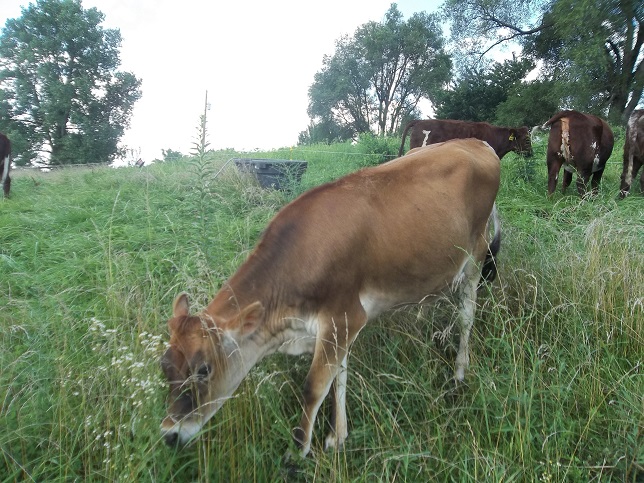
Molly

In my discussion about budgeting for the farm I focused on money.  Money is kind of a big deal.  Money is a big deal even if you live in the suburbs but that longer commute to the sticks means you will have even less time at home…less time to build/repair fence…less time to eat…less time to build relationships with customers.  Greg Judy talked about building fence in the dark with a headlamp but his entire business is grazing, not retailing product.  Well, maybe consulting and speaking.  The point is, he, a grazier, was building his business by building fence.

Watch how you spend your time as time is more important than money.  Are you building a business or just running it?  Are you busy doing important things or are you stuck in a rut lacking direction?  Soon we’ll get specific about things to spend time on and the realistic return on investment starting with laying hens.

More Budgeting…Lord Help Us!

My previous post was a somewhat fictionalized version of what I’m up against.  Now, as our friends at SailorsSmallFarm pointed out, it’s not all that different than what someone could be up against living in suburbia (though my mortgage was never more than $120k…and I thought that was a huge number!).  But it is a big, sobering number.  Today I’m going to revisit the subject briefly, smoothing some rough edges I left behind.  Hope I don’t make things worse.

I’m not really wanting to compare city mouse and country mouse.  I’m not even wanting to dive into earnings vs. expenditures.  Really, I was wanting an honest assessment of the pure cost of my chosen lifestyle which, from my perspective, is incredibly pricey but far, far lower than I see in much of my peer group.

But, for you city mice, running a business has nothing to do with location.  There are an infinite number of businesses that can be run from a suburban home.  But in any case, you have to make some decisions about your personal financial condition.  15 years ago I spent 90% of my time traveling for work.  As a newlywed.  Yeah.  To pass the evenings I spent a lot of time reading, studying and talking to people: my wife, my father, my father’s father…and my wife’s grandfather (Alan).  Alan was one of several who helped me to change direction in life.  To paraphrase him, “If you want to get ahead in life you have to work a little harder than the next guy.  Your job won’t get it done.  You have to do a little extra work on the side.  Who are arguably the smartest people?  Would you count college professors among them?  They spend a lot of time writing books.  If some of the smartest people need extra work, what does that tell you?”  He then emphasized the need for a business, not another job.  So if you are stuck in town, start mowing grass or bookkeeping or cleaning houses or take on a few remodel jobs.  The point is, you have to do something.   That said, beyond just working, you have to make a few changes.

You have to start questioning every dollar you spend.  Otherwise, that new business income will just float away.  The farm will be lost.  Every action you take is a decision.  In the words of Geddy Lee, “If you choose not to decide you still have made a choice.”  How do you decide where to deploy your money?

We have made (and continue to make) certain sacrifices to support our lifestyle.  I could rattle off a long list of “weird” things we do that really are pretty normal.  Anything from cutting my own hair to canning peaches.  What percentage of the population make (or eat) sauerkraut anymore?  Butcher hogs?  How many women are content to get their ends cut once every 6 months to a year?  In reality, these things aren’t all that weird at all, it’s just that nobody knows how to can anymore.  …or how to cook.  …or how to bake bread without the help of a machine.  …or are comfortable with their natural hair color.  So we are able to save money because we have preserved these skills across generations and picked up from books…and because we’re weird.

And, look.  I know this is little stuff.  I cut my own hair every month saving as much as $120/year.  Not a huge savings.  But I also cut the boys’ hair.  (I know I’m not saying anything new here.)  The little things add up.  The $30 magazine subscription, the extra $x to get cable along with internet, the extra $x to get that premium channel, that cup of coffee to reward yourself…even if you “reward” yourself every day.  I’m not even talking about boats, motorcycles, vacation homes, swimming pools or Disney vacations or tractors, diesel dually pickups or 4-wheelers…none of which you will die without.  I’m talking about daily decisions that affirm and enable a certain lifestyle choice…making positive choices to enable your financial future.

This has nothing to do with being a farmer but it has everything to do with staying a farmer.  Not only do I have to spend less than I earn (which is easy by the way (more on that in a bit)), I have to plan what I’m spending money on.  I’m attempting to run a business.  A few days ago I described a need for a return on capital.  If I don’t get rewarded for my risk, why take the risk?  What’s the point?  I need to see increase (If you need motivation here, go read Matt. 25:14-30).  I only have $X.  I only have Y time.  I need the XY product to be great.  Raising more chickens requires more time but returns more cash compared to cattle.  Chickens also require higher inputs.  I’ll talk more about our experiences with the economics of cattle, pigs and chickens in later posts but none of the dollar values matter if I lack time.  Budgeting time itself is critical and is the subject of the next post in this series.

On Spending Less Than You Earn:

I feel somewhat silly saying this.  Figure out how much you earn.  Figure out how much you are spending.  Cut the spending till it fits, no matter how much it hurts.  As a rule, increasing earnings results in increasing expenses so you just have to do this and do it now! (though increasing your earnings is, generally, a good idea).  It’s so simple, anybody outside of government can do this math.  I understand that simple != easy.  I get it.  This practice gets even better when you can hide a portion of your income from yourself and cut your spending further.  And further.  Pretty soon your credit cards are paid off, your school loans, car loans, mortgage…it’s all behind you.  So.  There you go.  Really, hiding money from yourself and not extending additional credit is all the budget you need.  Can you believe people write whole books on this stuff…mollycoddling or, more likely, patronizing their readers?  Can you believe people buy books on this stuff?  No wonder they are broke.  This is the voice of experience talking.  My name is Chris and I’m a recovering spendaholic.

One Final Thought:

Money is a societal bug-a-boo.  We don’t talk about it.  We don’t like to think about it.  If you are my age it is quite likely that you think of rich people as bad.  That they have obviously done something wrong or immoral to get that money…or their ancestors did.  That having money proves one is immoral.  That poverty is preferred over prosperity.  I don’t think this post is the place to refute such nonsense.  Just understand, if you think money is bad…if you think money is your enemy…if you confuse the verse and think money is the root of all evil instead of the love of money, you will find it always eludes you.  (I really don’t think Paul is condemning rich people (1 Timothy 6), he’s condemning people who desire riches rather than the source of blessing.  See Solomon, Abram, Jehoshaphat, Job….) Money is a tool.  A powerful tool.  A tool you can use to save the world.  But you have to have it to use it.  If you think money is bad, you really need to change your mindset.  Money won’t stay where it is not welcome.

Budgeting, Planning, Dreaming and Praying for a Miracle

This is a continuation of a series about deliberately succeeding…or trying to anyway.  Thanks for sticking with me this far.  I apologize but I’m not going to share my family’s annual income either from on or off farm.  I think this post gives an idea of what our current farm income is…by that I mean it’s low.  We’re learning and education is not free.  I’m working off the farm 12 hours each day so that limits our options and our farm income somewhat.  I do have some ideas to share for moving to full-time on the farm but that will be handled separately.  Please don’t be discouraged by this post.  These are just numbers.  These specific numbers may not apply to you but you should figure out what numbers do apply.  Ready to fix my math?

Let’s do some quick math on a napkin with a mix of fictional and real numbers. I bought a farm. For simplicity’s sake let’s say I paid $4,000 for each of 60 acres of mixed Illinois ground (I know, right?). I would owe some bank $240,000. That’s not a small number. Now, let’s say I borrowed this at 4% fixed over 30 years (I wish!). These numbers are bogus but let’s run with it anyway. I have to find a way to generate $1,145 every month or the bank invites me to leave. We’ll round that up to $14,000 per year.  (People regularly pay this for houses in the suburbs on 1/4 acre lots!)

It’s not enough to pay the bank. I have to pay the king for the right to stay on my own land. Let’s tack another $3,000 on to that annual expense.  Hail Caesar…er…Macoupin County!

Now, the bank (and rational self-interest) requires that I insure my land. I need to be covered in case of flood, tornado, fire, theft, unemployment or death. In short, I have to make a bet that something bad is going to happen so my wife won’t be homeless in case something unlikely happens. Let’s tack on another $3,000 annually though that number is probably high.  (My wife will never be homeless.  She’s so pretty it will just be a chance for her to upgrade to a better husband.)

Wedding2

I realize that ownership may not be for everybody. It might be better to rearrange those numbers a bit and rent or lease. Those options have significant advantages but are not free either. Stay with me as we move forward. To this point, just to own my farm I have to come up with $20,000 each year for the next 30 years. Let’s peel the onion a bit with additional rough numbers.

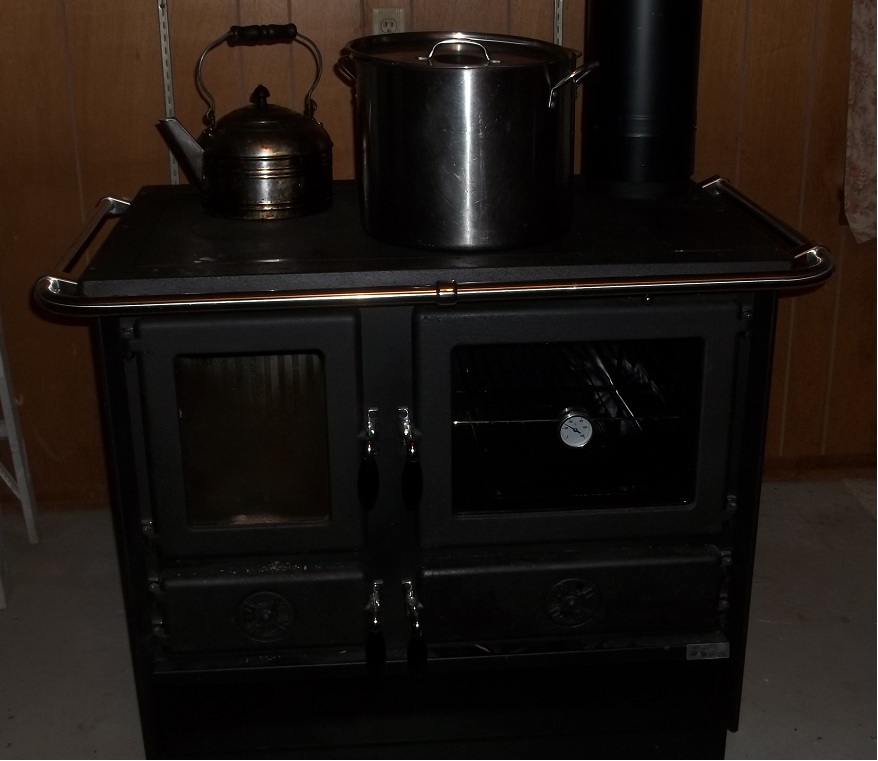
We get 4 seasons here. We usually have 4 months that don’t require any heating or cooling, 4 months that require heating and cooling and 4 months that require either heating or cooling. With me? My propane company just sent out a mailer to all subscribers asking that we get our bills up to date before the next heating season starts. It’s July. I’m not bothered by a company wanting to get paid for delivering a product. I’m troubled that late payment is so normal that it was handled in a mass mailer rather than just a quick letter to a few individuals.  I keep our drafty old home at 58 in the winter and heat one room with wood so our propane usage is kept to one tank per year. Even still, that propane isn’t free. Let’s put down another $600 to stay warm and have hot water, leaving out the little bit it takes to make my chainsaw run.

WoodStove

Being a family of computer-users and avid readers, we enjoy having power on. Further, a little air-conditioning on a hot day is a good thing. I’ll go big and tack on an additional $150 per month ($1800). We use city water at $100/month. We call in our trash pickup once/month paying $1.25 per bag ($63/year). We don’t but we could easily buy $500 worth of groceries each month (including Kleenex and TP). Our ONE CAR needs a bit of repair each year and we continue to make a $300 payment to ourselves so we can replace it in the future ($4,000) and don’t forget fuel ($4000 which would go down if I didn’t commute to work each day) and car insurance ($600). Oh, and the wife needs a cell phone for $240 and home internet costs $600/yr and since we have internet we should get Netflix for a mere $100/year.

So we’re at $39,203 just to live – and live comfortably – for a year. Missed several things like house repair($800), medical expenses ($1000), hobbies ($300), overdue book fines ($50), clothing for 6 ($900), Homeschooling supplies ($600), Tithe (10% of earnings) but we’ve got a starting number.  Rounding to $51,000 should cover to this point, $44,000 if you aren’t one to tithe…basing tithe on expected required income.

To this point, to live on my 60 acres I have to produce $51,000 each year after taxes…otherwise I’ll either eat into my savings or have to get a job off-farm. I have chosen the off-farm option.

But we have only just started.  All I am doing is paying for land and going through the motions.  It’s not exactly a Spartan existence (Netflix) but it’s also not posh.  The dentist smacked me with my own mortality this week.  One of these days I’m going to get old…possibly ill.  That’s going to require some cash.  Let’s put aside $10,000 each year and hope it earns 10%.  Now we’re at $61,000.

There is that dream of knocking down the current house ($10,000) and building a new one ($100/sq ft).  Sometimes, when farming, a truck is helpful.  Or a tractor with a loader.  But if we’re not careful I’ll have a new house, a 4-wheeler, a pickup truck a tractor and loader and no business.  Let’s add $5000 to develop our farm business.  We aren’t advertising.  We’re not building an online order system.  We’re just buying animals, housing, fencing and feed plus any licensing we need.  So now we’re shooting for $66,000.  Oh, heck with the house, tractor and truck.

Oh, and the tax man cometh.  To get to $66,000 after taxes we need somewhere in the neighborhood of $72,000.  The tax man is going to penalize me under the Affordable Healthcare Act if I don’t buy some health insurance too.  You will know better than me what that will cost you but for the sake of offering a number, insurance through Samaritan Ministries would cost my family $370/month bringing our total to $76,400 before taxes.  Another reason to keep that off-farm job.  Ugh.

If I make $1 for every dozen eggs I sell (I don’t but let’s play here), I have to sell 76,400 dozen eggs.  That’s 209 dozen each day…that’s a highly optomistic, hard-working 3,000 birds, the magical limit imposed on farms of my license type by the state of Illinois.  BTW, 3,000 birds would need 600 next boxes.  60 10-hole boxes would set you back $10,000, not to mention the $4,000 you paid for chicks, $2,700 for 16 lengths of PermaNet, and, assuming each chicken needs 25# of feed up to point of lay and if you can find feed around $13 per bag, you’ll need $20,000 worth of feed to get started.  Then you have to ship 7 cases of eggs every day!  So.  Let’s not start with 3,000 birds.

LayerHouse

Still thinking about farming full-time…abandoning the prison job?  I think it is possible.  Keep in mind, though, that I work off farm.  …that Joel Salatin‘s dad worked off farm.  …that Herrick Kimball built his business while working off-farm.  …that Greg Judy had a job off farm.  …that Gene Logsdon kept writing and working off farm.  …that J. Hector St. John de Crèvecoeur wrote about working off-farm.  That working off-farm and living frugally to pay this mutha off is a normal thing.  We recently heard Salatin speak about transitioning to full-time and I’ll explore some of those ideas in an upcoming post, also sharing our trajectory and how we’re working to avoid the ridiculous $37,000 first egg scenario above.

Luke 14:28 says:

Suppose one of you wants to build a tower. Won’t you first sit down and estimate the cost to see if you have enough money to complete it?

Pencil these numbers out for yourself.  Add in Scouts, sports and music lessons.  Planning for the kids’ college?  Don’t feel discouraged.  Eat less food.  Make that car last an extra year.  Cancel Netflix.  Don’t get sick, old and don’t ever retire.  Floss!  Seriously, I don’t mean for this to be a “glass is half-empty” post.  I just think it is important to define the target before we begin aiming for it.  Next time we’ll start aiming.

UPDATE:

Dad pointed out I have to come up with the same money weather I own a $240,000 house in the suburbs or a $240,000 farm in the stix.  Both of these have their advantages but those advantages have to be realized.

May As Well Do Nuthin’ for Nuthin’

Yesterday I said it helps me to feel better about the workload if I’m getting paid for the work.  Now, I’m not talking about gross farm income, I’m talking net…after expenses and taxes, but I repeat myself.  Let’s see some return on investment here!  If it costs me $12 to make a product that sells for $10, we’re not going to last.  I can sweat through my clothes before 8, pick mountains of berries, eat fresh chicken and pork while restoring the local ecology right up until the day the county shows up asking me why I haven’t paid my taxes.  Then the reality hits home.  Caesar wants his propers.

I have to do more than just work.  I have to generate a surplus.

This is important so I’m going to dwell on it further.  I want to pause to clarify that this is not a “Wait!  Don’t do it!” post.  I’m all in favor of you chasing down your dreams as I chase mine.  We need more producers and that’s “we” as in the community of innovative, alternative farmers, “we” as in consumers of quality food, “we” as in a national economic body and “we” as in inhabitants of a rock that needs a little TLC.  Maybe a few more “we’s” as well.  Now is the time to start.  There is so much to learn…so much to do…you better get started…but take a moment to consider what you are going to do and how you’re going to pay for it.

The Problem

I have to get paid for my work.  Work may be its own reward but profitable work brings home the bacon.  The Labor theory of value (put simply) states that “The value of a commodity increases in proportion to the duration and intensity of labor performed on average for its production.”  Adam Smith wrote that the exchange value of a good was “equal to the quantity of labour which it enables him to purchase or command.”  Much later Marx defined “Labor” as “the actual activity of producing value.”  So, according to this theory, I can make black caps or red caps with the same labor so they should be valued the same.  Unfortunately this is entirely wrong.  Black hats are, like, soooo 2012.  Red hats are in fashion now.  Neither are useful to people living in the frozen north who want ear flaps.  Value comes not from the laborer but from the consumer.  I can put an enormous amount of labor into creating something but for any of several reasons consumers may reject it as value is subjective and customers are fickle.  Betamax was arguably a better technology than VHS but we all ended up with VHS players…until we got DVDs and later Blue-Ray and later streaming technology.  Just as there is always more work to do there is, apparently, always more stuff to consume…we never get enough.  People will buy anything, pay any price no matter the labor that went into the production of the good.

Back to the point, it may cost me $12 per pound to produce a chicken but I’m probably not going to sell many $48 chickens as long as there are alternatives available for less.  You must produce efficiently or you will price yourself out of the market.  Further, just because you are working and money is flowing in doesn’t mean you are getting ahead.  You can’t simply be busy.  We often see people at craft fairs losing money on every transaction but filling the boring days of their retirement.  This practice won’t buy a farm (or power a nation).  You have to create more value than you consume and the value of your creation is defined by consumers.  You have to provide a good or service that people want…and $48 chicken is a hard sell but, apparently, an $85,000 Tesla S is a bargain.  Well, it must be.  They sell a lot of them.

The Problem With the Problem

We are, as defined in Mises’ Human Action, actors.  We weigh options and take action.  If the option before us will not benefit us we do not act.  As a consequence we always act in our own best interest…unless we don’t.  I like the taste of Coke products.  Mmmm.  But it is to my long-term detriment to consume Coke products.  I have to believe a heroin addict is following his own perceived best interest by using.  Similarly, owning a farm may be the fulfillment of a dream…until the dream turns into a nightmare.  In Knowledge Rich Ranching Allan Nation points out that there is a 99% turnover rate of “Urban Pioneers” in Montana in only 9 years.  That means people took what appeared to be positive action but either it proved to be a mistake or they followed the wrong path.  9 years into it, they gave up on the dream.  From my own experience, they then spend the next 50 years telling other potential “urban pioneers” not to go because they tried it and it doesn’t work and there’s no money in it.  You rarely hear an honest, “Well, I think it could be done but we went in starry-eyed and naive.  If we had only tracked our expenses and planned for a multi-year learning curve.  We had so much to learn and do but didn’t give ourselves enough time.  We needed a mentor.”

Look, I have made a little money in my time.  Not much but some.  I have rarely made money on accident.  You have to plan.  You have to find an edge.  You have to get up early after a snowstorm at age 10 to make a few bucks shoveling driveways.  You have to call your buddies the night before and work out who will go to which house, going to bed praying it will actually snow during the night.  You can’t show up too early or an angry woman in a robe and curlers will invite you to leave.  You have to show up early enough to beat the tractors that will plow the driveways for free.  It’s all about market timing and timing takes planning.  You have to plan…even if you’re 10.

You have to plan!  Who is going to buy those eggs?  How will you sell that pork?  How much will it cost to produce?  How much time are you spending on this?  Are you producing for the commodity market or will you retail every stinking one?  What’s the plan here?  What’s the backup plan?  How are you going to pay for this farm?  How long will it take to build fertility?  How many years will it take you to learn how to repair the soil?  How are you going to keep it going when you break your leg?  How are you going to support your family if something happens to you?  Want to retire someday?  Take a vacation?  What’s the plan?

The Summary of the Problems

So the problem is this: I have to make something that people want…and have to do efficiently enough that I have something left over.  The problem with the problem is that there aren’t always immediate consequences for mistakes.  Your 5-acre horse farm may not wipe out your bank account immediately.  Those 5,000 broilers may only lose you $1 each this year but, over time, if you aren’t providing value to consumers – and doing so efficiently – you’re heading for disaster.  If you’re going to keep this farm thing you have to at least break even.  If you’re not getting paid to work….why are you working?  It is worse than a waste of time and materials to make insulated wool hats with ear flaps to sell at a July market in Oklahoma.  Though Smith and Marx disagree, we would all be better off if you had done nothing.

So what’s the solution?

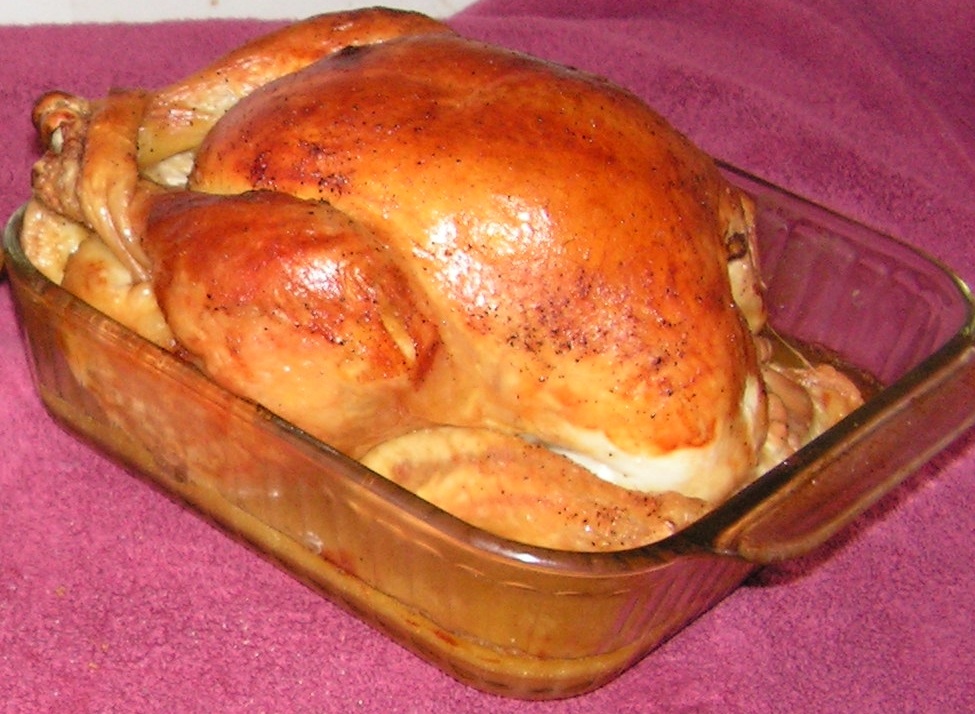
Beyond planting trees, moving cows and building fence, somebody has to pay for this lovely country estate.  If we can’t pay for it, some mean person will show up, demand the keys and explain that we have to leave.  Then someone else will get a chance to farm this ground.  Even if the land was ours free and clear we would still have to work and would still feel better about that work if the fruit of our labor found a ready market.  It is deeply satisfying to produce something that people enjoy…to add value to something that makes someone else’s life better…to be a part of a voluntary transaction where both parties come out ahead.  I get a little money in exchange for a little bird.  The money keeps my farm running.   The bird keeps your family healthy (for several meals).  The transaction strengthens both the local ecology and the local economy.  That feeling of satisfaction helps get me started early in the morning on butchering day.

Roasted Chicken

What does it take to keep a 60 acre farm running?  Stay tuned.  I’m going to share a realistic but somewhat fictional budget of a farm just like mine.  I also have a separate post coming where I want to explore why we have a moral imperative to produce more than we consume.

Working Hard is Hard Work…Sometimes

In its original form, this was a post justifying feeling sorry for myself because that’s where I was a month ago.  Fortunately I didn’t publish that nonsense.

So.  Put your hands in the air if you have ever had a bad day.  …or five.  …or if you have ever become emotional after several hard days and long, sleepless nights.  Any hands up?

Let me give you the skinny.  Working hard is hard work.  When it’s hot outside, you’re going to sweat.  Sometimes a lot.  If you are allergic to hay, putting up hay will make you sneeze.  Cows will get out.  At night.  In the road.  Rain won’t come when you need it but will always come as soon as you mow hay.  Rain will find its way into your home.  Ducks are hard to pluck.  Children need fathers who can set work aside and just hang out…just when the pressure to work is the highest.  Husbands need wives who understand that sometimes (and only sometimes) I just want to sit and play video games…accomplishing nothing, learning nothing, improving nothing…just shooting aliens with my brain in the off position…OK Boo?

Sometimes things are so difficult that I regret moving here…but who hasn’t wondered if they made the right choices in life?  If they married the right spouse?  …if they went to the right school?  …if things could have turned out better if they had only done that one thing differently?

Today I live on a farm.  This is where I am.  In some ways it’s who I am.  I could write about the bad stuff that comes with working a farm.  I could tell you what it is and what it is not from a strongly negative perspective.  I could do it in the name of “saving future homesteaders from the heartbreak of shattered dreams.”  But that is all meaningless.  A month after I wrote the first draft of this post I feel radically different about the farm.  It’s still hot out, the days are still long, there is still more work than I can handle but I feel pretty OK about it.  What is different?

You know that thing you love?  You would do it even if it didn’t pay.  You would want to share it with everyone you know and love…even strangers on the street.  It’s amazingly cool and you feel blessed to be able to do it…to be able to share it.  You know that thing?  Sometimes it really stinks.

But only sometimes.

Here’s a tip to make the work more tolerable:  Get paid to do it.  More on this tomorrow-ish.

Numbering the Days of Hay

3 days of work.  15 days of fear.  3 months of worry.  9 months of hoping we have enough stored up.  18 months of hay available at any given time…drought could strike any day now.  Each dry cow needs 25-30 pounds of hay each day to maintain weight in the winter.  Each bale weighs 40-50 pounds.  If I have 10 cows and feed for 120 days (Jan 1 – April 1) I need at least 600 bales to see me through…if they don’t waste any hay.  These are the hay numbers…and I want to believe our days of numbering hay are numbered.

In my last post I talked about how proud I am of my son.  At age 12 he’s eager and able to work.  It’s not just that he has a desire to please me, he sees the value of what we are doing and recognizes that I’m just not healthy enough to put up hay.  And, yes, I equate bad allergies to poor health.  That’s a topic for another day.

My son knocked it out of the park.  I may start referring to him as “Buck”.  He’s 12.  Nearly 6′ tall.  Lifts bales with apparent ease.  How did I get such a son?  With a son like that my allergies are not a factor. Why wouldn’t I want to put up hay (even if he has to re-stack the wagon while I’m eating mulberries)?

HayRestack

Because I am not rich.  Like you, I need the maximum return on my investment.  Like everyone else, I need to make the best use I can of my time.  For example, if I wanted to replace the after-tax income from my day job I would need around 8,000 laying hens.  Then I could spend my whole day washing eggs, grinding feed, moving fence, shooting predators and praying…PRAYING that I’m able to sell all 400 dozen eggs I’m going to collect that day with a minimum of deliveries all to places that buy by the case (so I can re-use the cases to save money).  Let’s compare that to my current job.

I began my day today by making sure my SQL agent jobs were all successful.  Then I verified the status of my weekend backups.  After that I ran a report on the progress of a long-running data migration.  A new employee showed up and we showed him around.  Then I ate a bagel.  Then I took a quick break to deliver eggs to co-workers.  Then there was an ongoing issue with SharePoint backups (you know how those can be) trying to tame our growing transaction logs…an ongoing maintenance issue.  I spent the rest of the morning and a large portion of the afternoon writing the outline for a series of classes I intend to teach on indexing; clustered vs. non-clustered indexes, filtered indexes, indexed views (did you know the first index on a view has to be clustered?  That fact really wows the crowds!).  Finally, toward the end of the day, I needed to truncate and repopulate a set of tables for end-of-month reporting.  An exciting day!  I mean, did you truncate tables today?  I did.

I have a head full of very specific training – so much so I have a hard time breaking down what I do for a living without resorting to jargon.  How can I tell my kids what I do?  “Well, guys, I’m a database administrator.  I make sure electronic file cabinets are sorted.”  Meaningless.  It would be so much easier to tell them I’m a chicken farmer but my skill set solves several problems for our family, even if they don’t understand what I do.  First, it solves my allergy issue.  I can sit in the air conditioning all day resting my body, working my mind…even if I have to rely on farm work to retain my sanity.  Second, it really helps with the whole money issue…you know…eating food, paying for the farm, buying my wife pretty dresses.  Finally, it saves us from having to sell 400 dozen eggs every day.

All of that to say, at this point, it’s not a good decision from a financial, nor from a health perspective for me to ride or even drive the hay wagon.   Heck, just the labor expense of maintaining and running the equipment may force my hand on this issue.  I would be better off to buy in my hay instead of maintaining a tractor, baler, rake, mower and wagons just for that one purpose (26 tires on all that equipment!).  Instead of that, I should manage my fescue stockpile to minimize my own need for hay and, instead, deploy that capital toward appreciating assets.  Again, not putting up hay means I’m dedicating more time to selling things my farm produces, not producing something my farm consumes, feeding it in a feedlot and hauling manure later (more time).

Gabe Brown keeps cattle in North Dakota.  When I heard him speak he talked about planting cover crops to use as winter forage.  48″ snows were not a problem for him.  Low temperatures were not a problem.  The cattle walked a mile or more every other day to get water.  No problem.  He just kept moving the fence a little at a time to give them access to more of the stockpile.

Jim Gerrish wrote a whole book on the topic.  In Kick the Hay Habit Gerrish details how expensive hay is, how much better off the cows are if you let them harvest their own feed and how practical it is for almost all of North America.  He guesses that farmers continue to put up hay because it’s “just what you are supposed to do”…and because they like to…even if it is not in the best interest of their wallet.

Greg Judy suggests keeping 30 days of hay purchased in case of an ice storm that the cows can’t graze through.  Julius Ruechel, Gordon Hazard, Cody Holmes…I could keep listing authors/ranchers who agree.  OK, maybe not Joel Salatin.  Or even my friend Matron of Husbandry.

I’m not presenting a case against hay.  I’m presenting a case for why I believe our days of baling hay are numbered.  For now, though, we have fully-depreciated, functional equipment, we enjoy haying (allergies aside) and it’s just what you are supposed to do.  So we’ll probably keep it up for a while.  Long enough to build strength and character in my sons anyway.

Regularly Scheduled Simplification

There is only so much I can ask of my wife.  She is intelligent, beautiful and strong.  She cooks, cleans and cares for all 5 of her dependents (including me).  She teaches the children.  She washes, sorts and boxes the eggs.  She runs her own business, continues her ongoing education as well as that of the children and keeps the farm running when I go sit in the A/C at a desk job.  It is important that we simplify things as much as possible…that I stack the cards in her favor.  She is strong but she has a hard time moving chicken tractors.  She is willing to work hard but tires out long before I do.  There are only so many hours in a day and I can’t expect her to be able to do everything I can do.  So we have to simplify.

Milking

What do I mean by that?  Recently we took possession of 6 new heifers.  Now, six heifers doesn’t look like much on paper but it’s a whole new deal for us.  Rotational grazing.  Mob stocking.  Hoping and praying that the green stuff growing in our fields is appetizing to our hooved animals.  We have to learn how to move fence, how to move the water tank, how to troubleshoot shorts in our fencing, how to watch for problem weeds and to monitor how full the cows are.  Again, on paper, no big deal.  But in real life, learning all of that all at once is a bit daunting.  Learning all of that while keeping the food cooked, the dishes washed, the laundry folded, the kids educated and the business growing is pretty rough (though she does it all while looking great).

Sunshine

So we simplified.  We scheduled our production for the year and made sure several things were finished or on break before the heifers arrived.  The broilers are in the freezer.  No more chicken tractor chores.  The pigs went to market.  No more planning and moving pig pastures…or working pig pasture recovery into our grazing schedule.  We planned ahead, knowing our spring is busy and staging things out so we could learn new skills away from the pressure of existing skills.  Now, there’s no getting away from housework or even garden work but just freeing her from checking broilers 3-4x per day and liberating her from her fear of 300 pound hogs lightens her workload enough that she can afford to focus on these new heifers just when they need it without shorting the kids of the time they need.

Garden

The goats were scheduled to be sold in December.  The two females finally left today.  Once they are gone we’ll be down to just ducks, cows and layers.  Over time we’ll work pigs back into the rotation.  In the fall we’ll do another big batch of broilers.  In between we’ll attend Cattle Grazing University, Chism Heritage Farm campus, and the school of hard knocks.  Experience is a great teacher.  I have read every grazing book I could get my hands on and I’ve learned more in the last week than ever before.

Broilers

I think pigs, turkeys, goats and broilers all have a place in our lives, in our business and on our farm but we can only ask so much of ourselves.  At regular intervals we plan time to review what we are doing, why we are doing it and verifying that we are making the best use of our time.  Are we happy or just busy?  It makes me happy to see the pigs run in the pasture.  I enjoy butchering chickens with my children.  I love our goats.  That said, today I’m content to watch the cows eat grass.  They have a lot to teach me and require my full attention.

Most importantly, I have to consider my wife.  This is our dream, not simply mine.  I can’t abuse her with hard labor and expect her to remain enthusiastic.

Processing Day: Things We Have Learned

Saturday was beautiful.  We worked at a leisurely pace and wrapped up processing and packing birds in about 3 hours of work time then went to church in the evening.  No big deal.

Sunday was awful.  Awful.  The wind picked up and I felt like I was fighting the scalder all day long.  Just awful.

As a quick review, we really like our Featherman equipment but you have to know its limitations.

The Featherman kill cones are awesome.  We find cleanup is easier if we fill the base with sawdust before we begin but the cones themselves owe me nothing.  The plucker may be the best thing ever.  Compared to the Whizbang we used before, the Featherman plucker is a dream.  Where before the birds would tear, legs would get stuck or the belt would fall off, with this beauty there is no belt, the fingers are very soft and we have never had a leg (or head) fall through.  On top of that I suspect, were one so inclined, the plucker would work on the moon.  Really.

But now the fun part.  I’ll start by saying in the old days we used a pot on a turkey fryer in conjunction with a number of pots warming water on an electric stove.  It was awful.  I was married to the scalder, holding two birds at a time in the water, hoping I was keeping the water at a consistent temperature and trying not to splash water into the burner.  Please understand, your whole processing experience hinges on getting a good scald.  If your scald is poor, your day will be long.  You will pick feathers all the way through to packaging…slowing that process down too.  So we got the Featherman one.  Bigger burner, larger thermal mass, automatic dunker.  Should be awesome right?

Well…it is.  But only under fair conditions.  You can’t expect a miracle.  If you are working outside in a 20 mph wind on a 30 degree morning you should hold off for better weather.  That was reinforced for us yesterday.  The first 10 or 12 birds were great.  From then on it was all downhill.  At 30 we decided to call it and go eat an early lunch as the propane tank had frozen.  The kids and I even fit in some goof-off time.  I fell asleep playing video games with them.  The kids thought it was hilarious.

By 1:00 the air temperature had risen enough that the scalder was back on top of its game…but out of propane.  I changed tanks, heated some water on the stove to kickstart the process and we dove into the work.  We worked at a slow pace as we were tired from processing the day before and finished up 115 birds by 3.

Beyond just understanding the limitations of the equipment, over the years we have made a few adjustments to make things better.  Let me start with the scalder:

  • Work with the weather.  If it’s cold and windy either move indoors or wait until it is not cold and windy.  Similarly, if you want to play baseball at night, turn on bright lights or hold off till daytime.  I don’t know why this is so hard for me to remember.
  • If the birds dress out above 4 pounds each you can only put one bird in each basket.  Smaller birds can double up.  The roto-dunker motor can only do so much lifting.
  • Refill the water frequently.  Keep it full.  Refill with warm water if available to keep the burner from working so hard.
  • There is an overflow location on your scalder.  Plug it.
  • Be sure your scalder is parked level.  Even 1/4″ out of level and you risk the birds falling out.

Other processing tips?

  • Sharp knives.  If your knives are razor sharp you do less cutting or sawing.  Less work means less tired.  Less tired is more good.
  • Keep a bucket of water near kill station to clean your kill knife(-ves).  I now keep a gallon bucket of warm, soapy water on top of the kill station and drop my knife in every kill.  It is just more pleasant to use a knife that isn’t coated in dried blood.
  • Be careful what you sell.  Years ago we offered a group of Asian customers more than we could deliver at a profit.  We offered chicken with feet and head still attached.  They loved it but the bird didn’t fit in a gallon Ziploc bag.  Again, it sold well but was inconvenient for us.  Sometimes customers ask for heads or feet or gizzards.  It would be nice to sell every part of the bird but there are no free lunches.  At some point we have to say no.
  • Don’t use gallon Ziploc bags.
  • Say no.  Yeah, I know.  Look.  Pencil it out.  It may sound like a great idea but every new idea takes more time.  And more energy.  And more packaging.  I have better things to do with my time than split gizzards.  Maybe when the kids are older.
  • If you are going to cut up a bird make sure you are getting paid to do so.  The total of the bird cut into parts should be greater than the price of the bird intact.  If it’s not, either raise your prices or stop wasting your time.  Dumb, dumb, dumb.
  • Give yourself enough time.  We can kill 100 birds in about the same time it takes us to clean up from killing any number of birds.  Clean up takes longer than you expect.  Plan for it.  After we clean up we shower, change and begin packaging the birds.  Again, this can take more time than you expect at a time when you are already tired.
  • Plan to rest.  Chicken processing is intense, hard, heavy work.  I kill, scald and pluck.  That means I pick up each 7 pound bird when I pack it in a crate, load it into a cone, place it in the scalder, move it to the plucker and carry it to foot removal and final picking.  Along the way I pull the head.  Let’ me tell you, I’m sore the next day.  Plan to rest.

Other tips:
We (I) have made (make) a lot of stupid decisions…usually based on emotion.  Fear can keep you in bed.  Carelessness can cause major injury.  Short tempers can damage your relationship with your children…er…co-workers.  Raising chickens can make you swear off raising chickens.  But fear is paralyzing.  Fear is the mind killer.  Fear is the little death that brings total obliteration.  Confront your fears.  Chicks will die for no apparent reason.  Chickens may not always die quickly.  A dying chicken will fling poop in your face.  You will cut your finger.  Some customers may complain about your prices.  Freezers full of meat may thaw.  You may lose money.  Your family may say, “I told you so”.  Once those fears are counted and compelled, they can quickly be dispelled.  Don’t be afraid.

Let me know if you have any additional tips for butchering day.  It’s hard work but little changes to the routine can make it better.  It seems to get better for us each year, beyond the kids growing up and becoming more helpful.

Green Acres of My Life

My father has known me for 36 years and, next to Julie, qualifies for the title of “Best Friend.”  He’s pretty well in tune with my likes and dislikes.  Dad said, “You should watch the first episode of Green Acres and write a blog post about it.”  So, Dad.  Here it is.

Now, before we get too carried away I invite you to watch it for yourself.  Julie found herself crying in laughter and sympathy with Lisa (Oliver’s wife).  Oliver’s enthusiasm and naivety mirror my own.  In fact, though we lack a hole in the floor leading to the cellar, the show hits a little too close to home.

Oliver reads the blogs of his day, USDA bulletins, every spare moment of his life.  That sounds familiar.  He spends every moment growing anything he can including mushrooms in his office desk drawer.  His job is just something he does well though mechanically and without enthusiasm.  He lacks that feeling of accomplishment, purpose and fulfillment.  That good kind of tired you get after a day of physical labor.  He says:

“A farm would give me a feeling of accomplishing something.”

and later…

“This has been the dream of my life: to buy a farm!  Move away from the city.  Plow my own fields.  Plant my own soil.  To get my hands DIRTY!  Sweat and strain to make things grow!  To join hands with you, the farmers…the backbone of our economy.”

Like Oliver, I wanted a real farm like the one I was born on.  Unlike Oliver I actually bought the one I was born on (er…well, the one my parents lived on when I was born at the hospital).  Like Oliver I bought a run-down house with sheds that are falling in on themselves, failing fences and odd bits of junk everywhere.  Unlike Oliver I wasn’t suckered into it.  Like Oliver I have a beautiful, sophisticated, thin, blonde wife.  Unlike Oliver my wife came along willingly…and doesn’t have a Hungarian accent.  Like Oliver, I bought with big, unrealistic expectations, no experience and inhuman optimism.  That optimism has been just about beaten out of me.  Maybe this year we can limit our losses to just a couple thousand dollars then turn things around to positive numbers in our 5th year.  I don’t know.  The infrastructure needs are so great.  It looks to me like Oliver just pours money into the farm every episode.  My pockets aren’t deep enough for that.  Fortunately I don’t have a Mr. Haney in my life.

Look.  I don’t have any help for you if you have decided to get your hands dirty and join the backbone of the nation.  You’ve picked a tough row to hoe.  I think we can do it (or I wouldn’t be trying) but it’s not easy.  I have to suggest that Oliver’s adjustment would have been easier if there had been no house at all…if he had only had the sense to send Mr. Haney packing then take a match to the empty house at the beginning of episode 2 and build new.  My land itself is a fixer-upper.  I don’t have time to deal with the house issues.  Neither does Oliver.  I like to encourage my farmers that they can succeed.  You can.  But try not to put yourself behind the 8 ball from the beginning just because you were born somewhere.

Channeling Lisa, my wife, lovely as ever, upon viewing the farm as we return from a business trip to Florida, looks at me from the passenger seat and says, “Let’s go back.”

Green Acres offers a response, “Keep Smiling.”

If you’re going to do this, Keep Smiling.

Freezer LaBoeuf

Well, we had a calf.  This was not unexpected.  It was kind of a crossed finger thing.  A friend was getting some straws in, offered to pasture my cows and ended up turning our heifer out with his bull.  So…calf.

Cousins

He was born around sunset on a cold, snowy evening.  We were trying to keep the chicks in our brooder alive during a severe cold snap and, dang, if Flora didn’t go into labor.  That’s all we needed.  Obviously this has a happy ending but it gets worse before it gets better.

He didn’t get up.  He lay in the straw, wet and cold, while mamma licked him clean.  But he didn’t stand.  He slowly crawled out into the snow.  I grabbed him up and carried him back into the straw, covered him with my coat and hat and started rubbing his cold legs.  Not much happening.  Nothing else to do, we took him inside to the wood stove to try warming him up inside.  Then we grabbed a halter and rope, tied up Flora and milked about a gallon our of her.  Once he had something warm to drink he started looking better.  By the time we had 3/4 of a gallon in him he was up and around…a bit of a nuisance.  The kids named him “Freezer”, not because he got cold but because that’s where he’s headed.  Freezer LaBoeuf.

He was dry, the straw was deep and fresh so we took him back to Flora for the evening.  It got down to 12 degrees that night so we went to bed with fingers crossed.  I’ll be danged if I put a calf in a dog crate in the back room for the night.

Morning came and he was looking good…hungry, but good.  He couldn’t figure out what part of the mom was the tasty part and mom, being a heifer, wasn’t interested in being nursed, though she was spraying milk out of two teats.  So, we grabbed her halter and rope and got to filling a bucket.  Now, this isn’t the easiest thing in the world to do.  Flora’s teats are about as big as a thimble.  We milked about a half-gallon, filled a bottle to feed the calf then went back to milking.  Another half gallon, another half gallon.  We took turns milking with one finger and the thumb.  Ugh!  Lord!  Let it end!  She kicked, she walked around, she wapped us in the face with her tail.  Pretty awesome, eh?

We kept that up all day Saturday and Sunday morning.  Oh, you should have seen us out there Saturday night after church.  An hour of milking an engorged but reluctant cow.

Allow me to interrupt my narrative here to remind you we’re trying to keep chicks alive in the brooder, it’s 12 degrees outside and the world is covered in snow.  Great sledding, lousy for livestock husbandry.

Where was I?  Oh yeah.  Sunday, Julie was pooped.  We lost 40 chicks in 3 nights, the calf was proving to be a lazy mooch, and the kids all had minor sledding injuries and major tiredness issues.  It was time for that darned calf to help with the milking chores himself.  So, the wife set to work.  She milked a little.  He got curious.  She gave him a finger covered with milk.  He stuck around…betrayed by his stomach.  20 minutes of teasing the calf with the promise of a meal and he found a thimble teat he could hold on to.  You could see his whole world had changed.

Freezer

Later in the morning, we went to check our little bull calf to see if he had mastered his new discovery.  He was gone.  Mom had decided it was better out in the pasture with the other two than to be cooped up in a stall.  She pushed the gate open (it was just held with twisted baling wire, not exactly secure) and trotted off with her little man.

I was so proud.  So relieved.  So tired.

We’re done calving in winter.