Why Did You Get Out of Bed This Morning?

“Why did you get out of bed this morning?”

I love that question. I love to ask that question to children. We had dinner with some friends a few years ago. One of their daughters was seated to my right. I started right in.

Now, most of you don’t really know me. You have never met me. Allow me to describe myself in two words.

1. Obnoxious.
2. Loud.

Oh! the stupid things I say to people. Why can’t I just shut up?

So I asked this child, “Why did you get out of bed today?”

“Um…because…my…parents…told me to?”

“Ooh! That’s the wrong answer. Try again.”

(several lame attempts later…)

“Well, Mr. Jordan…what is it you want me to say?”

I’m glad you asked.

Julie and I went through a rough spot (understatement) 9 years ago. Obviously we worked it out but along the way we saw a marriage counselor. She complained to the nice man one session, “It’s like there’s a spring in my husband that winds up while he sleeps. When the alarm clock goes off in the morning it’s like ‘BOING’ and he pops out of bed at a run. That’s not normal!”

Oh, yes it is. I only sleep because I have to. Sleep is necessary but interrupts me from fulfilling my purpose. And I know what my purpose is…and I’m excited about it. This morning I built a fire in the wood stove, put away laundry, walked to the cows in the dark (1/4 mile across the pasture), built fence, carried and fed hay, walked home, split and loaded wood to take to a friend, got dressed, packed up today’s deliveries and was out the door by 6:45. No dishes to wash this morning!

Then when I got home I raced to the cows again to fill water, open new pasture and prepare fencing for tomorrow. Home again, home again I fed the pigs. I scramble to fit the farm into my day because I see the farm as a part of our future….a part that increases as the future arrives. In order to prepare for the future’s arrival I have to work now. So most mornings (not every morning) I jump up and get started.

I know what I need to do. I’m happy to do it.

How did I find my purpose? There was a lot of wasted time but it helped when I started paying attention in church.

“For I know the plans I have for you,” declares the Lord, “plans to prosper you and not to harm you, plans to give you hope and a future.
Jeremiah 29:11

That’s not the only reference but it is the one I carry with me. I was made by God. I was made by God to do something. I have something to do that is worth doing…so much so that God made me so it would get done. And He’s going to help me get it done. There’s no way I can stay in bed in the morning!

Maybe some people are born knowing their purpose. I wasn’t. There were some years attempting to find and discover my purpose. Time spent reading broadly, thinking, talking with Julie. Initially racing from one subject to the next finding things that stuck. Slowly discovering things I could do and could do well. Things that just felt natural…felt right. Look, I know emotions are poor counselors but work with me here. Julie and I looked at and pursued a whole lot of different things. A whole lot. Investing, remodeling houses, opening a Crossfit gym, woodworking, auto mechanics, learning ancient Greek, cooking…but somehow, everything we did came back to the land. We discovered our purpose right in our own back yard.

And don’t misunderstand me. I am still being made. My purpose does not come naturally to me. It is not easy. I spend the majority of my otherwise free time reading, thinking and studying how to do it better…and have for more than 10 years now. Huge amounts of time are wasted wondering if I screwed something up…if my cows are skinny, if my chickens are healthy. I found my purpose…but the making of me will continue for another 60 years or so.

And as the making continues, the purpose may change.

Once we found our purpose we could work to bring the future into focus. Once we could see it, we could start heading that direction. Now, Columbus didn’t get where he wanted to go on the first trip. We may not either. But most of his trip was just the getting there, not the arrival.

I jump out of bed in the morning because I know where I am going and I know what needs to be done to get there. Will I ever “arrive”?

Do you know where you are going? Do you know what it will take to get there?

Why did you get out of bed this morning?

If you are happy with that answer you will still feel warm when you are out building fence on a cold, windy night. And there are a lot of cold, windy nights in farming.

Why All that Stuff is in the Shop

I have this job thing that’s pretty cool and keeps me on my toes…oh, and it pays the bills for our farming habit. I went to work Friday morning and returned home Saturday morning after completing a large, multi-month project. There was no chance to catch up on sleep on Saturday so when Sunday rolled around I was a little cranky.

Sunday was scheduled processing day for 100 broilers. No big deal, just a couple of hours worth of work. We slept in then worked around the farm and house Sunday morning at a leisurely pace then started on the chickens at 1:00. I had big plans to process a couple of roosters and a dozen or so ducks while we were at it.

Well, it shouldn’t have been a big deal. Our scalder broke. More specifically, the solenoid on the gas valve burned out. I could light the pilot light but the burner wouldn’t fire.  I noticed this about the time the 10th bird was in the scalder. Things just weren’t going right. At 20 birds we called an all stop.

So there I was, covered in chicken blood. My kids were waiting anxiously to complete our work so we could go inside, clean up and watch Star Trek. (We always watch Star Trek on Sundays.) My wife was miserable from a head cold but was sticking with it, ready to go inside and call it a day. And the scalder wouldn’t scald.

Fast forward a little bit. Not knowing what the problem was, I decided to try calling Featherman. To my complete astonishment they answered the phone on a Sunday afternoon. They were running a booth at a conference in Kansas. They helped me work the problem to the point that we identified the gas valve as being faulty in some way. Then my father in law stopped by to give me a hand. We found a matching gas valve on an old furnace (amazing what you can find laying around an old farm). With a little scrounging for parts here and there we installed the new valve and fired it up. Sighs of relief all around.

Until it broke. You see, in our elation over finding the part we neglected to account for a change in voltage. The previous valve was 120v. This one (out of a furnace) was 24v. Yeah. We burned up the replacement.

OK. Still tired, still running late, still not daunted. I know there are some brass fittings around here somewhere. Heck with the gas valve. I’ll control the fire manually!

After a total of 3 hours testing, brainstorming and scrounging parts around the farm we were back in business. Too late to do all 100 birds but we got 70 before it got dark. No temperature regulation with this design but it’s working until I get my replacement.

GasValveSo the moral of the story is that some day when you are short on sleep and everyone you care about is waiting on you to conjure up a miracle in time for dinner and Star Trek and customers are on their way to pick up birds you haven’t even killed yet you’ll be glad you haven’t thrown away all that junk that is cluttering the machine shed. I promise. Maybe.


So, I Read a Book…and Now I Know Everything

I have a friend named David. Dave has a great sense of humor. When we first met Dave my wife and I were still living in town 10 years ago. My wife and David’s wife, Jane, took our children to the same home school group. Jane and David are real farmers. At the time David worked for a large farmer and they kept rabbits, chickens and turkeys at their home. I didn’t really know any of this when Julie invited them over for dinner.

Picture in your mind a young, 28 year-old me with a bookshelf full of dog-eared, bookmarked, annotated farming books and zero experience. No chickens of my own. No pigs of my own. No experience butchering. Just a city kid with a dream.

I also need you to understand that the things Julie and I do are very unconventional…backwards even. David and Jane are conventional, modern farmers and are very good at it, not to mention frugal and otherwise like-minded.

Through the evening I keep asking David about this or that referencing a book I had read. COULD you do this with pigs? WOULD this work with goats? How about chickens with this or that? I read about this in a book.

David, who I hadn’t met previously, starts teasing me about all my book learnin’. “So-I-read-a-book…” became referenced constantly. “Wow. Did you learn that from a book?” “What did your book say about that?” “You don’t have a book about this?”

Point taken.

/*****************************

If you are squeamish and just read my blog casually this is the place to stop. Really. There is a big dose of cold reality just ahead. Meat comes wrapped in leather before it is wrapped in plastic. So if you are finishing now, Dave and I are good friends and we all lived happily ever after. The end.

Stop now.

Last warning.

*****************************/

Still with me? Hang on. I have some great pictures to accompany this post but my wife suggested I painted a sufficient picture with words.

Fast forward a few months. We were invited to Jane and David’s to learn to butcher rabbits. Oh! My! Gosh! The book didn’t say anything about screaming rabbits! David is an enormous bear of a strong man. He grabbed the rabbit by the hind legs and it starts screaming and struggling to escape. Then he grabs the head with the other hand and breaks the rabbit’s neck. Let me tell you, that takes some muscle and it’s not something I can do even now. I don’t know what I was expecting. You know…you raise rabbits to a certain size then you kill, dress and eat them. You know…like in the book. It’s easy. Clean. Quiet. The book says so!

So then he hangs the bunny up by its back legs using some baling twine in the shed and pulls out his pocket knife to start skinning it by tracing a line around each ankle then cutting toward the pelvis. Then, after finishing the entire process, he turns to my lovely bride and says, “Your turn”.

The worst part of the day was cooking the rabbit. Look, it’s not a chicken. It’s lean meat and it can turn out tough and dry if you don’t know what you are doing (we didn’t). So we had all of this trauma of killing a rabbit we had never met, complete with details that weren’t in the book, and this …eeew…blood clot on the neck… ending in a bad meal nobody wanted to eat.

And that’s how you transition from books to reality.

Several years later David and Jane have moved closer to her parents to work on the family hog confinement floor. We got our first few batches of hogs from them as floor rejects as each were ruptures (they had a hernia that caused a balloon somewhere along their bellies) consequently making them very cheap. Really, it’s a loop of intestine that pushes out of the wall of the stomach. This rupture can be torn open by hogs or by wear on the production floor which doesn’t end well for the pig. Hogs with ruptures sometimes survive to slaughter weight but the processing plants seriously dock the purchase price of a rupture because of the additional care needed to slaughter one. Sometimes the bag on the belly is filled with infection or just dark fluids that taint the meat. Most commonly ruptures are executed and sent to the rendering plant, reporting the data for the benefit of the vertical integration manager as ruptures are largely a genetic thing.

/*****************************

Remember when I said to stop reading a minute ago? That might apply more here. The piggies and bunnies were magic friends forever. The end.

*****************************/

I decided it was time to process a hog of my own. David had gotten busy and a few ruptures made it above 250 pounds and invited us to buy one of the ruptures from the hog owner and help with butchering day. Hoo boy! Remember above about the screaming rabbits? Yeah. Times 10. I don’t recommend this for the uninitiated…no matter how much you like bacon.

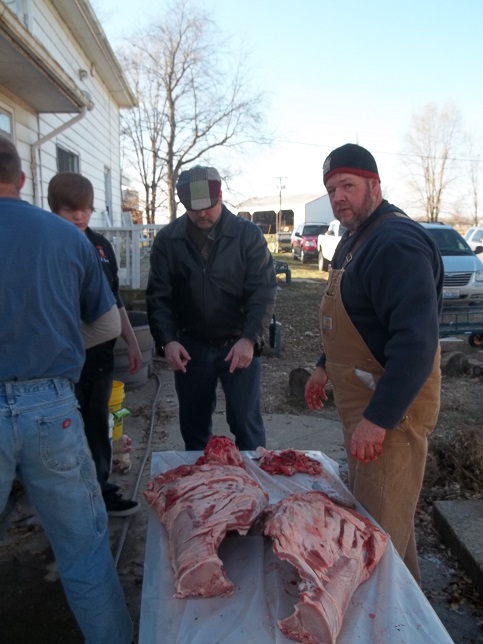
On a cold morning, David calmly walks one pig down the lane in the confinement house to the exit door where he has set up a temporary pen. Then he grabs a youth-model single-action .22 and puts the pig down, immediately cutting the carotid as the pig begins having a seizure.  The pig bleeds out quickly and we hang it from a singletree, spray away the blood and, in turn, walk out two more pigs for the same procedure. It is important to clean up the blood as it will make the next pig anxious.

David did a final scrub of the pigs then we drove the tractor to the shop where we skinned (easier than scraping) and gutted the pigs. I’m not going to go step by step into the butcher process but I’ll share a few observations. Remember the line in Empire Strikes Back where Han says, “I thought they smelled bad on the outside!”

Yeah. Smell.

The confinement floor the pigs were raised on was having a ventilation fan issue. All three pigs had black spots on their lungs…I assume from the dust and ammonia in the building but it could have been a secondary infection brought on by their ruptures and the accompanying weakened immune system. Who knows. Cutting around the ruptures proved interesting…challenging…frustrating. We had to cut around the ruptures to gut the animals. We couldn’t cut into the rupture without fear of tainting the bacon (mmmm…bacon!) It was a lengthy process of making little cuts and exploring the rupture to find where the problem was so we could cut around it. Geez.

Once the head, skin and innards were separated from the meat and bone we left everything hanging in a cold shed. By this time it was late morning and everybody had work to attend to. We made plans to cut and package the meat the next day.

The next day was a lesson in both anatomy, frugality and hard work. We cut, trimmed and ground our way through three hogs: pork chops, roasts, ham steaks, pork steaks, sausage and they kept most of the leg bones for stewing. It is amazing how lean pork sausage really is. I wonder what they do at the store to make it so fatty. Anyway, some of this I knew from reading…but that’s not the same as doing. In fact, I didn’t know anything. I couldn’t have shot the pig…if I had, it wouldn’t have been a clean kill. It wouldn’t have been a kill at all. The shot doesn’t kill the pig, cutting the carotid does…and fast! It’s all well and good to read the books but if I hadn’t found a mentor I would have been up against a steep learning curve. We continued to work with our friends as time allowed. They even brought their equipment to our house to help us butcher a couple of pigs and a goat for our own freezer. Let me tell you, there is nothing like sausage that’s 50/50 goat and pork.

Pork

Each time got better. Each time we knew and handled more of it on our own. If it hadn’t been for the experience our friends shared we would have had a hard time getting started…either with rabbits or with hogs. Or with a greenhouse. Or with any of a dozen other things they taught or gave us. Find yourself a mentor…even a conventional farmer has a lot to offer you. There is more overlap than we recognize sometimes. The books and blogs don’t have all the answers.

If I Were Homesteading Over Again…

I appreciate and welcome email correspondence with readers. In fact, probably the coolest part of the blog is the people I have met through it. There are a couple of themes that most emails follow and I would like to address one of those today: What to start with.

The typical letter I get goes something like this (please understand I’m having fun with this):

Chris,
My wife and I really enjoy reading your blog (though we never leave a comment) and have been making plans to move to a few acres of our own. We would like to keep goats and a few chickens. Do you have any tips that would help us get rich from goat milk and chicken eggs on our two acre lot?

Thanks,

A. Reader

Mr. Reader,

We have been all the way down Goat Road. I don’t find that goats are the easiest animals to keep and I’m not alone in that thinking. They are sweet. They won’t break your foot if they step on you. But they have specific nutrition requirements, need the best hay you can buy in the winter and they tend to turn half or more of their hay into manure-covered bedding. They are hard to keep fenced…and it is especially difficult to keep them fenced out of your orchard. They can jump over fence, crawl under fence and they have a built-in, natural resistance to electric shock. Really. Salatin jokes that he won’t keep them because he can’t keep an animal that is smarter than he is. Julie and I found the goats would stay put with a hot fence and plenty of brush to eat but when they run out of food the fence may as well not be there. Maybe it’s not that bad but they can be rough. And what do you get out of the deal? A quart of milk? Talk about a recipe for a fast homestead burnout!

Olive4

Instead of focusing on what I wouldn’t do (herd of elephants) I would rather break down what I would do if I were homesteading all over again. Sound cool? I have to admit, I surprised myself with my choices as I wrote the posting. Stick with me here. This may not apply to you. It may not be what you expect. But it is where I am today.

I can’t imagine a homestead without three types of animals. Maybe four as time goes on…five if conditions are right. Feel free to disagree but if I was me (and I am me) and I was moving to a couple of acres to start fresh, goats just wouldn’t make the cut. Again, you are probably thinking of the ideal farmstead with cow, pig and chicken. Maybe include a duck or a goose or a cat like in the Little Red Hen. But this isn’t the Little Red Hen. This is a homestead.

This is not a zoo. Too many animals will damage your soil. Too many can put too much pressure on the land not allowing adequate recovery and requiring you to buy feed, draining your budget. Miss Coulton was talking of supplying additional feed to livestock saying,

…but these things are only required when you keep more stock than your land can support,—a fault very common to inexperienced farmers on a small scale.

So let’s keep it simple and pare it down to bare bones. Knowing what I know now, what would I do if I was homesteading on an acre or three? I want to keep my workload to a minimum, keep the infrastructure costs to a minimum and allow a maximum amount of time to be a Human Being not a “Human Doing”. You with me here? I want to improve my soils and enjoy my livestock but not wake up every morning dreading the day’s chores.

Since we are homesteading, I would want to put in a big garden and plant a few fruit trees appropriate for my climate but, though my diet will be positively impacted by growing my own broccoli, my budget really won’t be. In fact, growing my own veggies could add significantly to my total food costs. And I would need a source of fertilizer and something to do with all of my weeds and garden wastes. I need to partner with livestock to significantly impact my budget…raising and butchering my own meat and sourcing my own natural fertilizers. But I need animals that will work for me efficiently and that will require a minimum amount of my resources in terms of daily chores and protection from predation. Ready? Let’s go.

Pigs

No surprise to long-time readers, pigs are on the top of my list. I hate it when we sell out of pigs. Usually I only make it a few days before I go buy more. I enjoy their intelligence, their curiosity and their ability to break down and convert waste products into bacon…and what’s better than bacon? The book Harris on the Pig breaks down what makes a pig worth keeping in the opening pages of the book.

The hog is a great eater. He can eat and digest and assimilate more nutriment in a time in proportion to his size than any other of our animals.

But more to the point, the pig assimilates what would otherwise go to waste.

…roots nuts and worms and other animal matter the natural food the hog.

and later…

We can in no other way utilize the refuse from the house and the dairy so advantageously as by feeding it to swine. On grain farms pigs will obtain a good living for several weeks after harvest on the stubbles and in some sections they find a considerable amount of food in the woods.

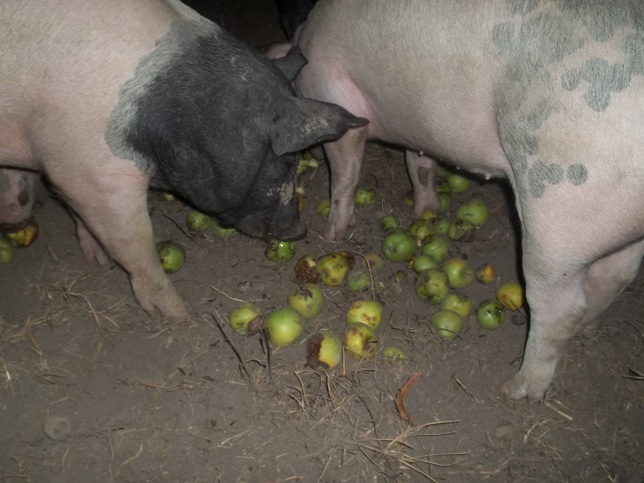
Our pigs get spoiled milk, apple drops, all the acorns, hickory nuts and walnuts they want. It’s fun to watch a pig try to eat a walnut…sounds like they are trying to eat marbles and keeps them entertained for hours. They get tomato vines and bad tomatoes, split watermelons, etc. from the garden and relish any weeds we can throw their way, especially lambsquarters. And as much as they will eat, they really don’t ask for much from us. They need shade, shelter, food and water and a place to dig. No problem. We need to go away overnight to attend a wedding? Put down some fresh bedding, fill the feeder, check the water and we’re good.

HamAndApples

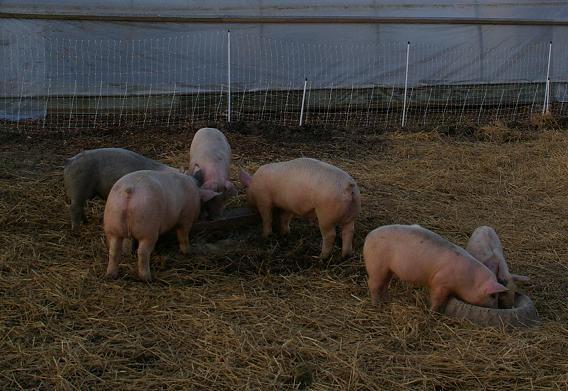
If I had limited space available I would confine the pig or pigs on deep bedding. I know, confinement. But this is exactly what Salatin does when he puts his pigs in the cow shed. Feed, water, shelter and a place to dig. That’s it. The pigs will decide to manure in one specific place and that’s the place to pile on extra bedding. When the pig ships, heap up all the bedding, let it cook through and age then add it to your potato bed. I might even suggest you overwinter a small group of pigs in an area you want to break sod and turn into a garden. To keep it simple you might pick up four 16′ combination panels then put a cover over one corner and hold everything in place with T-posts. That’s your $50 hog confinement facility. Add in a watering nipple for $2 and a feeder pan and I think you can see where I’m going with this.
Group2

Finally, I have to add that pigs can be an excellent centerpiece to your farm even beyond providing your own meat and scrap conversion. This is a business line you could grow into over time, building on skills as you go and can fully utilize your acreage, rotating through over time while keeping infrastructure costs low.

Rabbits

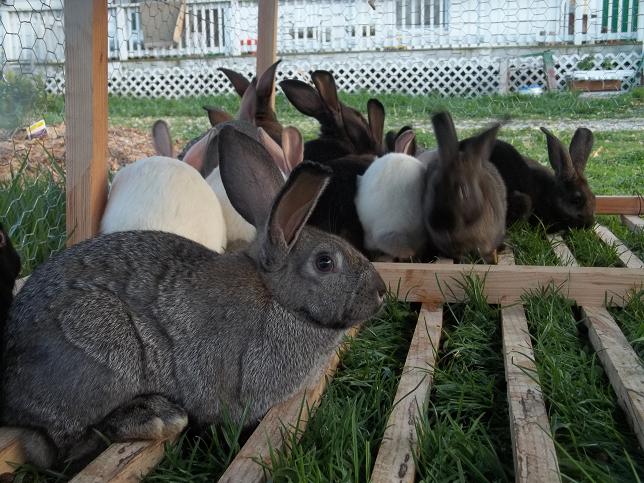
This may be something of a surprise but after getting a pig on my farm I would set up 4 cages, get 2 males and 2 females and start building a rabbit tractor or two to grow out the bunnies. Not unlike pigs, bunnies relish weeds and require little of the owner, though, as with pigs, we haven’t gotten around using a bagged feed. You have to work to keep them cool in the summer but they can produce a terrific amount of meat in short order and are easy to dress out. My great-grandpa Brown kept meat rabbits in his garage in Indianapolis and, apparently, my great-grandma Brown made rabbit-skin coats. I realize fur isn’t fashionable right now because we would rather save the world with polyester but some day we’ll return to utilizing natural resources…or at least I can hope.
HarePen3

Rabbits also produce copious amounts of manure…the kind you can put directly on your garden without composting and it acts like a time-release fertilizer capsule. But if you choose to compost it you’ll only make things better. Maybe make a compost pile with alternating layers of leaves and rabbit manure in the fall. But to keep odors down you’ll need to either clean and haul the rabbit manure regularly or cover the pile with sawdust regularly. Your nose will tell you…but if you wait to hear from your nose the rabbits will suffer. Be proactive about manure management.

After meat, fur and manure we are left with the offal. If you aren’t into eating rabbit livers (pretty good, really) you can save them for dog food. Same with kidneys and hearts. In fact, the head isn’t a bad thing for a little pooch or for your pig. Yup. The pig will eat every part of the rabbit you don’t…they are omnivores. We typically compost the heads, feet and intestines.

Worms

I know what you are thinking…Chickens didn’t make the top 3? Nope. Worms did. I was surprised myself. There are some things you just can’t convince a pig to eat. There are some things that you are better off not taking to the pigs. Our kitchen generates coffee grounds, banana peels and citrus waste in small portions. Pigs really aren’t interested in those but worms LOVE them. And worms do a thorough job of composting everything at a low temperature for use in our garden. After an initial thermophilic composting of pig bedding and manure we can give it to the worms for finishing, ending up with the best stuff in the world. Not to mention, worms we can sell or feed to other animals…fish, chickens…whatever.

Like the others, the worms don’t need much from us. Make sure they are damp, not wet. Make sure they have something to eat. Make sure they are not too hot or too cold. That’s about it. I highly recommend the book Worms Eat My Garbage for additional reading on the topic.
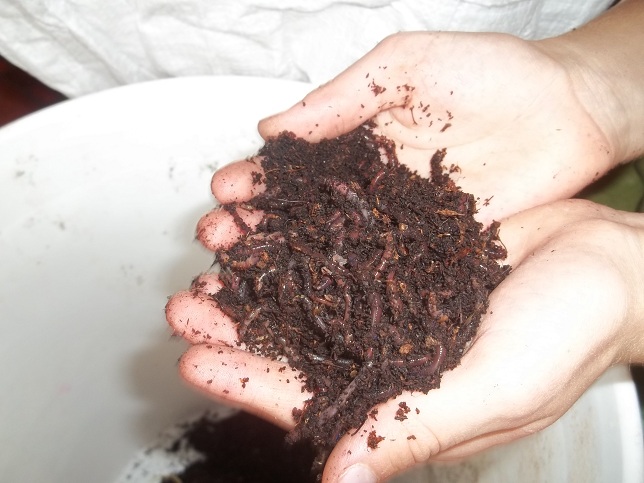
Worms

Let me pause here to say that you SHOULD be able to raise all three of my top 3 while still living in suburbia with less than $100 invested in infrastructure. Many places allow “pet” rabbits and pot-bellied pigs (often available for free) and there is no law against worms. You don’t need acres and acres of ground. You don’t need a huge amount of debt. What you do need is a plan to contain odors. You need a source of carbon. Do you live near a cabinetry shop? How about a sawmill? Do you have deciduous trees that you can gather leaves from? Can you collect newspapers from neighbors or buy some from the local recycler? If so, run composted animal wastes through your worms and sell the worm castings. Homestead at home. You’ll be amazed what you can do.

About a decade ago all the hog farmers around me who had sold out of hogs in the late ’90’s crash got caught up in a worm farming pyramid scheme. Don’t get caught up in a worm farming pyramid scheme. It strikes me that with a minimal investment in infrastructure, you can make superior compost for your garden using worms. This could be a serious money-maker but I’m really talking about a nutrient cycling resource.

So that’s my top 3. I’m as surprised as you are. But since we’re here, let’s talk about the rest as you may have your own ideas.

Need help mowing? Try Cows or Sheep

Cows are great at solving problems with surplus forage. You are probably going to have a hard time making a single cow happy as they are herd animals and you would probably have a hard time feeding a cow from a suburban yard (several yards maybe but watch for land mines). But on larger acreages…I mean, what else are you going to do with all that grass? You won’t save the Earth with a mower. Sheep may fit into suburbia but, again, you are better off in the stix to help you rotate away from parasites and avoid odor issues. In fact, I think you could make a case that a cow and 4 sheep count as one complimentary unit, utilizing pastures and breaking pathogen cycles, not to mention the cows keeping sheep predators at bay.

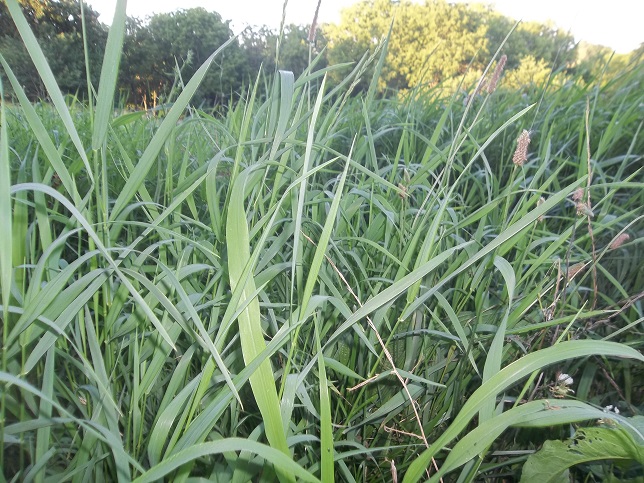
Not only do they take a low-value product (grass) and turn it into something better (steak or milk) but the grass sward improves because the cow tugged at the grass, salivated on it, urinated on it, stepped on it and manured all over it. If you want to build fertility in a hurry, if you are anxious to fix carbon and quickly save the world, hire a cow. The grass gets mowed and fertilized in one pass, nutrients are pushed into the soil and the mowers can reproduce themselves. Just add salt and water.
CompleteRecovery1

All that said, they are herd animals. What is a herd? Julius Ruechel says cows don’t really act like a mob until you have at least 500 in one group. I have also read numerous places (this is the most convenient) that you need one hired hand per 1,000 cows (commodity cows anyway)…which is the same as saying that you need 1,000 cows to pay the salary of one man…or one you. That’s a long way of saying, this is a low-margin, land-extensive enterprise. But it sure beats mowing.

HappyCows

I’ll forgive you if you include a dairy cow on your 1-5 acre farm. John Seymour includes a dairy cow in his homestead plans. Just know that milking isn’t for everybody. It just might be easier to drive 20 minutes to buy milk 6 gallons at a time once/week than to deal with 6 gallons/day from old Bessie. But, that’s why you have the pigs. Though it is only mentioned briefly, Eric Bende learned about this and shares his milking experiences in the book Better Off: Flipping the Switch on Technology. Also keep in mind, milk cows don’t take any days off. I hope Paul Atreides will forgive this joke but the milk must flow. Every day you bring Bessie to the barn in the morning, brush her off, wipe her off, check each teat, milk her out then clean up the barn after filtering and chilling the milk, sterilizing the milking pail…the list goes on. Matron says it takes her 15 minutes to go from her door to the cow and back again…twice each day. So, again, I might suggest you should make that 20 minute drive once/week instead. Cow or no cow is a quality of life decision and I can see both sides.

Milking

Let’s round out the top 5 with Fish.

I know, right? Look. We have a couple of ponds. They came stocked with bluegill, crappie and bass and we threw a couple hundred catfish in for kicks. Those fish don’t need anything from me. But if I chose to feed them the feed conversion rate for fish is the best it can be. For every pound of feed eaten they gain a pound. Every year I threaten to put Japanese Beetle traps over the pond to feed the bluegill (who love Japanese beetles, btw). How many meals could I pull from an acre pond in a year? How many hours do I have to spend maintaining fence to keep the fish in? None. How many hours fighting raccoons to protect my fish population? None. That said, maybe fish have just displaced pigs on my list. Nah.

Pond

You can look into aquaponics, and I encourage you to do so, but I’m attempting to list things that can take care of themselves. Our first attempt at aquaponics was a dismal failure. Since I have a pond…well, that’s easier.

So, What about…

Laying Hens

OK. Well. Not really a high-margin enterprise here. And everything likes to eat chicken. Everything. So, if you can keep them alive, you’ll get an excellent source of protein on a near-daily basis. Since the margins tend to be so tight (or negative) and we’re talking just a couple of acres here, it might be better to trade for eggs with your neighbor so they can go to war while you stay home. But if you want your own birds for household use you should plan one bird for each member of the household plus two birds…with a minimum of six birds. You could pickle surplus eggs or send cracked, checked or otherwise unwanted eggs to the pigs (you have to have pigs!). And I would buy the birds as ready-to-lay pullets so you don’t have to invest in brooding equipment, though chicks are cute and fun. Just understand, when you are coming home from Bob’s house after sundown on a Saturday evening and nobody was home to close up the chickens…well, you may have one less chicken and a fat skunk stuck in the fence. Good luck with that.

Chickens were the first livestock we bought and every step of the way has been more difficult than advertised. Numerous people have told me tales of the chicken wars recently. Here’s a real example.

Friend: “Well, we started with 15, got down to 1, bought 10 more and now we have 5.”

Me: “How many eggs have you gotten from those 25 birds?”

Friend: “None.”

Me: “Maybe you would be better off with pigs, rabbits or worms.”

Broilers

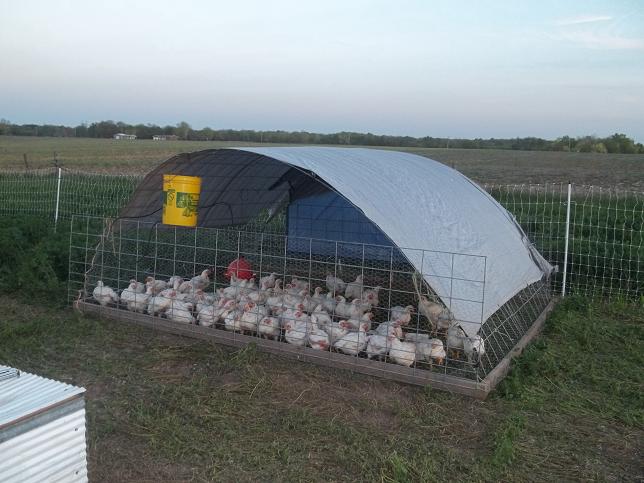
This is also a low-margin enterprise. If starting over, I would be tempted to find a farmer who raises broilers and work out a deal for the 50/year I need for my own household. 50 whole birds weighing 4 pounds at $3/pound is $600. Maybe you could trade him a fat hog or a litter of shoats for 50 frozen birds. Maybe you could just pay him the $600. There are big advantages to running broilers on your farm seasonally but there are also big expenses.

Hoop

Sigh. I guess I would go ahead and raise my own birds. I enjoy the work and with 3 weeks in the brooder and 5 weeks in the field it is not exactly a life-sentence…the way milking a cow is. I would probably fit broilers in either spring or fall on my homestead…but I say that grudgingly. I’ll hold further comment on broilers for another blog post.

So that’s about it. There are any number of animals I have intentionally overlooked on my list. Please don’t be offended if you are a fan of geese. I think geese could be a good source of grass-fed meat on a farm but I don’t have any experience with them. Ducks are comical but I don’t really like them. You may have your own ideas for an ideal homestead starting lineup but that’s mine. Pigs, rabbits and worms…animals you could start with while you are still in town. Feel free to disagree…but if you are disagreeing before you have dipped your toes in the water, let me know when you dream up your revised list. You will ultimately have to follow your heart’s leading but whatever you do, start small. Start where you are. Minimize your expenses. Start slowly. Step into each enterprise carefully…but for Pete’s sake…take a step!

A Moral Obligation

I tend to be both insecure and introspective…utilizing my introspection to analyze my own insecurities…uncertain of my conclusions.

Yup.  I’m a mess.

I spend a large amount of my time evaluating my own decisions, actions and motivations.  For example my recent post about why I have cows?  Grass is a low-input, low-value good.  Converting grass to something of higher value is desirable.  How do you convert acres and acres of low-value forage?  Cows are a pretty good option.

But why do I have cows?  Wouldn’t it be easier to park my tookus on the couch with a book in hand?  Wouldn’t it be easier to order a pizza or to buy peaches already canned?

I could live as if there were no tomorrow.  I could eat whatever I wanted, smoke, drive like a maniac, money wouldn’t matter…remember this in Groundhog Day?  I wouldn’t have to concern myself with my children’s future…there is no future.  No future? no concern about consequences of my actions…no moral consequences.  Like Bill Murray’s character, I wouldn’t even have to floss.

Well, that doesn’t sit well with me and it all boils down to this: I believe this is a moral issue.

We could, as residents of this world, simply consume as much as we can as fast as we can…living to have fun.  Unfortunately, the sun is very likely to rise in the morning.  Then what?  There is only so much leftover pizza within reach of the couch.  At some point I have to walk to the kitchen for more (ugh, work).  But there is only so much pizza in the freezer.  Then I either have to go to the store to buy pizza or I have to dial my phone (work, work, work) and ask someone to cook and deliver a pizza to me…and they will expect payment.  Ugh!  There is only so much money in my wallet, in my checking account or available on my credit card.  Now I either have to wait for someone to give me money, I have to take someone else’s money by force or I have to trade some portion of time I would normally spend on my couch for money doing any number of things I may not want to do. Worst of all, that cuts into my pizza-eating couch time!

Beyond simply meeting my own needs for MOAR! pizza, I work to contribute positively to the world around me. To some extent, I’m seeking to increase my surplus so I can buy better-tasting pizza but I’m also working to ease the pizza burden of current and future generations. And I feel this is something we are obligated to do. Whose planet is this? Does the planet belong to some long-dead pharaoh? How about George Washington? Should I preserve Illinois in the memory of Abraham Lincoln (lol)? How about my father? Do I want to prevent Illinois from turning into a desert or a chemical monoculture (same thing really) for my still-living father’s sake? Maybe…but that’s really not enough. I seek to enhance the soil ecology for the sake of generations yet to come, not to impress my wife.

I’m not going to own this land forever. In the light of that truth I have two options. I could, if I desired, strip the land of all wealth taking every dollar of value from the soil then abandoning the victimized soil to time. No big deal, it happens every day. Instead, I could seek to increase the water-holding capacity of my soil, improve my timber, solidify my fences and repair my buildings…not seeking peer approval, not seeking a higher resale value, (though both would be a natural result) but to hand the next owner something better than what I was handed. It’s not easy to build value into some things but farmland…that’s something else. It requires that I enable the farm to produce more than is consumed and that I return surplus to the land…cycling nutrients through. Distilled down to its essence, farming is the business of catching and holding sunlight and rain…then cycling surplus sunshine and rain back through the system. This could be done on a balcony in a 5-gallon bucket.

It strikes me as immoral to consume more than I contribute. I feel we have a moral obligation to produce.  That means seeking to increase and make the best use of all resources under my control. Everything from kittens to eggs to dollars and especially my children’s childhood.

How can you apply this to your own stewardship?

Better Because it Costs More?

What is a car supposed to do?  Why do we need them?  From a utilitarian perspective, we simply need them to help us get from A to B.  Do leather seats help us get from A to B?  No, but somehow a car with leather seats is normally considered better than one without. In fact, the less utilitarian a car is the better it is, up to a certain point.  I mean, I would probably enjoy driving a Lamborghini but not when grocery shopping. So there are two things there, Price has little to do with function and every paradigm has its limits. This applies to cows, land and money equally.

The price of money is particularly interesting (pun intended).  Money today is worth more than money tomorrow.  That’s why we pay more for it.  In part, this is also true because our central bank is targeting inflation, destroying the value of currency over time but even with a stable currency, money today costs more than money tomorrow. We want it NOW! I have to INTEREST you in deferring consumption today so I can use your money now…so I offer to pay you back more than you loan me. Similarly, if I borrow your cow I can’t repay you in 5 years with the same or equal cow.  You have lost 5 years of calves from that cow and, potentially, additional calves from heifers those calves would have birthed. I would have to INTEREST you in loaning me a cow…or herd…or even just a bull for stud service. I recently borrowed a bull and I am expected to repay the same bull plus $20 for each cow covered. How is that different than interest on money? Everybody involved is participating voluntarily so everybody believes they are better off in some way at the end of the day. Well, that’s how it should work but we have this central bank thing that dictates what borrowed money should cost today which really gums up the works for everybody unless you’re borrowing in terms of cattle and they butt out). That’s a topic for somebody else’s blog though.

Bull2

Back to the point. Money today is more expensive than money tomorrow…but is it better? And, if it is better are there any limits to the “better-ness”?

Hoo boy. Well, I guess it can be…or can be perceived as such. I mean, I borrowed money to buy the farm because I thought I was better off with the farm today than I would be if I waited till I was 60 and had the cash. Plus, the farm I want is available today.  Would it be available in another 25 years? Further, farming is a young man’s game…especially the getting started part. If I don’t get started I’ll never get going. So we borrowed…but not without reservations. Reservations you’re probably tired of reading about.

Borrowing can be a really bad idea too. We don’t borrow for consumption.  We don’t use credit to buy hamburgers, t-shirts or even cars (which means we take care of our cars…they last a long, long time). We even buy our livestock with cash…forcing us to grow slowly and deliberately. I could see a time when I would want to grow the herd quickly, forcing me to borrow tomorrow’s calves today but I would hate to explain to my banker that the cow I bought with his money died. I would also hate to make payments on a dead cow. 

Further, because future money is available for buyers today, prices today tend to go up. If everyone had to pay cash for cars and houses we would have fewer dollars chasing after scarce goods…prices would have to fall (which is great if you are poor or have savings but horrible if you owe money on depreciating assets). But we live in the opposite world. In the current economy we can borrow money for houses, educations (lol), cars, farms, cows, hog buildings, tractors…you name it. Every loan puts more and more money in competition for the same number of goods…driving prices higher (which is horrible if you have savings or are poor but helps out borrowers). If our economy lacked available credit, the perceived currency value of my farm would have to fall (see 2008)…and my lender would get nervous. But that’s part of the deal. My banker is betting that my farm will retain value and that I will be able to repay…otherwise he wouldn’t voluntarily loan me money.

So because of easy credit, prices are higher. Does that higher price make my farm better than it was when my great, great, great….grandpa paid tens of dollars for it? No. The work that went into the farm over the generations makes it better. The lack of work that went into maintenance in the last 20 years makes it worse. Price has nothing to do with “better”. The “better” of the thing has to do with the work we accomplish with it. Farmers vary in skill level. A skilled farmer is going to do a better job with the land. I have to be more skilled than the farmers who came before me or I will have wasted the land, money and time.

Family

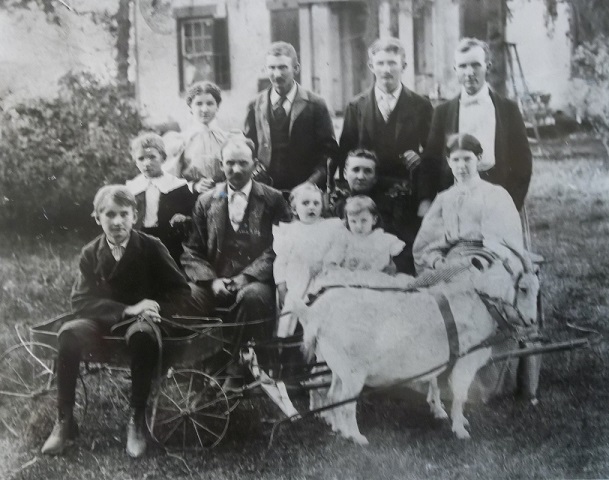
Maybe you disagree. Maybe you are happier when you pay more for the same thing. I dunno. I tend to look for sales or buy things second hand…or third hand.  But the cost of the thing has nothing to do with the “better” of the thing. If I need it, I need it. If I need it immediately I’m going to have to pay more for it. As we farm we try to limit our immediate needs. We try to plan years in advance. Years. Decades. Lifetimes. What will my great-grandchildren do with their inheritance? Can I influence that now? How much do I have to pay now to make things better for my grandchildren? Do I pay the future by not having a second vehicle? Do I pay the future by enslaving myself to the farm and to an off-farm job? Do I pay the future by avoiding eating meals out or by not going to see a movie? If the goal is to build better futures for my children’s children I have to pay a lot now. Does the future get better as I pay more for it? It might if I’m thoughtful about how I use my resources in the present. When does that paradigm run out? I doubt I’ll ever know.

So what if you don’t have kids? Does this matter to you? It most certainly does! The money part of the farm has nothing to do with the better part of the farm. You, as a steward (the dirt will outlast you), should be working and investing in future generations, even if they aren’t your kids. There are consequences to your actions. You don’t live in a bubble. Make choices that positively impact the community around you. Yes, it will cost you something; time, energy, cash. But that’s just part of the deal. You can’t simply consume your way through life. That is, I feel, immoral. Make a positive impact. Go out and “better” something. Do it cheaply if possible.

Eggs: Cheaper By the Dozen (Updated)

So, how do we make money on the farm? Well, we really don’t make much but opportunities abound. Today I’m going to talk about eggs and my answer is decidedly nonlinear. Further, the numbers I use may not apply to you at all but the process involved will at least provide you with the base questions to ask to determine profitability. Remember, price is determined by customers. It’s harder to find customers for $10 eggs than for $1 eggs. It’s hard to find chickens that lay eggs you can sell for $1/dozen. We currently sell $4 eggs. The money we make helps us move the farm forward, even if slowly. I’m happy to offer this transparency to our customers and readers. You should know what you are buying…what you are supporting…and what you are getting into. I have to make money to continue farming. If you think I’m making too much money (lol!) you can pursue other options.

I always enjoy talking to new customers after they have tried their first dozen eggs. Quite often they go on and on about taste, texture and color. Based on customer feedback and my own experience, we make the best egg in the world. However, no matter how good our eggs are, I won’t stay in business if I don’t count the cost. We have to figure out what it costs to sell eggs. Again, I won’t work for free. I need to make good use of my time. If eggs aren’t worth doing, we’ll make soup. This was originally posted on The Survival Podcast Forum but I have revised the numbers slightly.

Here’s what my numbers look like with additional detail below. Keep in mind we’re small potatoes so economy of scale works against us. Also realize I have been known to make errors in my math.
Costs (per day):
Chicks – $0.005
Feed – $6.72
Fencing: $0.27
Housing – $0.34
Egg handling – $1.89
Those costs total $9.265/day or $0.154/sellable egg (60 eggs/day annual average)…$1.85 per dozen before labor. I usually just say $2.

We retail eggs for $4/dozen and seasonally wholesale a portion of our eggs so we’re really looking at a gross of $19.50 and a net of $10.25/day, again, before labor. Labor includes moving chicken houses, feeding, watering, collecting the eggs then cleaning and sorting the eggs. This is unskilled labor and is valued on the market at less than $8/hour. (Probably much less than $8/hour.) That means I have to make darned I wrap up my work quickly or the farm is losing money.
__________

Now the boring details. My feed is not organic. It is not non-GMO (Sorry for the double negative). I use the Fertrell poultry rations and grind my own.

Last year’s pullets cost me an average of $1.80 each. I bought 350 then sold 225 of them for $5 each at 8 weeks…basically covering the costs of all birds up to 8 weeks. This covers electricity, water, brooders, shipping and feed. So I’m starting at 2 months from zero. 3 months to go before the first egg.

I raised my pullets on the alfalfa field. The cost per day of using the alfalfa field is a wash against the benefit of the manure they put down and the minerals from their feed. I feed them broiler mash until 2 weeks before onset of lay. Last year broiler mash cost me $26.92/hundred to grind myself. 125 birds ate an average of 15# of feed per day for that period of time so we’re looking at $4/day to feed 125 birds until their first egg. Again, the bird was free for the first two months. I have 75 days of feeding at $4/day spread across 125 birds in the flock. Let’s say 120 birds in the flock because at some point last spring a raccoon ate 5 of them. (Dad and I took turns sitting out all night every night for a week and never saw him.) So, at point of lay, each bird cost me $2.46. That has to be recuperated over the remaining 18 months of productive chicken life…or an additional half cent per day.

As adults, the birds get a slightly different ration that costs $27.14/hundred for me to grind. During the winter they tend to eat more than summer but the flock averages 20 pounds of mash and 5-7 pounds of oats each day. Oats cost me $20/hundred so let’s say $1.20 worth of oats each day and $5.42 of layer mash totaling $6.62/day for chicken feed plus $0.10 per day for the range feeder (assuming it lasts 10 years). We get 80-90 eggs/day from those same now 110 birds (predation is an issue) and to make the math easier, I’ll suggest to you we get a yearly average 60 eggs/day that are grade AA Large. The balance are cracked, stained, misshapen or small. 5 dozen eggs are salable. With me so far?

The birds spend their lives (2 years) surrounded by four lengths of PermaNet. That’s a $660 investment plus a solar energizer that cost $350. The fencing and charger, spread over 10 years, divided out to a per-day cost takes us to $0.27 cents/day.

The birds live in two simple hoop structures that also should last 10 years. Each hoop costs $200 to build plus two nest boxes for $180 each, again spread over 10 years adds another $0.21 per day. If we winter in a high tunnel the cost of the tunnel is spread between the livestock we keep there and the produce we grow the rest of the year. Since we bought the tunnel used the cost per day is pretty low. If we apply the entire cost directly to the chickens we need to add $0.13 to the cost every day.

I pay $0.31 for unprinted paper egg cartons. I sell 5 dozen eggs/day so that’s $1.86/day. We collect our eggs in baskets or plastic egg trays daily. For sake of completion I’ll add those in at $0.03 per day.

Now, labor. For months we moved our pullets every day, never getting a dime (beyond manure value which we washed against alfalfa field usage). Now, every day we move the layer houses (1 minute each), feed, water and gather eggs (15 minute round trip from the house). Then we wash, grade, sort and pack eggs (1 minute/dozen). 23 minutes of time against $10.25. Really the margin isn’t very good but that’s why it is not a primary enterprise. Salatin says a layer should make you $12 over the course of her life. I’d say that’s about right. But having eggs to sell puts our label in a family’s kitchen every day of the week. Once we get our eggs in the kitchen we go ahead and sell a chicken. Then half a hog. Each of these operations is increasingly profitable.

You can see from that, once you calculate the value of your time, eggs are a hard way to make a living. Without paying a dime for labor we are in the neighborhood of $3,000 from egg sales this year and we only worked for 23 minutes each day…not counting time spent sourcing and grinding feed, checking water extra times on hot days, sleeping in the pasture to deal with whatever has been hunting my birds or just marketing product. My true labor average may be more like an hour per day. Also, the layers don’t lay steadily year round. At some point production will drop below 3 doz/day but costs will remain relatively the same. Finally, as my friend Matron of Husbandry would point out, those chickens are eating bugs and dropping manure…that’s worth something. I also left off a charge for land use which varies between $50 and $200 per acre (though that is likely an expense shared by additional enterprises). All of that is the nonlinear part of this equation. Too many things vary. I didn’t even account for the possibility of a tornado blowing the birds away or a mink killing them all in one night. Adjusting vaguely for those missed values, we can begin to see Salatin’s argument more clearly. Once we pay our labor, each layer may only be making us $12 over the course of her life (and I suspect that includes selling her as a stewing hen).

Obviously economies of scale apply but I really don’t believe moving to 3,000 hens would boost annual farm income (before labor costs) to $72,000. I would have a heck of a time retailing 144 dozen eggs each day. Wholesale numbers would have to go up so margins would drop but, sticking with the $12/bird notion, spread over two years, after labor your 3,000 laying hen operation could bring in $14,000-$18,000 each year to the farm keeping someone very, very busy for 4-6 hours each day.

We prefer to keep the laying flock between 100 and 150 birds as a sideline business. Though marginally profitable, we don’t see it as a mainline enterprise. Just a part of the whole.  Remember what a cow costs? Individually, these enterprises won’t sustain us. Taken together, we have a chance.

UPDATE:
I had some offline correspondence with Matron of Husbandry who sent me a couple of links. I particularly appreciated the breakdown listed in this post. I came to $1.85 before labor because I didn’t count brooder costs, having supported that phase by selling pullets. That author comes to something on the order of $2.61 before labor, though the post lists something on the order of $5/dozen including labor and includes chick and brooder costs each year of production. Do the math any way you like as my math may be wrong and your numbers will be different. Selling eggs is a hard way to make a living.

Should I raise my prices? Probably. Should I just stop keeping layers? Maybe. But how boring would that be?

Abnormal. Not Weird.

We farm. That’s what we do. It’s not who we are. It’s not what we’re about. It’s what we do. I try to use this blog to write about what we do…not who we are. I could start a Family Blog-O-Rama if you want to read about me but I think that sounds boring. However, sometimes, in order to add meaning to what I do, I have to tell you about myself.

My name is Chris. I am abnormal. Abnormality is necessary for doing what we do. Based on peer interaction and lack of dates as an adolescent I must look abnormal but that’s not what I’m talking about here. I’m talking about being. Not looking. Not acting. Being.

To be absolutely clear, I’m not weird.  “Weird” describes somebody’s uncle or that really, really hairy neighbor who mows the lawn wearing only a speedo. (I grew up near a man who mowed his grass in a red paisley speedo. Yeah.)  Not only do I actively avoid wearing a speedo under any circumstances, I don’t mow my grass. (And isn’t it weird that someone with a riding lawn mower would also own a treadmill?)

If we were normal we would be average.  Average Americans have $15,000 in credit card debt, owes $25,000 on college debt, owns 2.28 cars, a home in the suburbs and are divorced.  The average American man is 5’8″ and weighs 195 with a nearly 40″ waist.  I don’t fit that description at all. I don’t want to be average. I am not average…not normal. Abnormal. I didn’t watch football Sunday afternoon, I told cows where they could eat.

I feel safe suggesting that if you’re going to take on this whole farming thing then you’re abnormal too. “Normal” meat comes pre-cut, wrapped in plastic and is magically created moments before the grocer places it in the cooler for sale. It is absolutely abnormal (in the current era) to brine a wood surface before cutting(!) a chicken with a sharp DANGEROUS knife, let alone kill a pig in your back yard.  I know, right? It borders on weird to, like, ruin your lawn so you can, like, grow, like, broccoli or whatever.  Like, sometimes, there are, like, little green worms crawling on the broccoli!  Gross! But that’s what you do when you are abnormal.

Now, you ready for the hard part?  Even among farmers I’m abnormal.  Normal farmers don’t grow broccoli or butcher chickens. In fact, normal farmers don’t grow food – they raise commodities. They certainly don’t tell the cows where they can eat! Normal farmers play cards at the coffee shop.  Normal farmers collect big, expensive hunks of metal. Normal farmers shake their heads when they drive past my house. It is obvious that we are abnormal.

Sometimes life on the frontier can be lonely. Do it anyway. In some ways, the more abnormal (maybe even weird) your idea is, the more likely you are to succeed. However, as you are chasing down your own specific abnormality (even if it is not farming), don’t overlook the need for community.  Maybe that’s why I blog. I suspect there were some seriously crazy people out on the American frontier.  We’re not shooting for crazy.  We’re just stepping away from the herd to do things as they should be done.

So that’s what it takes. Step away from the herd. I may talk more about our own lengthy transition to farming sometime but it starts by doing something abnormal. Not weird. Maybe not even smart. Just abnormal.

So now for a hard question: What do you do when your own specific abnormality is no longer abnormal?

Failing to Plan for Fall Egg Demand

I get this all the time.

“So, Chris, my 14 year-old daughter just watched Food Inc.  Now she’s not eating.  How much are your eggs?”

“Chris, we just started this new diet (Paleo, Zone, Sally Fallon…you name it) and need a source of clean food.  Do you sell eggs?”

“Chris, my sisters are coming in town this weekend and we are hoping to do a bunch of baking.  Can you get me 3 dozen extra?”

Well, shoot.  Our eggs are $4 (that’s $0.50 less than an inferior egg costs at Walmart!) but I’m afraid I can’t take new customers until Spring.  I would love to publish more on the topic of working to lower food costs and prices but for now, see what Salatin had to say about it in his speech about going full-time.

I sell a better egg than you can buy anywhere at a better price than you can find in a store. Consequently I don’t have enough eggs. Any chicken owner will tell you that egg availability changes through the year.  In the spring we are swimming in eggs.  In the heat of the summer the girls slow down (understandably) and heading into fall they molt. We’re in the lean times and it will get worse before it gets better. To account for this, most chicken owners start pullets in the spring so they begin laying in the fall. That way when the older hens molt they can be retired (either to the freezer or to Craig’s List) and the new hens will pick up the slack through the winter. I realize I’m not using specifics here but I’m just relating a general trend.

I failed. Our spring was so busy I just couldn’t raise pullets.  My travel schedule, my work schedule, the endless amount of work the farm requires of us…I couldn’t get it all done in the spring. Something had to give.  Since I didn’t sow, I don’t get to reap.  No pullets? No eggs. Not only can’t I accept new customers, I’m struggling to satisfy the demands of my existing customers.  I should have ordered pullets in the spring…like we always have.

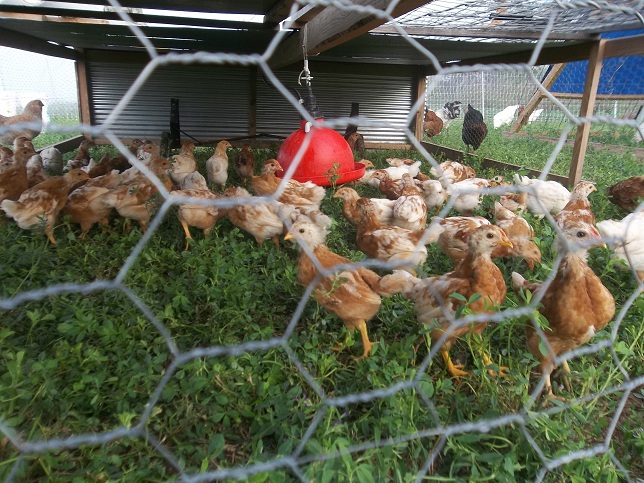
Pullets On Pasture

Chalk this one up as a mistake we will work to avoid going forward.  If you focus on making a quality product, customers will find you.  You need to anticipate and accommodate that demand. I could have put down a book one evening late last winter and gotten everything ready for a few hundred chicks.  I just didn’t. As a consequence, I’m missing an opportunity to feed more people. Lesson learned.

Sometimes the Cows Get Out

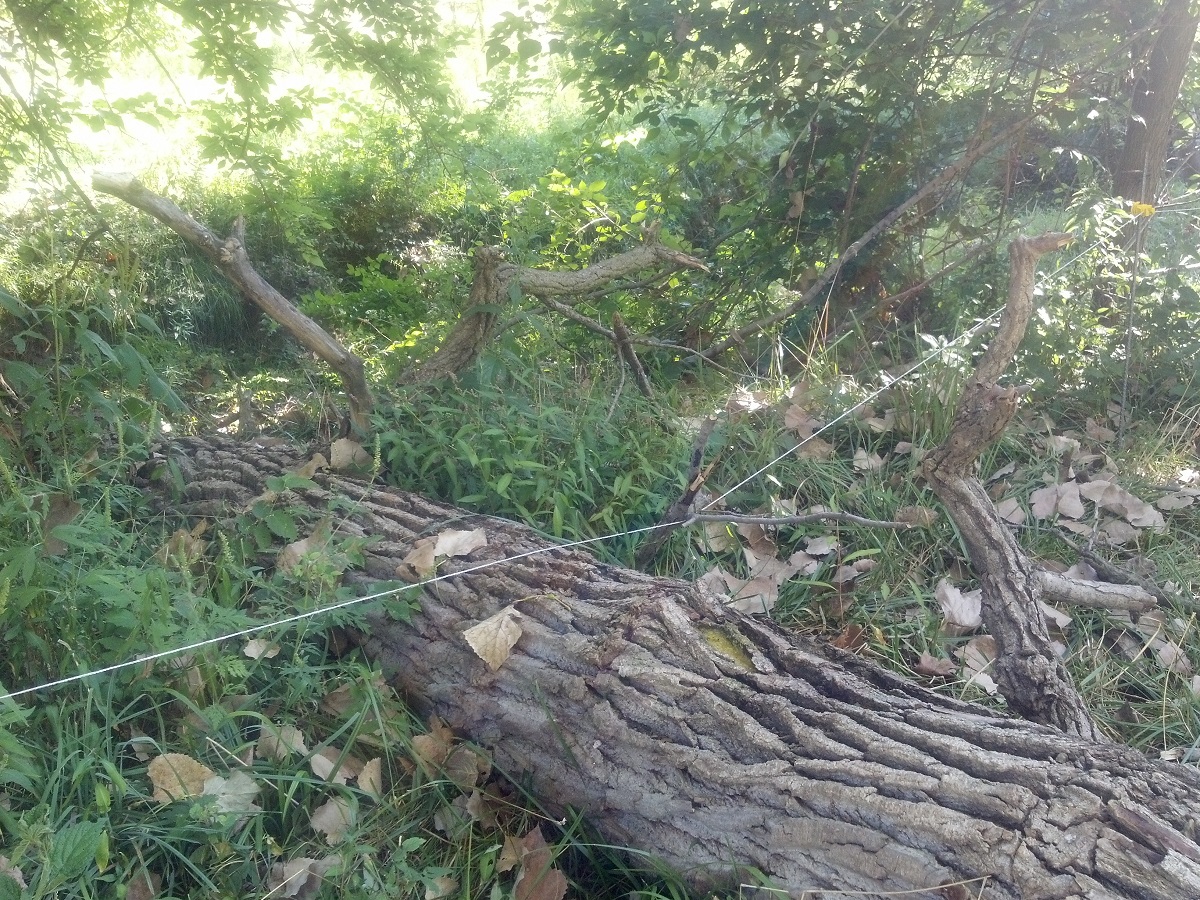
Sometimes the Cows get out.  They usually escape when I’m away on business going as far as 30 feet from where they should be (not far).  Last night a limb fell from a tree onto the fence and made an opening where they could simply walk over the fence.  We have a HUGE cottonwood that has been shedding limbs all spring.  Recently I fenced over a fallen limb hoping to clean it up when the weather cools.  That was a mistake.  Not a huge deal except, as usual, I was not home to discover their jailbreak.  My wife noticed it.  She got the one escaped cow back in with little difficulty.  This is unusual but not unexpected.

cow sees her chance

Unusual but not unexpected.

It happens.  Chicks die in the brooder.  Pigs get out.  Raccoons eat chickens.  Equipment fails on butcher day…just when you need it.  The baler throws a bad bale or the mower breaks a tooth.  All part of the thrill of farming.  With chicks, you buy more than you expect to sell, knowing something will go wrong in the brooder and some percentage will die.  With equipment, you try to keep parts around for the most common problems…extra teeth or shear bolts.  You also try to build extra time into your schedule for a trip to town to have a tire repaired.  If the cows escape their daily grazing area, you hope your perimeter fence is in condition to at least keep the cows on the farm.

On any given day a lot of unusual but not unexpected things can happen.  Don’t let it wear on you.  It’s just part of the job.