Why bother composting? I can’t believe you asked that question!
To abuse Renault’s line, “I’m shocked. Shocked! to find that composting is not going on here!”
I have to admit composting is not the easiest thing in the world to do. Don’t get me wrong, everything rots in time but if you want quality compost, in a reasonable amount of time without creating a buffet for varments and without an odor, you have to work at it. It’s not simply a matter of throwing banana peels and grass clippings in a pile by the garden and 2 weeks later…voila…compost.
Further, you have to gather the stuff in your kitchen and/or yard. That can be unpleasant. That what’s-it that went bad in the jar in the fridge? You know, that stuff that has grown hair since you forgot about it at least a month ago? That’s compost. That sour milk? Compost. Paper plates from the birthday party? Compost. But instead of dropping all those things in the trash, tying the top of the bag and setting it out for the trash man, taking precautions to keep masked bandits out of it you are going to drop all those things in a bucket, put a lid on and dump it in your compost pile, taking precautions to keep masked bandits out of it.
What happens when you do this? You remove 40-50% of the waste, possibly more if you normally set out yard waste. You’re putting out half the trash you normally do (less if you recycle diligently). Your trash doesn’t stink or attract animals. The trash company either stops by less frequently or hauls less weight. Either way, you are cutting fuel usage. All that stuff you keep gives you nicer flowers, healthier grass and happier worms. This is the heart of stewardship. Not sorting compost is the same as putting a $5 bill in every bag of trash. Compost has value. If you send it to the landfill you have wasted a valuable resource…not to mention the money we, as a nation, literally flush down the toilet.
As a real world example, our family now produces two large trash bags each month. We produce about one bag worth of recycling. We produce at least three bags worth of compost and we burn a fair portion of our paper goods and use the ashes on the garden.
So, class, your assignment is to start paying attention to your waste. What are you throwing away that would rot? Begin paying attention. Kleenex? Coffee Grounds? Banana peels? Lawn clippings? Keep your eyes open. Next time we’ll get into the mechanics.
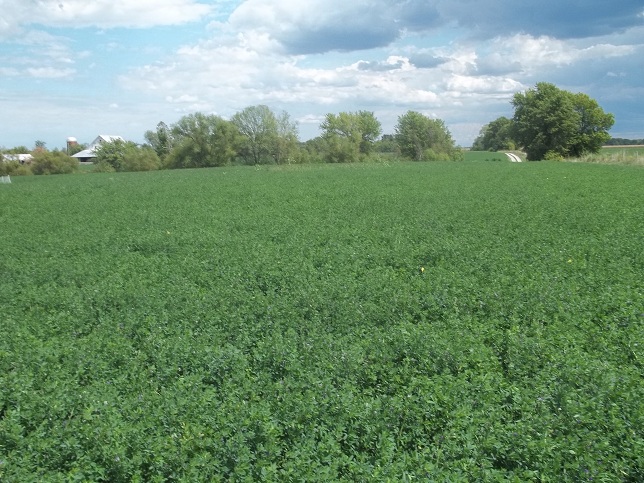
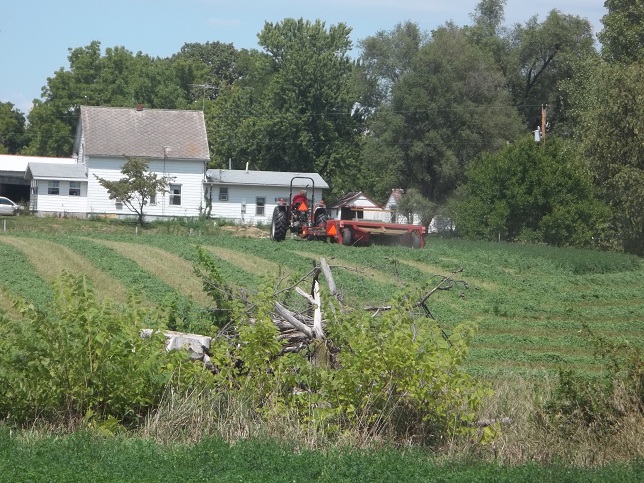
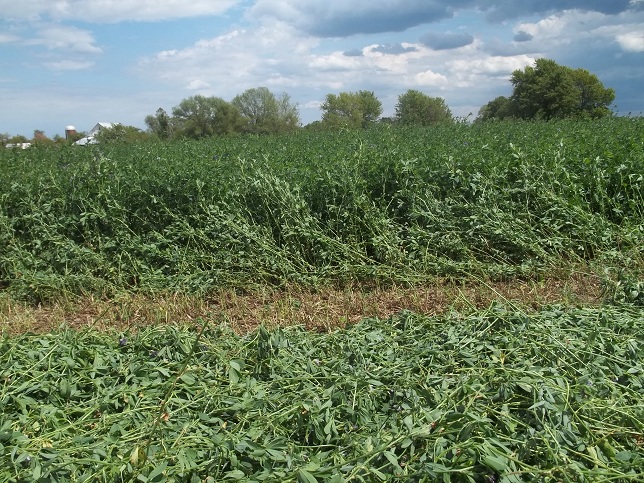
We made our final cutting of alfalfa on Sunday. My eldest son and I took a few pictures as dad was cutting the hay. It was neat to see the swallows swooping in and grabbing bugs behind the mower. There were also quite a few dragonflies out. Most of the dragonflies and swallows are already on their way out. Dad noticed the barn swallows started leaving about 10 days earlier than normal this year.
Watch for the swallows catching bugs in this video:
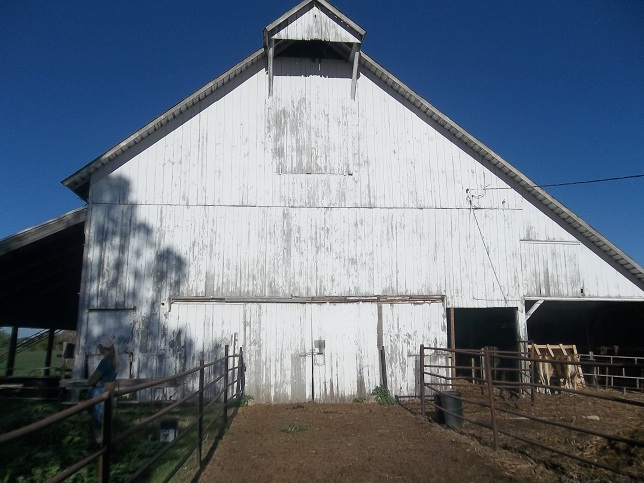
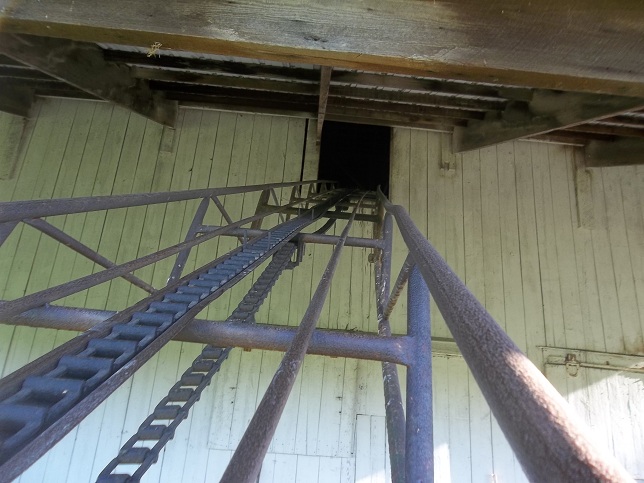
Northern people have always been savers. Those that didn’t save didn’t make the winter. Those that saved may have made the winter. Farmers are savers. We are savers. Unfortunately, we don’t have any money. We save sunshine. This is the main branch of the First Chism Heritage Farmers Bank, established in 18??. We keep our sunshine here.
Isn’t it majestic? (don’t mind the paint job or the leaky roof) Several times each year we walk up to the teller’s window to make a deposit.
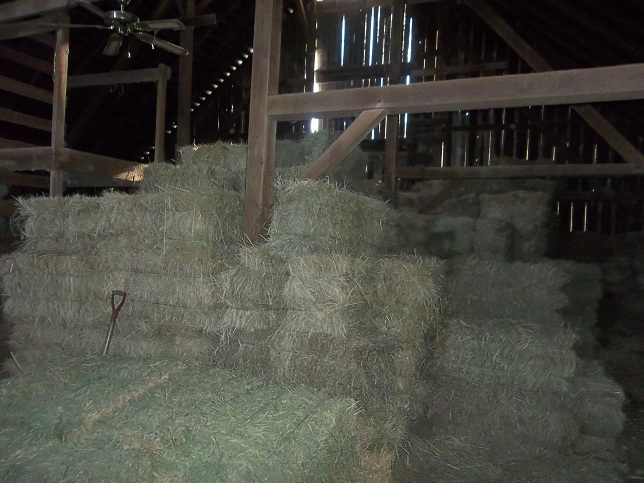
Then, to keep banking fees to a minimum, we head into the vault to help arrange, sort and stack the deposits. Here’s a small portion of this year’s deposits.
In the foreground you can see a low stack of sunshine in the form of alfalfa bales from the third cutting. Further back, among the posts, is more sunshine in the form of grass hay we cut earlier in the year. To the left (and out of the camera) is an absolute mountain of alfalfa hay. There are also a few fair piles of straw tucked away here and there. Tons and tons of sunshine. Think of the different kinds of hay as different kinds of currency and I’ll keep my lame bank analogy running. When withdrawals are needed we head into the vault, determine which kind of currency is in demand that day and grab a whole bale of it.
Since this is a farm economy (and something of a closed loop) any withdrawls from the loft vault are soon to become deposits somewhere else.
Then deposits somewhere else.
Then deposits somewhere else.
Then out to the alfalfa field. Just add sunlight and a dash of rain and we’re ready to fill the barn vault again.
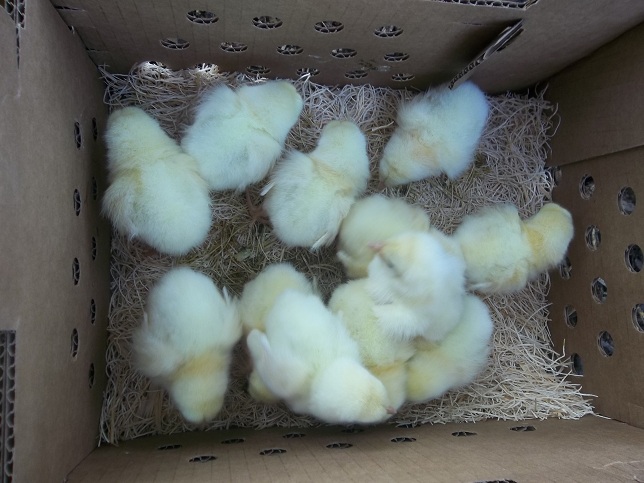
Well, it’s time. We recieved our last batch of broilers for the year. We were on the fence about ordering more birds but the weather cooled off a bit, it finally rained and we are nearly sold out of boneless breast meat. At the last minute we decided to order 125 chicks.
I called our normal hatchery, Schlecht Hatchery, to see if she could fit me in the 8/15 shipment. Etta said she had gone to hatching every other week and wouldn’t be able to fill my order until September 5th. Well, a Sep. 5th ship date means a Nov. 1. butcher date. I don’t want to butcher chickens in November again…too cold. I called another supplier, Sun Ray Hatchery (also in Iowa). They acted like they were waiting for me to call. No problem at all with my order.
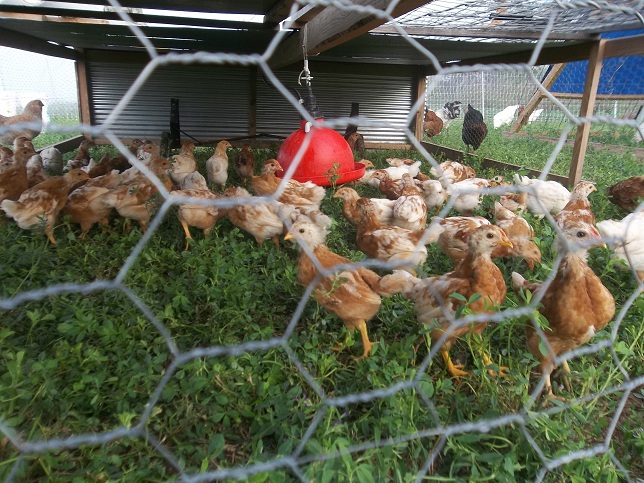
I had very good luck with turkeys from Sun Ray last summer and I have high hopes for their chicks. At any rate, these are all destined to be cut-up birds, available either Oct. 13th or 20th depending on weather. Between now and then we have a good supply of whole frozen birds and backs but very few boneless breasts, leg quarters or wings available. If you are in the market for a whole bird or one hundred whole birds, give us a call. That means it’s a good time to learn how to cook and use the whole bird. Look for a new series on cooking the whole bird soon and check back for updates as these little birdies grow. They will be on pasture in early September.
Before the chicks arrived we went through the normal routine. We put a layer of well-composted (and quite warm) wood chips down in an even layer. Then we turned on the heat lamps. We thought we only needed two lamps but it turned out later we needed three. No big deal. We filled the water bucket with 5 gallons of water and 1/4th cup of sugar. The sugar tip came from Andy Lee in Chicken Tractor. He actually says 3 Tlbs sugar or honey per quart of water for the first 2 days. I also filled two feed trays and two bucket lids with feed and nestled them into the bedding so they were level with the ground. That gives the chicks a place to eat at ground level. It’s important that they don’t have to reach up to eat and, I think, important they don’t have to jump hurdles as they run around and play. Tomorrow they will get creek sand on top of their feed but today I just want them to drink, warm up and rest.
The post office called early in the morning but we finished our chores before driving to town. Everybody looked great. Julie counted 80 chicks from her crate, I lost count of mine. There were supposed to be 125. We’ll count them again as we unload the brooder.
Two by two we loaded them into the brooder. I don’t know how they know but chicks know how to be chicks. They went right to work. Scratching, pecking, running, chasing, even drinking from the watering nipples. Amazing.
Even more amazing was the packaging label. Caution! Step Back! Dangerous Chickens! OMG!!! BIRD FLU!!!!!
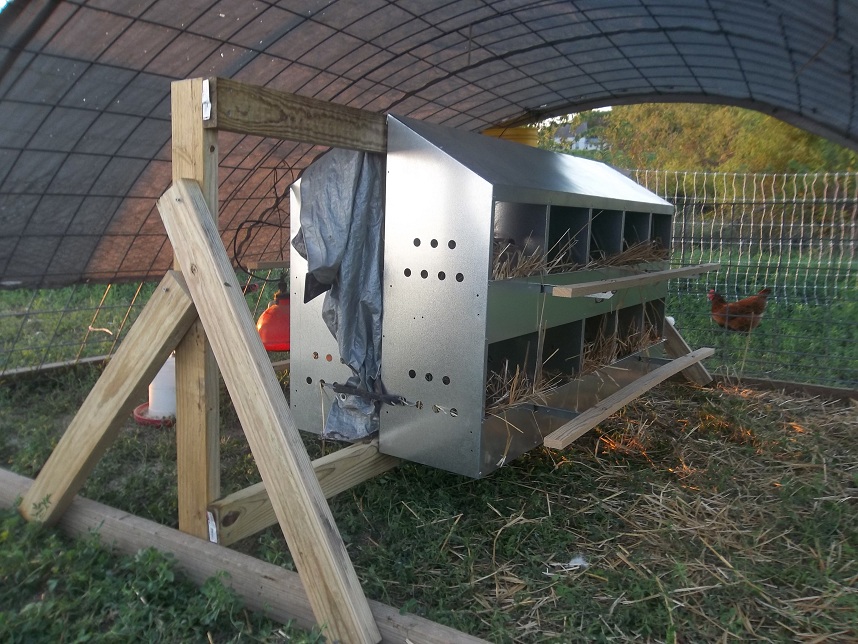
Now, forgive me if this looks crude. The picture you are about to see represents 15 minutes worth of thought and actual work. I needed a quick solution to hanging the nest boxes so I could continue moving the chicken tractor. Three and a half 2x4s later…
The boxes are hanging from screws in the upper 2×4. There are tarp straps holding the bases together so they don’t swing in the wind. Everything seems to work fine but it’s suddenly quite a heavy chicken tractor.
I put part of an old tarp between the two nest boxes hoping to offer the hens a little privacy without adding much weight.
So, there you go. There’s still room for feed and water in the shelter and there’s plenty of airflow. I just need to make it a bit lighter. Let me know if you have any ideas.
I maintain and encourage offline correspondence with readers. Many of you all around the world read my blog regularly but don’t comment. Who are you in the UK, Australia, Hungary, Pakistan and the Netherlands? What about you Singapore? India? Get to know me!
Anyway, this was in with Jesse’s comments about chicken processing:
Jesse:
I also wanted to ask how many sections of electro-netting you are using for your pigs. My three pigs are in one 100ft section of the premier fencing. I am moving it once a week, which is taking me about 4 hours total since I have to clear/mow where the fencing is going, then cover seed the old paddock. I’m thinking of getting more fence and giving them two sections of that fence. I was curious how much you are using for your number of pigs.
I own 4 sections of pig quikfence. I use two at a time so I have an empty paddock set up at all times. I do tear down and set up in my free time, long before I move the pigs. I’m behind on seeding where the pigs have been but I’ll get it before the next rain. I need to haul wood chips to fill in the wallow and I need to rake the rough spots smooth. I also need to cut some brush before I seed. I’m sold on that deer food plot mix I found with rape, turnip, daikon radish, etc. Pretty cool.
Jesse later:
4 sections of pig fence, that’s exactly what i’m thinking of doing. i only have two right now, so when i set the second one up adjacent, i still have to make this awkward temporary chute out of cattle panels because the gates don’t line up. plus with only 1 100′ section and the three pigs, i’ve been moving the whole thing weekly, and i’d like to be able to let each paddock go at least 2 weeks. what is your typical rotation time? do you use a non-electric gate as a door between the paddocks? or just the break in the pig fence?
where did you find that deer plot mix? it sounds good, only with my rotation and small number of pigs, i don’t think i’ll be re-using paddocks this year, so i’ve just been seeding with rye grass. one of the guys at the farm bureau did recommend rape. man i hate that plant name. i really just don’t like ordering 10lbs of rape.
There are a couple of ways to set up your fence. We tend toward setting up an hourglass [two squares]. All four fences join in the middle. [Jesse later said this wasn’t clear so I drew this
[]
[]
to make it more clear] We just peel back two posts and feed the pigs on the other side. When they find their way through we close it up. While they are eating I move the fence charger. As time allows I roll up the fence, usually immediately.
Rapeseed looks like kale but is sold as canola. Pick your term. I bought the mix at my local farm supply store. It’s this stuff right here.
Though I like it, I don’t think I’ll buy the mix again. No promises though. It’s not difficult to come up with winter rye, cowpeas, clover, chickory, etc and make my own mix…hopefully for less money. Even planting turnips behind the pigs would be great…especially if I let the turnips grow then put my chickens over the turnip patch after frost. I’m also spreading raw aragonite behind the pigs. No, they won’t return to the same ground again but, like the turnip and chicken example, I’m creating forage opportunities for other animals (including wildlife) and establishing groundcover.
I realized later I didn’t answer his question about rotation time. I’ll try to answer it now. Ready? It varies. I know that is a terrible answer. Sometimes I just want them to eat and manure a bit. Sometimes I want them to tear everything up, kill everything and work in wood chips and straw like last winter in the garden. Sometimes I count on them to clean up weeds and tree nuts but not destroy the pasture. Sometimes I want them to wipe the pasture out so I can re-seed with a variety of forages. Sometimes it’s so stinking hot and dry we can’t drive a fence post in the ground with a hammer so we just sacrifice an area. Yesterday I moved the pigs because they were nearing the end of forage in their pasture and a rainstorm was moving in. I didn’t want them to create a mud volleyball pit so…off they went. Here’s Joel Salatin aswering the same question.
Key points:
It depends
For his pastures, it’s time to move the pigs when they eat 2 tons of feed. Pigs can create a lot of disturbance on their way to 2 tons of feed so go back to point 1…it depends.
He currently has three pig finishing pastures and another one under development. Each pasture is about two acres in size and is divided into eight smaller paddocks. These pastures are each stocked with 30 to 50 pigs.
He said it is very important to leave some trees in each paddock as pigs are very susceptible to sunburn.
I should also point out that pigs wallow. Big pigs make big wallows. As stated above, I fill their wallows in with wood chips, compost, sawdust or old bedding…basically, whatever is laying around. You might think this is a nuisance but I think it’s a valuable part of pasture renovation and of allowing the pigs to be pigs.
I’m not a pig farmer. I’m a farmer with pigs. I’m learning with you and am happy to help discover the answers with you. If you need real expert help, write a letter to Salatin. He always writes back. Also, check out Sugar Mountain Farm. Walter does things a little differently than we do but he really knows his beans…er…pigs. Better than that, find someone who pastures pigs locally (yeah, good luck with that!).
Our friend Jesse is just starting his farming adventures and regularly shares his experiences with me in email. He makes some valuable observations and asks good questions. Here’s our recent coorespondence concerning poultry processing:
Jesse:
We just finished up our first day of processing. 21 birds, ha. We are slow, BUT we didn’t have any problems. It was actually really smooth. Took us about 9am to 12 for the evisceration, then a break, then we shrink wrapped. A lot of learning took place, but the equipment all worked well, and we didn’t hurt each other. We are tired though. Well I had to share that with you. I do need to ask you, do you remove the kidneys? We did, but every evisceration video I watch says nothing about it. Also do you leave the necks on? We did, but it looks a bit unorthodox in the shrink bags. Thanks again!
I replied:
We leave on the neck. We leave in the kidneys. Just make sure to scrape out the lungs. We used a bent butter knife when we started but found that to be unnecessary. Now we just run our fingers along the keel till we start feeling ribs. Then we run one fingernail between each rib down to the spine. The lung just pops right out.
Glad you started small. Salatin makes it look so easy. You’ll find your groove.
Jesse wrote later:
Our days 2 and 3 of processing went really well, so we finished our first batch of 100 and they are beautiful. We sold some fresh and some frozen, and we hope the quality of those first sold set off a wildfire of new customer referrals. We’re still trying to find our rhythm working with the featherman equipment. We did about 40 in 3 hours on Sunday morning. I killed, scalded and plucked all the birds, then put them in cold water. Lesley [His lovely bride] started the evisceration, table top, and when I finished all the plucking I joined her. We feel we’re getting a little faster each time. Any tips on improving processing speed? One thing that slows us down is picking the few pin feathers before we start eviscerating, especially on the tail and at the base of the legs. Also I had the pilot go out twice on the scalder, not sure why, the weather was good. How long does a normal propane tank last you? We did have about 3 broken or dislocated wings.
Our birds were on Sunday were nearly all at 4lb or over, with one or two even at 5lb.
I replied:
A 20# propane tank lasts several processing days if I don’t light my fire too early. I don’t know why the pilot light won’t stay on sometimes. You can tell by my blog posts I find it frustrating. I suspect I’ll be indoors next year.
I know you have read this before but I’m going to write it out so I can think it through. If it’s just Julie and me I pull four birds out of the plucker and put them in a dry stainless steel sink (2 more should be in the scalder with more bleeding out). These birds are already headless. One at a time I cut the feet off and cut out the scent gland. While the bird is in my hand I reach for my plyers and pull out any remaining tail feathers. Then I check the armpits of the birds and pass the bird to Julie. I have to finish two birds before the scalder finishes its work. Then I unload the scalder into the plucker, load the scalder with two birds again, finish the other two in the sink, unload the scalder, turn on the plucker, load the scalder, kill two birds, turn off the plucker, kill two birds, put 2 in the scalder, grab the birds out of the plucker and start again. WHEW! It helps if you can make a little triangle of equipment around you but lay it out so dying birds don’t flip their crap on the evisceration table. Julie cuts the skin at the neck to pull the crop and windpipe then eviscerates the bird, removes the lungs, rinses it out and drops it in the chill tank. She also maintains the ice in the chill tank. She can do all that faster than I can type it so she sometimes waits on me after cleaning her work area. It really helps if you have children who will grab the birds out of the plucker, remove the feet, pluck the feathers and hand the bird to mommy…lol. I know we can do 80 in an hour but 60 is a lot easier on all of us. Just the two of us are probably limited to 40-50/hour. When we have even unskilled adult help we can quickly push to 100 birds. I just need somebody to keep the kill cones filled so I can focus on keeping the water hot, the scalder full and the plucker cleaned out.
—-
Re-reading that response I realized I missed his comment about broken wings. Lots of things can go wrong in the plucker. We see broken wings, broken legs, broken ribs and torn skin but all of these are fairly rare. Out of 100 birds Jesse saw three bad wings. When we have a broken wing we usually salvage the leg quarters, breast meat and tenders for customers then keep the broken wing for ourselves. There’s nothing wrong with the bird, it’s just not up to the standards we want to present to our customers. Just know that it does happen.
I want to emphasize several things Jesse said. His first time out of the gate he needed 3 hours to do 21 birds and was tired when he finished. He needed 10 minutes per bird his first time out. That’s why I recommend you start small. This stuff is hard. His second and third times he needed 3 hours to do 40 birds. That’s a lot better but still a hard way to make a dollar. Play with your equipment setup, kill more birds and you’ll figure out a process flow. Just keep doing it and finding ways to get better. I still watch Salatin eviscerate. I have never figured out how he grabs the crop as quickly as he does. I have shaken his hand. I don’t think he’s that much stronger than I am.
I would like to know how long it took Jesse to package the birds in the shrink bags each time. Hopefully Jesse will let us know in comments. In fact, maybe he’ll do some guest blogging for me now that he’s an old hand at processing.
Good luck with your bird processing. I hope you, like Jesse, won’t hesitate to ask if you need help either in comments or through email.
So I says to me wife, I says, “Honey, What does this look like to you?”
And she says to me, she says, “Looks like the pigs dug a swale.”
And I says to her, I says, “Well I think it looks like the….pigs….du….oh.”
And so you see, kids, it’s a good idea, from the standpoint of your future genetic line, to marry someone both more attractive than you and, more importantly, more intelligent than you. But in practice it sucks. Not only does she run circles around me intellectually, everywhere we go people look at us like, “What’s SHE doing with HIM?”
So, while I work to determine how much of a swale I can hire the pigs to build for me on contour and sulk about being continually outsmarted by my lovely bride, here’s a video of the pigs enjoying fresh pasture. Ever seen a pig eat grass?











 Chism Heritage Farm